Thisispaper Community
Join today.
Enter your email address to receive the latest news on emerging art, design, lifestyle and tech from Thisispaper, delivered straight to your inbox.
Oops! Something went wrong while submitting the form.
Instant access to new channels
The top stories curated daily
Weekly roundups of what's important
Original features and deep dives
Exclusive community features
Alexander Zaxarov
Apr 1, 2026

Near the Mississippi in Minneapolis, Brandlhuber+ transforms a former limousine garage into Midway Contemporary Art Garage — a non-profit art facility conceived as a living process rather than a finished building.

The Midway Contemporary Art Garage occupies a former limousine garage near the Mississippi River in Minneapolis — a city in the midst of one of the more unusual urban visions in contemporary planning: a hundred-year initiative to reimagine its post-industrial riverfront landscape. The project sits within this larger ambition as an early node, an adaptive reuse that is as much about what it might become as what it currently is. Situated in the Midway neighbourhood, the building carries the unglamorous integrity of industrial infrastructure: honest in its proportions, frank about its construction, indifferent to the conventions of institutional architecture.

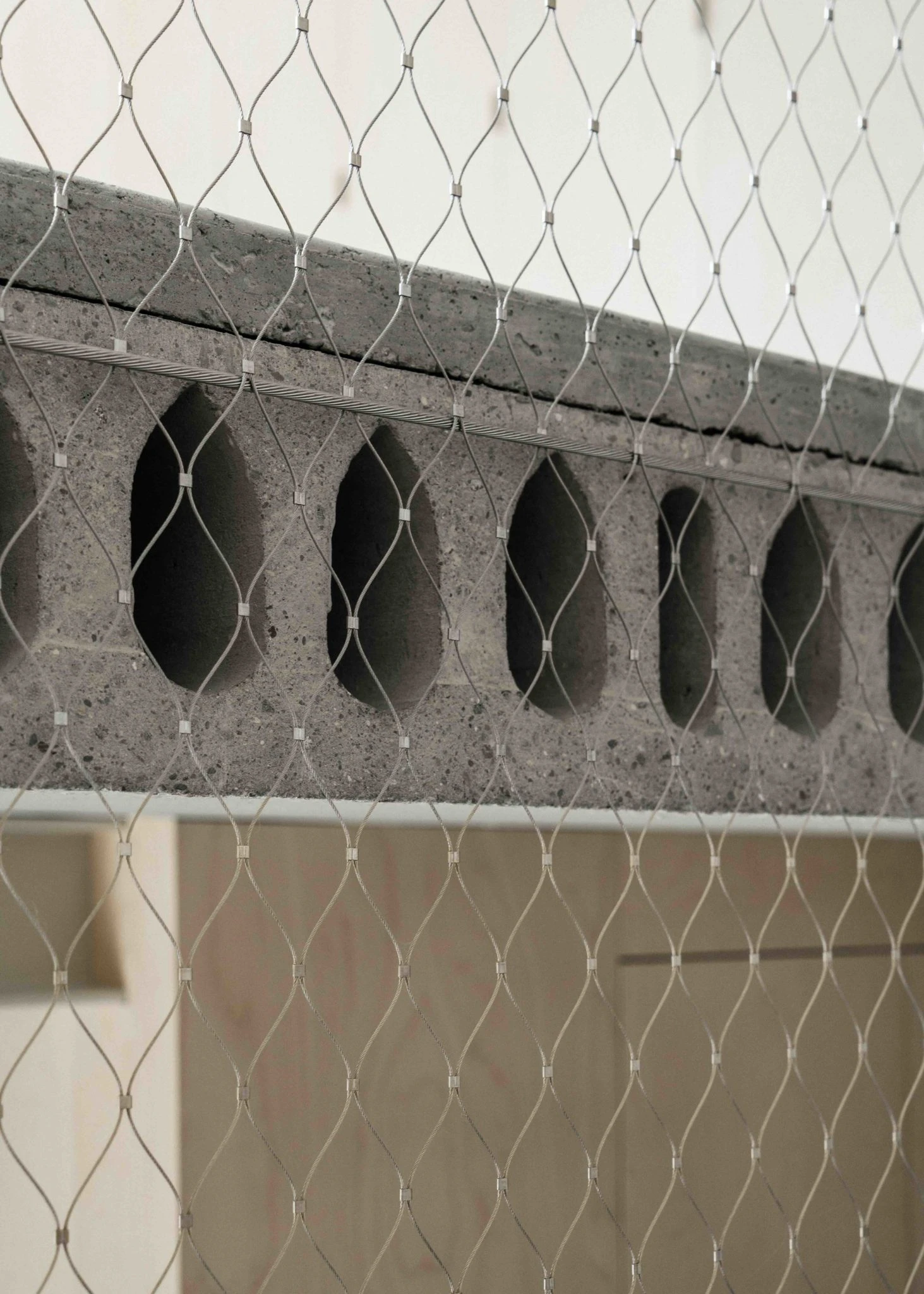
The existing building was not erased but accepted. Its structural frankness — exposed concrete block, industrial scale, the accumulated evidence of previous uses — was retained as the honest substrate of the new program. What Brandlhuber+ introduced were incisions, openings, and reorganisations that change the building's relationship to the street and the public realm around it. The work in progress quality is deliberate: this is a building that acknowledges its own incompleteness as a condition rather than a deficiency.

The design follows a phased concept in three movements: first, the adaptation and renovation of the existing building for exhibition and program use; second, the conversion of the outdoor parking area into a park and rain garden; third, the eventual expansion of library, teaching, and artist residency spaces. "The design highlights the transformative process," the studio noted, "acknowledging its importance alongside the eventual outcome." In a cultural institution of this kind — non-profit, community-embedded, long-term — the argument that the process is itself the content feels less like an architectural position than a necessity.

Brandlhuber+ have built a practice around the productive tension between existing structures and new programs — exploring the latent capacity of buildings that the market has left behind. In Minneapolis, working alongside local architects Snow Kreilich, they engage a post-industrial site not as a problem to be solved but as a collaborator: a structure already fully charged with the material evidence of urban time, and now asked to hold art as well.

Interested in Showcasing Your Work?

If you would like to feature your works on Thisispaper, please visit our Submission page and sign up to Thisispaper+ to submit your work. Once your submission is approved, your work will be showcased to our global audience of 2 million art, architecture, and design professionals and enthusiasts.
No items found.
We love less
but there is more.
Become a Thisispaper+ member today to unlock full access to our magazine, advanced tools, and support our work.
Get two months FREE
with annual subscription
We love less
but there is more.
Become a Thisispaper+ member today to unlock full access to our magazine, advanced tools, and support our work.
Get two months FREE
with annual subscription
No items found.
Alexander Zaxarov
Apr 1, 2026

Near the Mississippi in Minneapolis, Brandlhuber+ transforms a former limousine garage into Midway Contemporary Art Garage — a non-profit art facility conceived as a living process rather than a finished building.

The Midway Contemporary Art Garage occupies a former limousine garage near the Mississippi River in Minneapolis — a city in the midst of one of the more unusual urban visions in contemporary planning: a hundred-year initiative to reimagine its post-industrial riverfront landscape. The project sits within this larger ambition as an early node, an adaptive reuse that is as much about what it might become as what it currently is. Situated in the Midway neighbourhood, the building carries the unglamorous integrity of industrial infrastructure: honest in its proportions, frank about its construction, indifferent to the conventions of institutional architecture.

The existing building was not erased but accepted. Its structural frankness — exposed concrete block, industrial scale, the accumulated evidence of previous uses — was retained as the honest substrate of the new program. What Brandlhuber+ introduced were incisions, openings, and reorganisations that change the building's relationship to the street and the public realm around it. The work in progress quality is deliberate: this is a building that acknowledges its own incompleteness as a condition rather than a deficiency.

The design follows a phased concept in three movements: first, the adaptation and renovation of the existing building for exhibition and program use; second, the conversion of the outdoor parking area into a park and rain garden; third, the eventual expansion of library, teaching, and artist residency spaces. "The design highlights the transformative process," the studio noted, "acknowledging its importance alongside the eventual outcome." In a cultural institution of this kind — non-profit, community-embedded, long-term — the argument that the process is itself the content feels less like an architectural position than a necessity.

Brandlhuber+ have built a practice around the productive tension between existing structures and new programs — exploring the latent capacity of buildings that the market has left behind. In Minneapolis, working alongside local architects Snow Kreilich, they engage a post-industrial site not as a problem to be solved but as a collaborator: a structure already fully charged with the material evidence of urban time, and now asked to hold art as well.

Interested in Showcasing Your Work?

If you would like to feature your works on Thisispaper, please visit our Submission page and subscribe to Thisispaper+. Once your submission is approved, your work will be showcased to our global audience of 2 million art, architecture, and design professionals and enthusiasts.
No items found.

Join Thisispaper+
Unlock access to 2500 stories, curated guides + editions, and share your work with a global network of architects, artists, writers and designers who are shaping the future.
Get two months FREE
with annual subscription
Travel Guides
Immerse yourself in timeless destinations, hidden gems, and creative spaces—curated by humans, not algorithms.
Explore All Guides +
Submission Module
Submit your project and gain the chance to showcase your work to our worldwide audience of over 2M architects, designers, artists, and curious minds.
Learn More+
Curated Editions
Dive deeper into carefully curated editions, designed to feed your curiosity and foster exploration.
Off-the-Grid
Jutaku
Sacral Journey
minimum
The New Chair
Explore All Editions +
Atlas
A new and interactive way to explore the most inspiring places around the world.
Interactive map
Linked to articles
300+ curated locations
Google + Apple directions
Smart filters
Subscribe to Explore+
Become a Thisispaper+ member today to unlock full access to our magazine, submit your project and support our work.
Join Thisispaper+Join Thisispaper+
€ 9 EUR
/month
Cancel anytime
Get two months FREE
with annual subscription