At the end of its street in Saint Kilda West, Melbourne, Edition Office reimagines a Federation-era home — a dwelling open to three sides where heritage brick and new spatial ambition occupy the same threshold.
The Mary Street House occupies an unusual urban condition: sitting at the terminus of its street, the site is exposed on three sides, opening to the northern sun while simultaneously facing a busy arterial road. Edition Office — the practice of Kim Bridgland and Aaron Roberts, winners of the 2019 Dezeen Emerging Architect of the Year — took this challenge as the project's generative tension: how to invite light and air from three directions while maintaining the domestic calm that the Federation shell promises.
The existing house is retained and respected, its front rooms left largely intact as the address and threshold. Behind, a new volume extends into the garden with a spatial ambition that the original plan could never accommodate. The new work is distinguished from the old through material and proportion — concrete, steel, and large openings that contrast with the brick and timber of the heritage fabric — but the two sit together without competing.
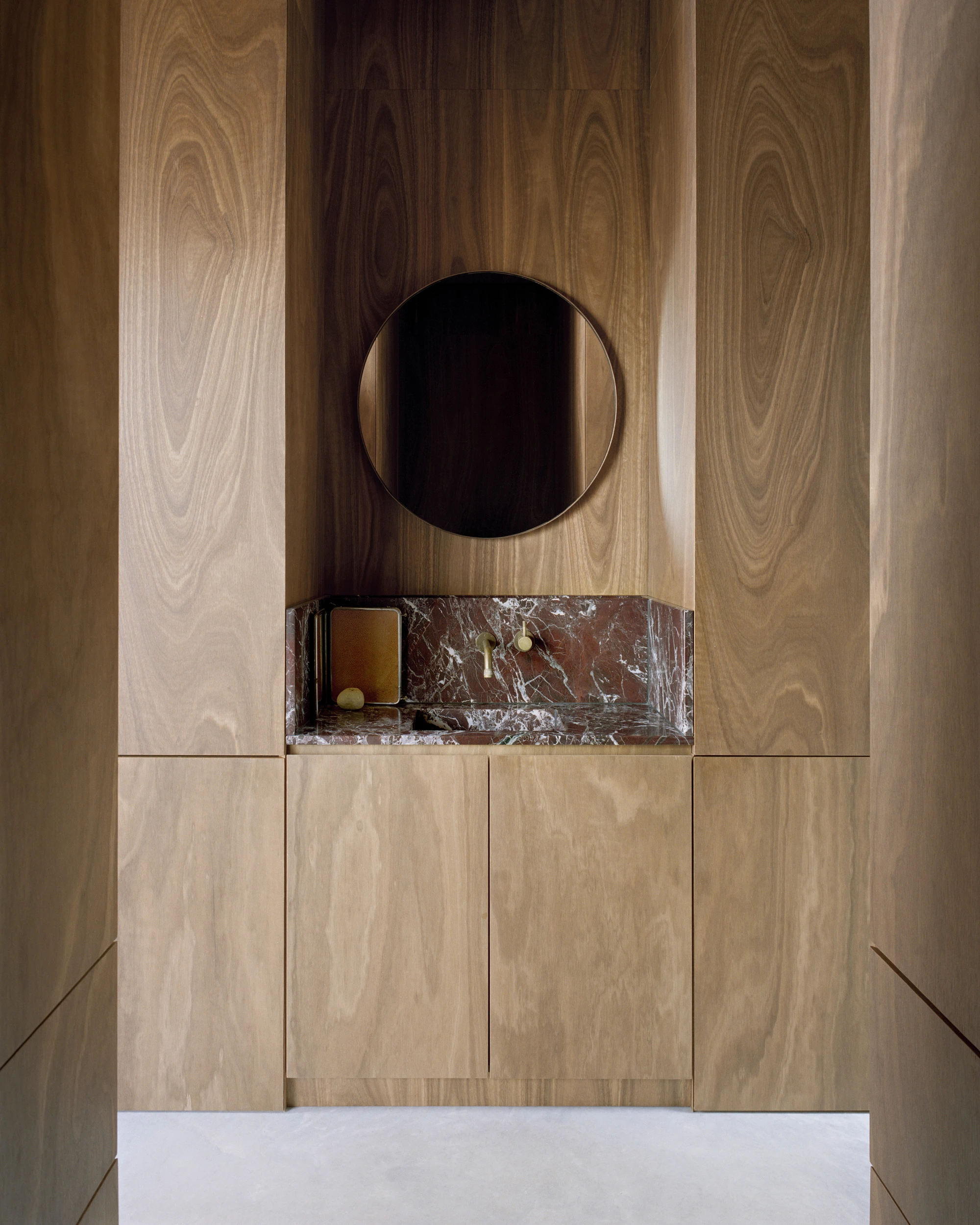
The interiors move through a carefully modulated sequence: from the compressed entry of the old house to the expanded living spaces of the new, from the street-facing enclosure to the garden-facing openness. Light is the medium that binds the sequence. It enters from the north, falls through skylights, and is reflected by pale surfaces that amplify its reach into the deeper plan.
Edition Office describes their work as "encompassing cultural, social and technological research, enabling exploration of material expression, form and spatial practice." Mary Street House is a clear demonstration of that ambition — a project that treats the renovation of a well-worn suburban house as an opportunity for genuine architectural inquiry, producing rooms that feel both inevitable and unexpected.