In the medieval village of Aurignac, in the foothills of the French Pyrénées, Les Ateliers Permanents finds a ruined castle house and adds to its centuries of accumulated layering one more — quiet, contemporary, precisely placed.
Aurignac sits in the Haute-Garonne, in the rolling terrain of the pre-Pyrenean foothills of southern France — a village whose medieval castle and narrow stone-paved streets have remained largely intact across centuries of occupancy and neglect. The house arrived on the market with only its stone facades and load-bearing walls standing. A client discovered the village by chance and decided to settle there. Together with Les Ateliers Permanents, a Paris-based studio, they undertook a transformation that would become an exercise in working with a site that has been worked on many times before.
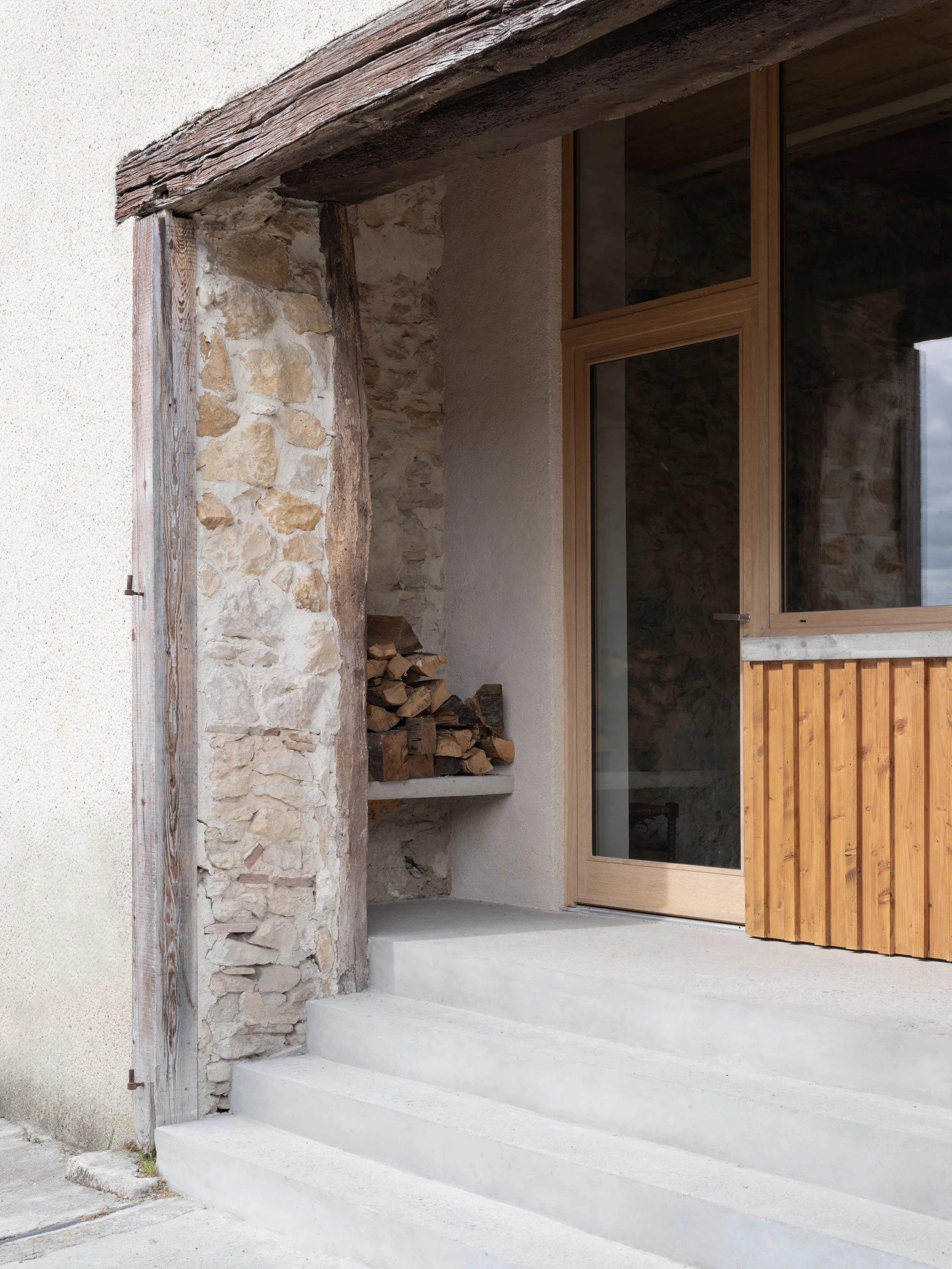
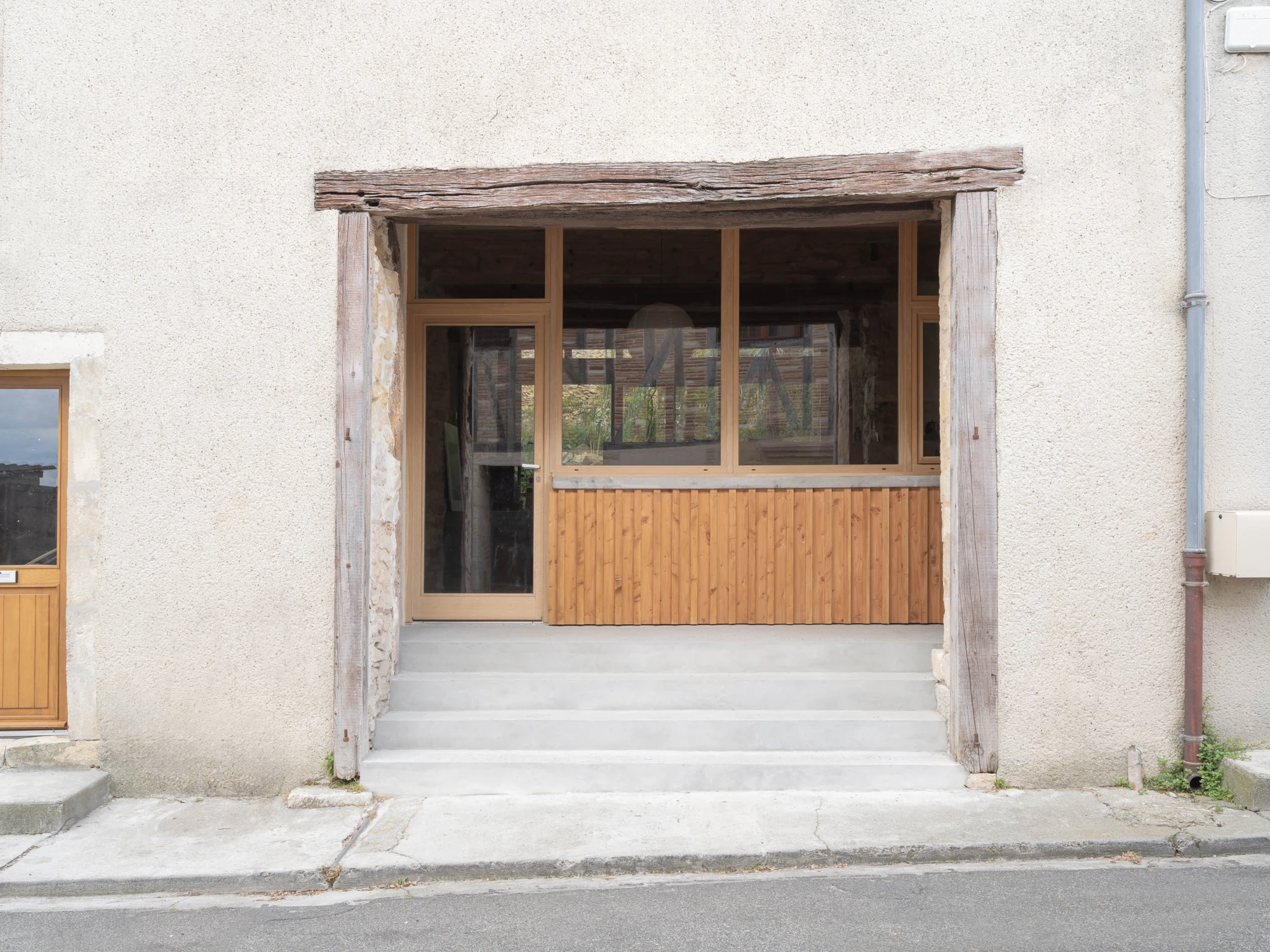
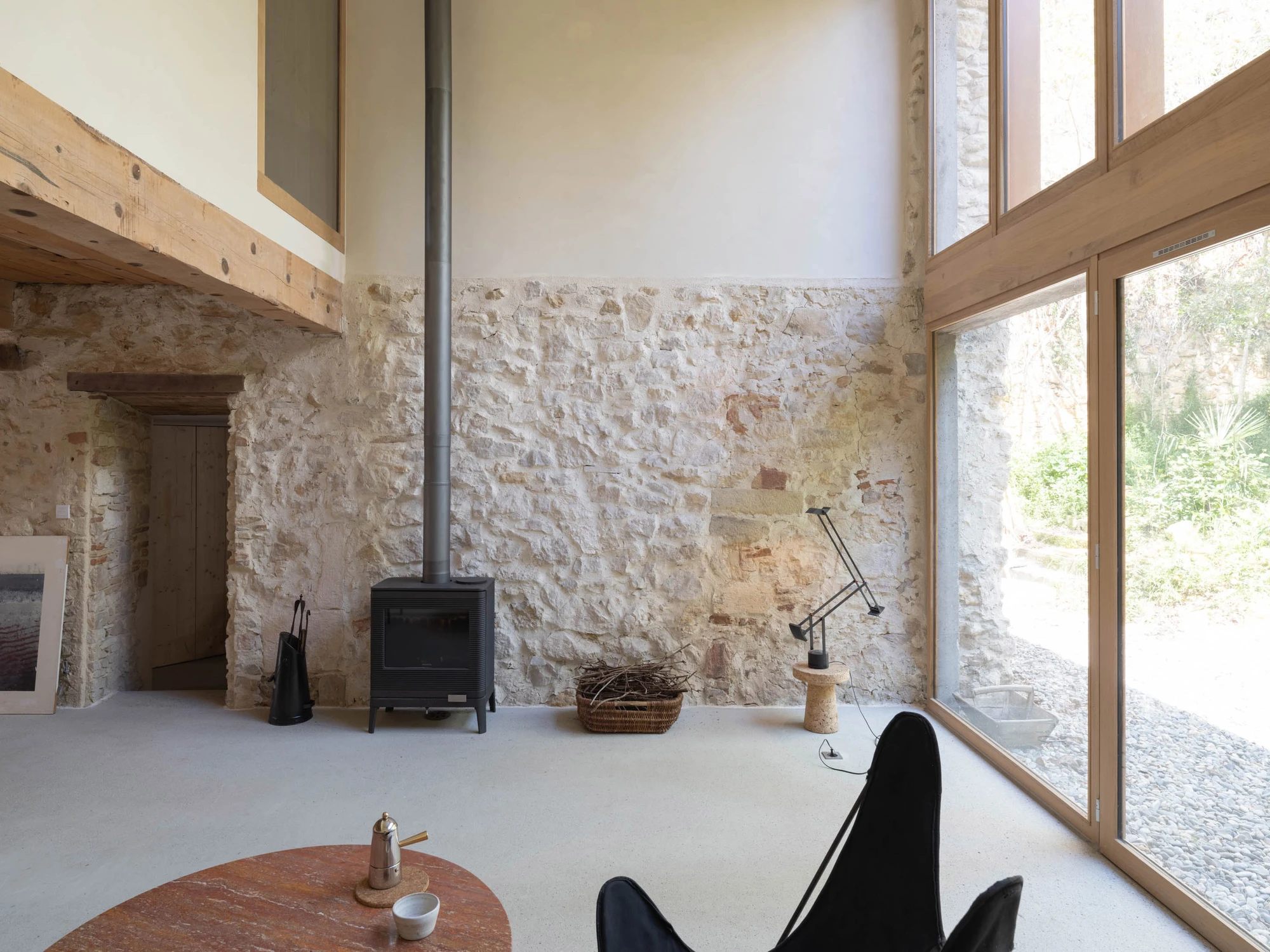
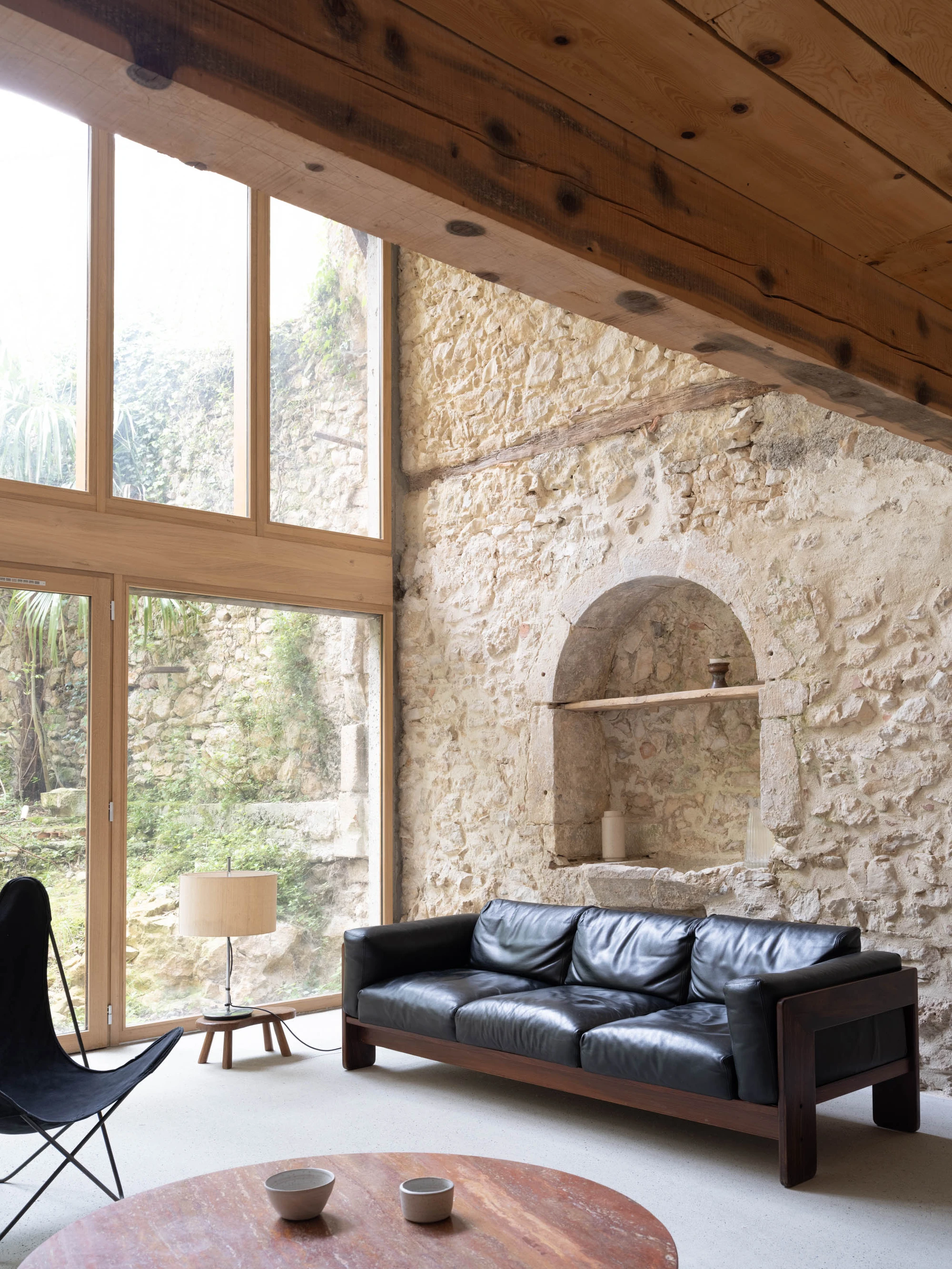
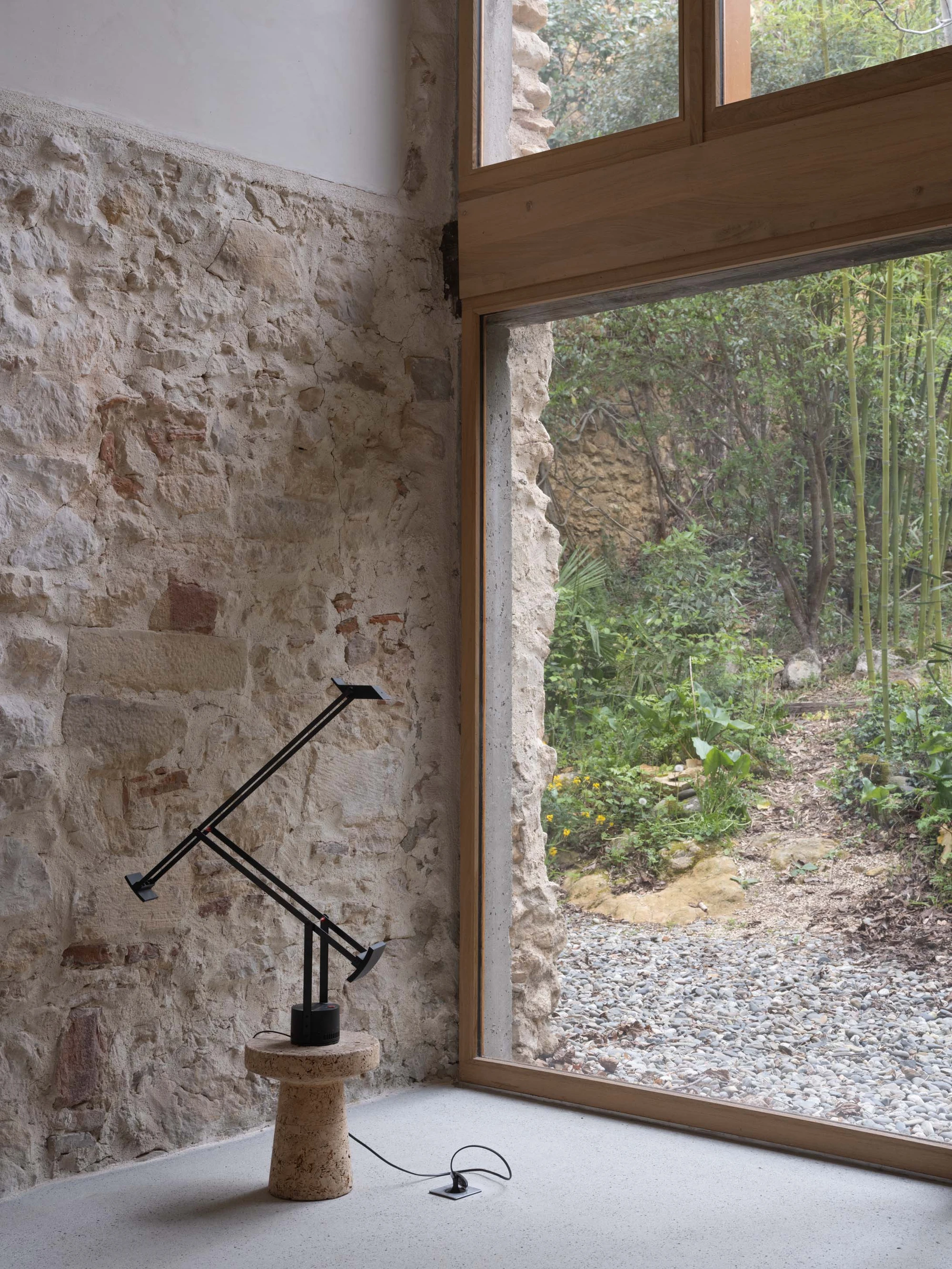
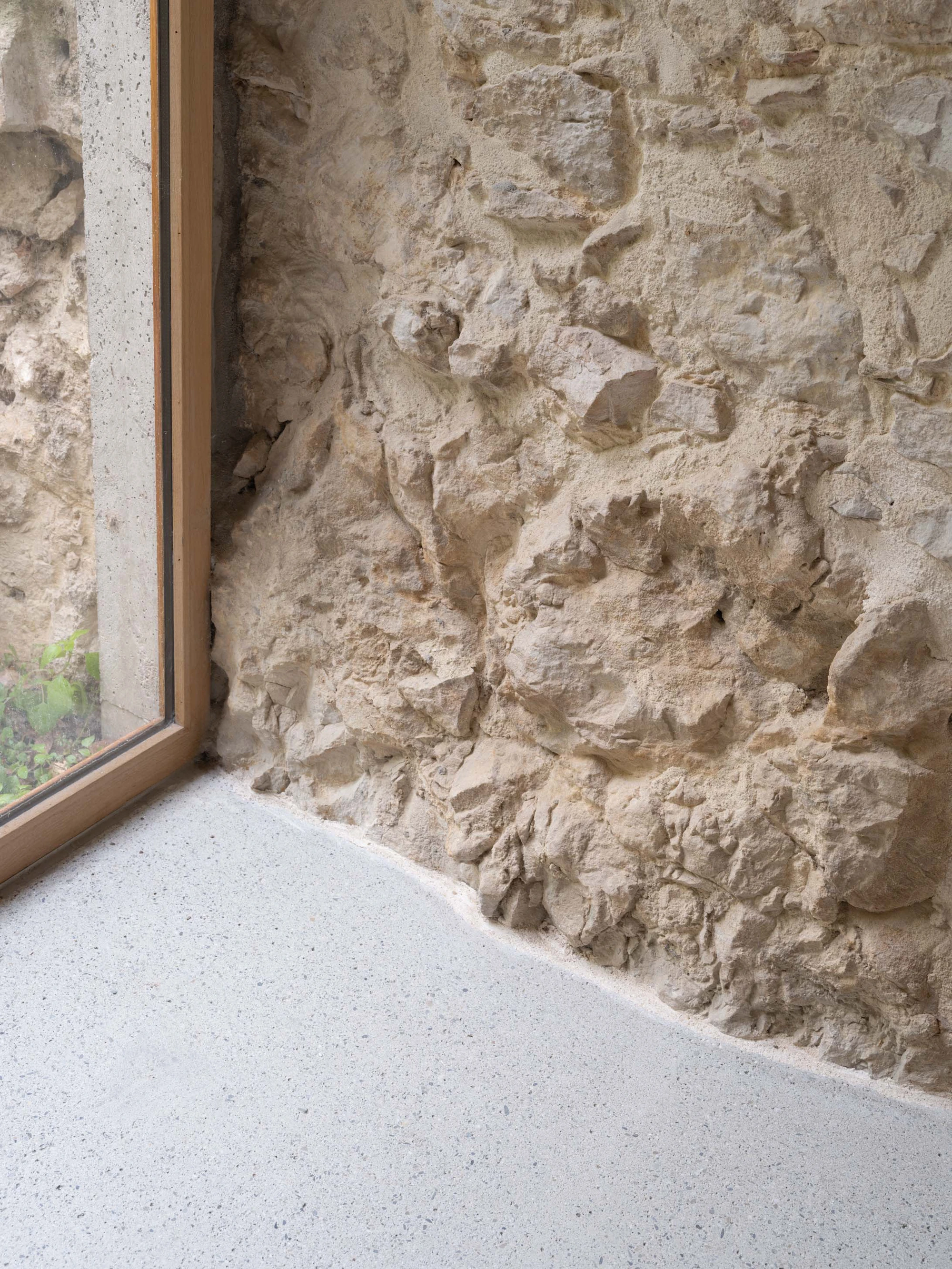
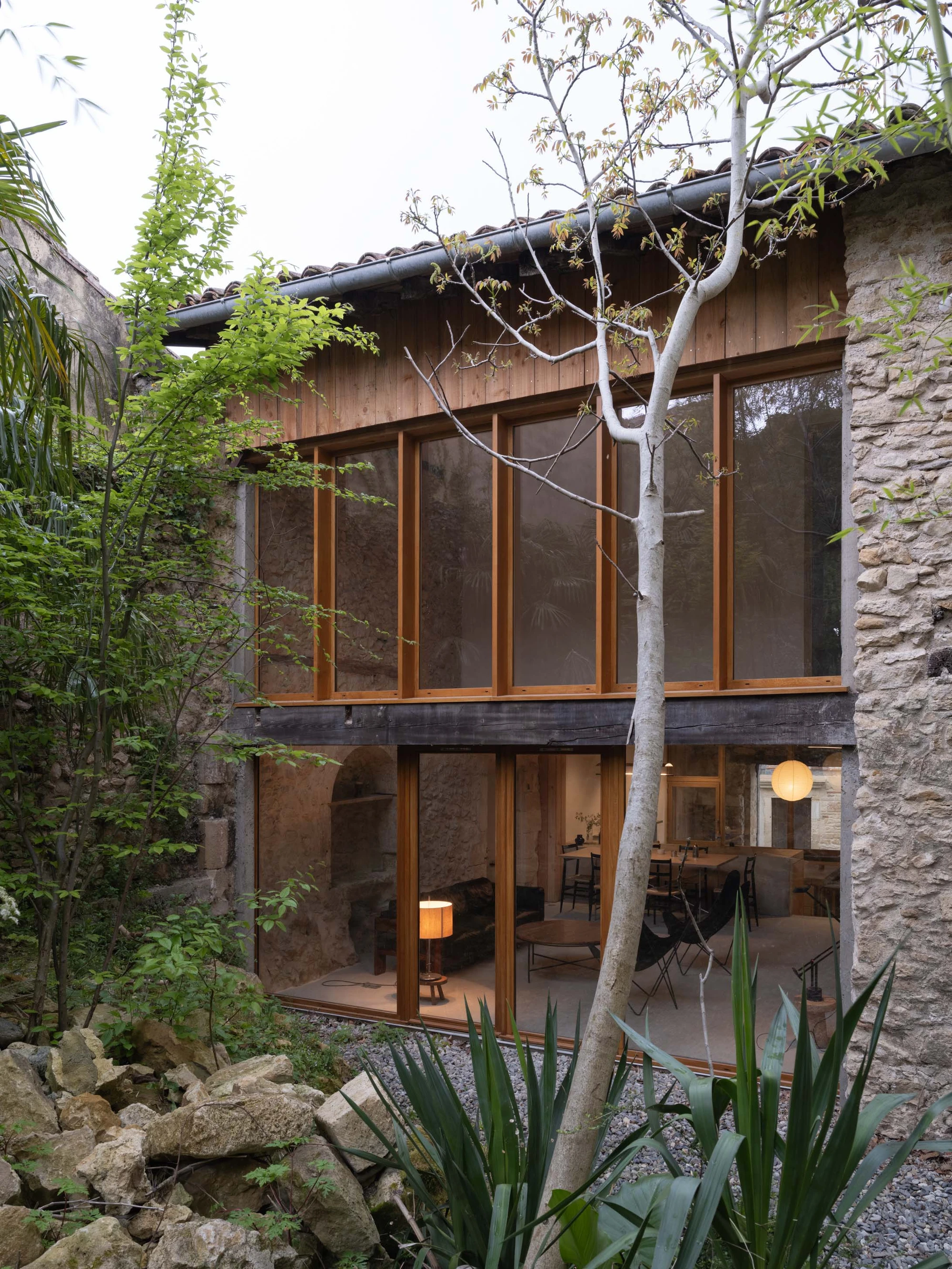
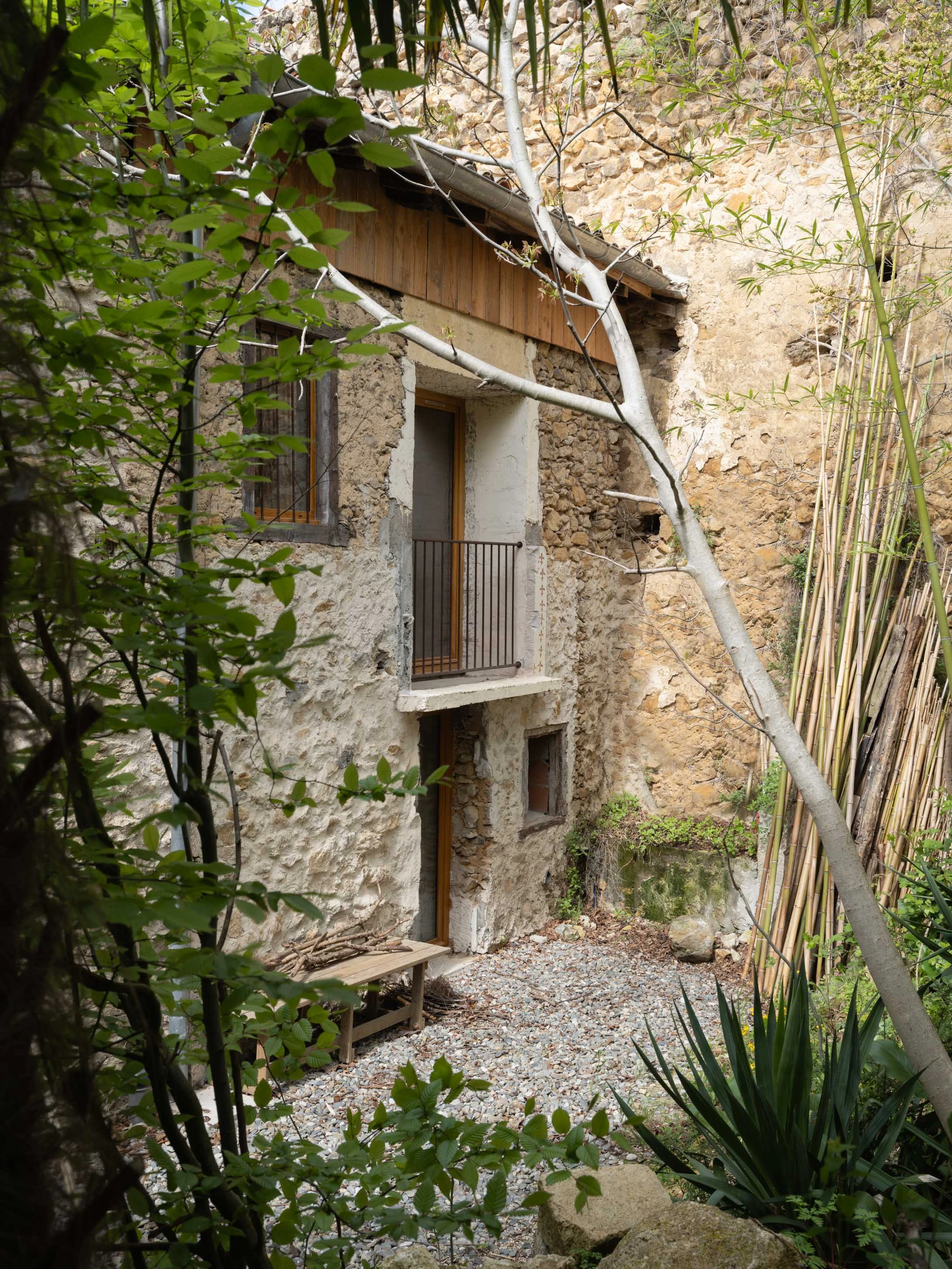
The approach was to understand the building as a document: to read what remained and respond in kind. The roof was rebuilt, volumes reimagined, floors drained and relaid. Where existing stone walls could be preserved, they were — and the photographs by Sandrine Iratcabal make clear just how much value those walls carry. Their irregular coursework of local limestone, the gaps and repairs that index different epochs of construction, the texture that no new surface could replicate — all of it is brought into dialogue with new oak framing, large picture windows, and polished concrete floors that introduce a contemporary layer without competing with the old.
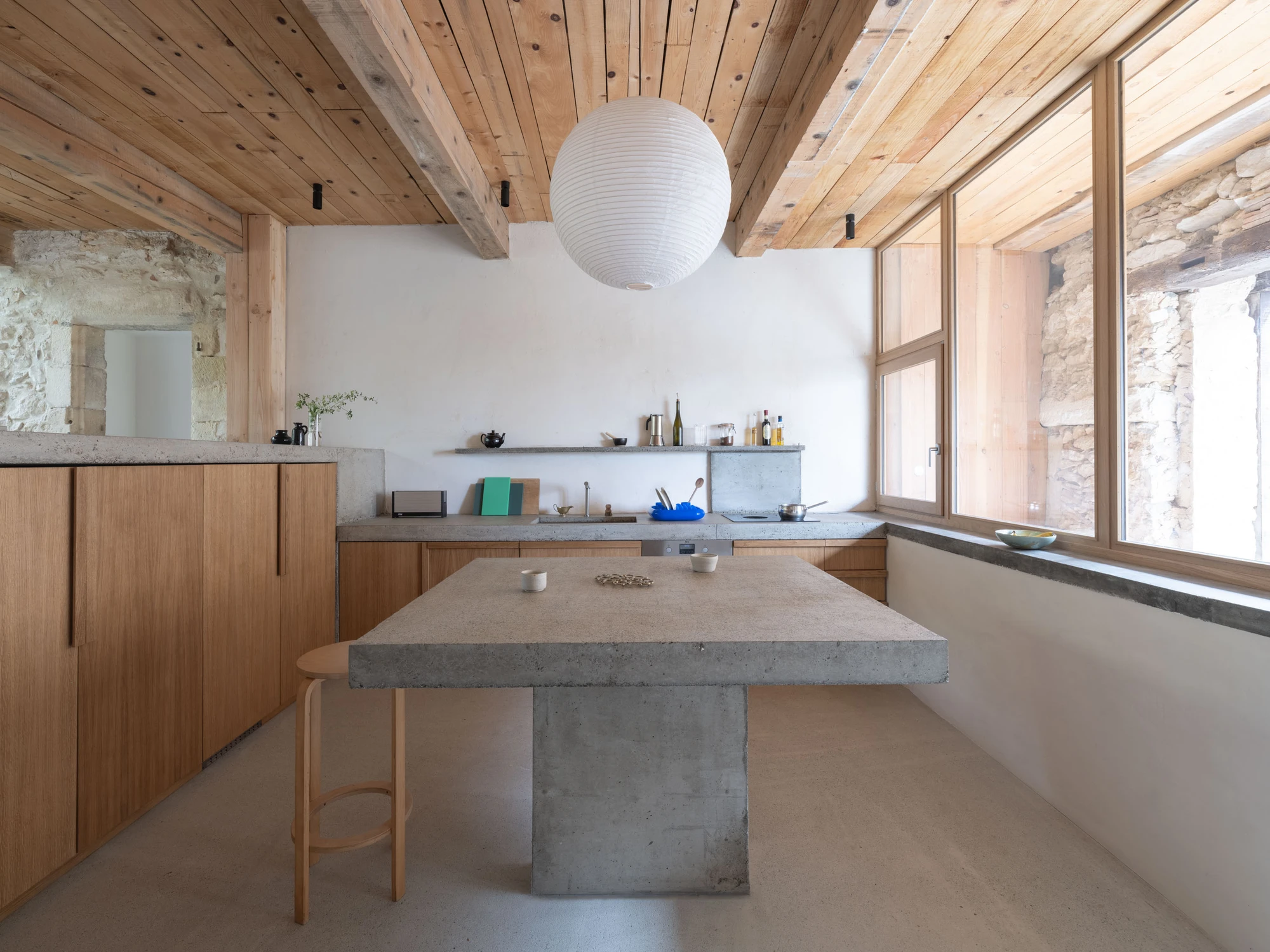
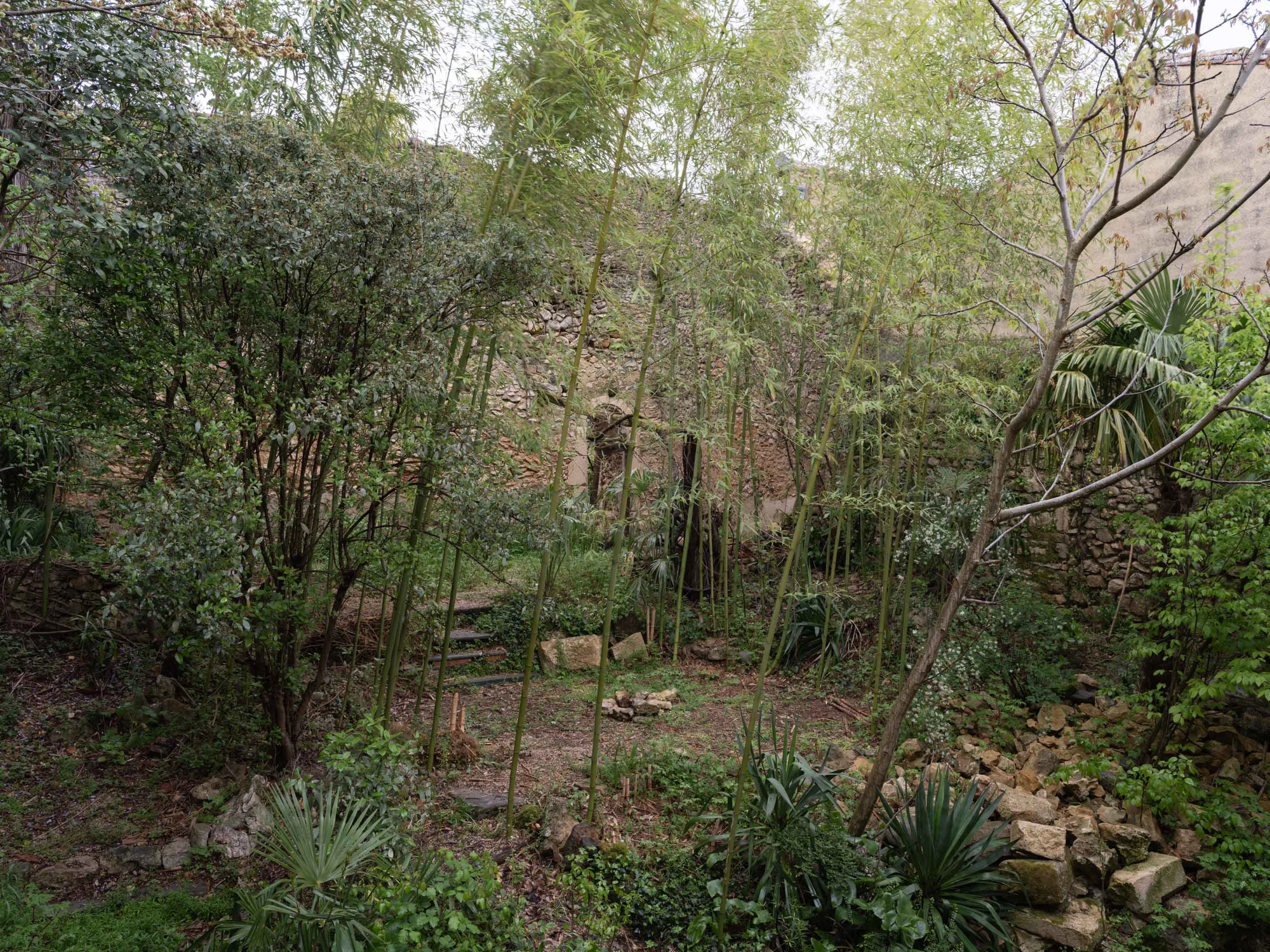
The kitchen now opens onto an enclosed garden — a threshold between the medieval density of the street and the cultivated enclosure behind the house, where bamboo and subtropical plants create a scene of unexpected lushness. This inside-outside relationship, mediated by large glazed openings in heavy timber frames, is central to the spatial experience: the house is both very old and very permeable, holding the garden as much as it is held by the village.
"A new, contemporary architectural layer is added, respectfully aligning with the past," the studio writes — and the restraint of that sentence is reflected in every decision. Les Ateliers Permanents work within the logic of the existing rather than against it, producing spaces whose quality derives from the accumulated depth of what was already there. Maison Enzo is, in this sense, less a renovation than a long conversation — one in which the new voice has the confidence to speak clearly without raising it.