Thisispaper Community
Join today.
Enter your email address to receive the latest news on emerging art, design, lifestyle and tech from Thisispaper, delivered straight to your inbox.
Oops! Something went wrong while submitting the form.
Instant access to new channels
The top stories curated daily
Weekly roundups of what's important
Original features and deep dives
Exclusive community features
Porto Guide
under the patronage of
Leixões Cruise Terminal by Luís Pedro Silva Arquitecto
Alexander Zaxarov
Aug 11, 2026

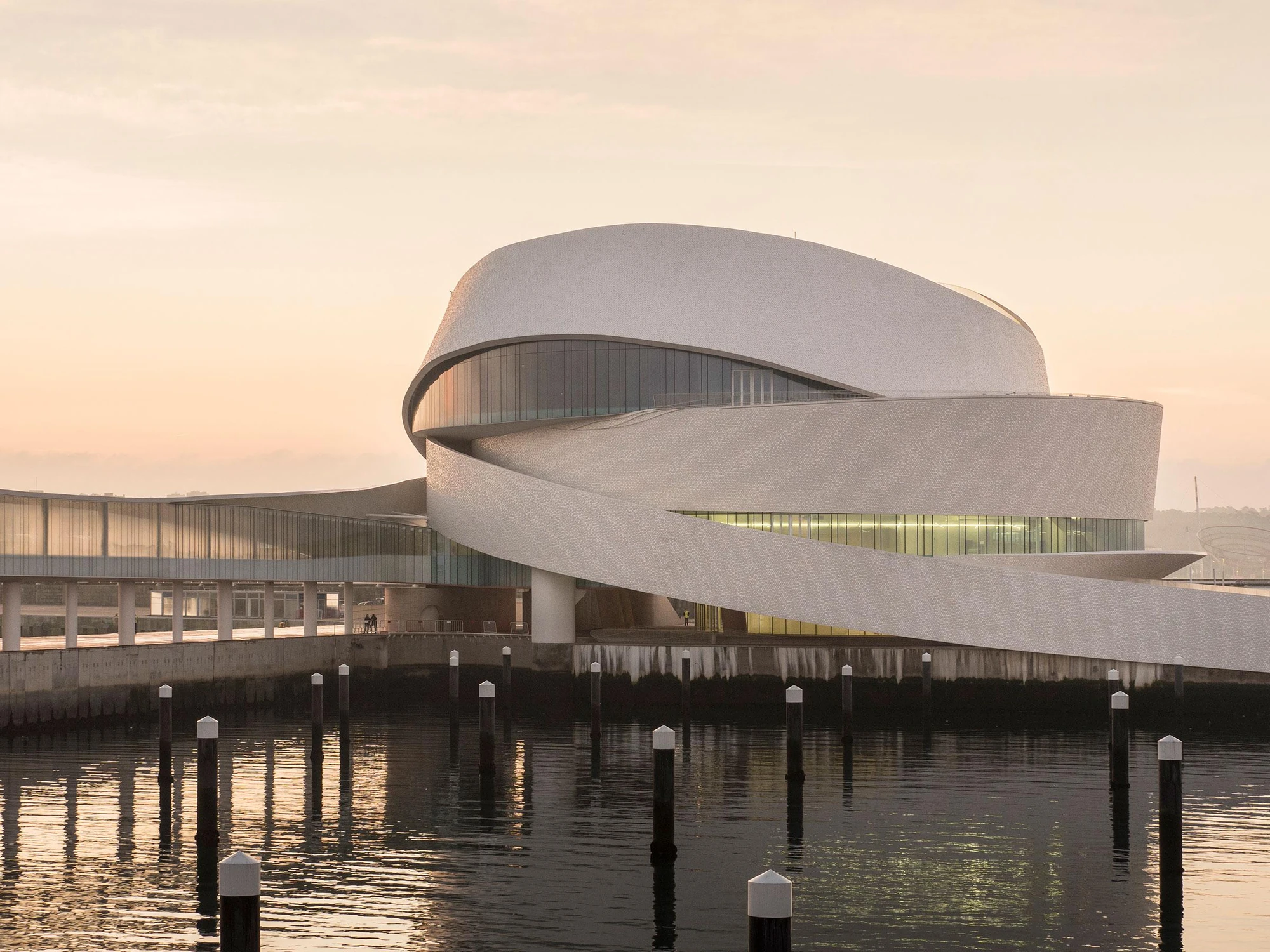
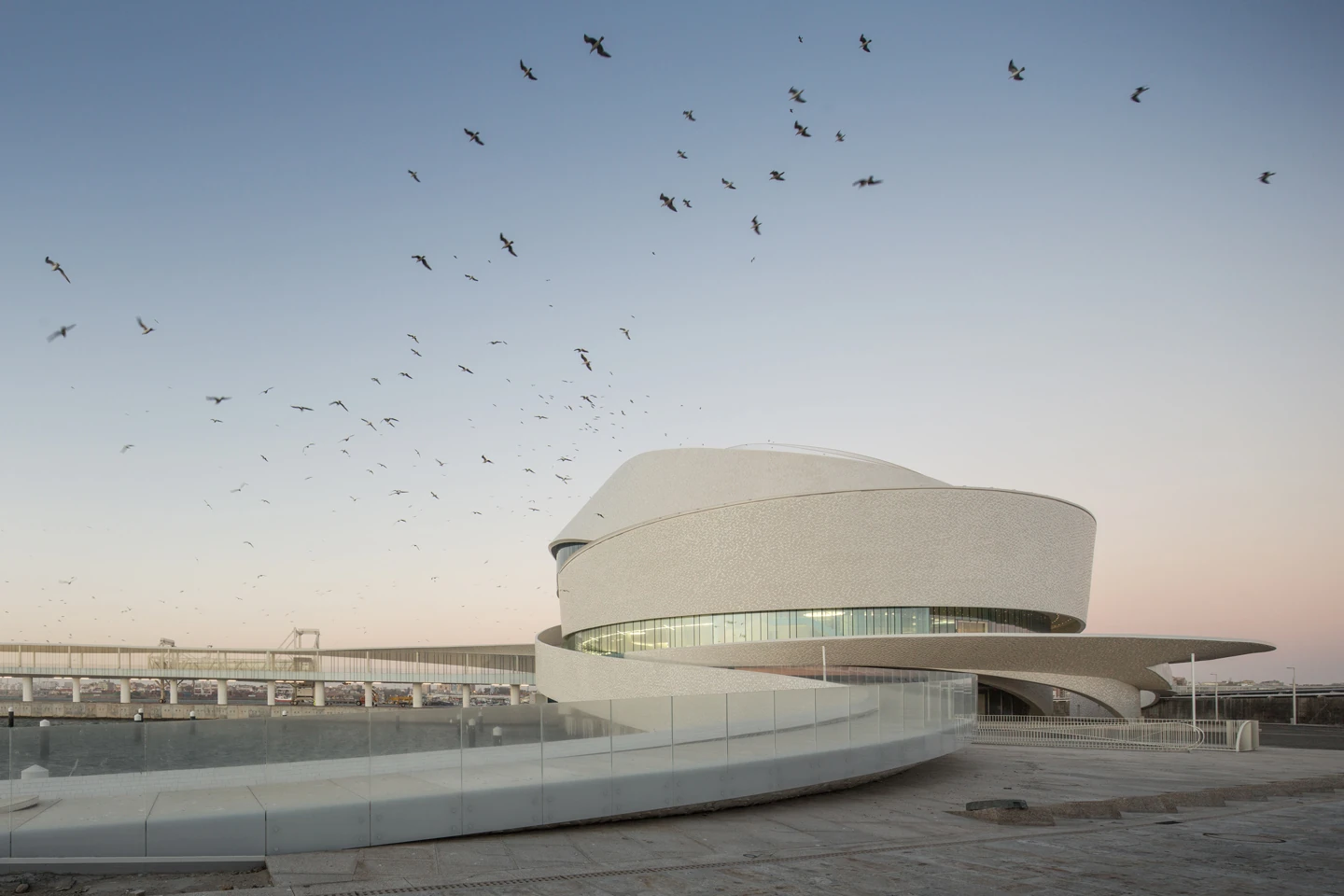
At the end of the south jetty of the port of Leixões, out in the Atlantic off Matosinhos in Porto, Luís Pedro Silva Arquitecto has coiled a white tiled cruise terminal around a sea sciences research centre.

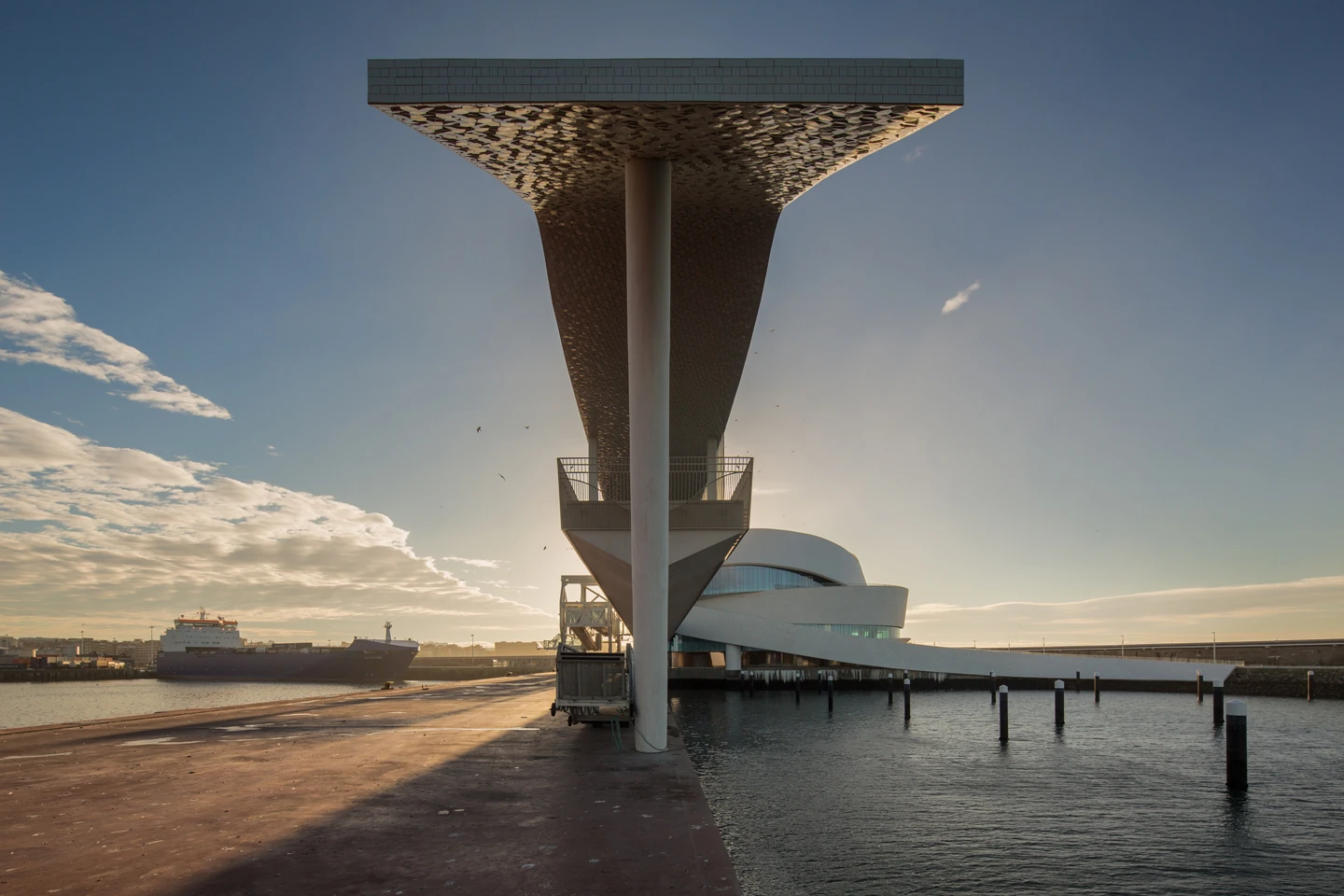
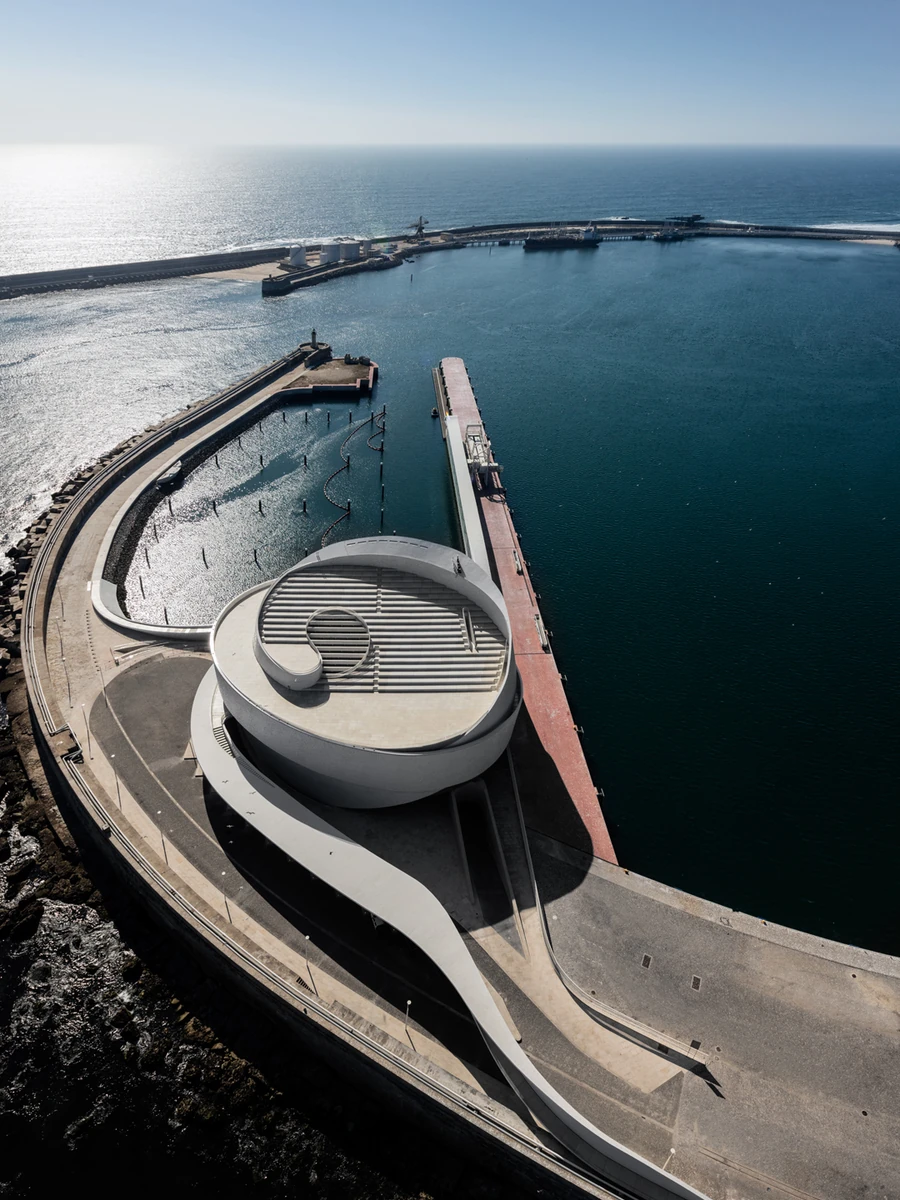
The south jetty of the port of Leixões runs out into the Atlantic and then stops. Matosinhos sits 750 metres back across the water, Porto's Ribeira ten kilometres off by road or by river. At the end of that stone wall the port authority APDL, working with the University of Porto, wanted one building to do two jobs at once: move cruise passengers efficiently, and hand a piece of working port back to the city as ground the public could stand on.

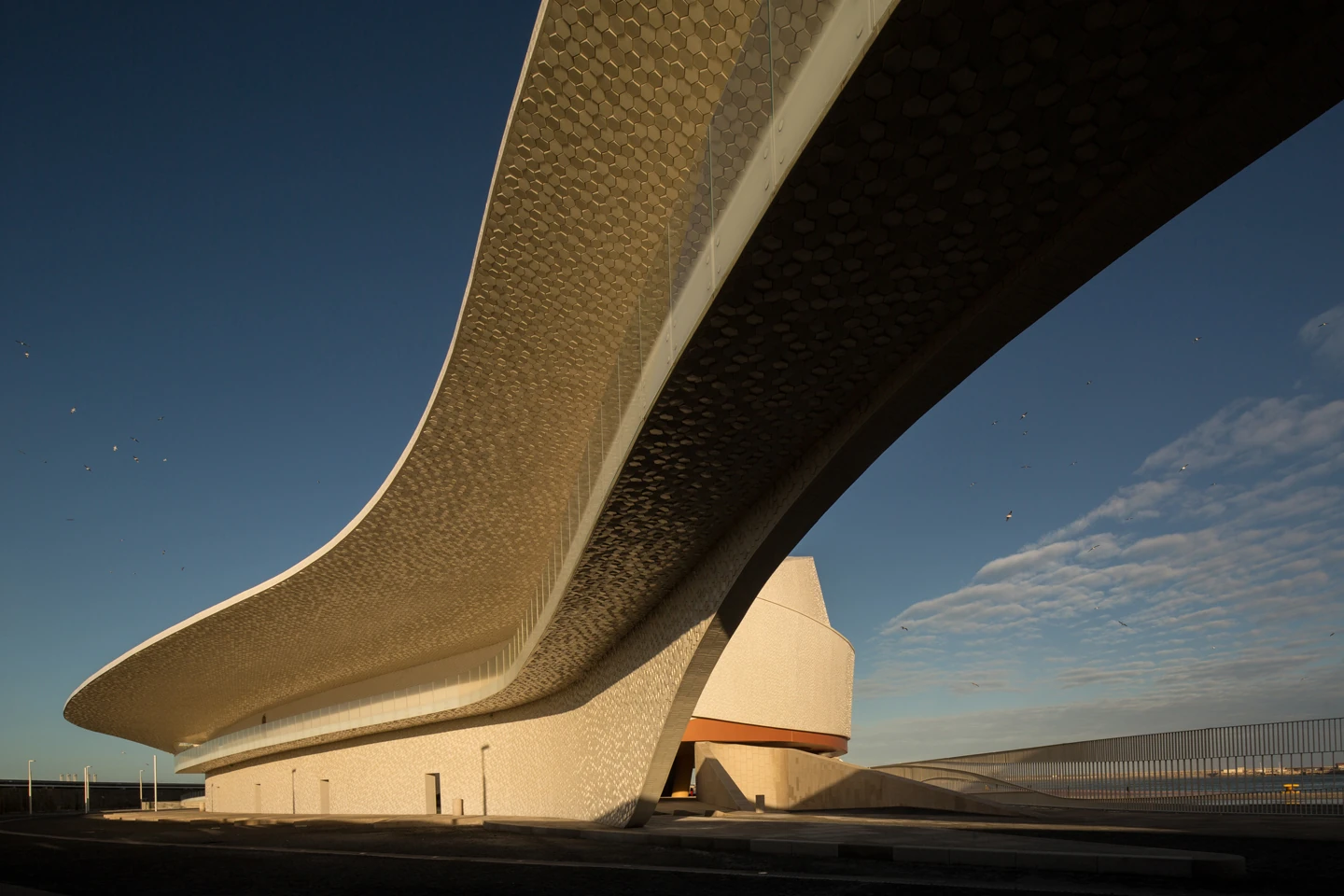
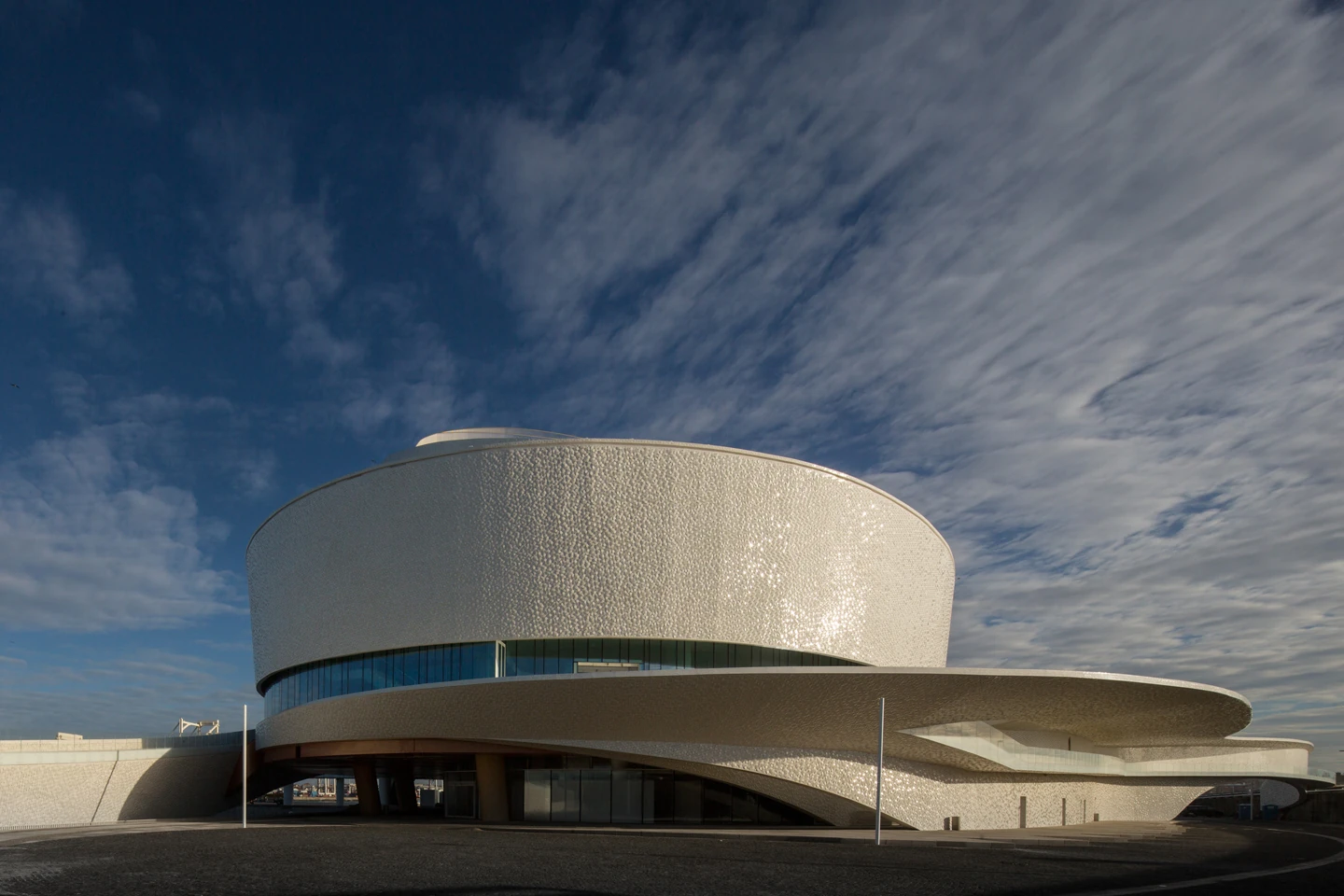
What arrived in 2015 is a coil. The studio describes itself as enchanted by the jetty's curve, and the building answers it by winding: three arms reach out from a drum, and a fourth turns inward as a helical ramp around a core four storeys tall. The outer arms do the sorting. One carries the research level down toward the water, another delivers departing passengers to the cruise gangway, a third becomes the elevated walkway back toward the beach at Matosinhos.

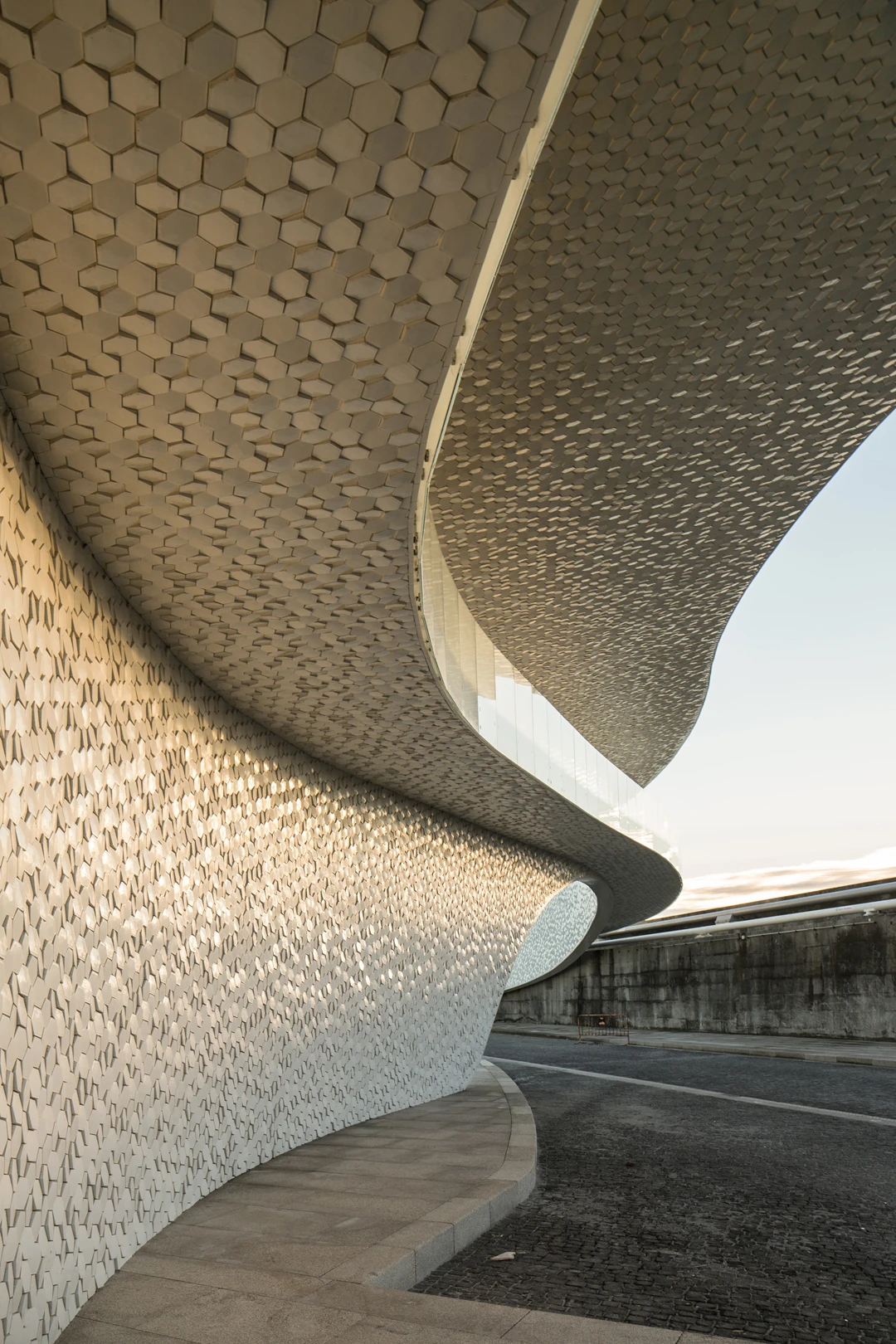
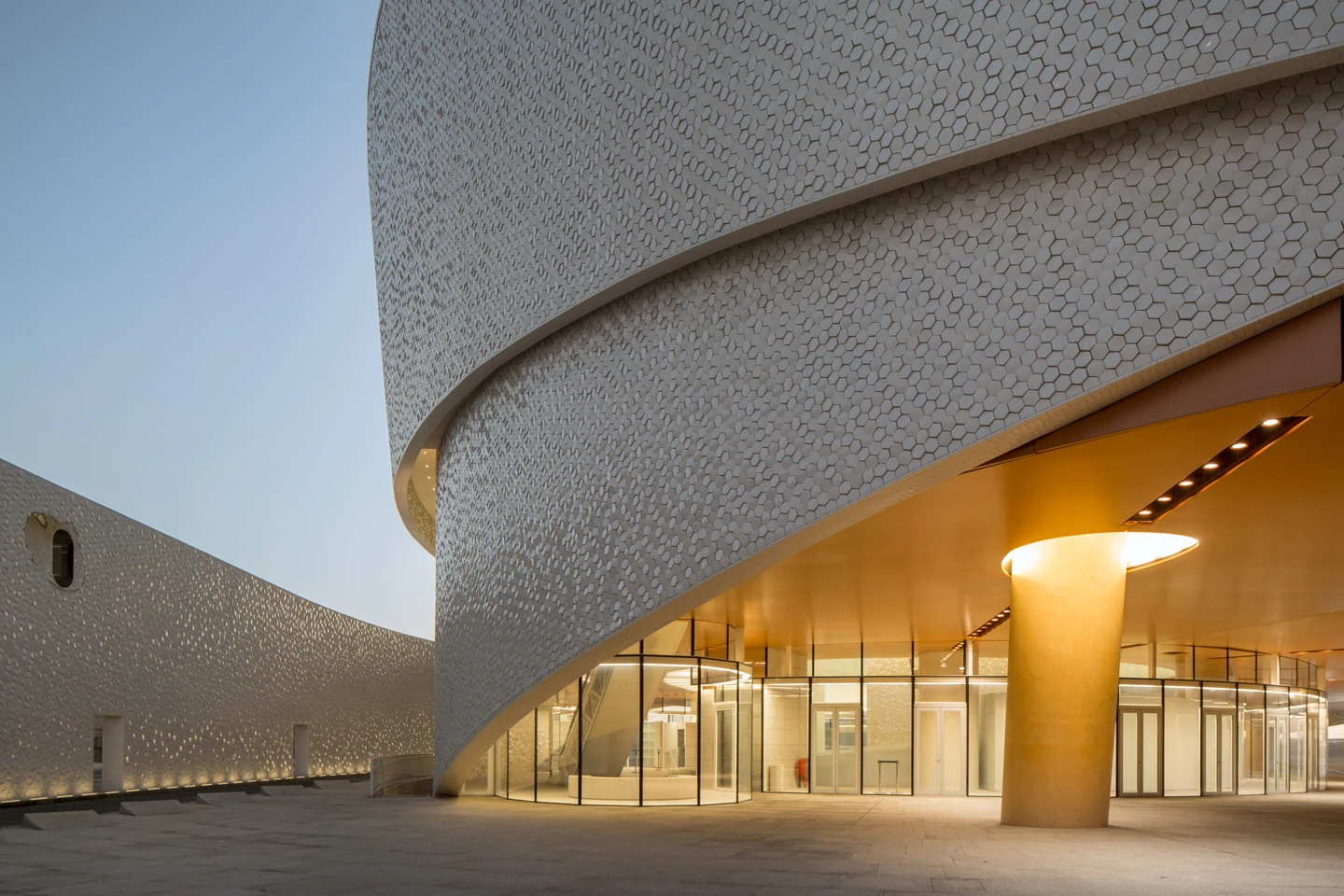
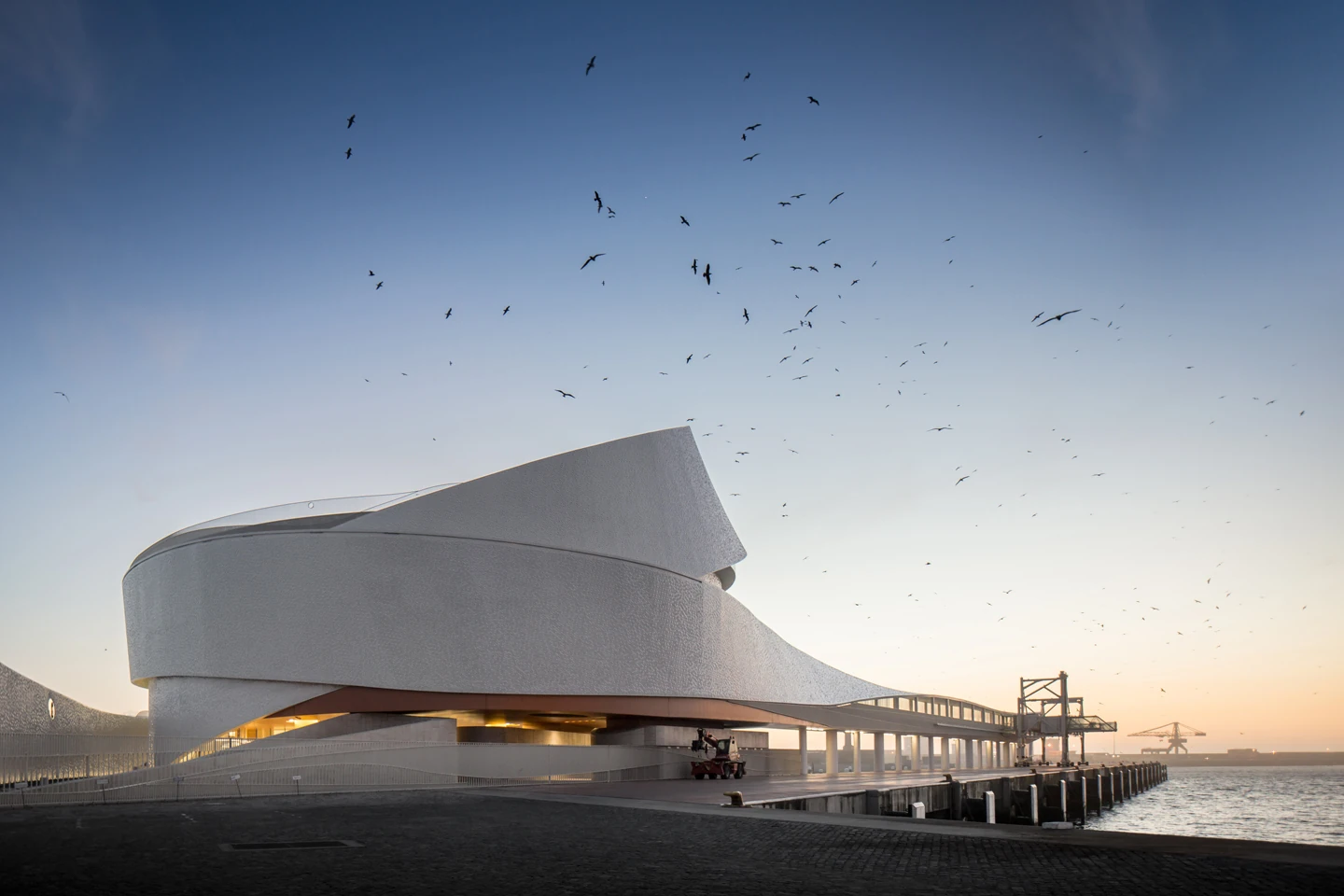
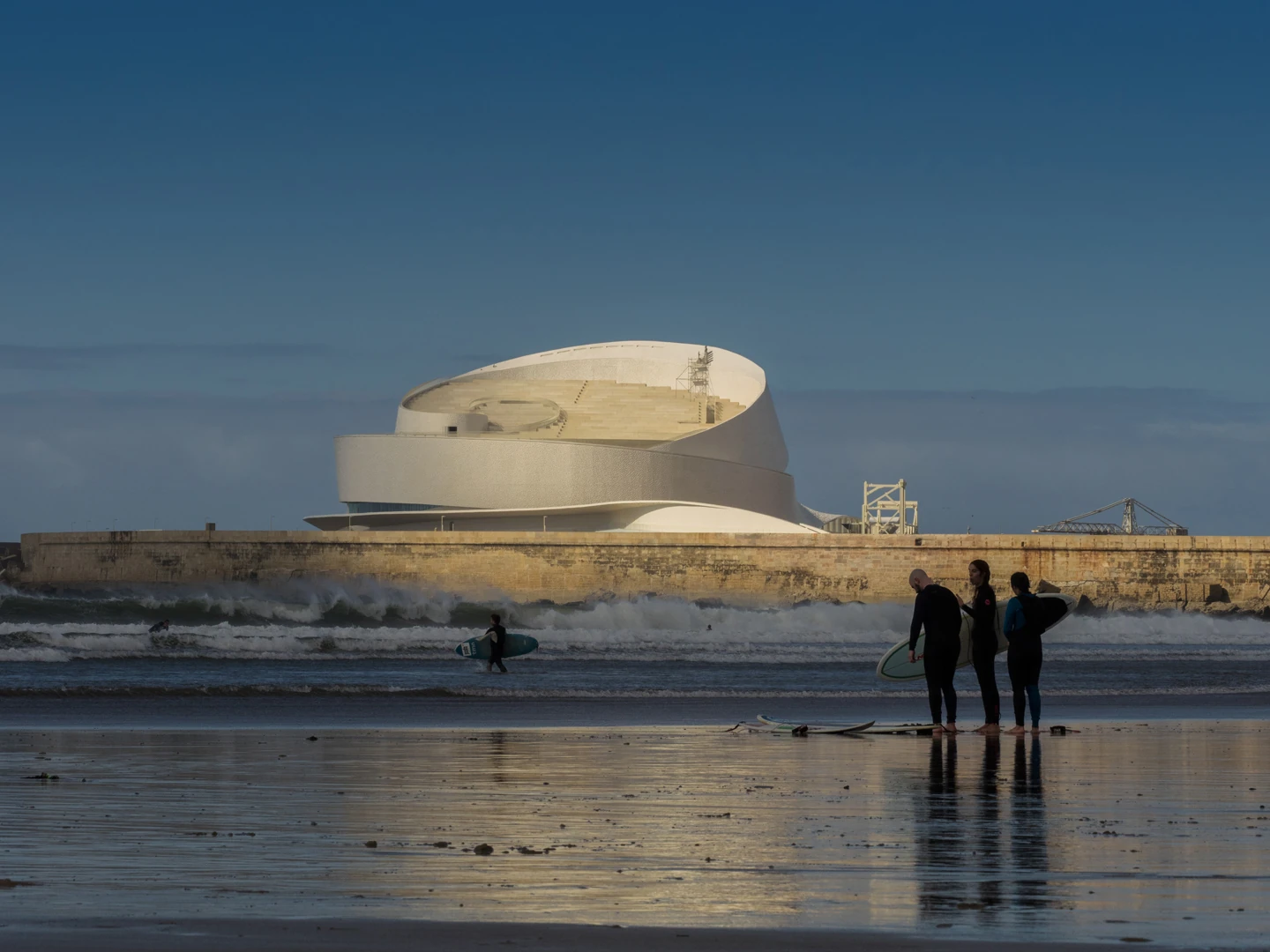
The whole of it is tiled in white hexagonal ceramic, laid over surfaces that curve in two directions at once. From the sand the effect is a single wavy white mass with the weather moving across it. Up close it breaks into thousands of small faceted units, each catching the light at a slightly different angle, and the soffits under the ramps glow amber at low sun. "Closely the arches and its texture appeal to proximity, involve movements and the body, inviting the look and the touch," the studio writes.

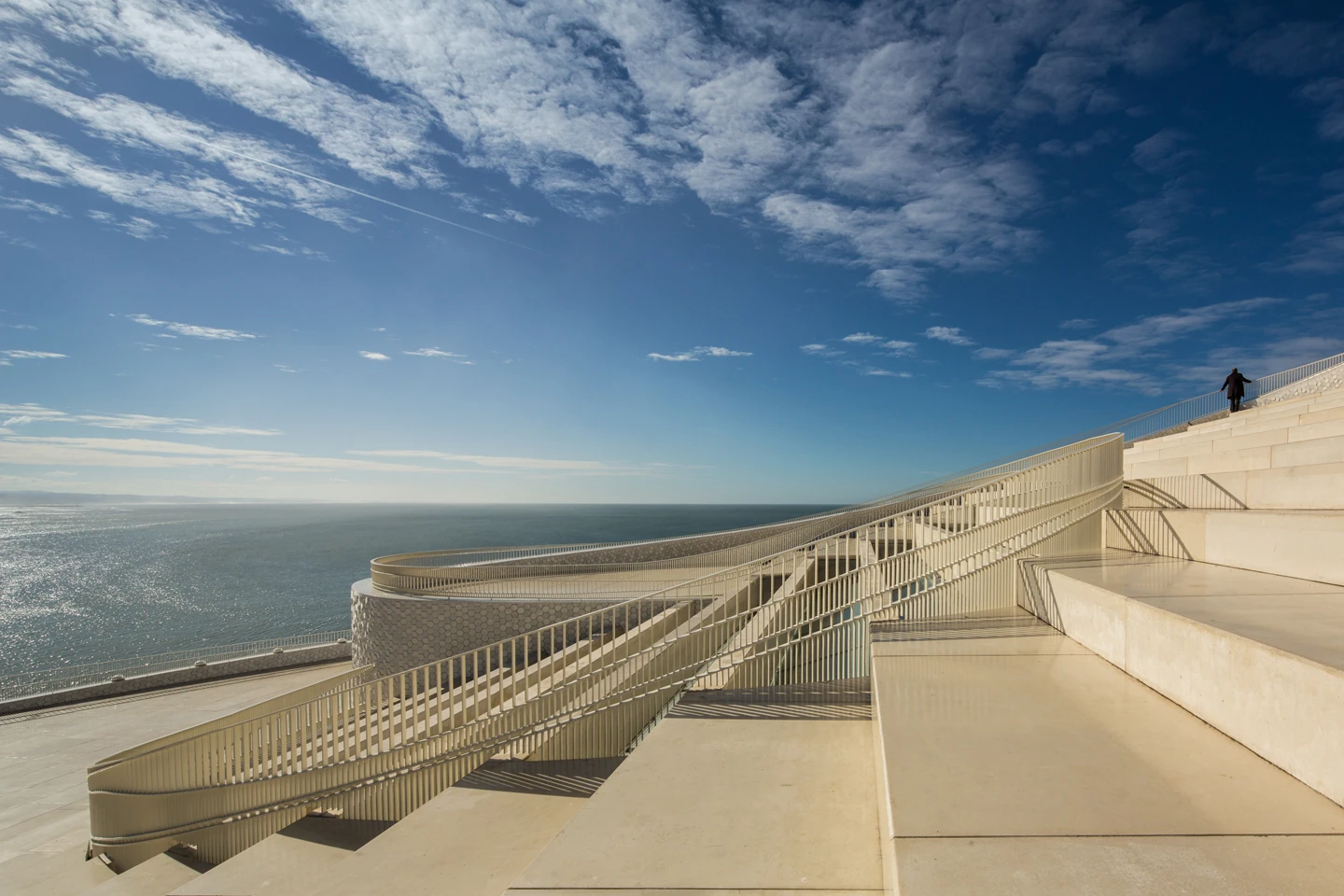
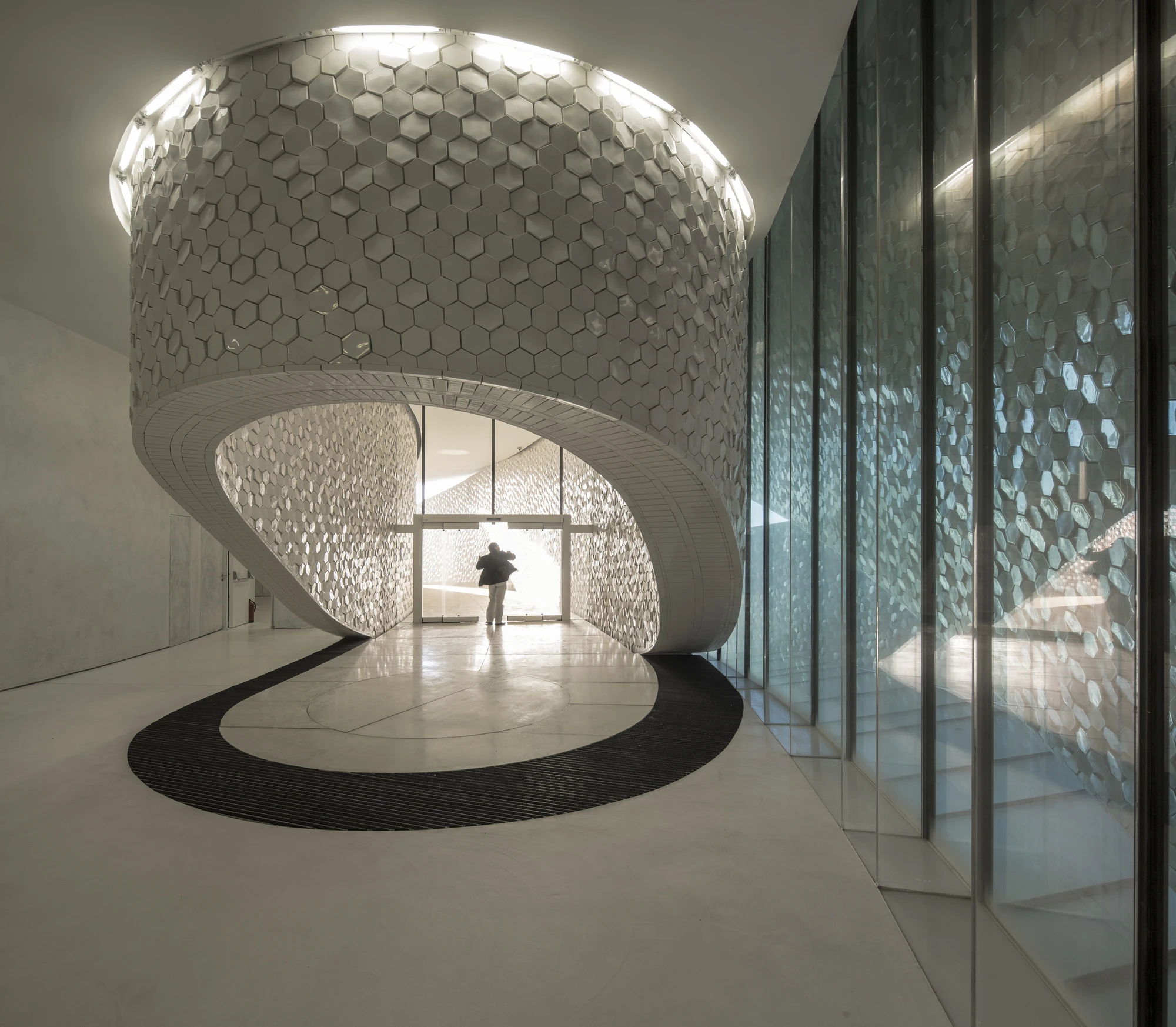
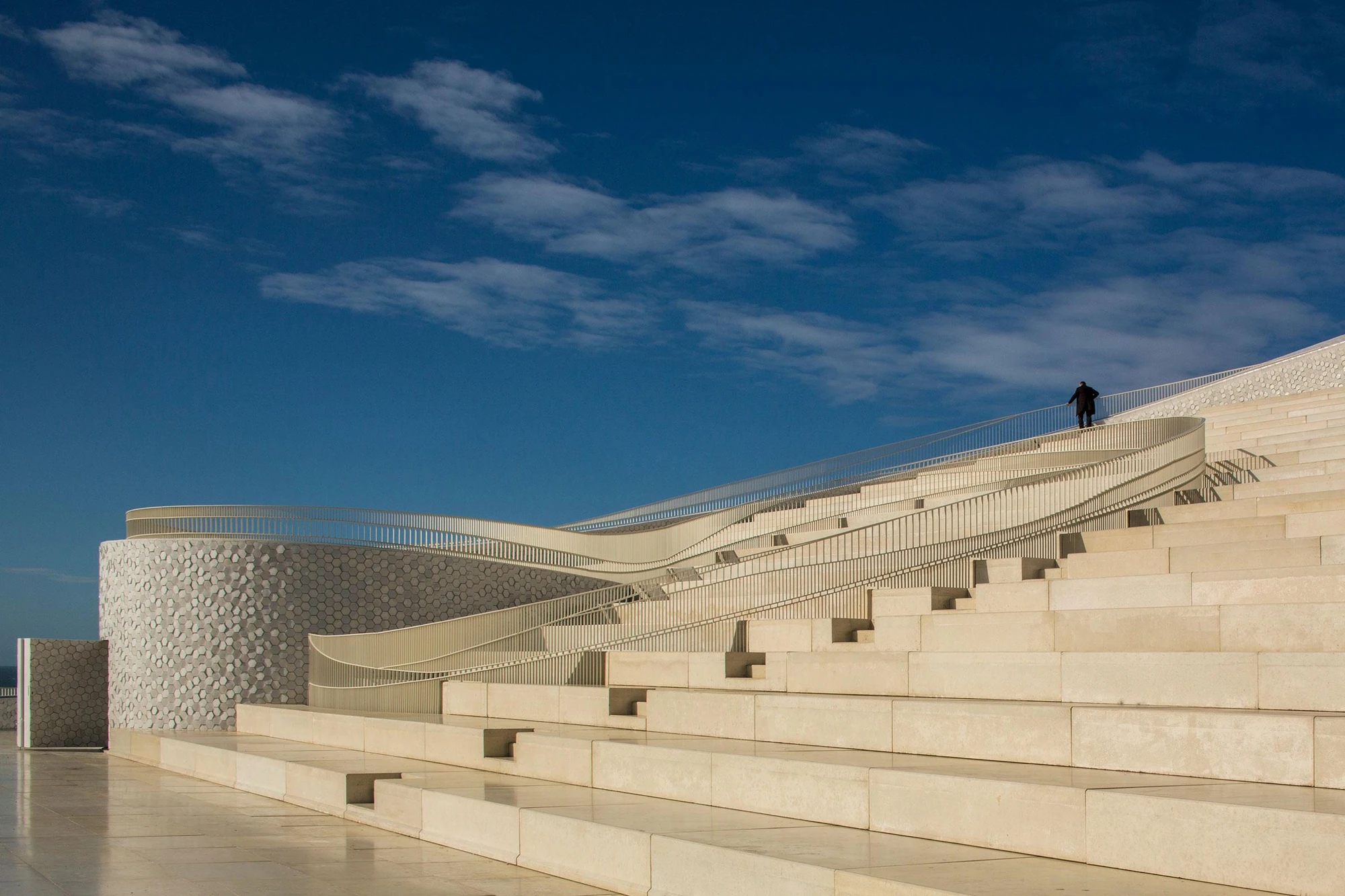
Toward the jetty the building refuses to explain itself. It turns a blank tiled wall to the stone, no windows, nothing to read. The other faces open: a continuous glazed band under the drum, a lobby where the tiled underside of the ramp hangs overhead like a hull, and a roof that anyone can climb. Broad steps of pale stone rise in tiers toward a thin ribbon of railing, and at the top the horizon does the rest.

Inside, the sea and the land are kept on separate levels. Departure and arrival rooms and the marina facilities face the water; the Science and Technology Park of the Sea of the University of Porto, the event rooms, a restaurant and parking sit on the city side. So a passenger waiting for a ship shares a roof with people measuring what the ship is sailing through, which is a rarer arrangement than 17,500 square metres of terminal would suggest.

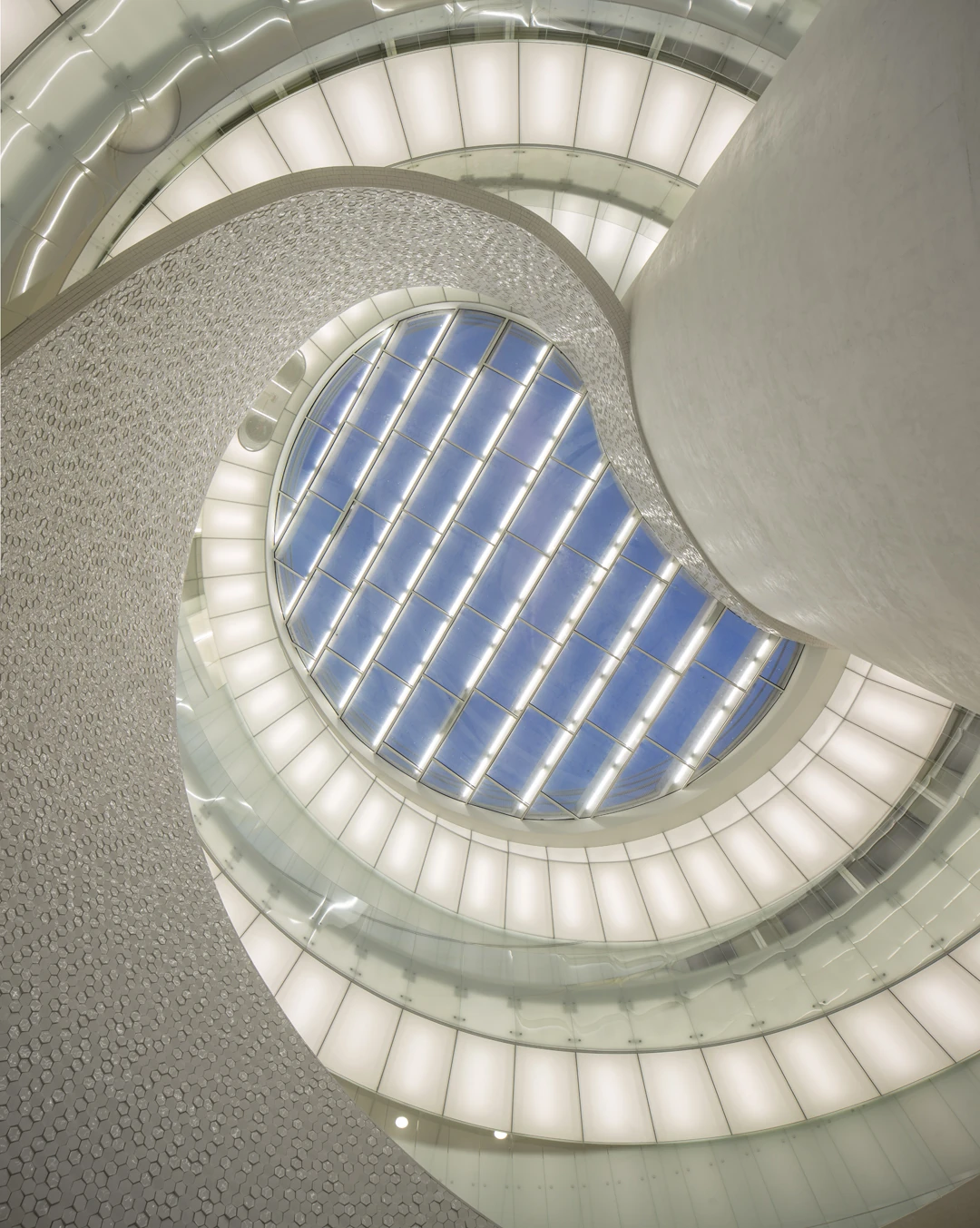
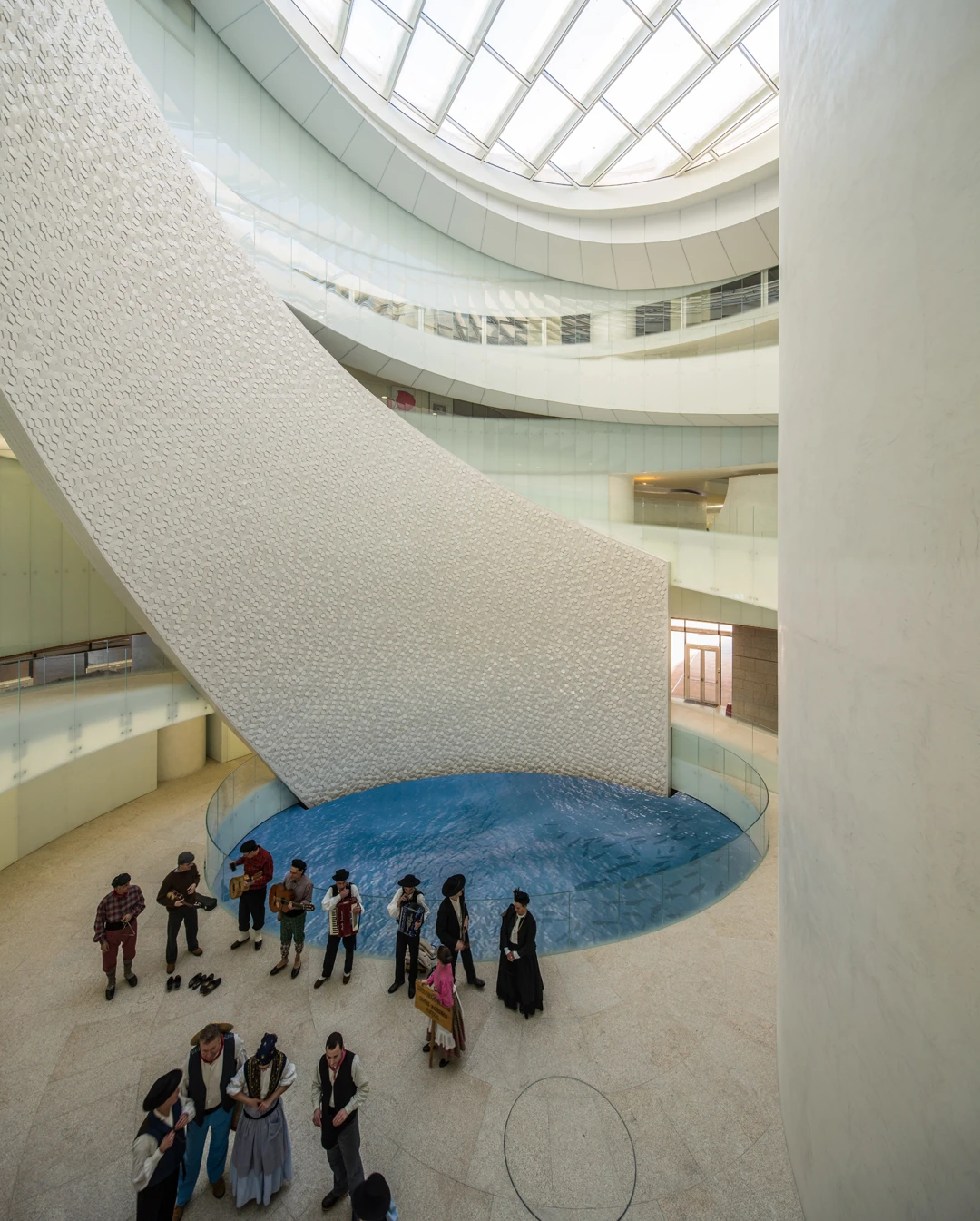
The work came in three stages. The quay and the main building were finished first; the last stage brought the street to the city, the marina, and the shallow pool set at the bottom of the atrium, a disc of blue held under the skylight. On the right afternoon there are musicians standing at its edge in traditional dress, playing to a room that was built to process luggage. The building is smaller than the ships it serves, and it seems entirely aware of that.
Interested in Showcasing Your Work?

If you would like to feature your works on Thisispaper, please visit our Submission page and sign up to Thisispaper+ to submit your work. Once your submission is approved, your work will be showcased to our global audience of 2 million art, architecture, and design professionals and enthusiasts.
No items found.
Less, with more behind it.
Explore guides. Search the archive. Walk the atlas.
Become a Thisispaper+ member today to unlock full access to our magazine, advanced tools, and support our work.
Get two months FREE
with annual subscription
Less, with more behind it.
Explore guides. Search the archive. Walk the atlas.
Become a Thisispaper+ member today to unlock full access to our magazine, advanced tools, and support our work.
Get two months FREE
with annual subscription
No items found.
Alexander Zaxarov
Aug 11, 2026

At the end of the south jetty of the port of Leixões, out in the Atlantic off Matosinhos in Porto, Luís Pedro Silva Arquitecto has coiled a white tiled cruise terminal around a sea sciences research centre.

The south jetty of the port of Leixões runs out into the Atlantic and then stops. Matosinhos sits 750 metres back across the water, Porto's Ribeira ten kilometres off by road or by river. At the end of that stone wall the port authority APDL, working with the University of Porto, wanted one building to do two jobs at once: move cruise passengers efficiently, and hand a piece of working port back to the city as ground the public could stand on.

What arrived in 2015 is a coil. The studio describes itself as enchanted by the jetty's curve, and the building answers it by winding: three arms reach out from a drum, and a fourth turns inward as a helical ramp around a core four storeys tall. The outer arms do the sorting. One carries the research level down toward the water, another delivers departing passengers to the cruise gangway, a third becomes the elevated walkway back toward the beach at Matosinhos.

The whole of it is tiled in white hexagonal ceramic, laid over surfaces that curve in two directions at once. From the sand the effect is a single wavy white mass with the weather moving across it. Up close it breaks into thousands of small faceted units, each catching the light at a slightly different angle, and the soffits under the ramps glow amber at low sun. "Closely the arches and its texture appeal to proximity, involve movements and the body, inviting the look and the touch," the studio writes.

Toward the jetty the building refuses to explain itself. It turns a blank tiled wall to the stone, no windows, nothing to read. The other faces open: a continuous glazed band under the drum, a lobby where the tiled underside of the ramp hangs overhead like a hull, and a roof that anyone can climb. Broad steps of pale stone rise in tiers toward a thin ribbon of railing, and at the top the horizon does the rest.

Inside, the sea and the land are kept on separate levels. Departure and arrival rooms and the marina facilities face the water; the Science and Technology Park of the Sea of the University of Porto, the event rooms, a restaurant and parking sit on the city side. So a passenger waiting for a ship shares a roof with people measuring what the ship is sailing through, which is a rarer arrangement than 17,500 square metres of terminal would suggest.

The work came in three stages. The quay and the main building were finished first; the last stage brought the street to the city, the marina, and the shallow pool set at the bottom of the atrium, a disc of blue held under the skylight. On the right afternoon there are musicians standing at its edge in traditional dress, playing to a room that was built to process luggage. The building is smaller than the ships it serves, and it seems entirely aware of that.
Interested in Showcasing Your Work?

If you would like to feature your works on Thisispaper, please visit our Submission page and subscribe to Thisispaper+. Once your submission is approved, your work will be showcased to our global audience of 2 million art, architecture, and design professionals and enthusiasts.
Thisispaper+
Porto Guide
10+ Projects
Web Access
Link to Maps
Porto is small enough that architecture, design and art are not separate scenes with separate audiences, and the reputation it carries runs ahead of its size. Its cultural life keeps moving into what the city stopped using, a park on a former estate on one bank, warehouses and a cookware factory on the other.
A working port that reads sound and light as readily as it reads a facade.
Explore
Porto Guide

Join Thisispaper+
Unlock access to 2500 stories, curated guides + editions, and share your work with a global network of architects, artists and designers who are shaping the future.
Get two months FREE
with annual subscription
Travel Guides
Immerse yourself in timeless destinations, hidden gems, and creative spaces—curated by humans, not algorithms.
Explore All Guides +
Submission Module
Submit your project and gain the chance to showcase your work to our worldwide audience of over 2M architects, designers, artists, and curious minds.
Learn More+
Curated Editions
Dive deeper into carefully curated editions, designed to feed your curiosity and foster exploration.
Off-the-Grid
Jutaku
Sacral Journey
minimum
The New Chair
Explore All Editions +
Atlas
A new and interactive way to explore the most inspiring places around the world.
Interactive map
Linked to articles
450+ curated locations
Google + Apple directions
Smart filters
Subscribe to Explore+
Become a Thisispaper+ member today to unlock full access to our magazine, submit your project and support our work.
Join Thisispaper+Join Thisispaper+
€9/month
Get two months FREE
with annual subscription