On the narrow San Mateo Street in Madrid, Lluís Alexandre Casanovas Blanco lines Lawrence Bookshop with birch plywood plinths that sell artists' books and hold artworks at once.
Lawrence is a bookshop and exhibition space for artists' books in central Madrid, and a project of the visual artist Alejandro Cesarco, whose practice turns on editing and reproduction. Cesarco also directs Art Resources Transfer, the New York non-profit that produces and distributes artists' books to widen access to art and literacy. The shop takes its name from the late conceptual artist Lawrence Weiner, a friend of Cesarco who built entire works from text and typography. It joins a lineage of artist-run bookshops that runs through Ulises Carrión's Other Books and So in Amsterdam, Printed Matter in New York, and Art Metropole in Toronto.
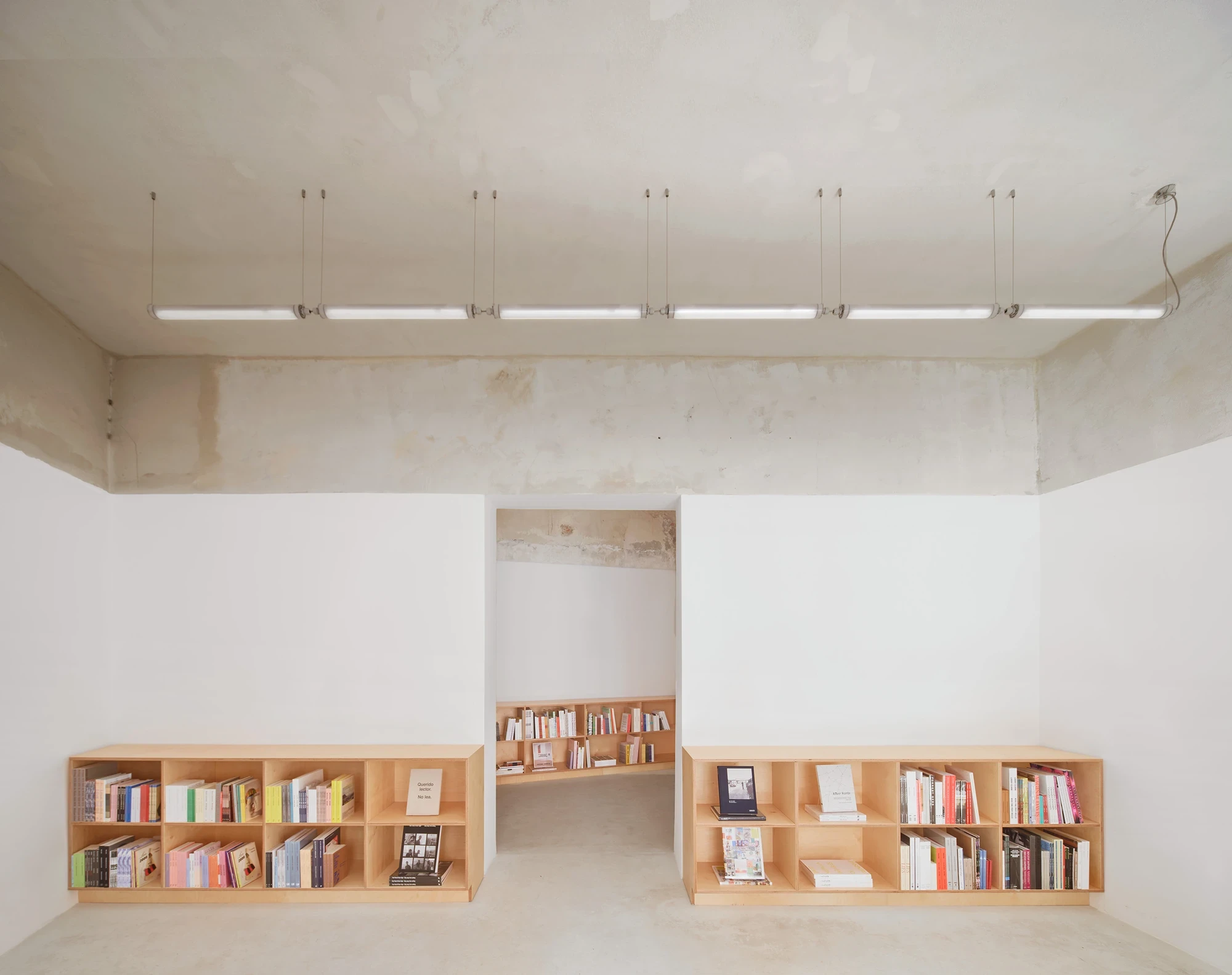
The unit on San Mateo Street has been an electrical supply store, a stationery shop, and, most recently, an independent gallery. Casanovas Blanco keeps the original load-bearing wall that splits the plan and reworks everything around it, closing two lateral openings and cutting a single wide aperture through the centre. The move stitches the entrance to what had been an isolated, poorly lit back room, so the shopfront and the rear now read as one continuous space.
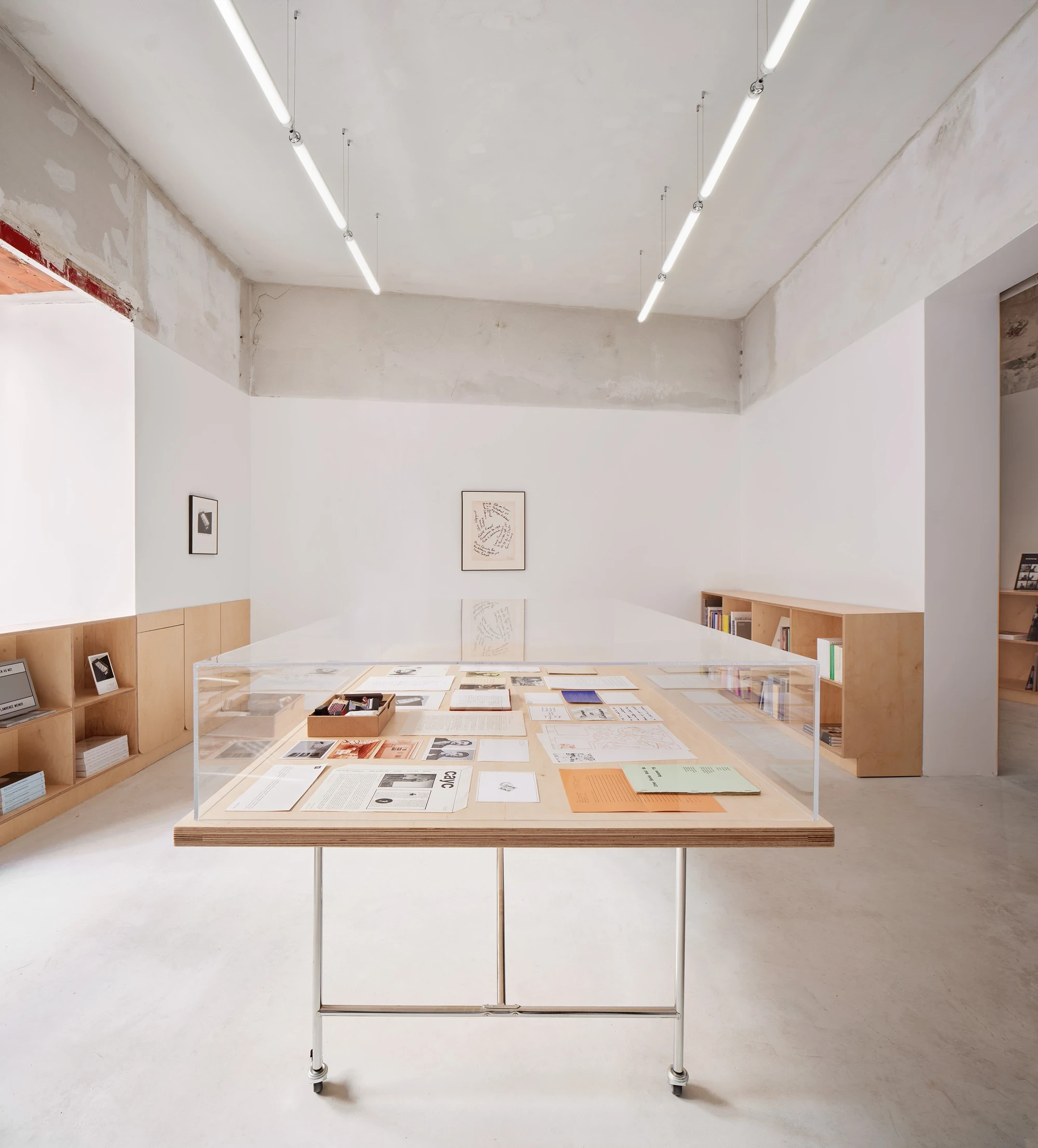
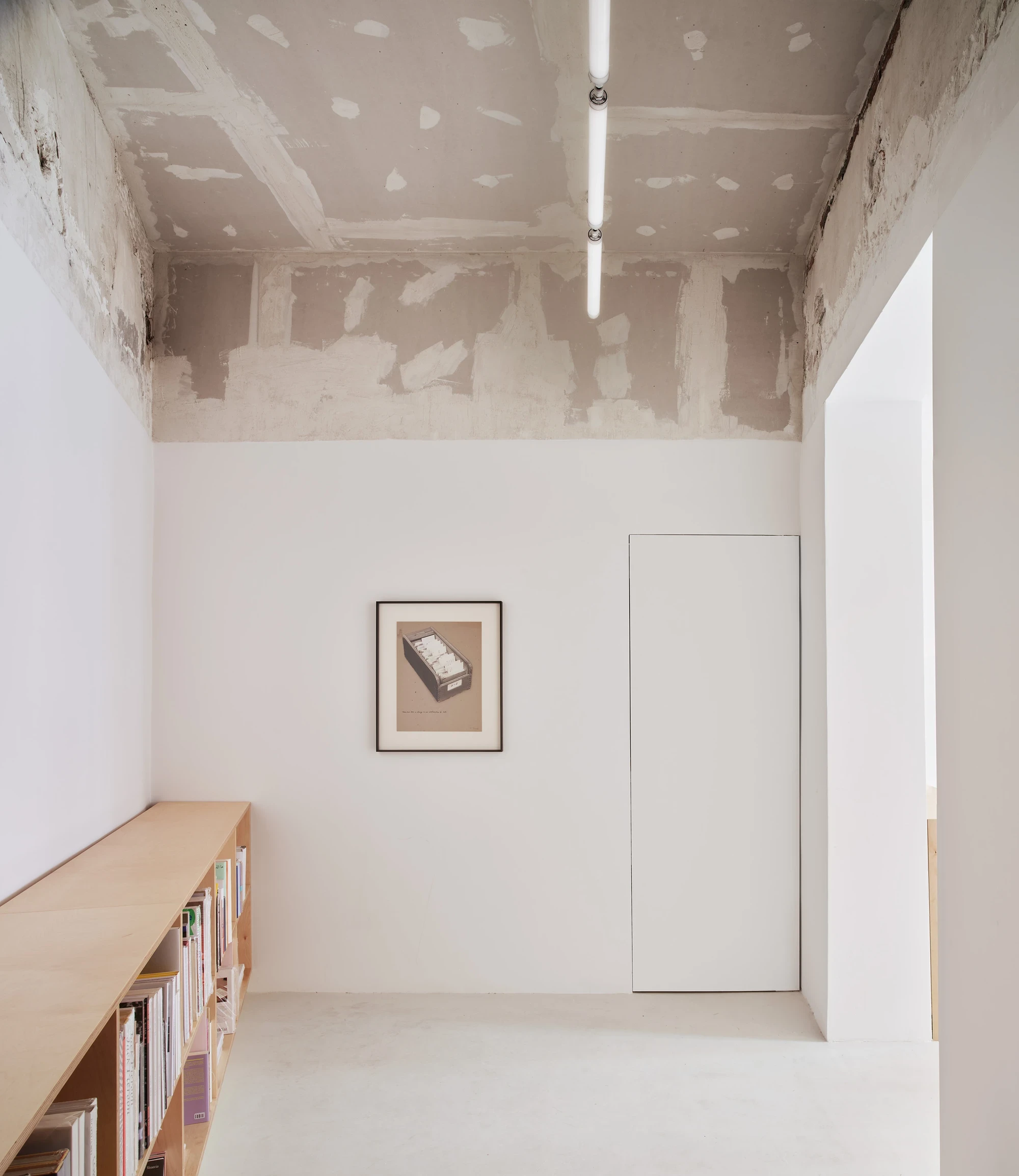
Money was tight, and the design makes a virtue of it. Walls were repaired and plastered only to a height of 2.6 metres, enough to give artworks a neutral ground; above that line the existing walls and ceiling stay as found, their accumulated layers left exposed. Rows of tubular fluorescent lights hang from the slab on thin cables, washing the room in an even, shadowless light. The failing floor is sealed under a pale grey resin. Everything of use is made from richly grained birch plywood, cut and assembled on site so the boards meet the walls exactly, their edges joined on the bevel.
The plywood resolves into a sequence of low plinths whose thresholds sort the shop's activities. Along the storefront, a tiered rack faces the street and, on its inner side, folds into a wall of shelving with hidden drop-down tables for work or display. A broken shelf frames the central opening; another closes off a more secluded reading corner at the back. Their tops sit just above table height, ready to carry a stack of publications or a single artwork. A long table on castors holds the middle of the room, its acrylic vitrine laid with printed matter; wheel it to the rear and the entrance clears for a book launch or a performance.
The street keeps its evidence. The old door and frame, painted a scuffed cadmium red, were left untouched, and above them the name Lawrence is set in Weiner's own typeface, hand-painted on black mirrored glass by a local sign painter in the manner of an old shopfront. What results is a room that refuses to sort selling from showing. With almost nothing, and a set of furniture that keeps changing its job, the bookshop lets art circulate the way its founder always wanted it to, one book at a time.