Thisispaper Community
Join today.
Enter your email address to receive the latest news on emerging art, design, lifestyle and tech from Thisispaper, delivered straight to your inbox.
Oops! Something went wrong while submitting the form.
Instant access to new channels
The top stories curated daily
Weekly roundups of what's important
Original features and deep dives
Exclusive community features
London Guide
under the patronage of
Serpentine Pavilion 2026 by LANZA atelier
Alexander Zaxarov
Jun 8, 2026

On the lawn beside the Serpentine South Gallery in London, Mexico City studio LANZA atelier builds a serpentine, a 2026 pavilion of red brick walls that bend rather than stand straight.

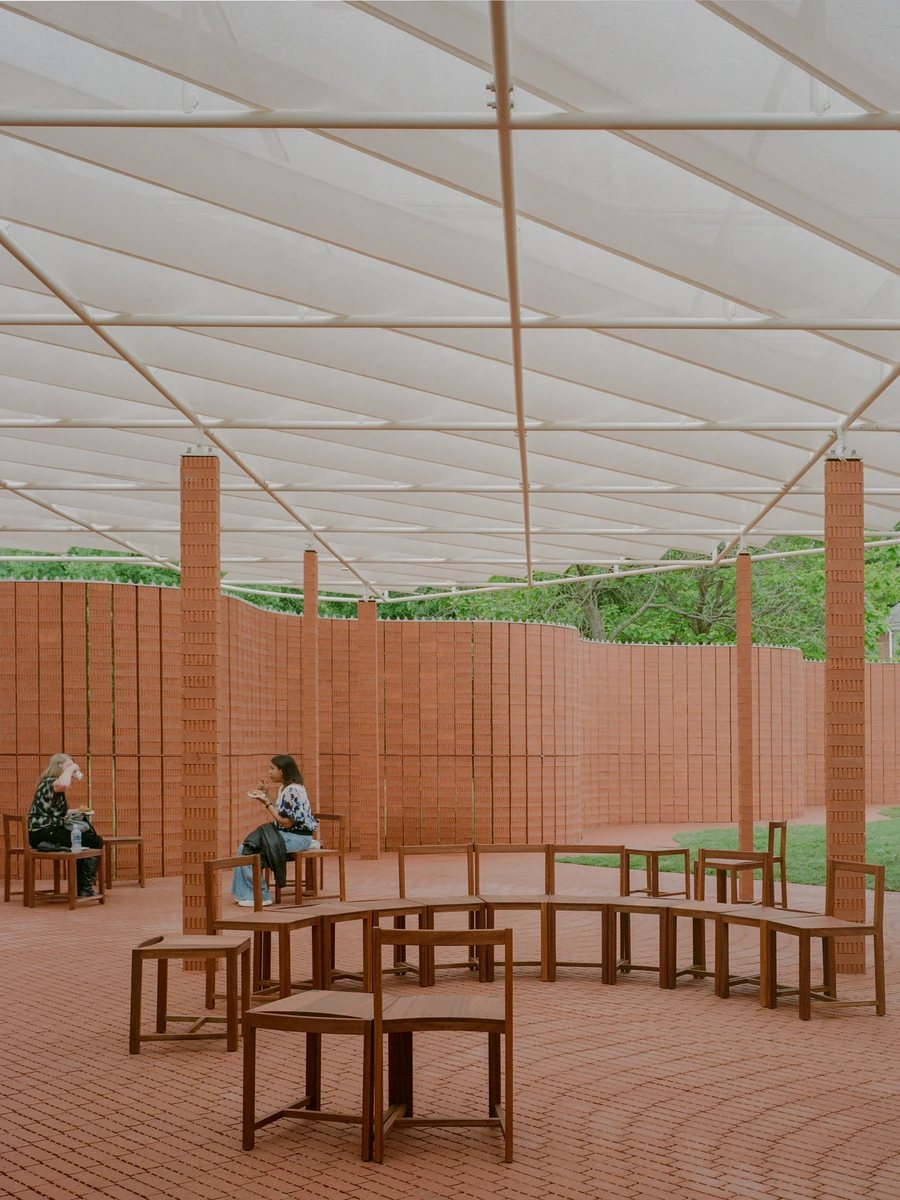
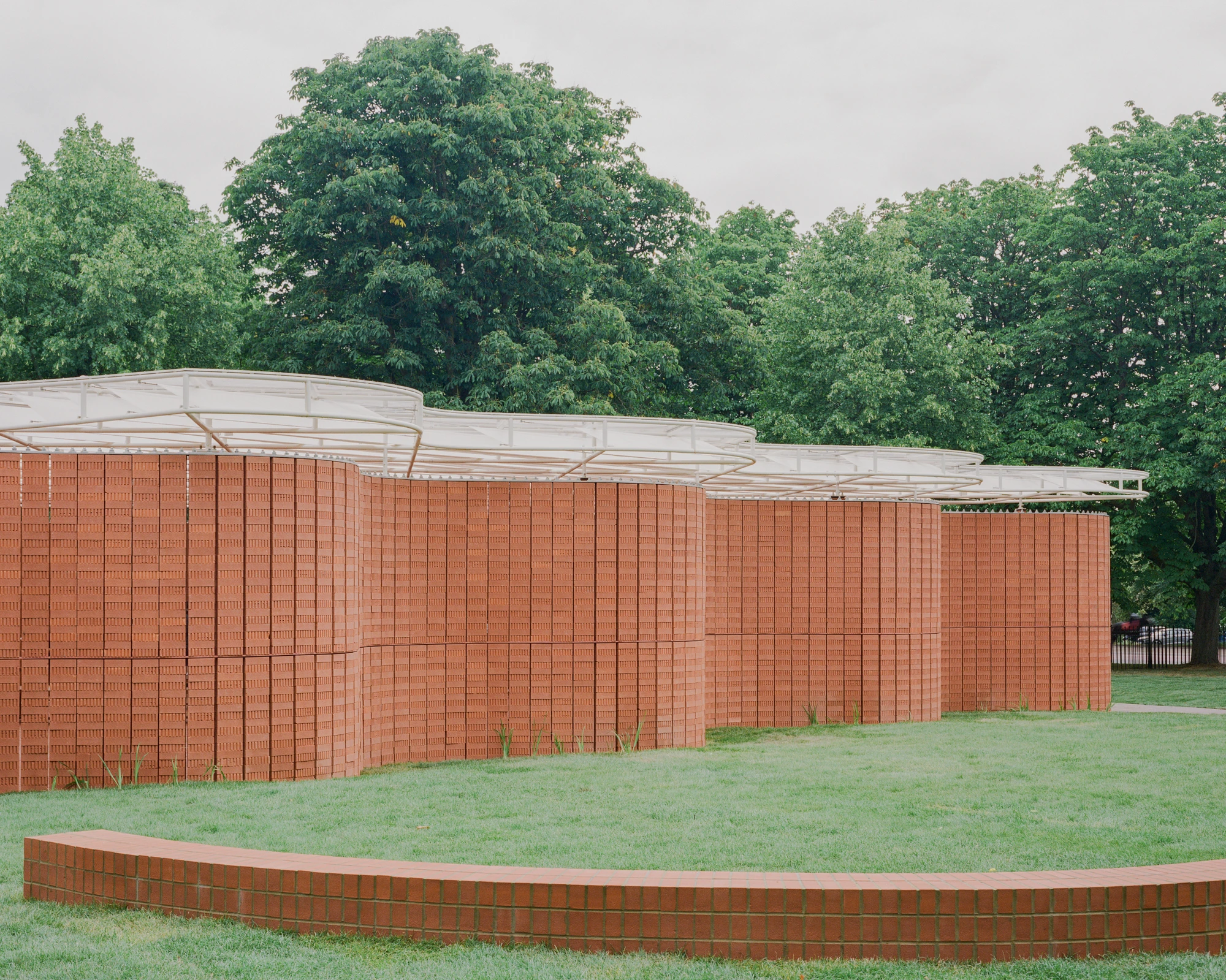
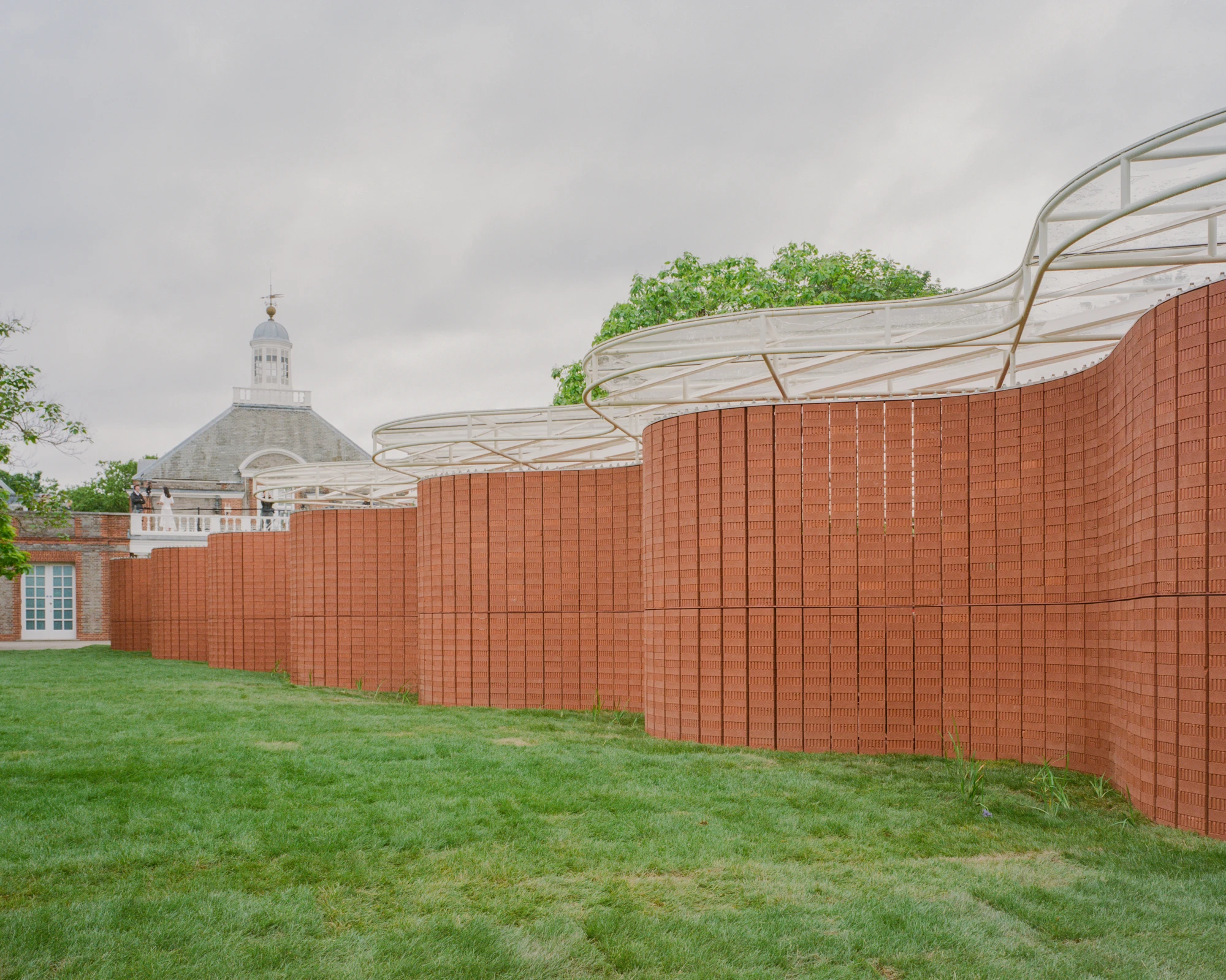
The 2026 Serpentine Pavilion photographed by Lorenzo Zandri takes its name twice over. From the lake whose curve gave the gallery its title, and from the English crinkle-crankle wall, a garden enclosure that wins its rigidity from waving rather than from mass. LANZA atelier, the Mexico City studio founded by Isabel Abascal and Alessandro Arienzo, treats the doubled reference as the project's whole argument. A wall that needs fewer bricks because it refuses to go straight.

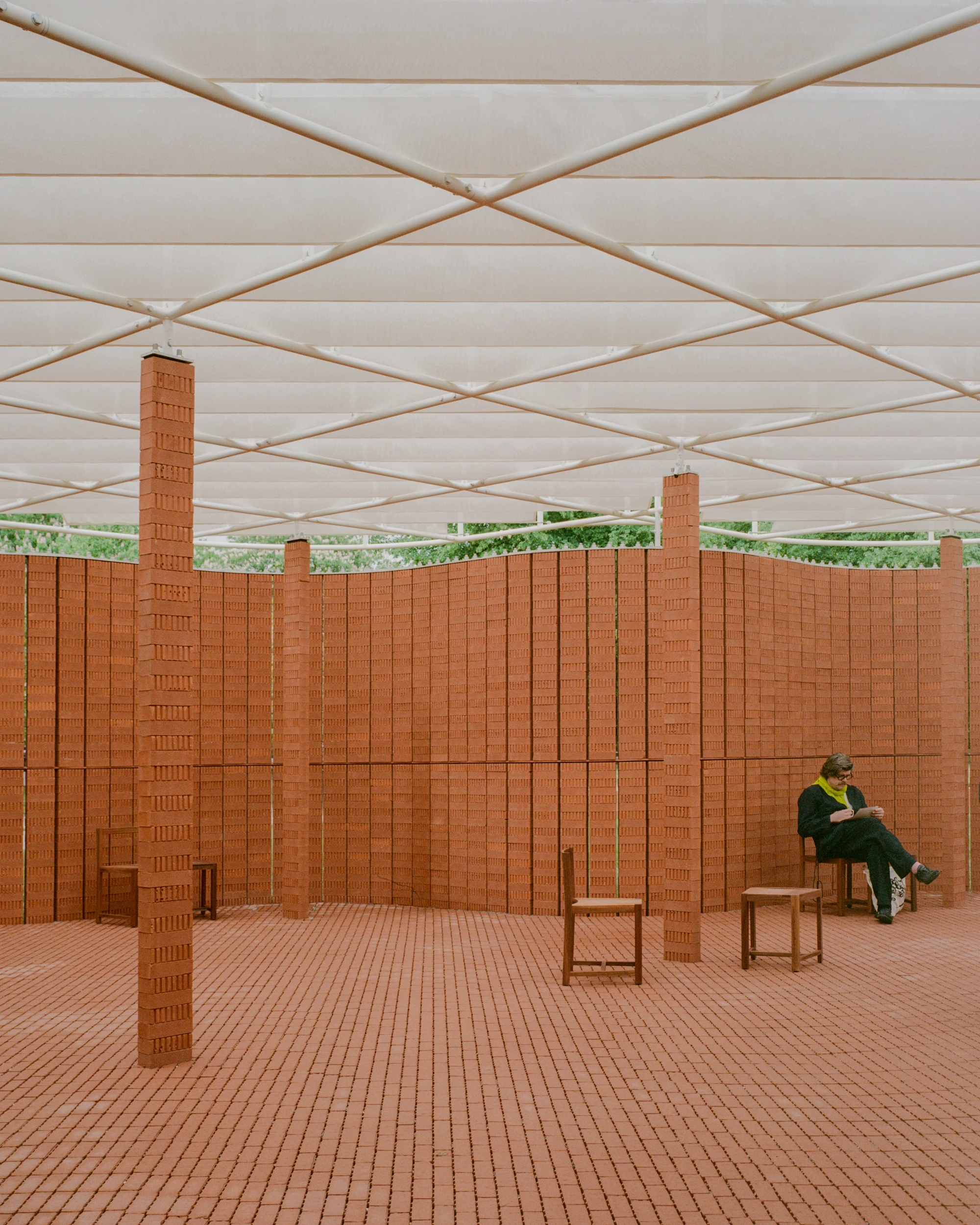
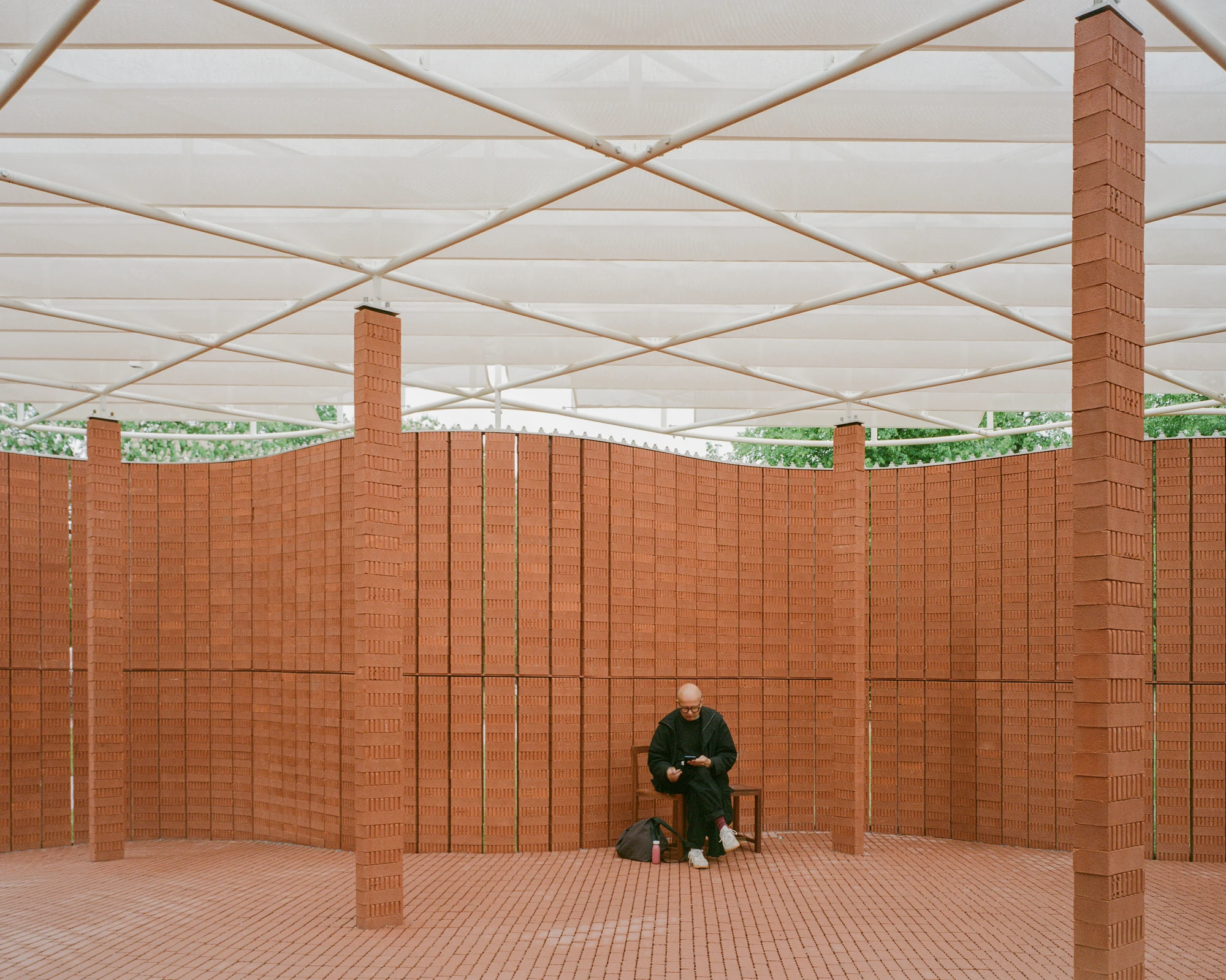
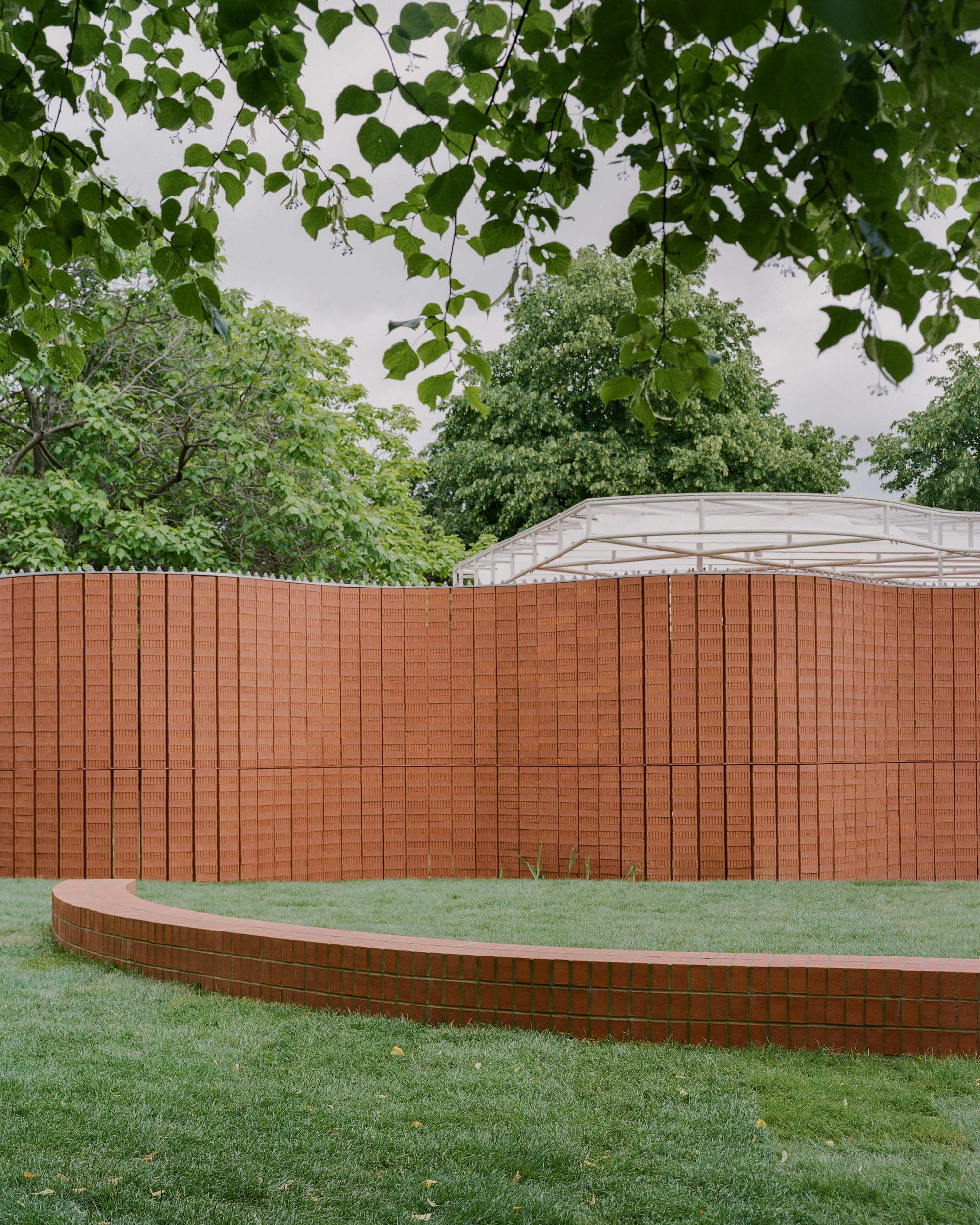
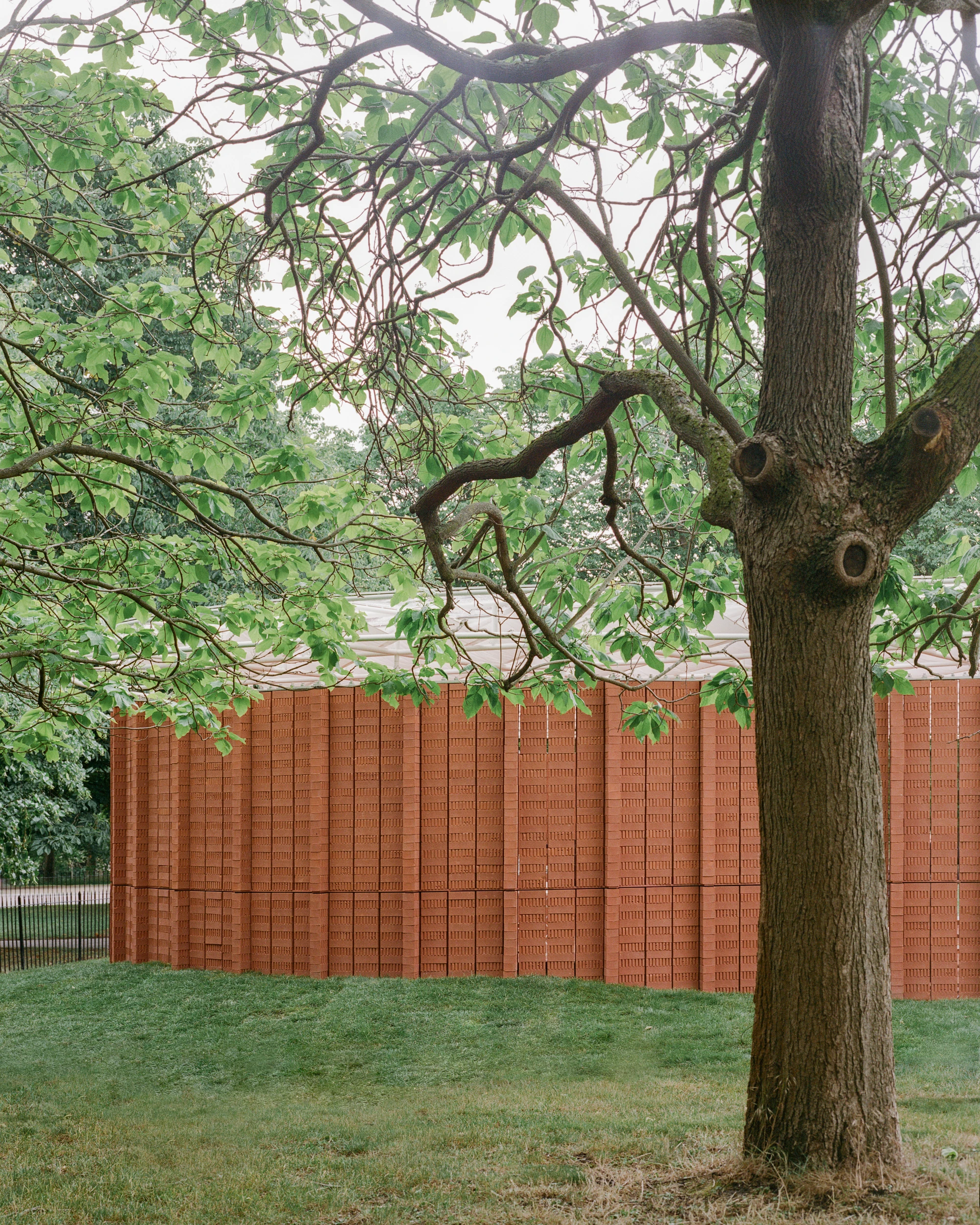
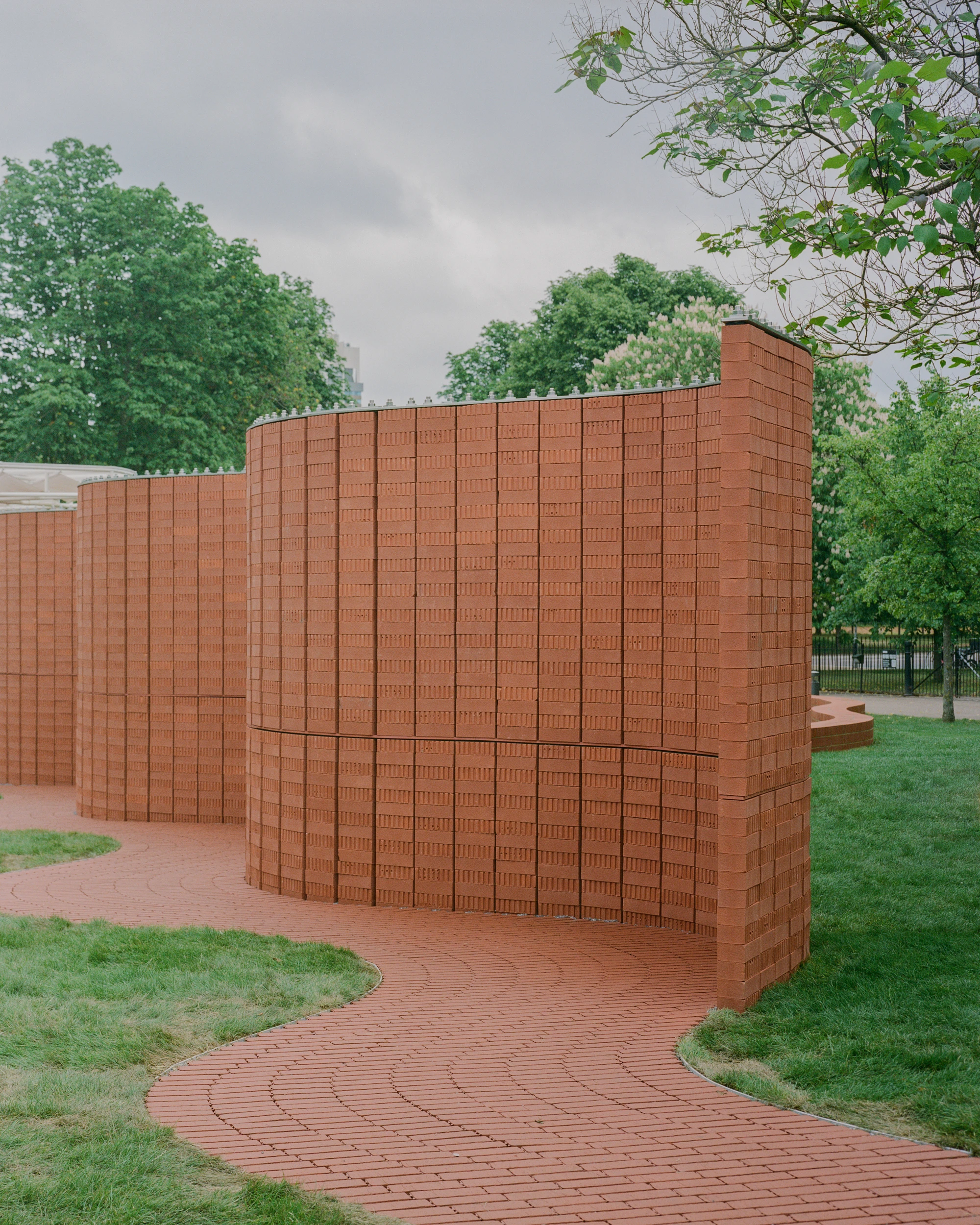
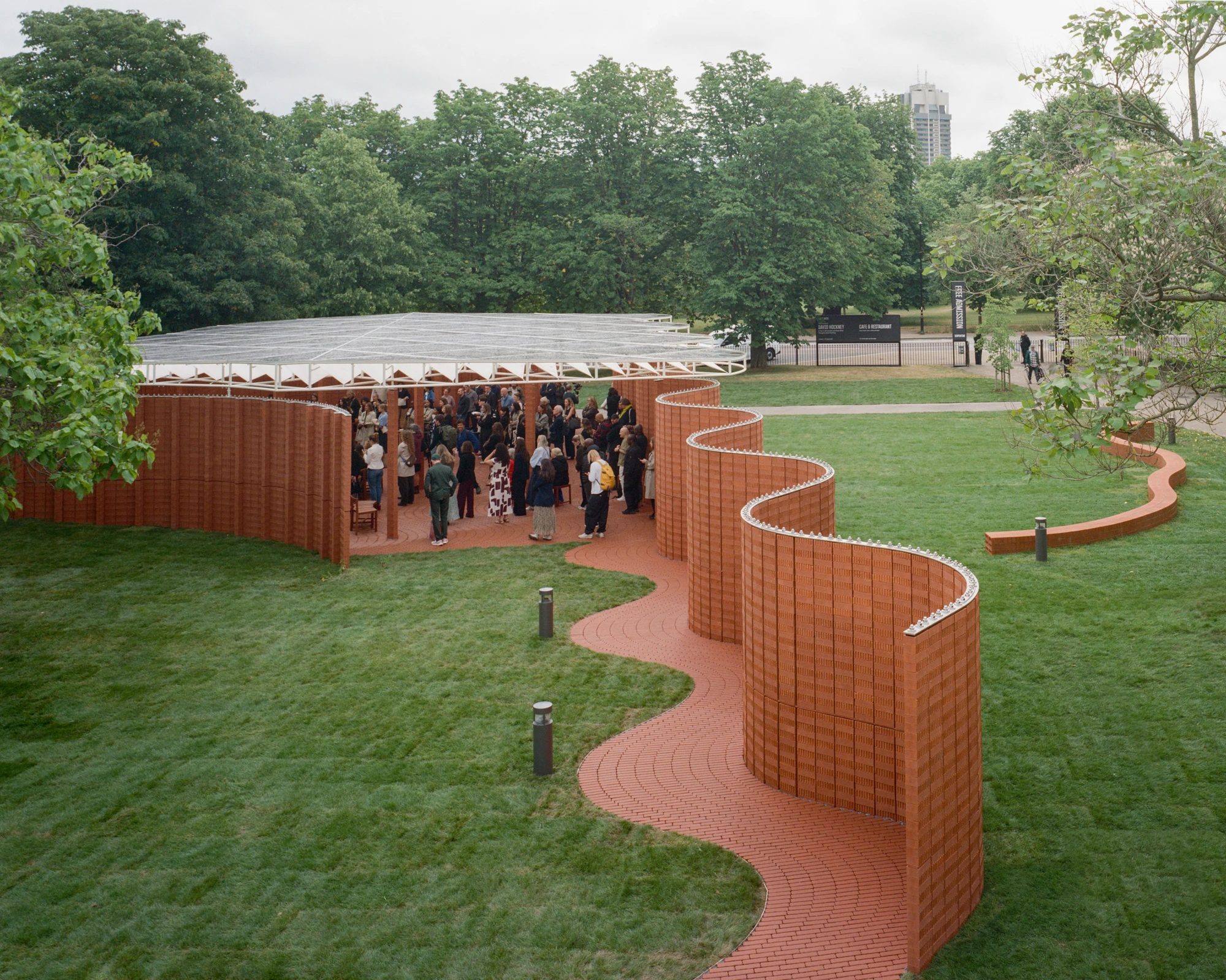
Two long walls do most of the work. The south wall is the crinkle-crankle proper, a single thickness of red brick that snakes across the lawn and earns its stability from geometry rather than reinforcement. The north wall answers it, bending the other way to thread around an existing tree canopy. Together they enclose a room that has no corners and no obvious front, only a slow procession from the brick path that uncoils across the grass.

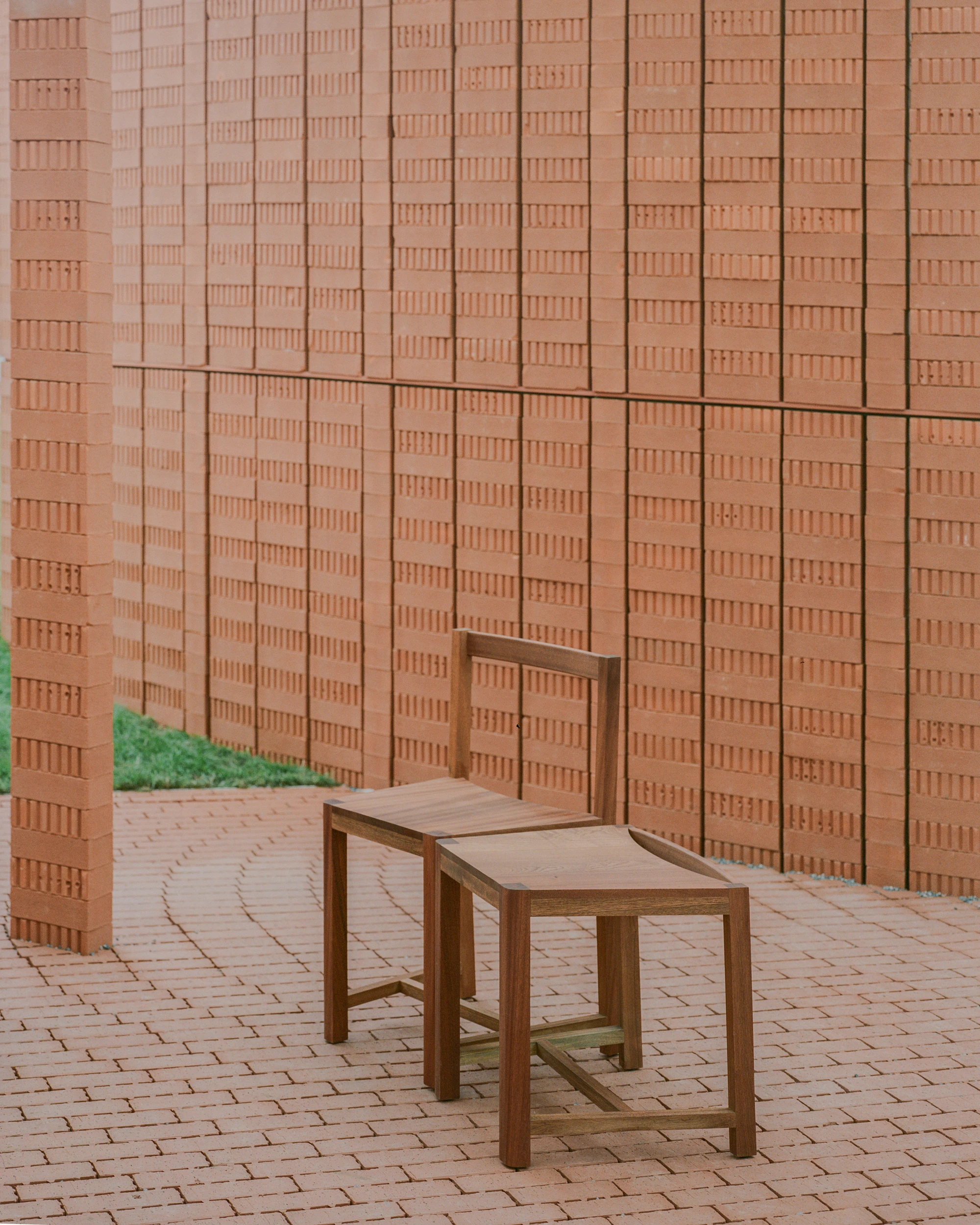
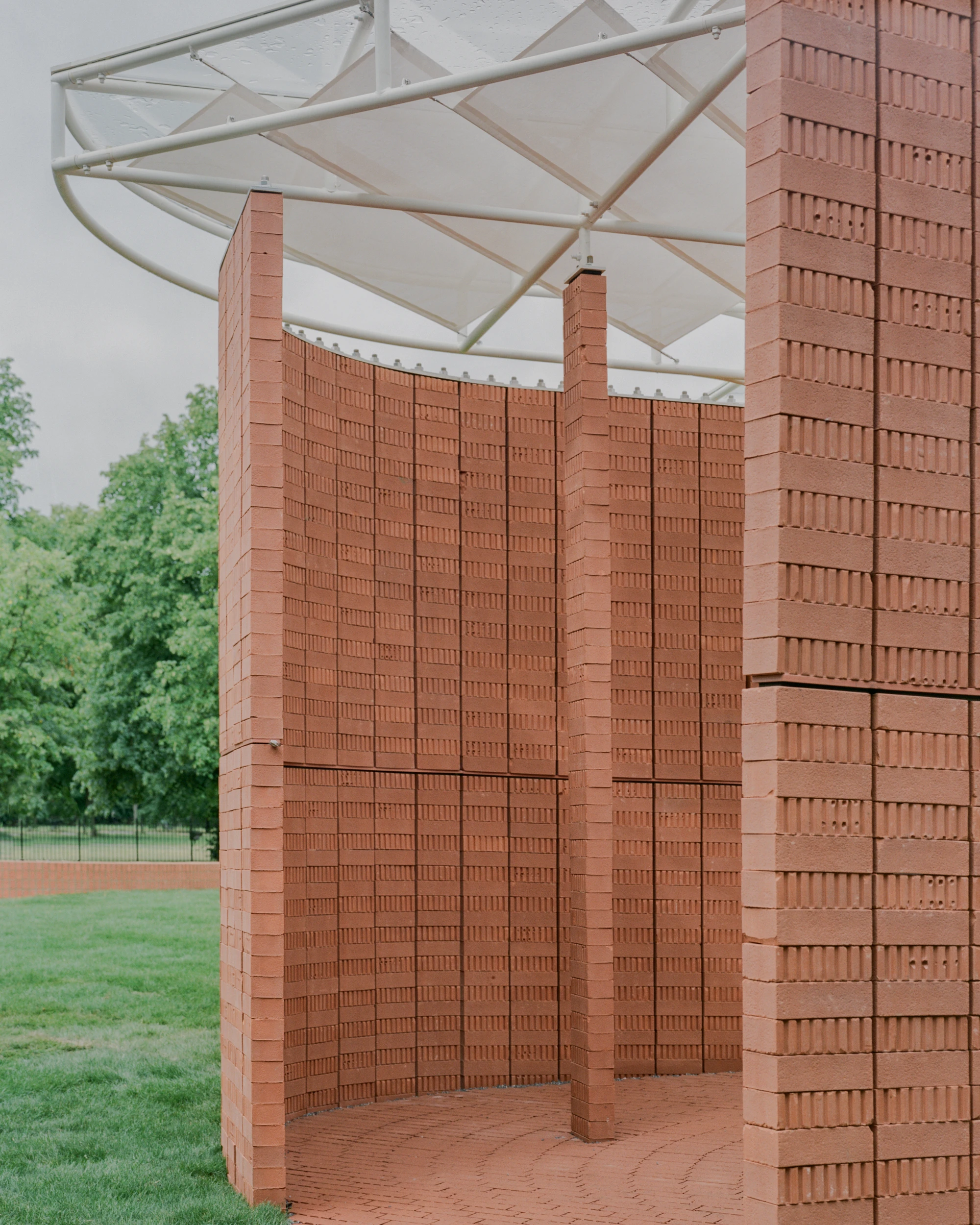
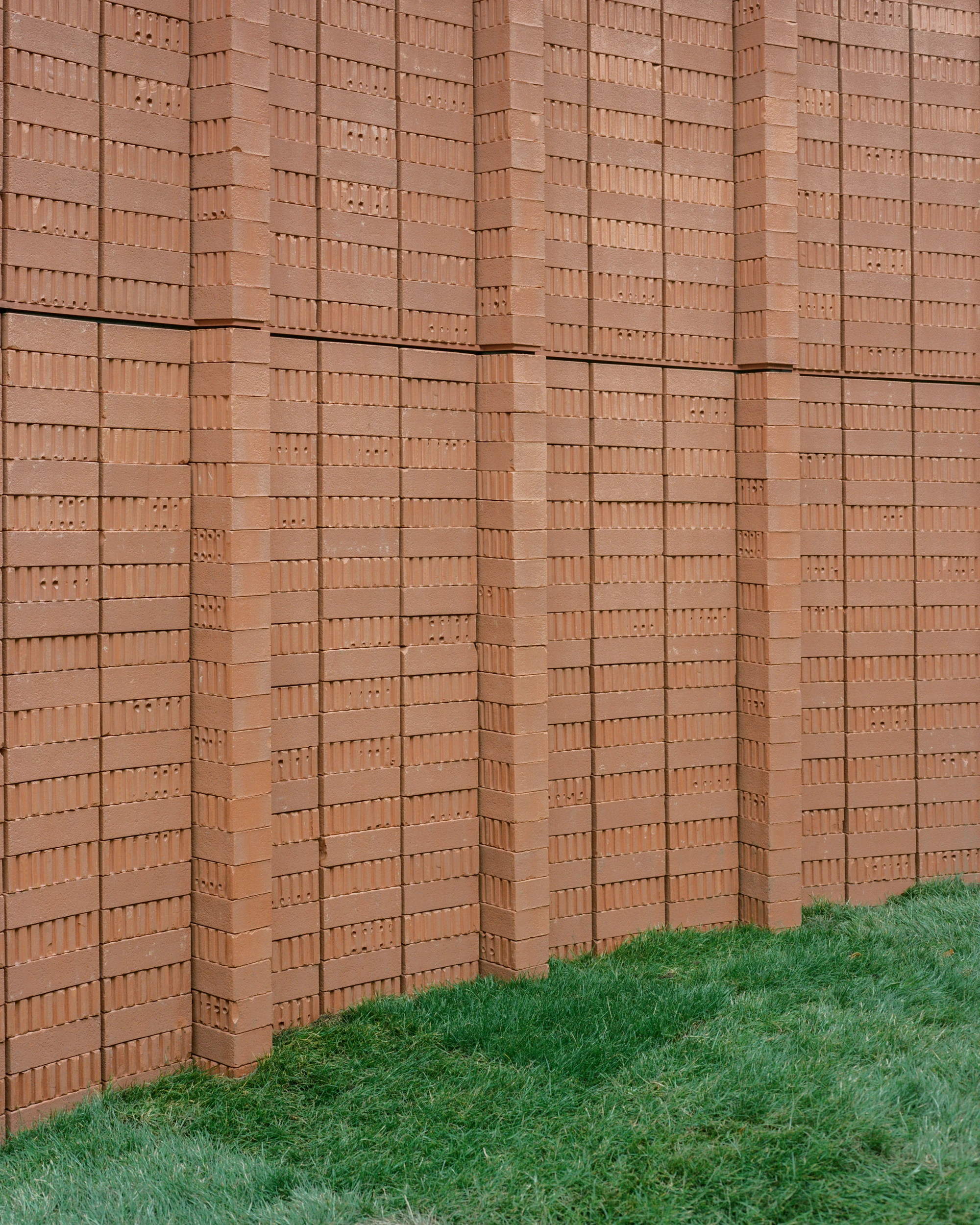
The brick itself is the loudest decision. LANZA stacks the units on edge, hollow faces outward, so the perforations read as a vertical weave across the surface. Up close the wall is a screen of small shadows. From the path it reads as a single ribbon of warm red, the same red as the Victorian facades of the Serpentine South Gallery, originally built as a tea pavilion. The pavement extends the gesture: brick laid in concentric arcs that organise the floor without drawing a centre.

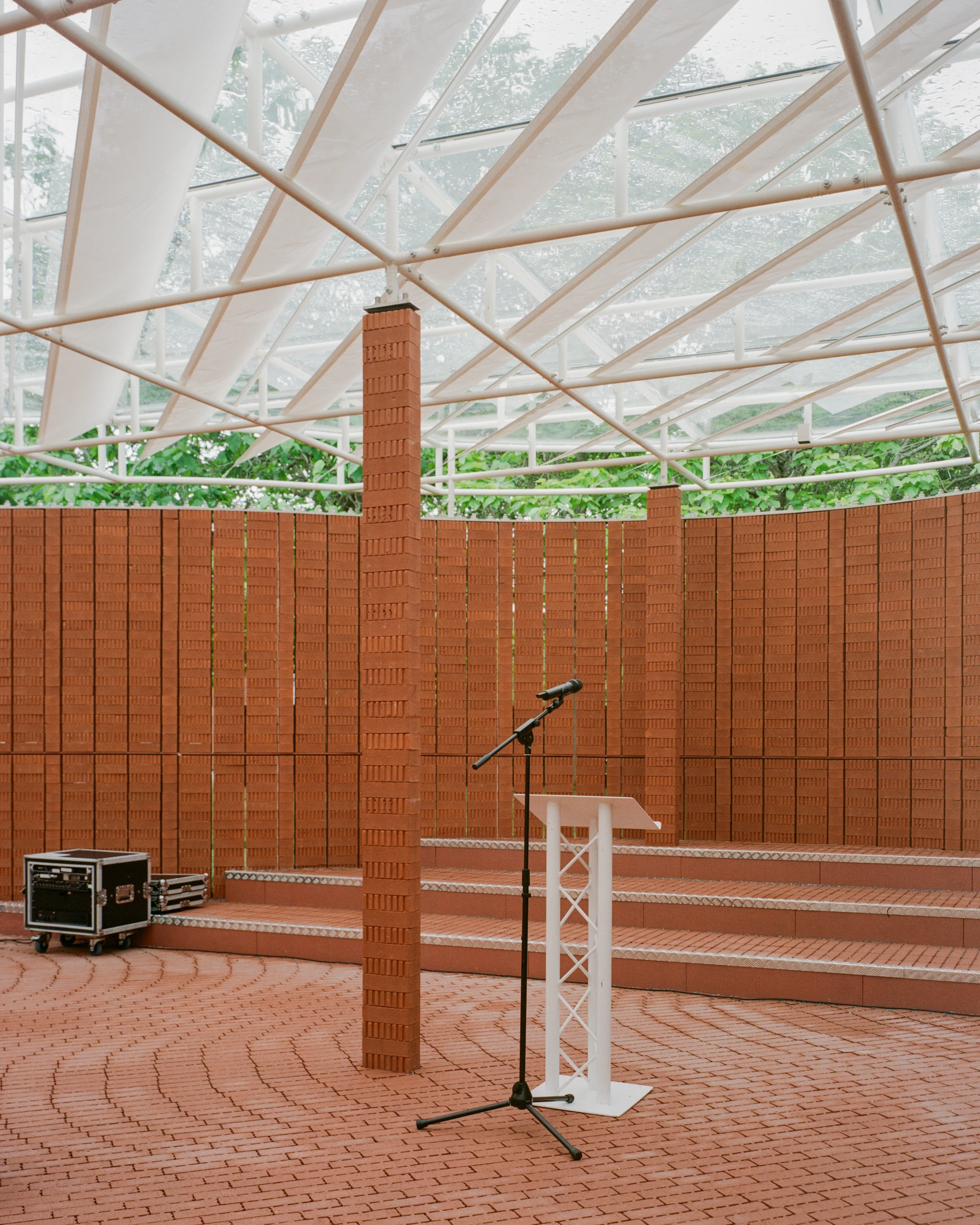
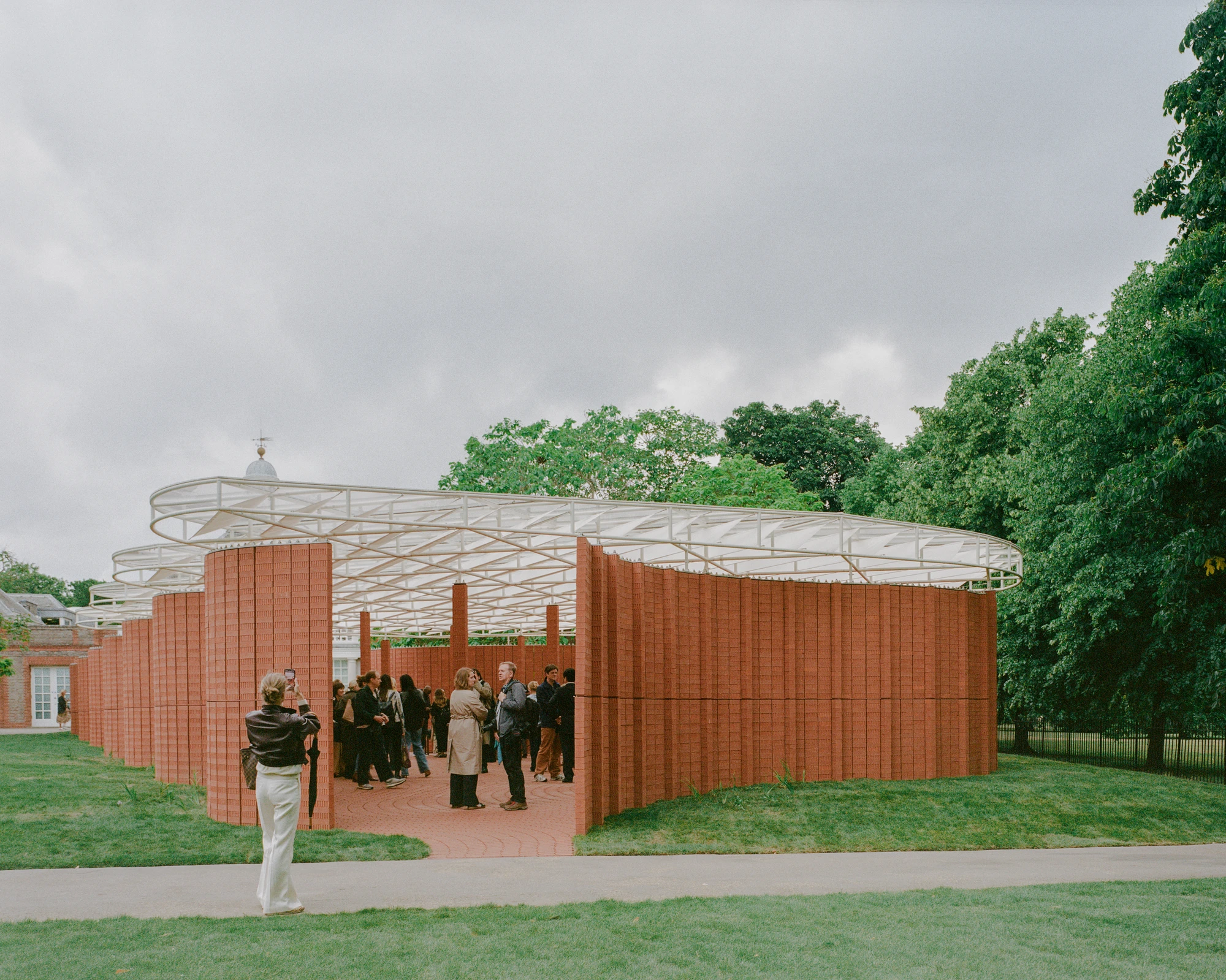
The roof refuses the brick's weight. A shallow space frame in slim white tubing carries a translucent fabric that diffuses London's grey overhead light into something closer to the inside of a paper lantern. It touches the walls only through a row of square brick columns lifted clear of the enclosure, each one a stack of the same perforated units rotated ninety degrees. LANZA describes them as a grove. They behave more like punctuation, marking the long interior into bays without dividing it.

Walnut-stained timber furniture, curved benches that follow the wall, square stools and high-backed chairs sit on the brick floor as if part of the same garden vocabulary. There is no stage and no centre. The pavilion accepts a lectern, a reading, a crowd at an opening, then empties out into a place to sit alone with the trees showing over the rim of the wall. The threshold between inside and outside is held by light, not by glazing.

What LANZA has built is unfashionably literal. A serpentine, in a place called Serpentine, made of bricks that match the bricks already there. The pavilion does not invent a vocabulary so much as translate one. The English garden wall, a piece of vernacular engineering most often found around kitchen gardens in Suffolk, ends up at Kensington Gardens at full pavilion scale, holding a room together with nothing but its own waver.

Interested in Showcasing Your Work?

If you would like to feature your works on Thisispaper, please visit our Submission page and sign up to Thisispaper+ to submit your work. Once your submission is approved, your work will be showcased to our global audience of 2 million art, architecture, and design professionals and enthusiasts.
No items found.
We love less
but there is more.
Become a Thisispaper+ member today to unlock full access to our magazine, advanced tools, and support our work.
Get two months FREE
with annual subscription
We love less
but there is more.
Become a Thisispaper+ member today to unlock full access to our magazine, advanced tools, and support our work.
Get two months FREE
with annual subscription
No items found.
Alexander Zaxarov
Jun 8, 2026

On the lawn beside the Serpentine South Gallery in London, Mexico City studio LANZA atelier builds a serpentine, a 2026 pavilion of red brick walls that bend rather than stand straight.

The 2026 Serpentine Pavilion photographed by Lorenzo Zandri takes its name twice over. From the lake whose curve gave the gallery its title, and from the English crinkle-crankle wall, a garden enclosure that wins its rigidity from waving rather than from mass. LANZA atelier, the Mexico City studio founded by Isabel Abascal and Alessandro Arienzo, treats the doubled reference as the project's whole argument. A wall that needs fewer bricks because it refuses to go straight.

Two long walls do most of the work. The south wall is the crinkle-crankle proper, a single thickness of red brick that snakes across the lawn and earns its stability from geometry rather than reinforcement. The north wall answers it, bending the other way to thread around an existing tree canopy. Together they enclose a room that has no corners and no obvious front, only a slow procession from the brick path that uncoils across the grass.

The brick itself is the loudest decision. LANZA stacks the units on edge, hollow faces outward, so the perforations read as a vertical weave across the surface. Up close the wall is a screen of small shadows. From the path it reads as a single ribbon of warm red, the same red as the Victorian facades of the Serpentine South Gallery, originally built as a tea pavilion. The pavement extends the gesture: brick laid in concentric arcs that organise the floor without drawing a centre.

The roof refuses the brick's weight. A shallow space frame in slim white tubing carries a translucent fabric that diffuses London's grey overhead light into something closer to the inside of a paper lantern. It touches the walls only through a row of square brick columns lifted clear of the enclosure, each one a stack of the same perforated units rotated ninety degrees. LANZA describes them as a grove. They behave more like punctuation, marking the long interior into bays without dividing it.

Walnut-stained timber furniture, curved benches that follow the wall, square stools and high-backed chairs sit on the brick floor as if part of the same garden vocabulary. There is no stage and no centre. The pavilion accepts a lectern, a reading, a crowd at an opening, then empties out into a place to sit alone with the trees showing over the rim of the wall. The threshold between inside and outside is held by light, not by glazing.

What LANZA has built is unfashionably literal. A serpentine, in a place called Serpentine, made of bricks that match the bricks already there. The pavilion does not invent a vocabulary so much as translate one. The English garden wall, a piece of vernacular engineering most often found around kitchen gardens in Suffolk, ends up at Kensington Gardens at full pavilion scale, holding a room together with nothing but its own waver.

Interested in Showcasing Your Work?

If you would like to feature your works on Thisispaper, please visit our Submission page and subscribe to Thisispaper+. Once your submission is approved, your work will be showcased to our global audience of 2 million art, architecture, and design professionals and enthusiasts.
Thisispaper+
London Guide
30+ Locations
Web Access
Link to Maps
Architecture in London — from Georgian terraces and Victorian warehouses to Brutalist estates and contemporary pavilions. A city that builds by layering the new onto the old, where every extension, conversion, and new-build negotiates heritage, density, and light.
Explore
London Guide

Join Thisispaper+
Unlock access to 2500 stories, curated guides + editions, and share your work with a global network of architects, artists, writers and designers who are shaping the future.
Get two months FREE
with annual subscription
Travel Guides
Immerse yourself in timeless destinations, hidden gems, and creative spaces—curated by humans, not algorithms.
Explore All Guides +
Submission Module
Submit your project and gain the chance to showcase your work to our worldwide audience of over 2M architects, designers, artists, and curious minds.
Learn More+
Curated Editions
Dive deeper into carefully curated editions, designed to feed your curiosity and foster exploration.
Off-the-Grid
Jutaku
Sacral Journey
minimum
The New Chair
Explore All Editions +
Atlas
A new and interactive way to explore the most inspiring places around the world.
Interactive map
Linked to articles
300+ curated locations
Google + Apple directions
Smart filters
Subscribe to Explore+
Become a Thisispaper+ member today to unlock full access to our magazine, submit your project and support our work.
Join Thisispaper+Join Thisispaper+
€ 9 EUR
/month
Cancel anytime
Get two months FREE
with annual subscription