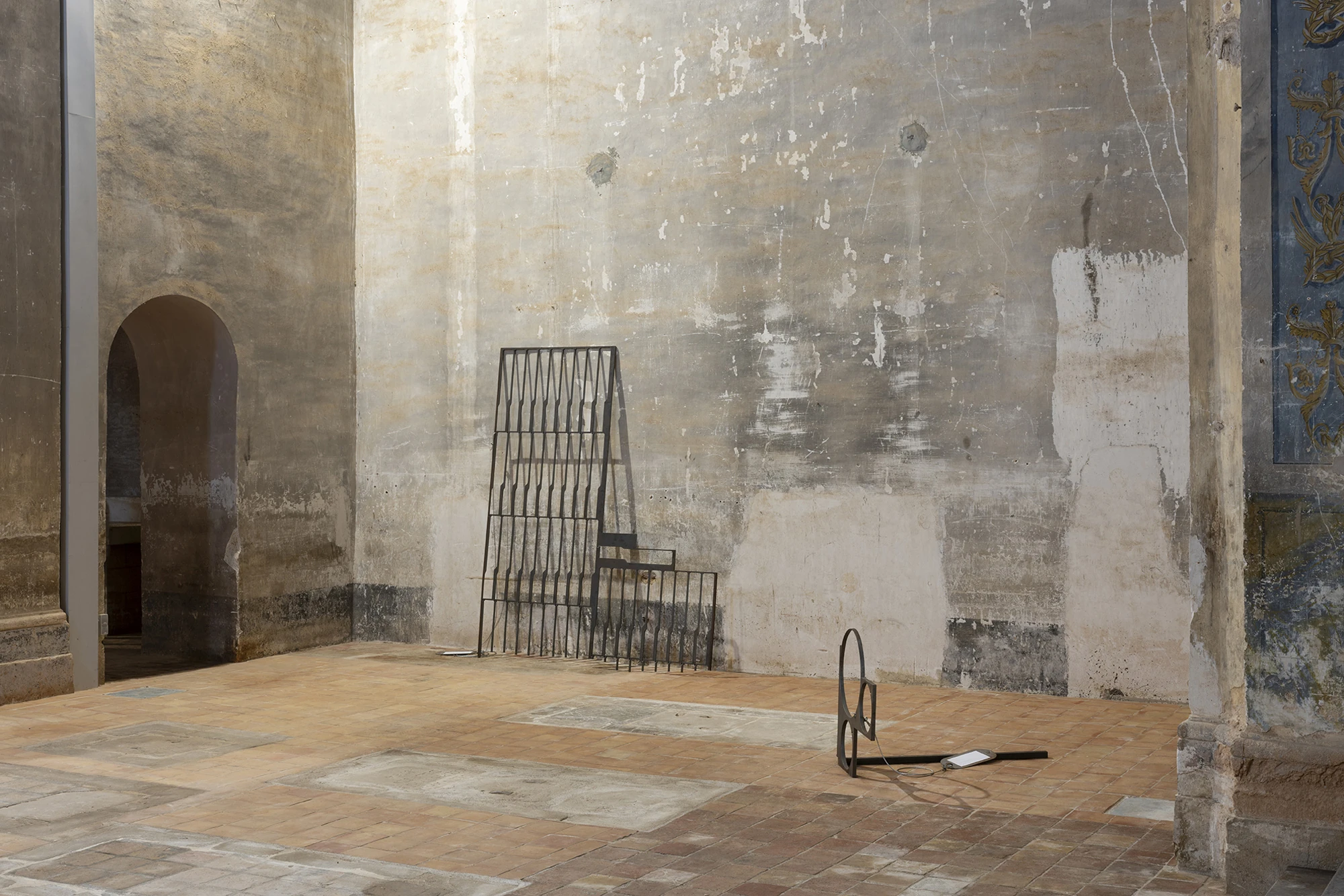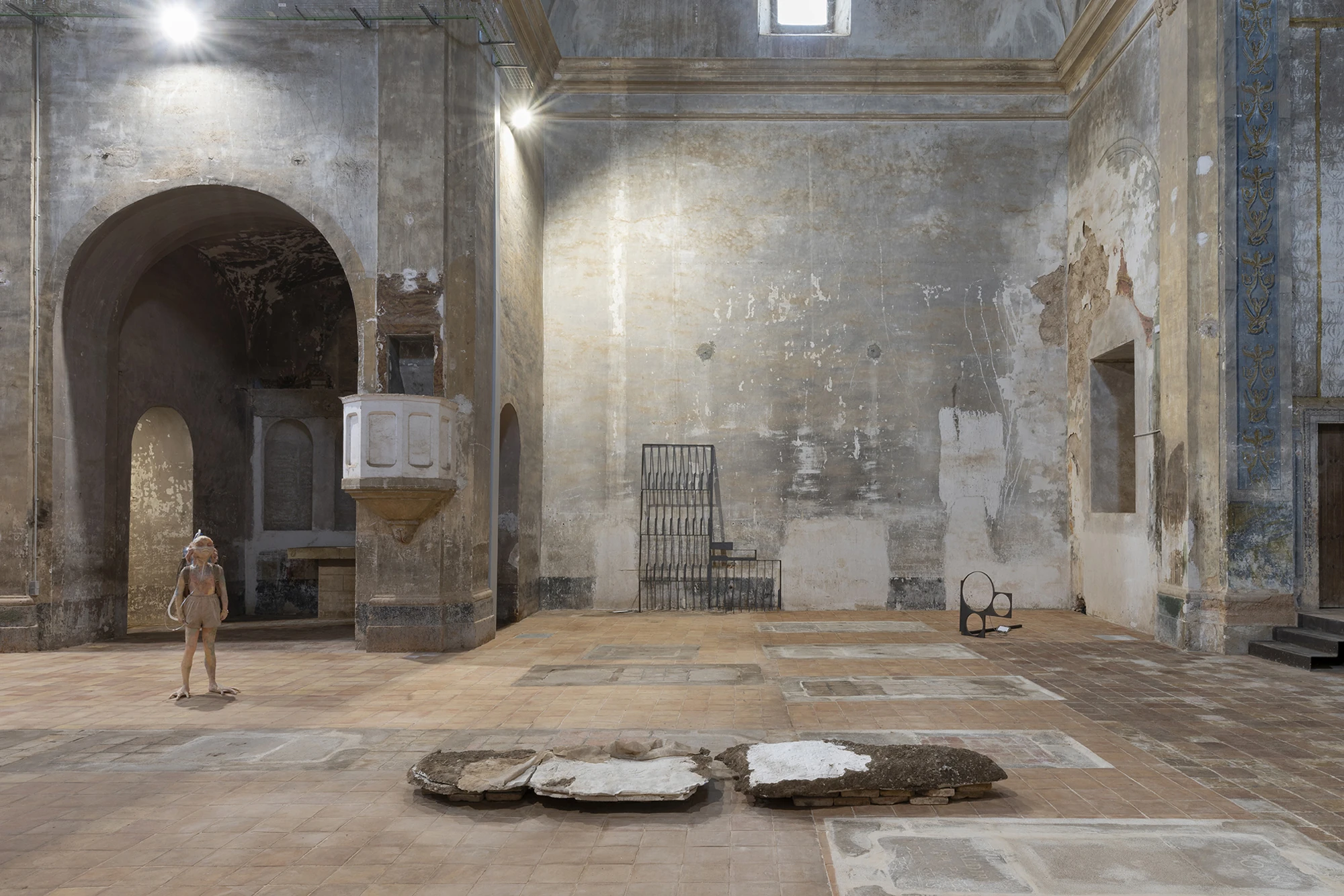
Inside the disused Church of Sant Feliu in Lladó, Spain, the gallery Spiritvessel stages KIN TOO, a second gathering of artists whose work turns negative space, discards and imprints into a shared language of kinship.
Kin names the ties that bind people, beings or things: family, but also the looser bonds between entities that share a nature. For KIN TOO at the disused Church of Sant Feliu in Lladó, north of Girona, the gallery Spiritvessel takes that idea at its word. The show is a second round. The first, KIN, opened at Spiritvessel's own space in nearby Espinavessa in 2024 with Monia Ben Hamouda, Michele Gabriele and Andrew Birk; Sahatsa Jauregi and Jordi Mitjà, already inside that circle, join here. The title carries the doubling, meaning both also and two.
Curator Sira Pizà frames the group as a conversation rather than a movement. Through a run of coincidences the artists' paths cross at decisive points, and from those meetings, in her words, 'a network is woven, a conversation made of a language shared between its speakers.' Their materials and methods diverge sharply, yet an affinity surfaces from mirroring each other gesture by gesture. Each brings one experimental move that pulls an image out of negative space, out of discarding, imprinting or handling things already lodged in the landscape or the collective imagination.
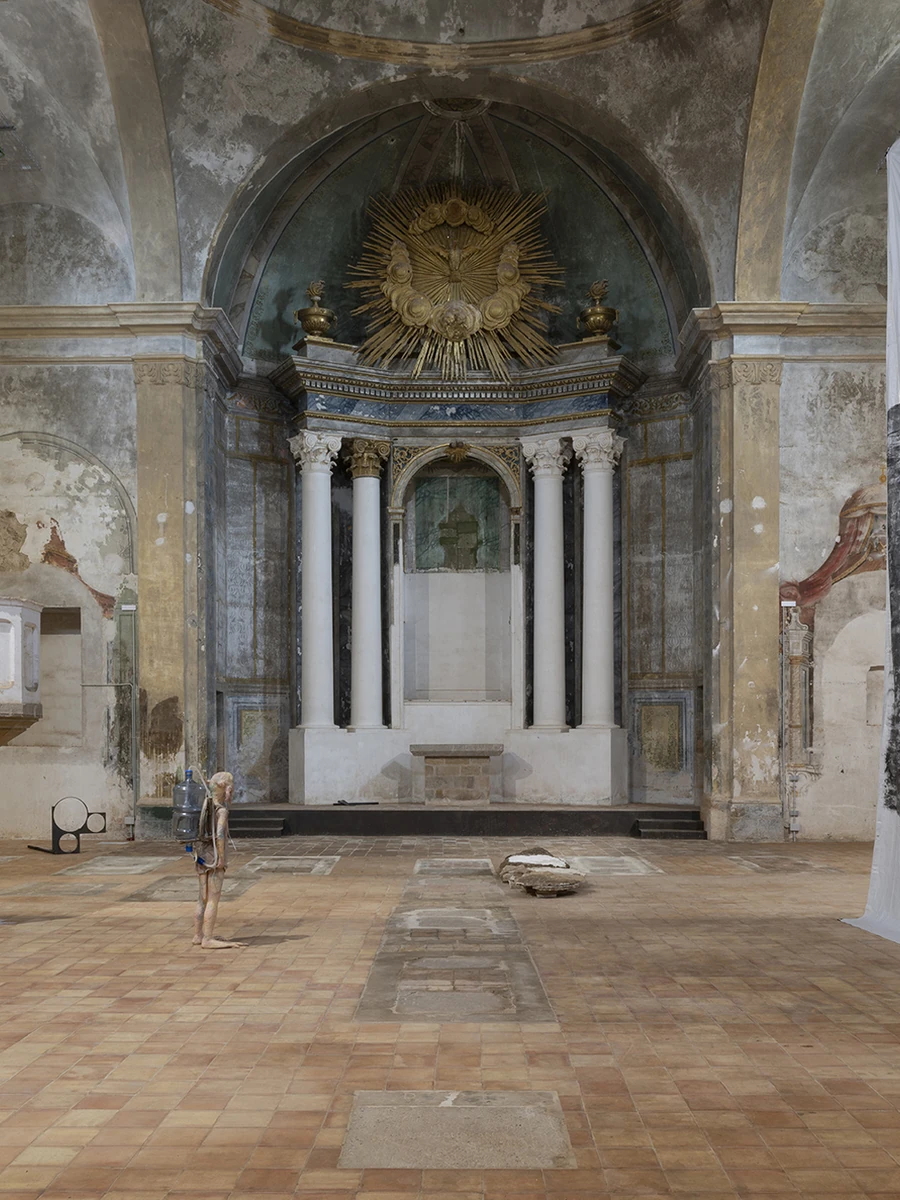
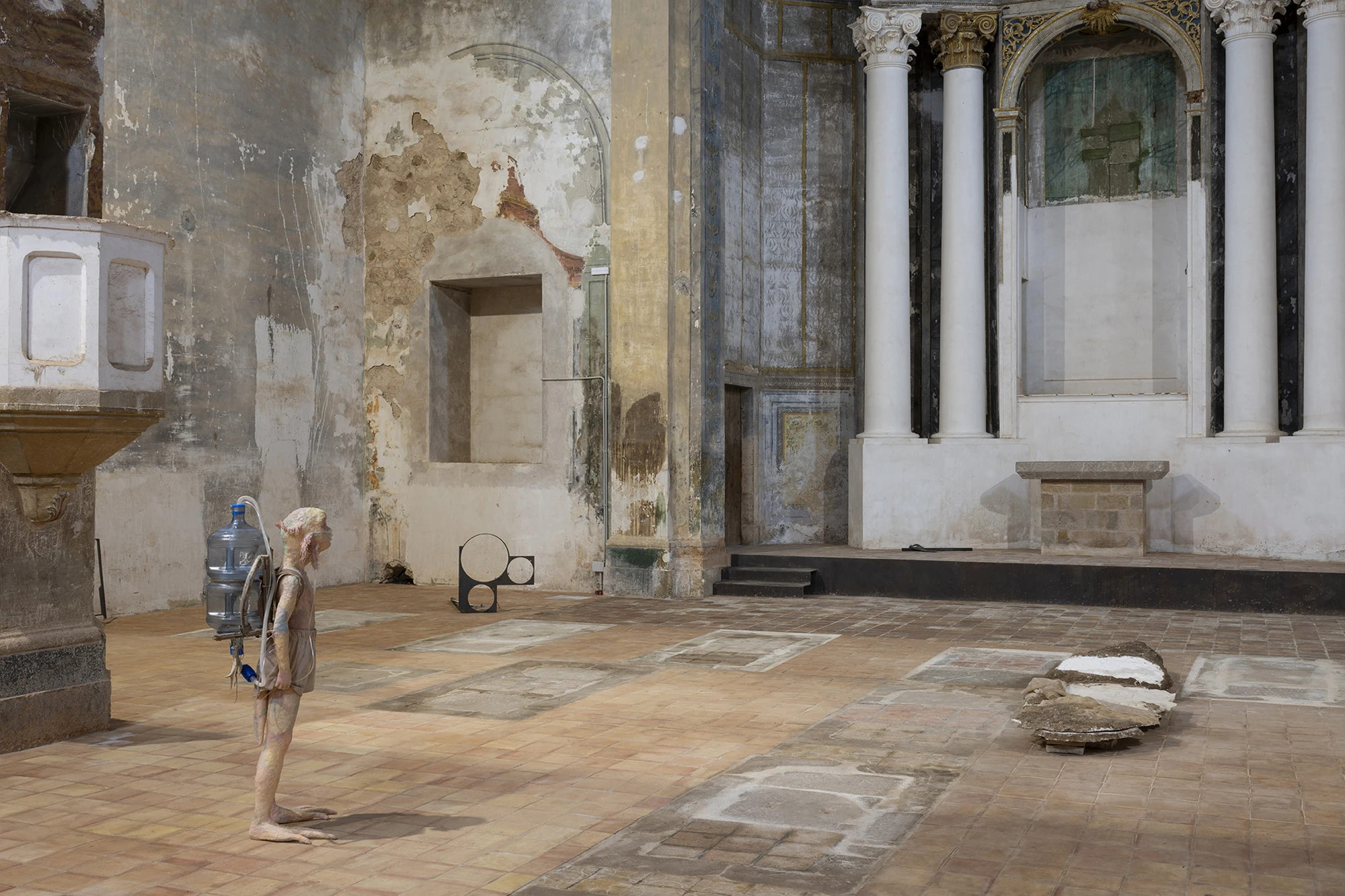
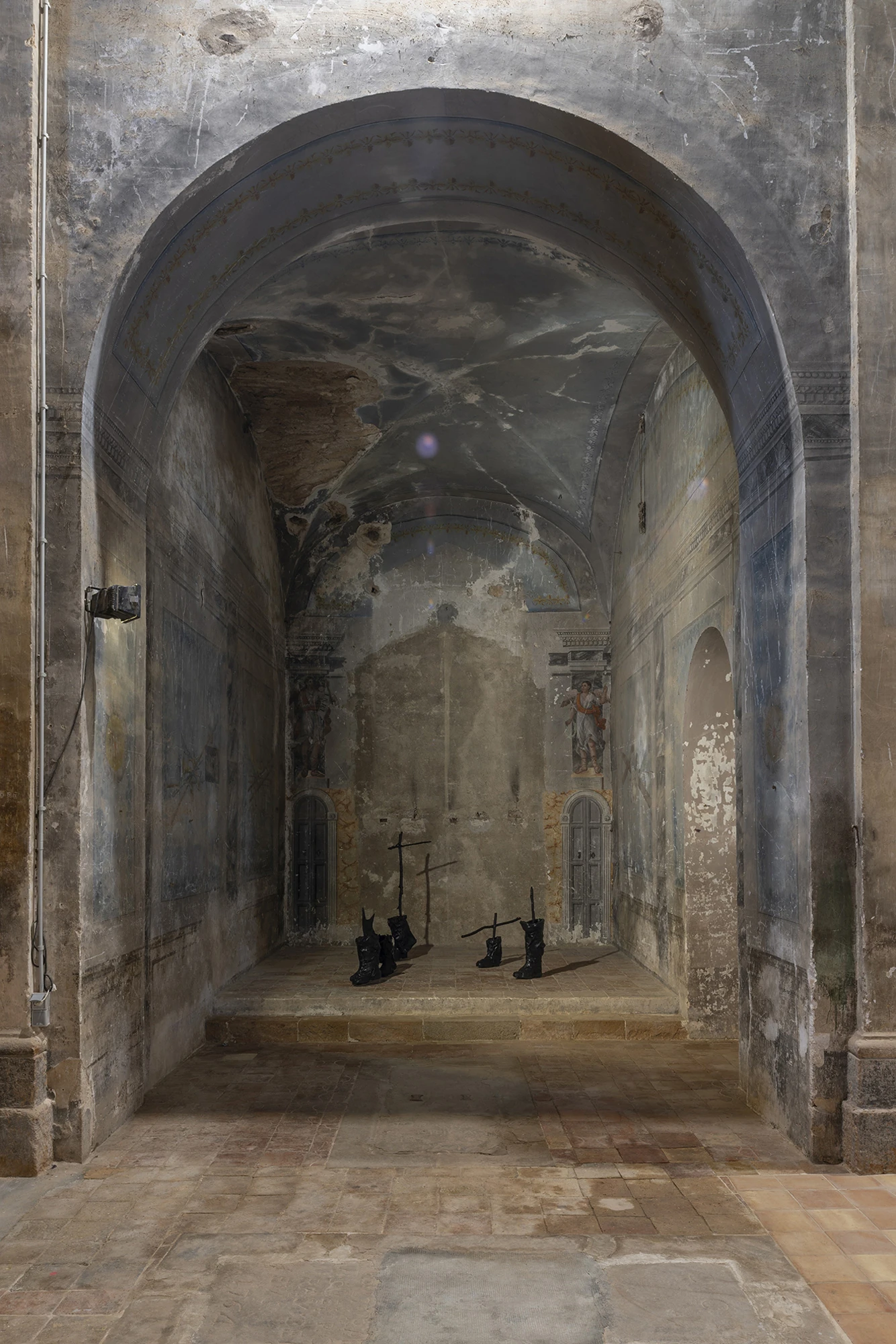
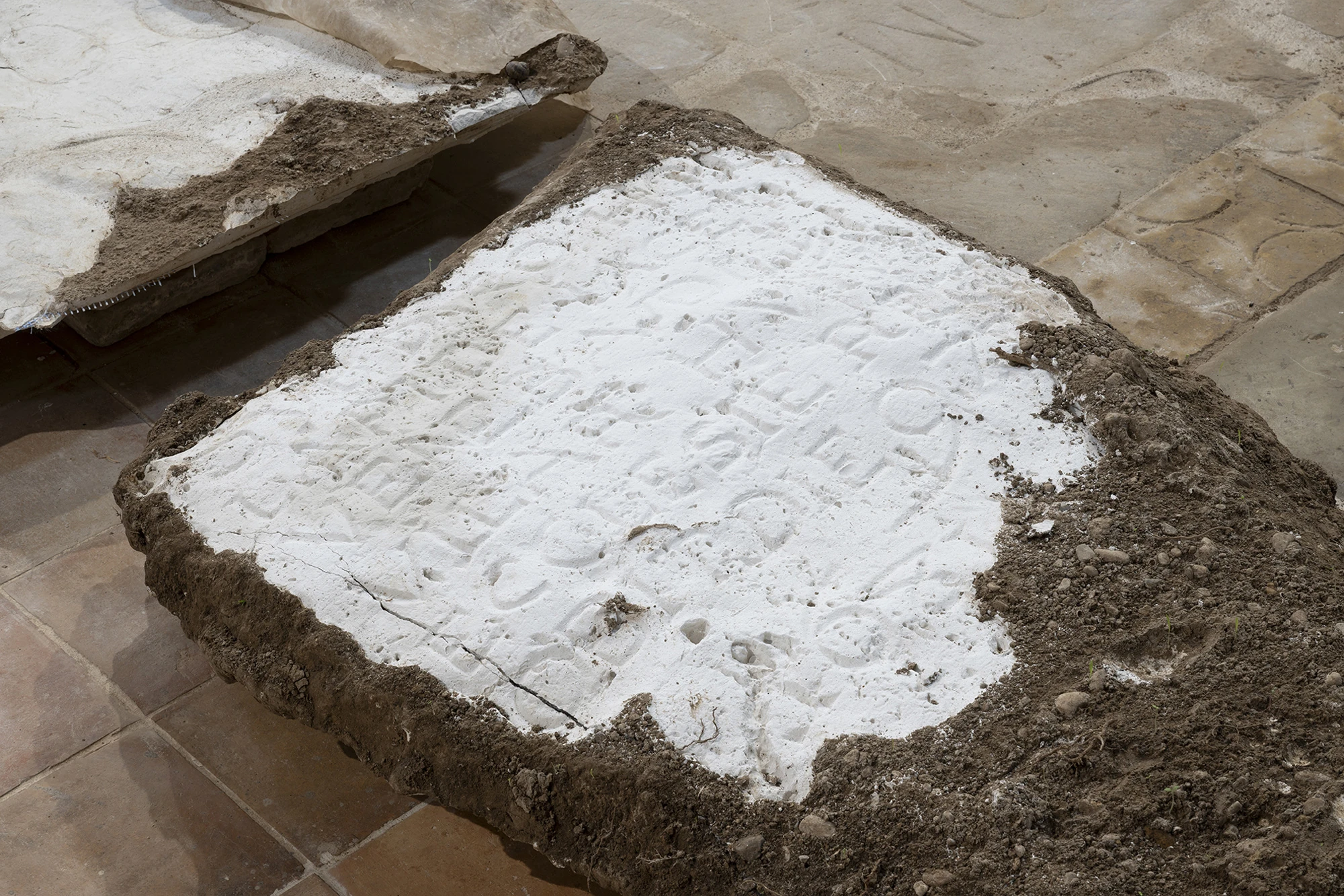
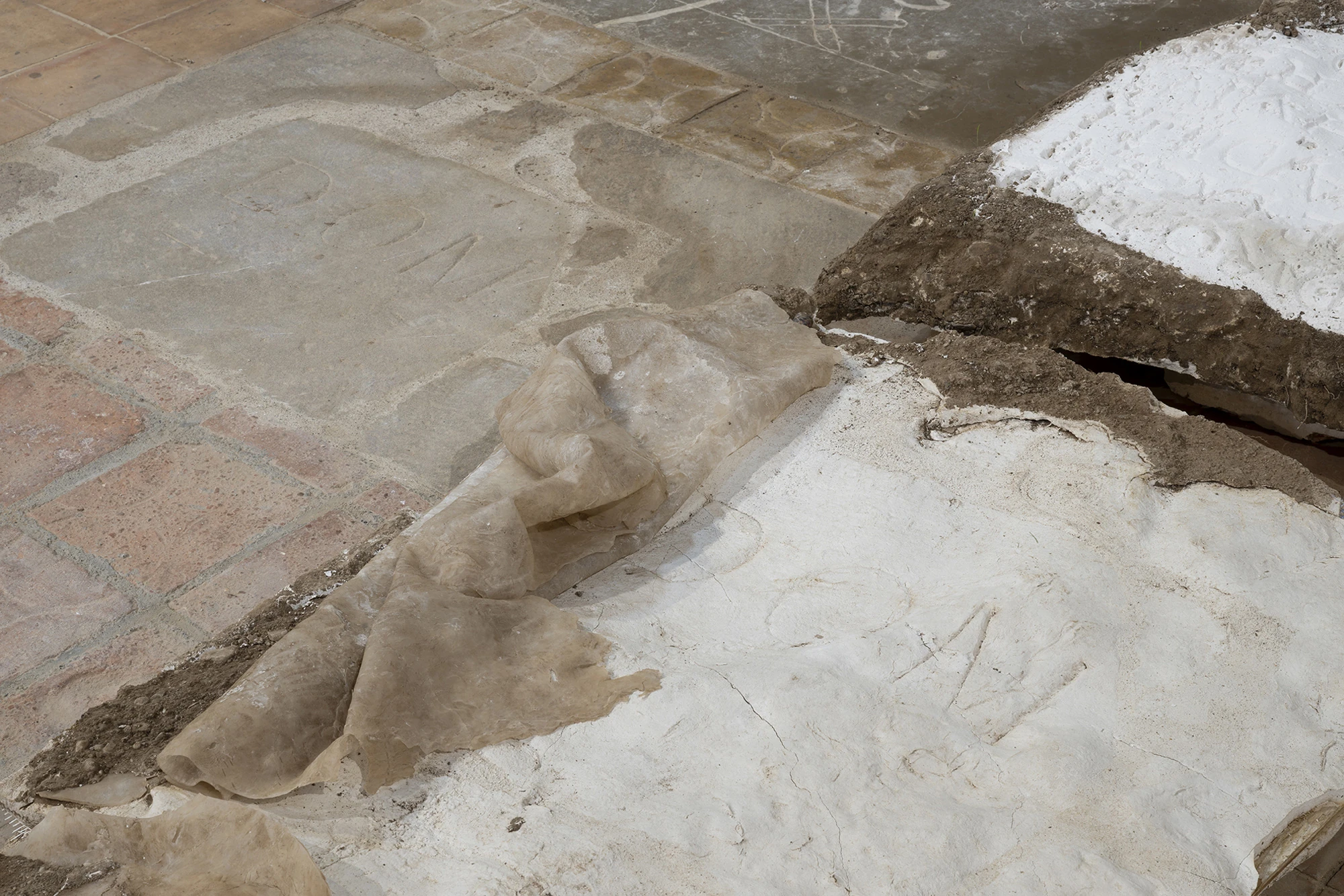
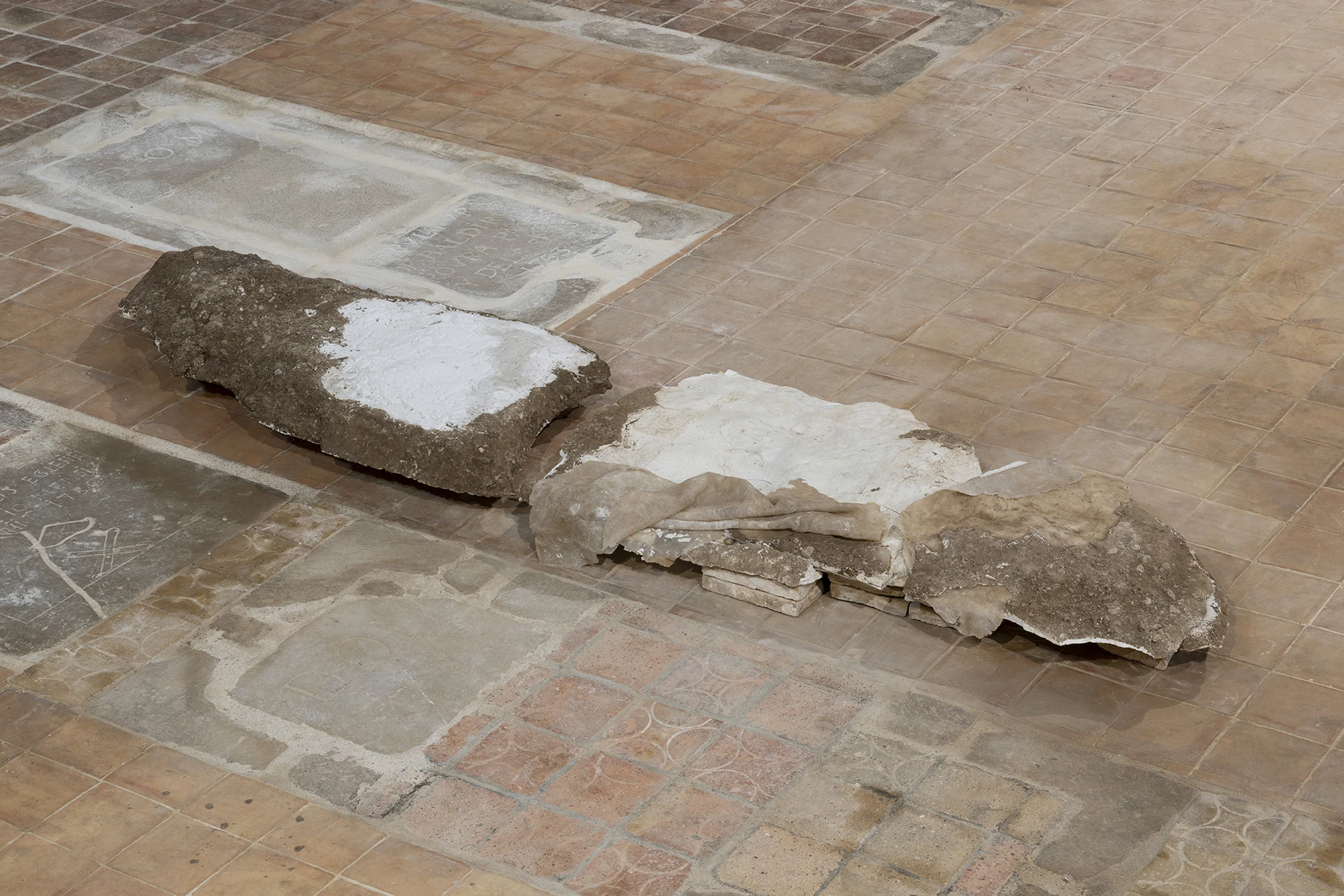
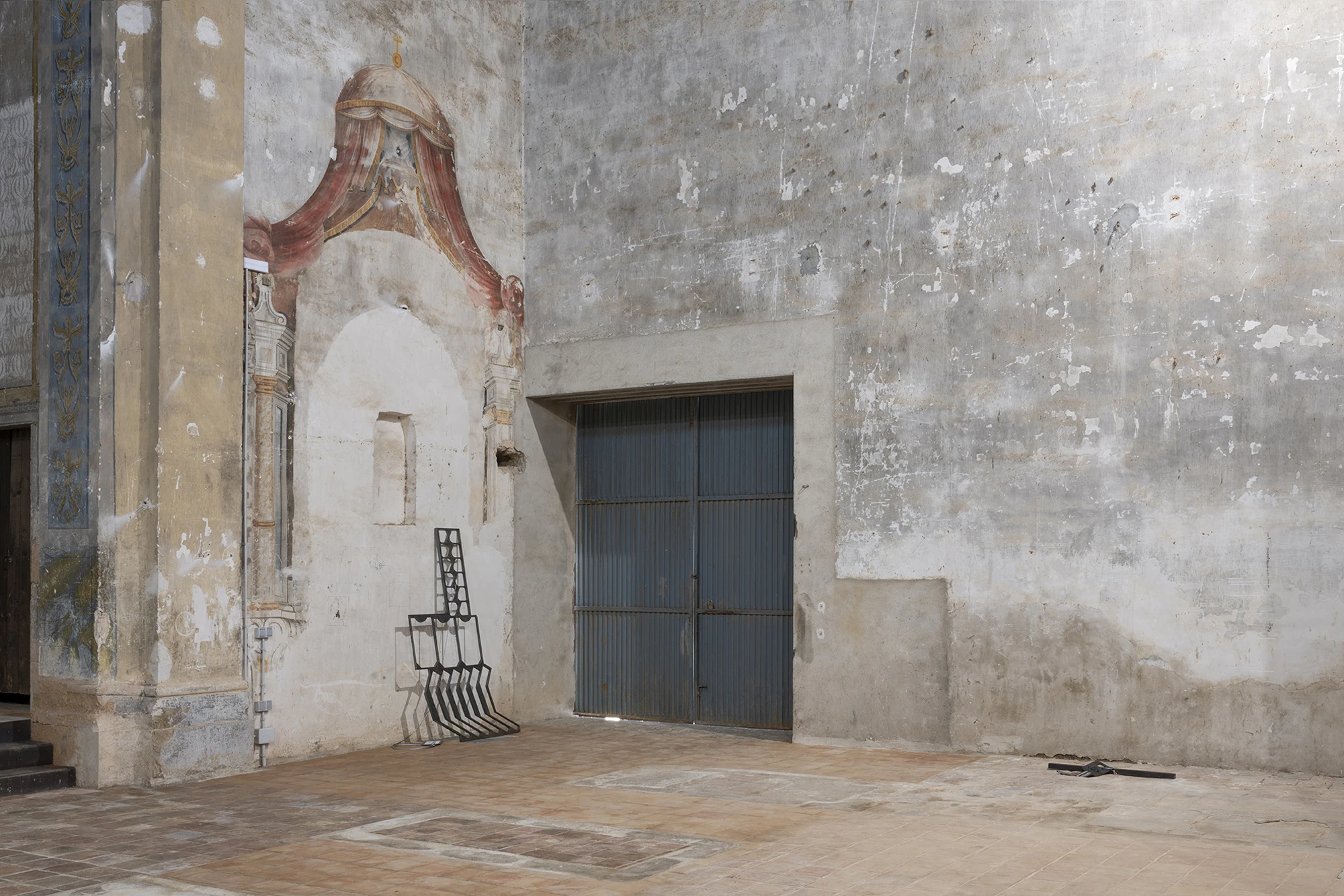
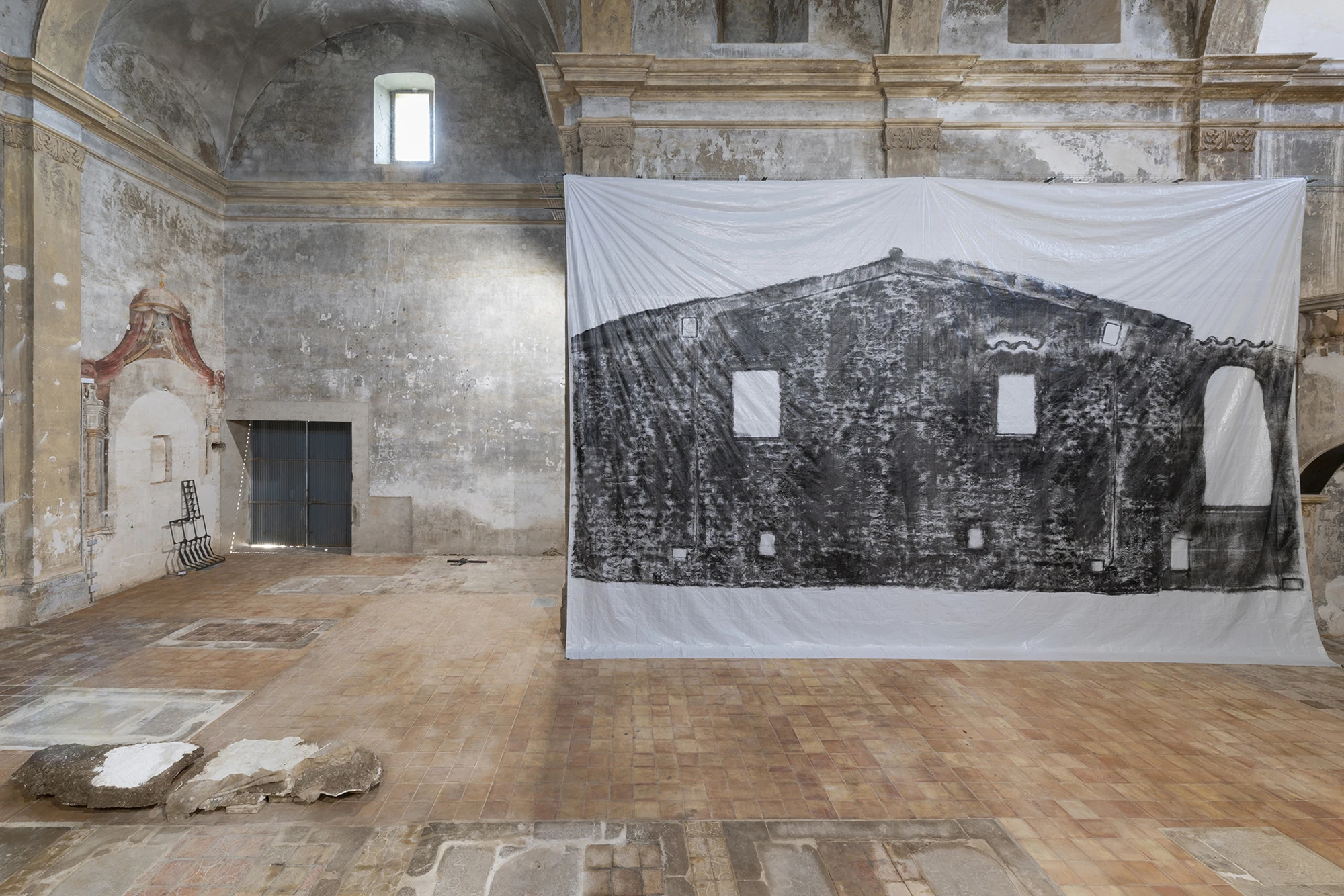
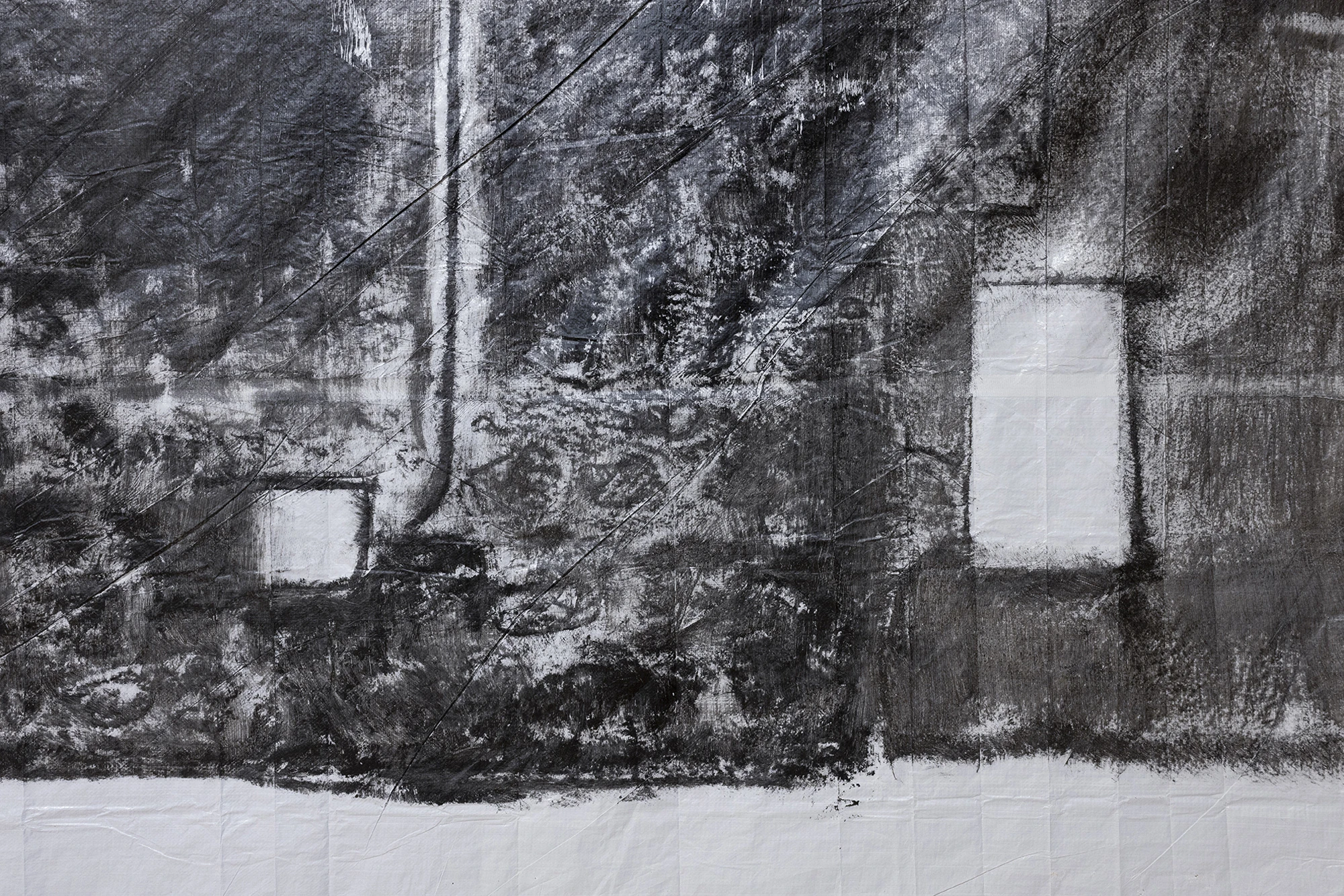
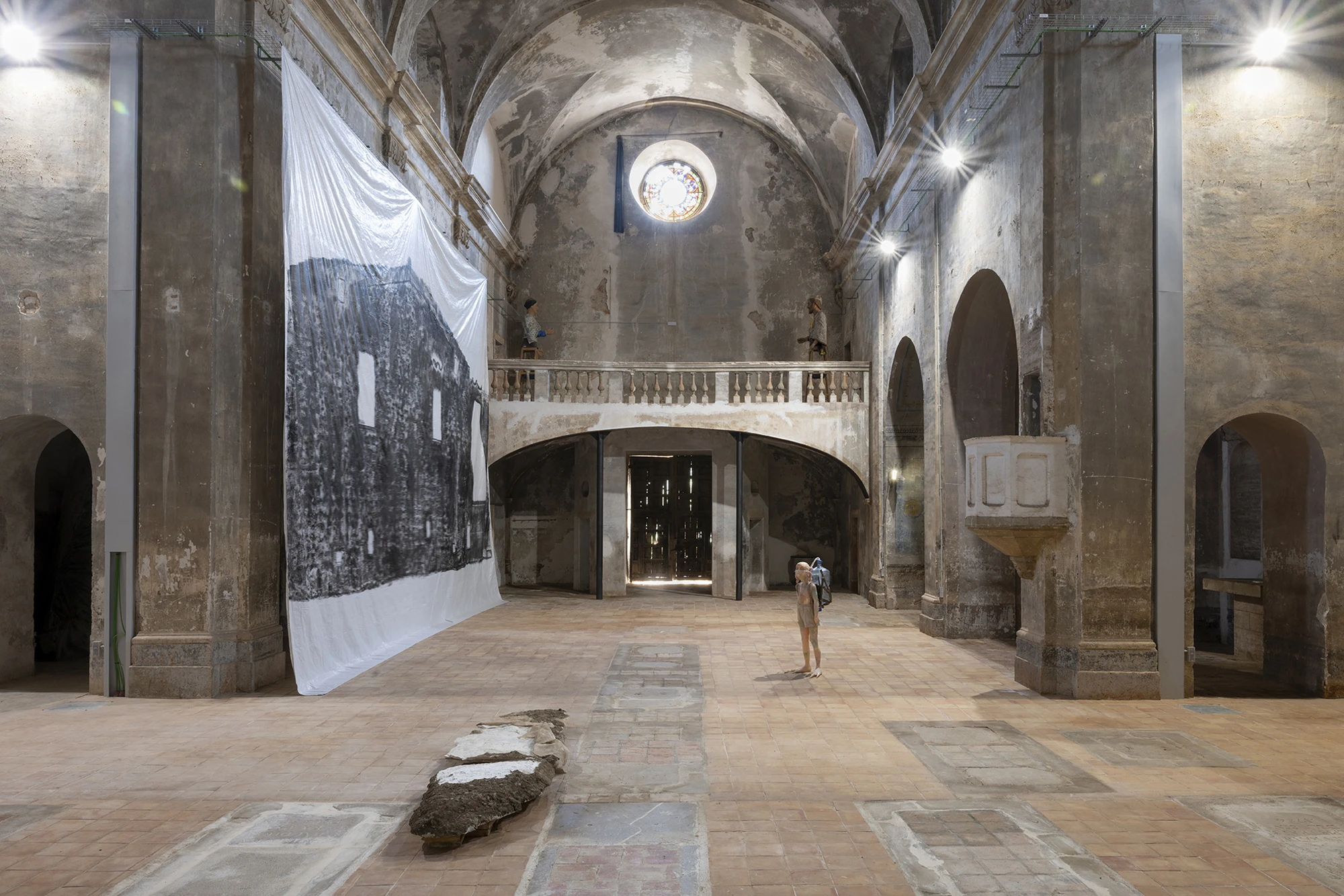
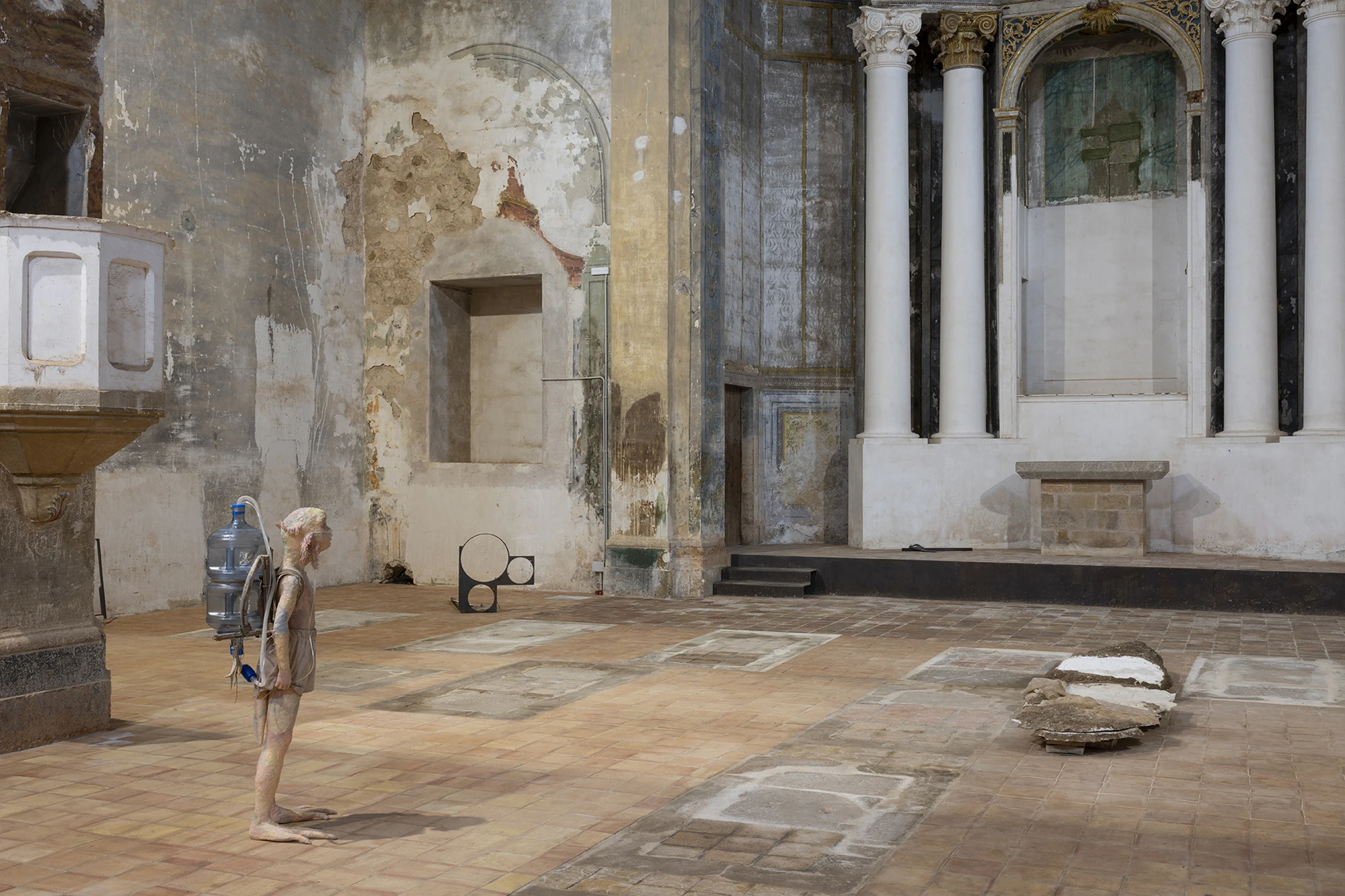
The setting does much of the work. The church stands stripped and half-ruined: terracotta paving worn over old grave markers, a gilt sunburst fixed above the altar, frescoed saints surfacing through blistered plaster. Monia Ben Hamouda lays her Ghost pieces flat on this floor, slabs of white plaster caked with soil and, in the Lladó version, folded silicone, opening a series on mortuary space and the return of matter to the earth. Across the nave, Andrew Birk hangs Floating House, a direct impression of a building pressed onto canvas, one structure carried inside another as a black phantasmal trace.
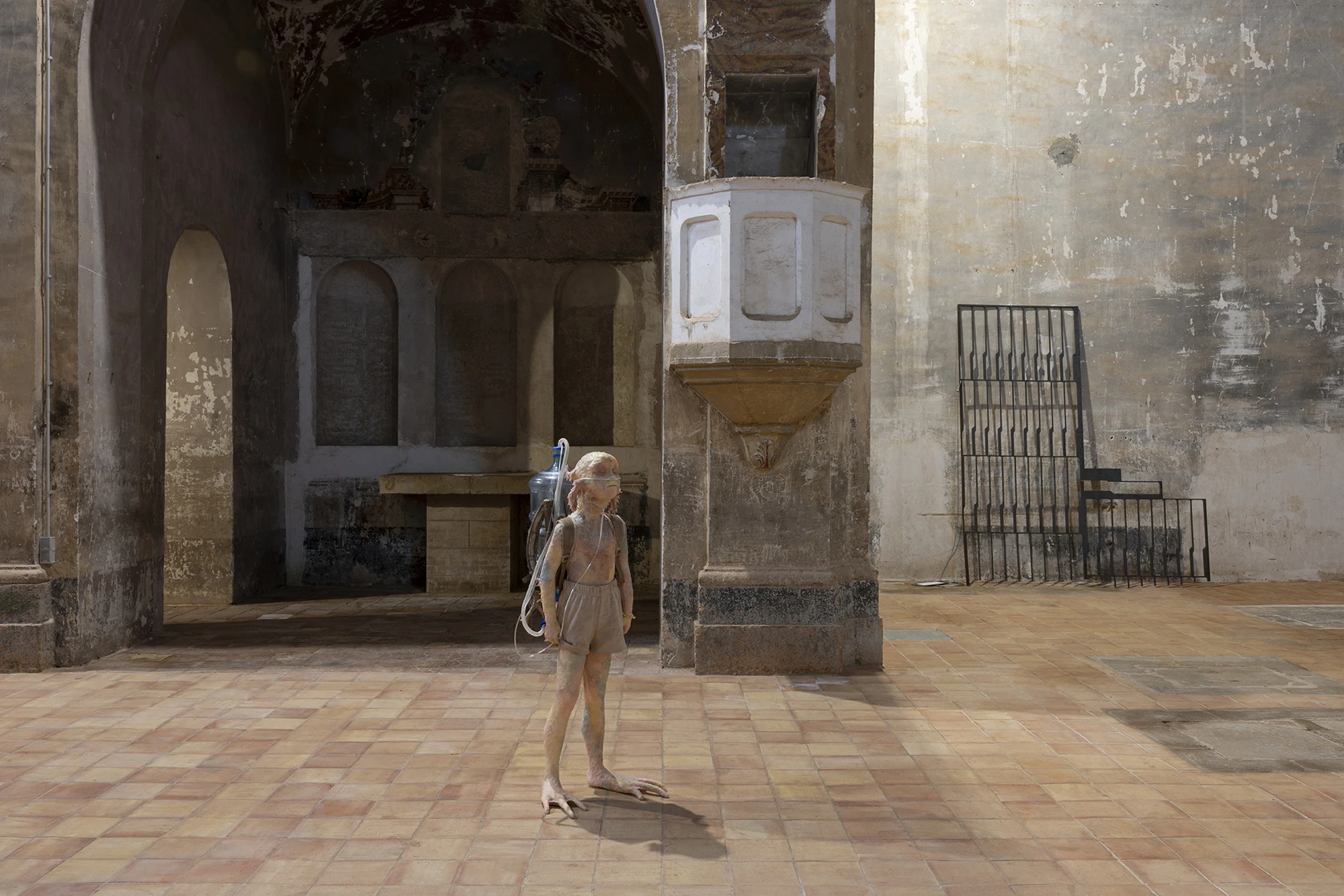
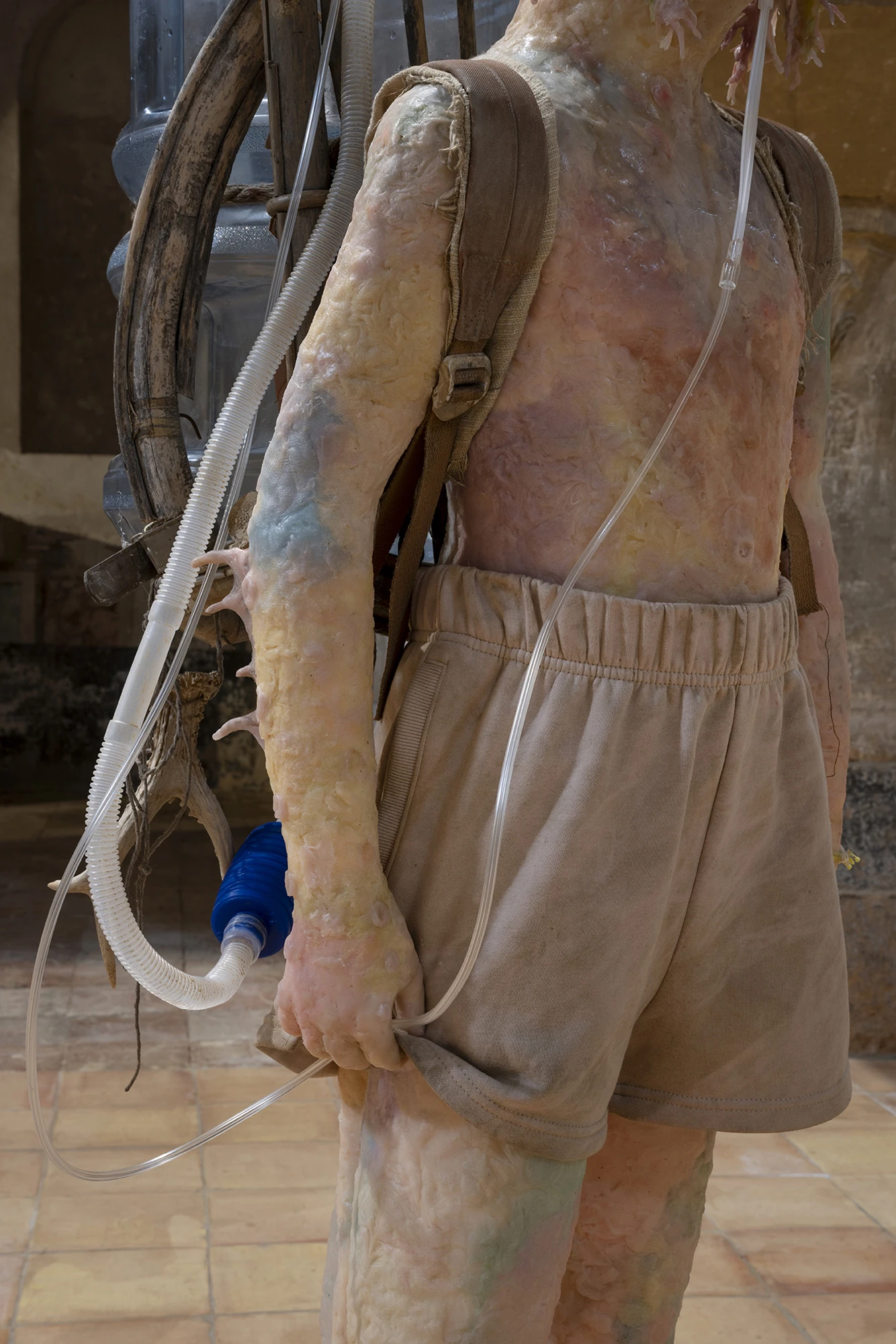
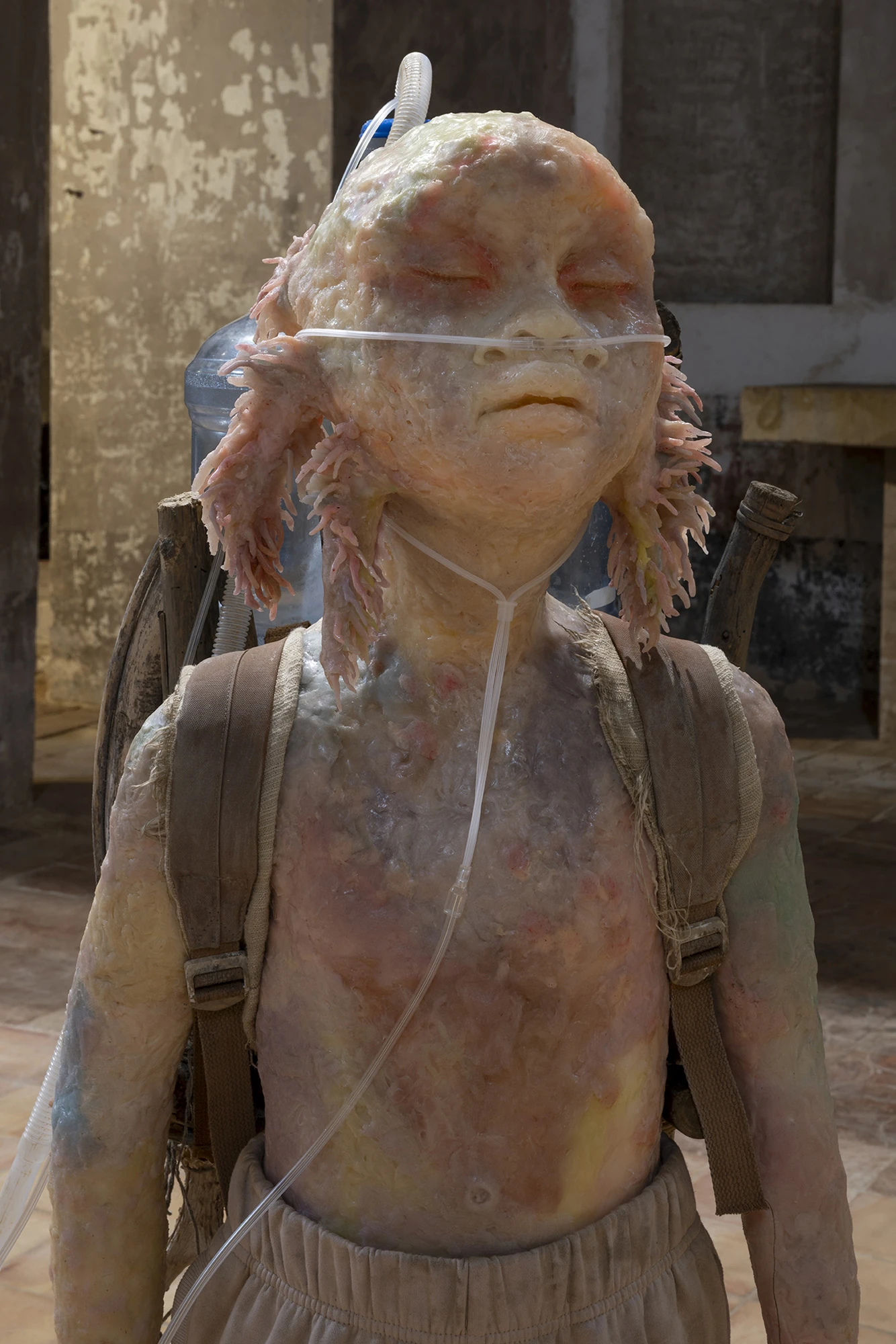
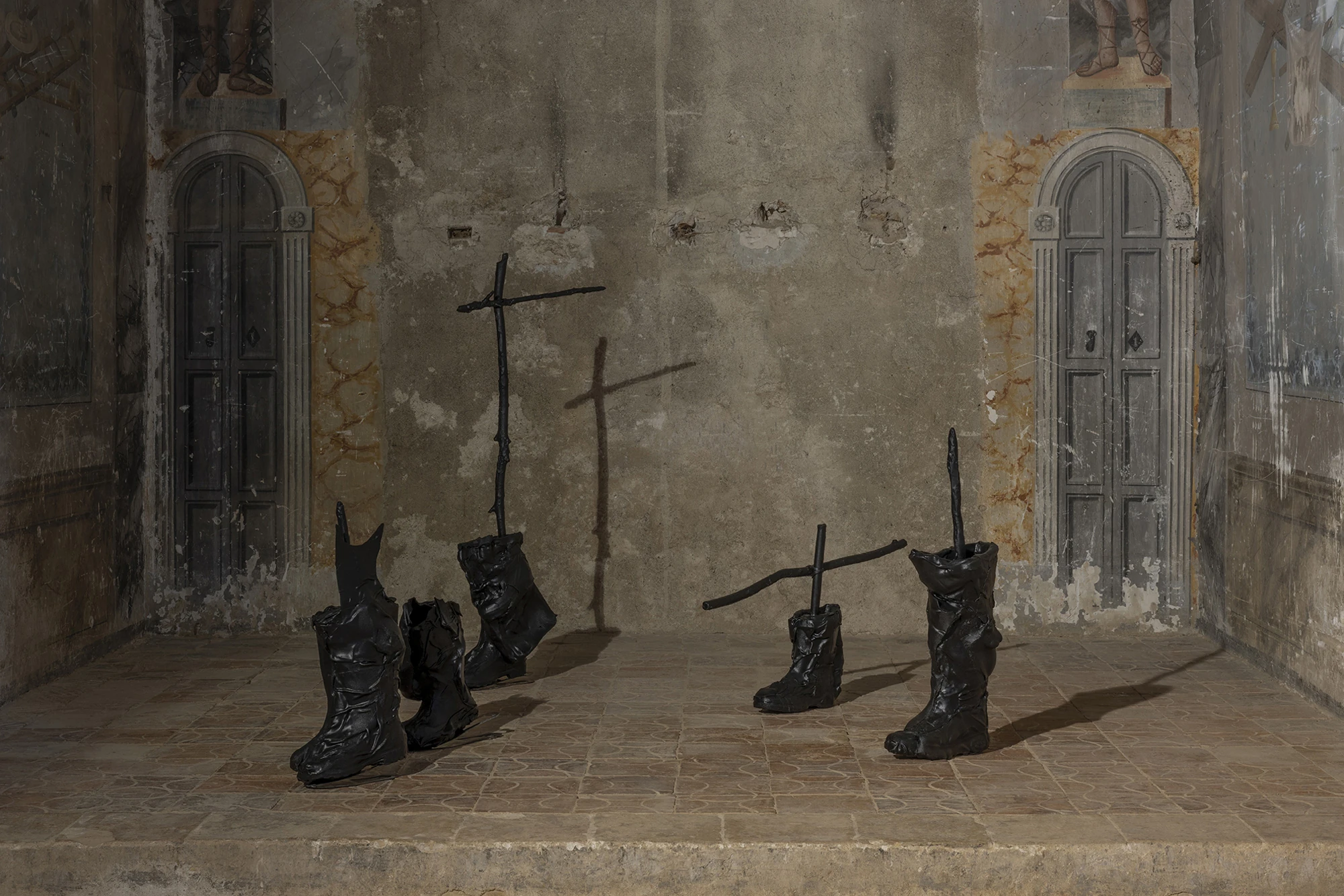
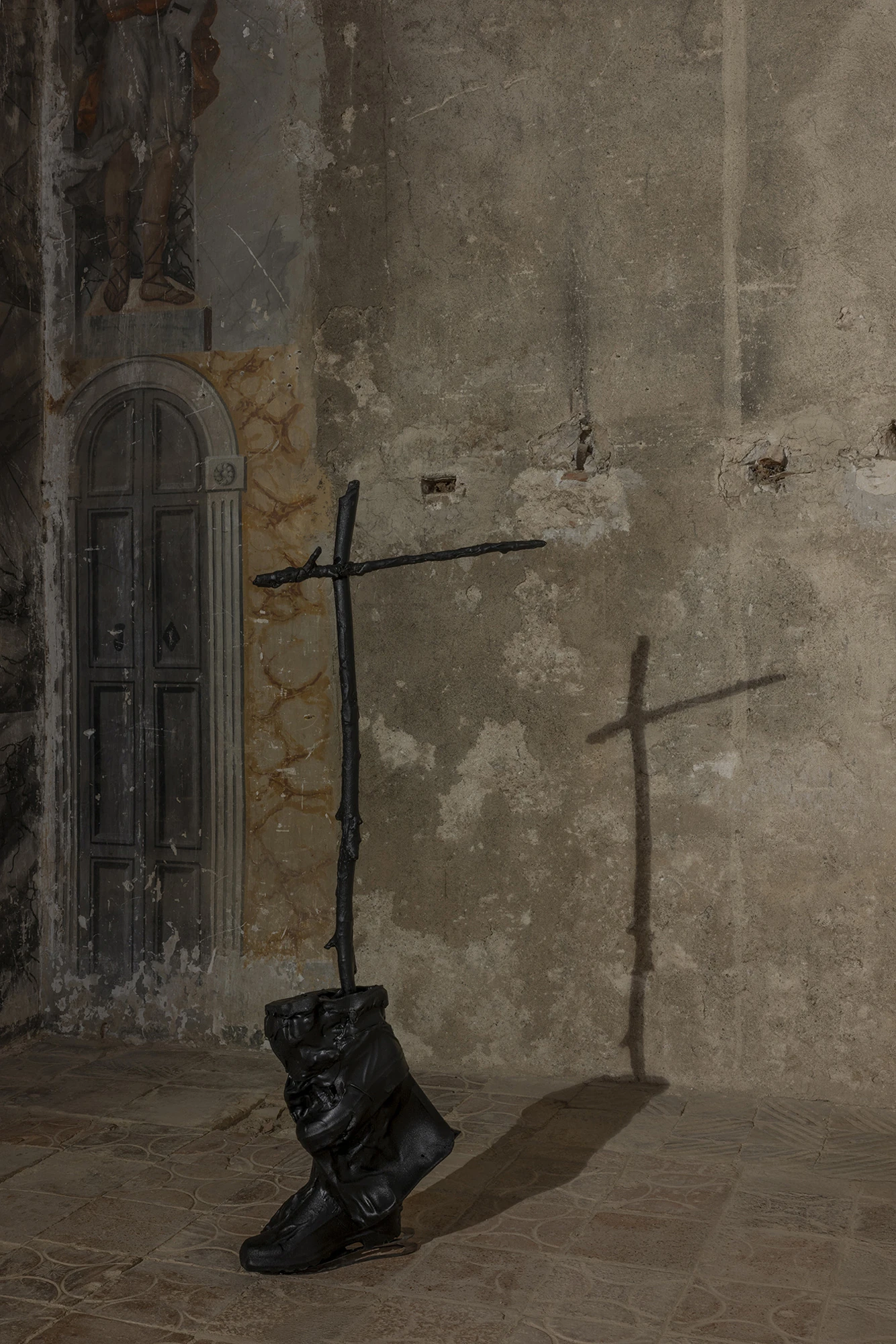
Michele Gabriele's July 2nd holds the center, a life-size silicone figure with a water bottle strapped to its back and tubing looped across its mottled skin, a fiction that bends the room into its own habitat. In a side chapel, Sahatsa Jauregi's Pájaros sets blackened rubber boots and thin cut-steel crosses on a raised platform, staging the scarecrow as a figure humans invent of themselves to be seen through the eyes of animals. The boots throw cross-shaped shadows onto the wall.
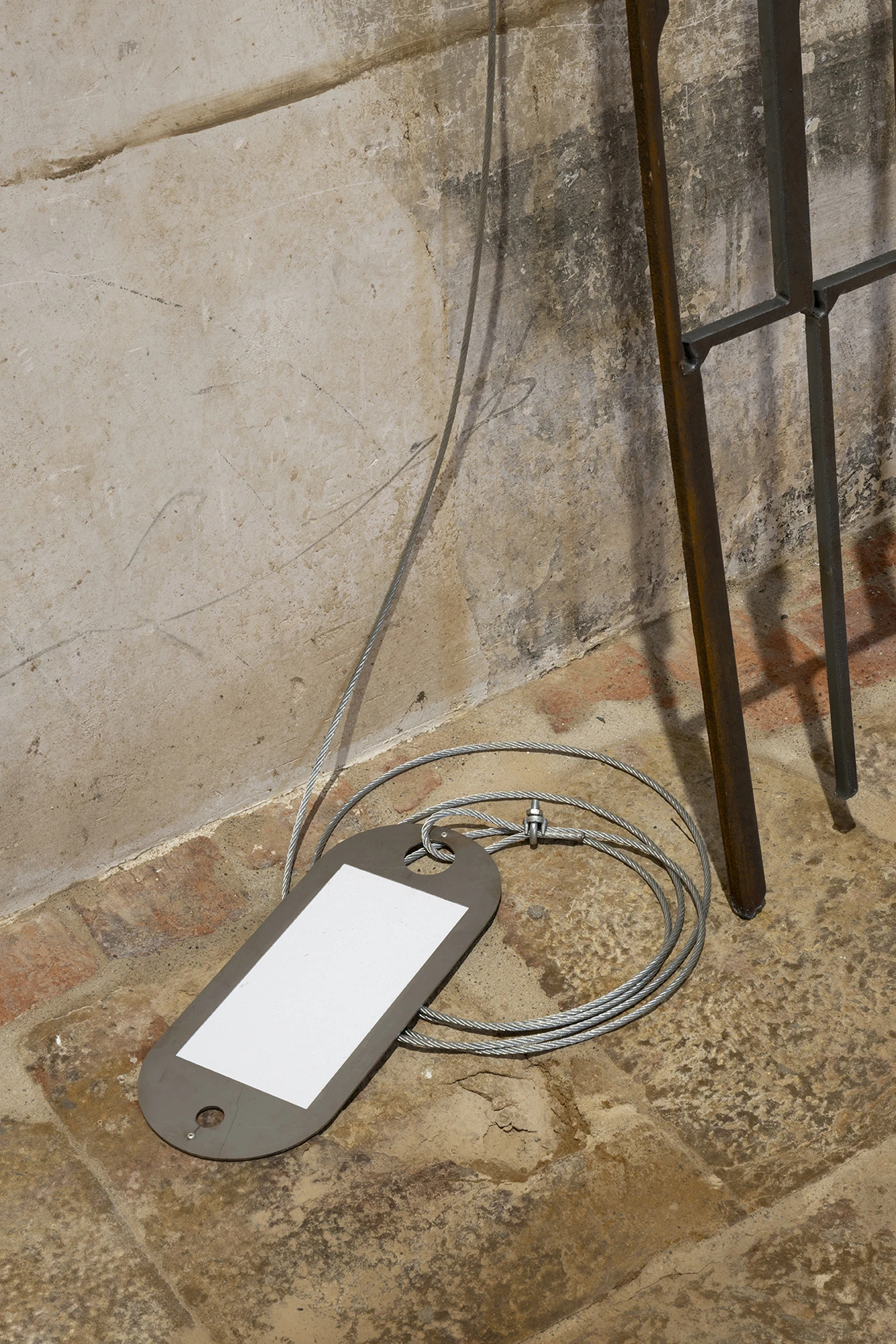
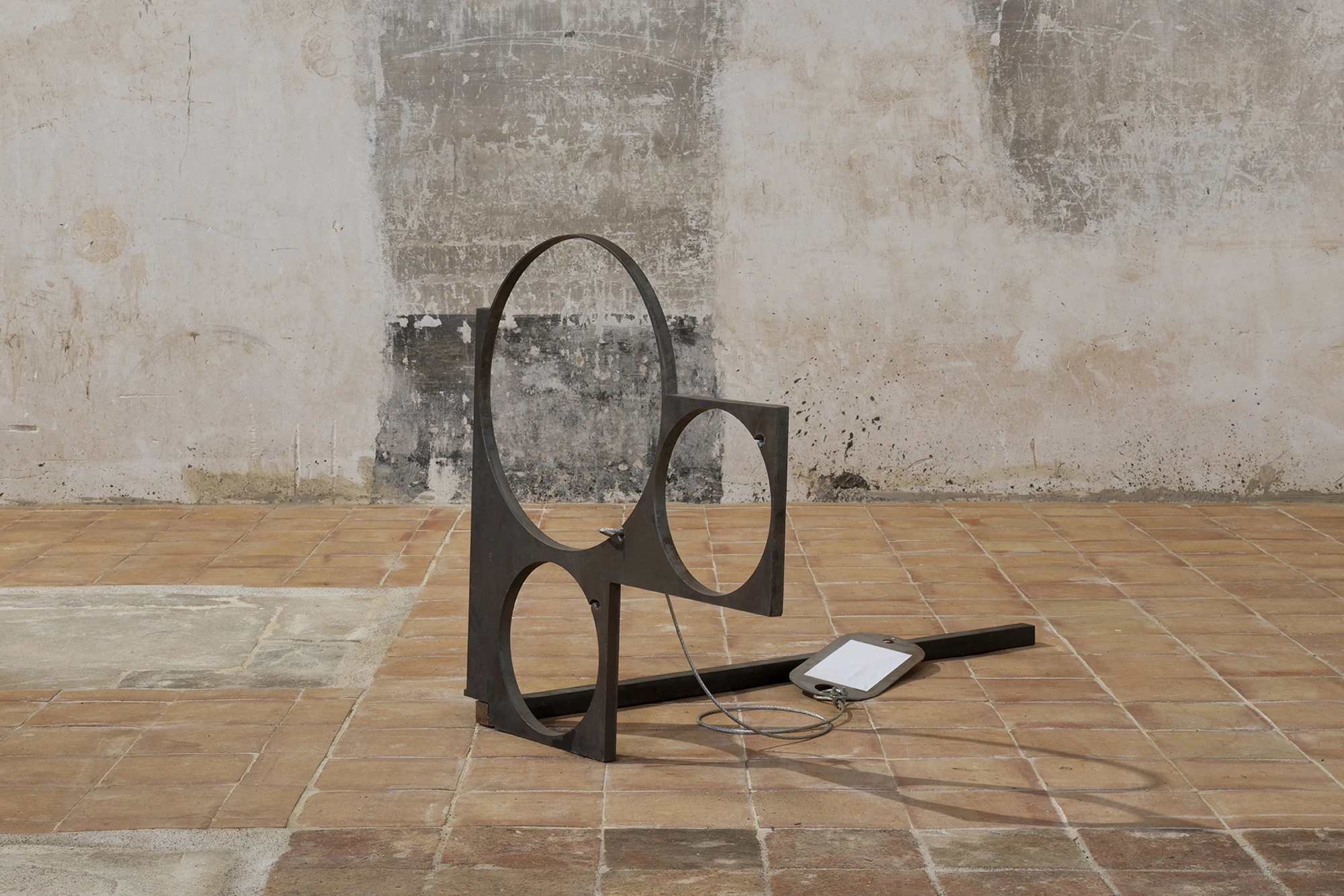
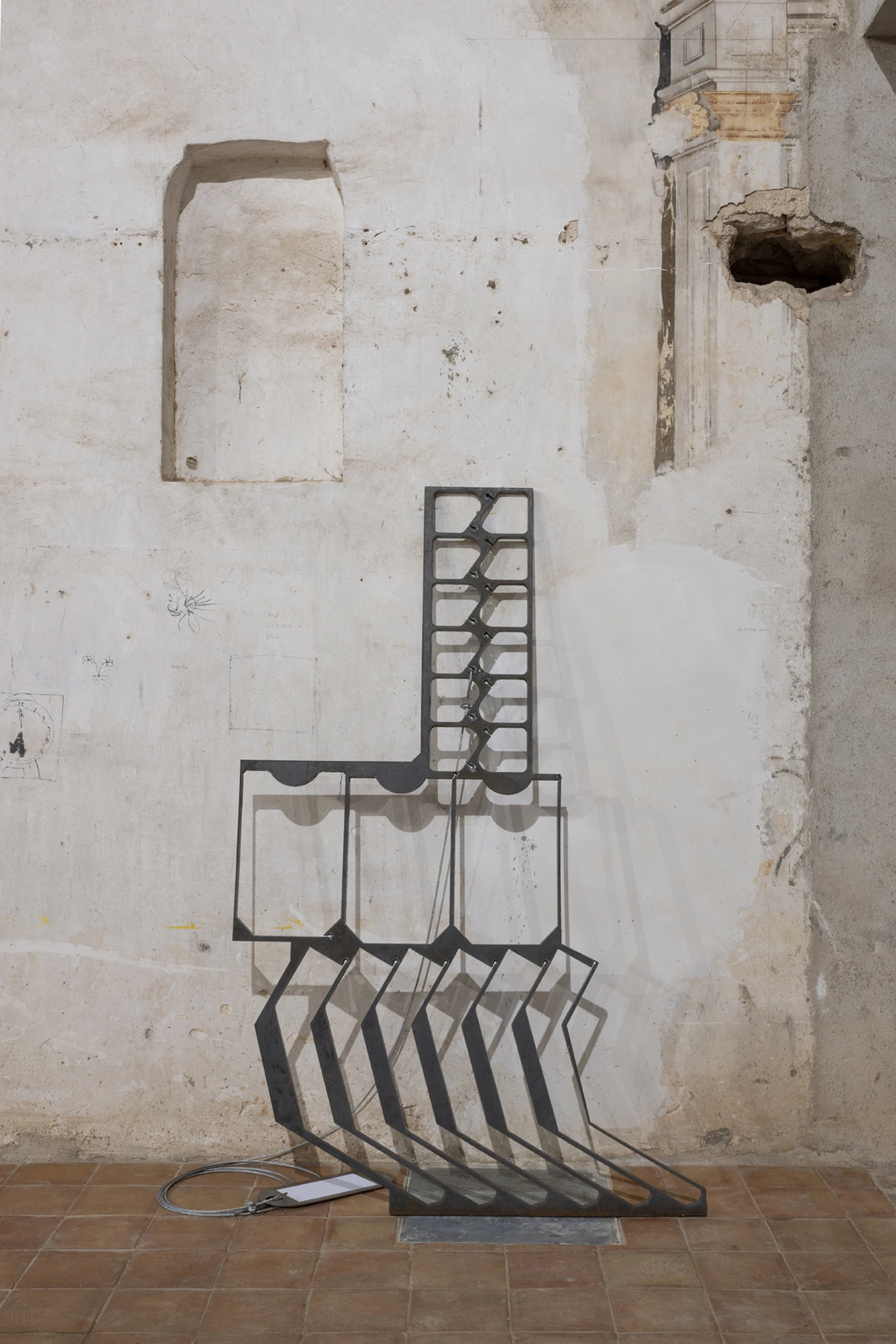
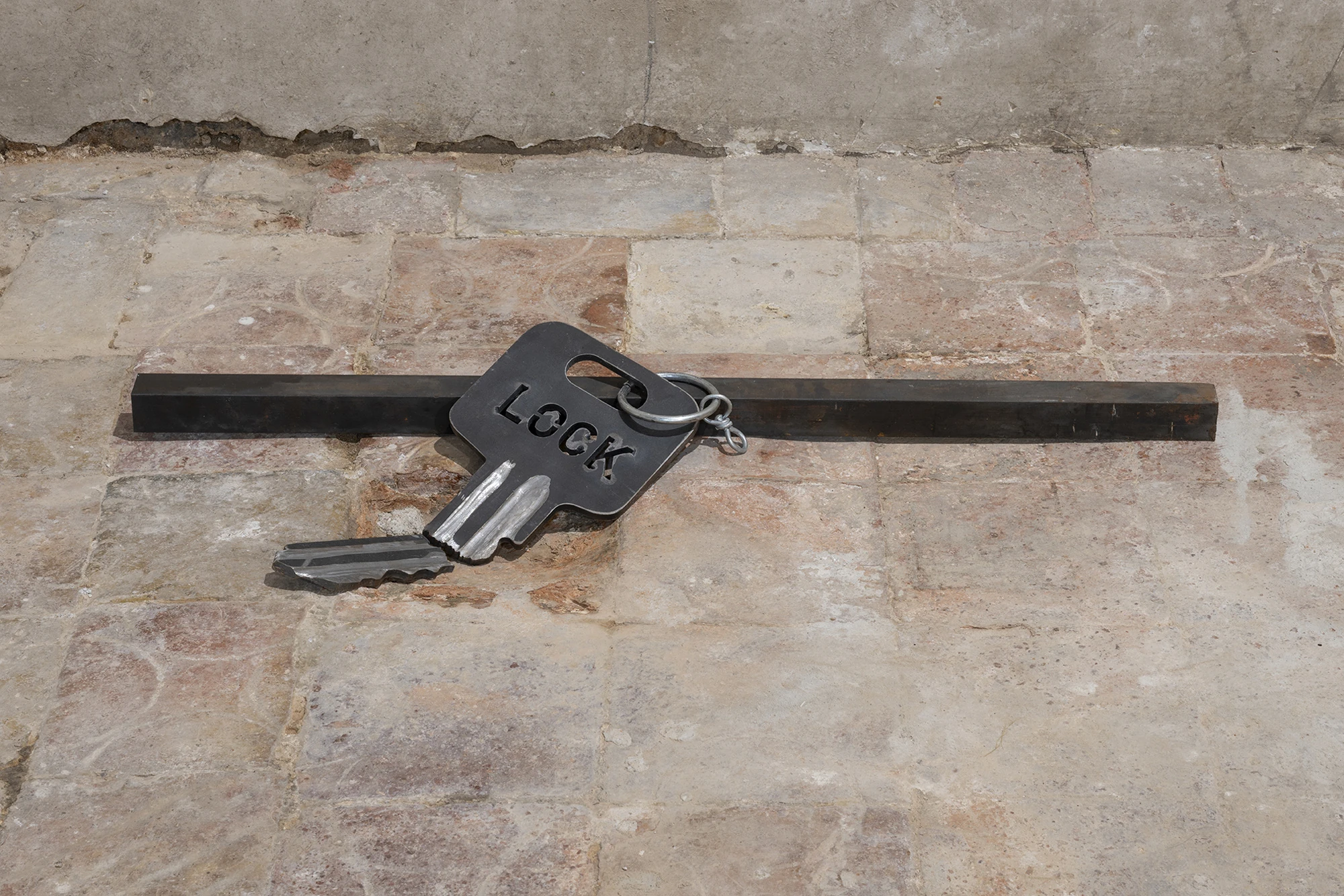
Jordi Mitjà works the register of scale. His Negatiu Reconsiderat, Clau Partida and Clau Doblegada turn discarded industrial stock and everyday finds into a sculptural body: a leaning steel grille, three cut circles tethered by cable to a blank metal tag, an oversized iron key stamped LOCK laid across a bar on the stone. Together the pieces hold to Pizà's wager that kin is 'not a secret language but... an understood language,' legible in the shared instinct to make something appear where nothing was.