Thisispaper Community
Join today.
Enter your email address to receive the latest news on emerging art, design, lifestyle and tech from Thisispaper, delivered straight to your inbox.
Oops! Something went wrong while submitting the form.
Instant access to new channels
The top stories curated daily
Weekly roundups of what's important
Original features and deep dives
Exclusive community features
Thisispaper+ Member

Issey Miyake HaaT flagship in Kyoto by Tokujin Yoshioka

Dates:
✧ Collect Post
Kyoto Guide
under the patronage of
Issey Miyake HaaT flagship in Kyoto by Tokujin Yoshioka
Alexander Zaxarov
Dec 20, 2025

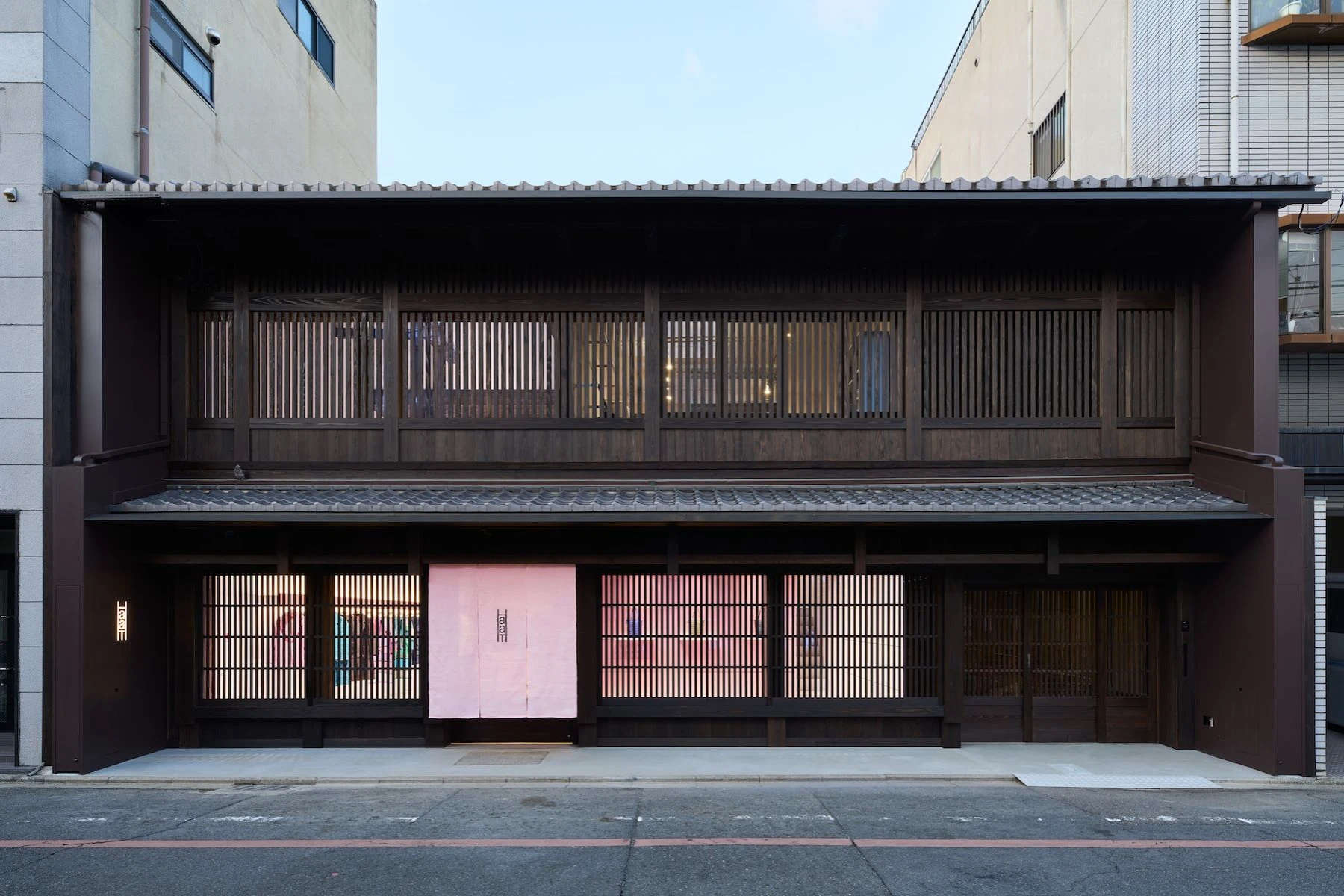
Issey Miyake’s HaaT line has found a quietly luminous home in Kyoto, where Tokujin Yoshioka has transformed a 150-year-old machiya into a retail project that feels both assuredly local and gently unbound from time.

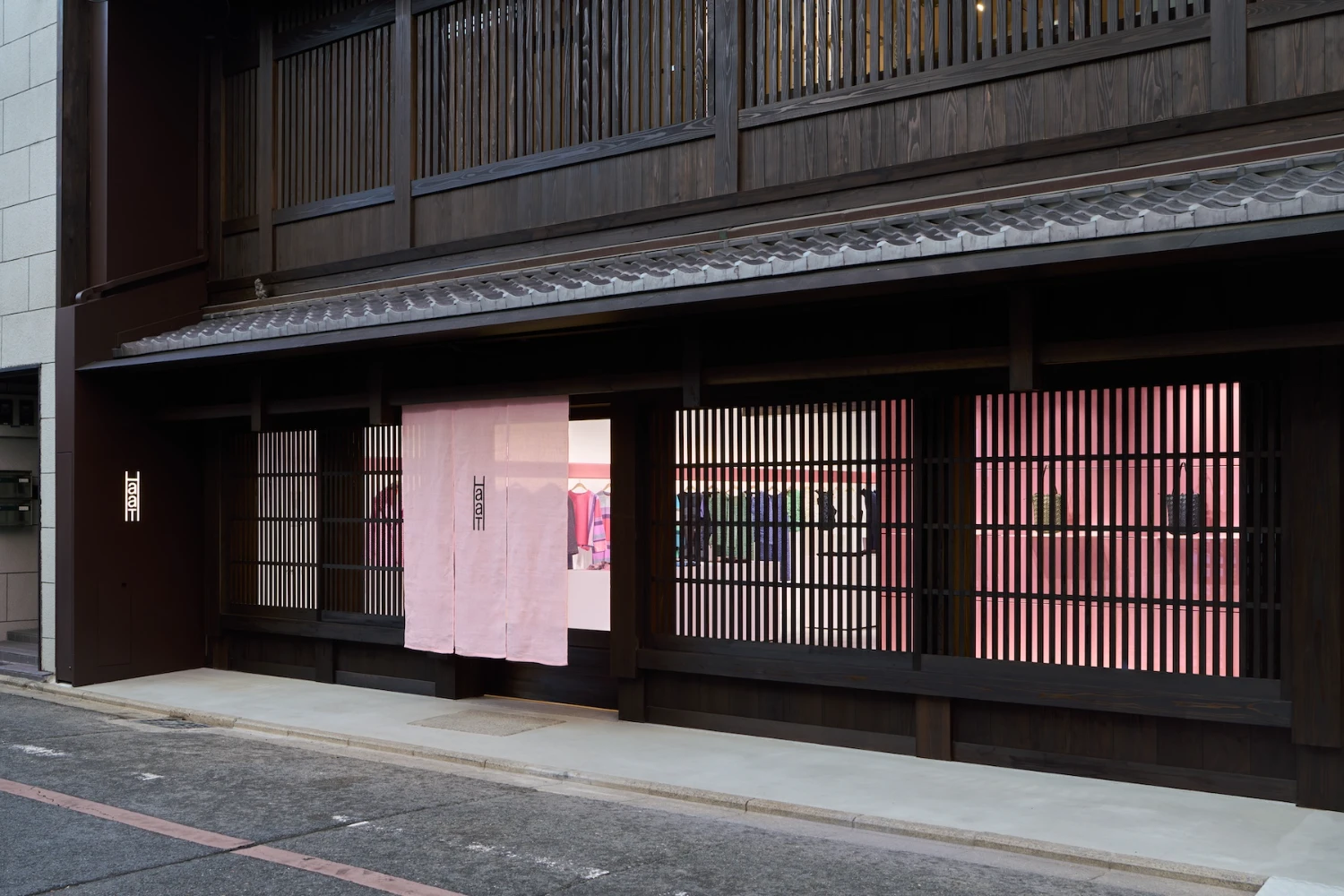
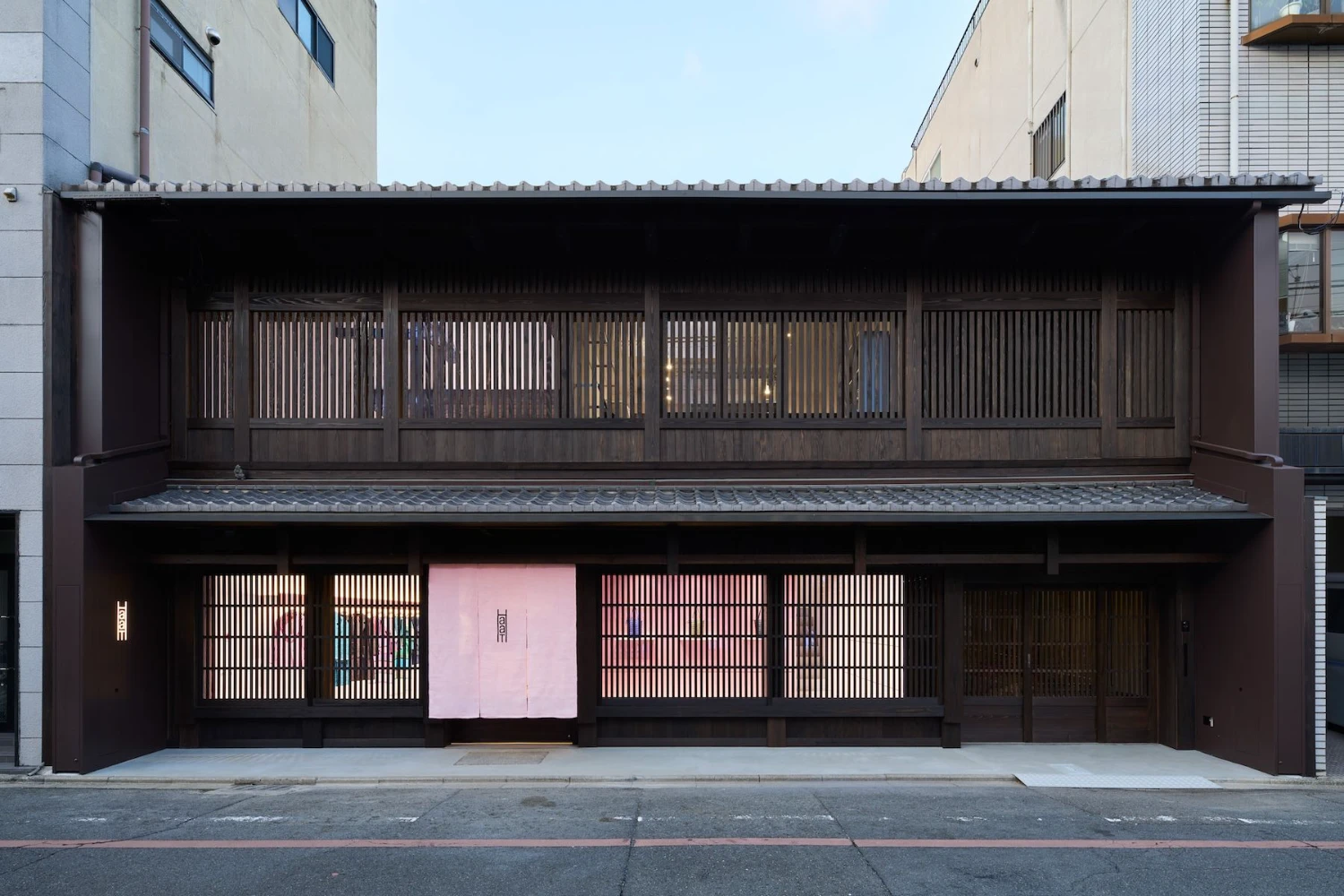
From the street, the façade reads as a restrained composition of charcoal-toned timber and latticework, its traditional geometry interrupted only by a pale pink noren that registers like a blush across the building’s surface. This chromatic shift is subtle but pointed: a signal that the renovation is not about reproduction, but recalibration.

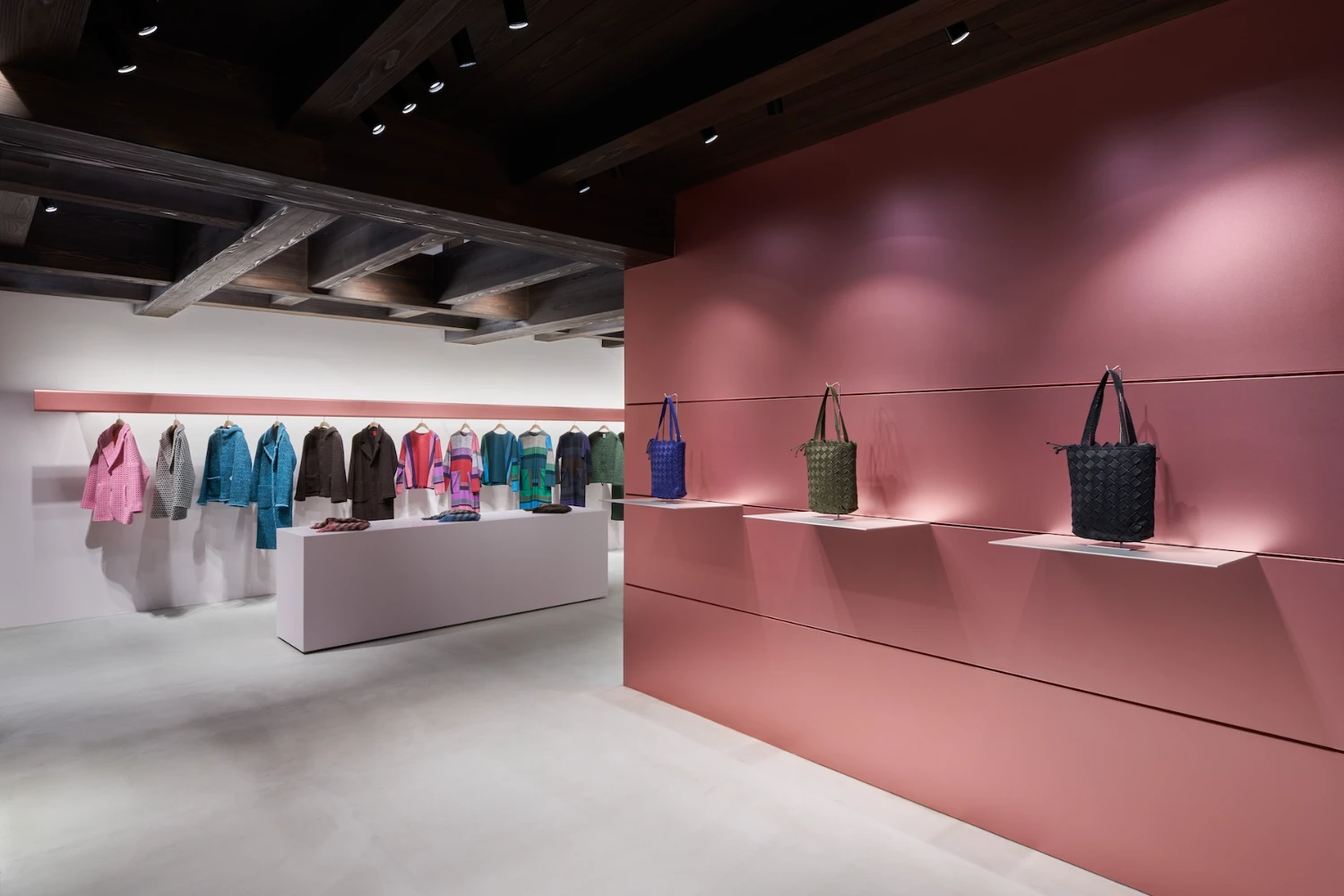
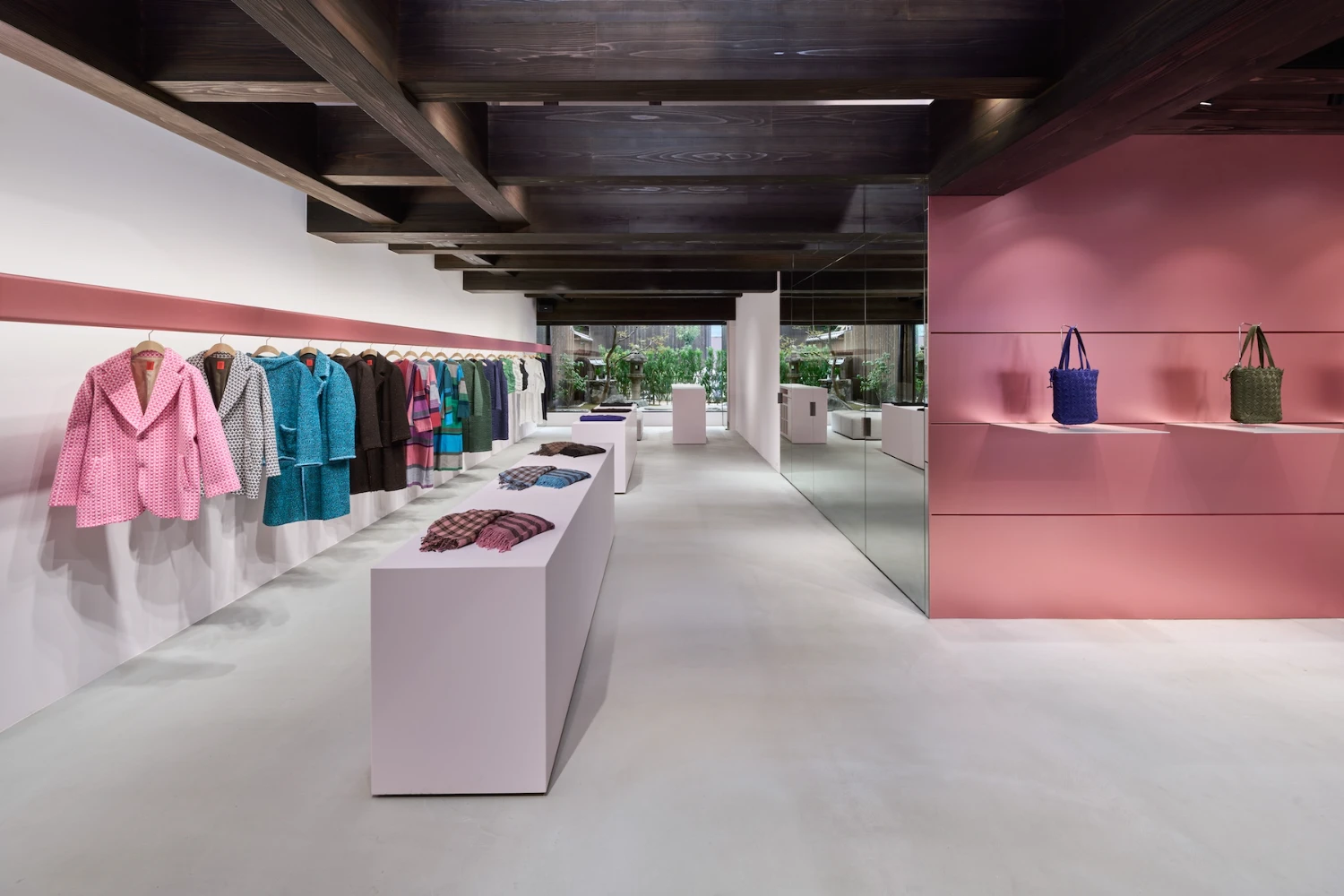
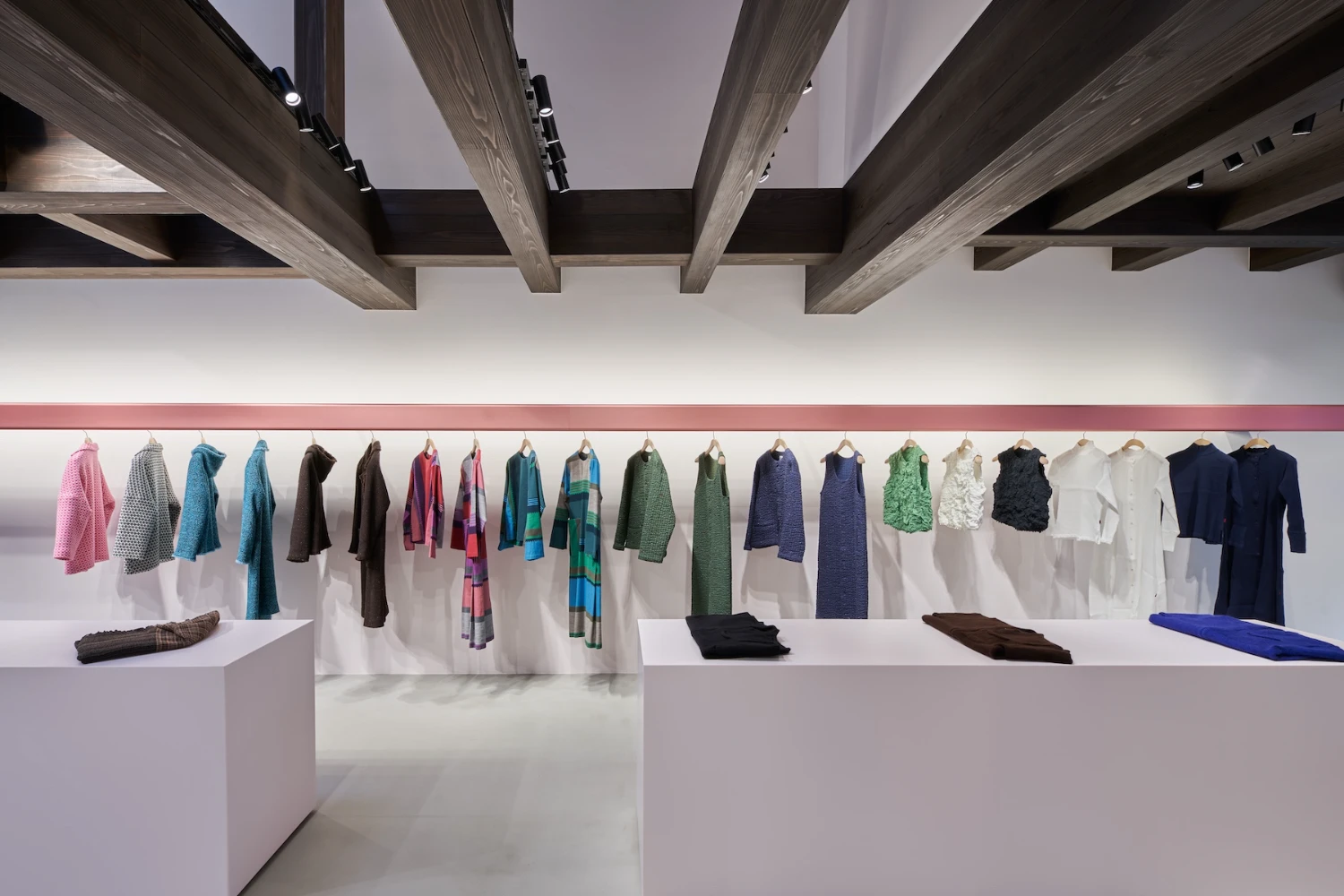
Inside, Yoshioka treats the original structure almost as a collaborator. Heavy beams overhead remain exposed, their historical weight offset by walls washed in pink-white gradients and floors cast in a soft, continuous grey. The intervention is spare, but never austere. Clothing hangs in a linear sweep of colour and texture, suspended from an aluminium rail tinged with cherry-blossom tones. Against the edited backdrop, the garments behave less like merchandise and more like a study in textile topographies, their shadows creating a quiet, rhythmic tension across the room.

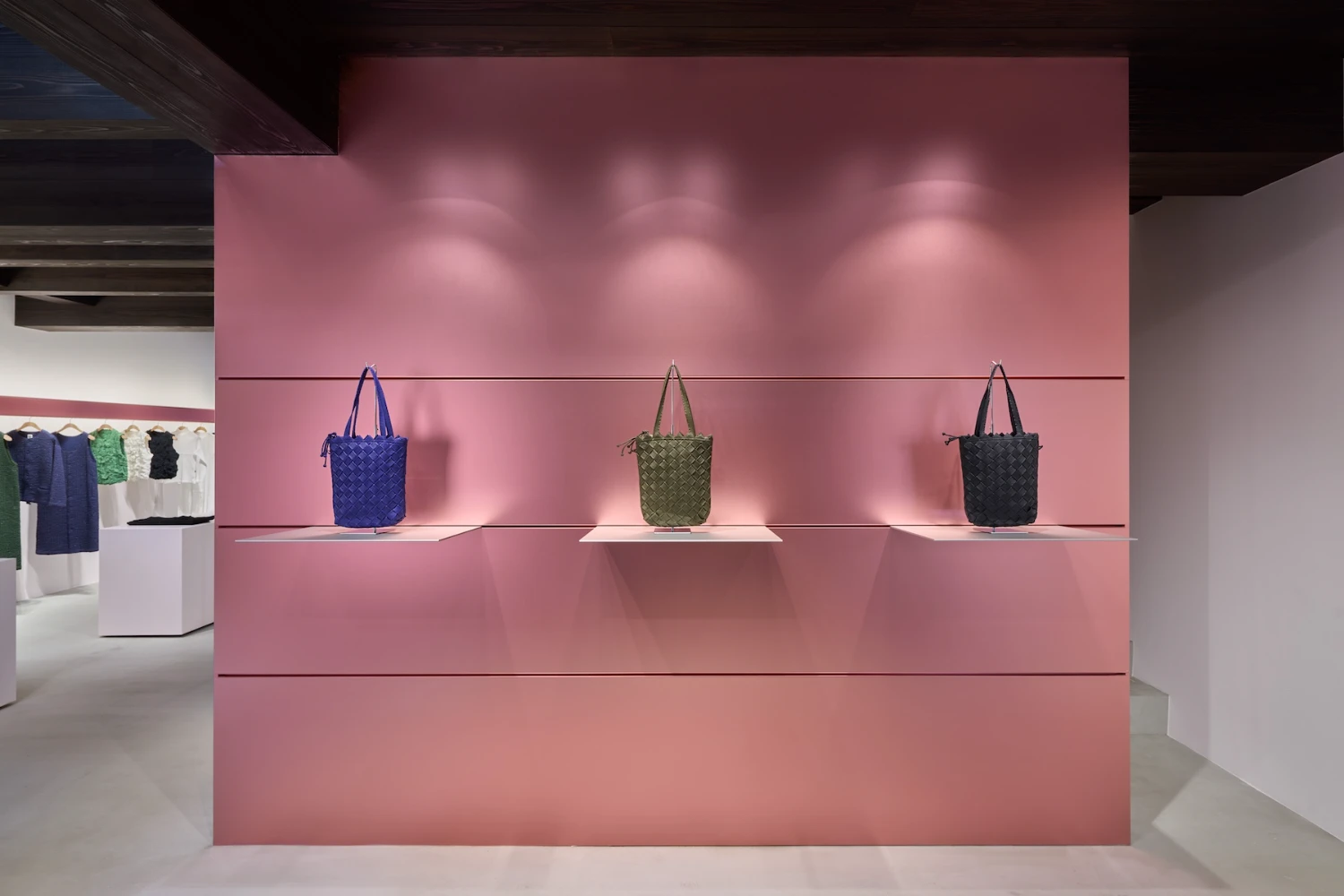
The pink motif, requested by HaaT artistic director Makiko Minagawa, becomes a connective tissue rather than an accent. On one side of the store, modular panels in rosé aluminium create a sculptural field for bags—objects presented with museum-like clarity, yet still grounded by the tactility of the materials around them. The palette feels unmistakably Kyoto: muted, atmospheric, guided by light rather than saturation. But it is also distinctly Yoshioka, whose fascination with translucency and reflection appears in mirrored surfaces that elongate the architecture and echo the timber eaves at the rear.

That garden-facing moment is the store’s emotional anchor. A wall of glass frames a small raked stone garden, where the machiya’s original eaves hover like an architectural haiku. On either side, mirrors create a near-infinite repeat of timber and shadow, collapsing past and present into a single gesture. It is here that the building feels most attuned to HaaT’s sensibility—a brand rooted in rigorous, cross-cultural textile innovation while refusing to sever itself from lineage.

Textile craft ultimately drives the narrative. The store foregrounds HaaT’s ongoing collaborations with artisans across Kyoto, Japan, and India, presenting materials such as Kumo Shibori and Roving Kogin not as nostalgic artefacts but as contemporary experiments in dimension, structure and handwork. Minagawa’s belief in sustaining craft through reinvention is embedded into the architecture itself: a space where tradition is not displayed behind glass, but metabolised into new form.

In Yoshioka’s hands, the machiya becomes less a preserved relic and more a site of continuity—a living frame for a design language that values care, restraint and the slow evolution of making. The flagship doesn’t shout its presence; it glows. And in Kyoto, a city shaped as much by silence as by spectacle, that glow feels exactly right.
Interested in Showcasing Your Work?

If you would like to feature your works on Thisispaper, please visit our Submission page and sign up to Thisispaper+ to submit your work. Once your submission is approved, your work will be showcased to our global audience of 2 million art, architecture, and design professionals and enthusiasts.
No items found.
We love less
but there is more.
Become a Thisispaper+ member today to unlock full access to our magazine, advanced tools, and support our work.
Get two months FREE
with annual subscription
We love less
but there is more.
Become a Thisispaper+ member today to unlock full access to our magazine, advanced tools, and support our work.
Get two months FREE
with annual subscription
No items found.
Alexander Zaxarov
Dec 20, 2025

Issey Miyake’s HaaT line has found a quietly luminous home in Kyoto, where Tokujin Yoshioka has transformed a 150-year-old machiya into a retail project that feels both assuredly local and gently unbound from time.

From the street, the façade reads as a restrained composition of charcoal-toned timber and latticework, its traditional geometry interrupted only by a pale pink noren that registers like a blush across the building’s surface. This chromatic shift is subtle but pointed: a signal that the renovation is not about reproduction, but recalibration.

Inside, Yoshioka treats the original structure almost as a collaborator. Heavy beams overhead remain exposed, their historical weight offset by walls washed in pink-white gradients and floors cast in a soft, continuous grey. The intervention is spare, but never austere. Clothing hangs in a linear sweep of colour and texture, suspended from an aluminium rail tinged with cherry-blossom tones. Against the edited backdrop, the garments behave less like merchandise and more like a study in textile topographies, their shadows creating a quiet, rhythmic tension across the room.

The pink motif, requested by HaaT artistic director Makiko Minagawa, becomes a connective tissue rather than an accent. On one side of the store, modular panels in rosé aluminium create a sculptural field for bags—objects presented with museum-like clarity, yet still grounded by the tactility of the materials around them. The palette feels unmistakably Kyoto: muted, atmospheric, guided by light rather than saturation. But it is also distinctly Yoshioka, whose fascination with translucency and reflection appears in mirrored surfaces that elongate the architecture and echo the timber eaves at the rear.

That garden-facing moment is the store’s emotional anchor. A wall of glass frames a small raked stone garden, where the machiya’s original eaves hover like an architectural haiku. On either side, mirrors create a near-infinite repeat of timber and shadow, collapsing past and present into a single gesture. It is here that the building feels most attuned to HaaT’s sensibility—a brand rooted in rigorous, cross-cultural textile innovation while refusing to sever itself from lineage.

Textile craft ultimately drives the narrative. The store foregrounds HaaT’s ongoing collaborations with artisans across Kyoto, Japan, and India, presenting materials such as Kumo Shibori and Roving Kogin not as nostalgic artefacts but as contemporary experiments in dimension, structure and handwork. Minagawa’s belief in sustaining craft through reinvention is embedded into the architecture itself: a space where tradition is not displayed behind glass, but metabolised into new form.

In Yoshioka’s hands, the machiya becomes less a preserved relic and more a site of continuity—a living frame for a design language that values care, restraint and the slow evolution of making. The flagship doesn’t shout its presence; it glows. And in Kyoto, a city shaped as much by silence as by spectacle, that glow feels exactly right.
Interested in Showcasing Your Work?

If you would like to feature your works on Thisispaper, please visit our Submission page and subscribe to Thisispaper+. Once your submission is approved, your work will be showcased to our global audience of 2 million art, architecture, and design professionals and enthusiasts.
Thisispaper+
Kyoto Guide
20+ Locations
Web Access
Link to Maps
Welcome to Kyoto, where Japan's enduring elegance seamlessly blends with contemporary creativity. This guide to Kyoto's design culture takes you on a journey through refined art galleries, concept stores, and local ateliers, unveiling a city steeped in profound artistry and understated innovation.
Explore
Kyoto Guide

Join Thisispaper+
Unlock access to 2500 stories, curated guides + editions, and share your work with a global network of architects, artists, writers and designers who are shaping the future.
Get two months FREE
with annual subscription
Atlas
A new and interactive way to explore the most inspiring places around the world.
Interactive map
Linked to articles
300+ curated locations
Google + Apple directions
Smart filters
Subscribe to Explore+
Travel Guides
Immerse yourself in timeless destinations, hidden gems, and creative spaces—curated by humans, not algorithms.
Explore All Guides +
Curated Editions
Dive deeper into carefully curated editions, designed to feed your curiosity and foster exploration.
Off-the-Grid
Jutaku
Sacral Journey
minimum
The New Chair
Explore All Editions +
Submission Module
Submit your project and gain the chance to showcase your work to our worldwide audience of over 2M architects, designers, artists, and curious minds.
Learn More+
Become a Thisispaper+ member today to unlock full access to our magazine, submit your project and support our work.
Join Thisispaper+Join Thisispaper+
€ 9 EUR
/month
Cancel anytime
Get two months FREE
with annual subscription