.webp)
In Helsinki, Didi NG Wing Yin builds In Between Wood and Fire from 10 x 10 cm construction lumber, splitting, carving and charring ordinary building timber into five pieces that keep every crack.
Construction lumber is the timber nobody photographs. Sawn to 10 x 10 cm and stacked on building sites, it is specified for what it can hold up, not for how it looks, and it is expected to misbehave: to crack as it dries, to twist off square, to run soft in one section and hard in the next. Furniture making usually answers this by cutting the fault out. In Between Wood and Fire starts from the fault and works outward.
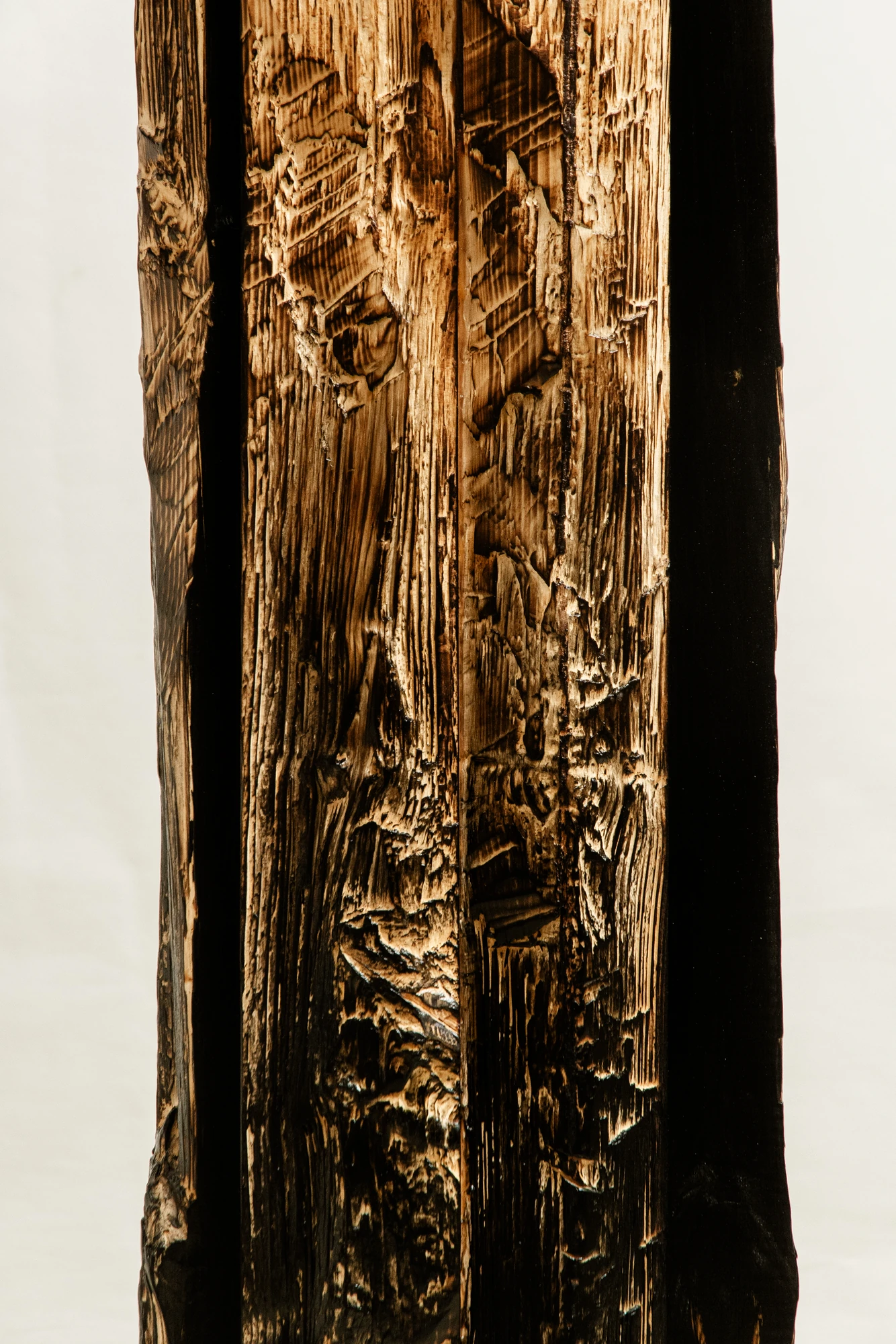
Three operations do the work. Splitting follows the grain rather than the drawing, opening the beam along the line it was already inclined to fail on and exposing the fibrous interior. Carving removes material while leaving the tool's argument with the wood on the surface, chatter, torn fibre, facets where the blade skipped. Charring is the third and the least reversible: fire darkens the outside while pulling the grain beneath it into sharper relief, a change that cannot be taken back.
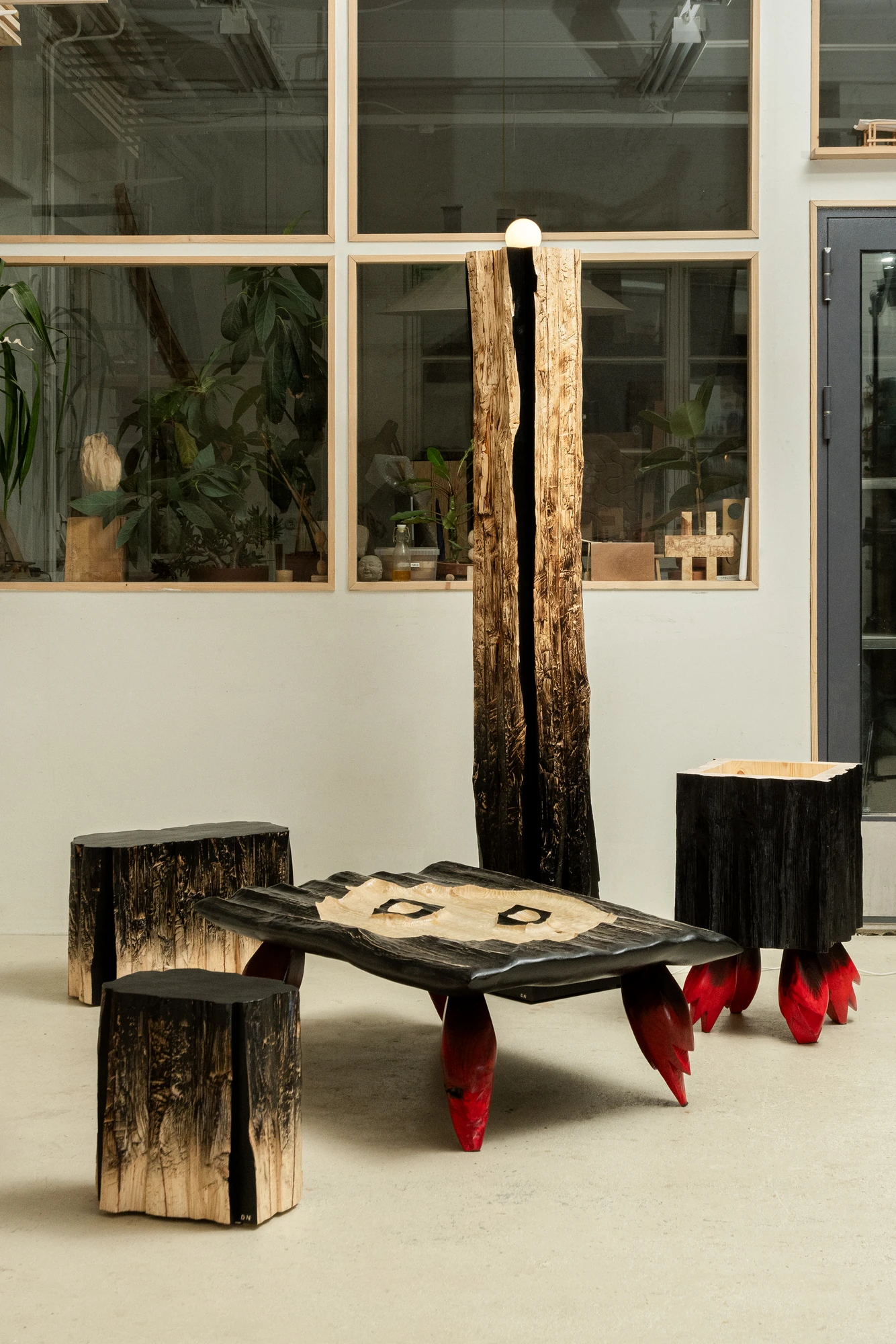
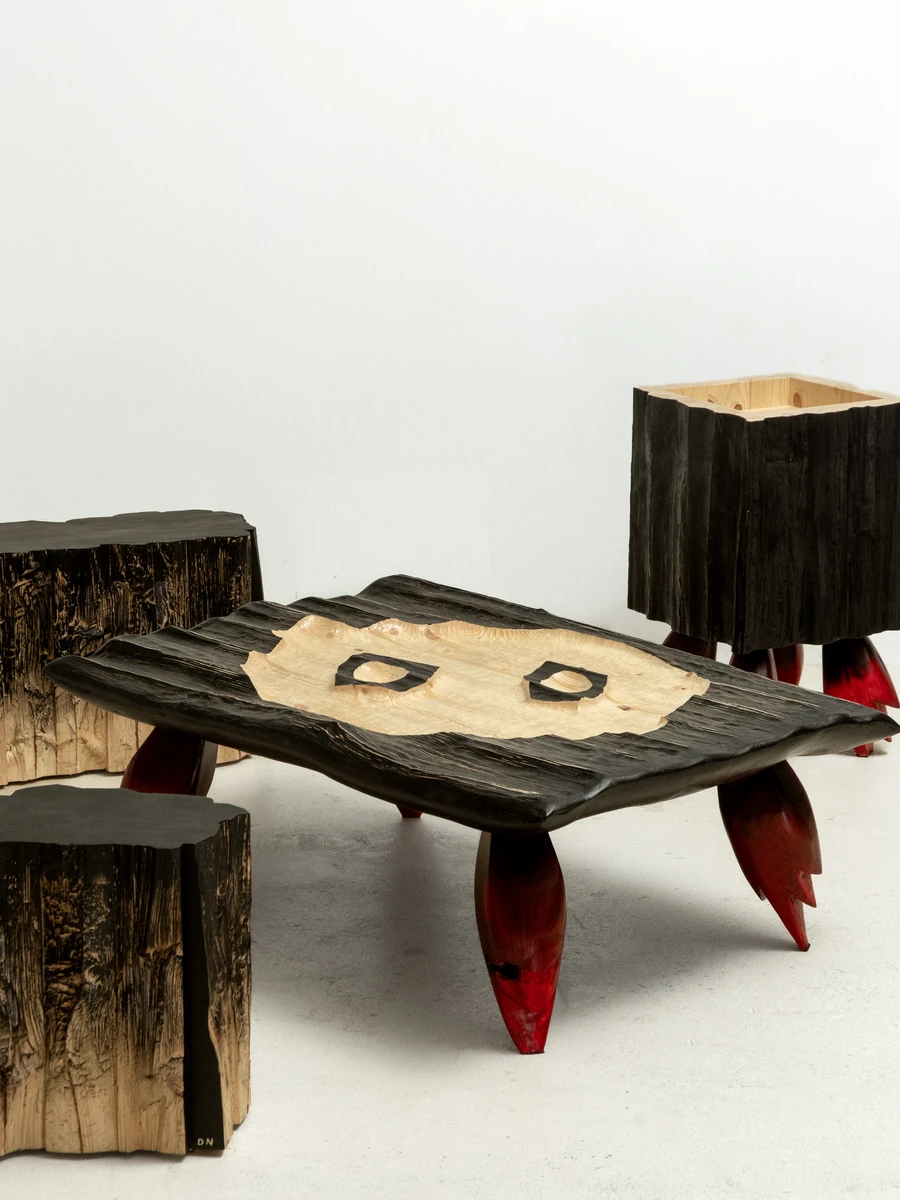
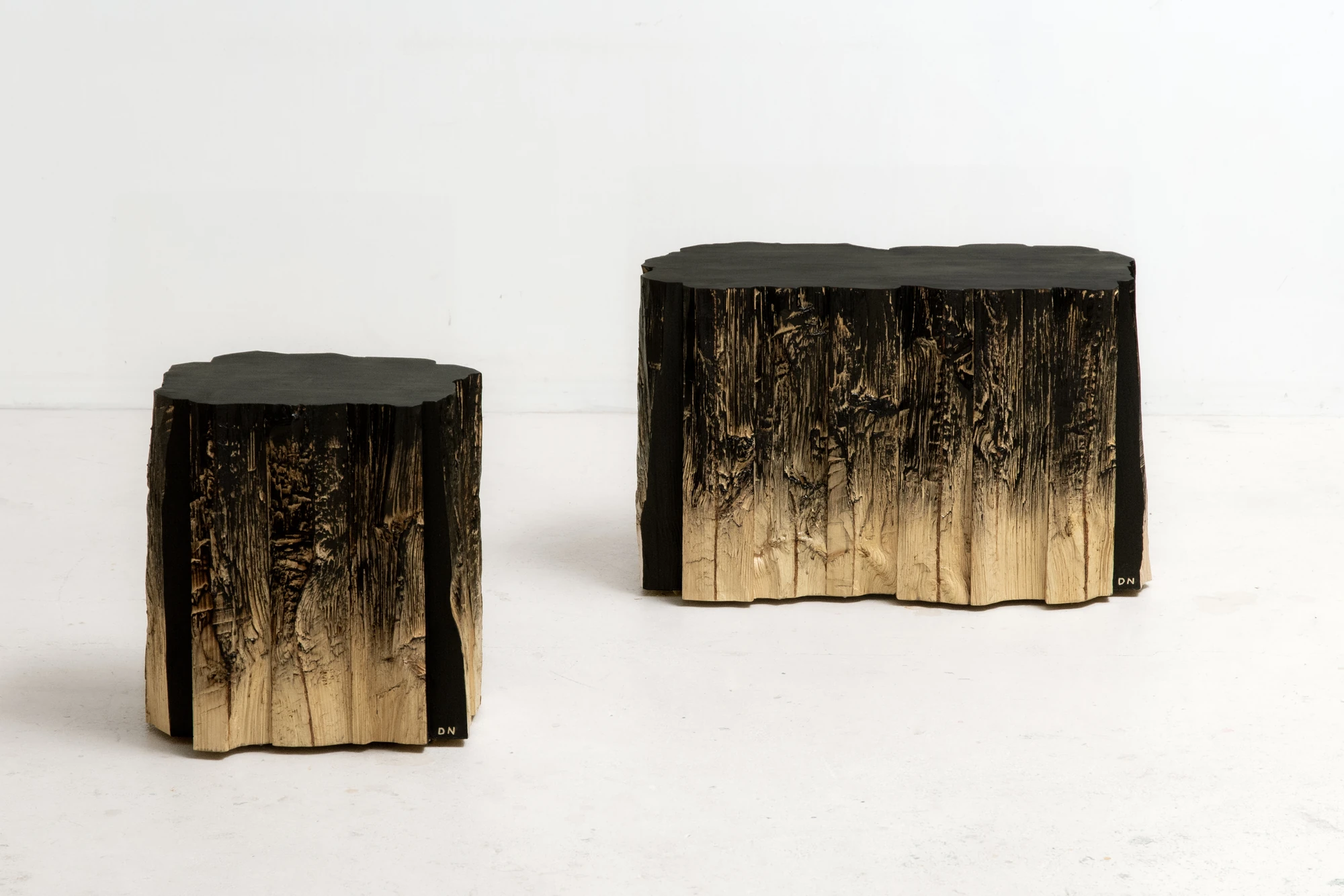
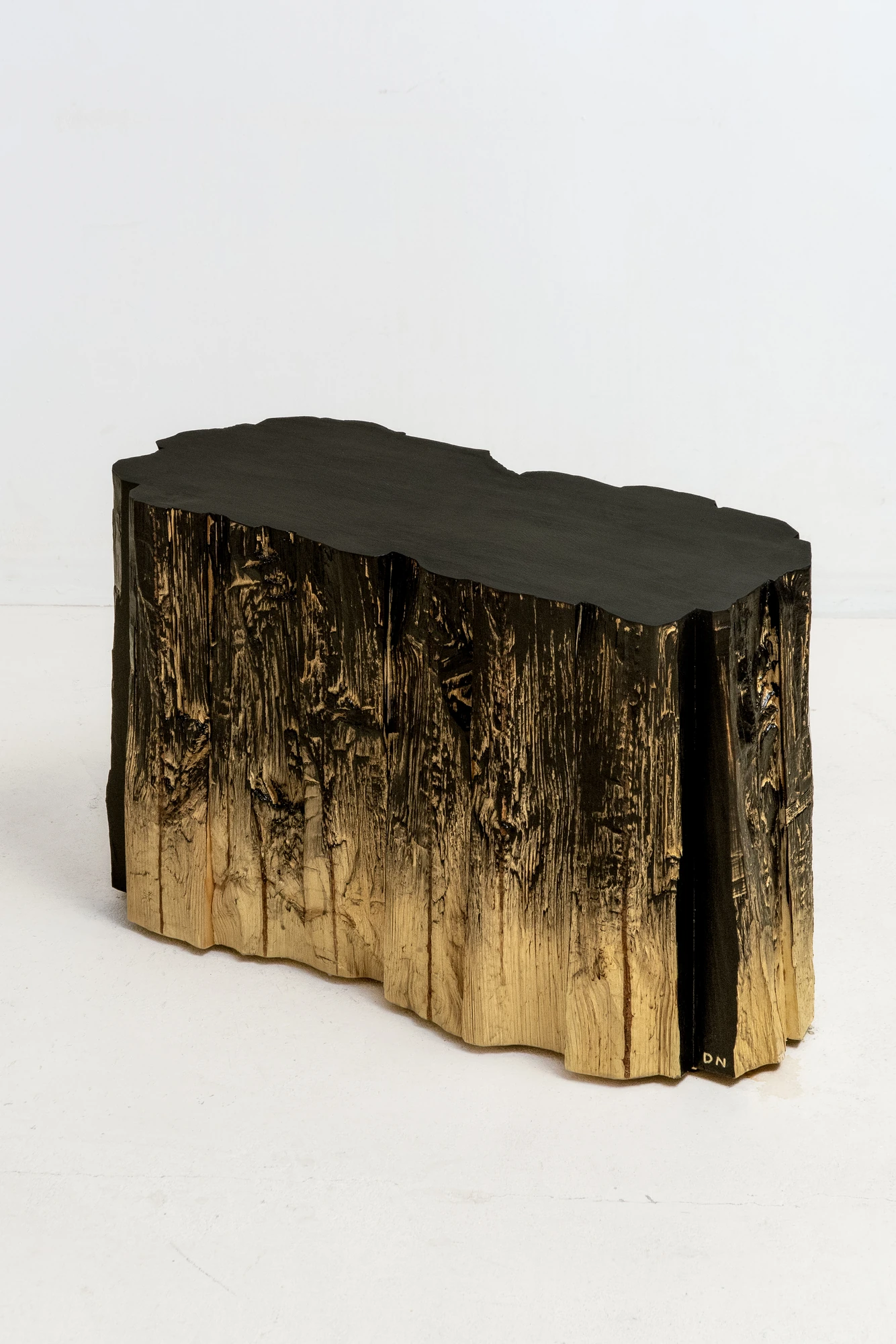
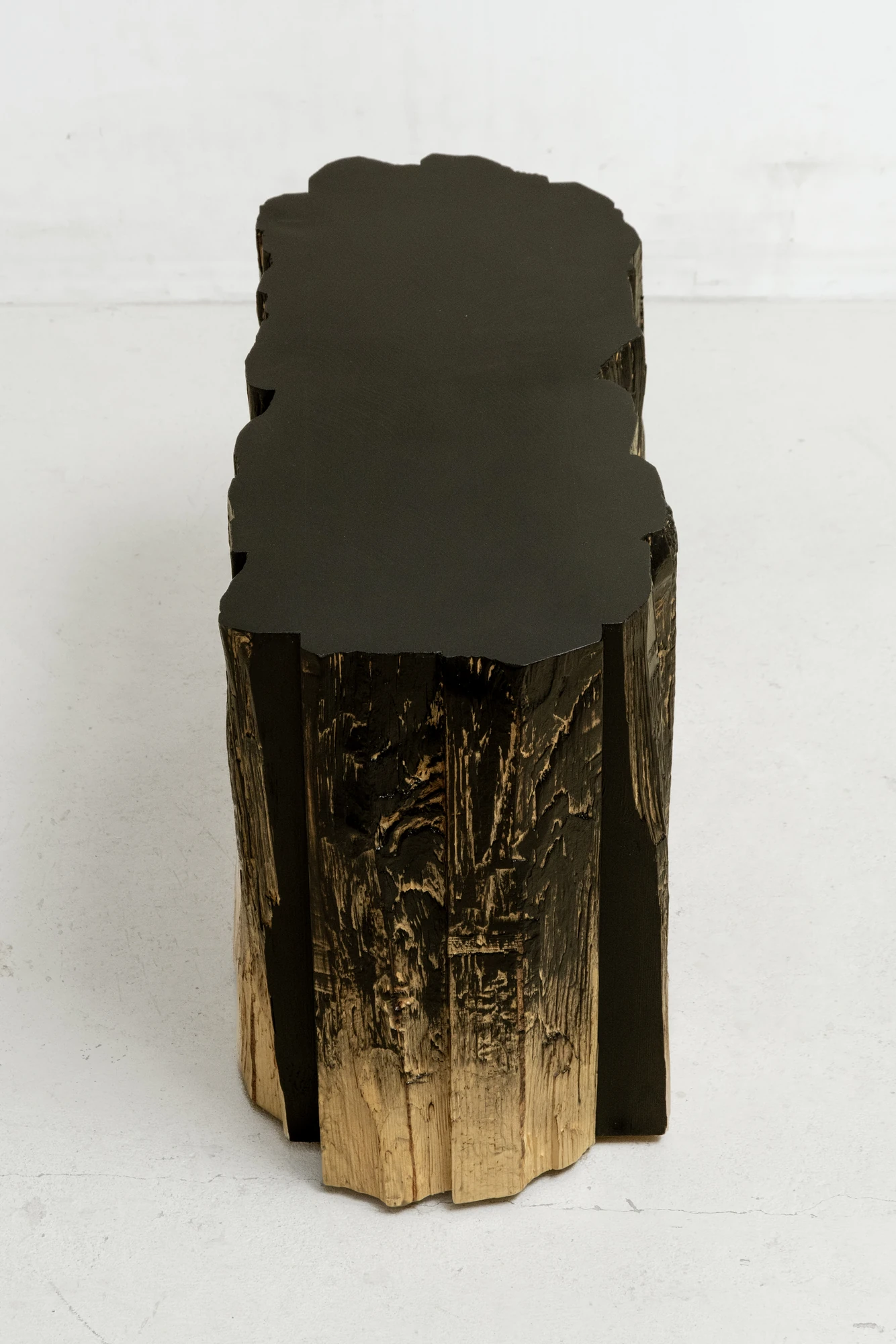
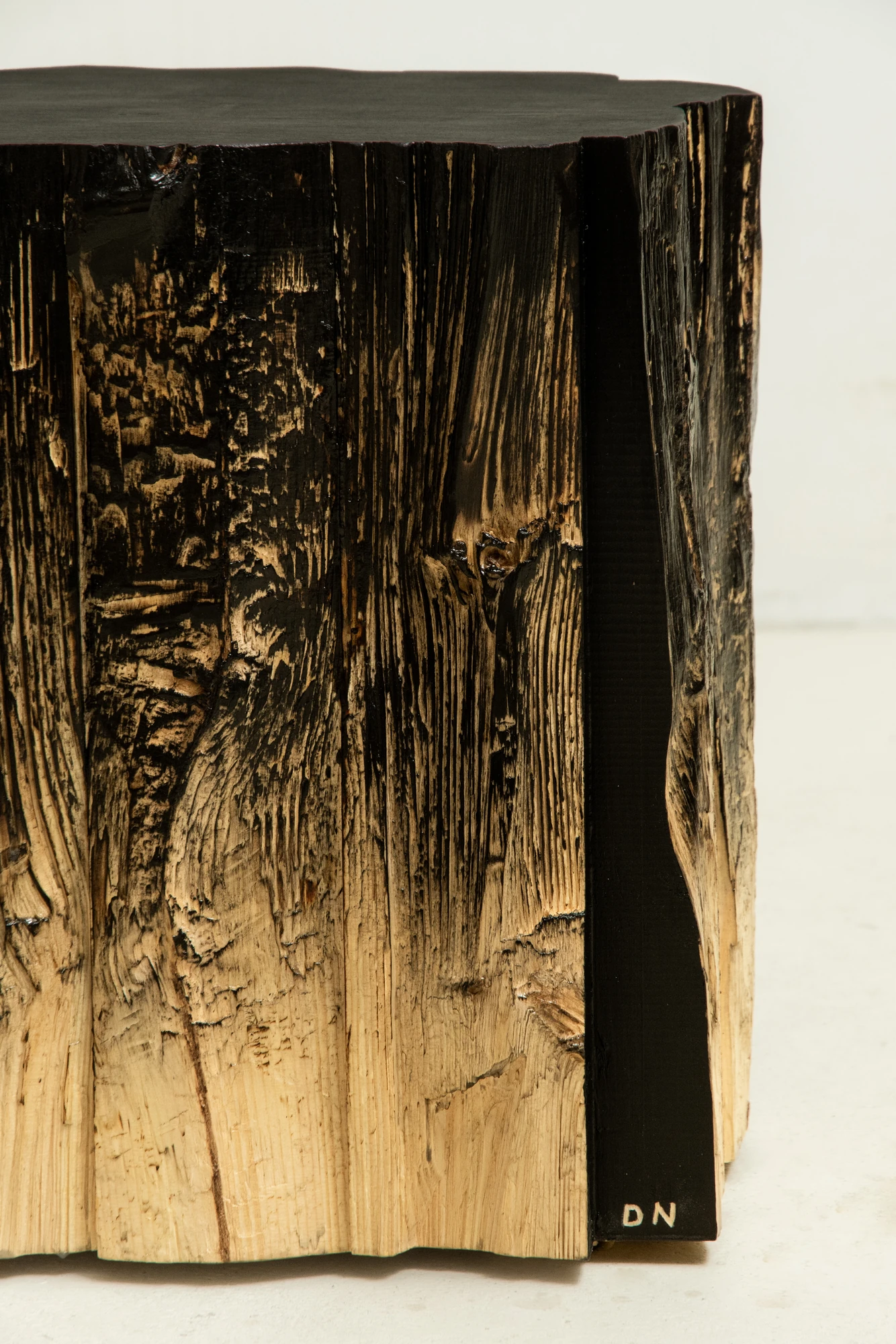
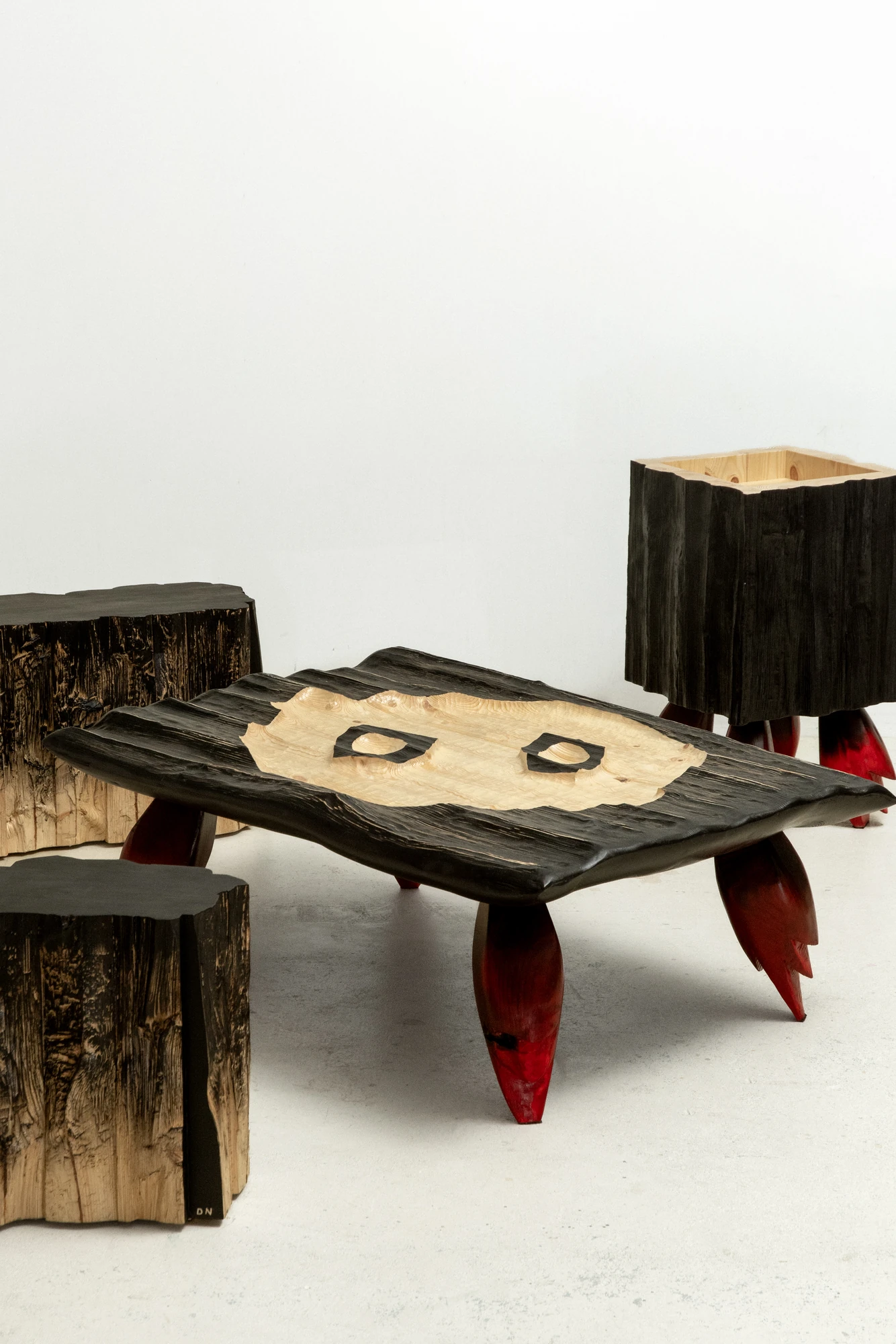
The two Pith stools show the sequence most plainly. Their flanks are split faces, fluted and torn, still carrying the ragged edges left by the wood's own separation. Across those flanks the burn runs as a gradient, near black at the top and thinning to raw pale timber at the foot, so the char reads as something that happened rather than a finish that was applied. The seat is the counterargument: a flat matte plane, planed level, black, with the initials DN lettered small on one facet.
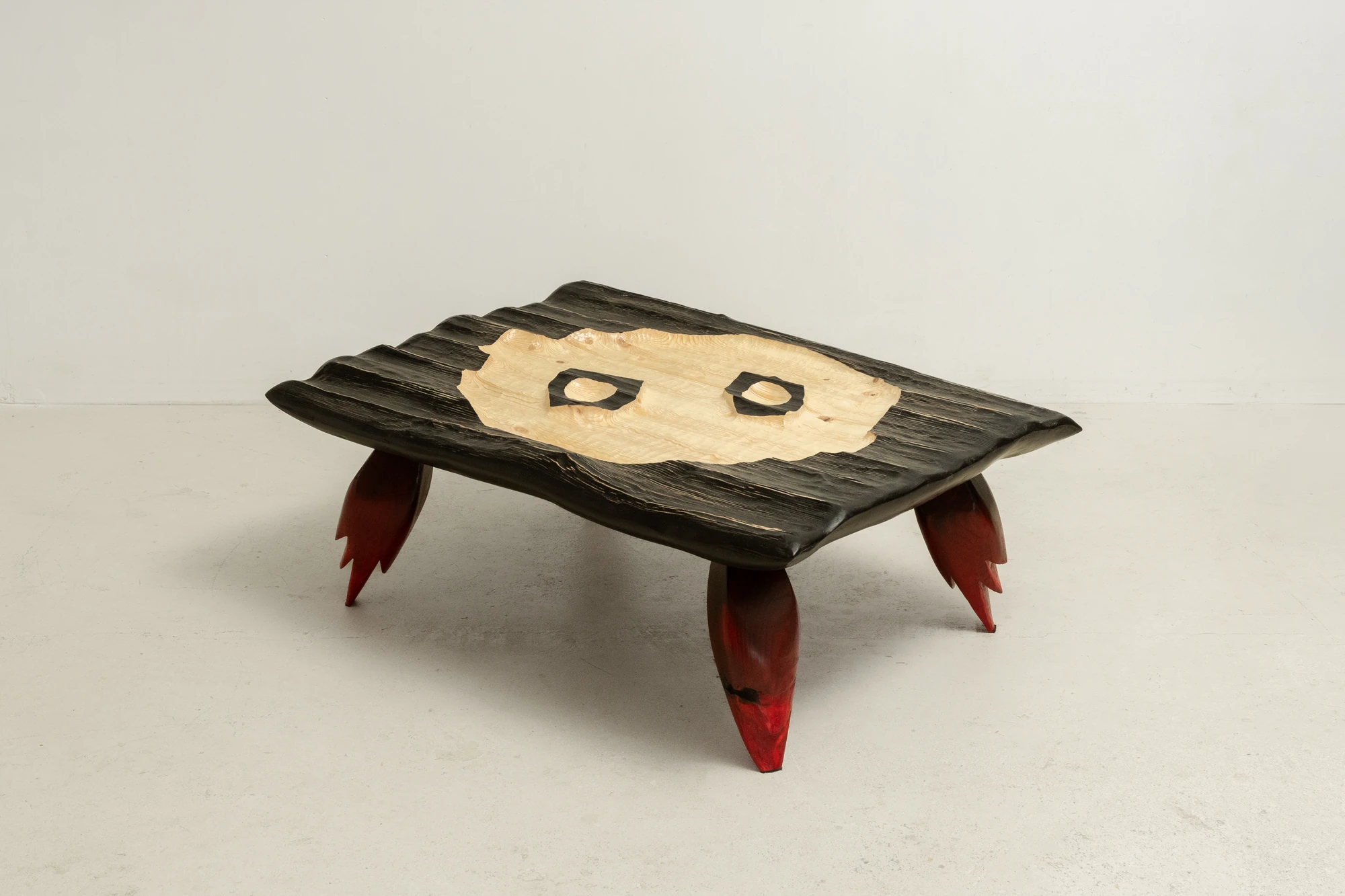
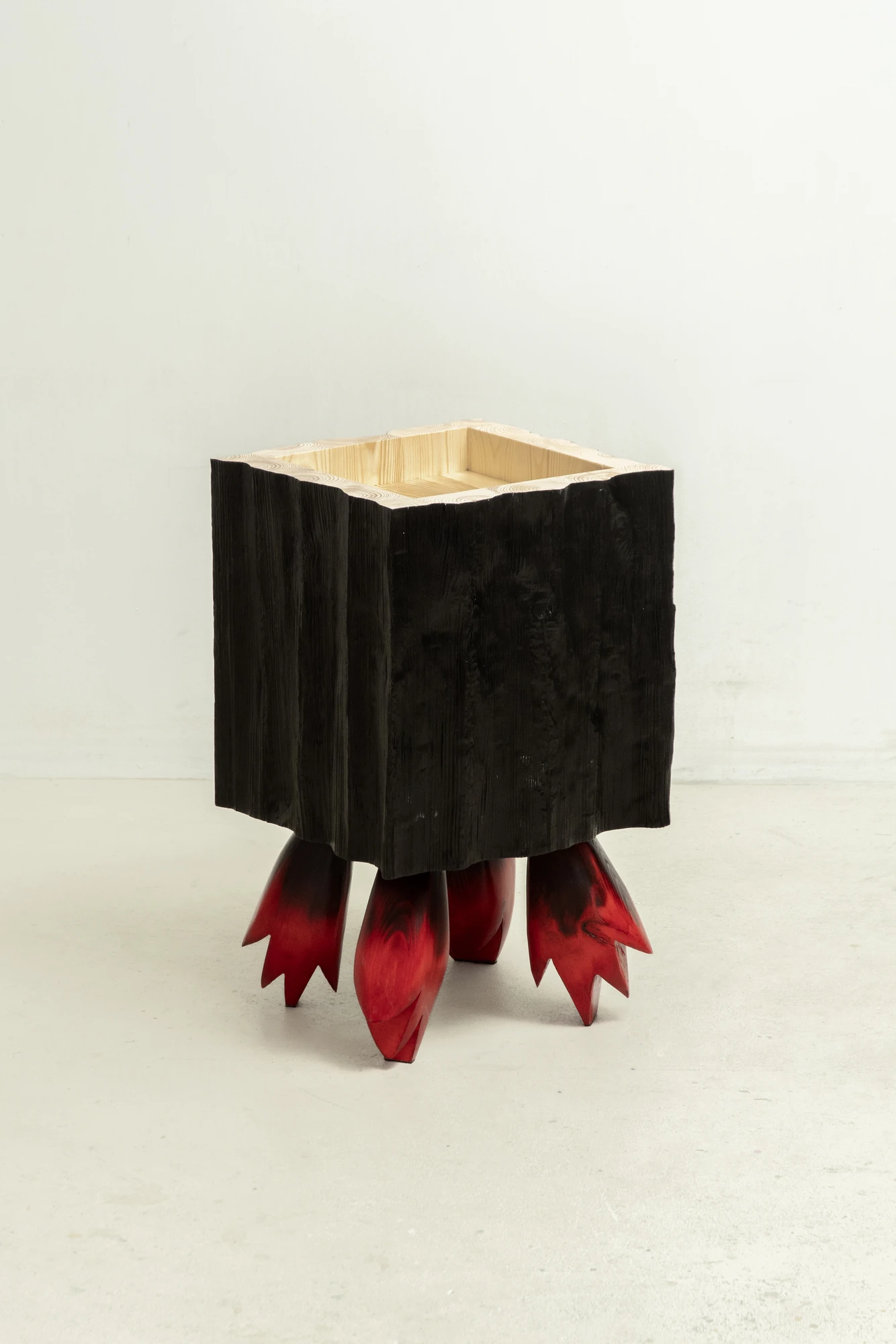
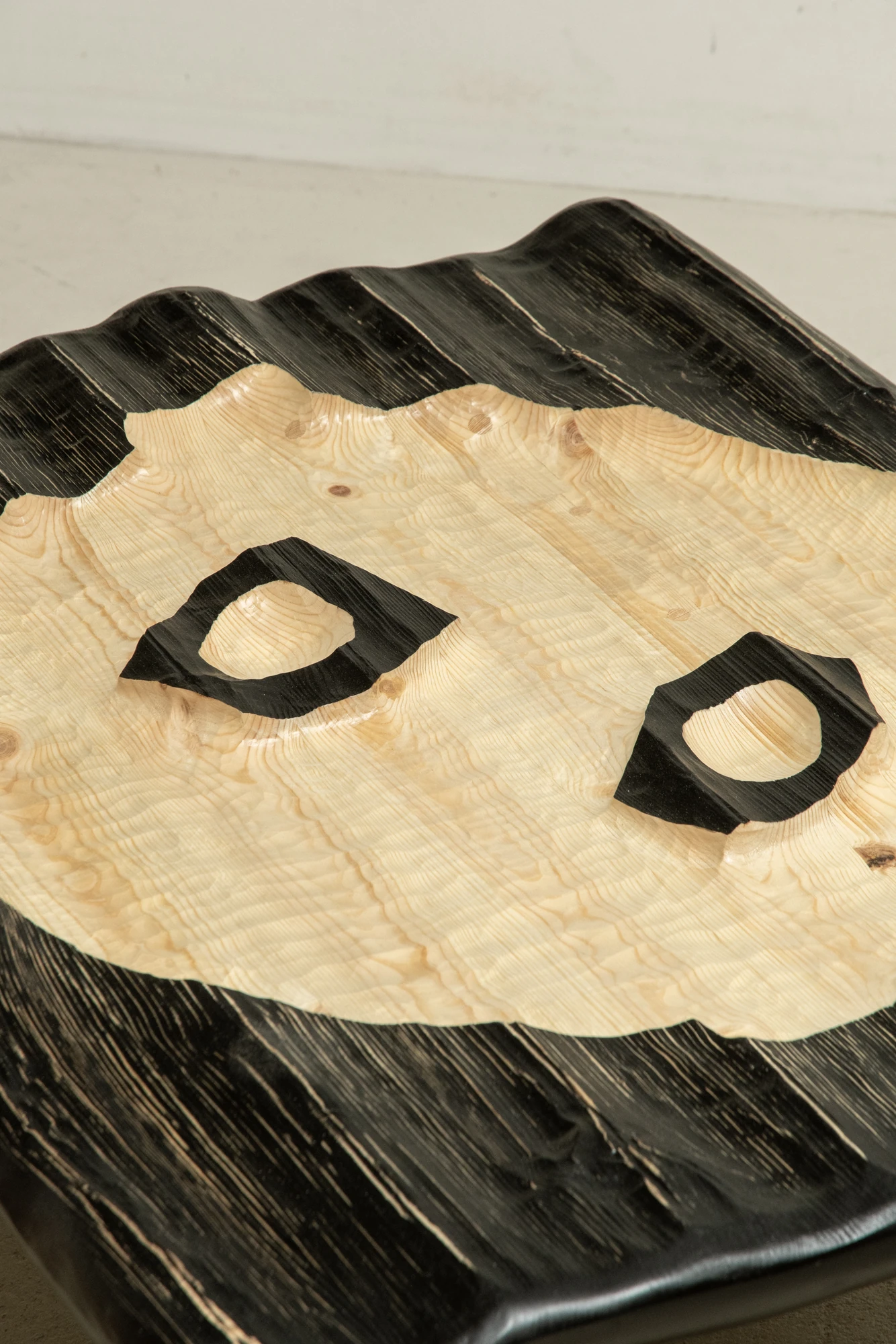
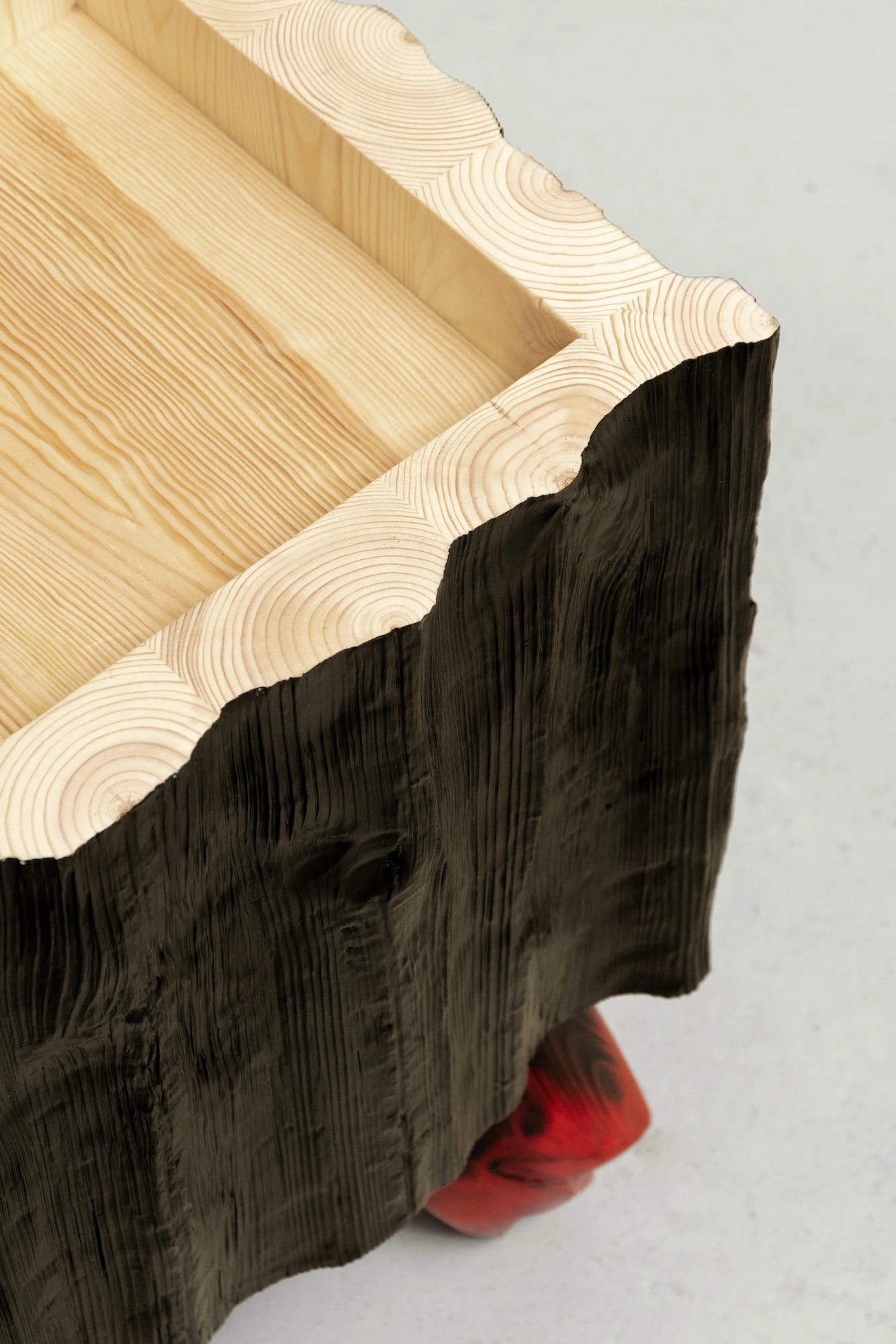
The Rocket pieces run hotter. The Rocket Side Coffee Table stands on four legs that taper to points and are coloured a hard red, and its blackened top has been cut back at the centre to an irregular field of pale wood holding two dark apertures. Rocket Side Table No.2 repeats those legs under a carbonised box, open at the top, where the burnt exterior gives way to an interior of untouched timber, its growth rings running in tight arcs around the rim.
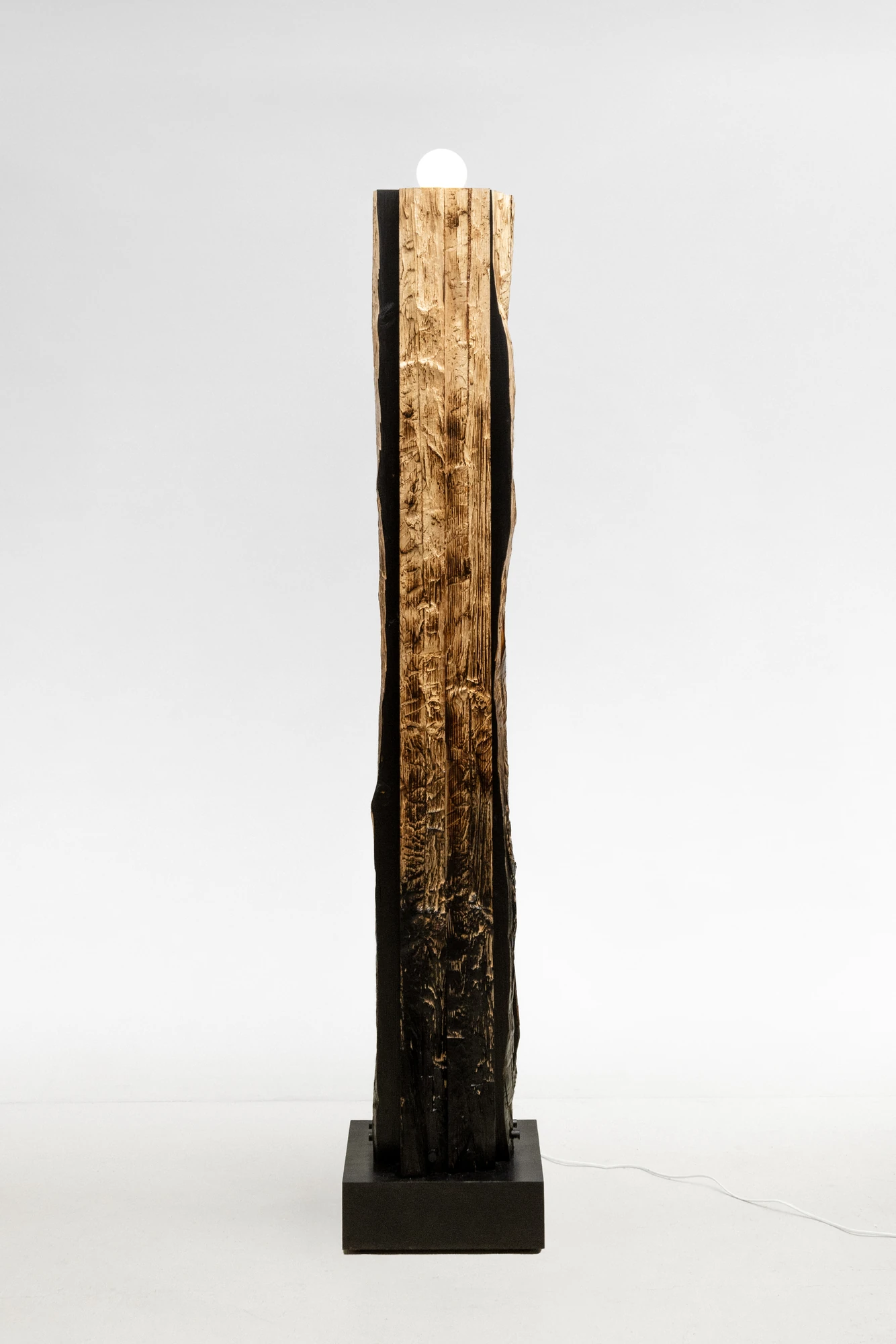
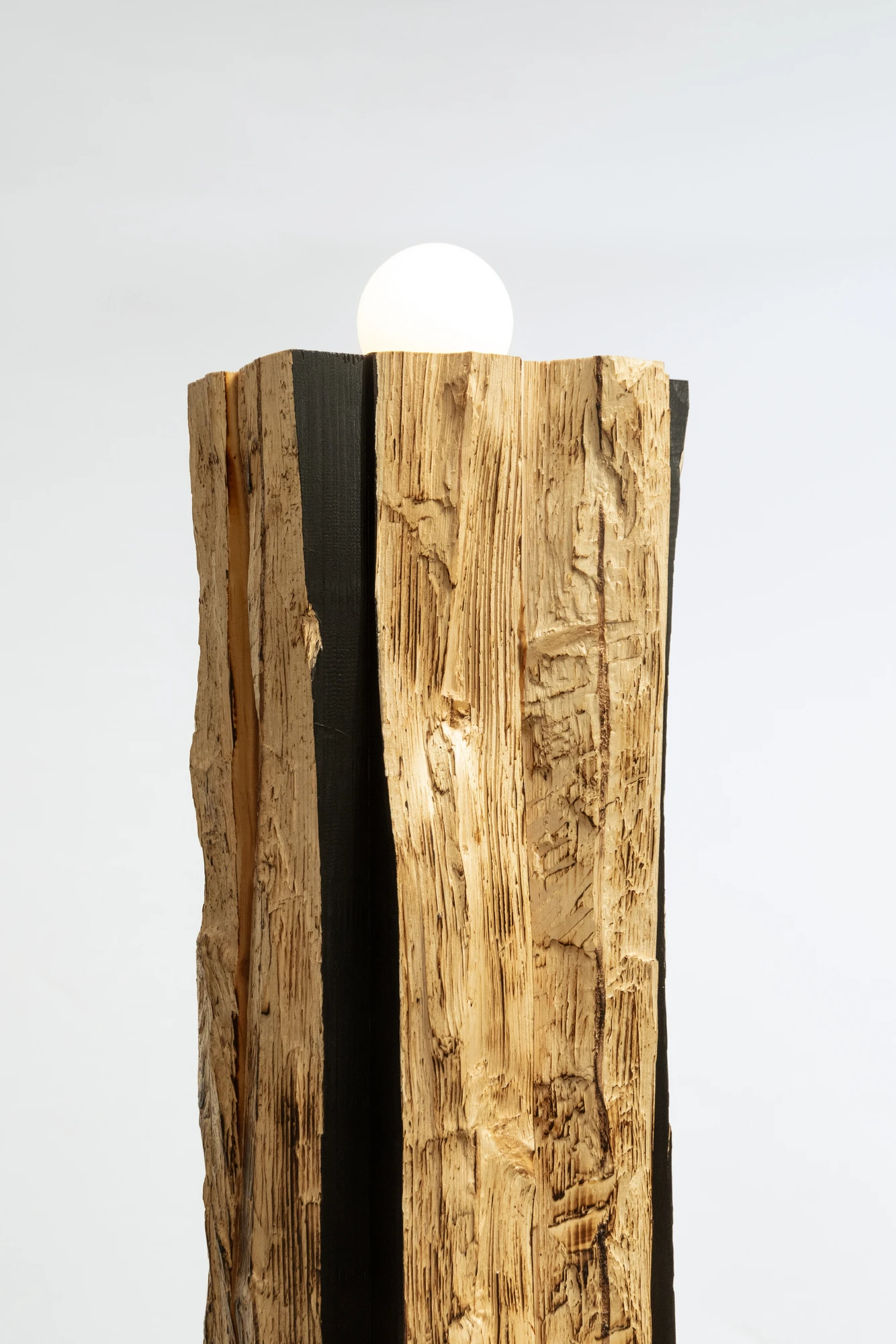
The Pith Floor Lamp is the most direct statement of method. A single length is split down its full height and left standing with the cleft open, and an opal globe sits in the notch at the top, so the light source occupies the gap the material made. Char is heaviest at the base and lifts as the column rises. Nothing is concealed in a housing. The fixture is the beam, plus a bulb.
What the collection tests is the price of perfection. A material chosen for being cheap and overlooked is given the attention usually reserved for hardwood, and the flaws that would disqualify it become the reason to look at it. Value sits not in the stock but in the hours spent reading it, and the work leaves an open question about whether flawlessness was ever the point.