On a hillside above the Nagara River in Gifu, Japan, Mononoma designs House in Seichodai, a single-story U-shaped dwelling that manipulates floor height to give a large air volume its pulse.
The site sits on a hillside cleared and parcelled about four decades ago, a residential grid still loose enough that young trees have reclaimed the gaps between plots. To the west, the Nagara River threads between mountains; to the north, a ridgeline draws a slow horizontal against the sky. House in Seichodai faces this expanse across a 250-square-metre plot, conceived, in the words of its author Kyohei Honda, as land that would grow and take root over the years alongside the surrounding seedlings.
Because roads flank the property on three sides, Mononoma chose to pull the house inward and downward. The living and dining rooms are sunk below the circulation datum, a manoeuvre that draws the gaze toward the floor and away from the street. The bathing room, requested from the start with a framed view of the mountains, is lifted roughly half a storey in the opposite direction, its window calibrated to clear the neighbouring fences and land on the ridge beyond.
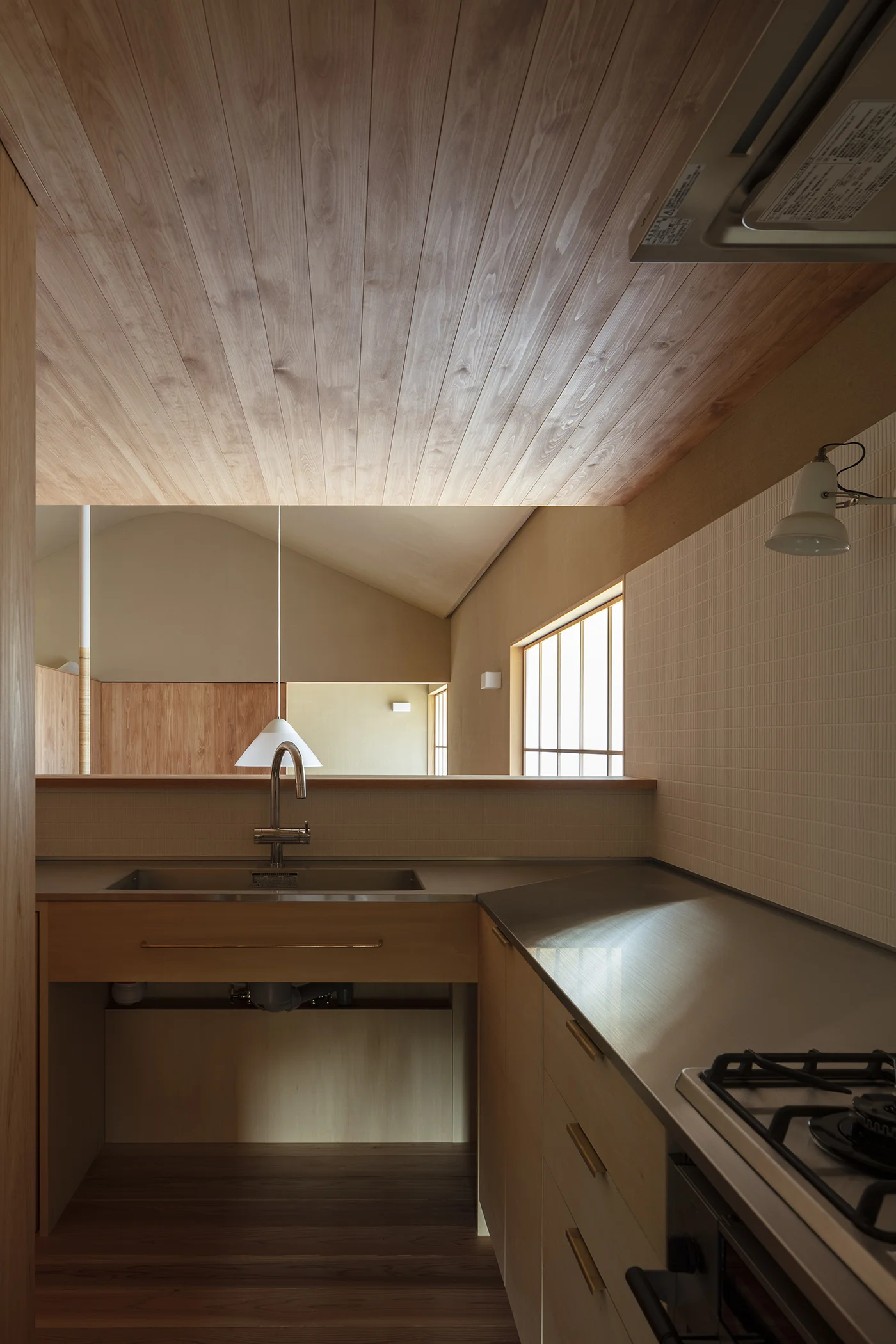
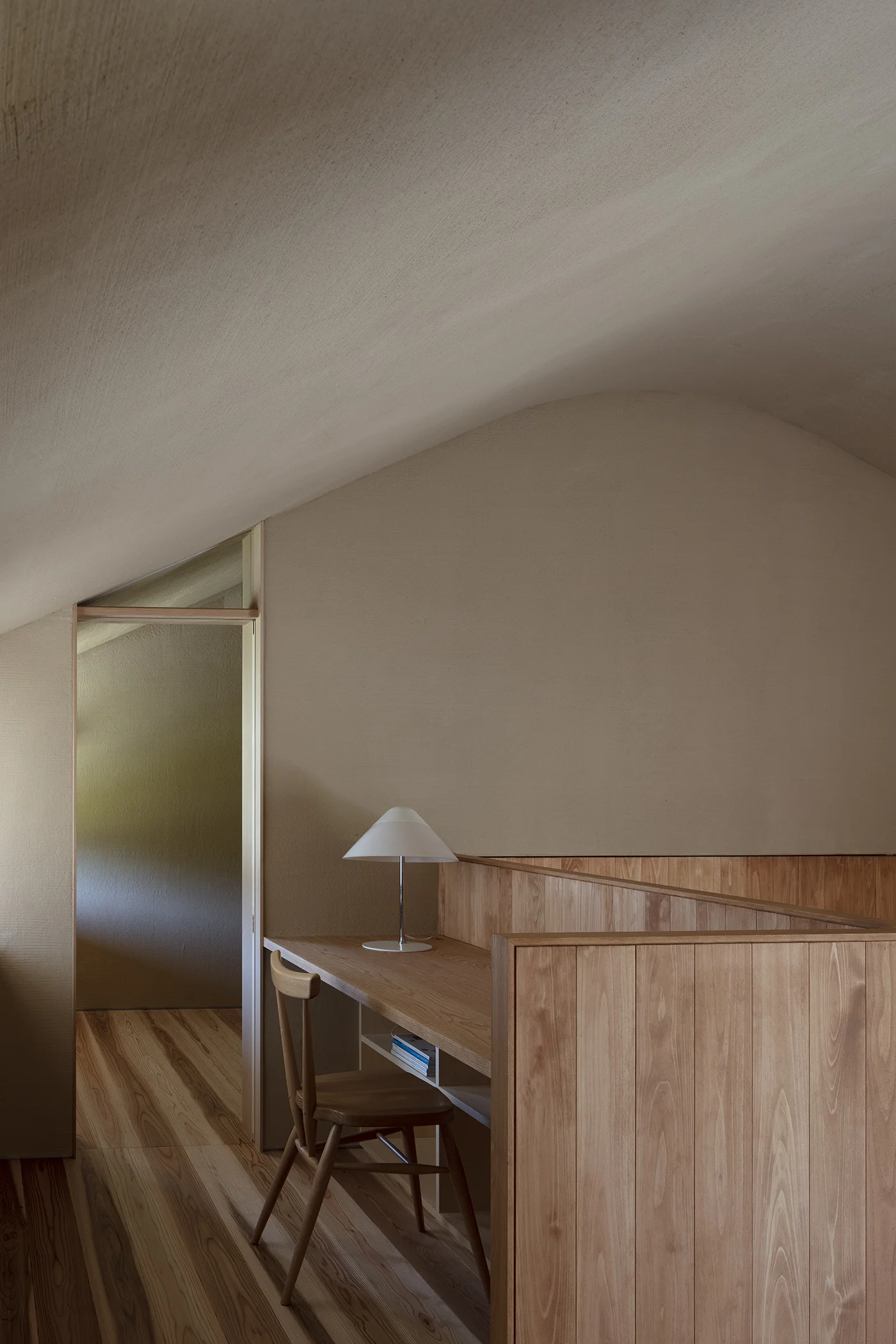
These two shifts give a flat one-story plan the section it would otherwise lack. A dining nook beneath a peaked plaster ceiling looks across to a tatami annex raised on a shallow platform; a low bench seat tucks into cedar wainscoting opposite a run of timber stairs; a slim painted column stands off a binding of rattan where the roof volume crests. The effect is a house that reads as a single vessel, yet divides itself without walls.
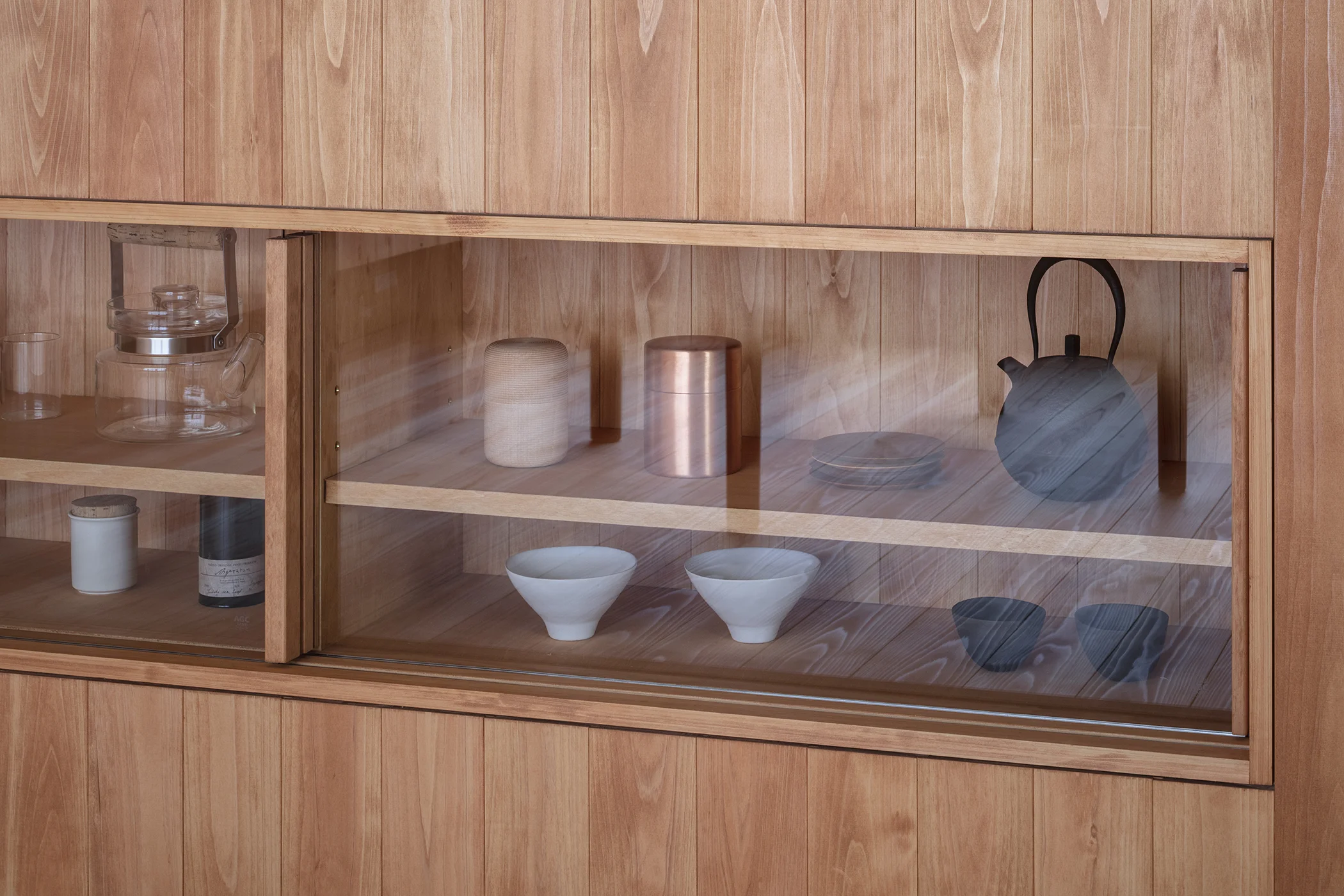
The material palette is narrow and warm. Cedar lines the ceilings of the covered approach, the interior corridor and the bathroom, its honey grain set against hand-troweled earth-plaster walls in a soft ochre that shifts with the hour. Floors run in broad boards of a slightly redder pine. In the kitchen, stainless steel and tile break the continuity; in the bathing room, a dark soaking tub sits below a picture window framed by a single cedar reveal, the mountains and a neighbour's roof held in perfect horizontal register.
Outside, a shallow-pitched corrugated metal roof spreads across the U-plan with deep eaves, its ridge dipped toward the street so the house reads low from the approach and opens up toward the shared garden behind. Rendered concrete block forms a long perimeter wall at the ground; above it, a lightweight render facade in warm grey completes the stratification. Pentagonal bedrooms ease the awkward geometry where the U meets its site boundaries, and a covered carport doubles as the house's formal threshold, its cedar soffit catching reflected light off gravel.
The garden is shared with the neighbouring plot, planted from a common palette of native species that will knit the two properties into the hillside over time. It is the closing move of a project that treats the house less as an object than as a settled condition, one that accepts the flatness of a cleared hillside and then, through a few careful adjustments in floor and roof, gives it somewhere to rest.