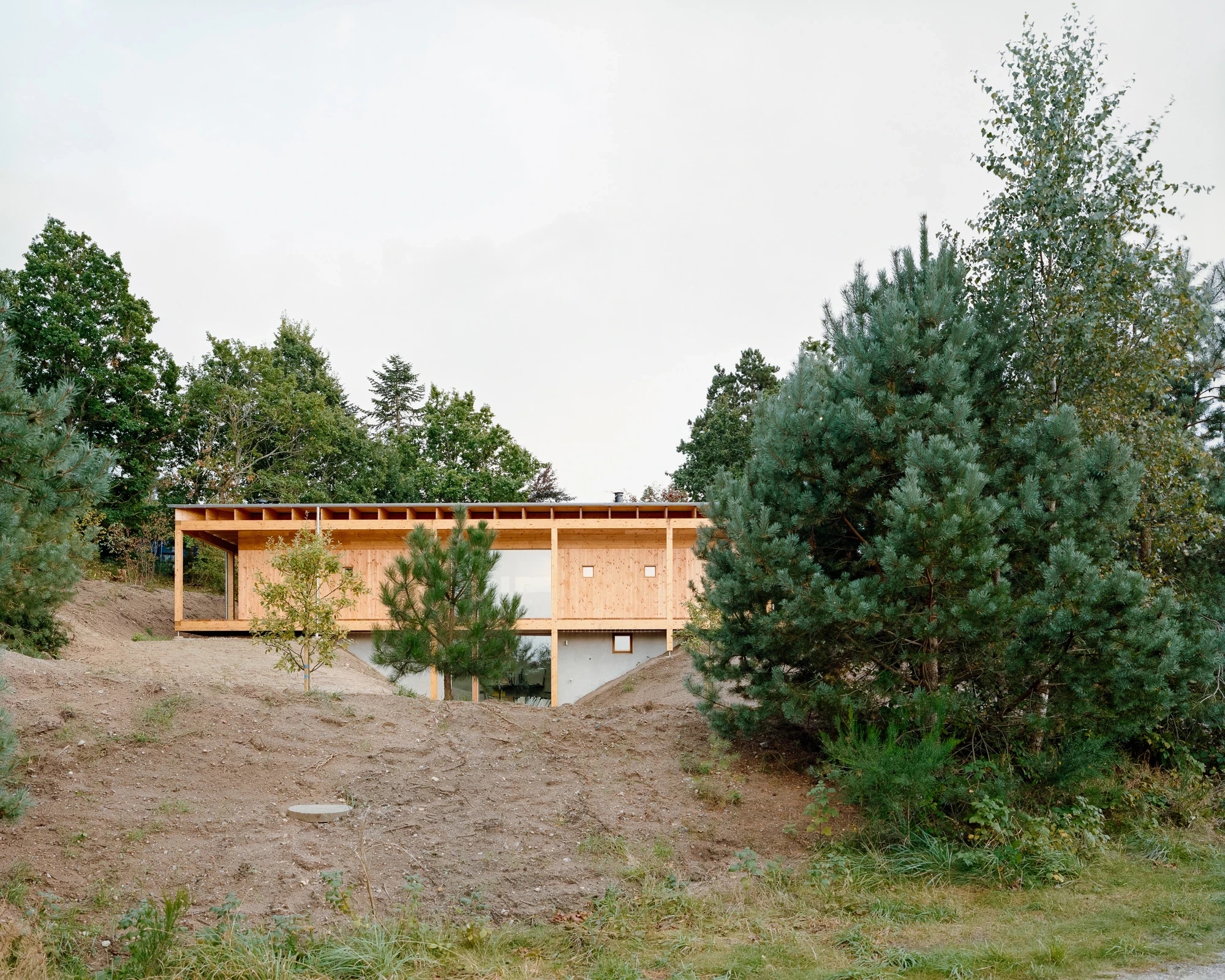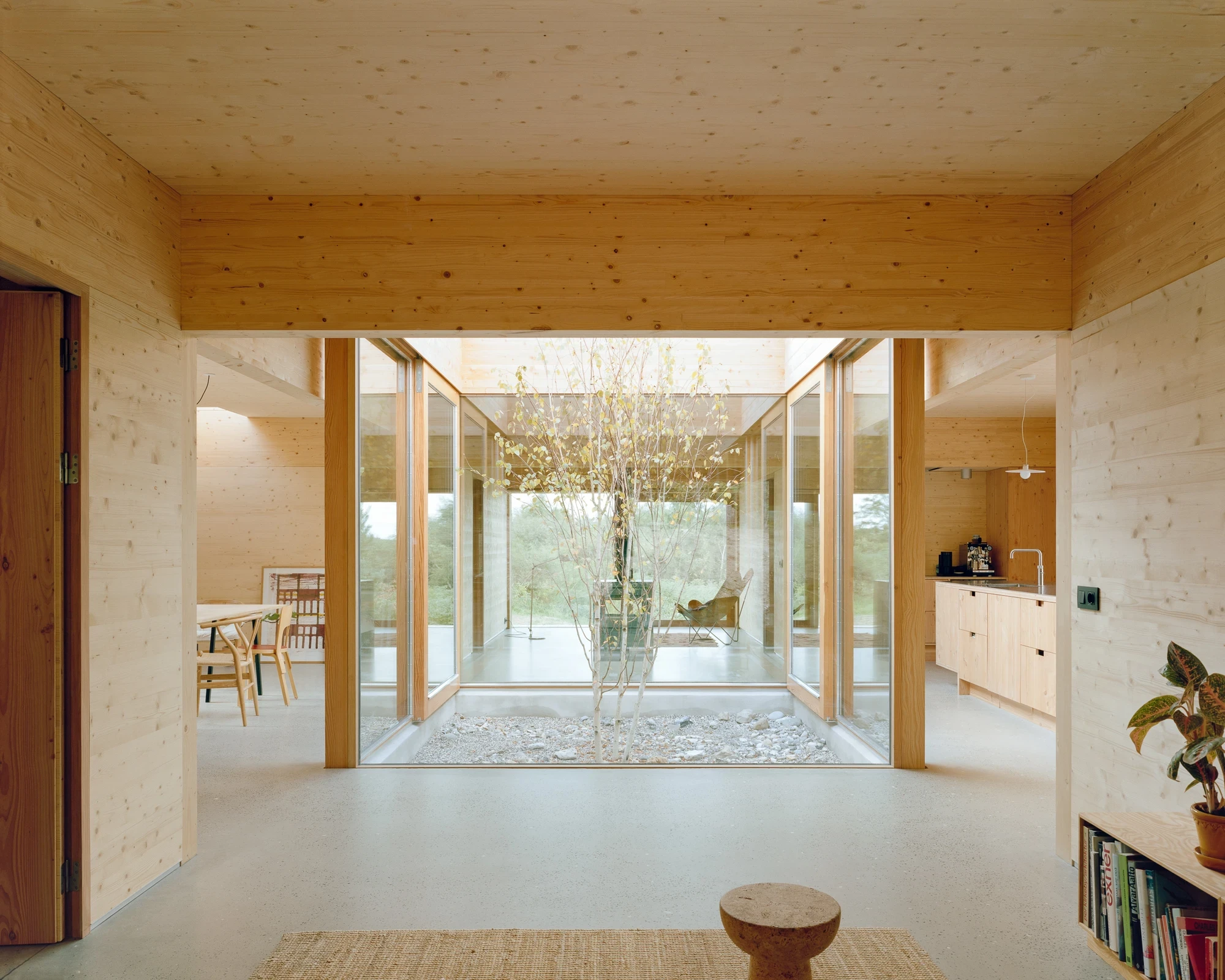
On a glacial plateau at the edge of Ebeltoft, Høyer Arkitektur completes House in Ebeltoft, a timber-panel family house centered on an atrium of gravel and glass open to all four compass points.
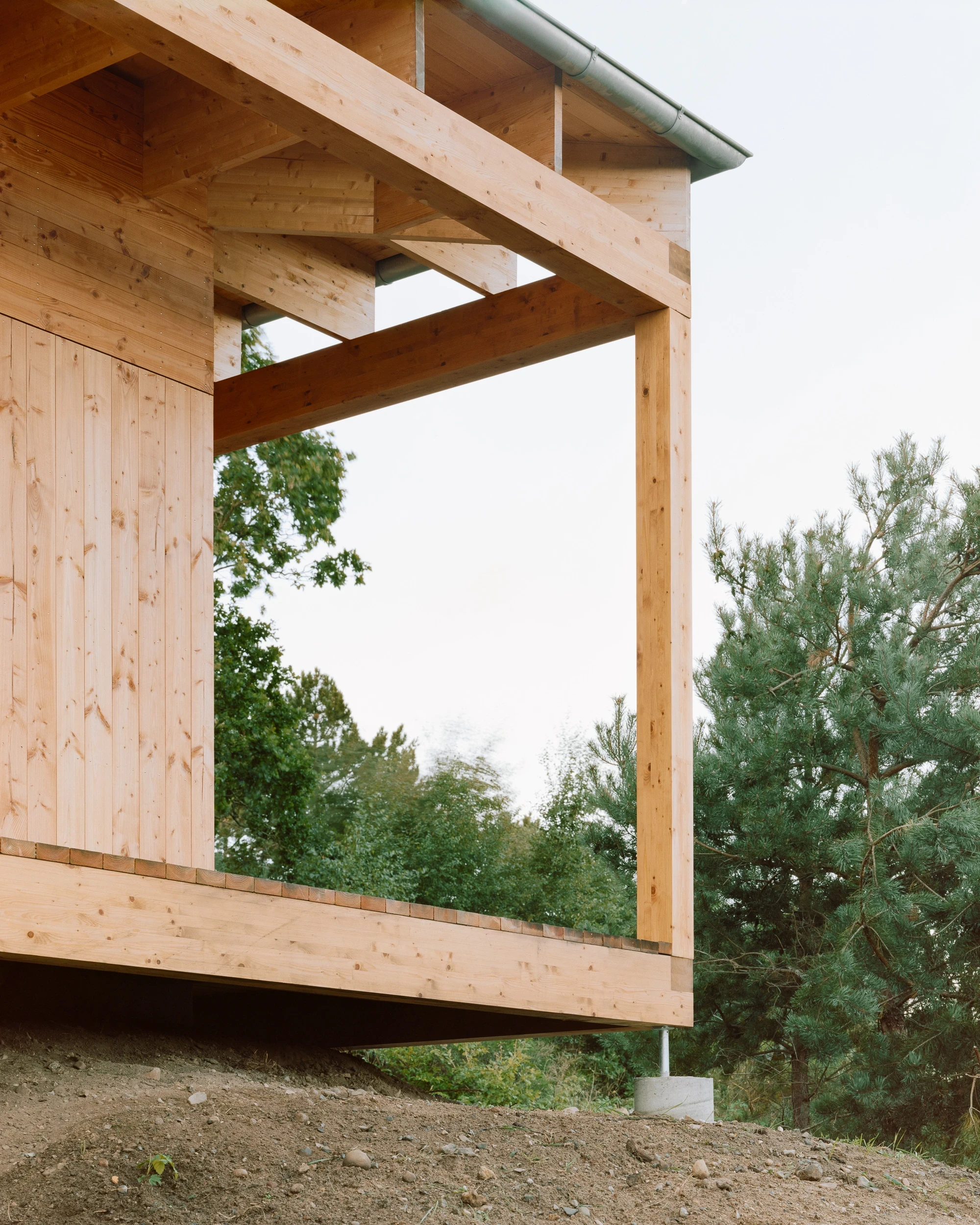
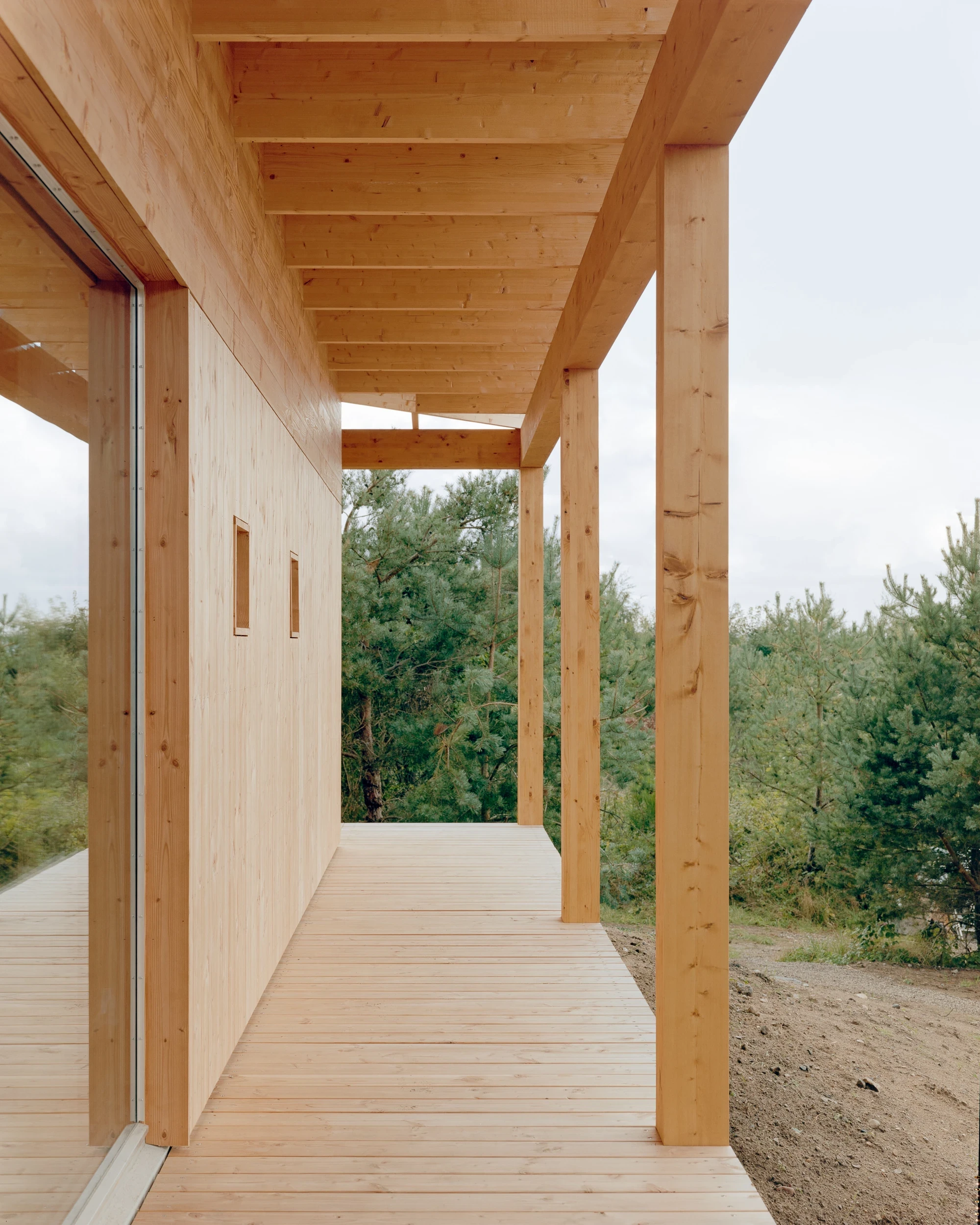
Ebeltoft sits on a moraine peninsula in eastern Jutland, the land shaped by glaciers into a terrain of Scots pine scrub and sandy ridges. Høyer Arkitektur sets a low timber-panel house on one of its plateaus, elevated above the surrounding coastal heath. From outside it reads as a single horizontal volume: pale spruce CLT panels, a pitched roof with deep overhangs, and a colonnade of square timber columns on point concrete footings.
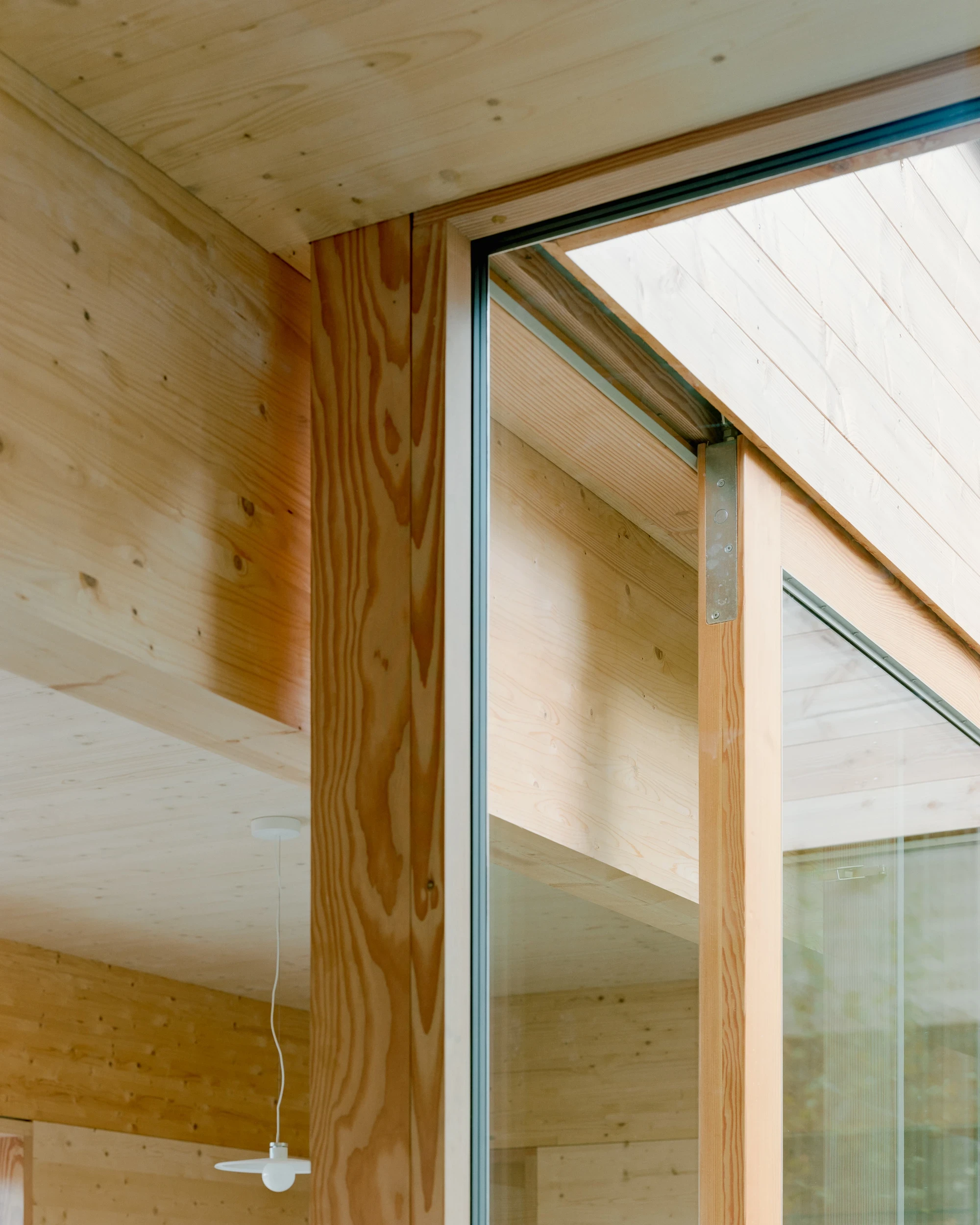
The roof is the organizing force. It spans the full footprint supported only at the outer wall by continuous top straps, leaving the interior free of load-bearing partitions. Every internal wall becomes optional and moveable, the plan adjustable as the family's needs shift. The overhanging eave runs around all four elevations carried by the colonnade, forming a covered spruce-board terrace. A thin rooflight strip separates roof plane from wall plane along the eave, admitting a continuous slot of northern sky.
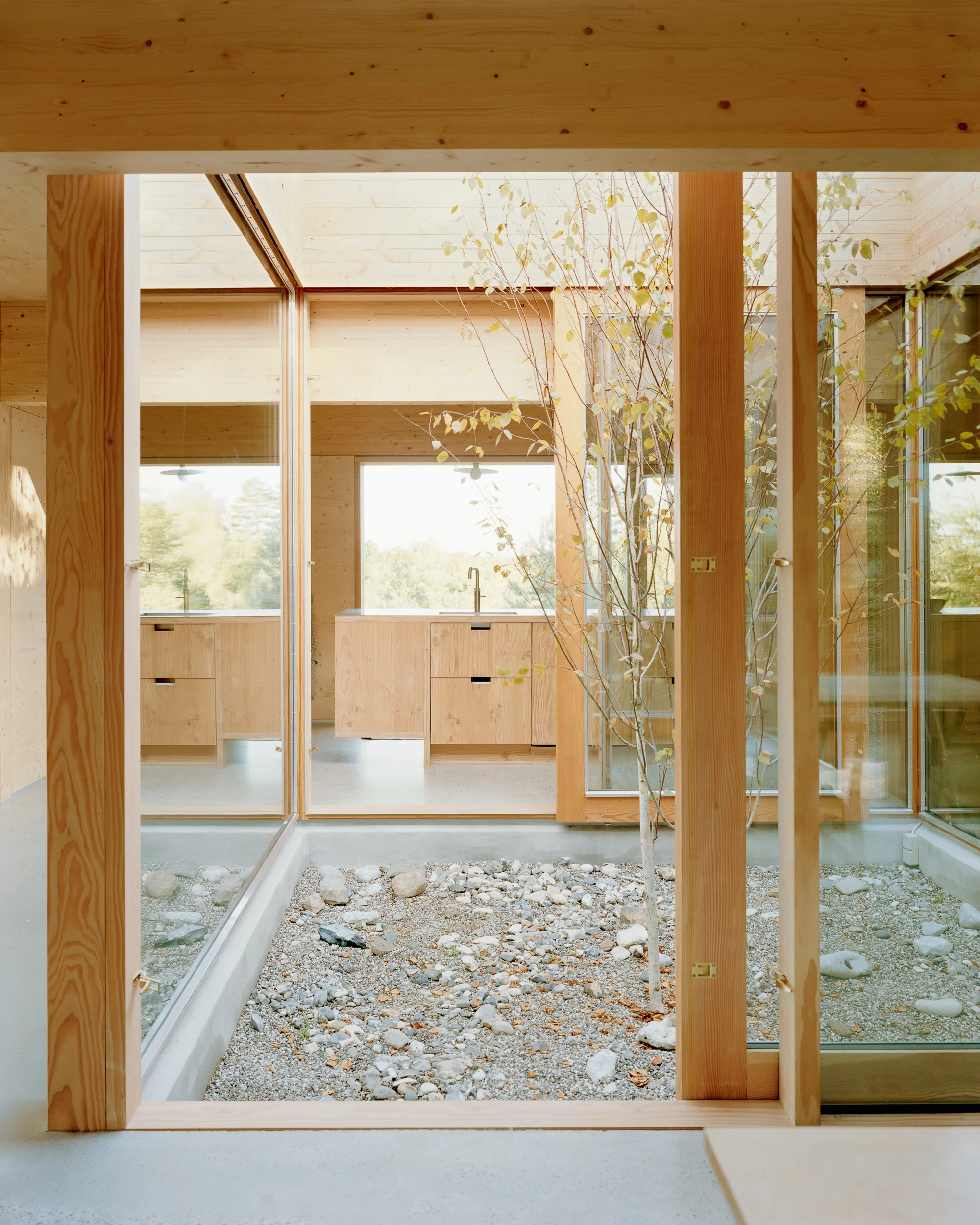
The center of the house is not a room but an atrium: a gravel and river-stone court with a single slender deciduous tree at its floor, enclosed on all four sides by floor-to-ceiling sliding panels of timber-framed glass. From every adjacent room you look through it to the rooms and landscape beyond. The studio writes of a view to all four compass directions from here, each framing a different condition of the moraine. What the photographs add is the quality of the light: diffuse northern overcast on pale pebbles and bare winter branches.
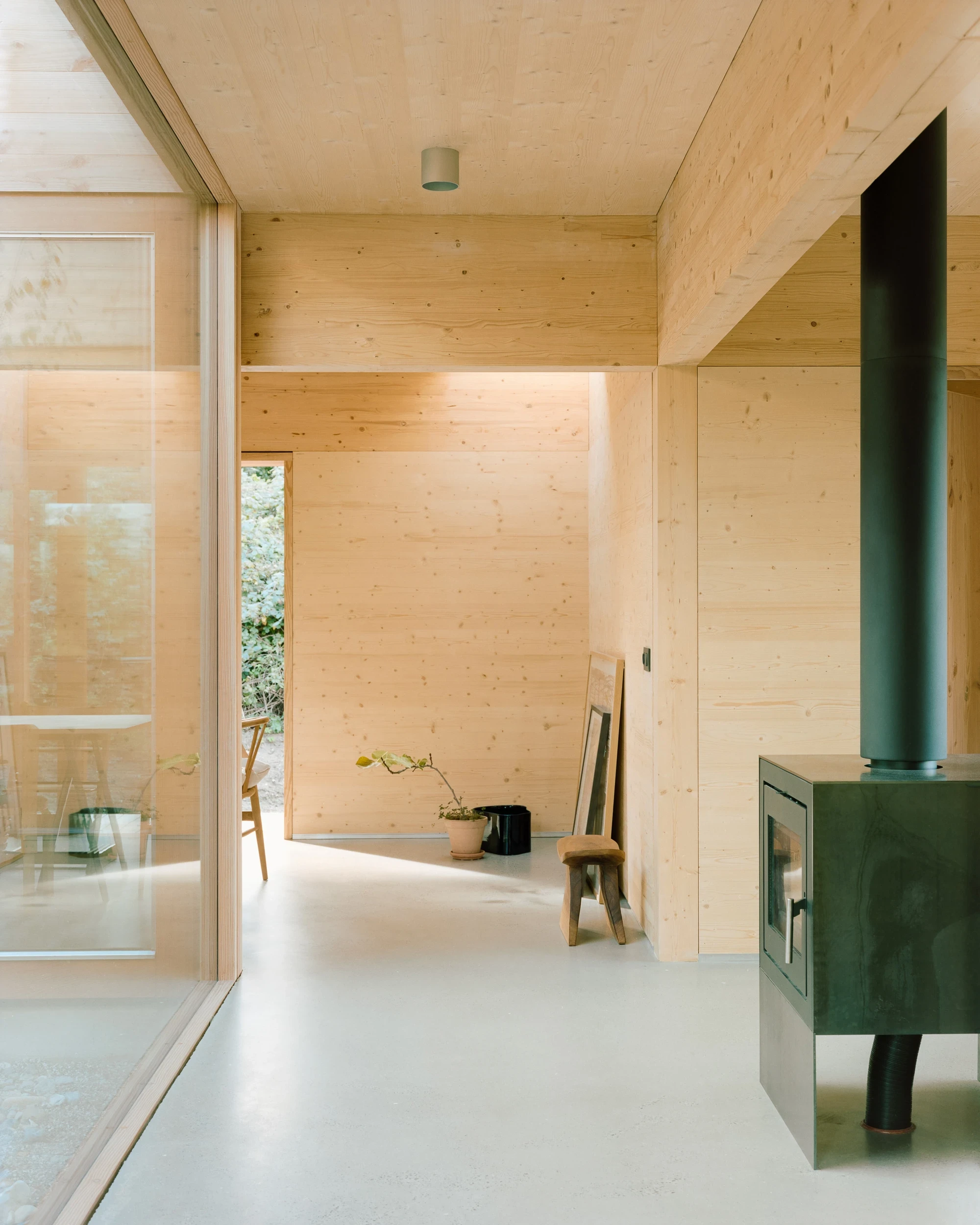
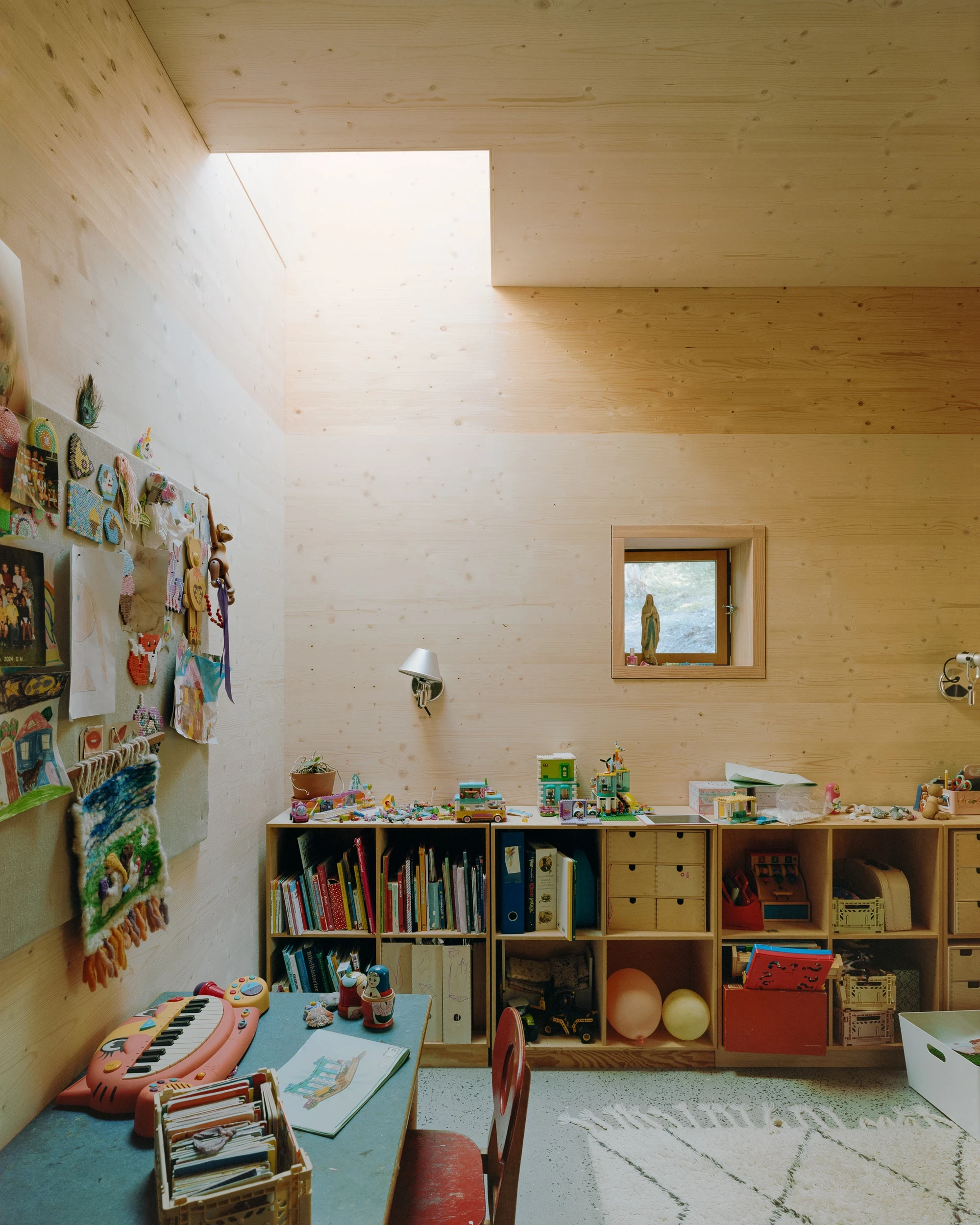
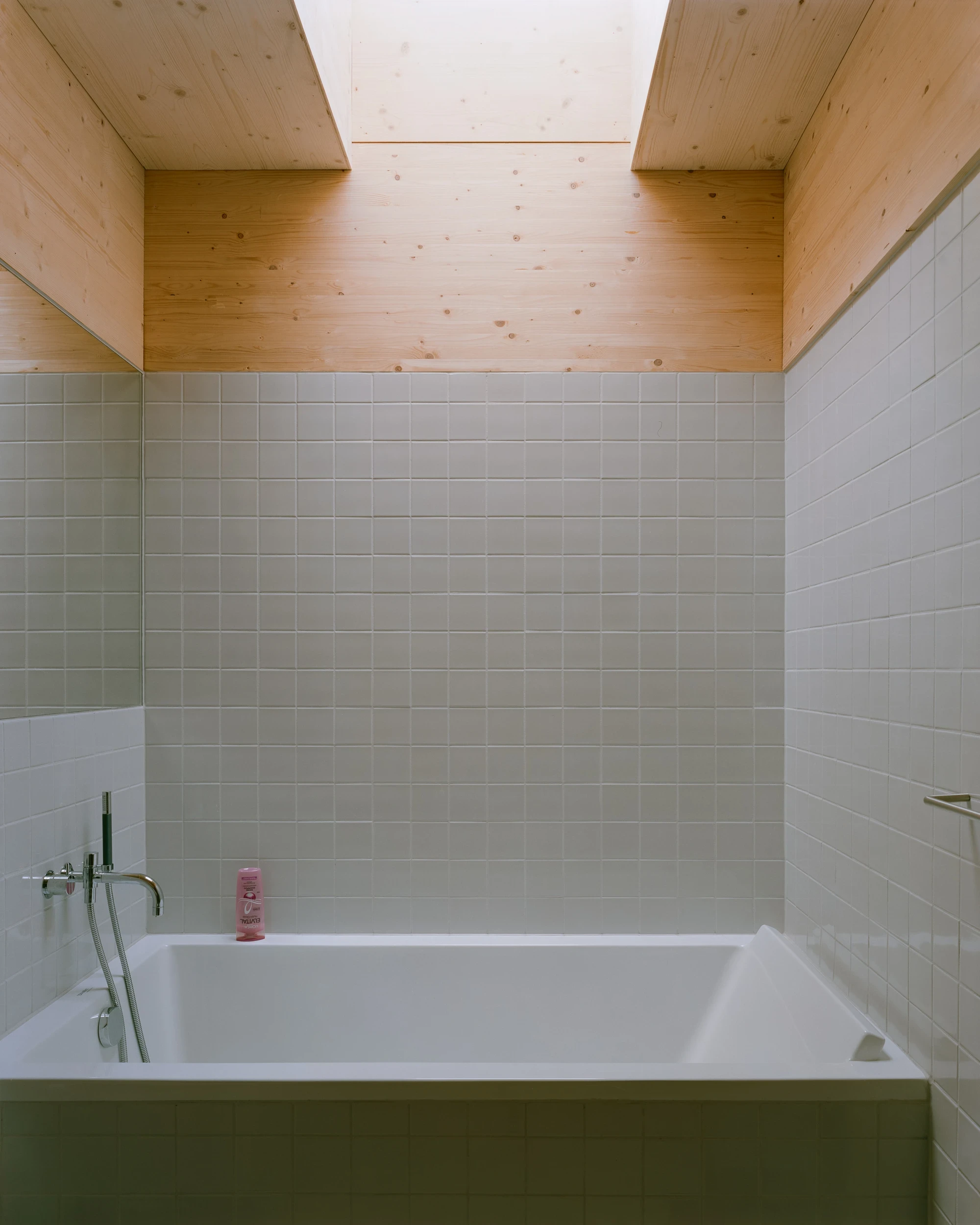
Inside, every surface is CLT: walls, ceilings, internal partitions, kitchen cabinetry in pale pine. The floor is a polished resin screed in pale grey. A dark olive-green cast-iron log stove with a matching enamel flue pipe anchors one corner. Individual ceiling rooflights serve the children's room and bathroom, the latter tiled to mid-wall in square off-white ceramic before giving way to timber above. A single material system, carried without interruption from exterior to interior.