In the countryside near Gradačac, Bosnia and Herzegovina, TEN builds a house for five women who have survived war, violence, and social injustice — a seven-year collaboration that turned architecture into a model for care, mutual support, and shared life.
The House for Five Women began with Hazima Smajlović, whose personal experiences inspired a collaboration between TEN, the NGO Engineers Without Borders, Vive Žene, the municipality of Gradačac, and many individual contributors. Resources were gathered, donated, and secured transparently over time. The project team managed these through annual reports and decisions made by an accountable committee. To fully understand the requirements and resources at hand was the first step of the design process.
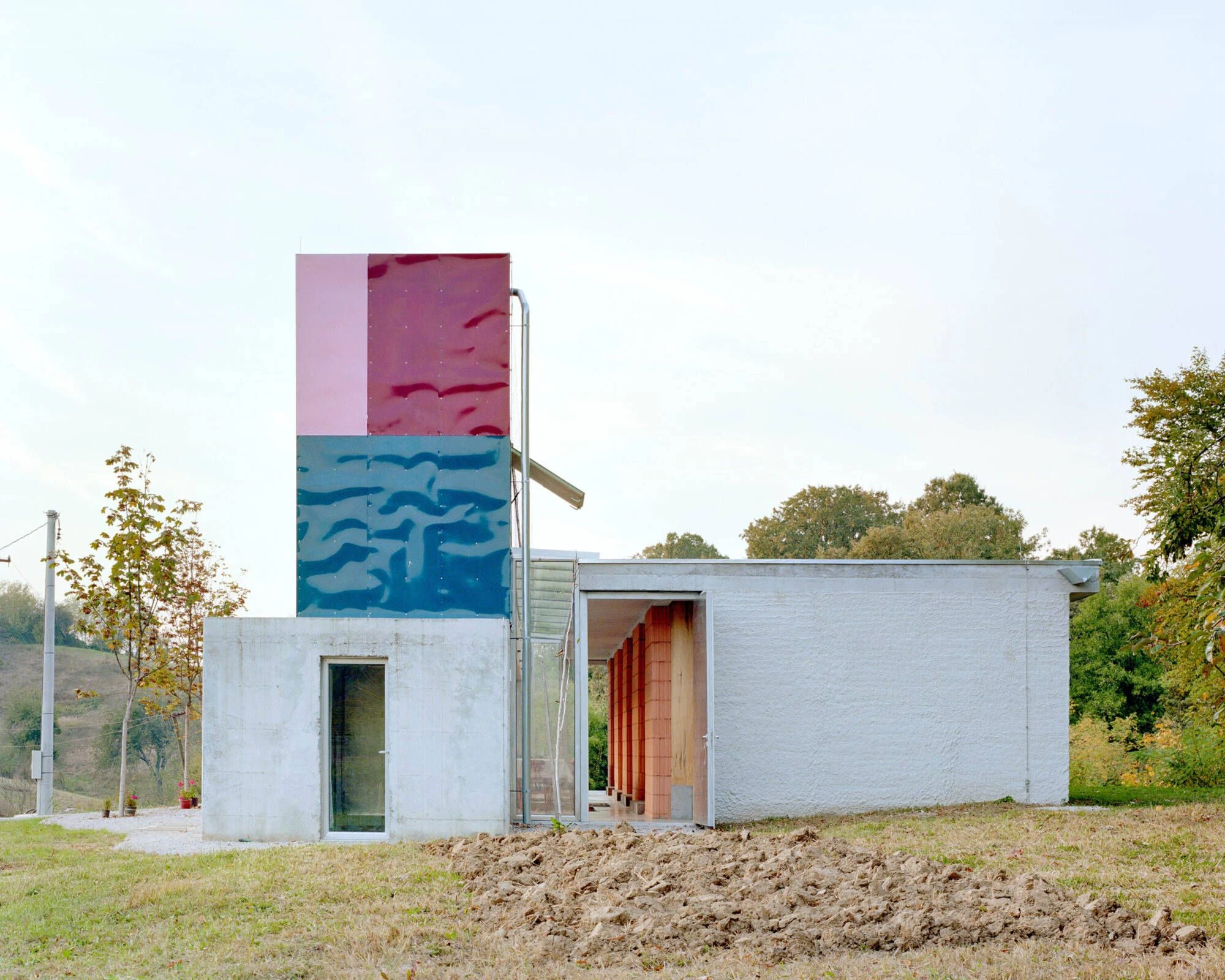
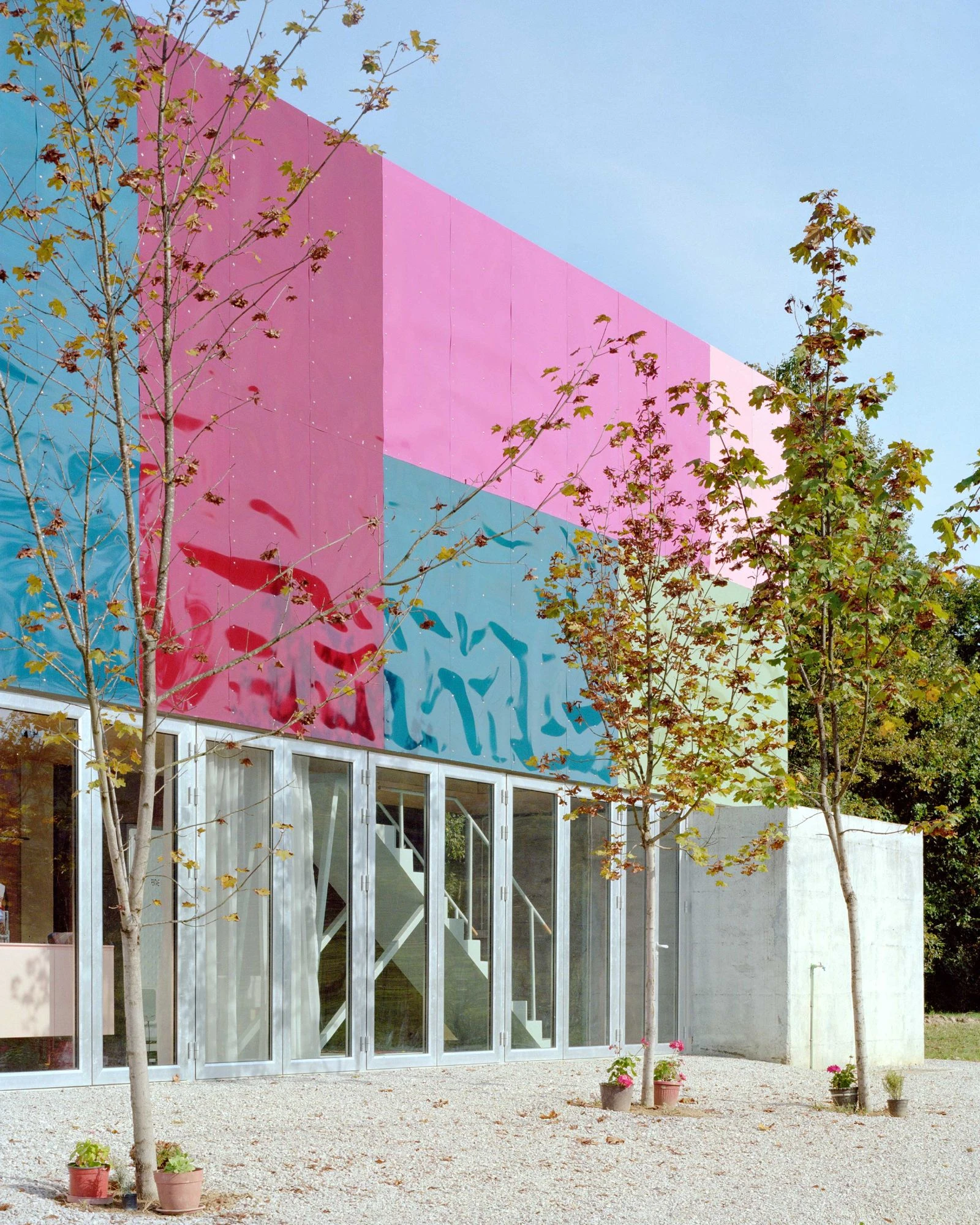
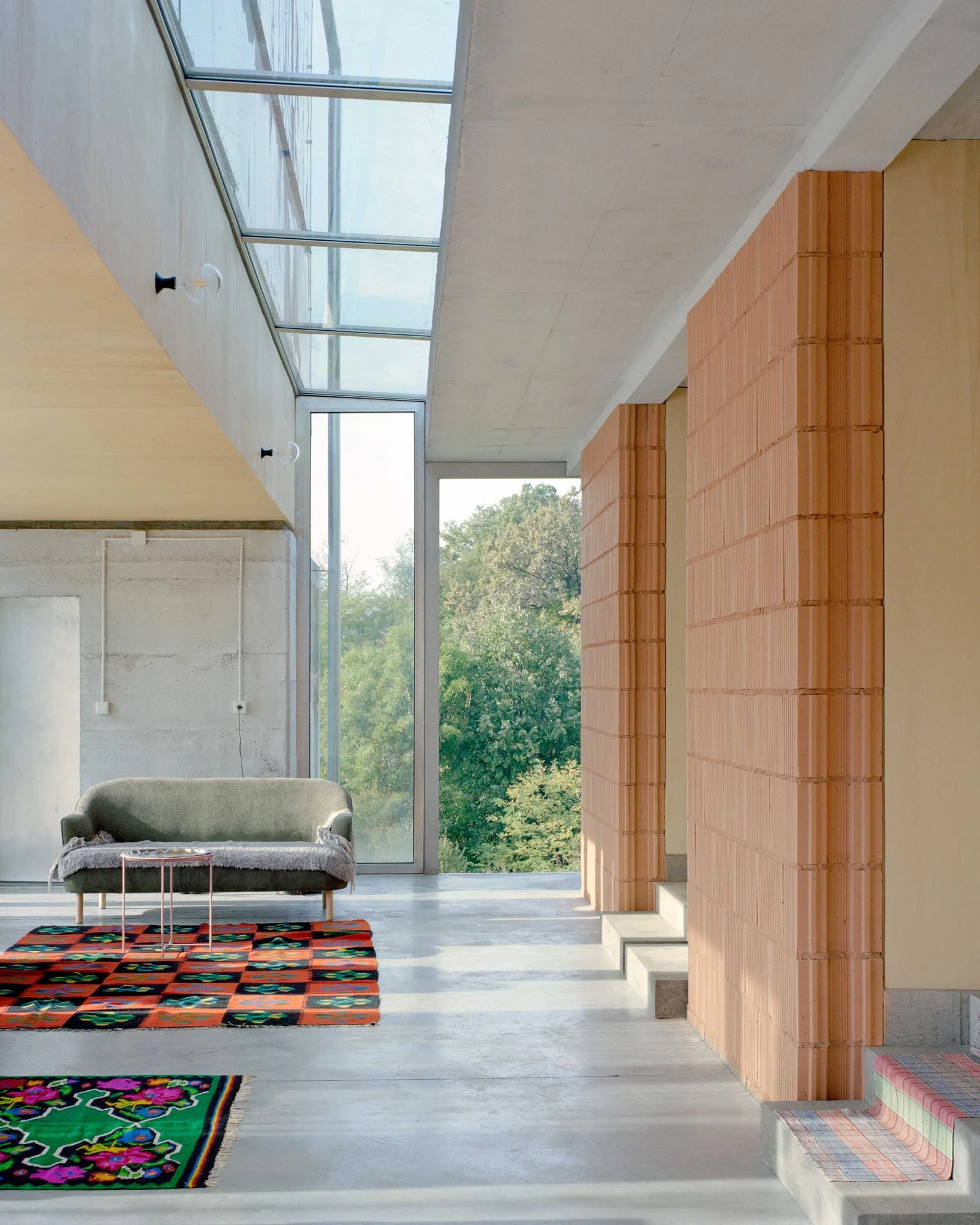
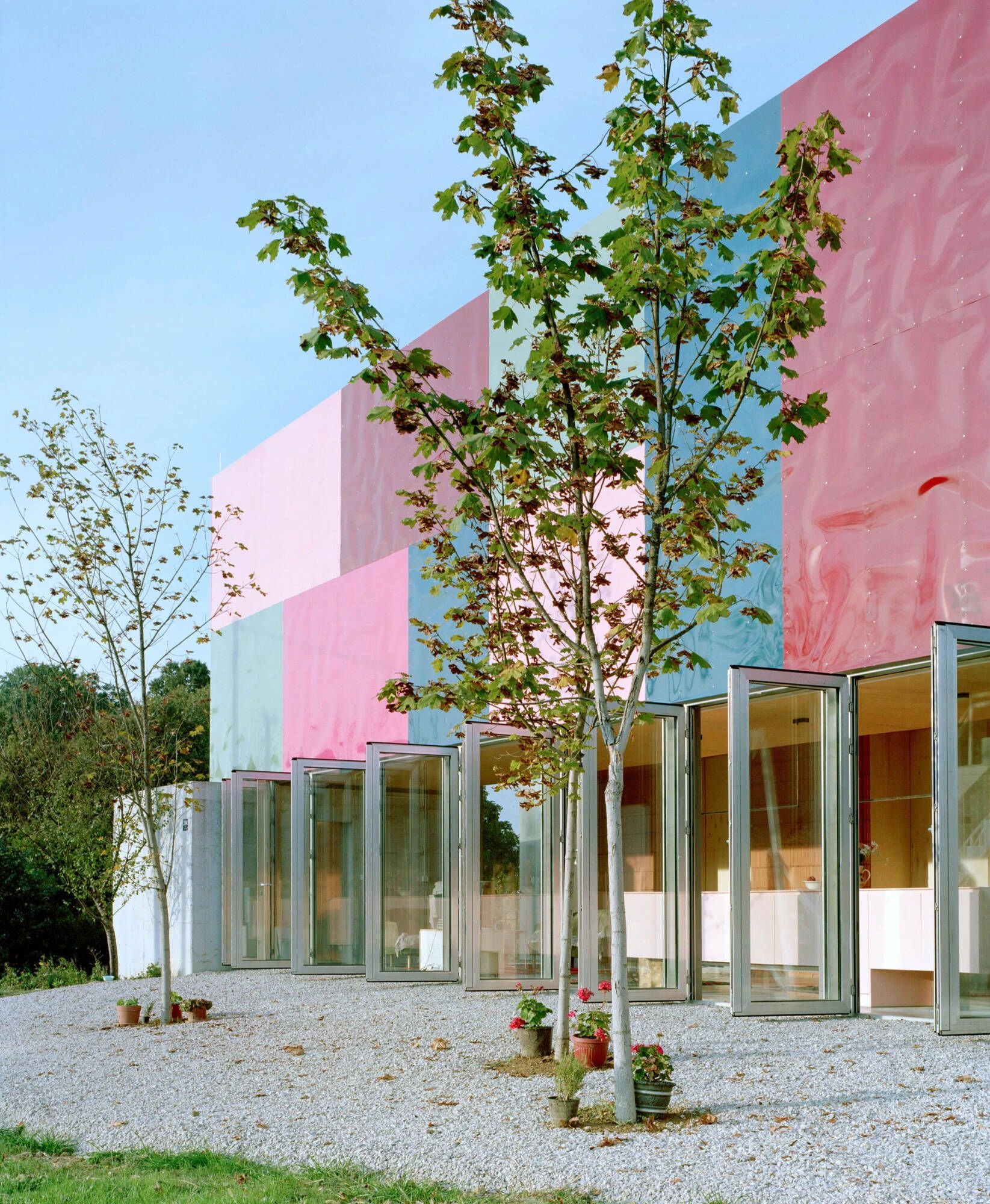
Collaboration with local metalworkers, carpenters, car painters, and carpet repairers was essential in establishing both a culture of visibility and defining the project's boundaries. Artist Shirana Shahbazi worked with material and colour to transform the facade and interior into a dynamic visual display — a tapestry that continuously changes in appearance. The colouring and arrangement of the facade panels were made on-site and in a nearby car painter's workshop, transforming a vehicle repair service into a kind of art studio.
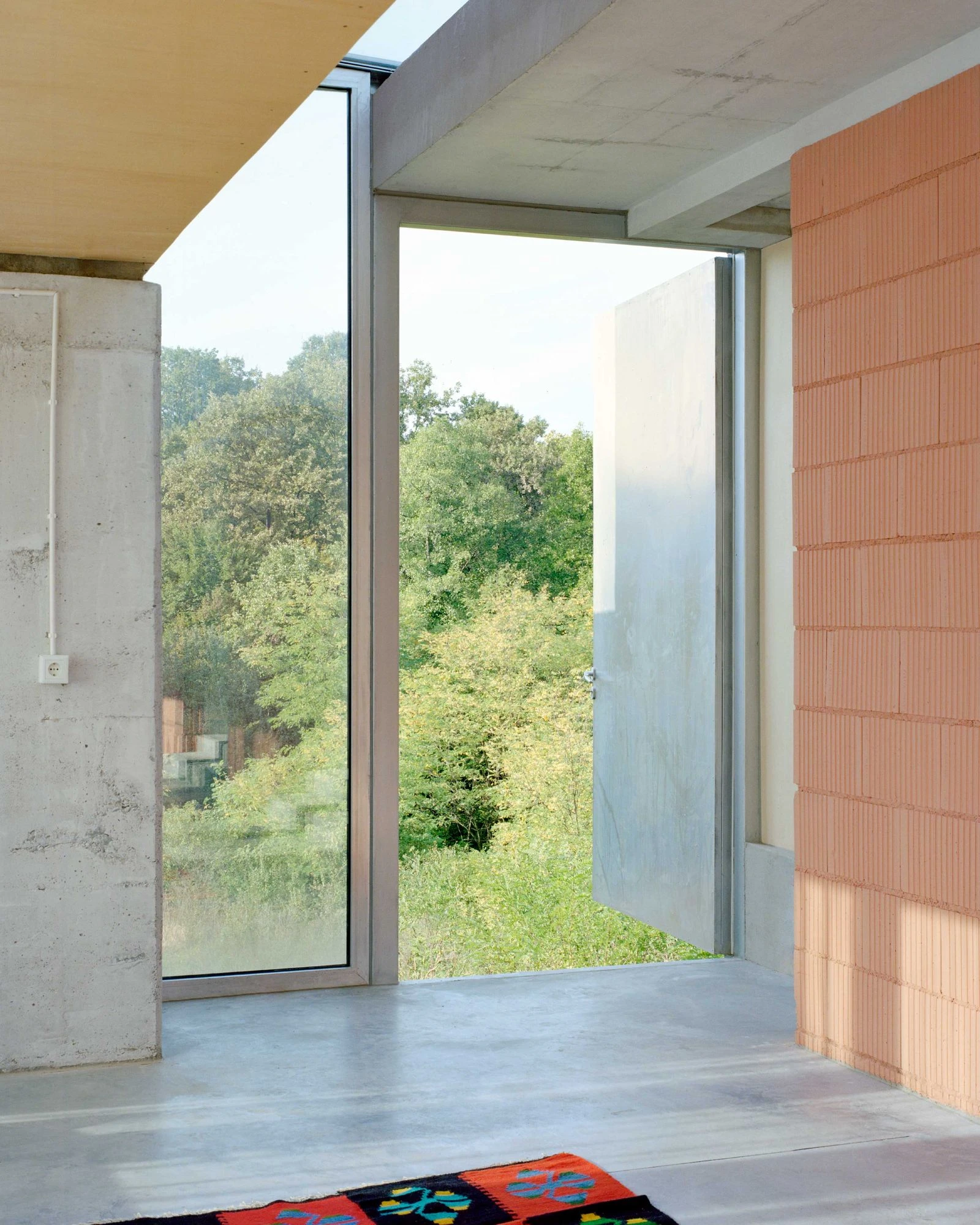
The large facade with twenty doors that can be opened toward the road makes the house approachable and inviting. When fully opened, these doors create a 25-metre-long threshold that brings the landscape into the interior. The layout supports both privacy and shared experience: five equal private rooms with self-contained kitchenettes ensure independence, while a common area of approximately 90 square metres — larger than what any individual could afford alone — requires shared participation and reinforces the idea of collective living.
Above the utility spaces sits a 26-metre multifunctional space inspired by pastoral storage typologies, adaptable for seasonal activities and additional accommodation. Landscape architect Daniel Ganz integrated the building with its surroundings through planted trees and a productive food garden that encourages agricultural engagement. The completion marks a beginning rather than a conclusion — a structure designed as an evolving platform for growth, maintained by the NGO Naš Izvor.