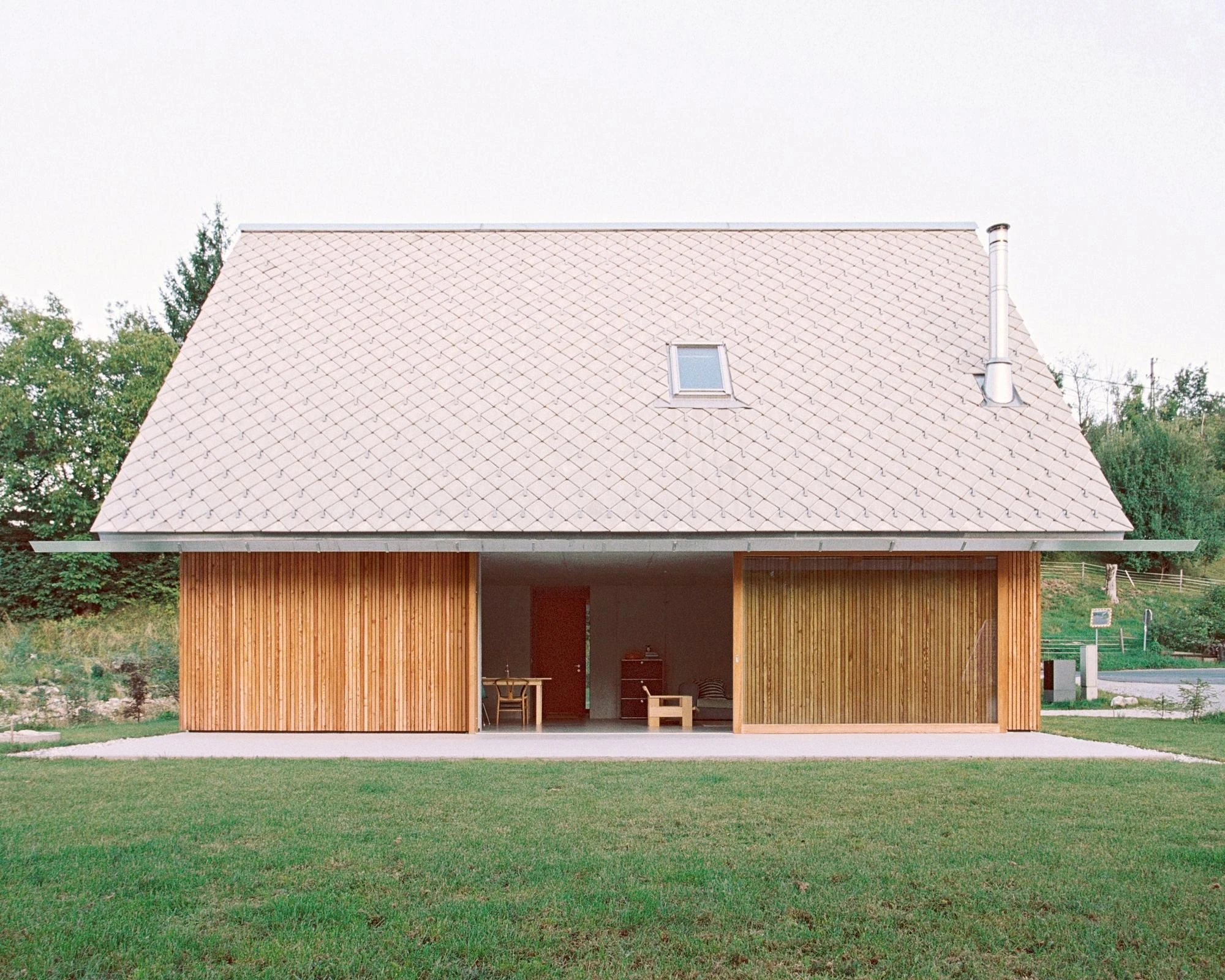
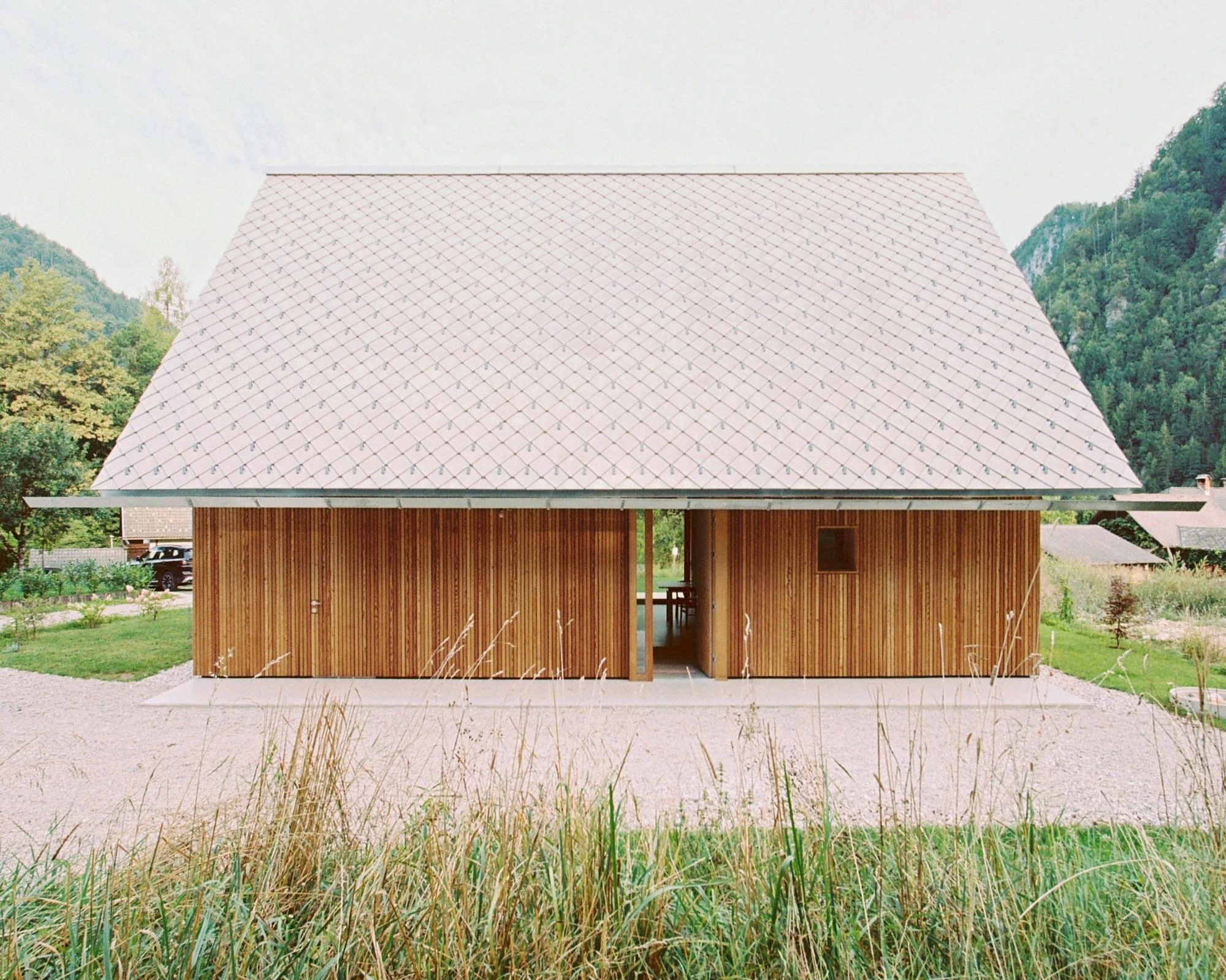
At the foot of the Pokljuka forests in Upper Carniola, Slovenia, Arhitekti Počivašek Petranovič set House Alva parallel to the village road, a concrete ground floor carrying a timber attic under a tiled roof.
House Alva stands in a village in Upper Carniola, on ground that rises toward the Pokljuka forests. The setting is ordinary Gorenjska: working farms, orchards, woodsheds, the low ridgelines of barns roofed in concrete tile. The house sits parallel to the road and lets its ridge fall in line with the buildings beside it, so the silhouette joins the existing grain rather than announcing itself against it.
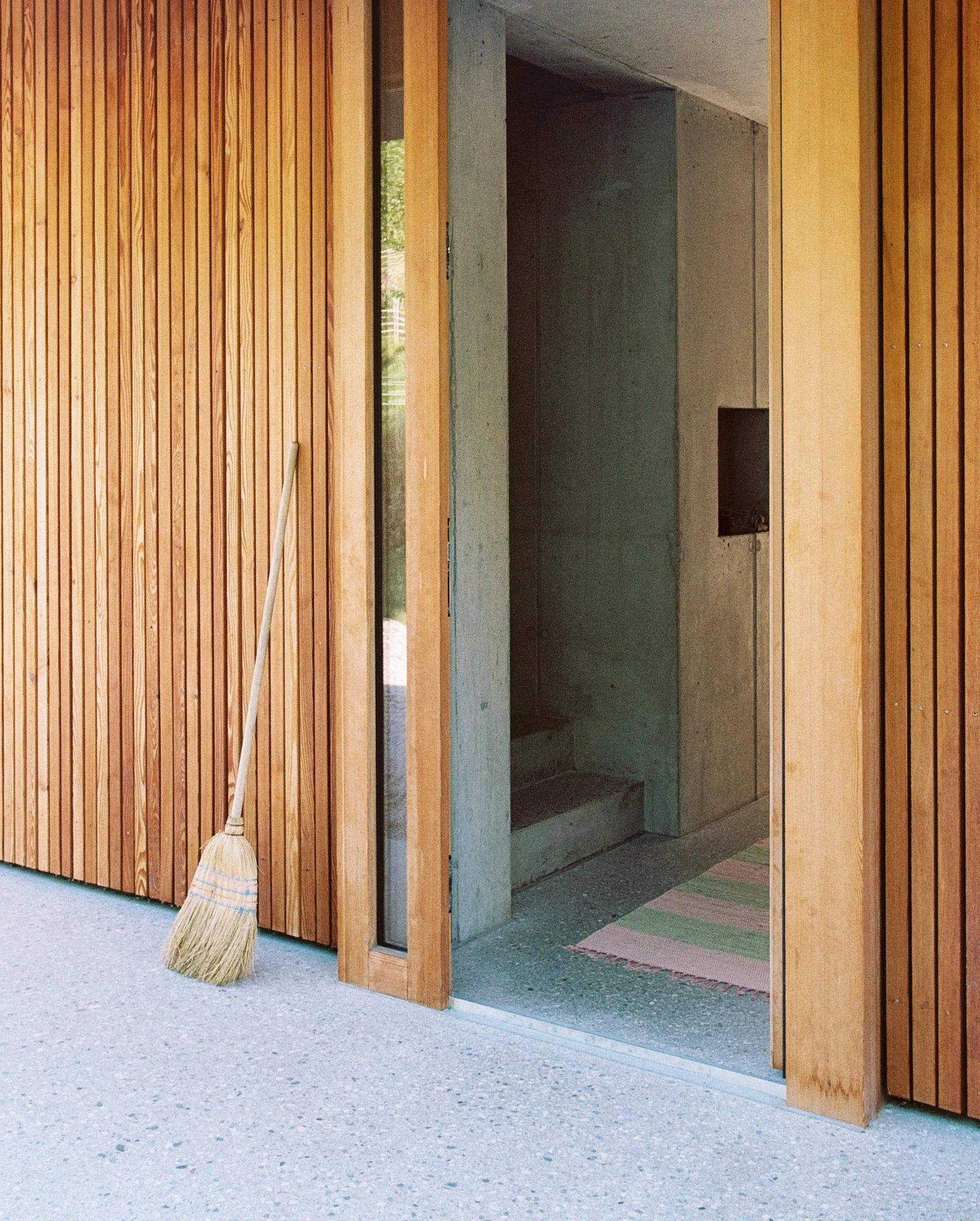
The plan reads as a series of bands laid across the plot, running from the public road toward the garden and the valley beyond. A forecourt comes first, then a service strip holding the entrance and the woodshed, then the living room and kitchen, then the terrace, then the orchard. Two bedrooms and a bathroom sit upstairs. Movement through the house is also a movement from the village out into open fields.
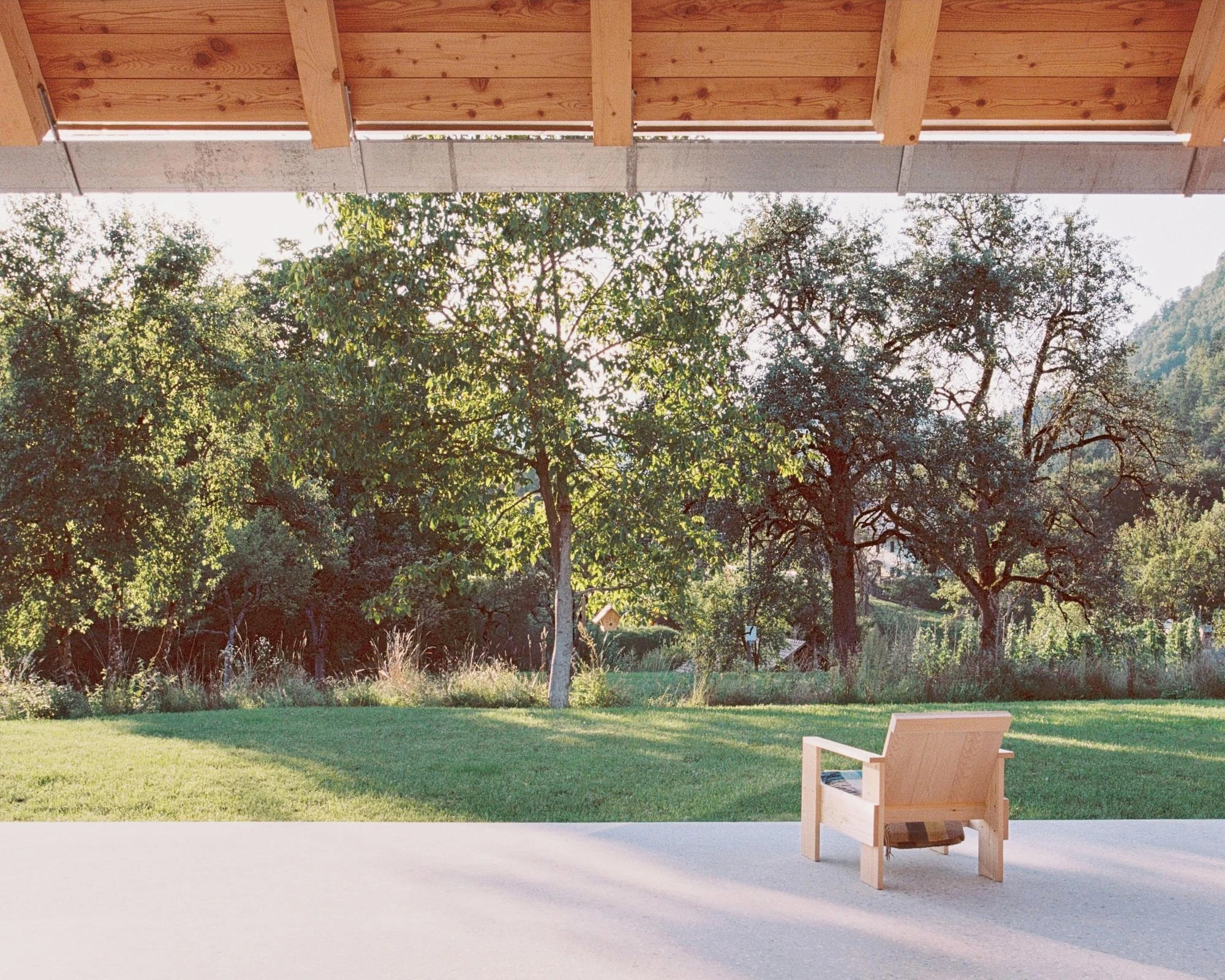
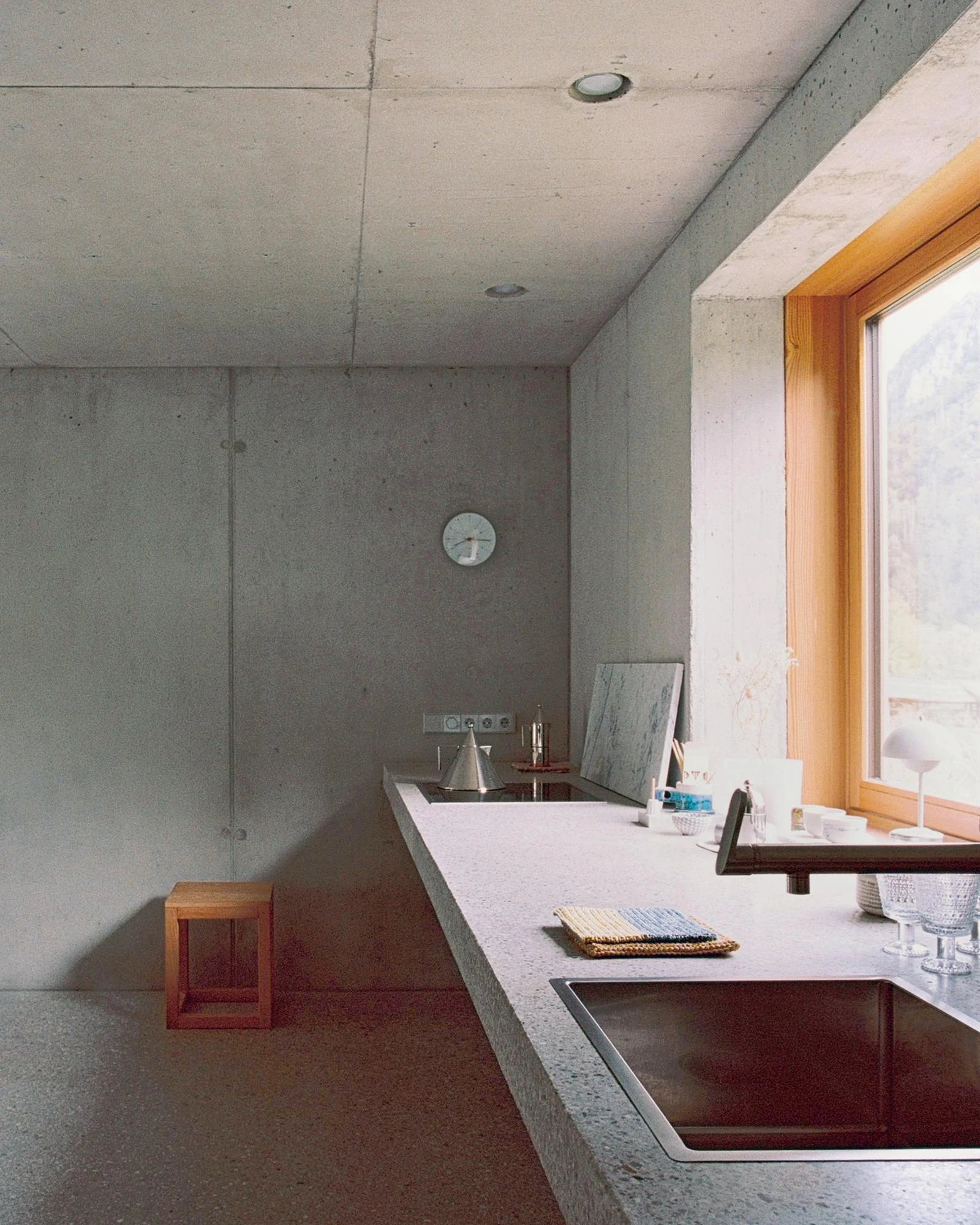
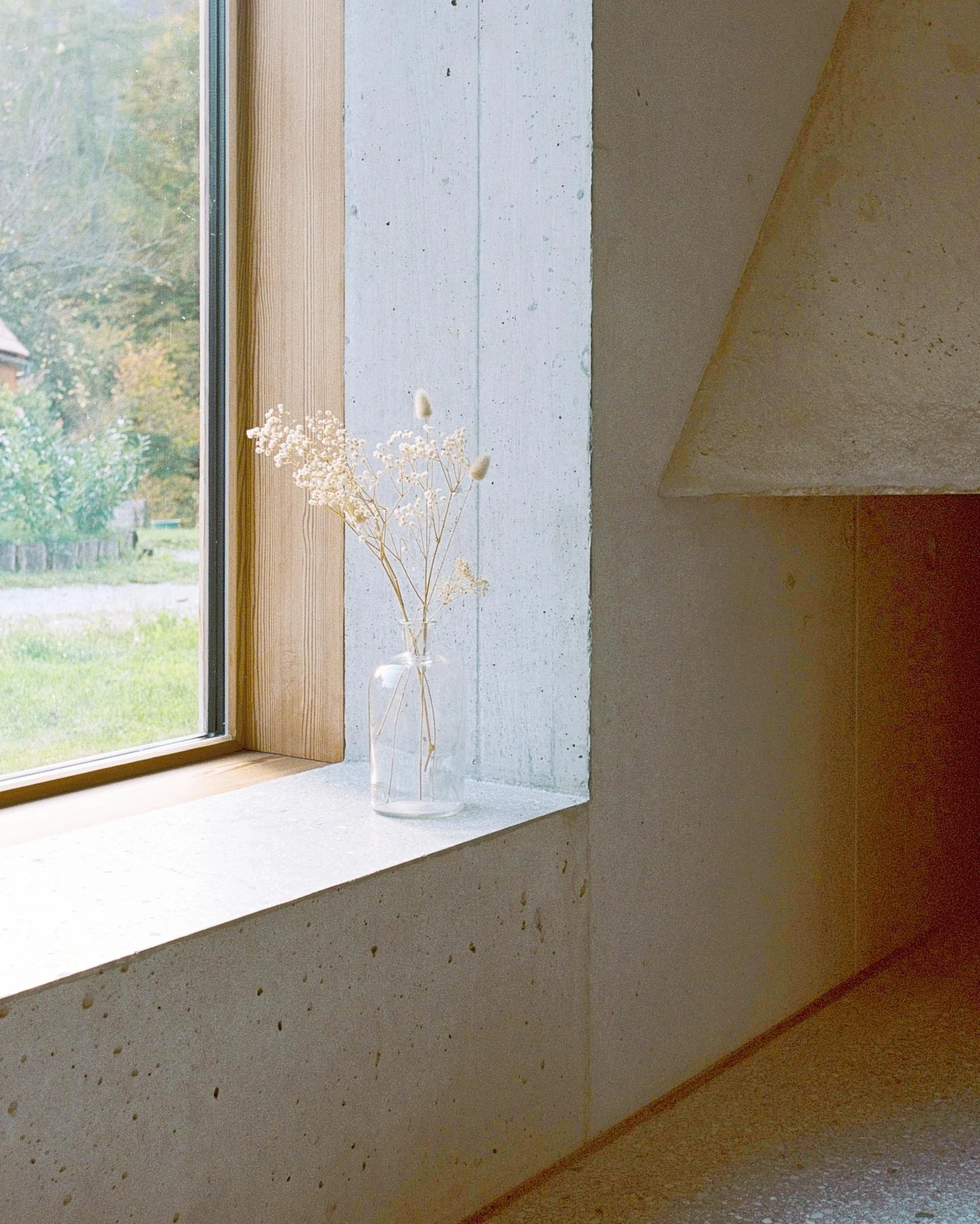
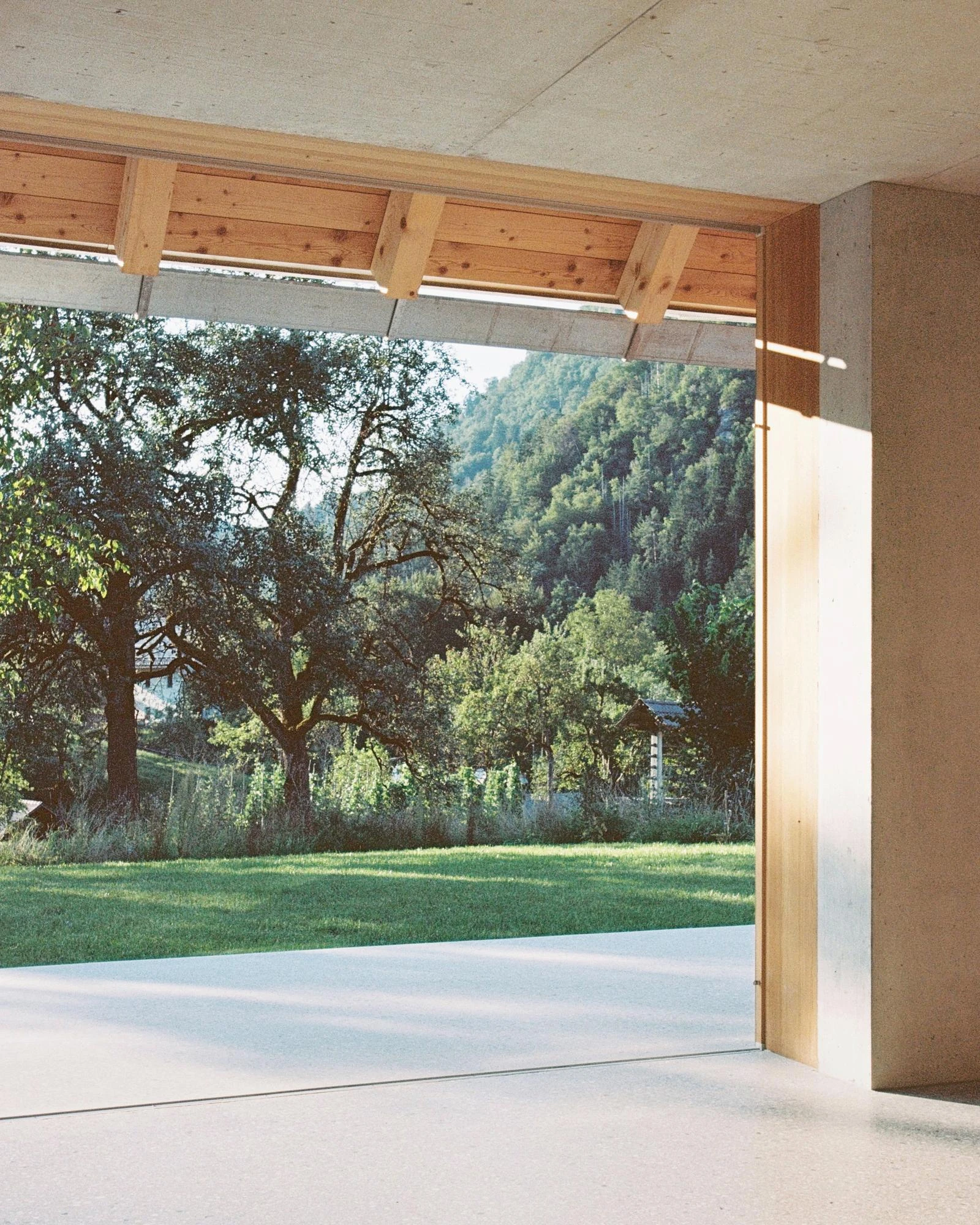
The ground floor is reinforced concrete, and it behaves like a single poured object. The polished concrete floor carries through a deep larch-framed opening and continues onto the terrace, erasing the usual line between inside and out. The kitchen counter and the fireplace hood are cast from the same mix, terrazzo-flecked and grey, so that the working surfaces and the chimney read as parts of one continuous mass rather than added fittings.
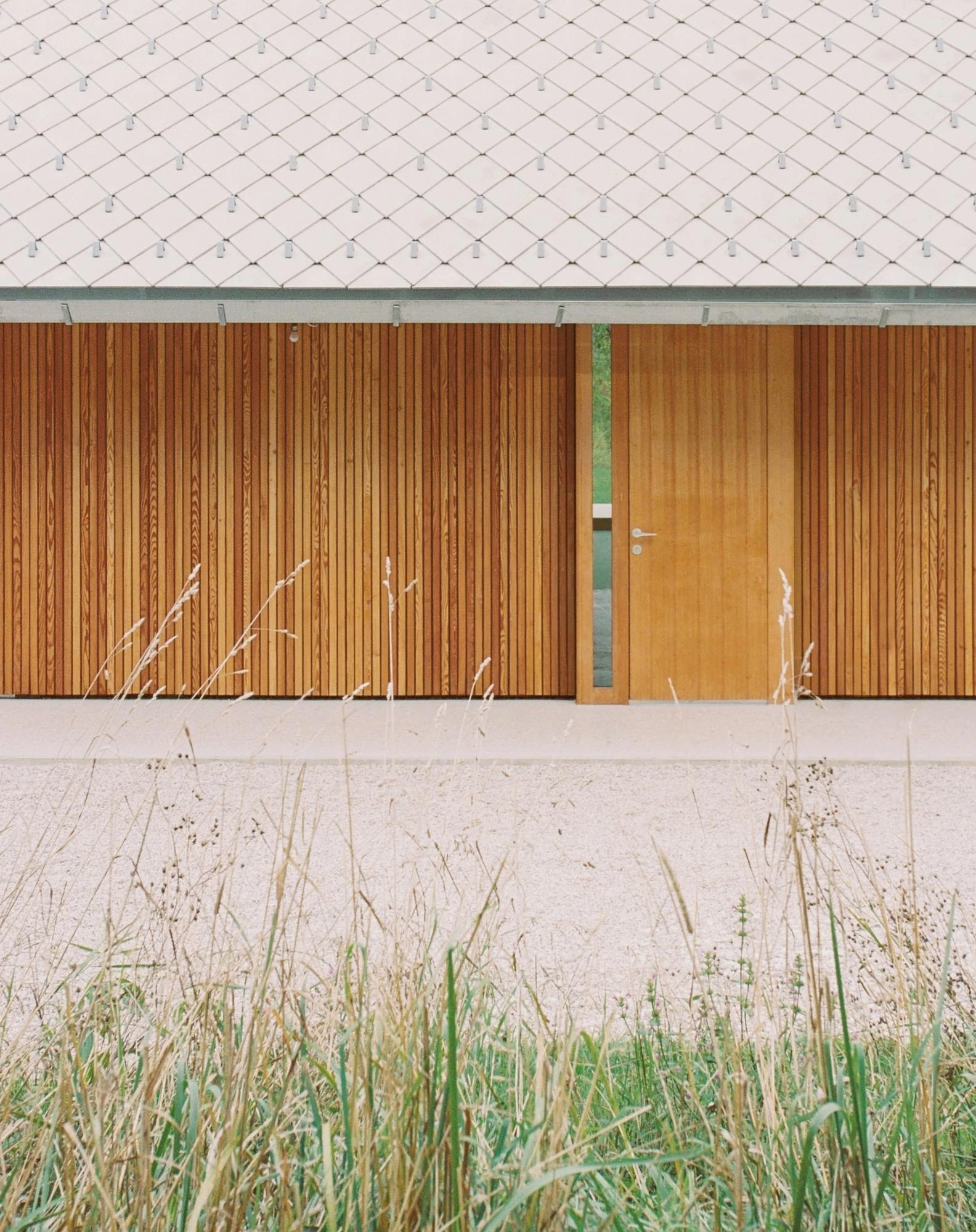
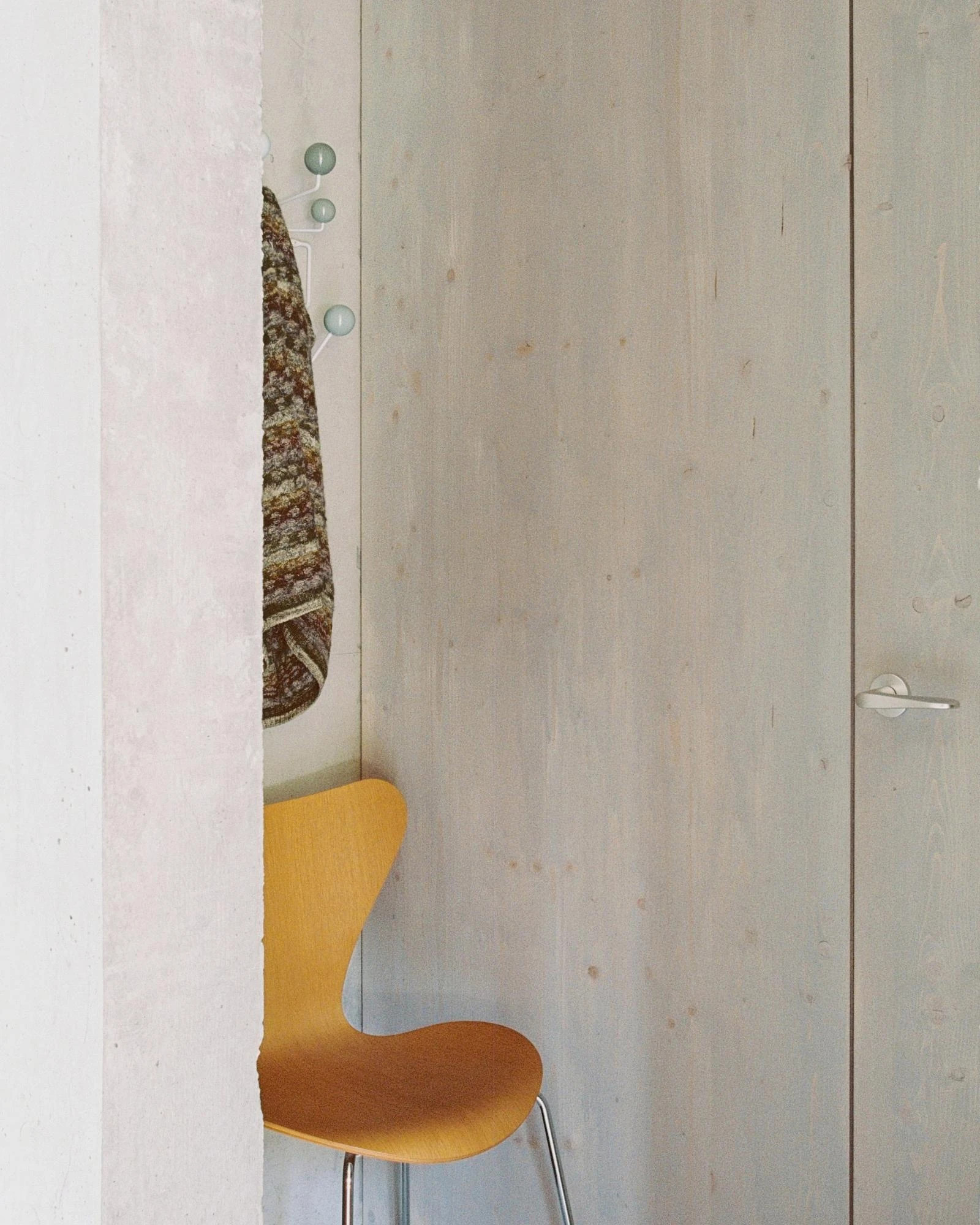
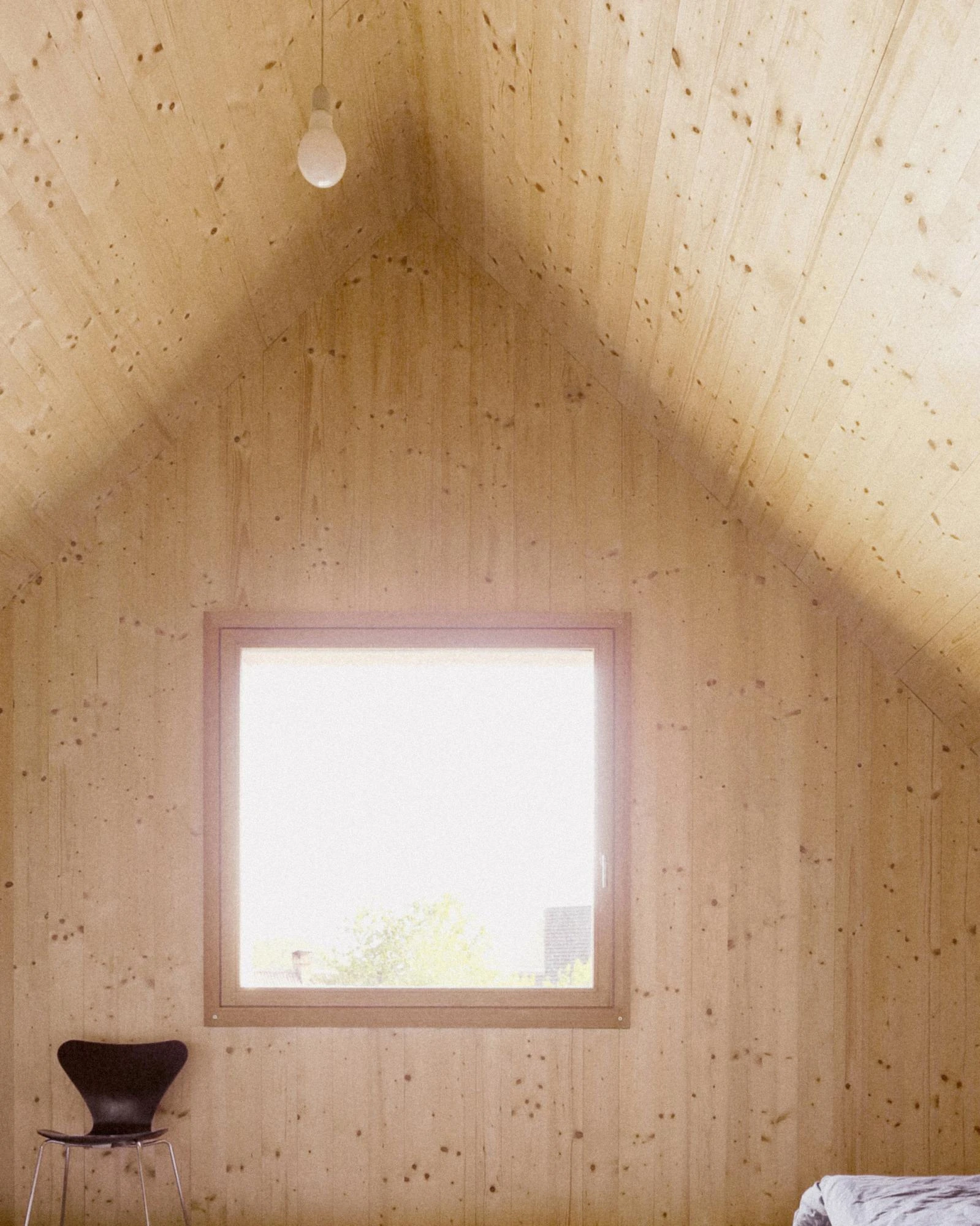
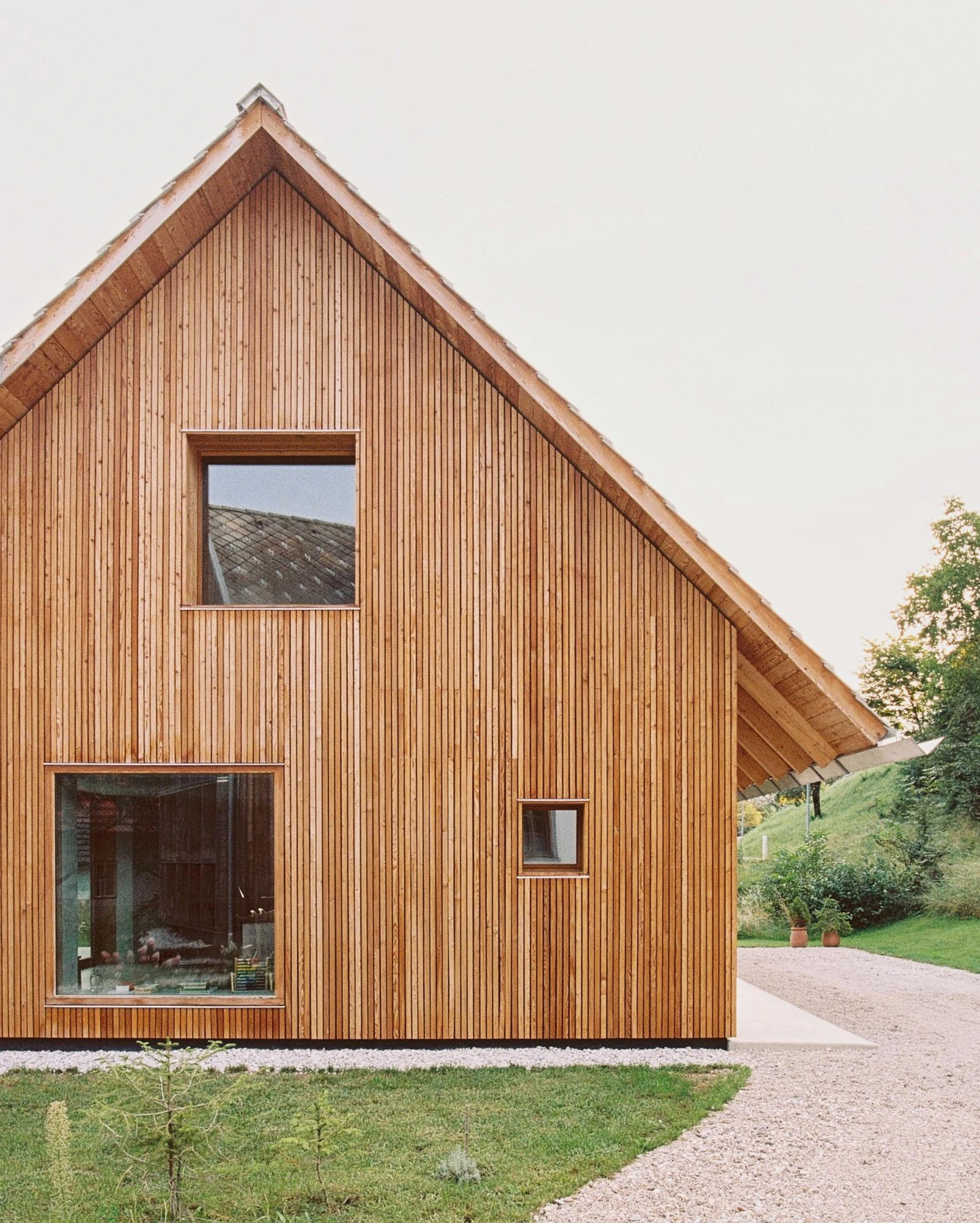
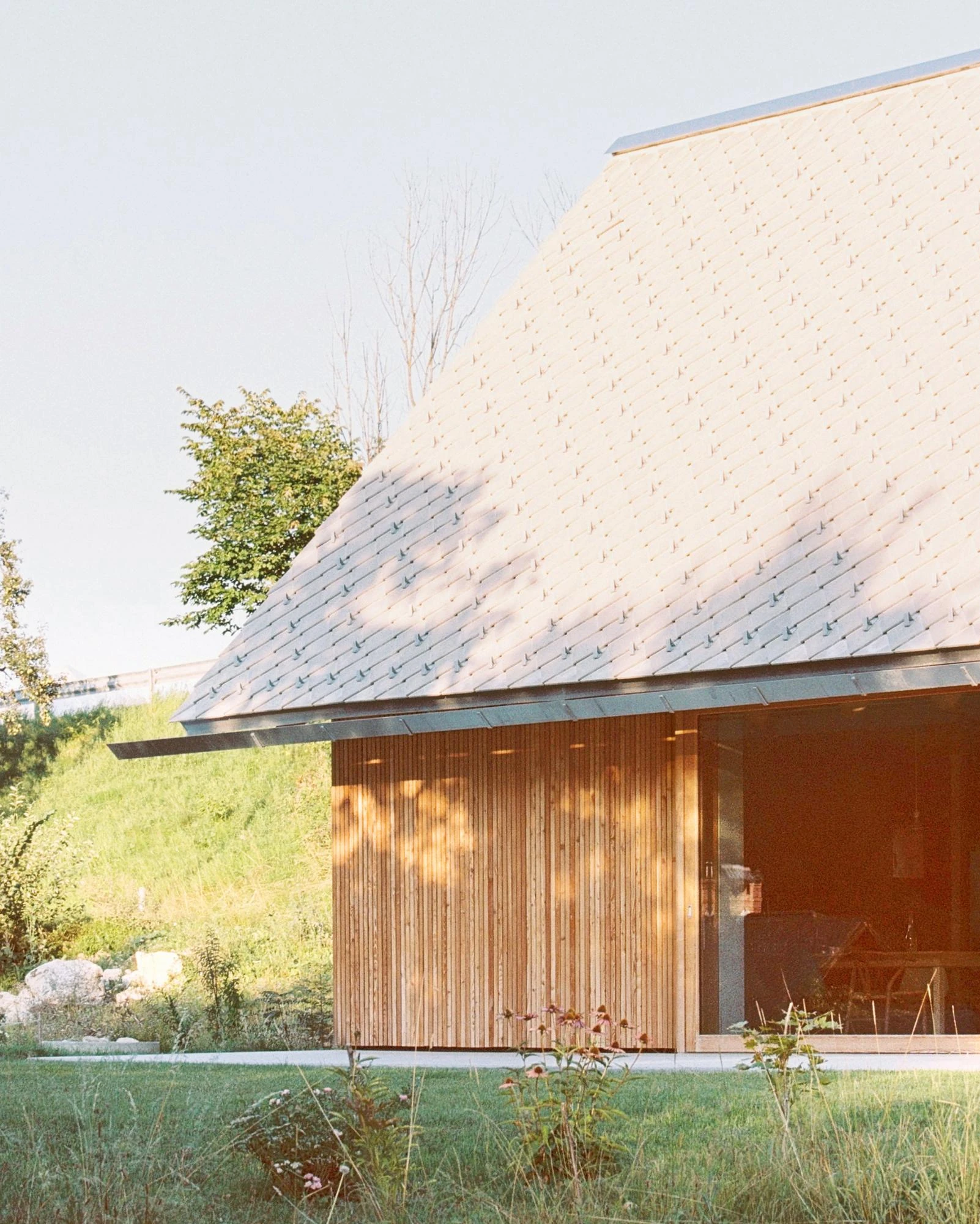
Above this base sits a timber world. The attic is framed in wood and lined throughout in spruce, its knotted boards wrapping walls and pitched ceiling alike up to a bedroom window set into the gable. Outside, the entire volume wears untreated larch: vertical cladding, sliding screens, windows and doors, all left to silver with weather. The roof returns to the local concrete tile, its scalloped pattern catching light like the barns around it.
Počivašek and Petranovič take the better elements of the surrounding farms and rebuild them in a plainer register, stripping ornament without losing the logic of mass below and timber above. The result holds a clear position: a contemporary house that earns its place by speaking the construction language already spoken on the street.