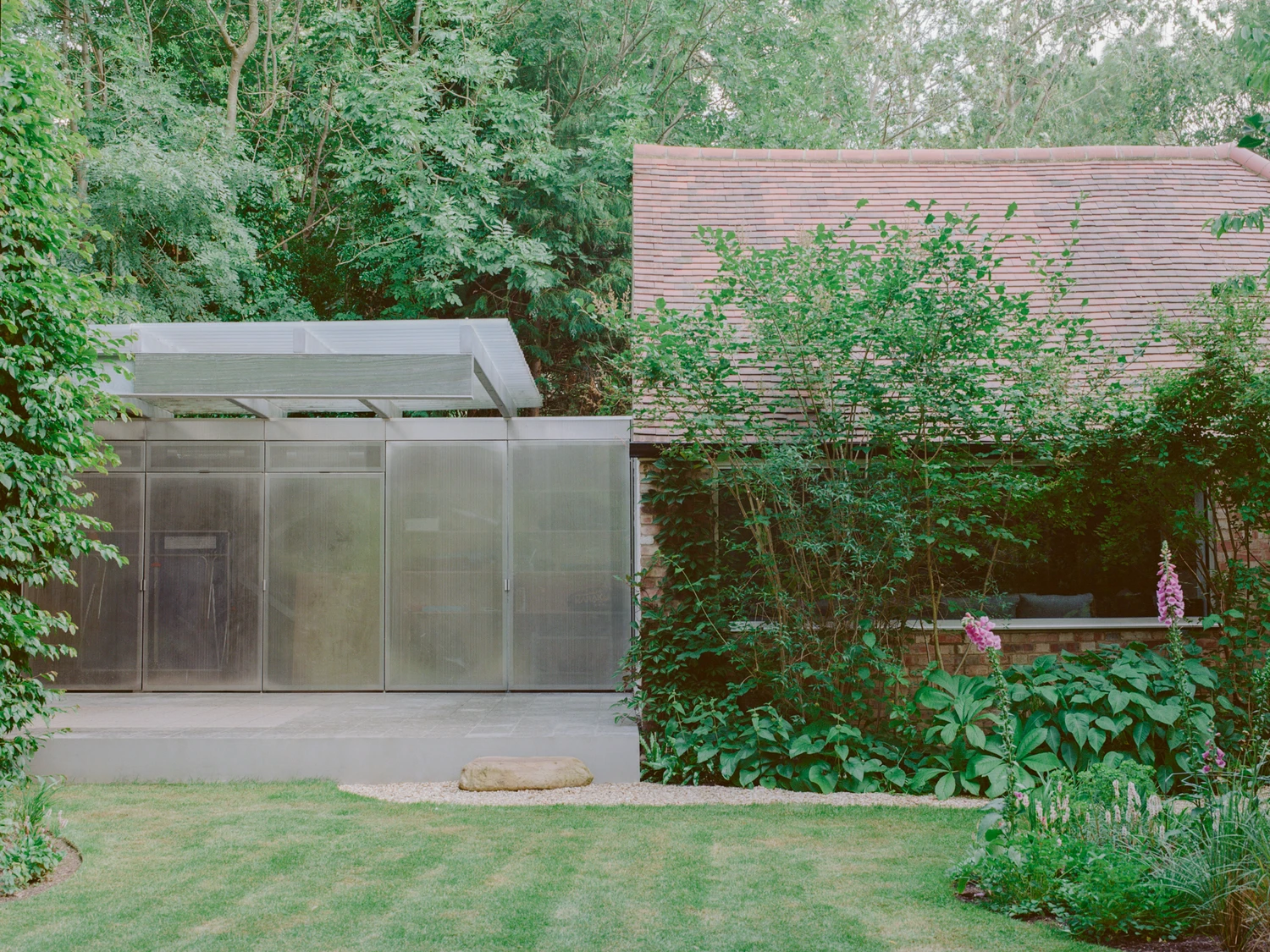
In northwest London, transforms a modest Victorian garden outbuilding into the Exeter Road Pavilion—a cabinet of curiosities in perforated stainless steel, balanced by a marble counterweight and inspired by the precarious poise of Fischli & Weiss.
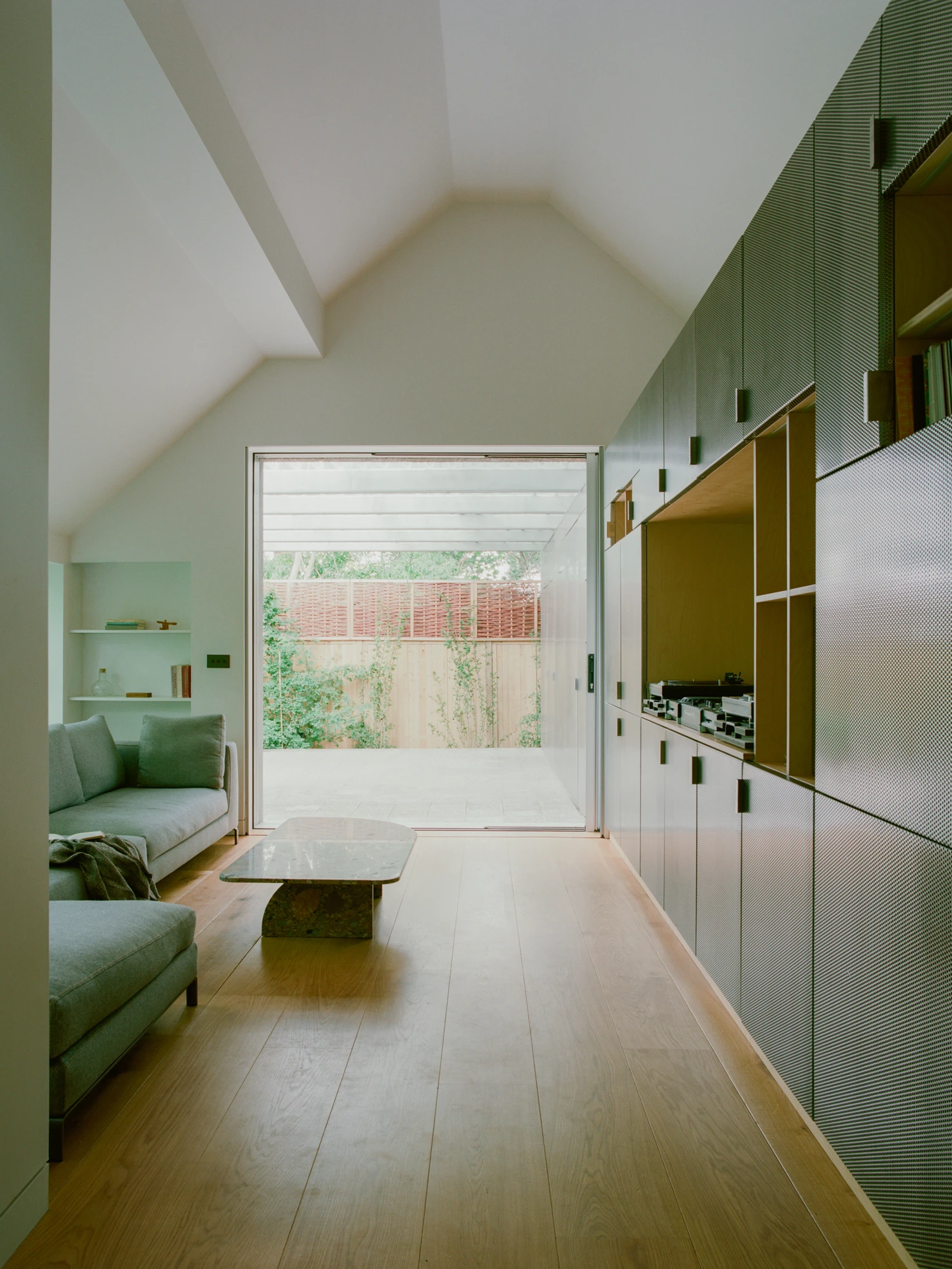
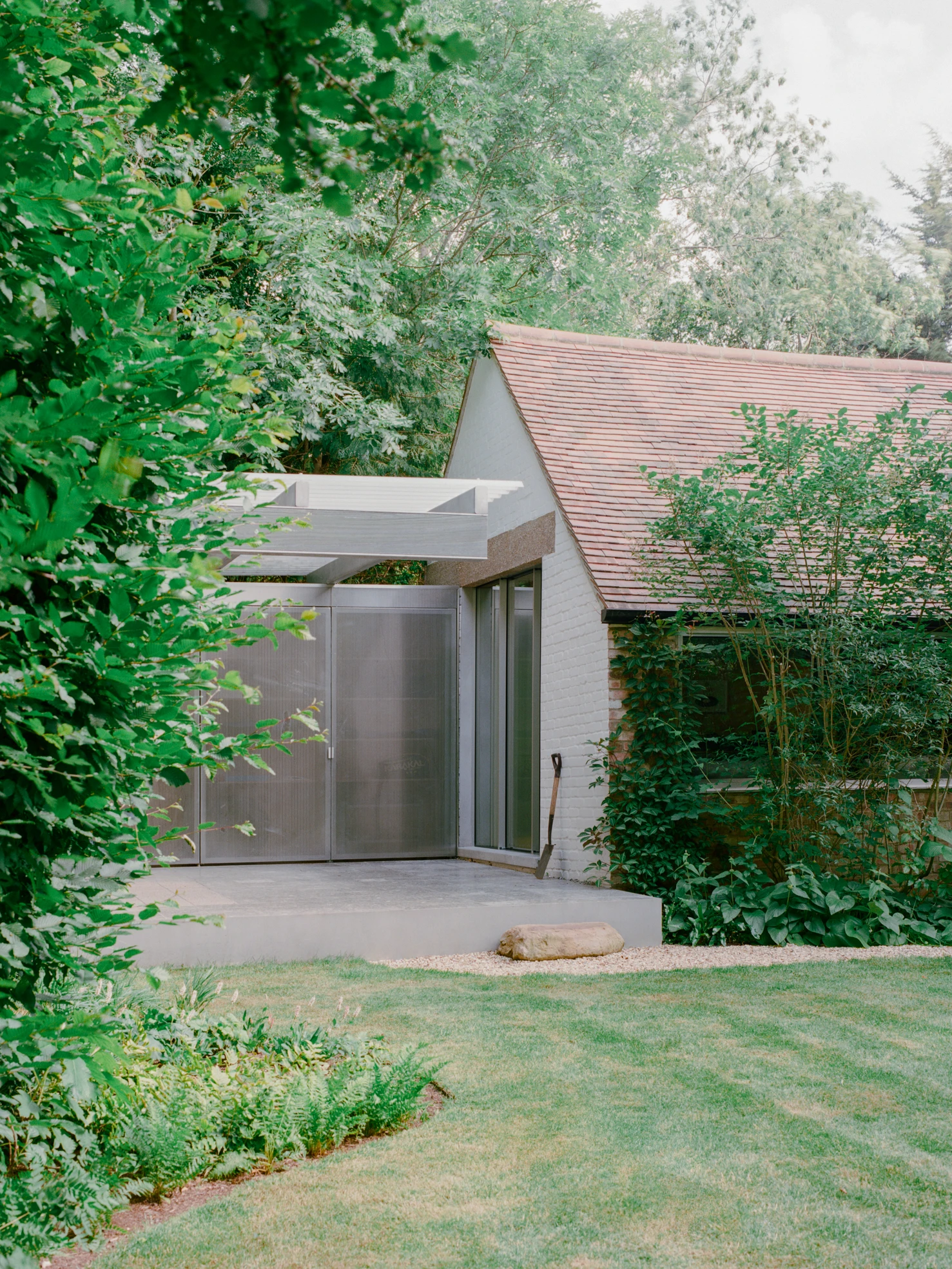
The Exeter Road Pavilion is an adaptive reuse of a modest Victorian garden outbuilding in northwest London, redesigned by Neiheiser Argyros for an art collector and amateur DJ who wanted a place equally suited to storing books, records, and artworks as to hosting garden gatherings, workouts, and the occasional ping-pong match. From the outset, the architects saw what might have been two separate briefs—an interior cabinet for storage and an exterior canopy for shelter—as a single architectural problem.
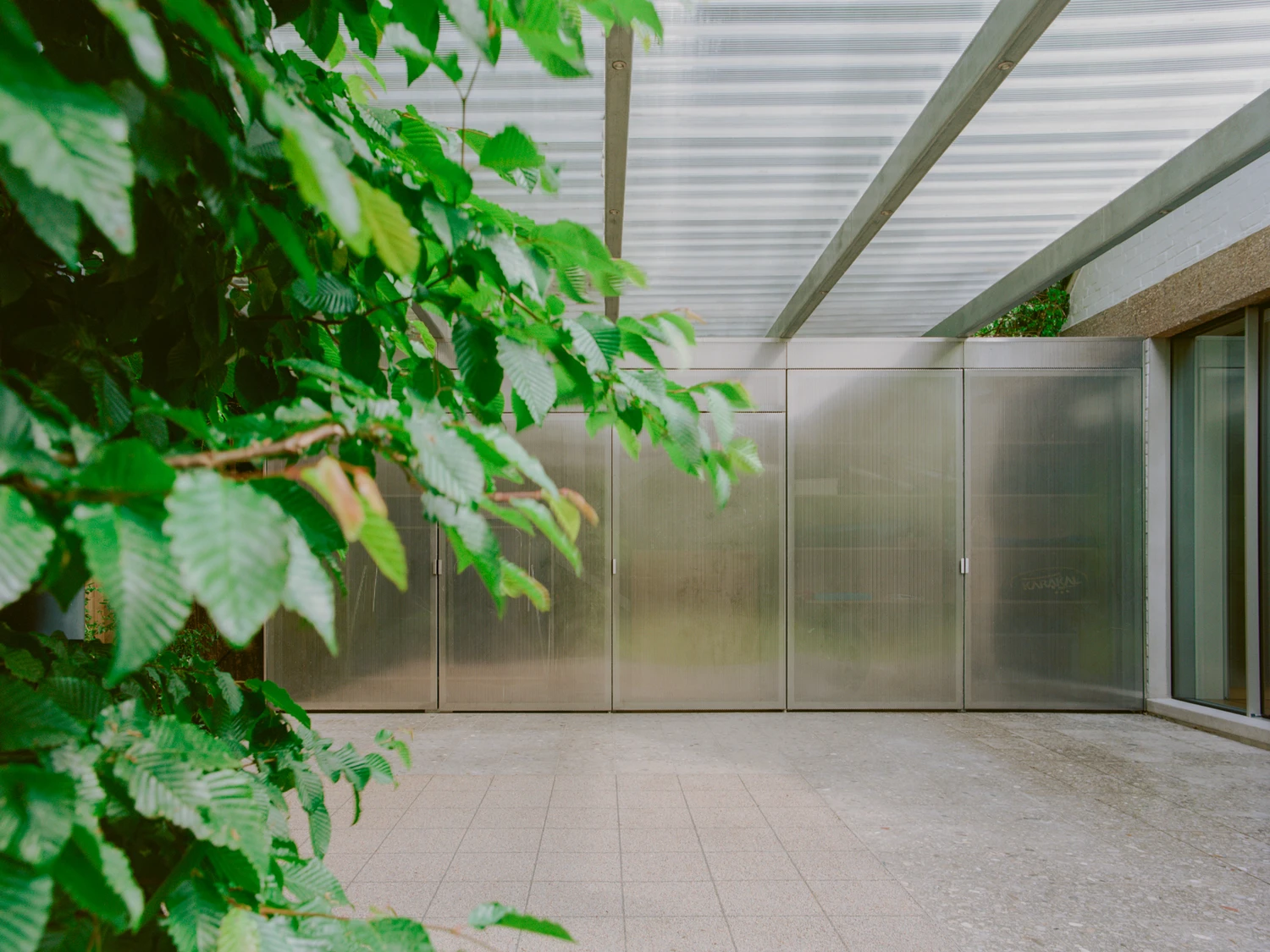
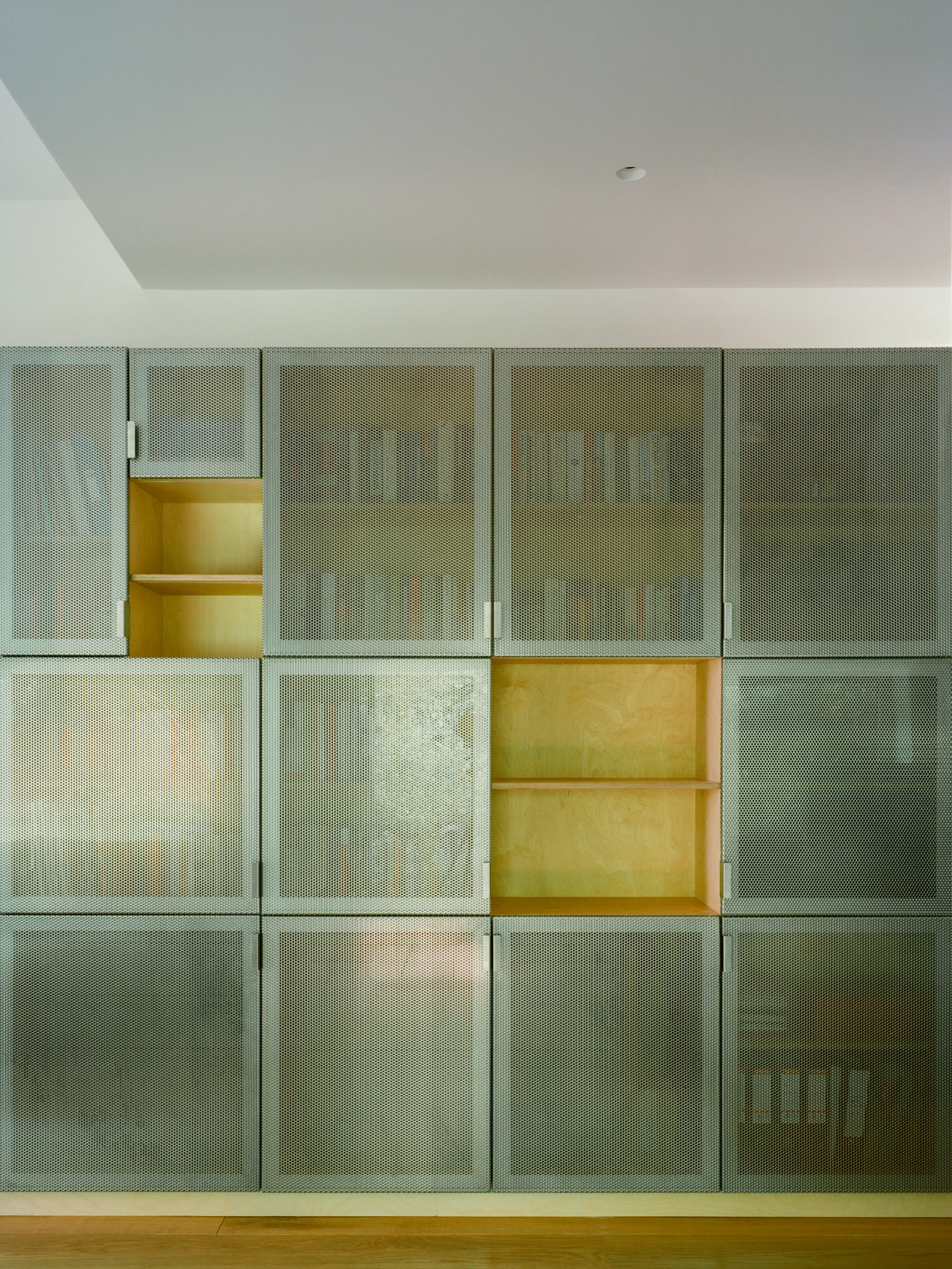
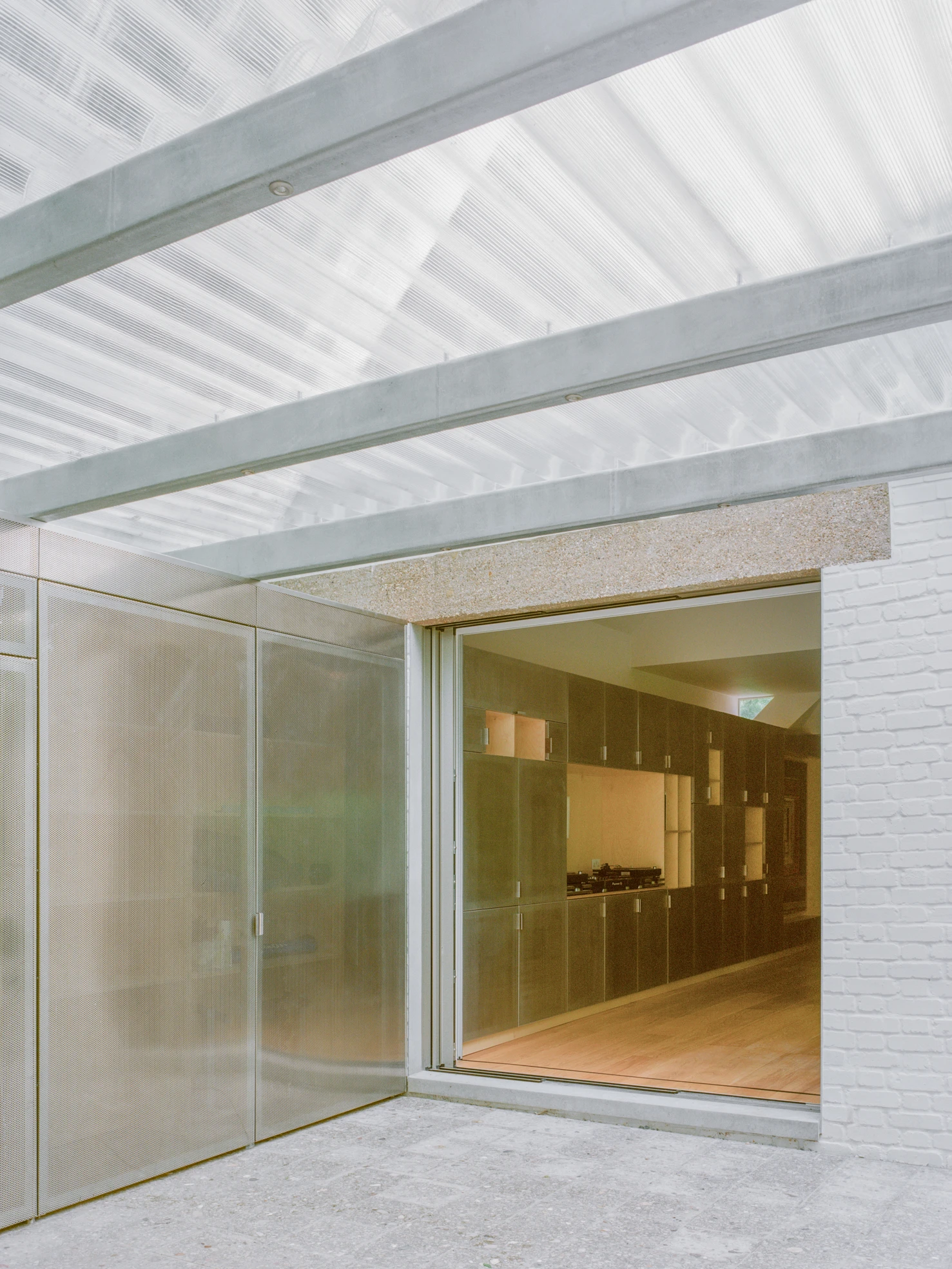
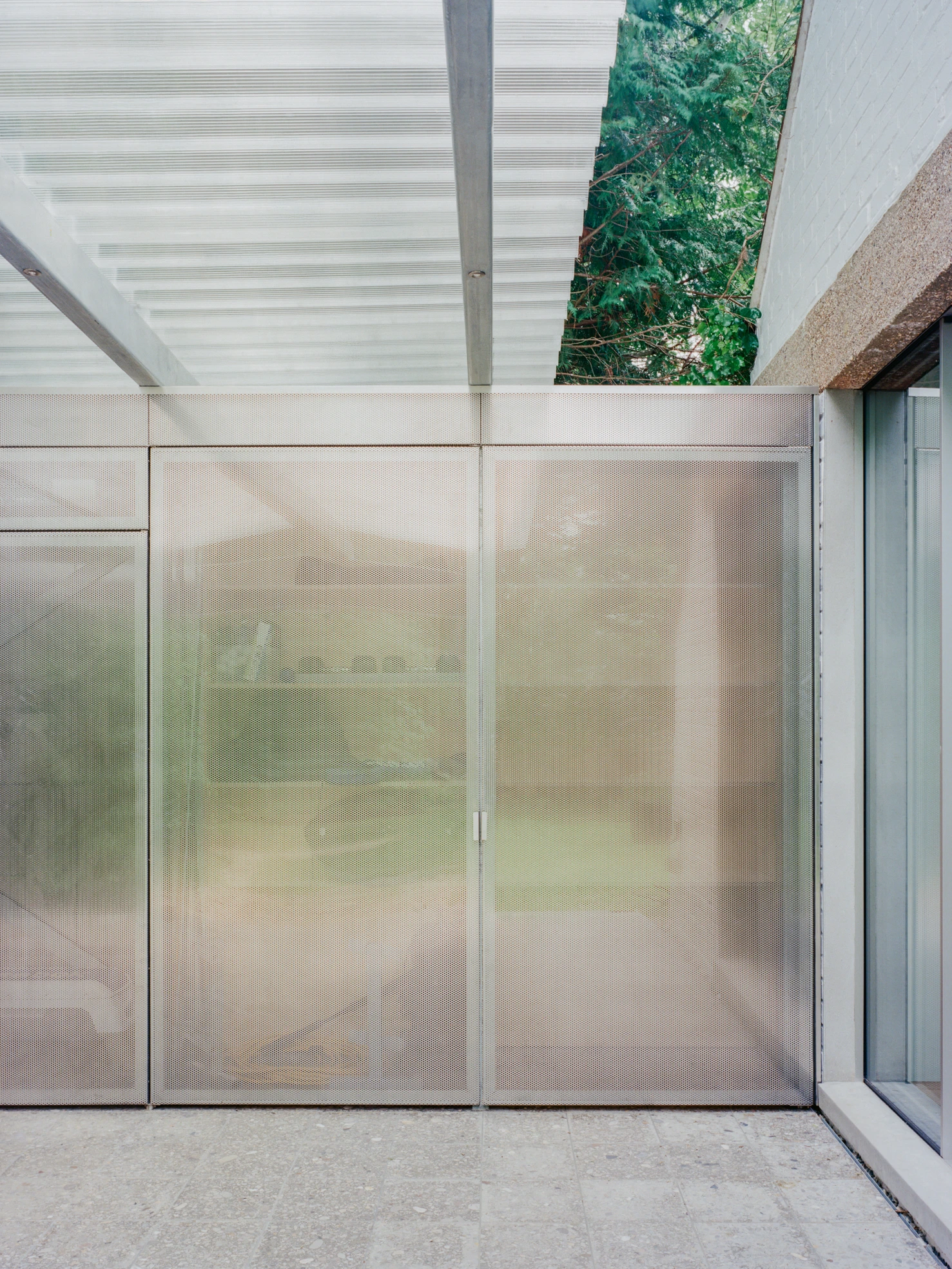
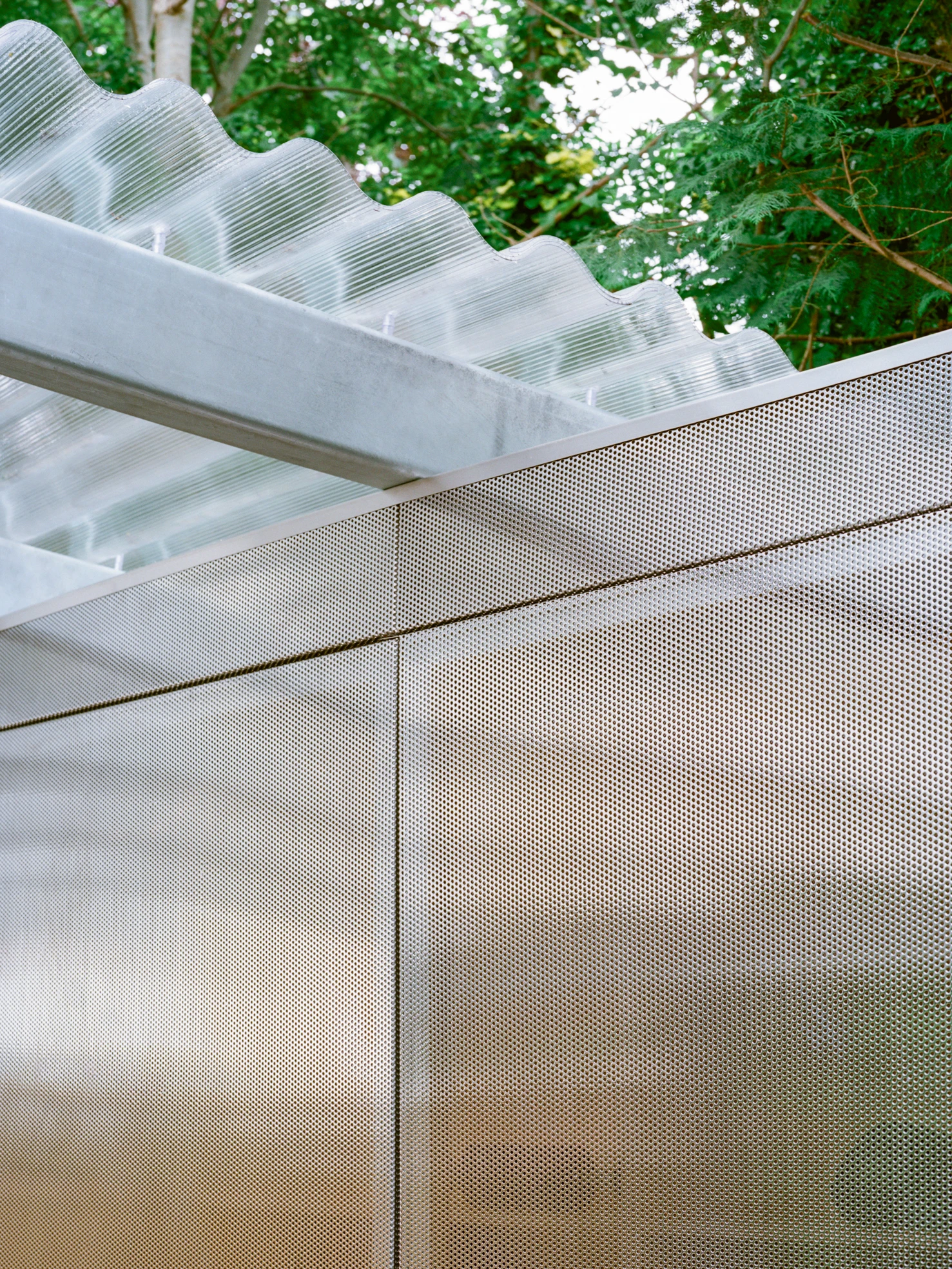
At the centre of the project sits a long, continuous cabinet—conceived as a contemporary cabinet of curiosities—that begins inside the refurbished outbuilding and extends outward into the garden. Within it, the client’s eclectic world finds a home: art storage and display, shelves for books and vinyl, a DJ booth, a television, family photos, and a rotating constellation of knickknacks. As the cabinet continues outdoors, it houses a ping-pong table, free weights, and garden games within the same coherent framework. A perforated stainless-steel screen fronts the entire length, producing a shifting awareness of what lies behind—"sometimes transparent, sometimes reflective, sometimes nearly opaque"—as light changes throughout the day.
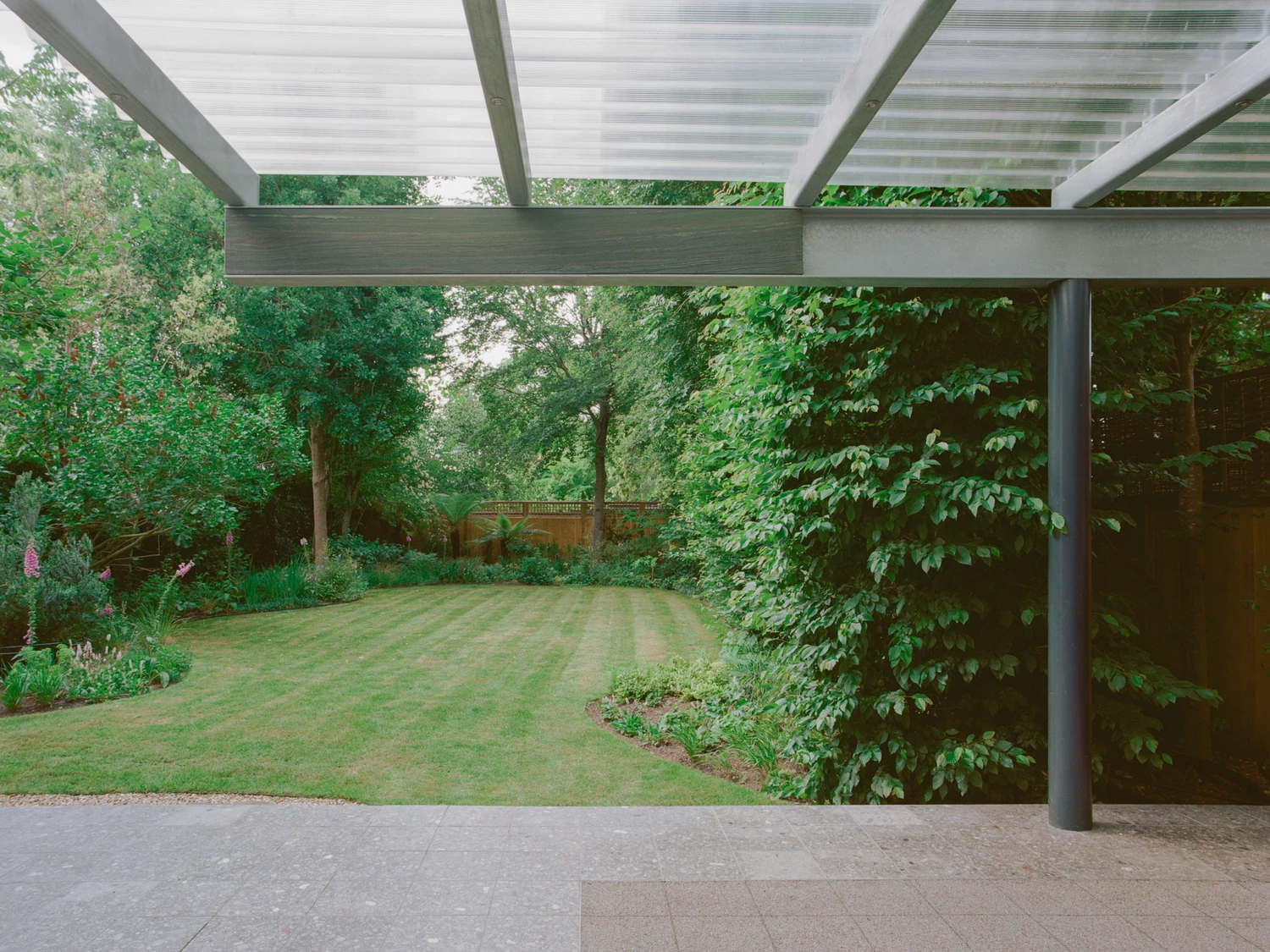
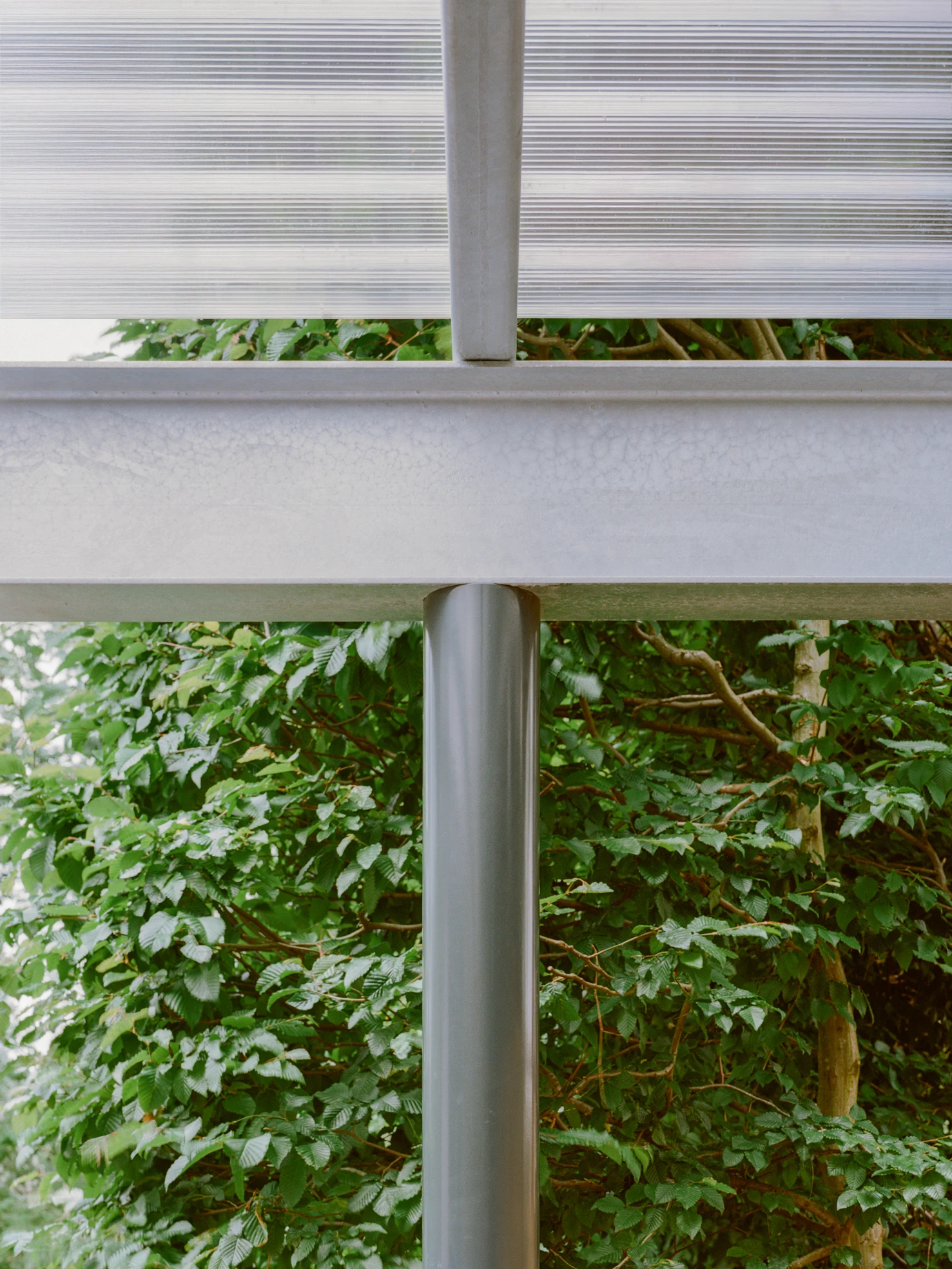
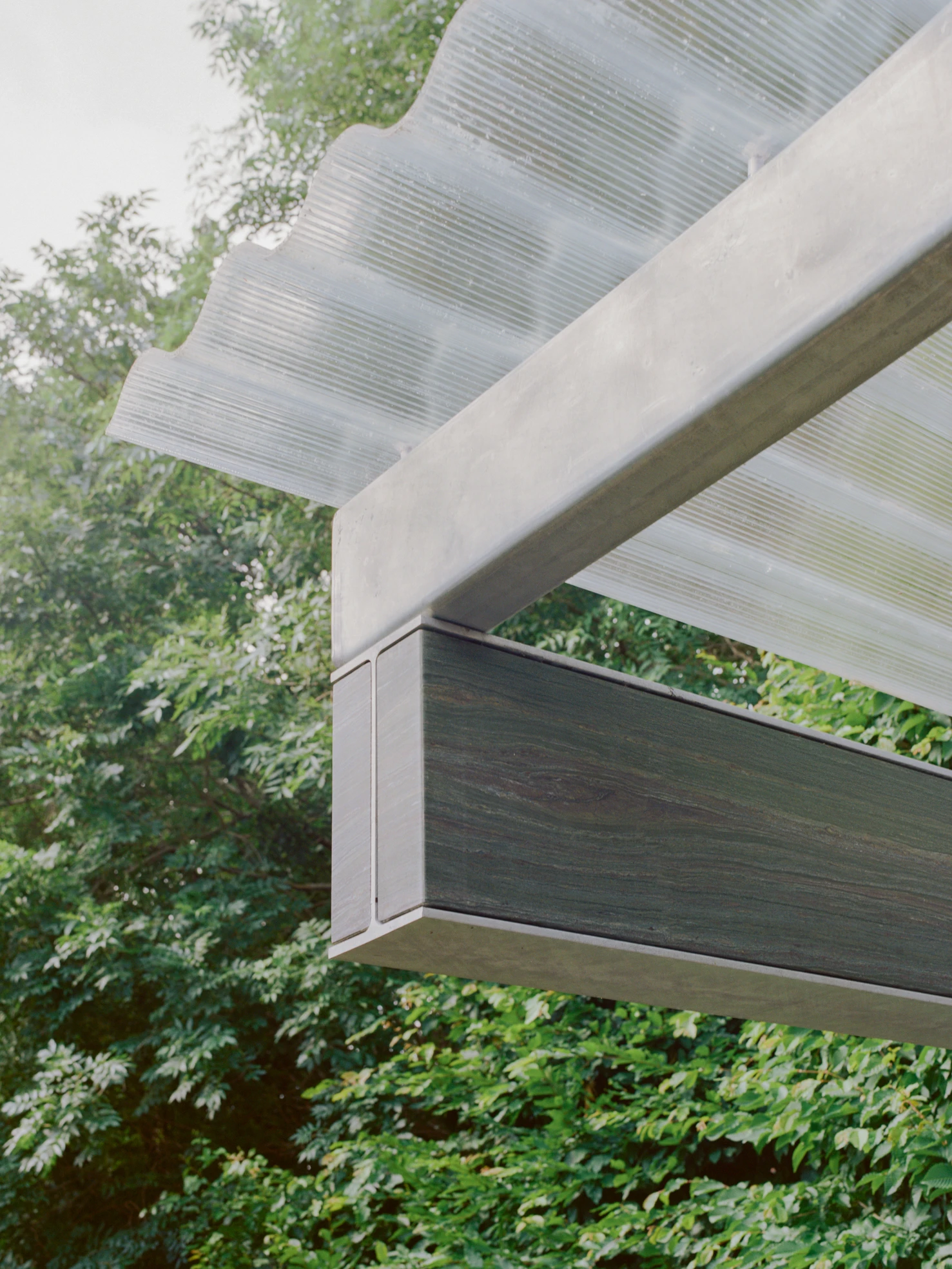
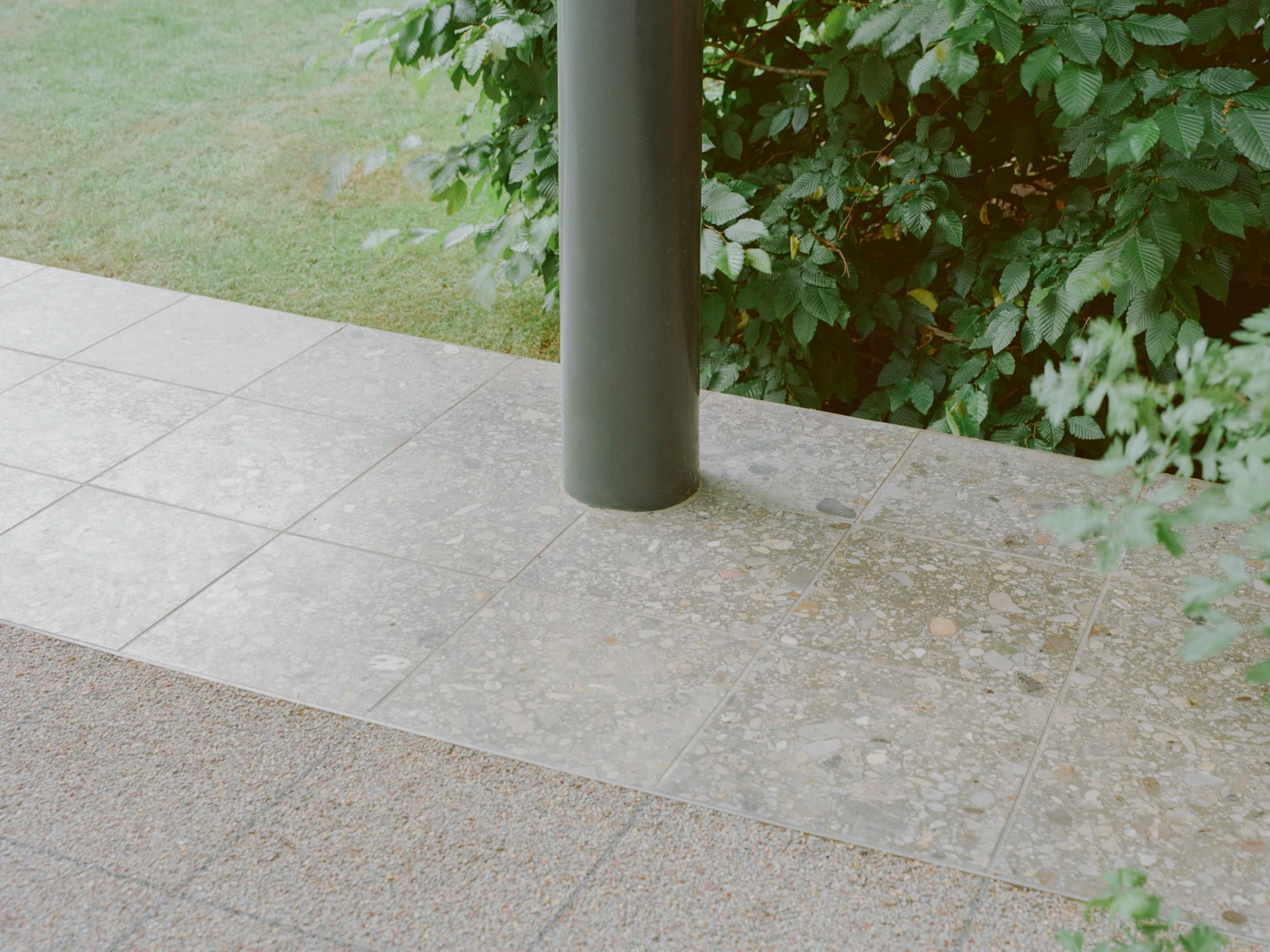
The structural concept introduces a productive tension between cabinet and canopy. Inspired by the photographic series of Fischli & Weiss—those carefully poised everyday objects caught in the fragile instant before collapse—the architects traced the path of gravity through a straightforward canopy form in a non-intuitive way. By removing a column where one would normally expect support, they introduced a subtle structural precarity. A solid mass of precision-milled marble, nested within the web of a galvanised steel I-beam, serves as counterweight. A tension rod on the opposite side ties back to a concrete block below ground, allowing the canopy to hover with surprising lightness.
The cabinet surfaces are clad in stainless steel panels that simultaneously mirror the shifting garden and reveal the collection held within. The canopy itself layers marble, steel, and polycarbonate—materials raw and refined—one atop the other. As daylight changes and the vegetation grows and recedes, the pavilion becomes what the architects describe as "an instrument of observation: a site where structure, storage, and landscape remain in constant, perceptible dialogue."