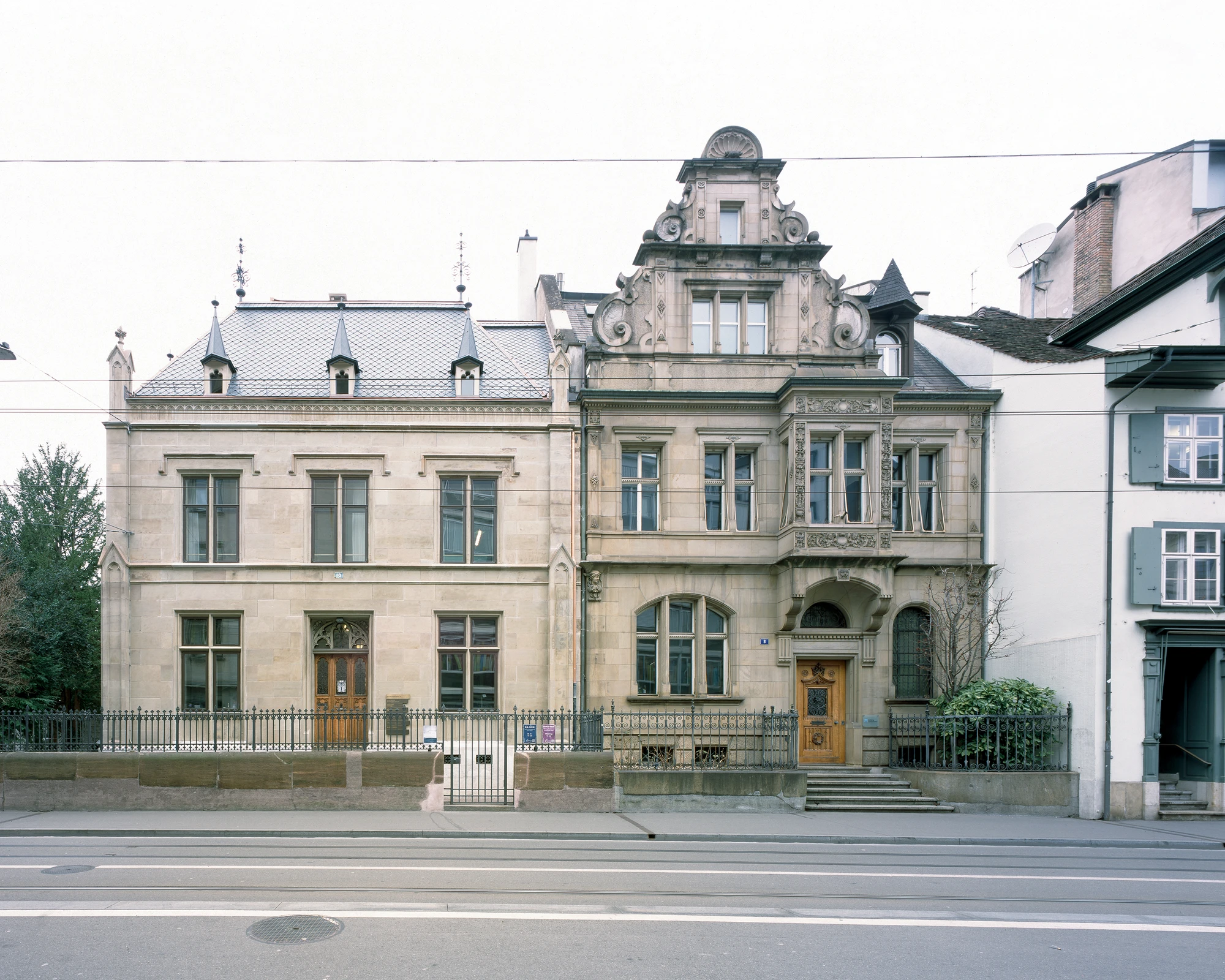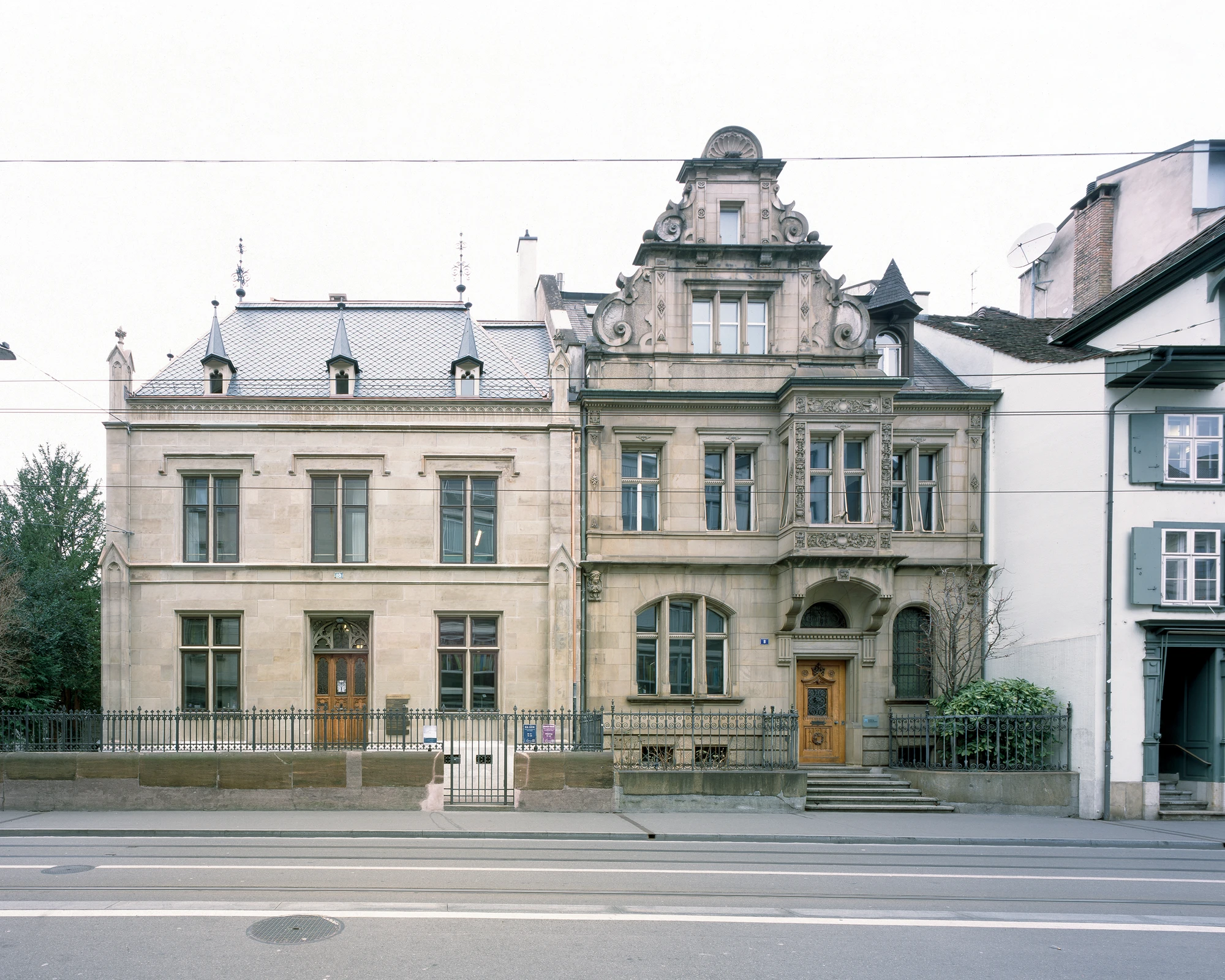
At Elisabethenstrasse 10 in Basel, Vecsey Schmidt Architekten renovated an 1867 rectory by Johann Jakob Stehlin the Younger, restoring the bel etage while opening the attic to raw daylight.
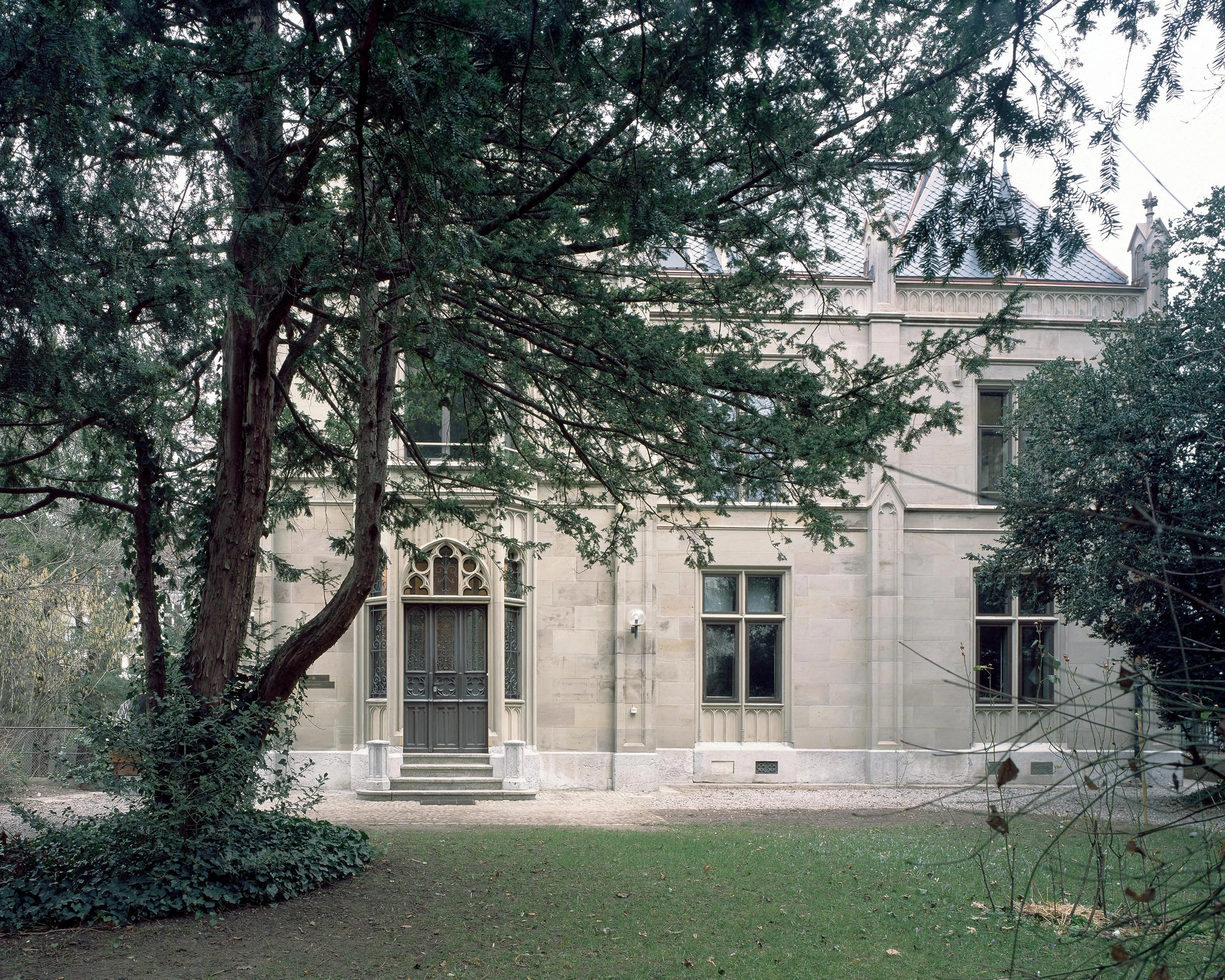
The building was commissioned in 1867 as the rectory for the Elisabethenkirche, the final piece of Johann Jakob Stehlin the Younger's planned cultural ensemble stretching from Barfusserplatz to the Bankverein. Stehlin conceived this urban sequence of art gallery, sculpture hall, music hall, theatre, schoolhouse, and rectory as a coherent civic statement, and the rectory's Neo-Renaissance sandstone facade, with its mansard roof and baroque gable, still reads as the ensemble's domestic anchor.
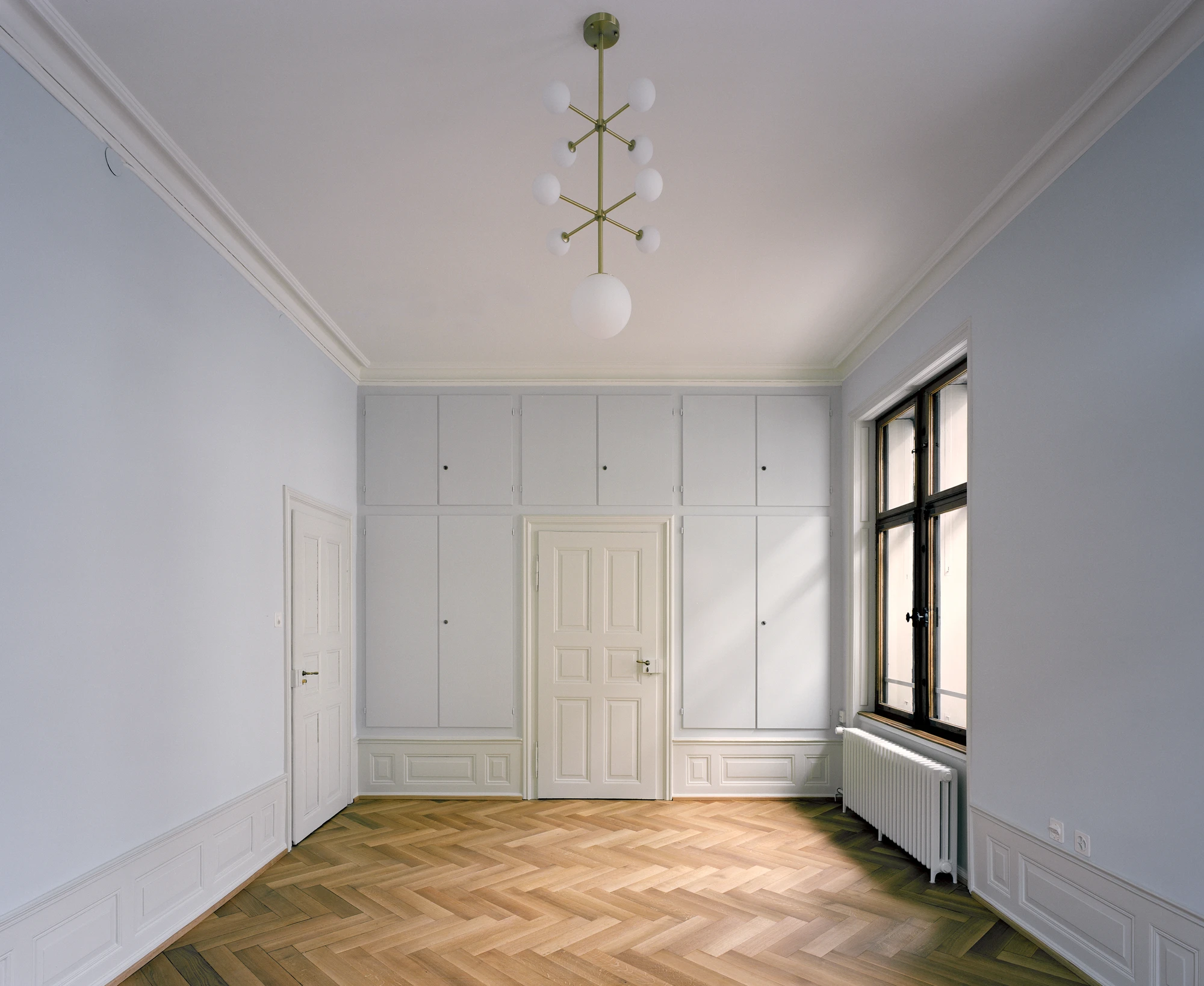
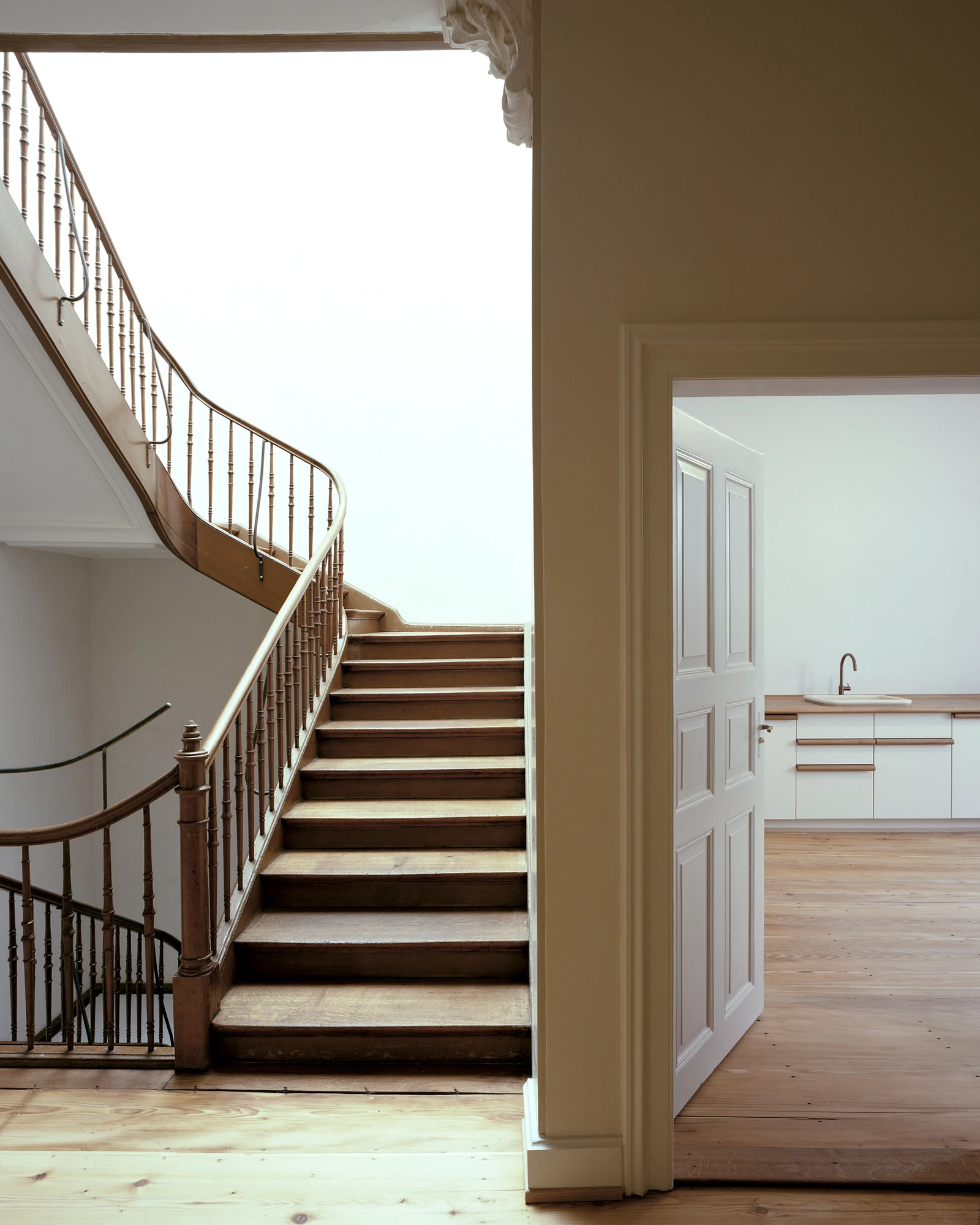
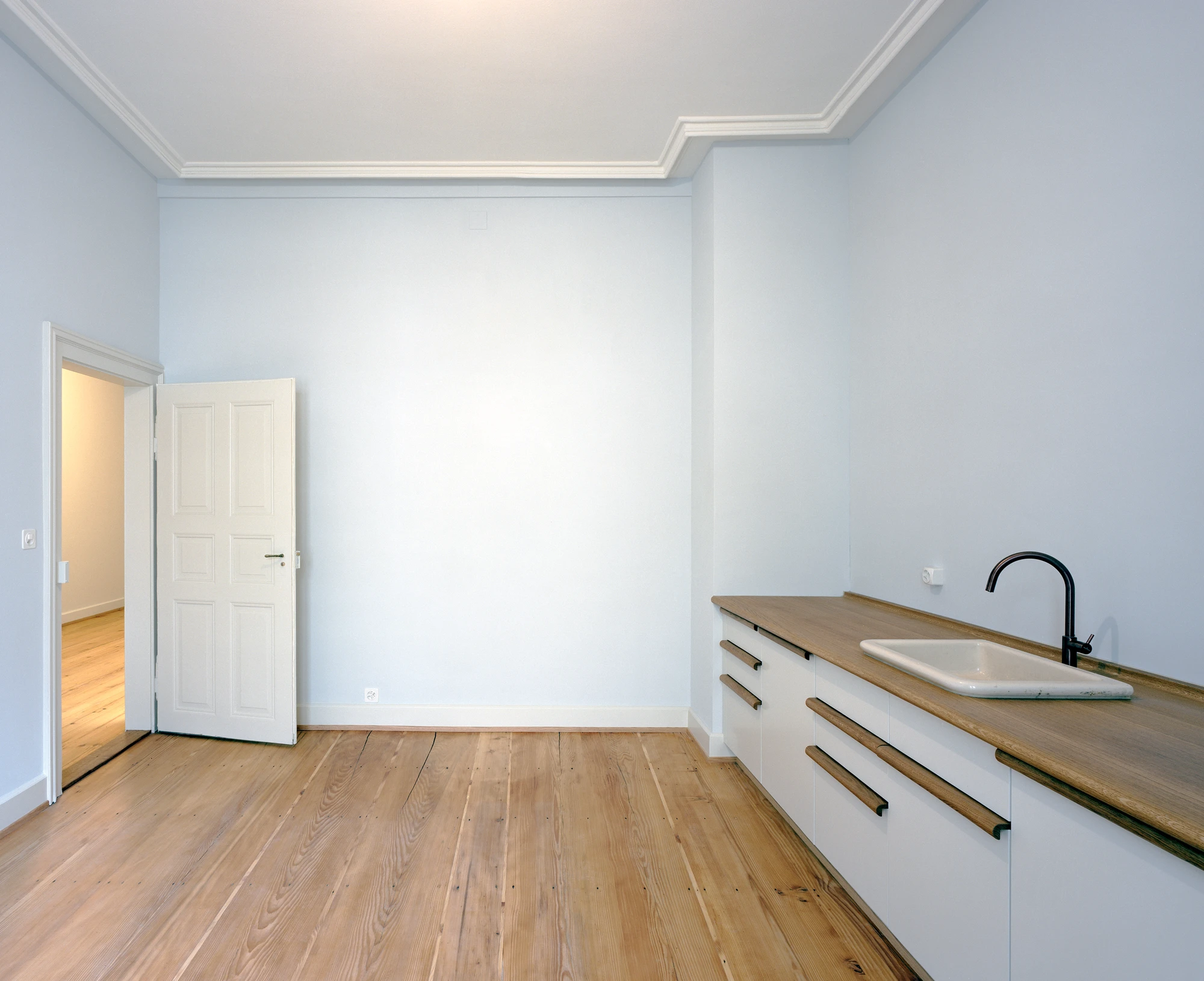
Susanne Vecsey and Christoph Schmidt structured the renovation around a clear binary: restraint on the exterior, intervention in the interior. The bel etage received full restoration: plaster cornices repaired, pale grey-blue walls returned, herringbone parquet laid, original carved doorframes kept in place. A modern white kitchen with oak counter was introduced as a clean counterpoint, legible as new without competing with the 19th-century fabric around it.
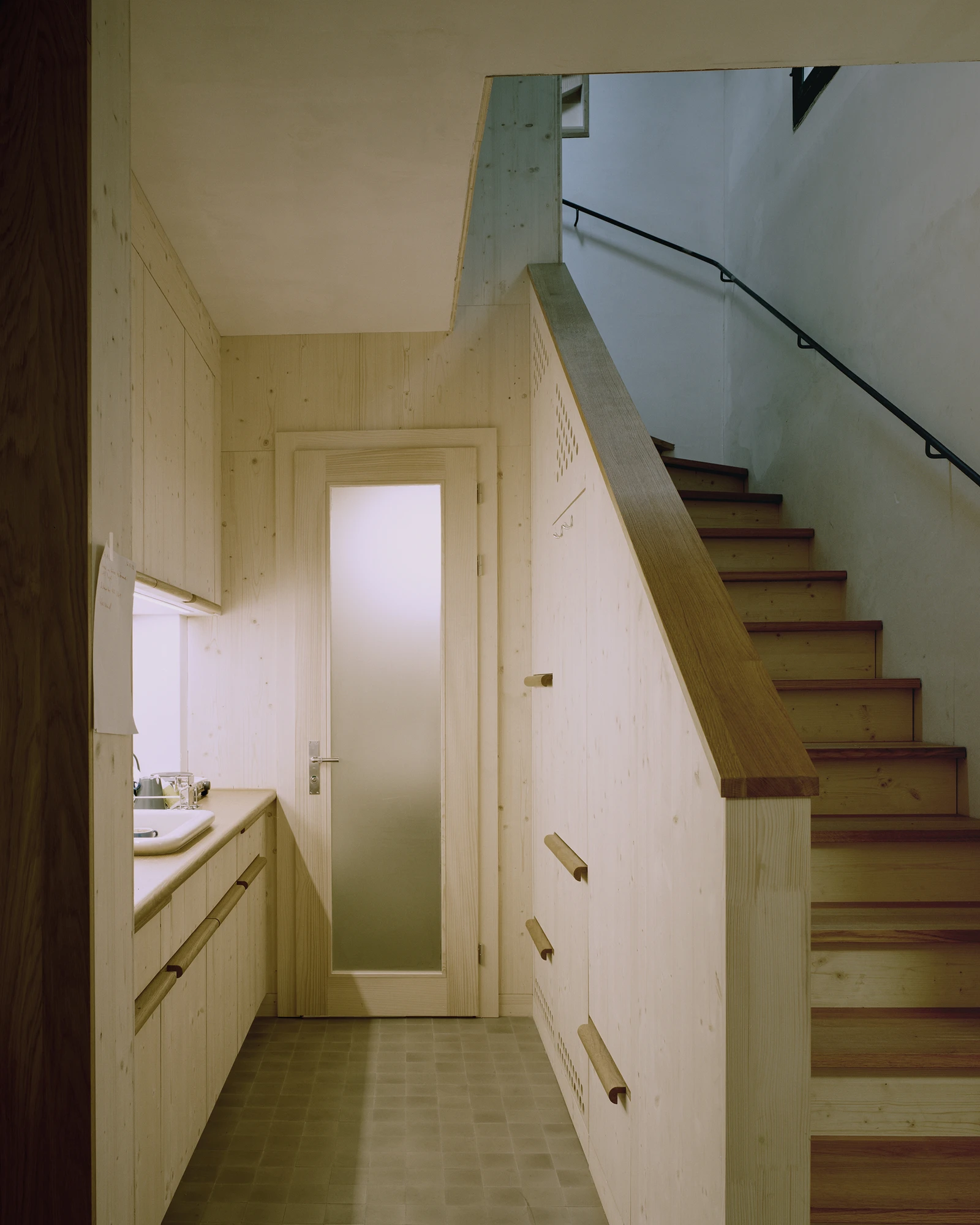
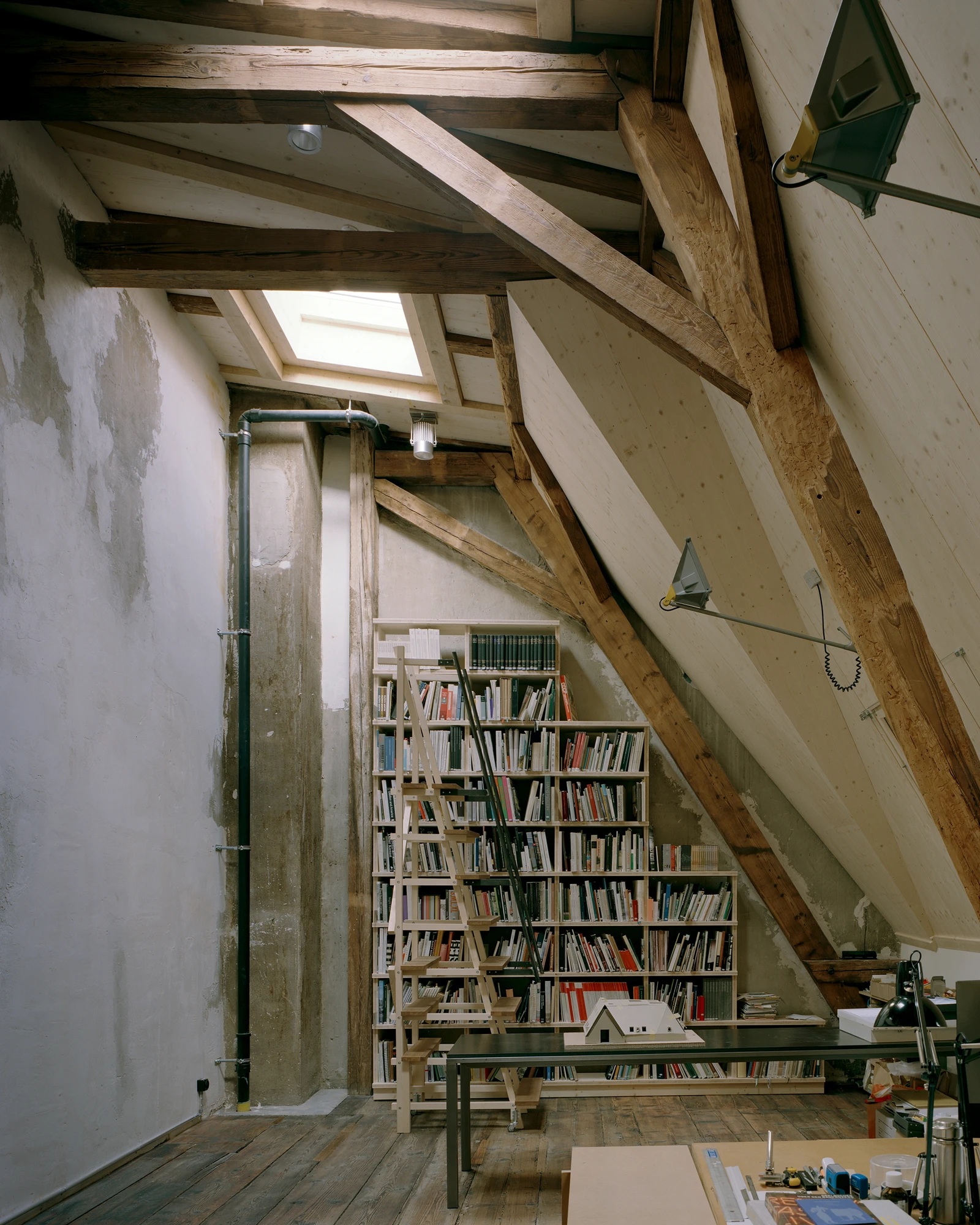
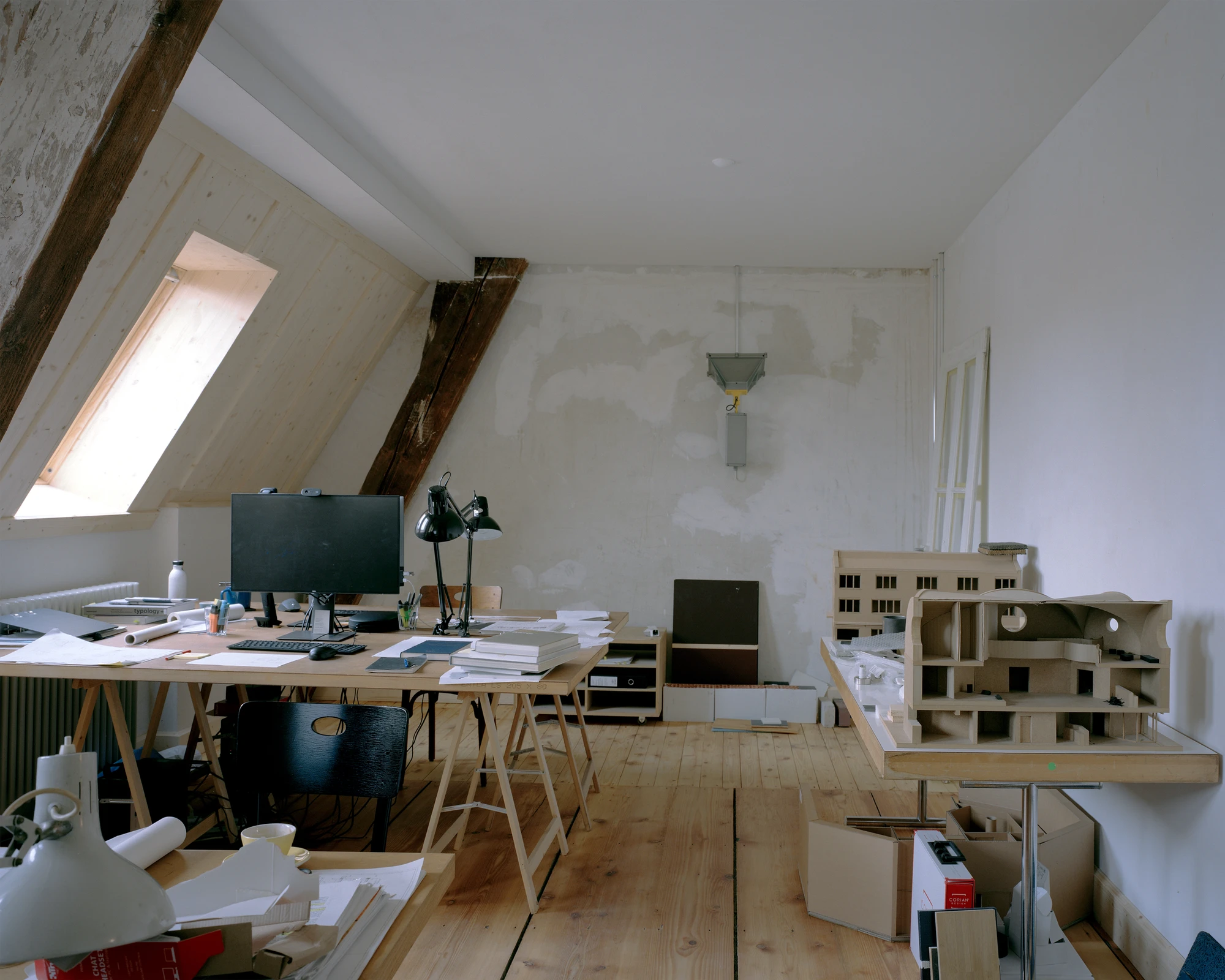
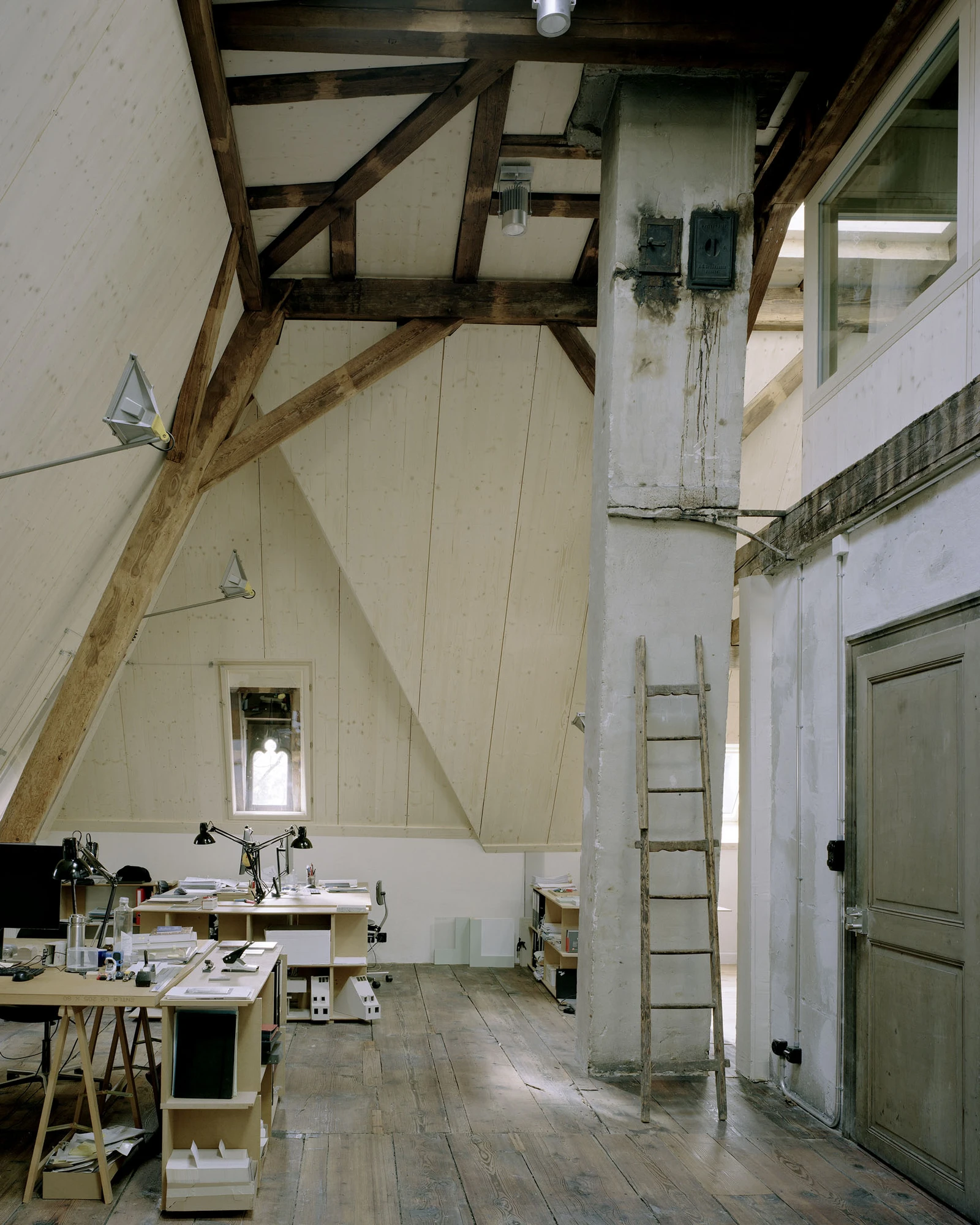
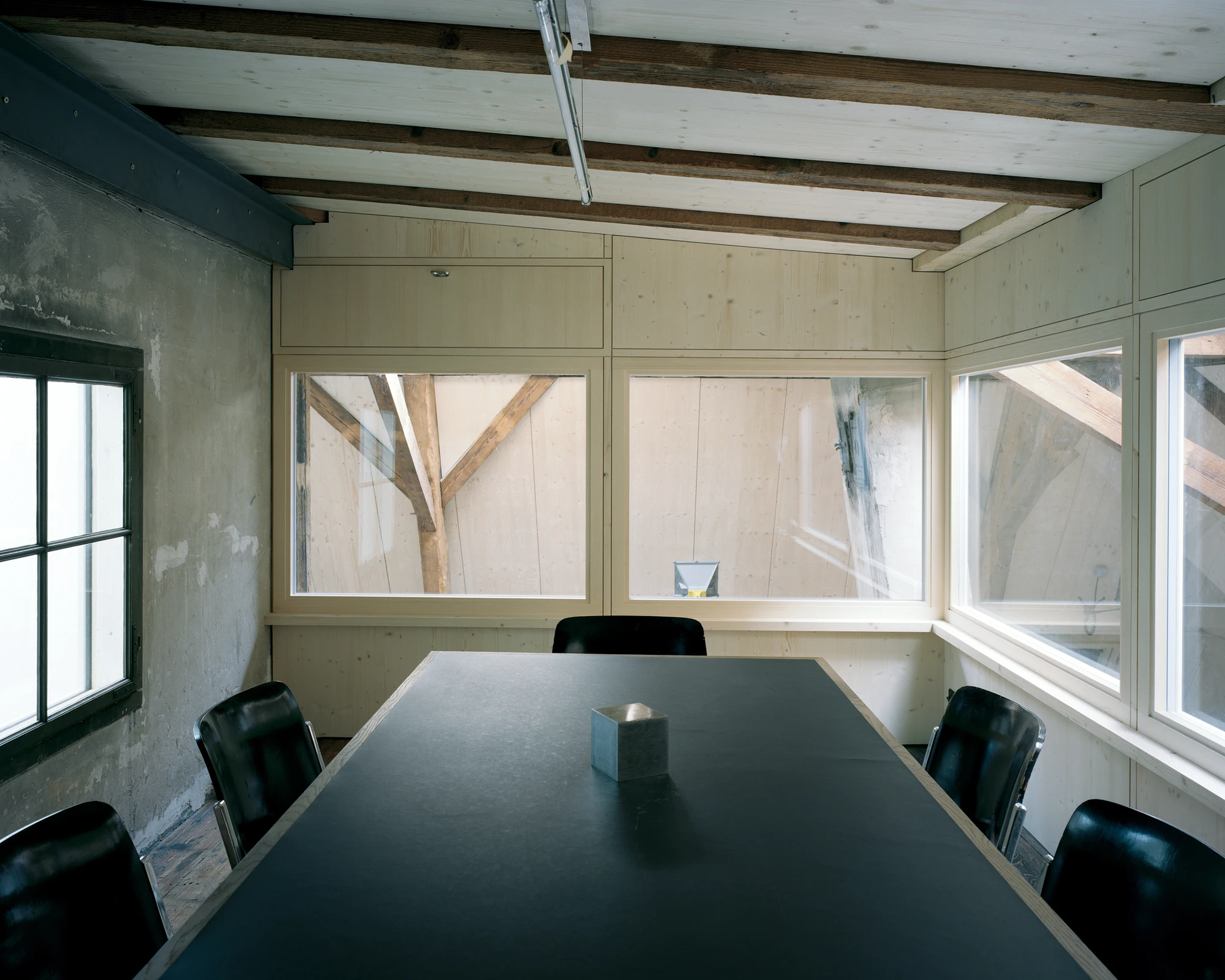
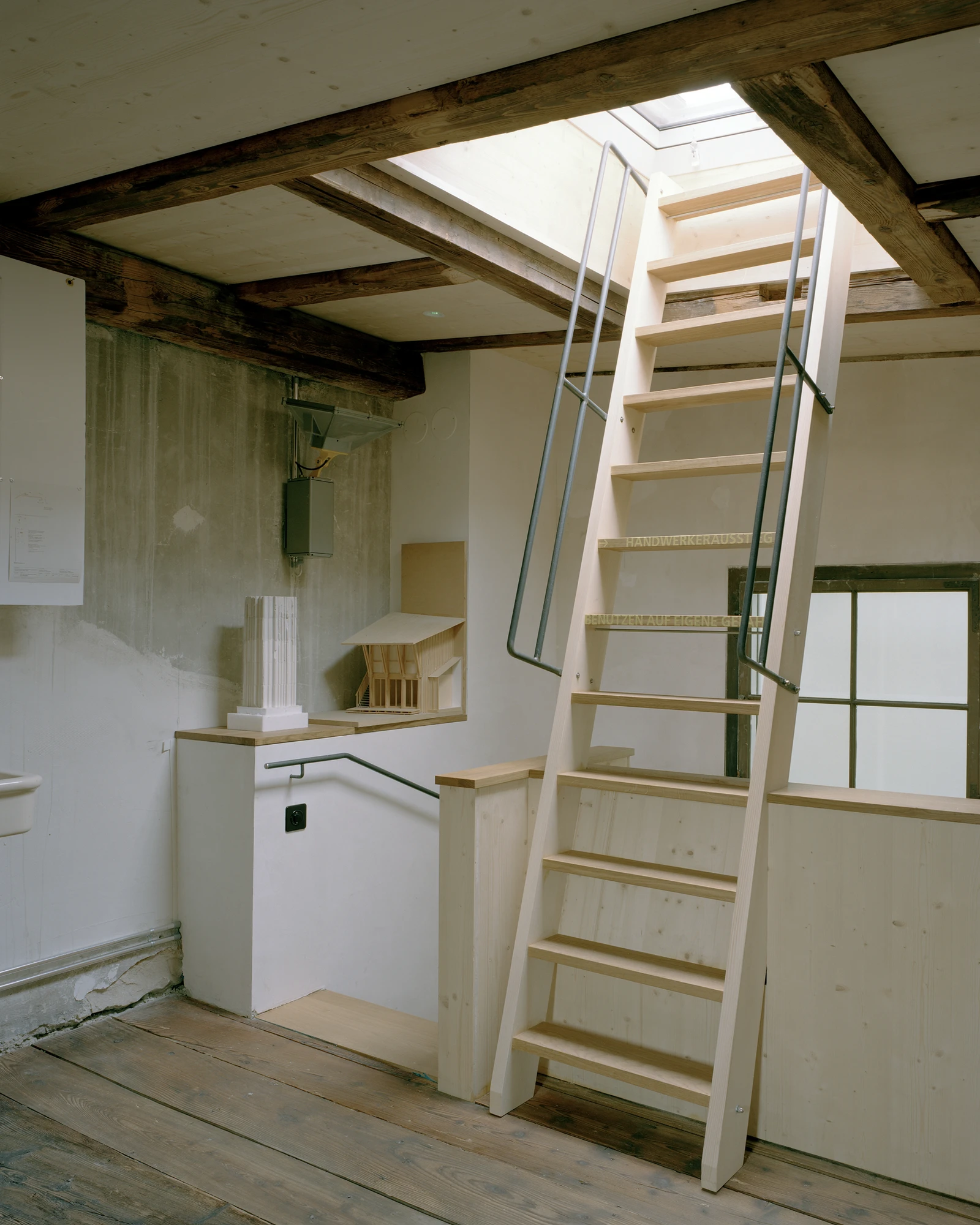
The attic floors tell a different story. Previously unused, the three upper levels were converted through a sequence of minimally invasive cuts: paired skylights arranged to echo the facade's rhythm, a ship's ladder stair with bare steel rail, a plywood-clad corridor tucked under the pitch. The meeting room works entirely on indirect light; occupants look out through translucent panels at the oak trusses beyond rather than directly at the sky. The office above receives zenithal light through a single rooflight. The studio at the top opens the full geometry of the king-post roof, exposing centuries-old timbers alongside lean trestle desks and the working detritus of an active practice.
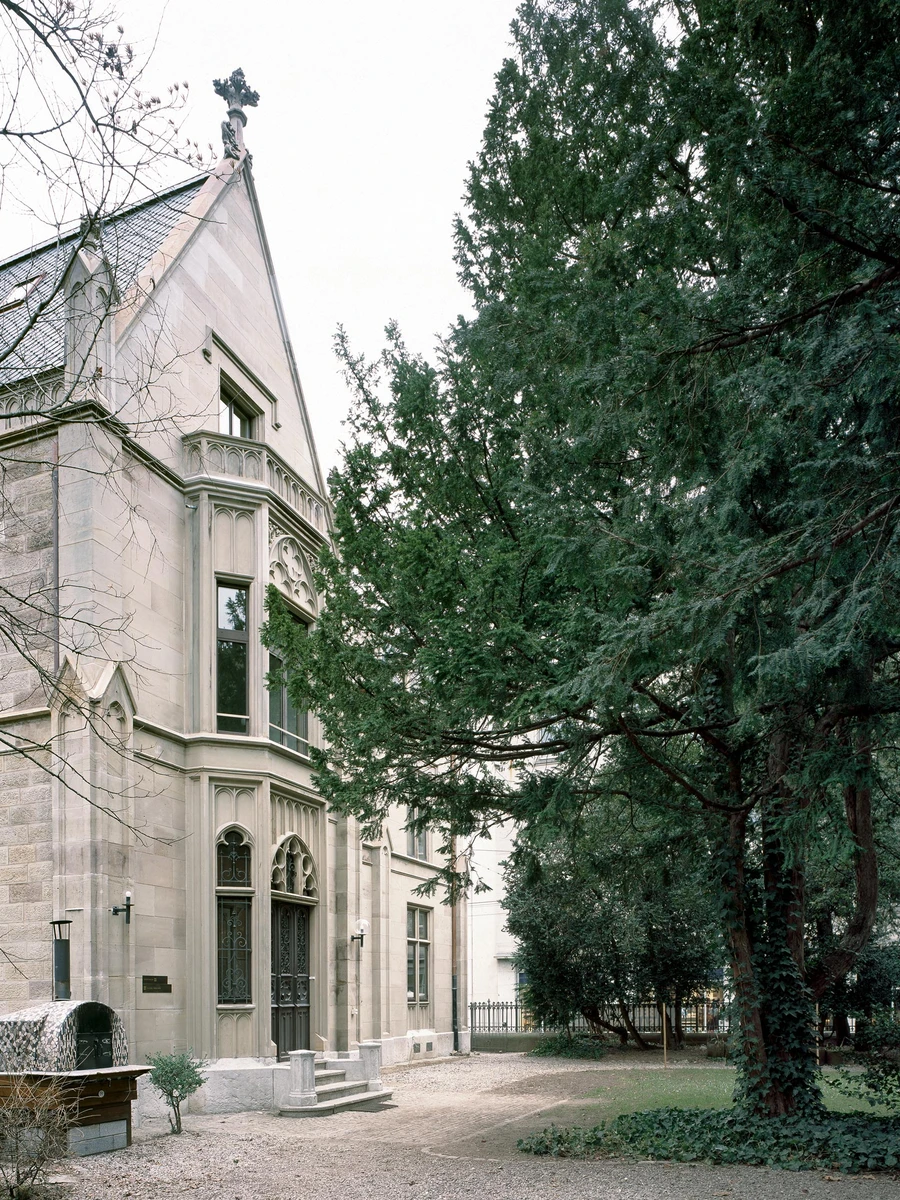
Vecsey Schmidt describe their method as operating through targeted interventions, and the photographs bear this out. Barbara Buhler's images hold the tension between the building's ornate public face, photographed from the parish garden through a screen of mature conifers, and the raw, unfinished quality of the attic. Exposed concrete columns retain their pipe conduit; bookshelves fill the triangular wedge below a diagonal truss; plaster walls are left with the shadows of removed elements still visible.
The building photographed by Barbara Buhler now houses the studio itself, which gives the renovation an unusual candour: the interventions are also the daily working environment. Scale models sit on shelves beside the skylights they were designed with. The sequence of spaces is both the brief and the result, a working argument for what the renovation of existing buildings can be when the emphasis falls on what to keep rather than what to add.