Burr Studio’s design for Dr.You transforms the apothecary into a sanctuary, blending warmth, clarity, and sensory quiet to encourage visitors toward slower, more intentional forms of wellbeing.
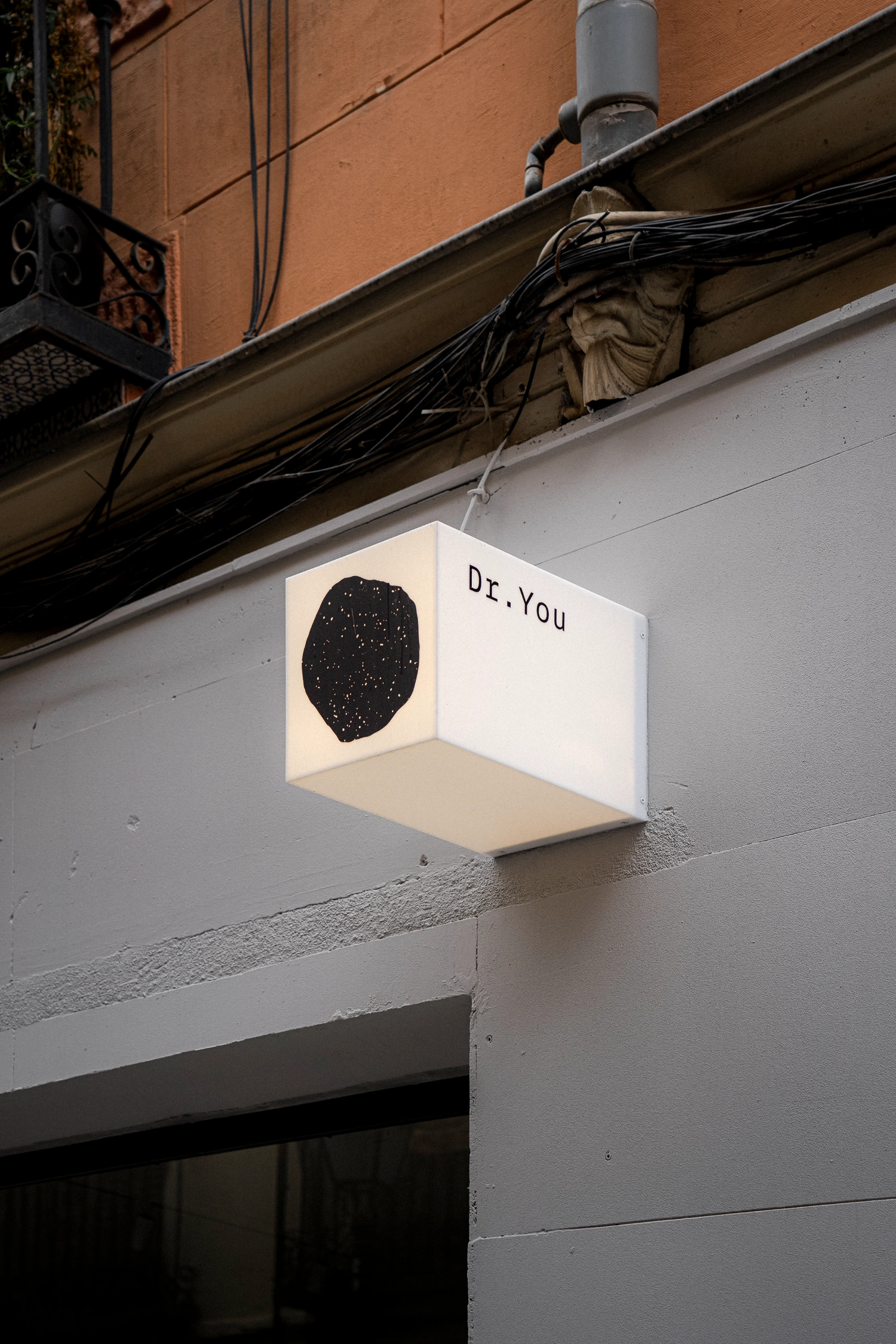
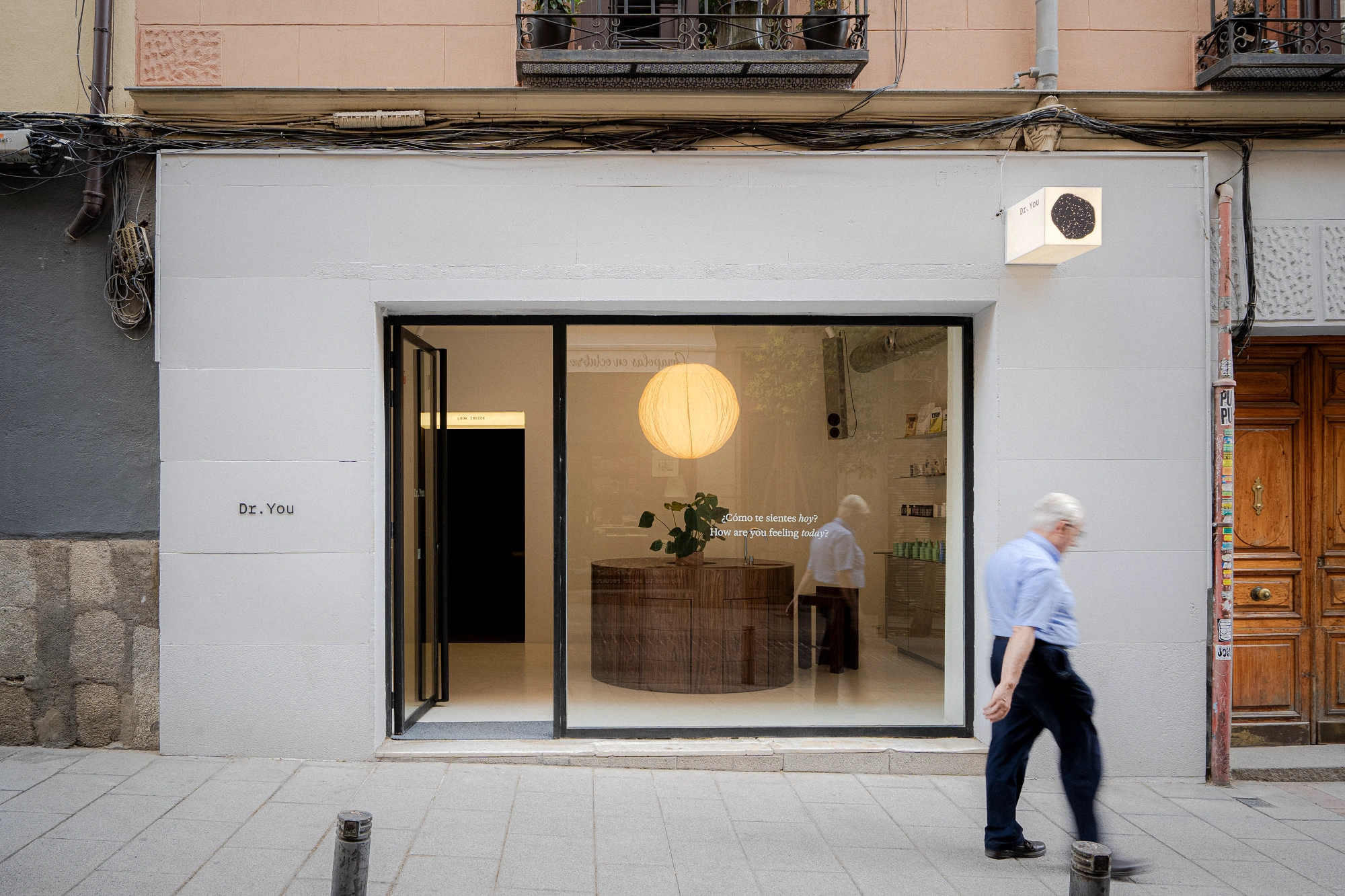
Stepping into Dr.You feels less like entering a retail space and more like crossing a threshold into a distilled version of wellbeing. Burr Studio has choreographed an interior that resists the pharmacy’s traditional rhythm of haste, replacing it with something closer to a whispered pause. The exterior already signals a deviation: a glowing cubic sign, understated to the point of abstraction, introduces the project’s guiding principle of reduction. Inside, that ethos unfolds with disarming clarity.
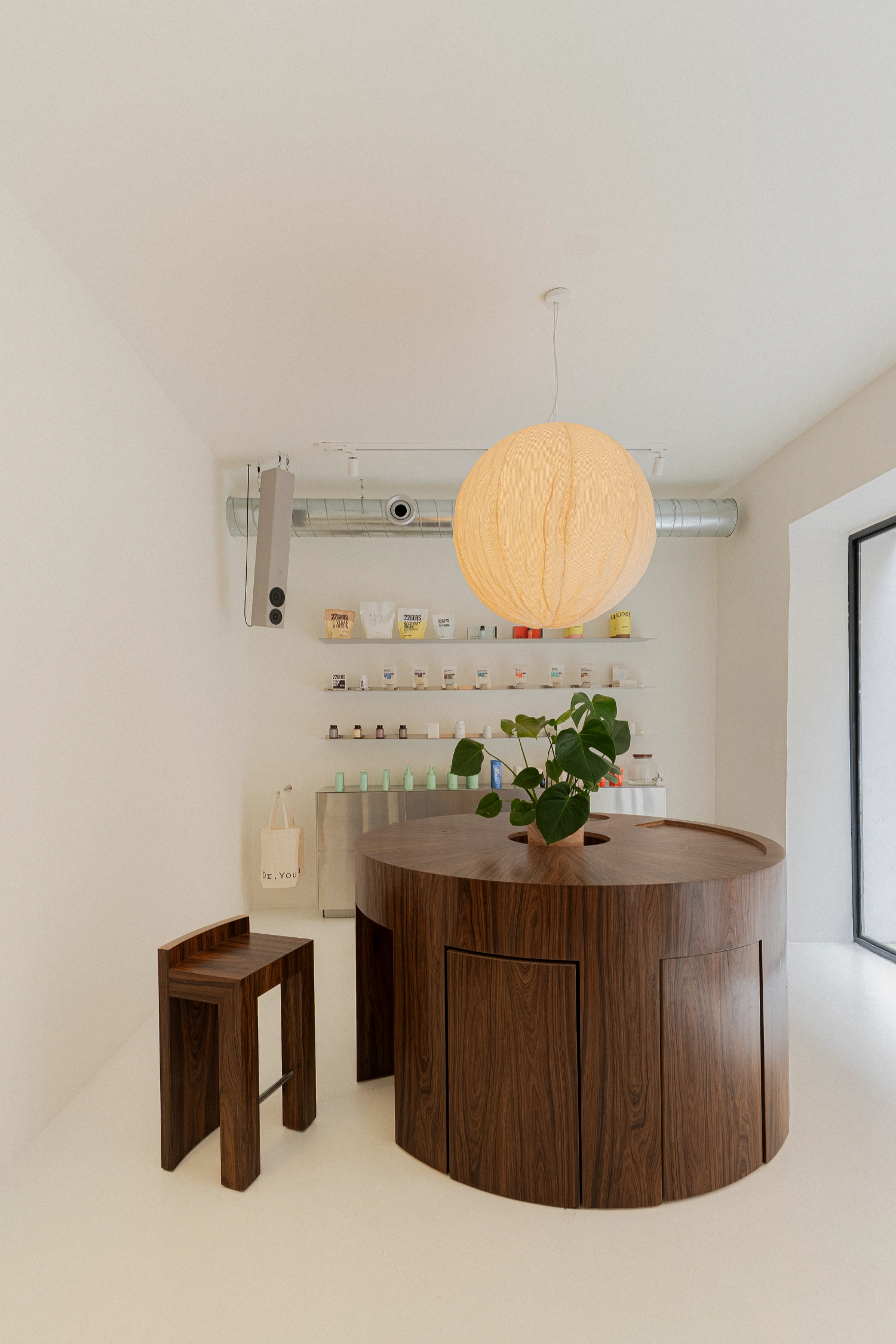
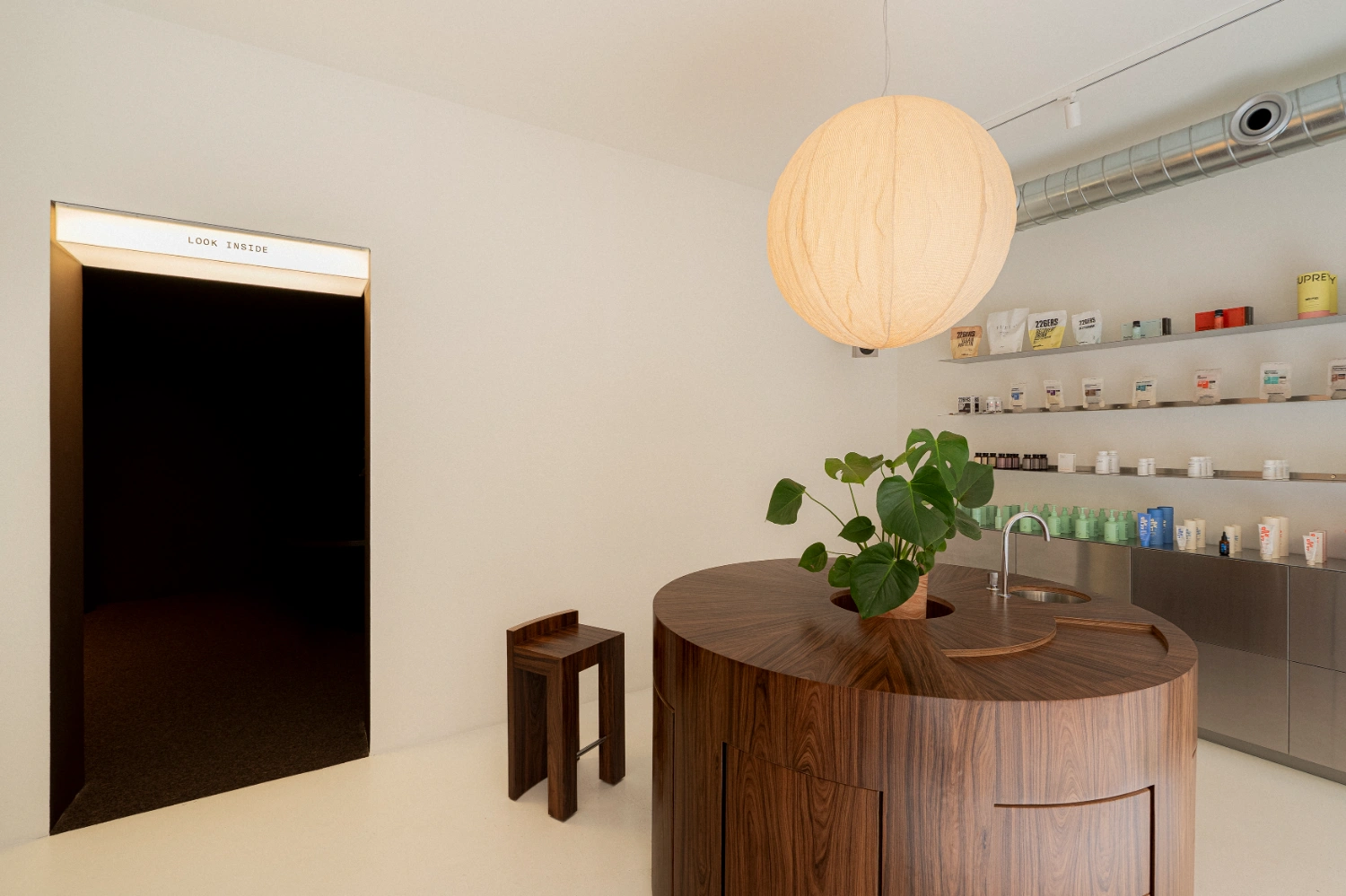
The front room is washed in soft, milky light, anchored by a monumental circular counter in warm walnut. It behaves almost like a hearth for contemporary care rituals. Instead of functioning as a service desk, it invites lingering—half sculpture, half communal landing point. The custom knitted lamp overhead, a glowing orb by Kauani, casts a gentle and enveloping illumination that neutralizes any trace of clinical harshness. Sparse shelving lines the wall with a quiet discipline, holding exactly enough product to convey intention without slipping into display fatigue.
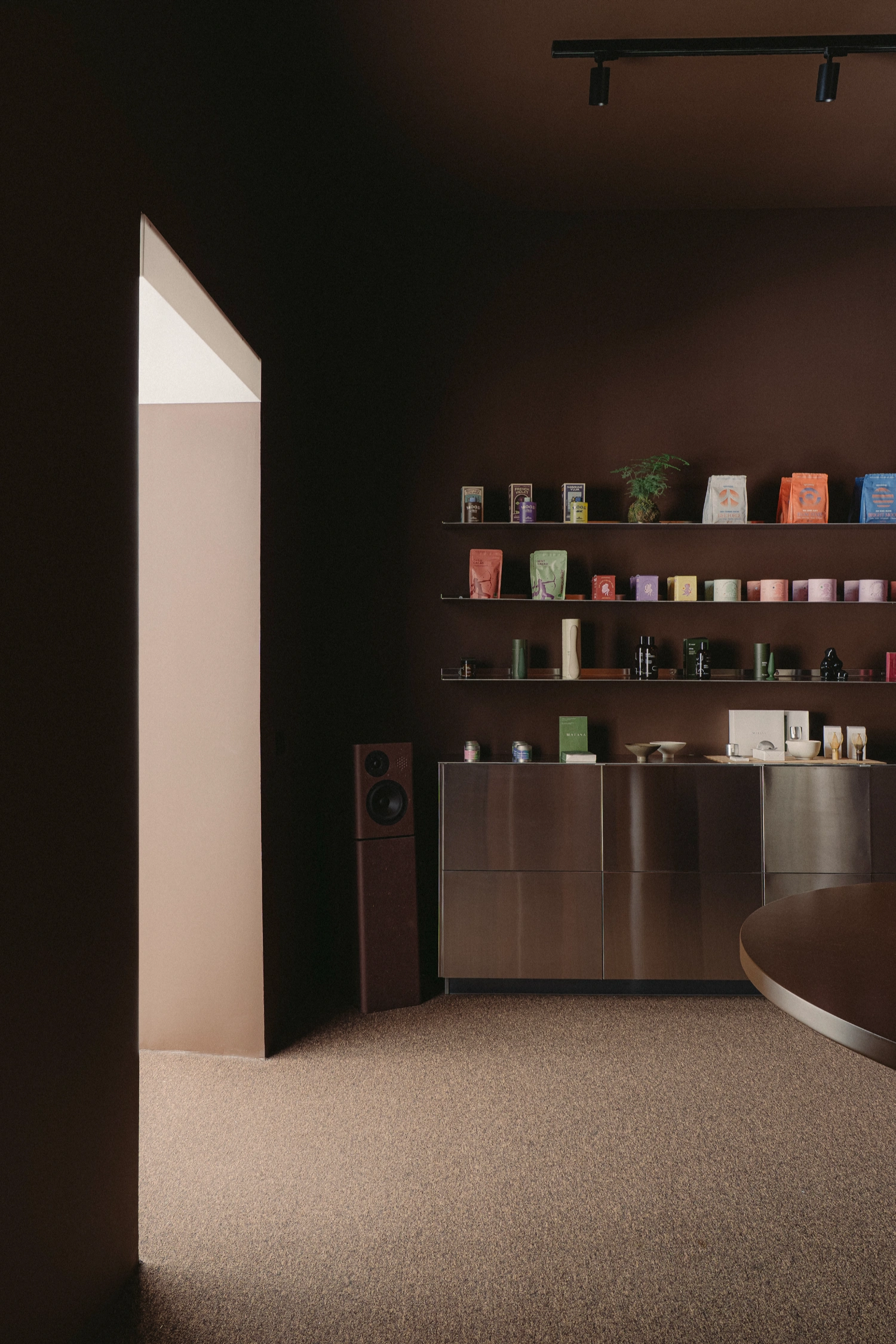
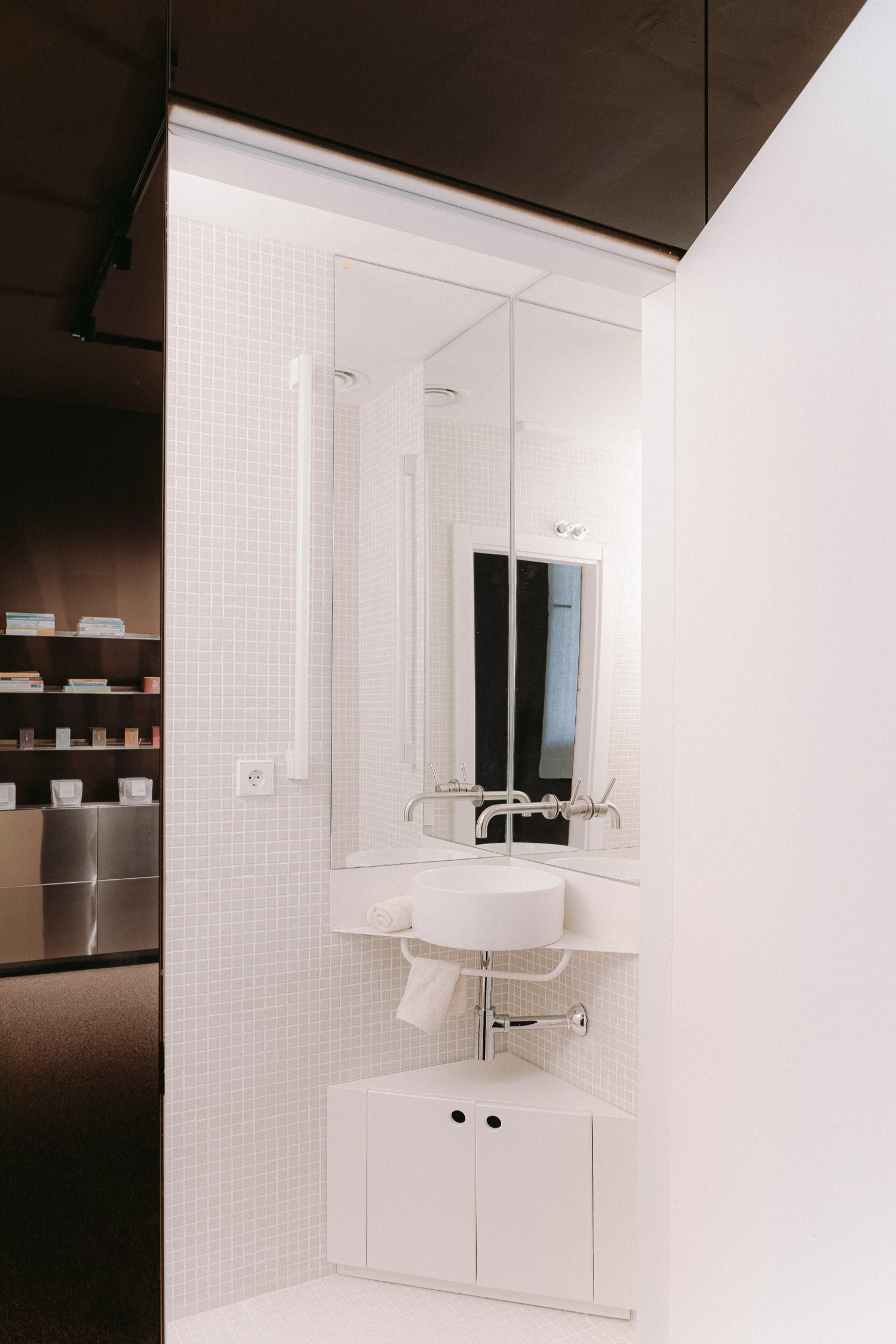
A threshold marked “Look Inside” leads to a darker, more introspective chamber. Here, Burr Studio leans into saturation and shadow, crafting a sensorial counterpoint to the bright antechamber. It reads like a listening room or a meditation pod—walls in deep browns, softened acoustics, and a soundscape by Bloom Island that draws the visitor inward. The stainless-steel cabinetry and carefully edited objects maintain continuity with the front space, but the psychological temperature shifts. If the first room is the body, this one is the mind.
Throughout, the architecture mirrors the story at the project’s core. Juanjo and Andrea’s Ecuadorian upbringing—one shaped by their parents’ Natural Vitality pharmacies—filters into the space not through nostalgia, but through a deeply felt respect for slowness. The interior avoids tropes of “wellness minimalism” and instead cultivates a domestic tactility: wood that feels held rather than polished, light that behaves like a natural cycle, and materials that insist on presence over performance.
This attention to nuance extends to how Dr.You frames its products. Only the essentials are visible, each supplement or tool positioned with the same discretion as a well-chosen book on a home shelf. The result is an environment where products do not shout; they breathe. The visual identity by 3TG Studio supports this attitude with typography and labeling that read as calm, contemporary, and human-scaled. Even the digital platform mirrors the physical logic: education over urgency, clarity over noise.
Dr.You signals a shift in how urban wellness spaces might evolve—neither clinic nor boutique, but a hybrid sanctuary calibrated for self-awareness. It’s an architecture of attunement, built on the belief that health is not an errand but an encounter.