Thisispaper Community
Join today.
Enter your email address to receive the latest news on emerging art, design, lifestyle and tech from Thisispaper, delivered straight to your inbox.
Oops! Something went wrong while submitting the form.
Instant access to new channels
The top stories curated daily
Weekly roundups of what's important
Original features and deep dives
Exclusive community features
Alexander Zaxarov
Jun 25, 2026

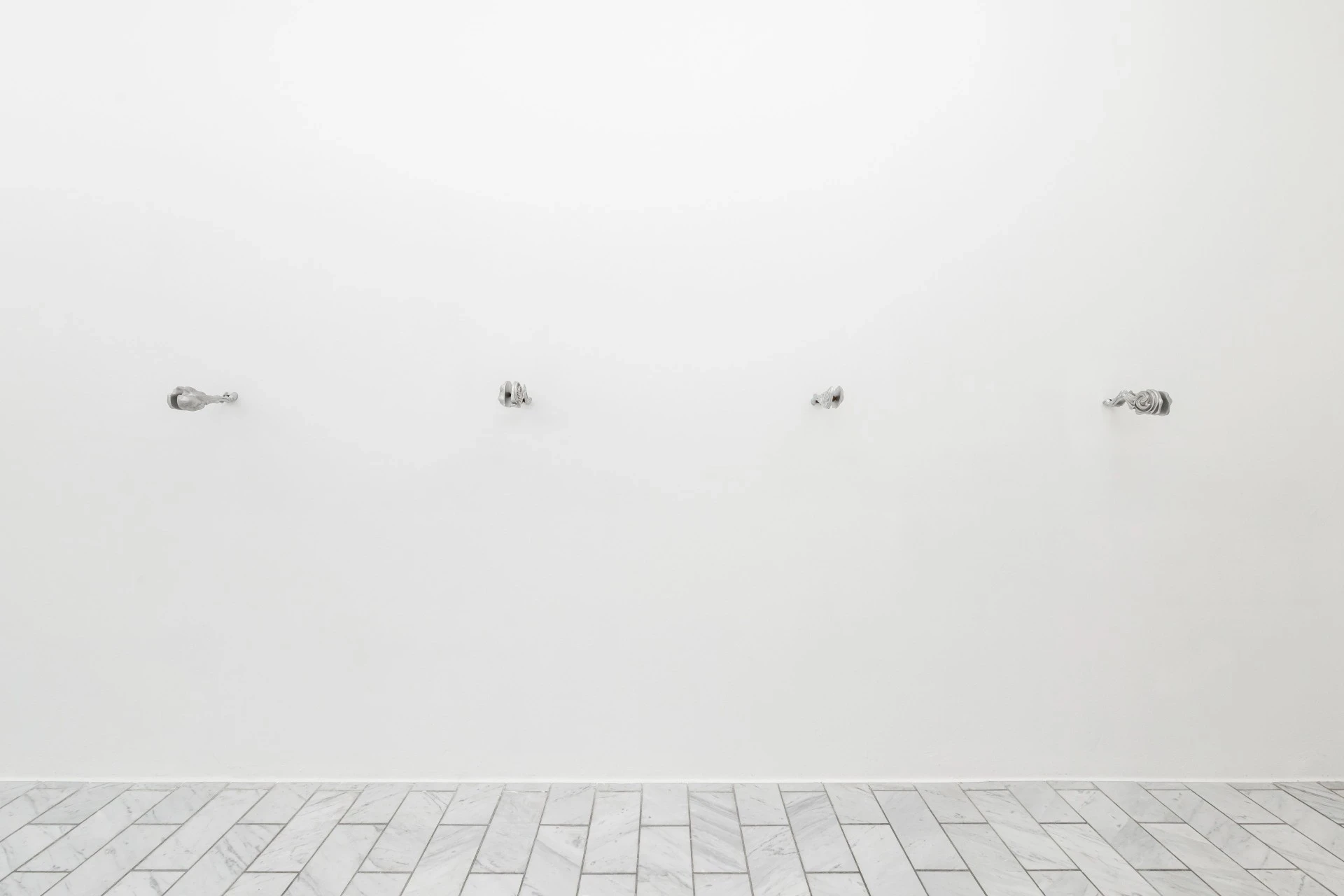
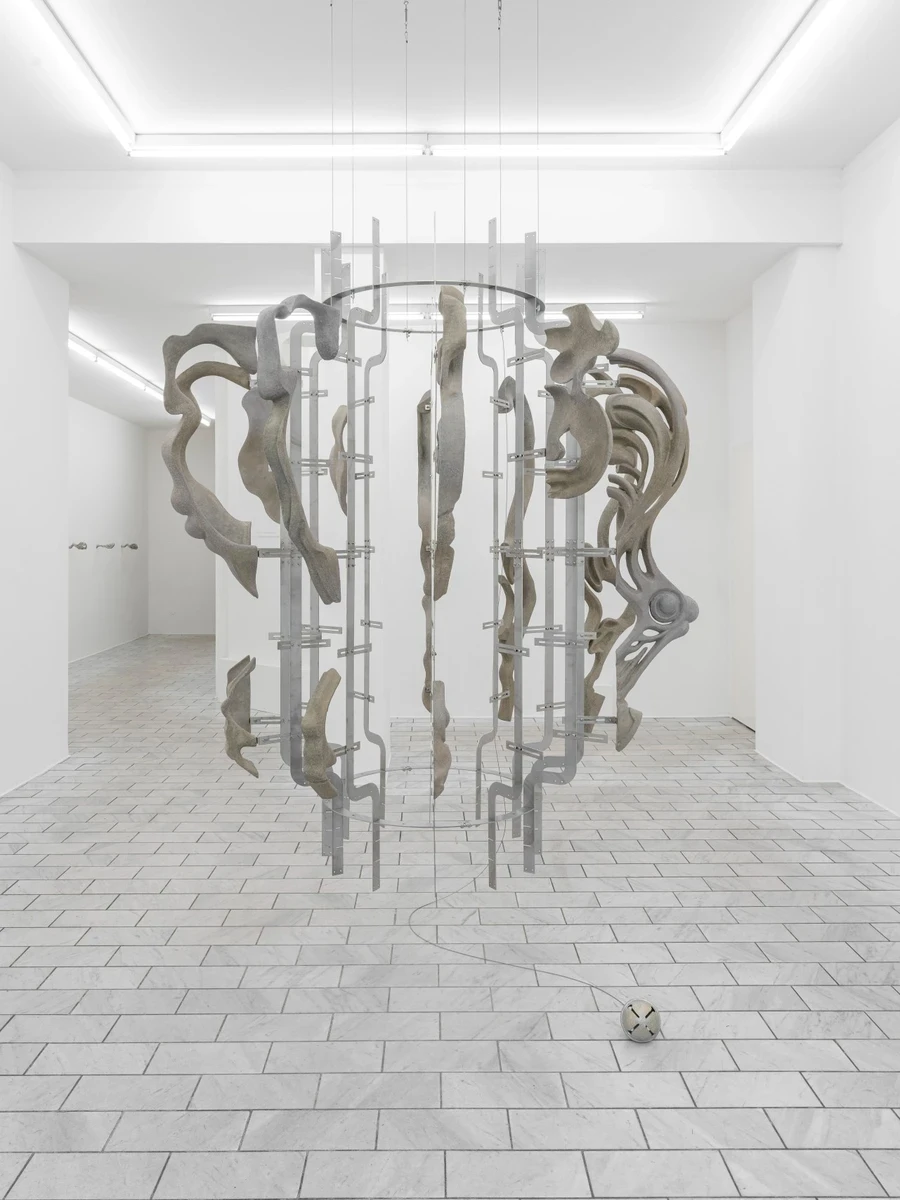
At nouveaux deuxdeux in Munich, Paola Siri Renard stages Double Star, seven cast-aluminum horse legs severed from their riders and a twelve-part body suspended in orbital formation.

Public equestrian monuments were built to settle an argument. The general rides; the horse carries; military authority, colonial conquest and heroic masculinity get cast in bronze and planted in the square as though the verdict were permanent. Paola Siri Renard begins by removing the rider. What is left, in sculpture drawn from preparatory maquettes, is the animal that did the work, dismantled from below and reduced to its legs.

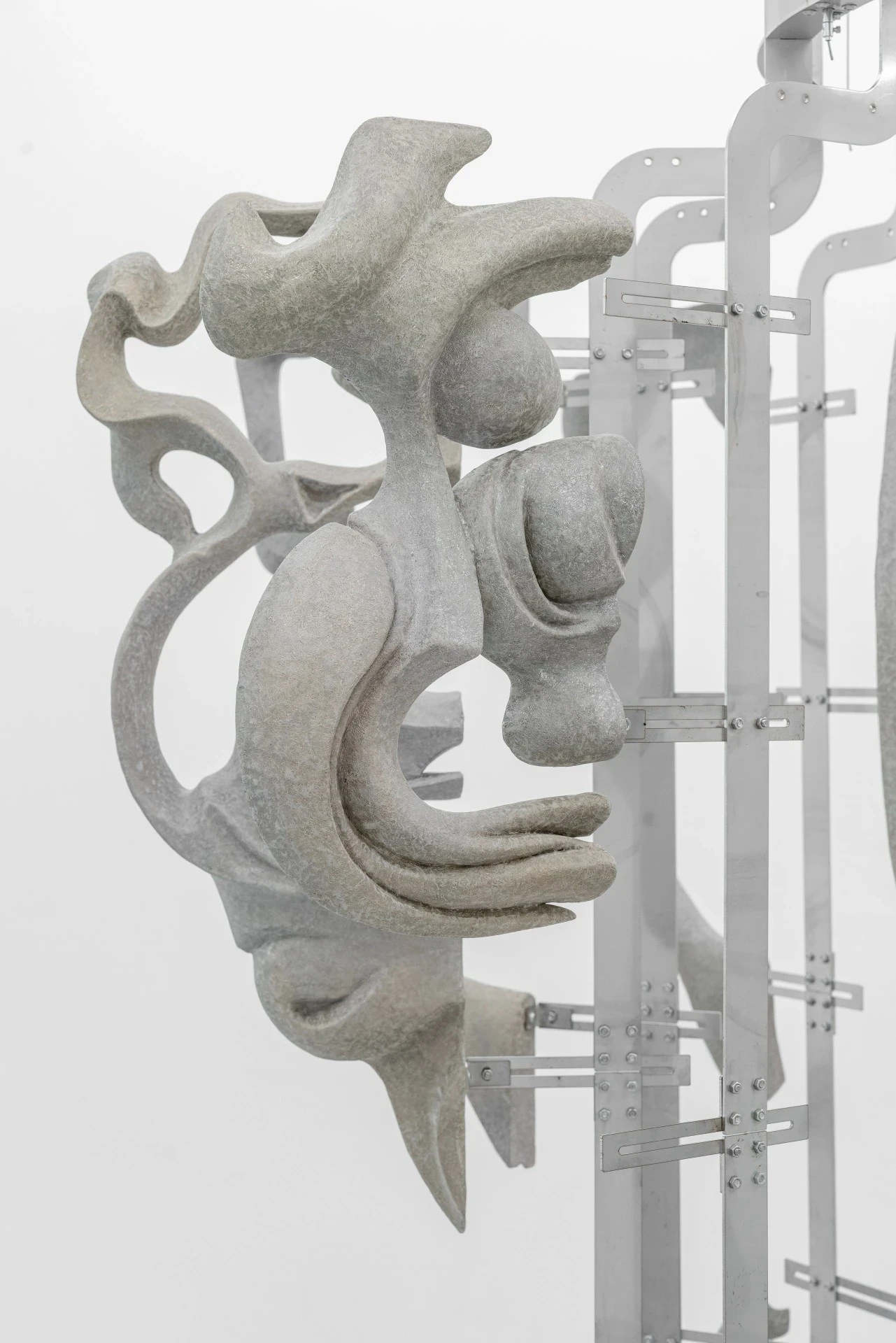
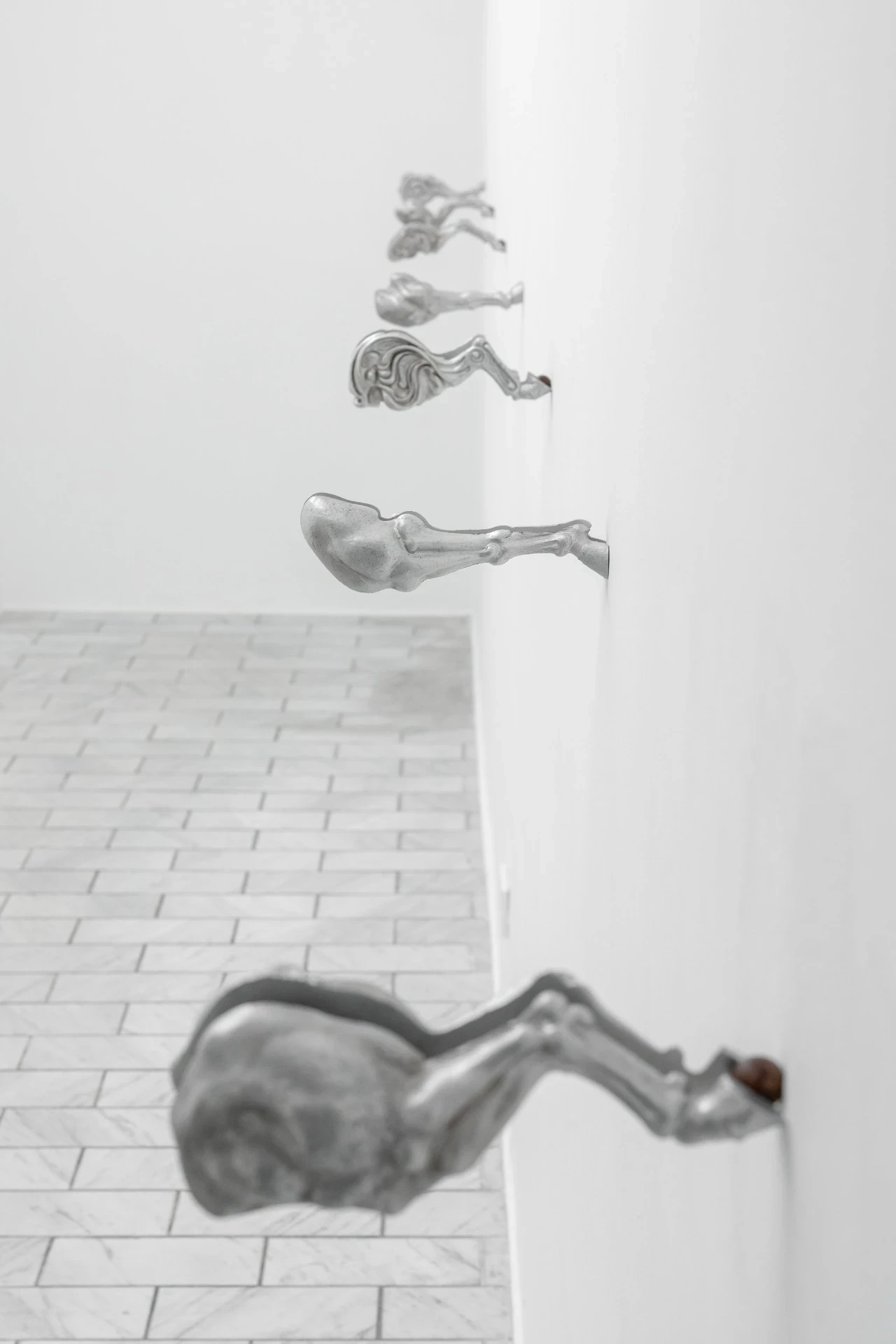
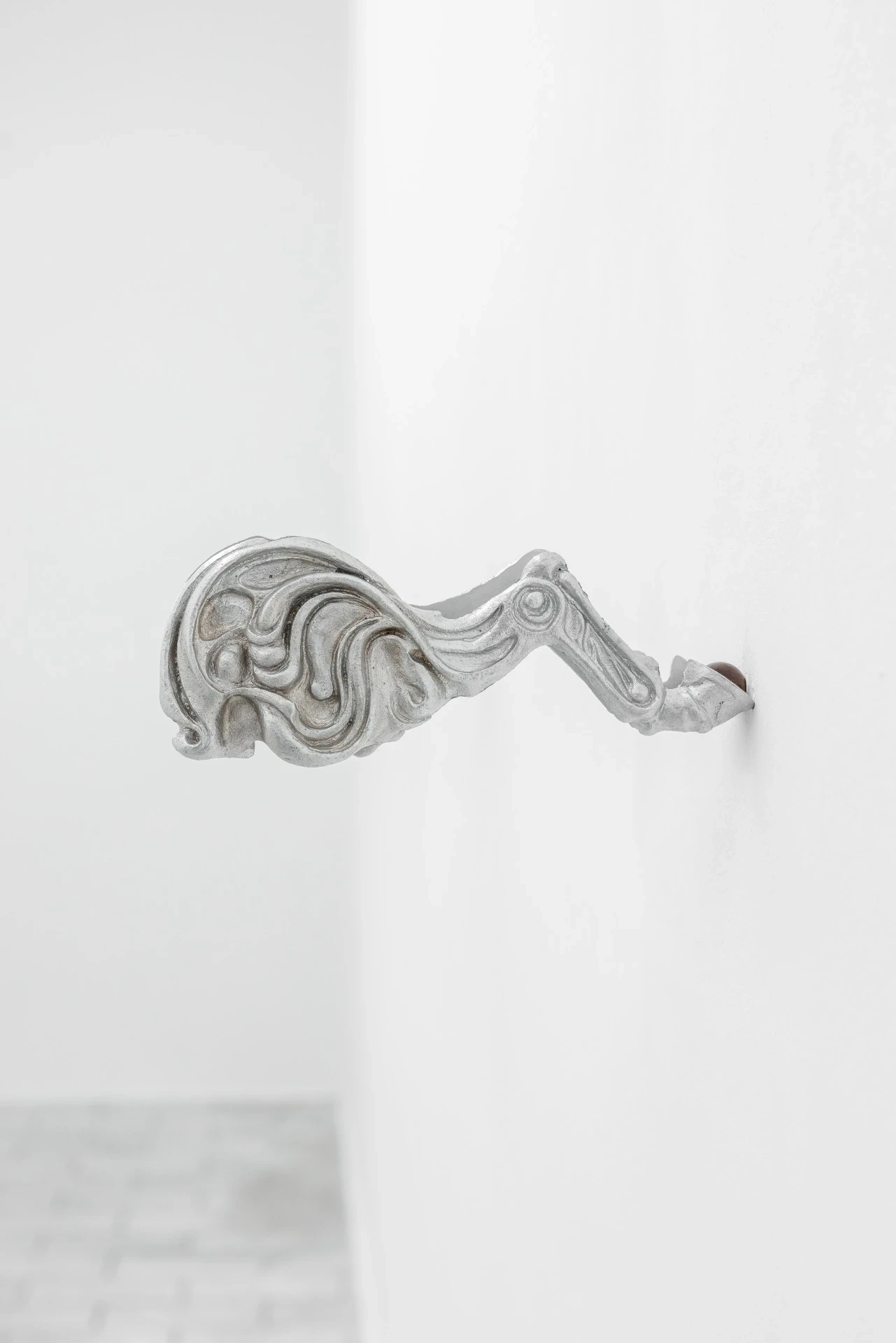
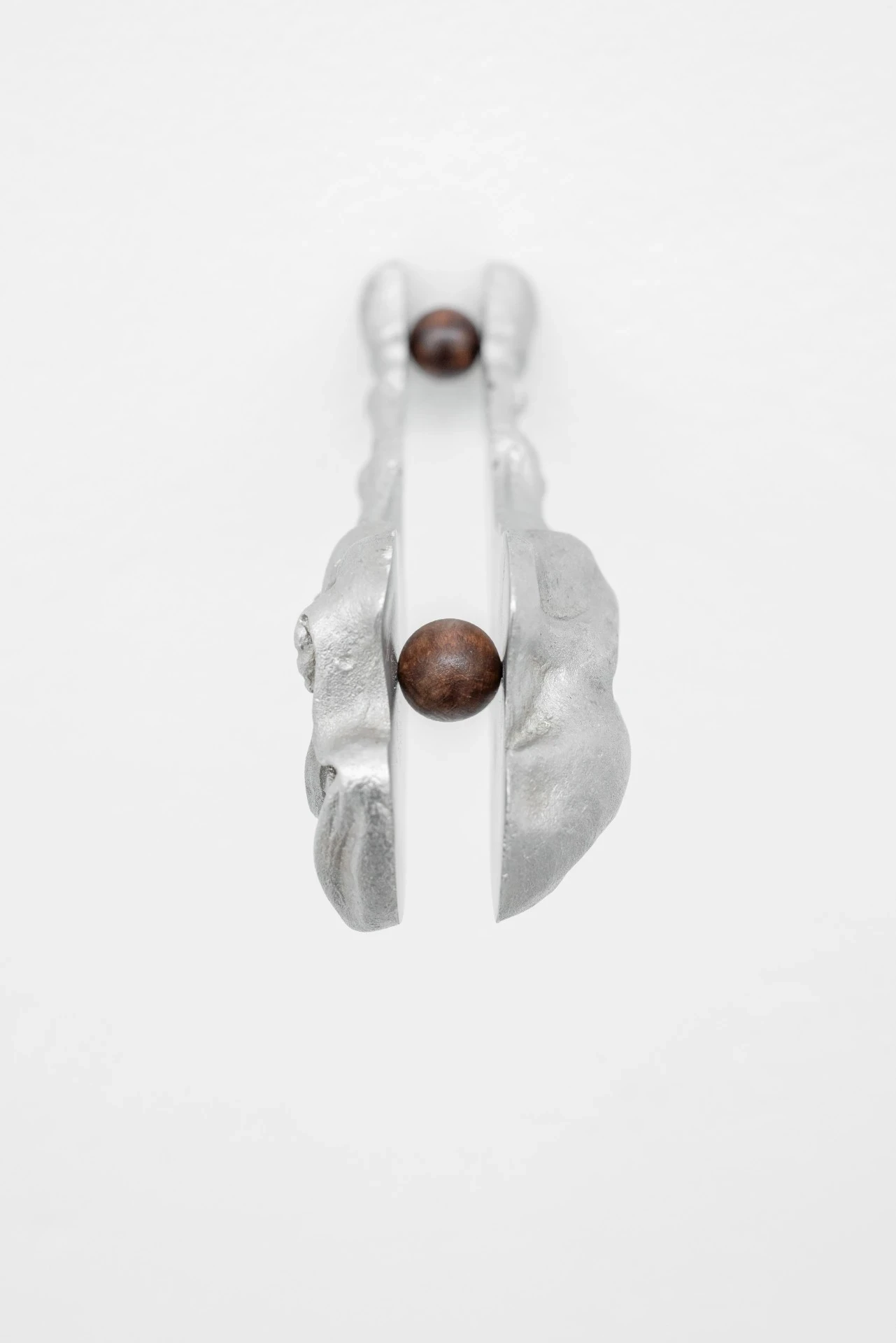
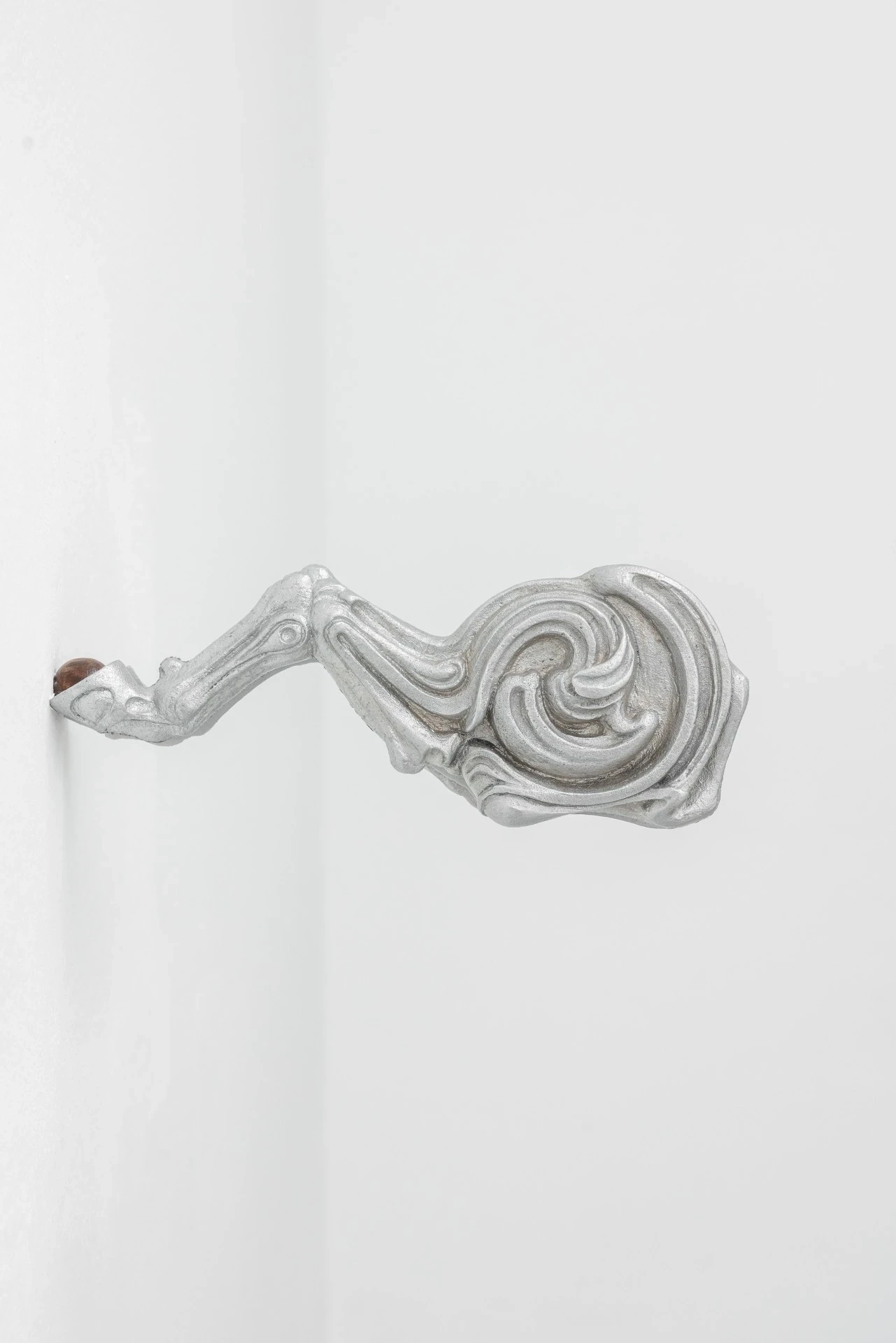
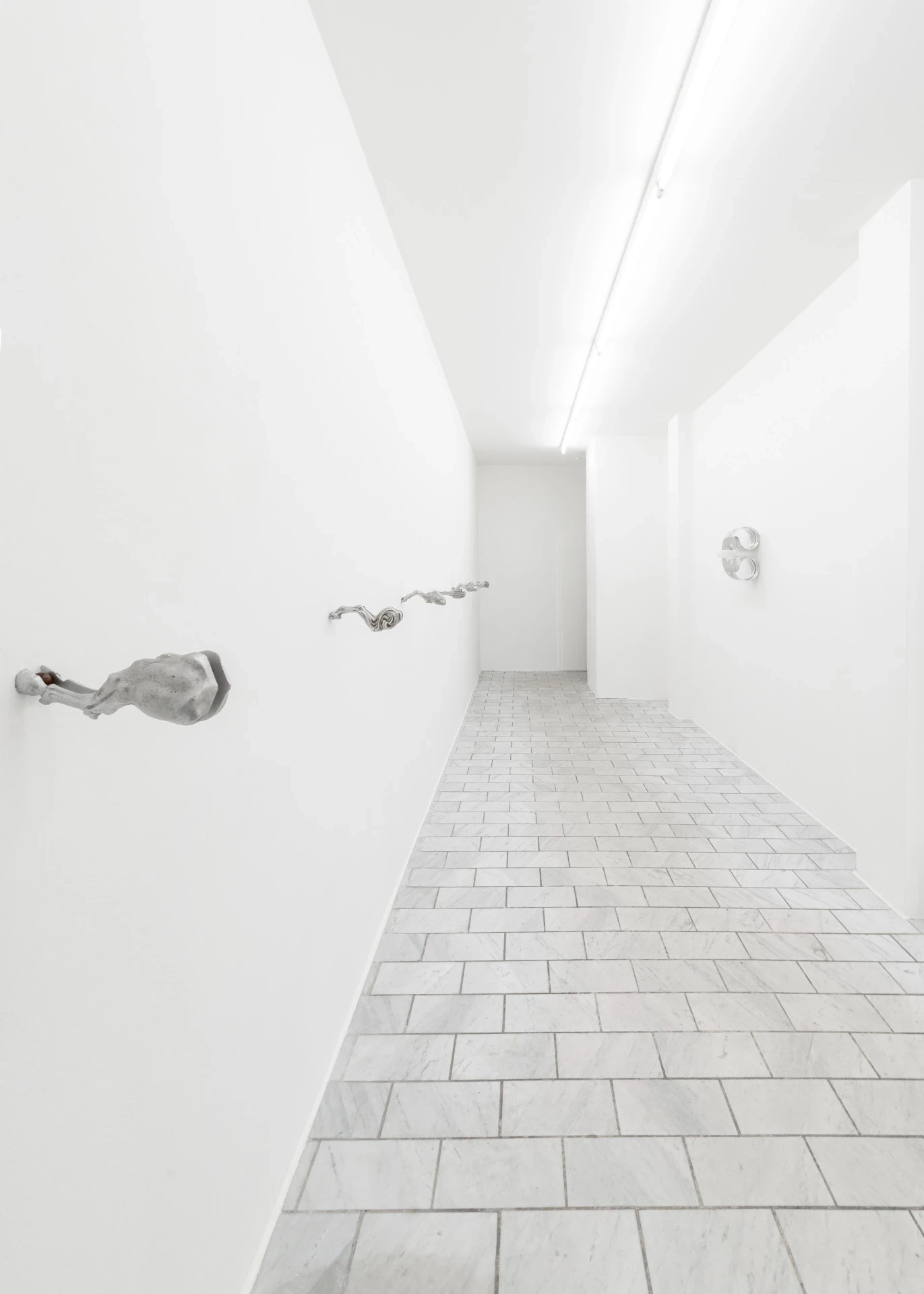
Seven cast-aluminum legs hang at nouveaux deuxdeux, each one split down its length into two faces. One side is muscled and anatomical, hooves and tendons exposed; the other dissolves into the whiplash scrolls of Art Nouveau, the vegetal ornament that once trimmed colonial wealth into something decorative. The cut runs between them like a seam, and from that mirrored gap a second identity surfaces. Renard treats the decoration not as surface but as evidence.

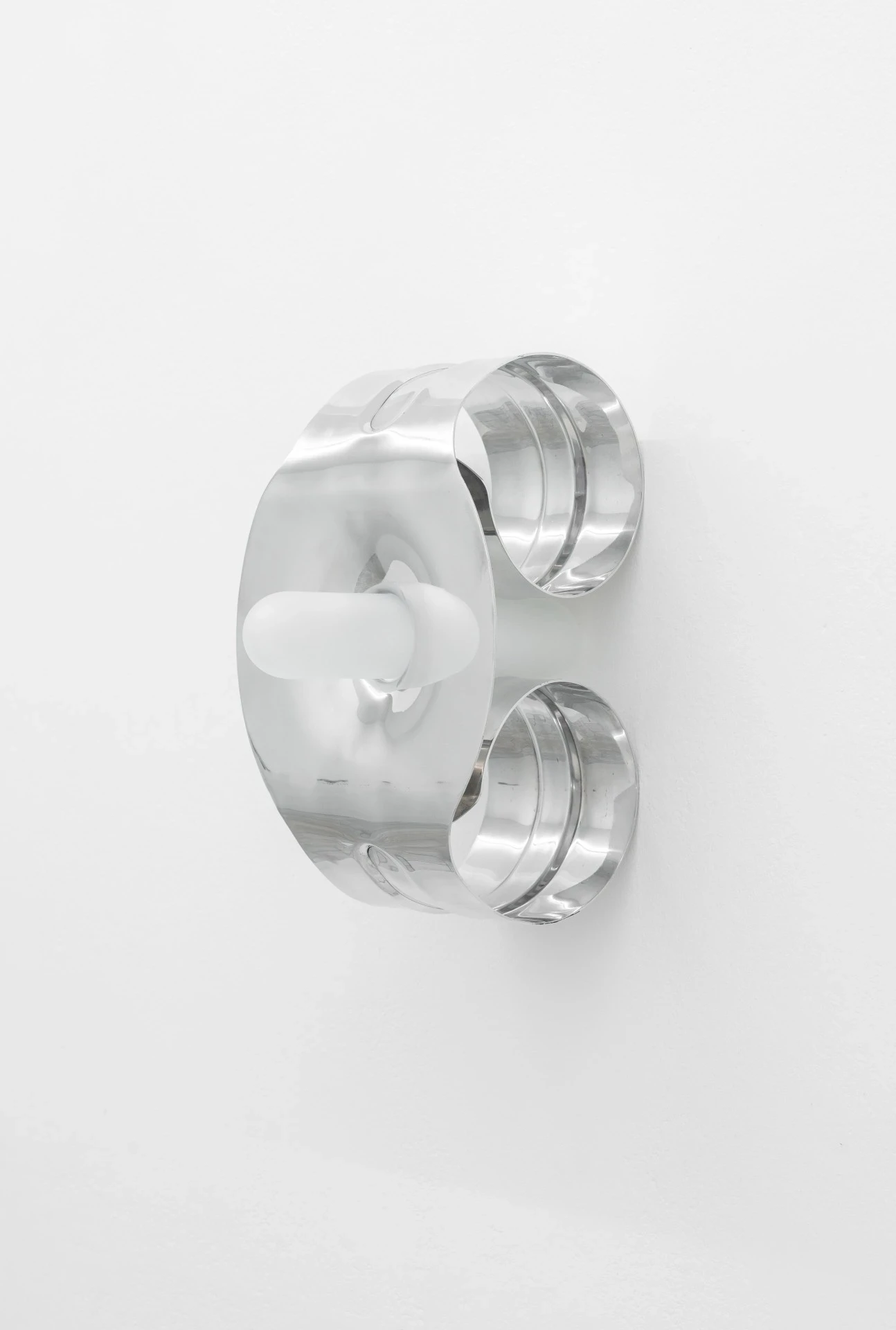
The smaller works cantilever straight out of the white wall on rust-flecked mounts, some in matte sandblasted grey, others polished to a hard mirror. A hoof reads as bone; a haunch swells into raw mass; a coil of acanthus turns back on itself. Her engagement with Art Nouveau follows the art historian Debora Silverman, who traced how the period's tendrils and blossoms travelled with empire. The ornamented monument, in this reading, is a living political body that absorbs domination into its decorative skin.

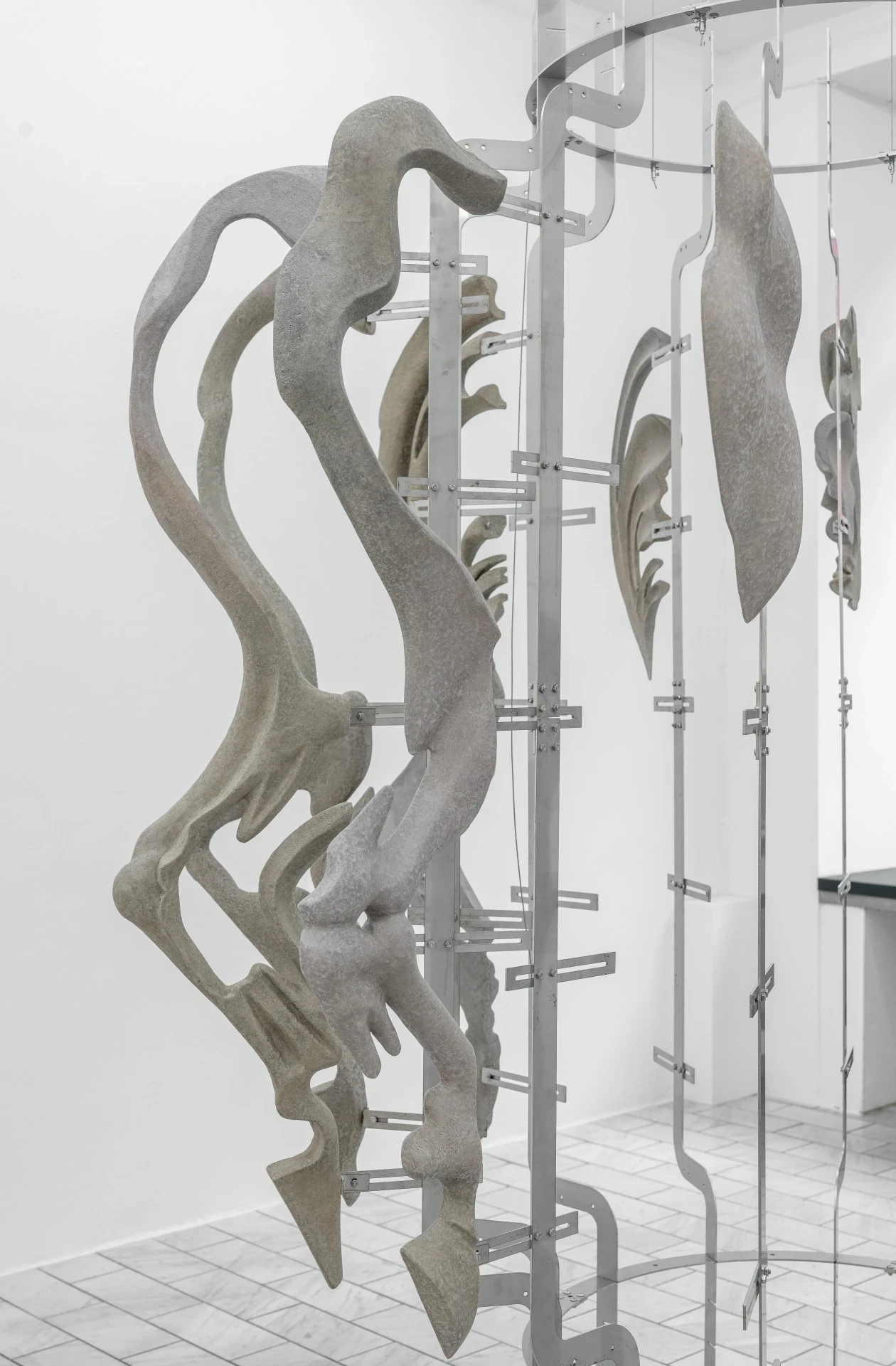
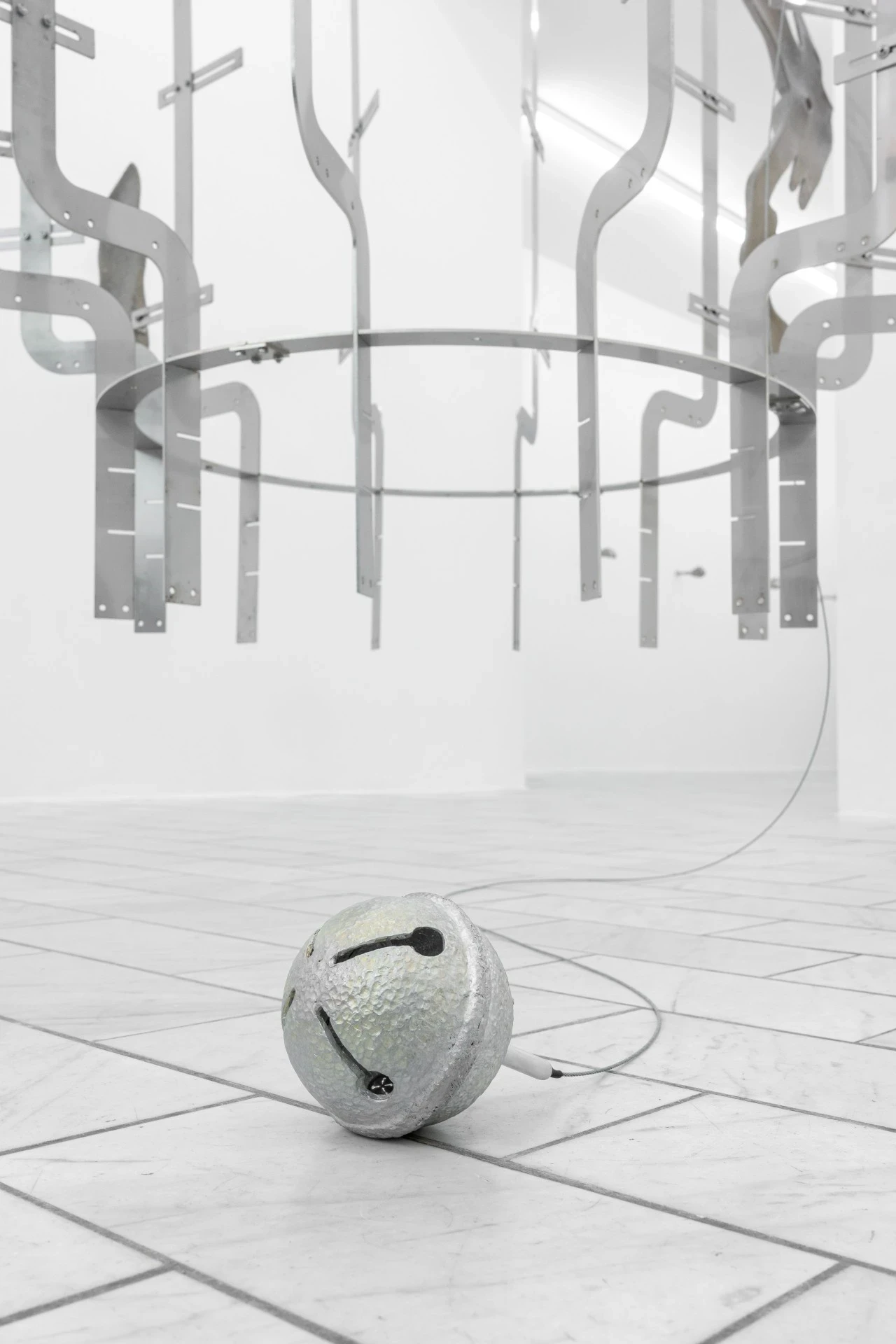
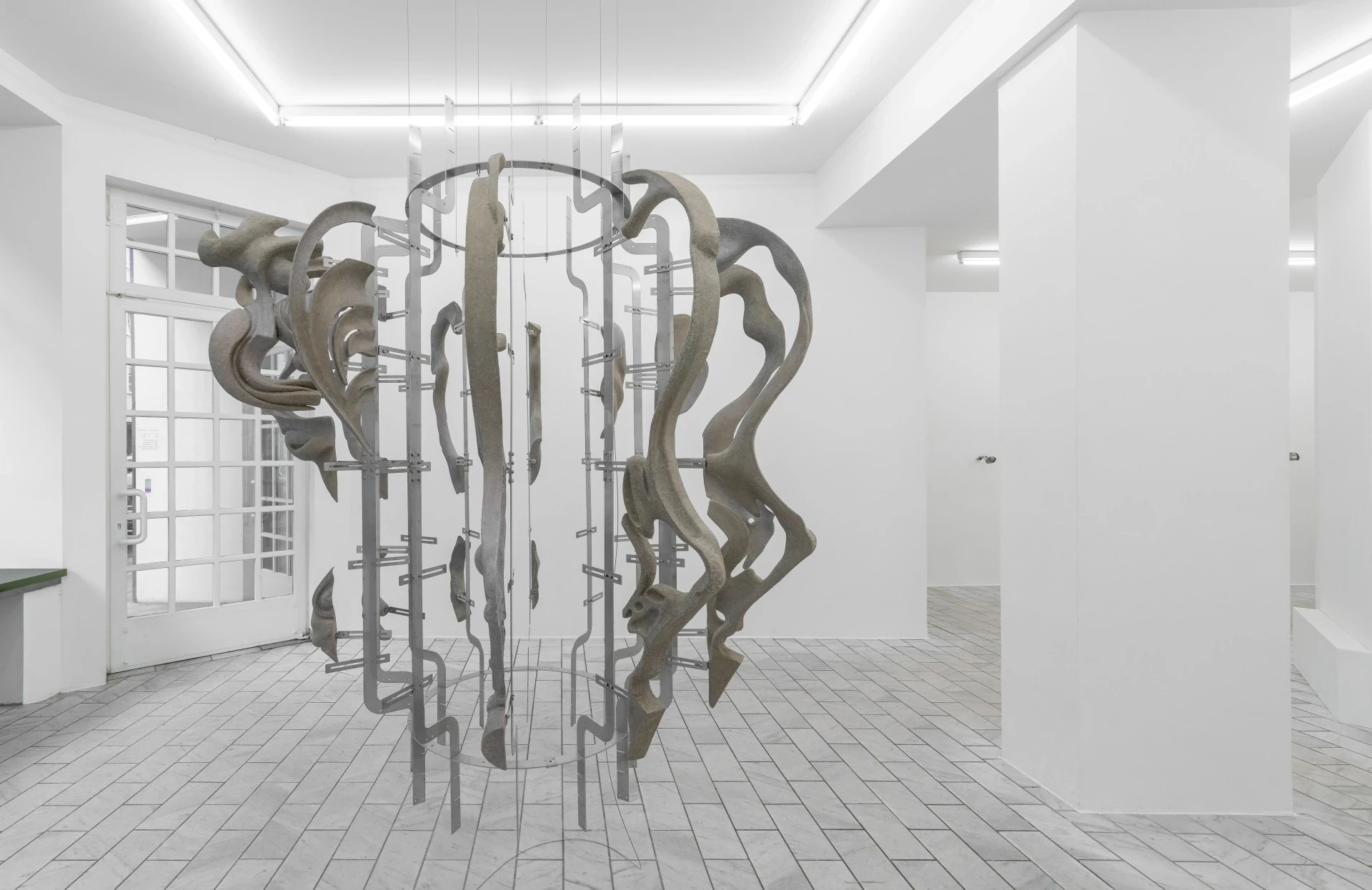
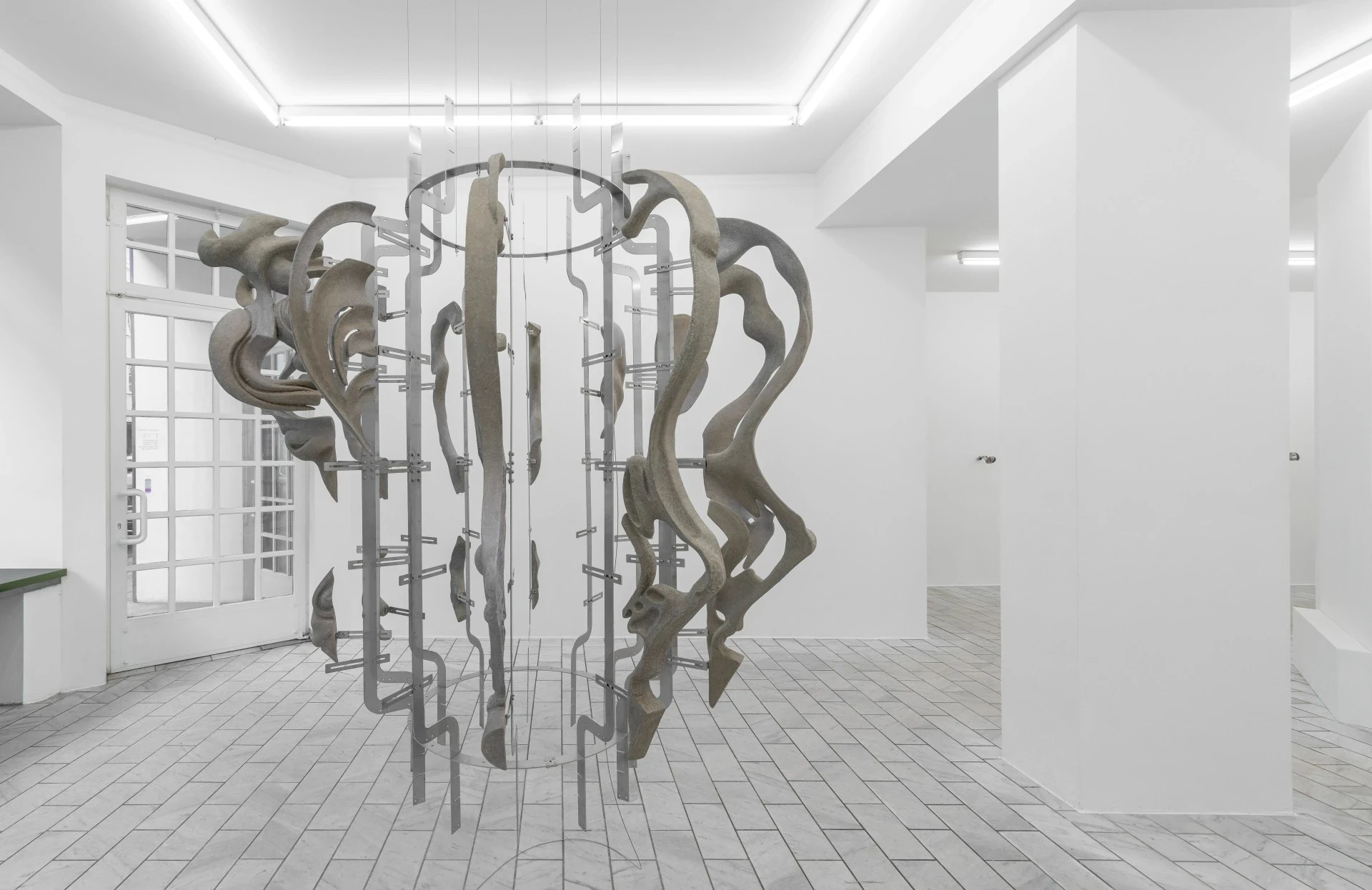
The central installation gathers all of it into one recomposed figure, fragmented into twelve elements and racked on slotted stainless-steel armatures that recall the rails of a slaughterhouse. Suspended in a ring across a marble herringbone floor, the parts can be read as a single rearing animal or scattered into abstraction. A hammered jingle bell lies on the tiles, wired to the structure, the show's only note of sound and an old emblem of livestock and control.

The title borrows from astronomy, where two stars orbit a center too faint to see. Renard makes the figure literal across the gallery, presence circling an absent core, and turns it on history itself. What looks stable from one position falls apart from another. The invisible center is the thing monuments need but can never show, the shared belief that binds scattered fragments into a story a city agrees to tell.

What survives here is neither the hero nor the whole beast, but a partial, post-identitarian figure, suspended between organism and machine, monument and collapse. Renard keeps it provisional on purpose, the zipper motif of her mounts insisting that every configuration is a state it could be unzipped from. The monument is not finished and not fallen. It is still mutating, with the violence of its making left visibly inside.
Interested in Showcasing Your Work?

If you would like to feature your works on Thisispaper, please visit our Submission page and sign up to Thisispaper+ to submit your work. Once your submission is approved, your work will be showcased to our global audience of 2 million art, architecture, and design professionals and enthusiasts.
No items found.
Less, with more behind it.
Explore guides. Search the archive. Walk the atlas.
Become a Thisispaper+ member today to unlock full access to our magazine, advanced tools, and support our work.
Get two months FREE
with annual subscription
Less, with more behind it.
Explore guides. Search the archive. Walk the atlas.
Become a Thisispaper+ member today to unlock full access to our magazine, advanced tools, and support our work.
Get two months FREE
with annual subscription
No items found.
Alexander Zaxarov
Jun 25, 2026

At nouveaux deuxdeux in Munich, Paola Siri Renard stages Double Star, seven cast-aluminum horse legs severed from their riders and a twelve-part body suspended in orbital formation.

Public equestrian monuments were built to settle an argument. The general rides; the horse carries; military authority, colonial conquest and heroic masculinity get cast in bronze and planted in the square as though the verdict were permanent. Paola Siri Renard begins by removing the rider. What is left, in sculpture drawn from preparatory maquettes, is the animal that did the work, dismantled from below and reduced to its legs.

Seven cast-aluminum legs hang at nouveaux deuxdeux, each one split down its length into two faces. One side is muscled and anatomical, hooves and tendons exposed; the other dissolves into the whiplash scrolls of Art Nouveau, the vegetal ornament that once trimmed colonial wealth into something decorative. The cut runs between them like a seam, and from that mirrored gap a second identity surfaces. Renard treats the decoration not as surface but as evidence.

The smaller works cantilever straight out of the white wall on rust-flecked mounts, some in matte sandblasted grey, others polished to a hard mirror. A hoof reads as bone; a haunch swells into raw mass; a coil of acanthus turns back on itself. Her engagement with Art Nouveau follows the art historian Debora Silverman, who traced how the period's tendrils and blossoms travelled with empire. The ornamented monument, in this reading, is a living political body that absorbs domination into its decorative skin.

The central installation gathers all of it into one recomposed figure, fragmented into twelve elements and racked on slotted stainless-steel armatures that recall the rails of a slaughterhouse. Suspended in a ring across a marble herringbone floor, the parts can be read as a single rearing animal or scattered into abstraction. A hammered jingle bell lies on the tiles, wired to the structure, the show's only note of sound and an old emblem of livestock and control.

The title borrows from astronomy, where two stars orbit a center too faint to see. Renard makes the figure literal across the gallery, presence circling an absent core, and turns it on history itself. What looks stable from one position falls apart from another. The invisible center is the thing monuments need but can never show, the shared belief that binds scattered fragments into a story a city agrees to tell.

What survives here is neither the hero nor the whole beast, but a partial, post-identitarian figure, suspended between organism and machine, monument and collapse. Renard keeps it provisional on purpose, the zipper motif of her mounts insisting that every configuration is a state it could be unzipped from. The monument is not finished and not fallen. It is still mutating, with the violence of its making left visibly inside.

Interested in Showcasing Your Work?

If you would like to feature your works on Thisispaper, please visit our Submission page and subscribe to Thisispaper+. Once your submission is approved, your work will be showcased to our global audience of 2 million art, architecture, and design professionals and enthusiasts.
No items found.

Join Thisispaper+
Unlock access to 2500 stories, curated guides + editions, and share your work with a global network of architects, artists and designers who are shaping the future.
Get two months FREE
with annual subscription
Travel Guides
Immerse yourself in timeless destinations, hidden gems, and creative spaces—curated by humans, not algorithms.
Explore All Guides +
Submission Module
Submit your project and gain the chance to showcase your work to our worldwide audience of over 2M architects, designers, artists, and curious minds.
Learn More+
Curated Editions
Dive deeper into carefully curated editions, designed to feed your curiosity and foster exploration.
Off-the-Grid
Jutaku
Sacral Journey
minimum
The New Chair
Explore All Editions +
Atlas
A new and interactive way to explore the most inspiring places around the world.
Interactive map
Linked to articles
450+ curated locations
Google + Apple directions
Smart filters
Subscribe to Explore+
Become a Thisispaper+ member today to unlock full access to our magazine, submit your project and support our work.
Join Thisispaper+Join Thisispaper+
€9/month
Get two months FREE
with annual subscription