On the square at Bab Al Bahrain in Manama, Studio Anne Holtrop finishes the 1937 Customs House by adding a third volume of white hand-hammered concrete that stops short at the corners, keeping the building deliberately incomplete.
The building at 21 Customs House is one of the oldest in the Bab Al Bahrain district, put up in 1937 to serve the port of Manama. Land reclamations from the 1980s pushed the shoreline away and left the old customs hall marooned at the center of a capital that had grown around it. Somewhere in that stretch of modernization the original was wrapped entirely in an added concrete and steel skin and turned into the central post office, its historic fabric buried under the conversion.
Restoration with the Bahrain Authority for Culture and Antiquities began in 2014, and the work was subtractive before it was additive. Peeling back decades of alterations left two incomplete historic volumes: a main hall and a valuable side addition. Rather than fake a missing wing back into existence, Studio Anne Holtrop completes the building with a third new volume and then cuts into it, so the whole reads as finished precisely by staying unfinished.
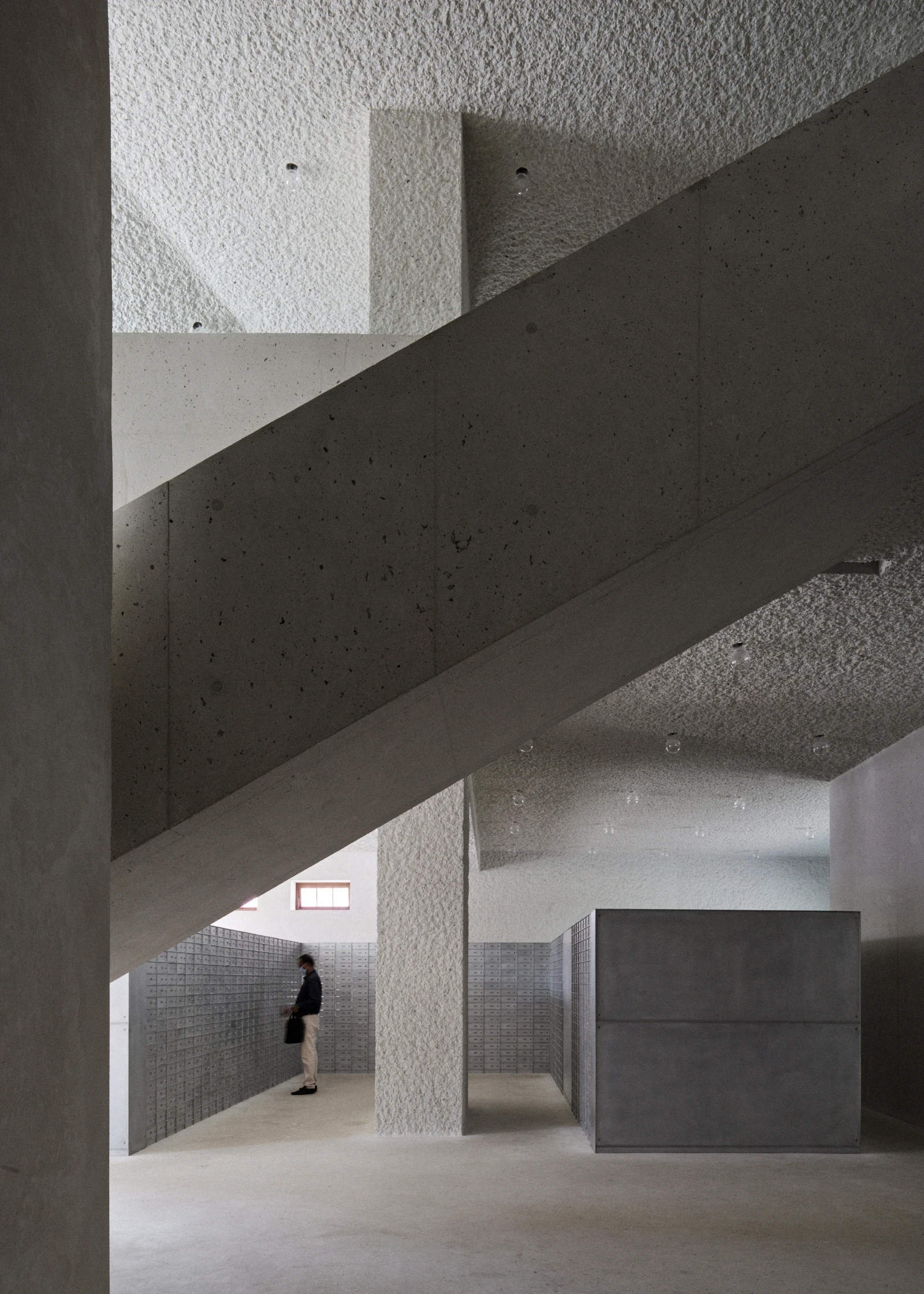
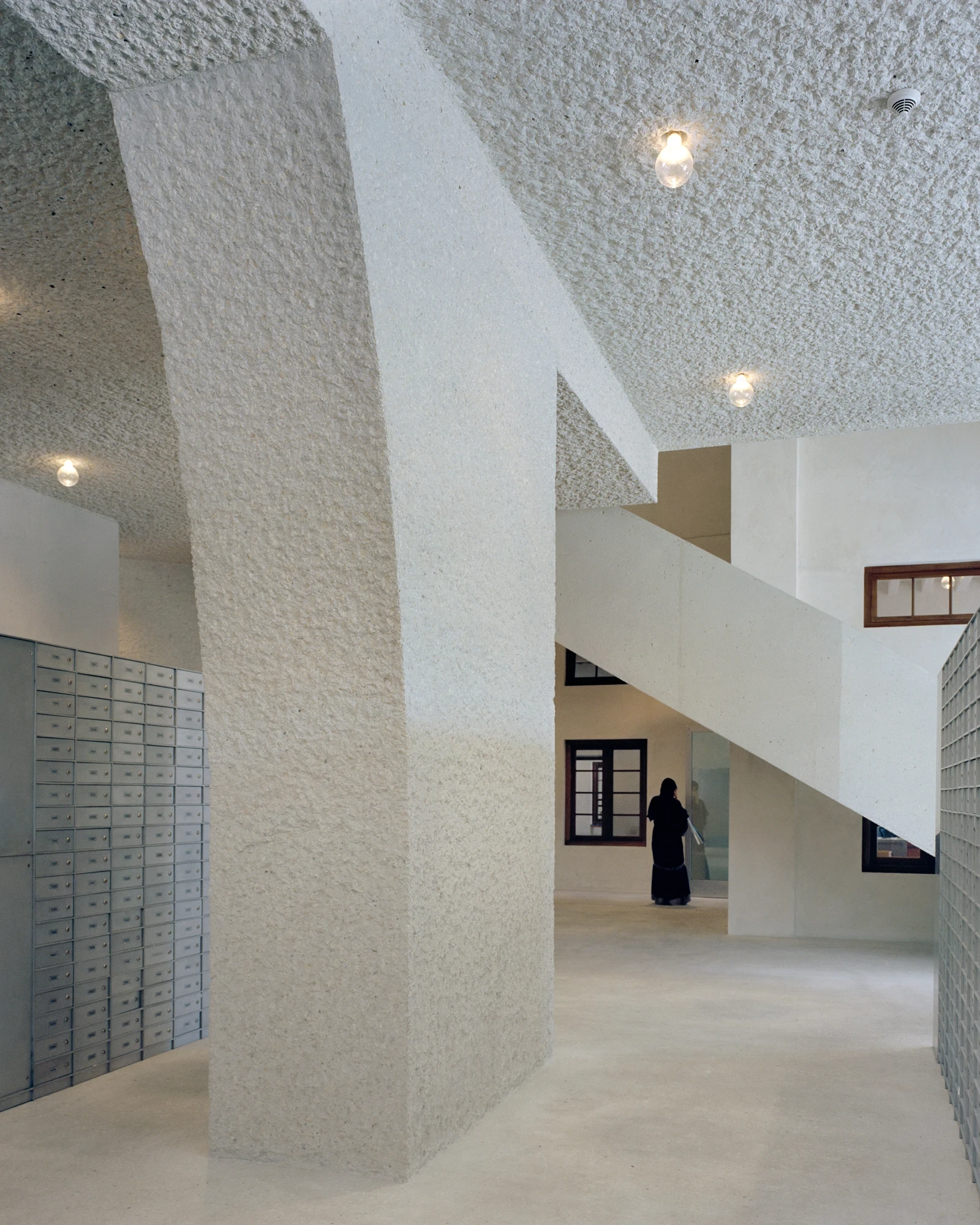
The new mass carries the same 80-centimeter depth as the historic walls, cast this time in white hand-hammered concrete whose surface is pocked, coarse, almost geological. Inside, that thickness becomes structure you can read: a single leaning pier swells and tapers like a section of cliff, a diagonal beam crosses a double-height room, and the ceilings are rendered in the same rough aggregate as the walls. Rows of bare bulbs sit against it like stars against sand.
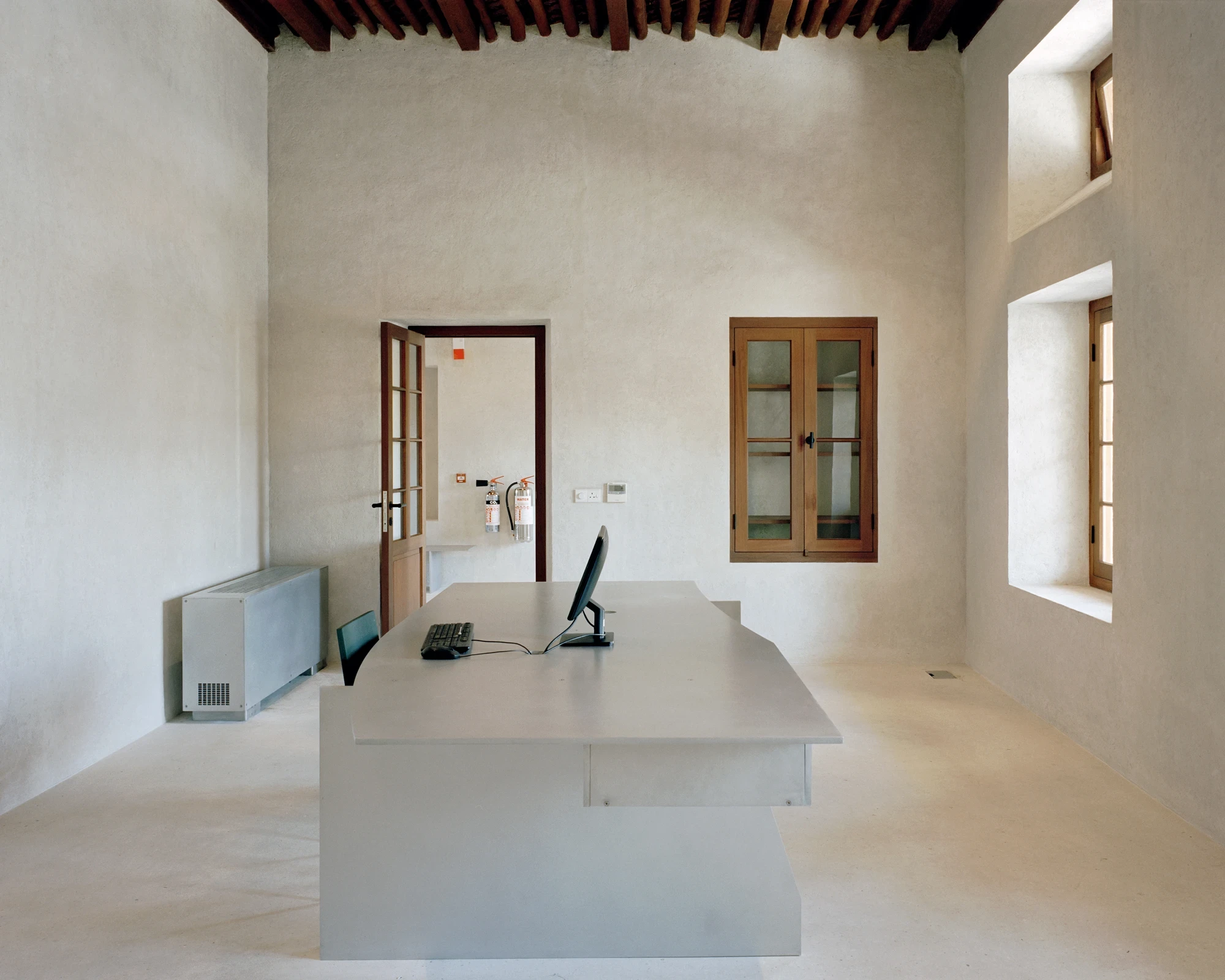
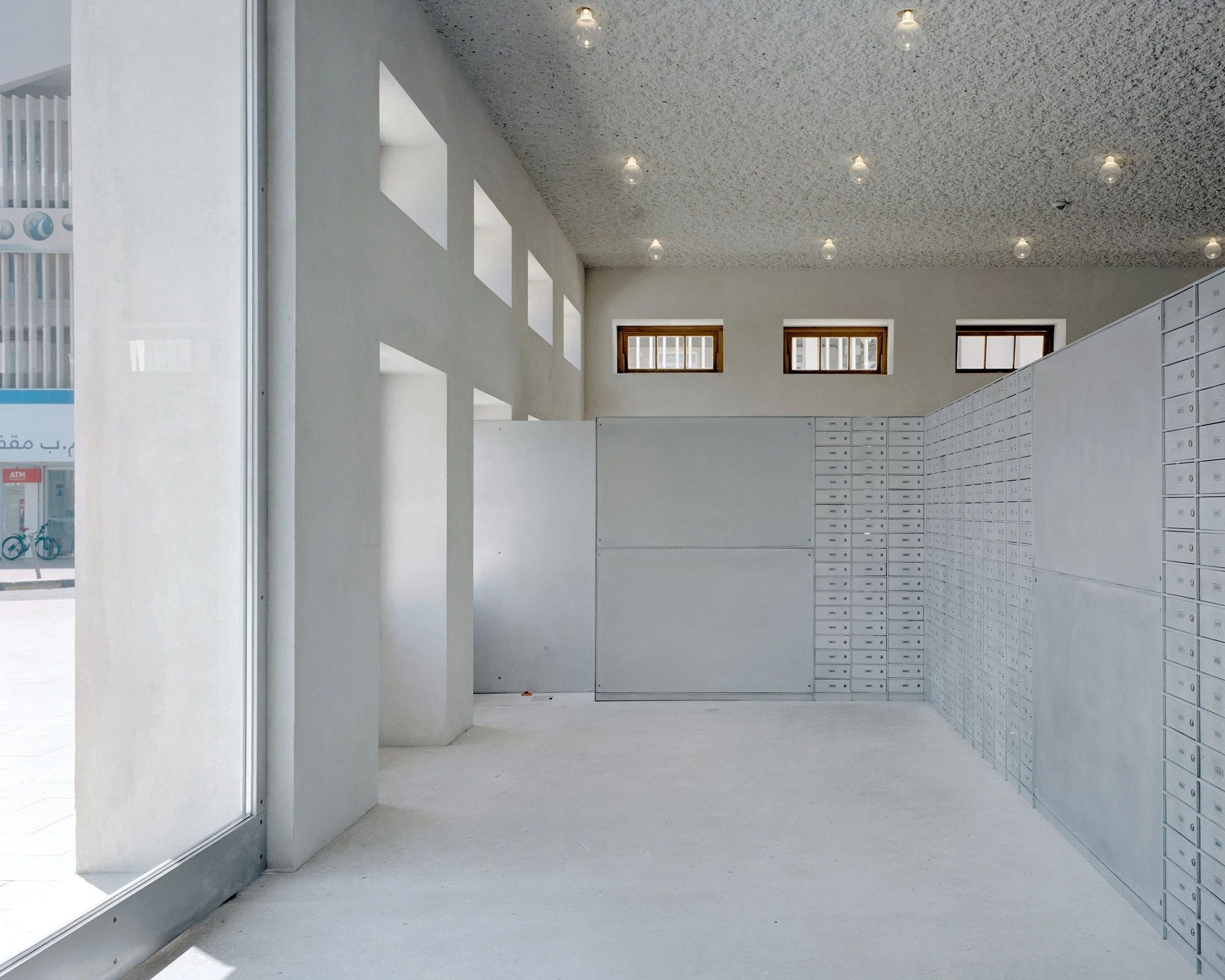
Program fills the shell without softening it. Grids of aluminum post boxes line the ground floor, a sorting room stacked floor to ceiling with pigeonholes, service counters cast from the same pale concrete as everything around them. Upstairs, the restored historic rooms keep their timber-beamed ceilings, wooden shutters and a director's office with a rug and rosewood desk, the old grain sitting quietly against new plaster. A washroom lined in veined pink and grey marble is the one moment of color the building allows itself.
What the cuts do is honest. Where the new volume meets the old, the corners simply open, gaps left where a solid building would resolve into a clean edge. Those openings frame the tree on the square, the towers across the road, the flag on the historic facade, and they hold the record of a structure altered and built upon for nearly a century. Completion here is not restoration to an imagined original. It is an argument that a building can be whole and provisional at once.