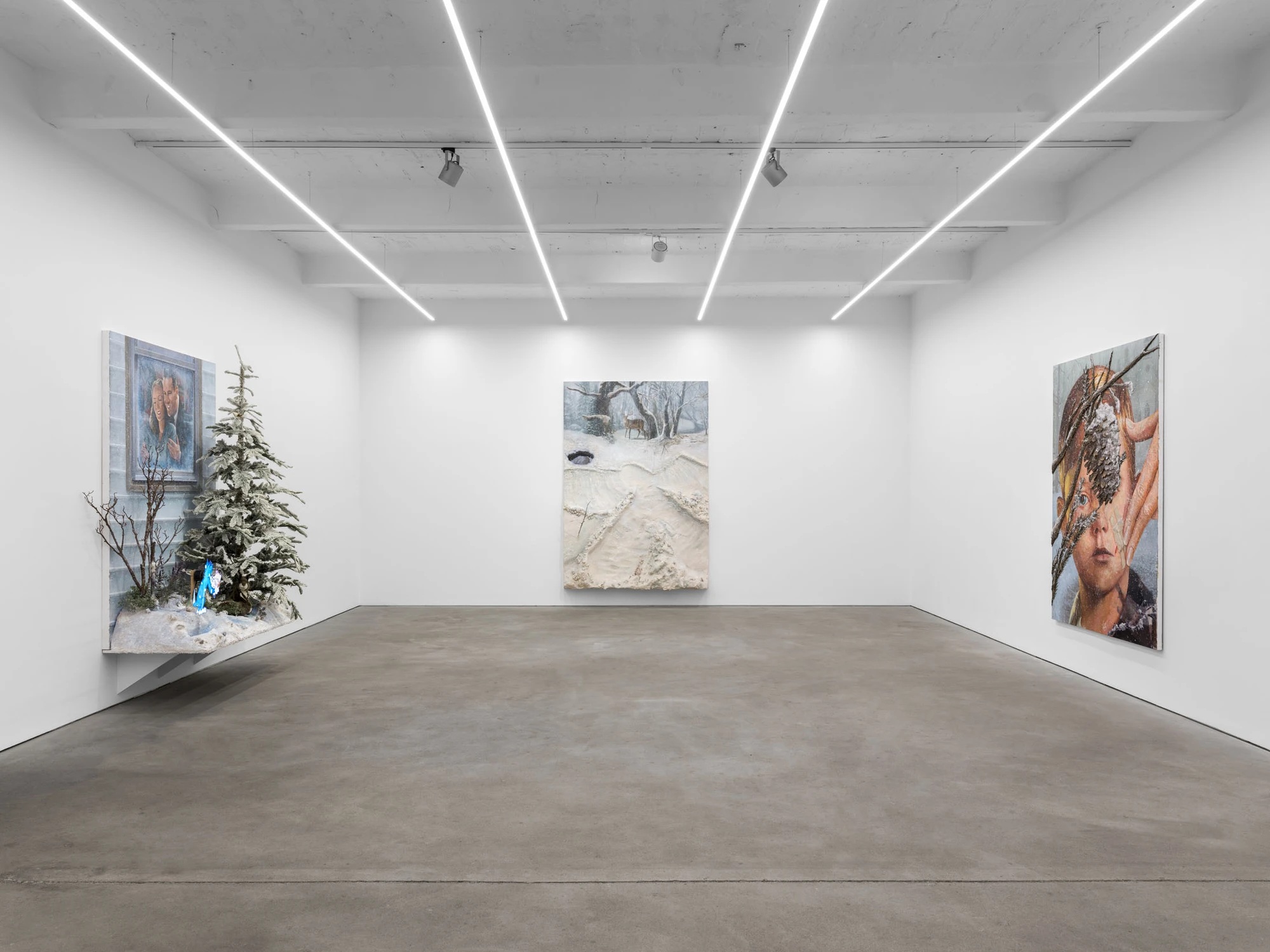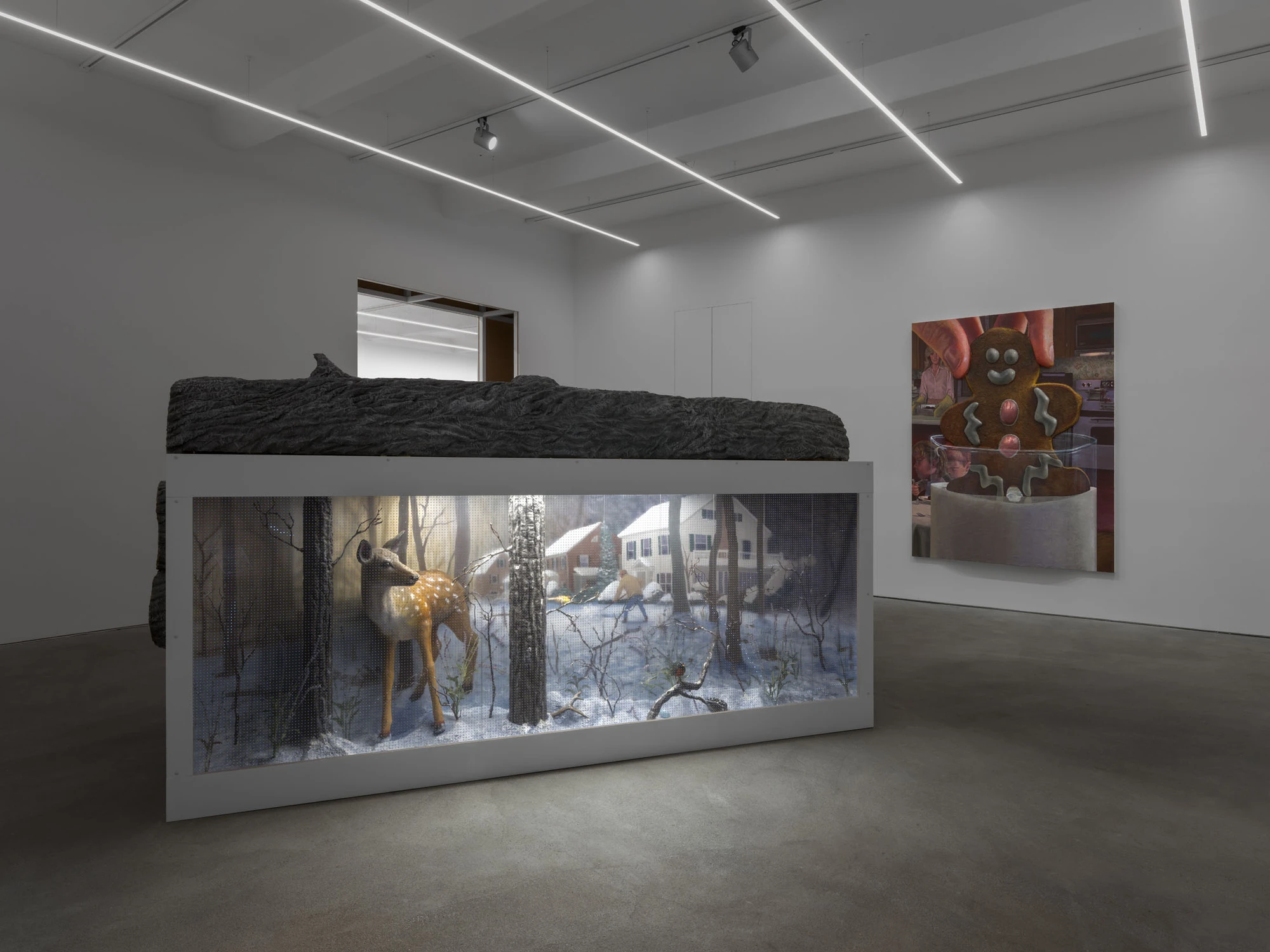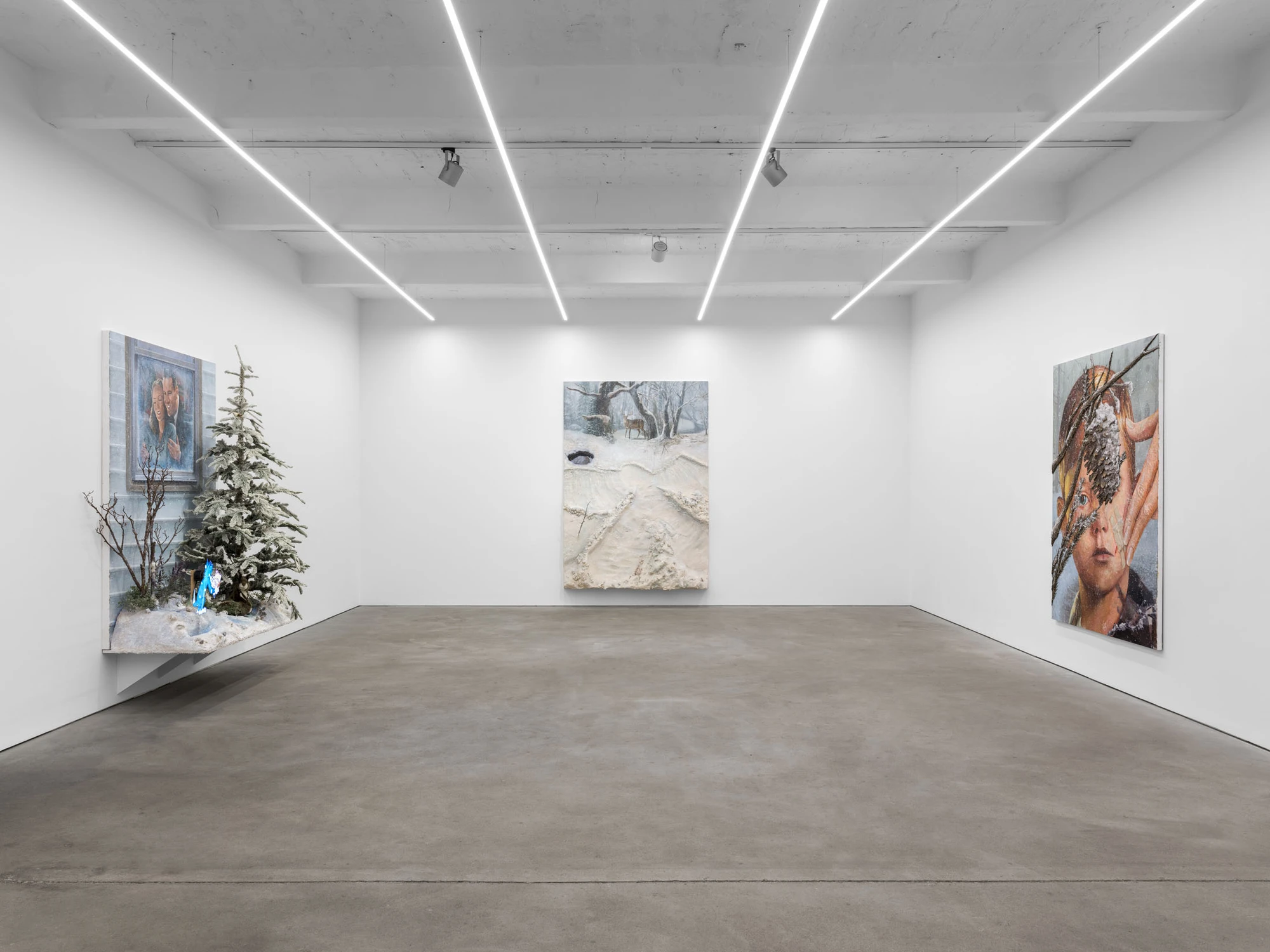
At Kraupa-Tuskany Zeidler in Berlin, Trey Abdella's first solo exhibition with the gallery feels like walking into a season that refuses to pass. Cold Front examines "how ceremony, tradition, and commercialization intersect within the visual language of winter," leaving the viewer suspended between tenderness and unease.
Abdella (b. 1994) grew up in West Virginia, and you can feel it in every piece—the theme parks, the hunting trips, the seasonal displays of domestic life that formed his first vocabulary of spectacle. He reflects on how "everyday craft, decoration, and entertainment shape the way we see and feel," and his medium is accumulation itself: eBay finds, junk-store ornaments, fake flowers, wigs, animatronic rabbits, Christmas decorations. These objects are "scavenged as much as selected," and for Abdella they carry something real—traces of sentiment and absurdity, "humor and discomfort synonymous to the emotional afterimage of American domestic life."
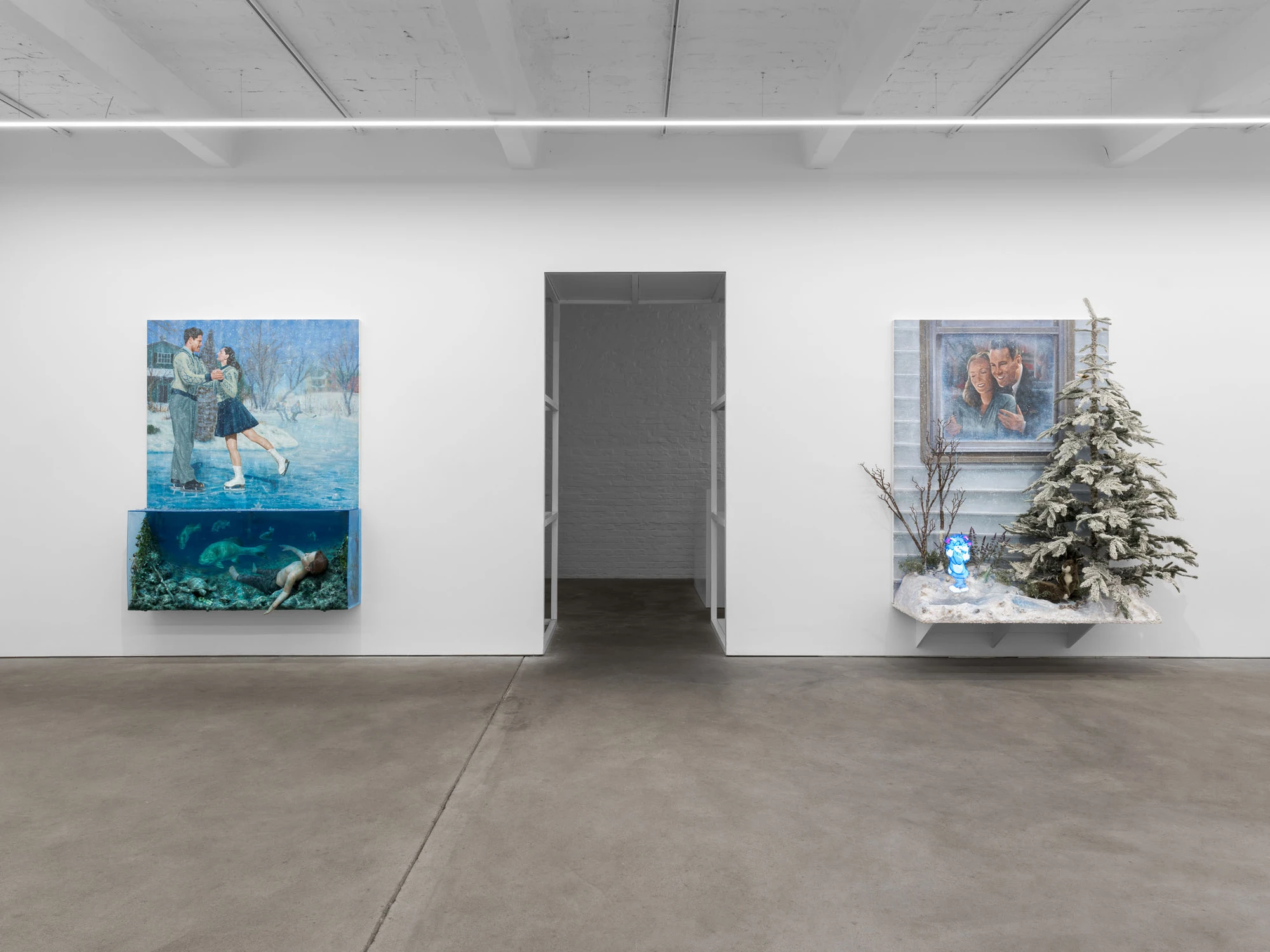
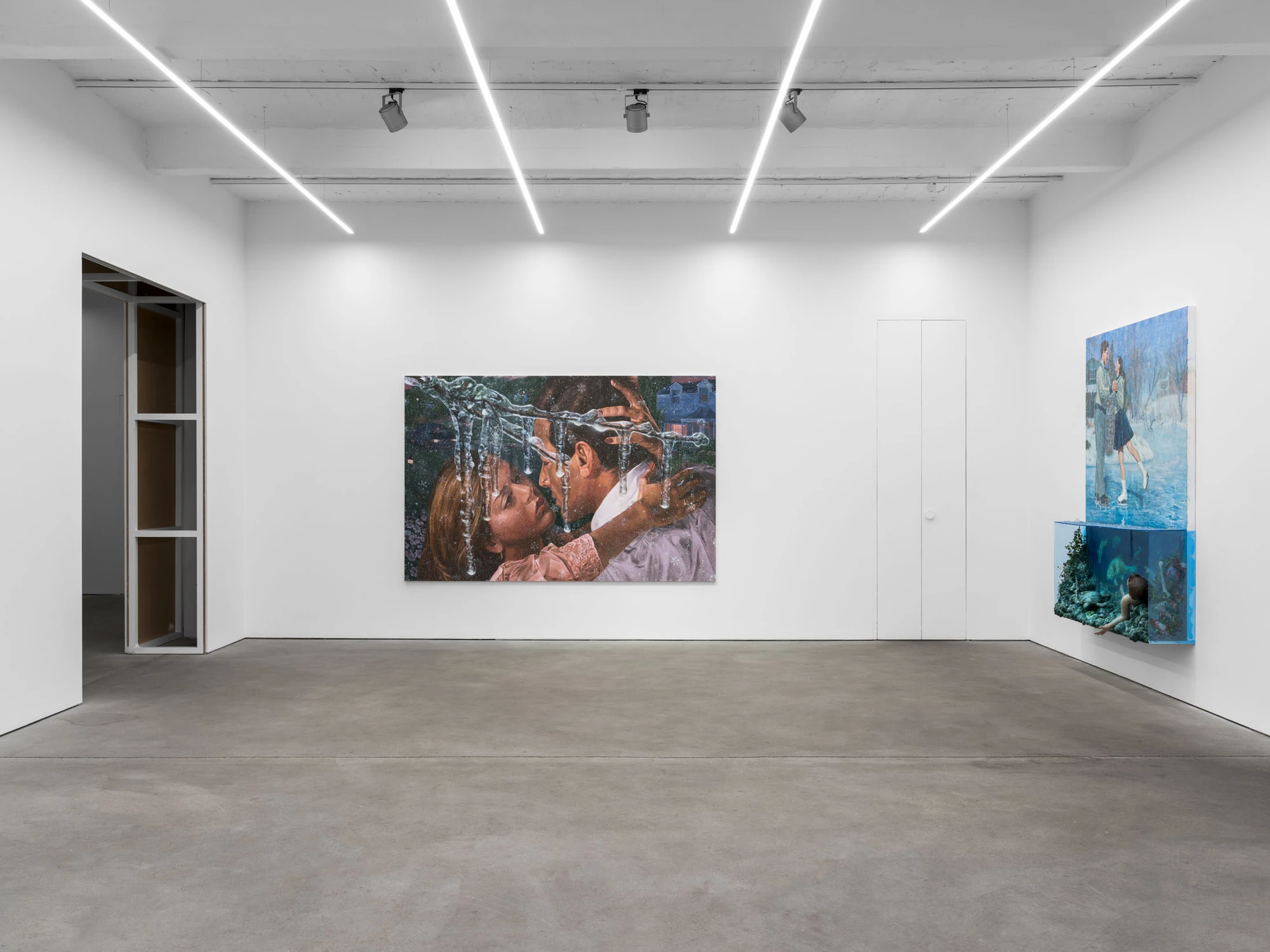
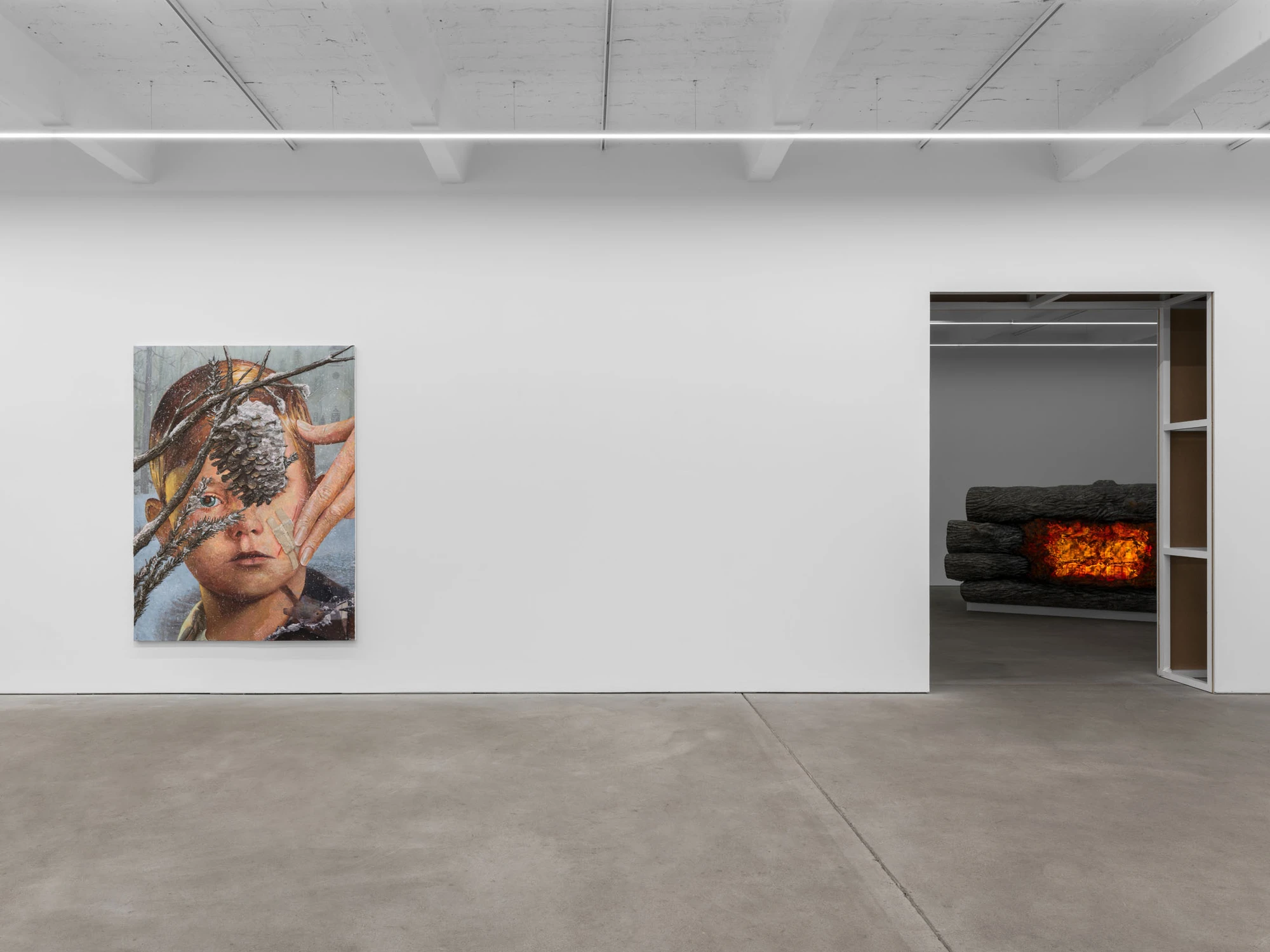
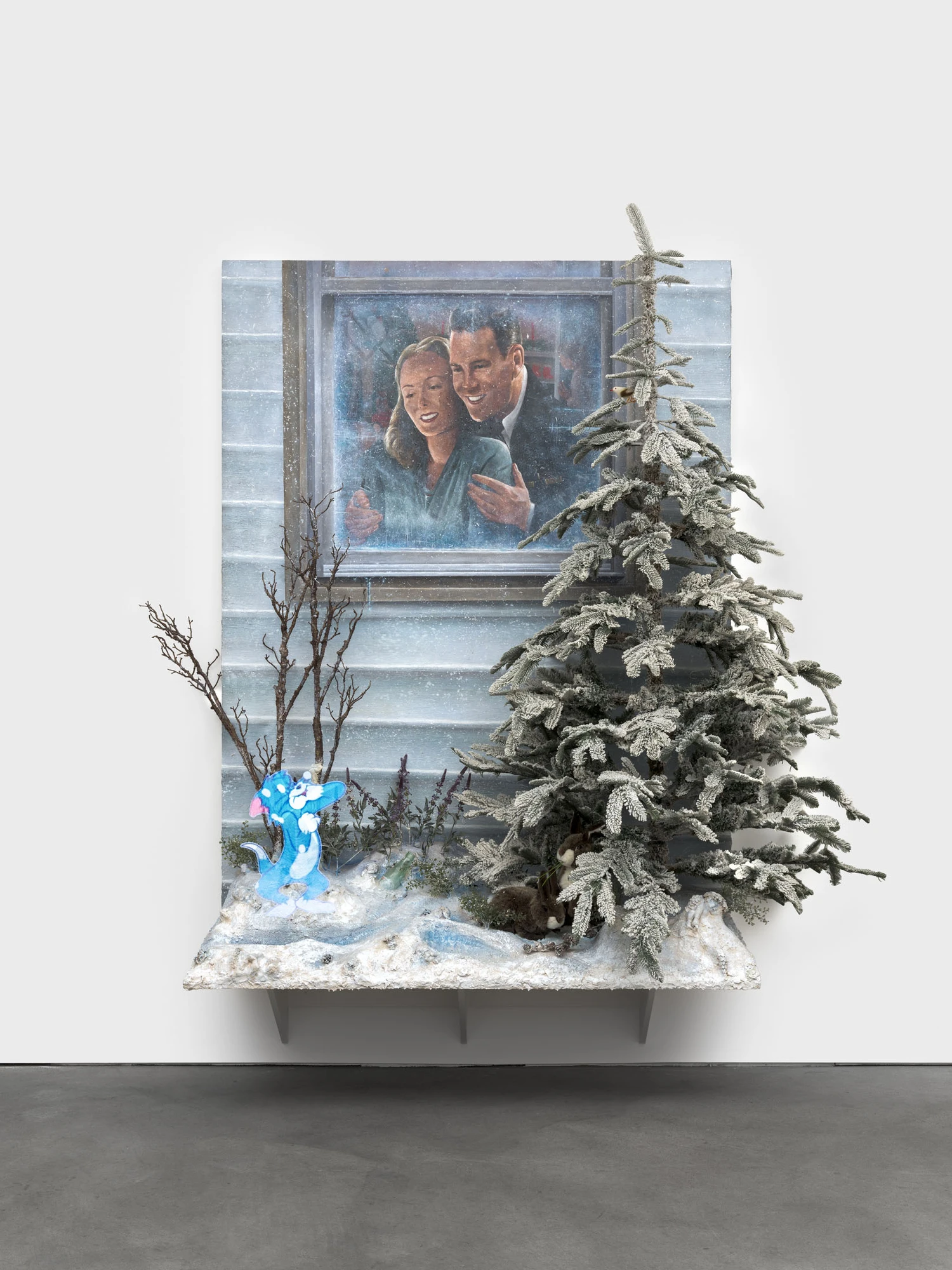
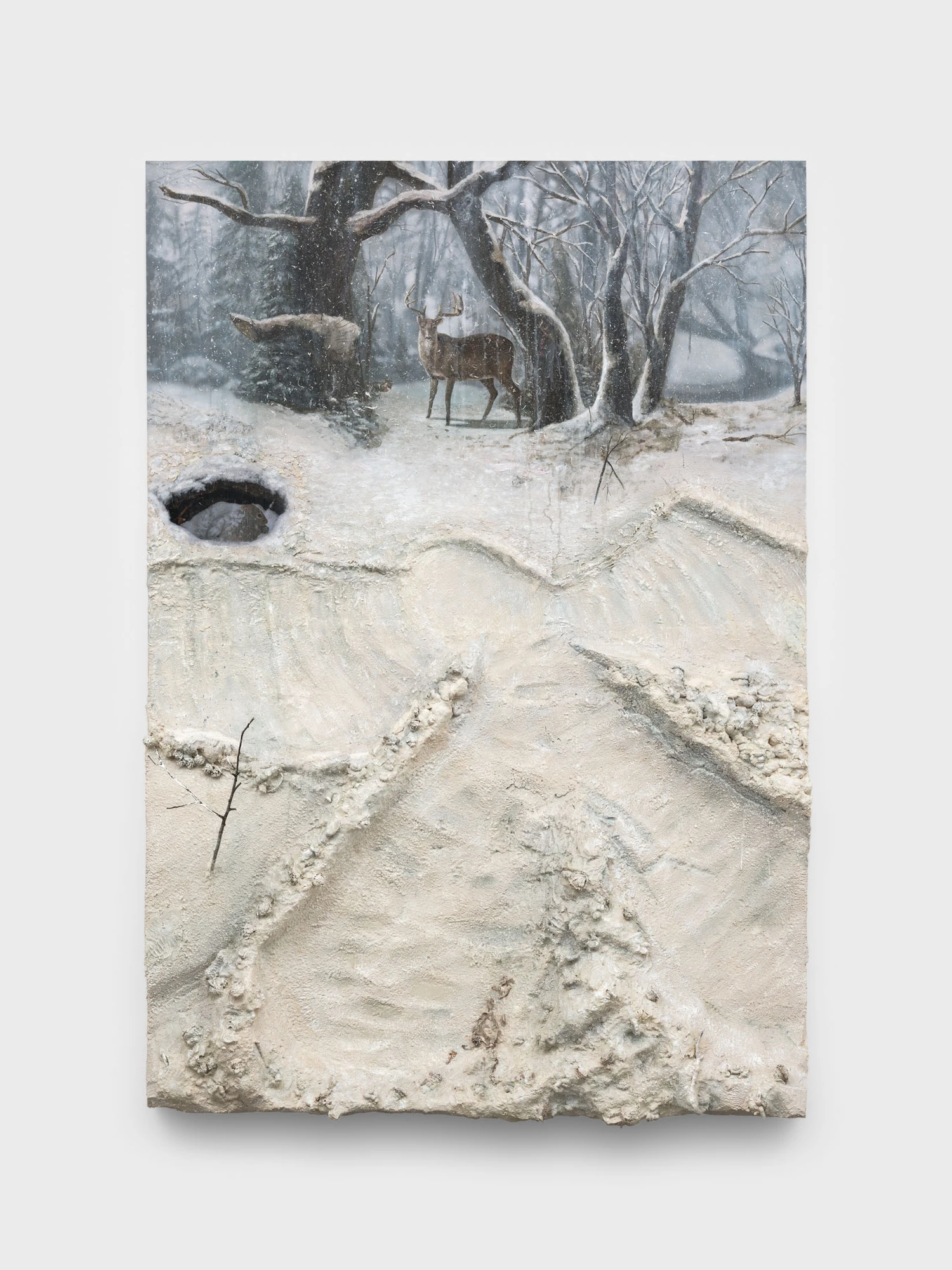
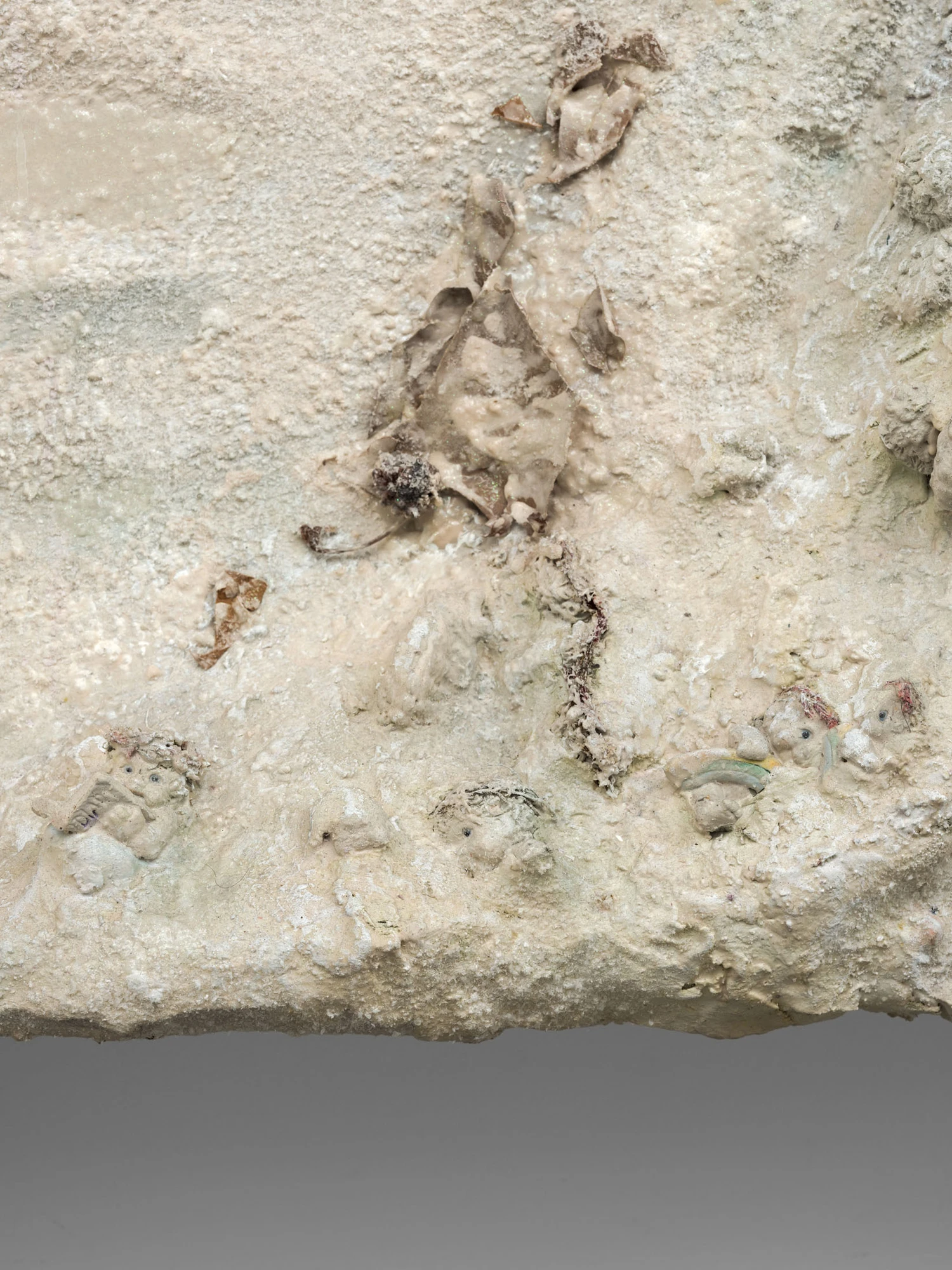
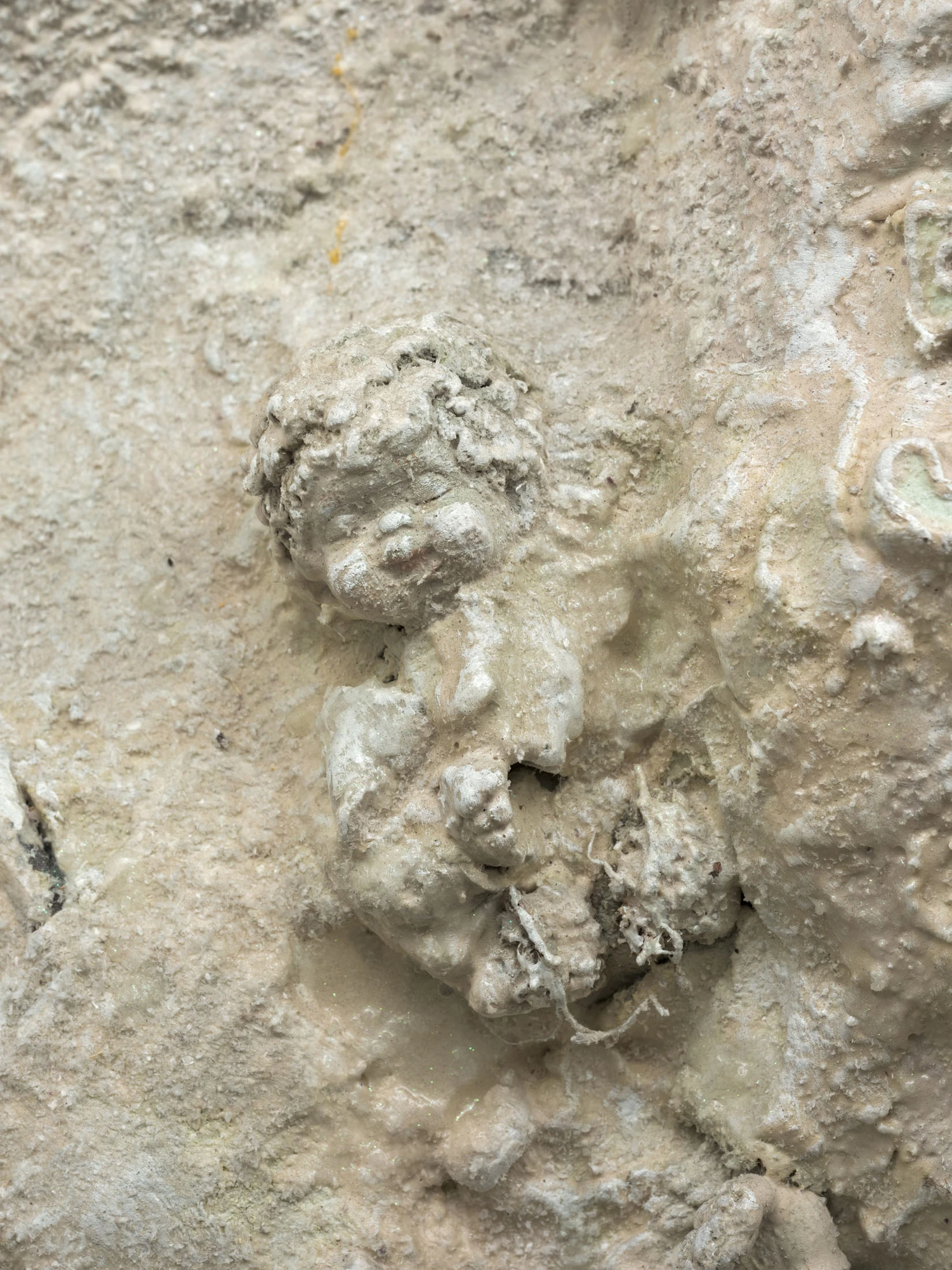
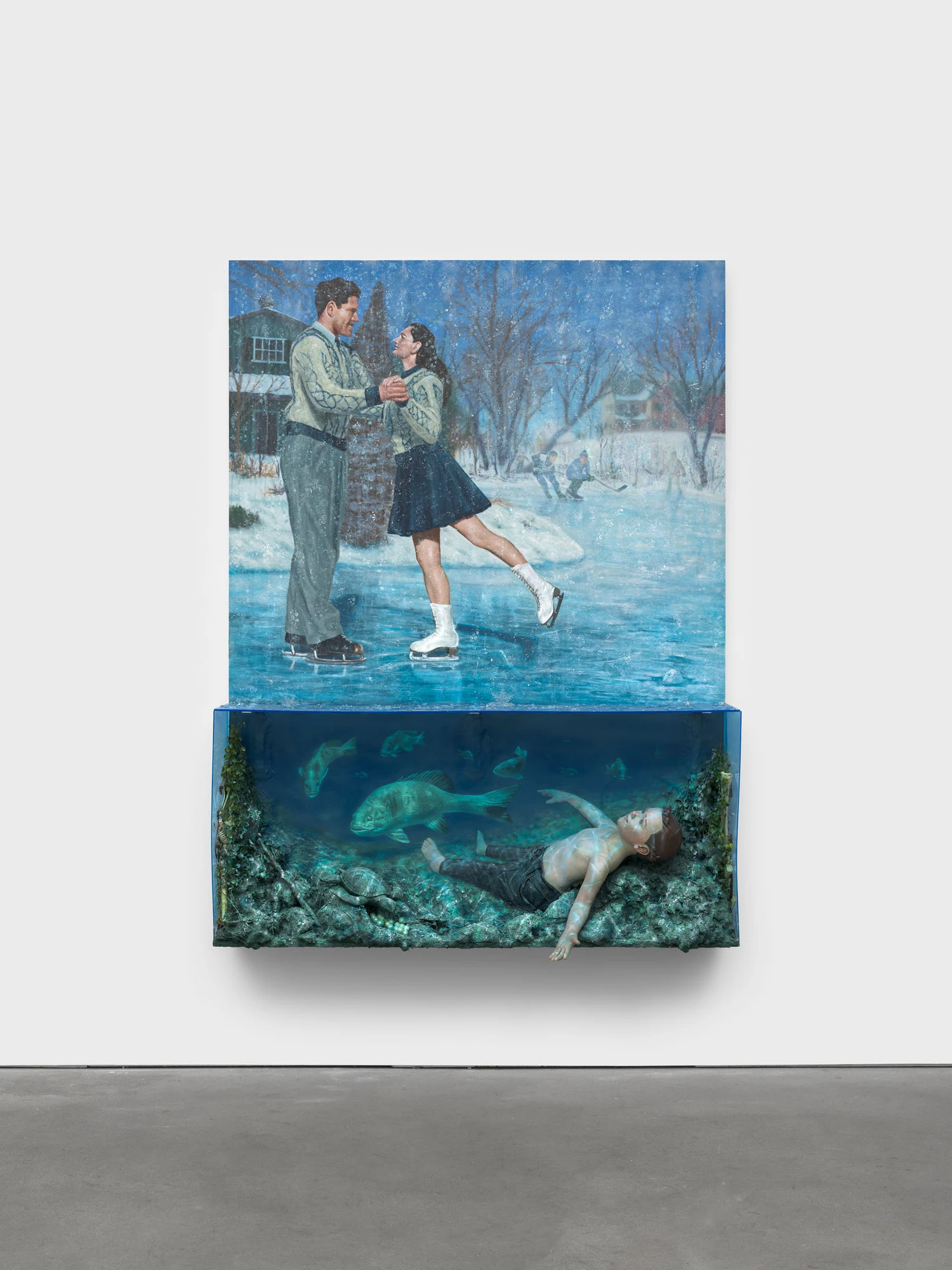
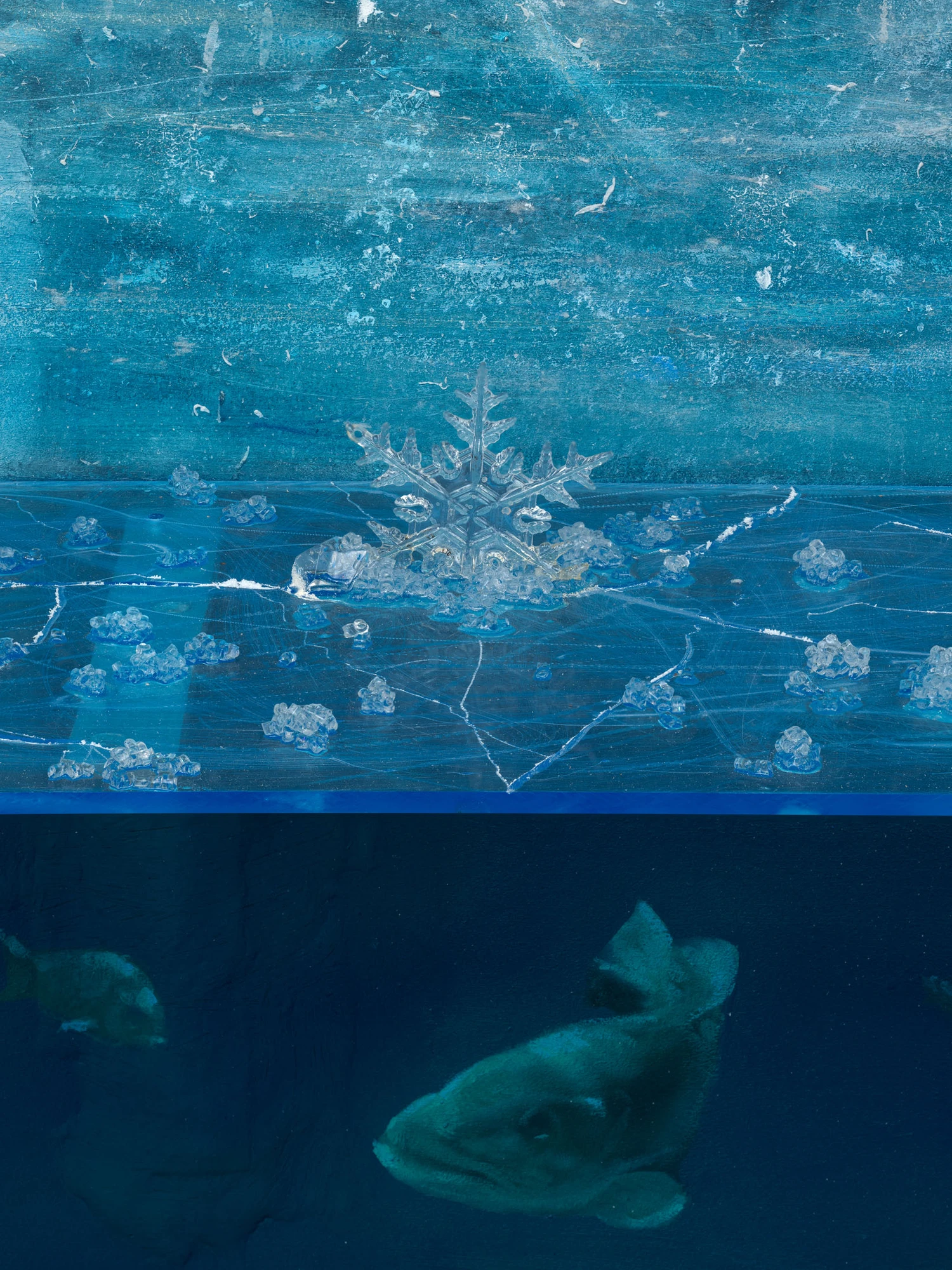
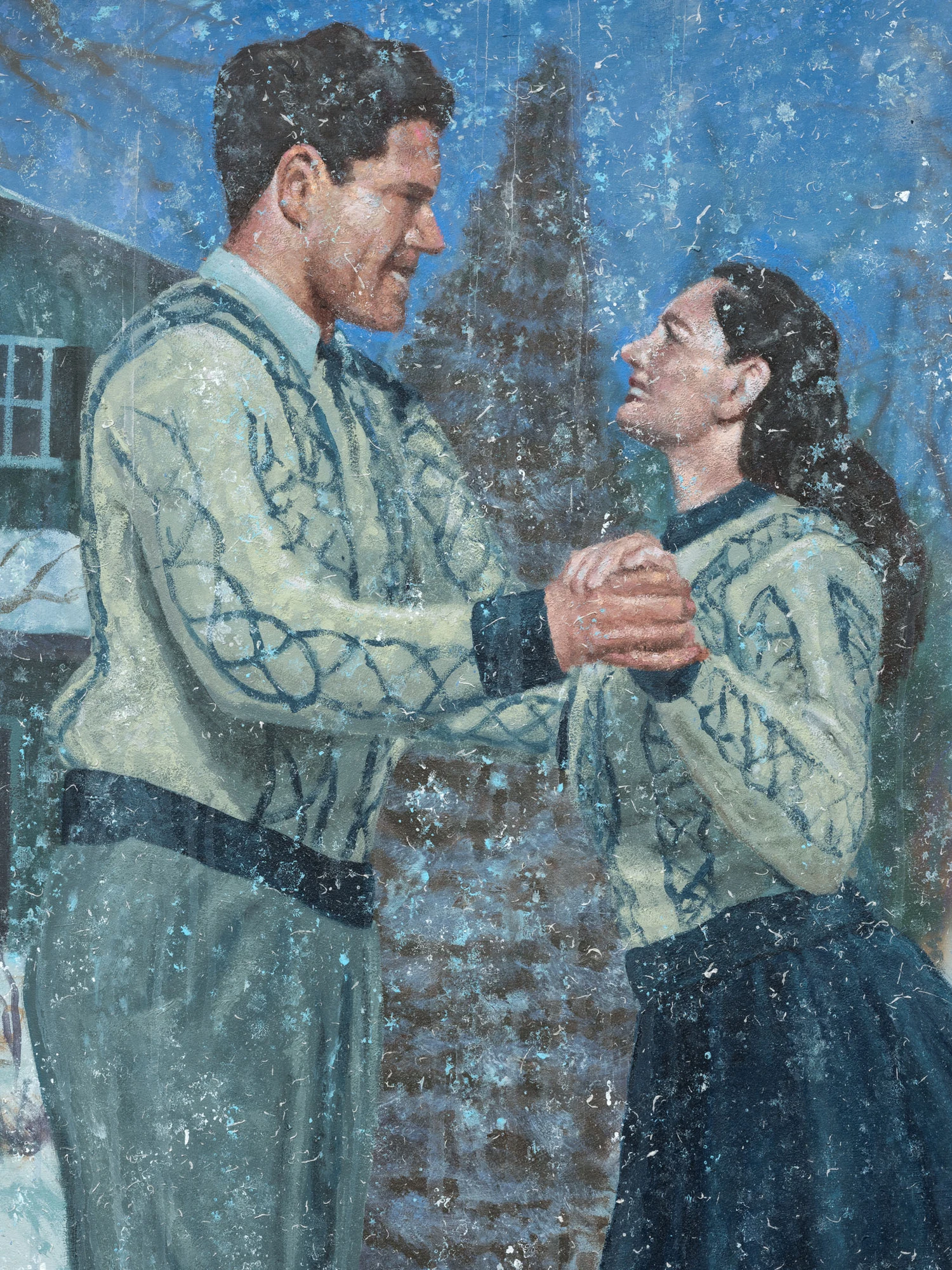
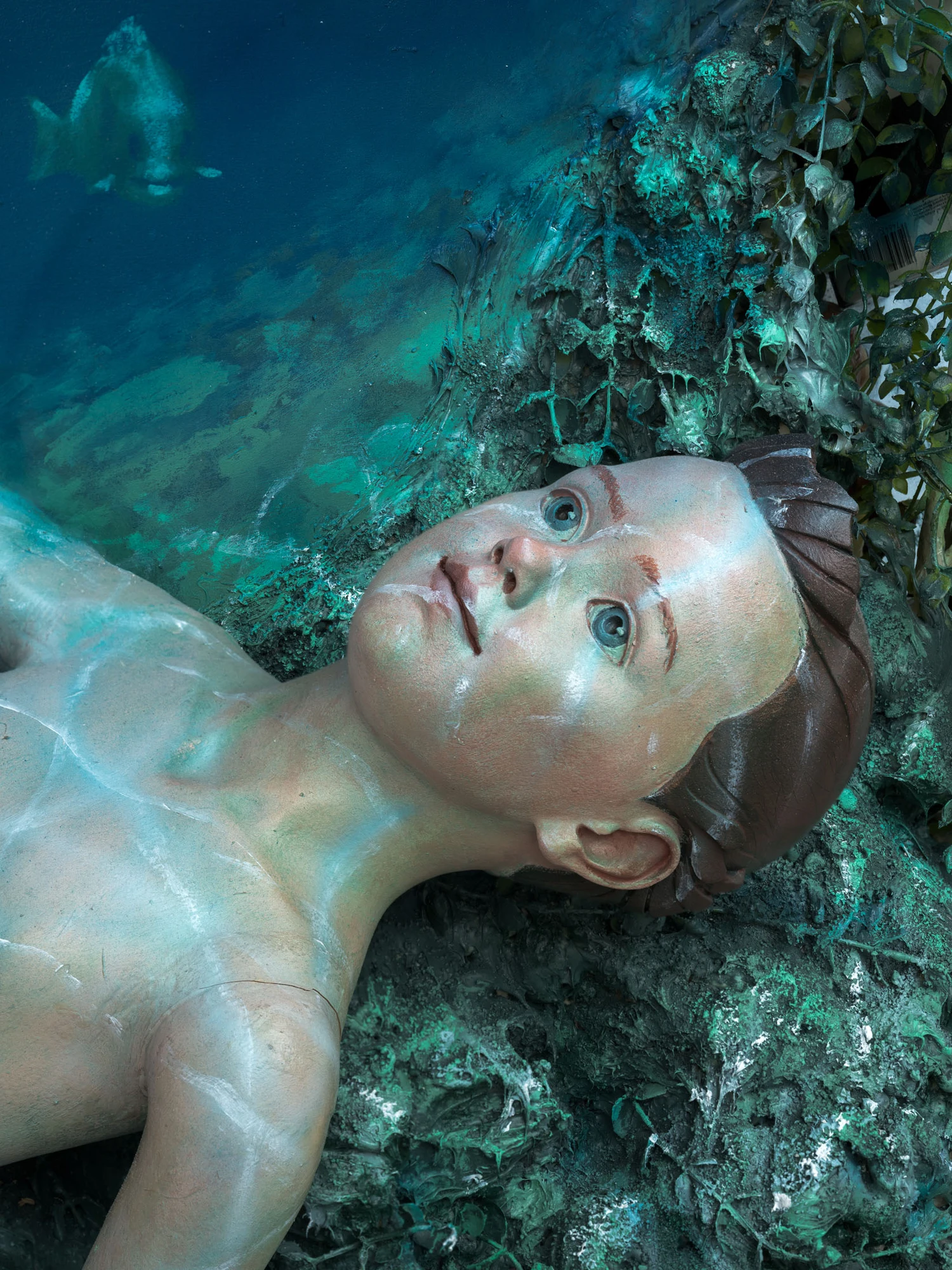
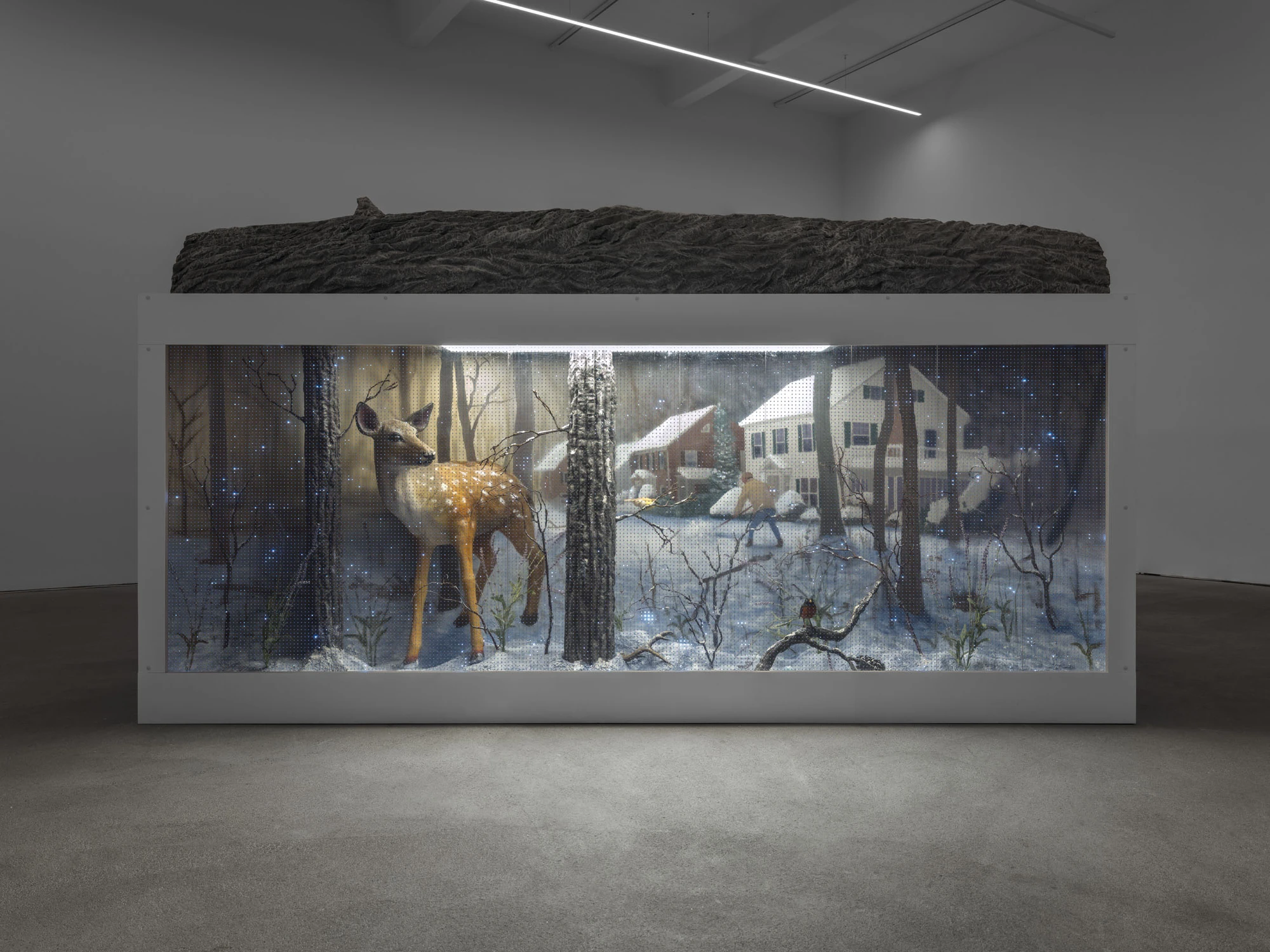
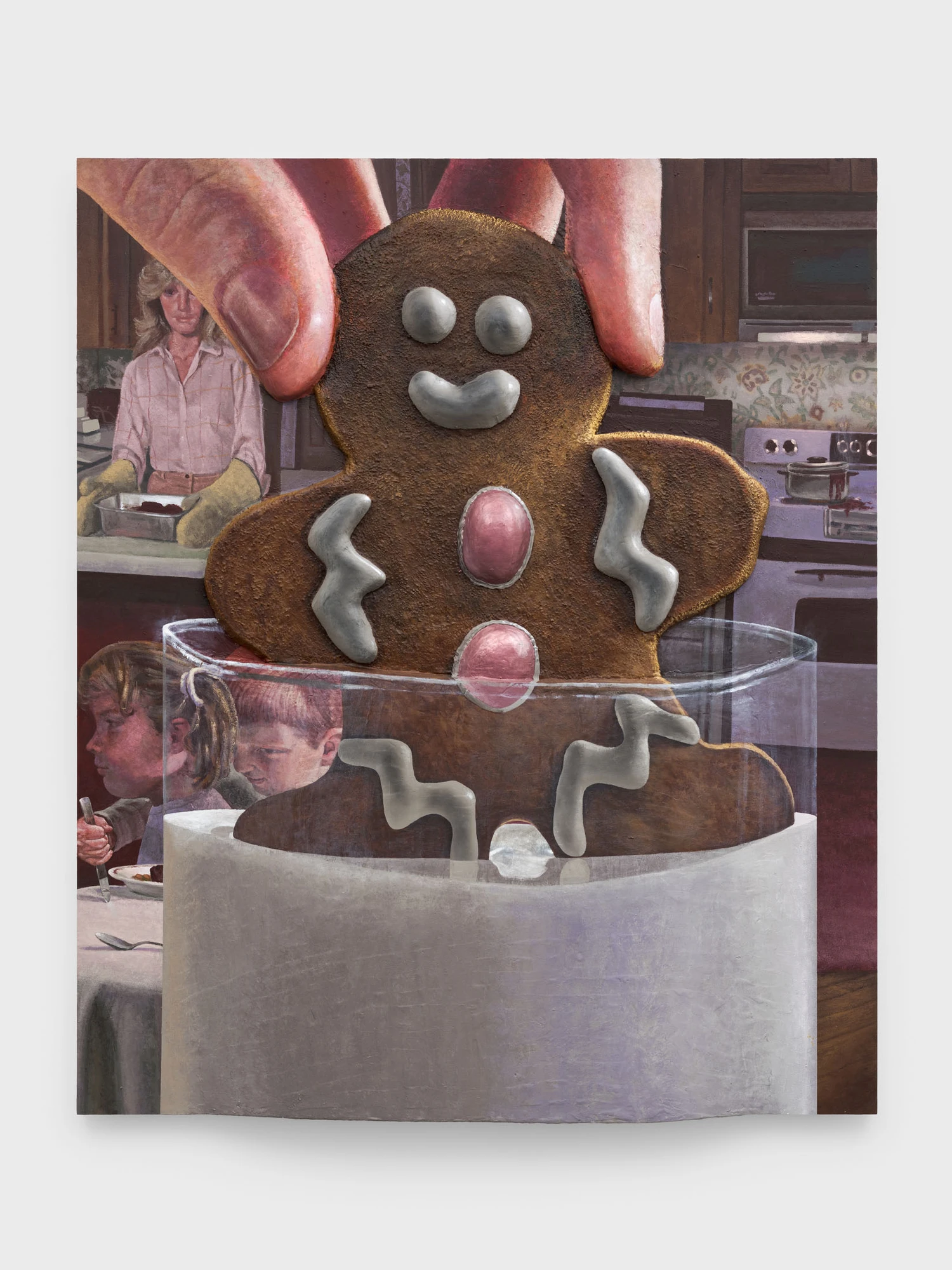
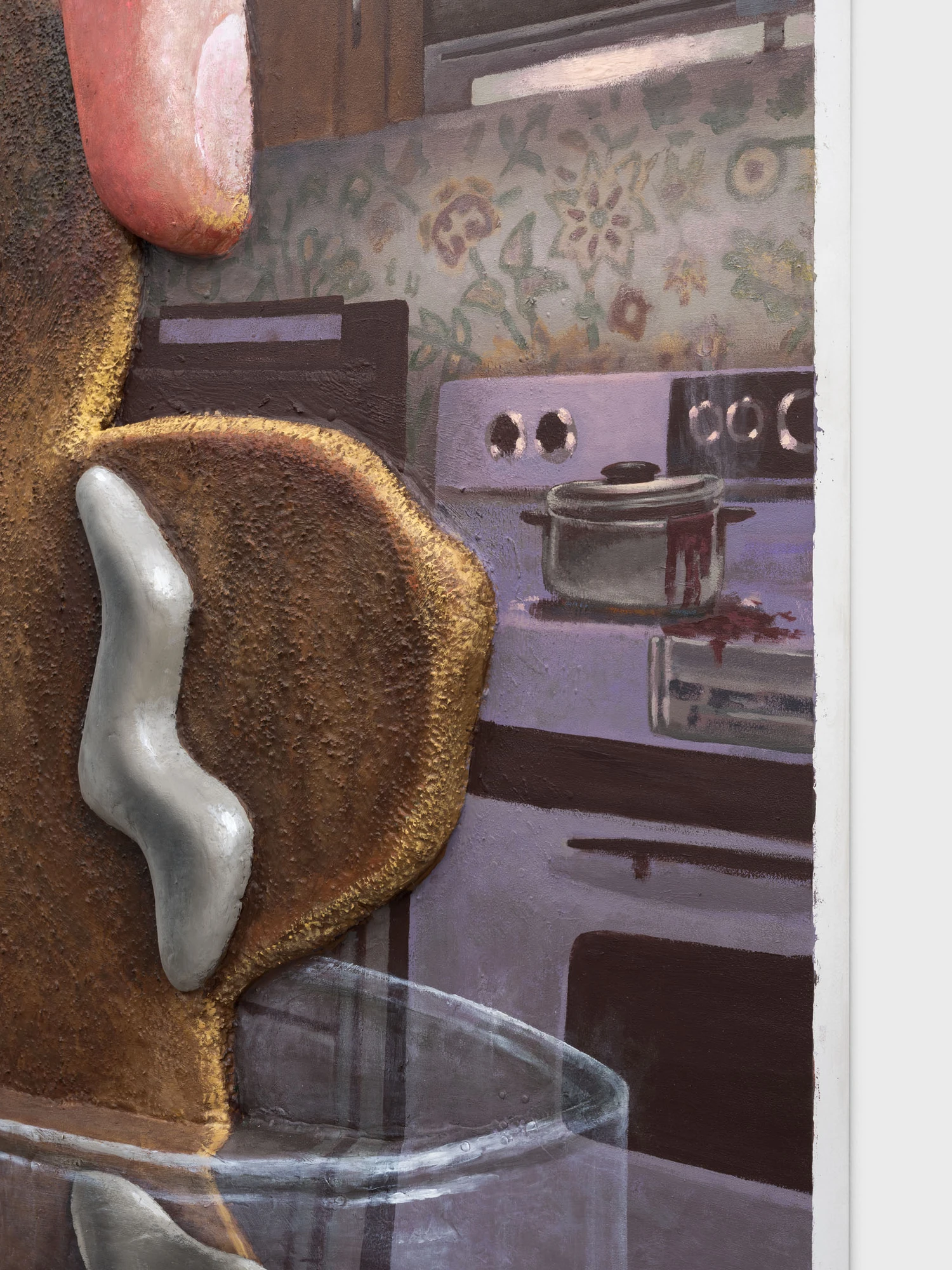
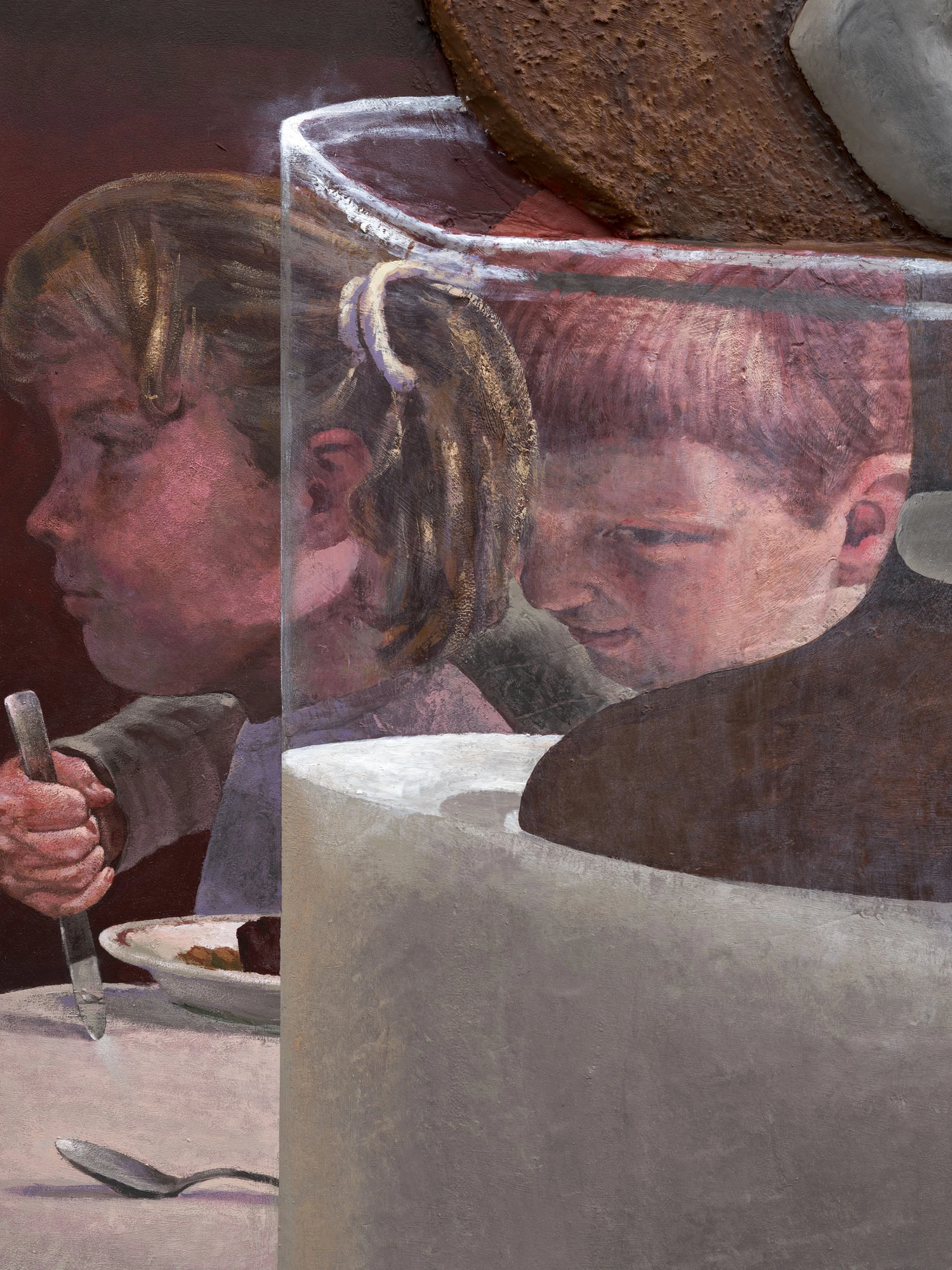
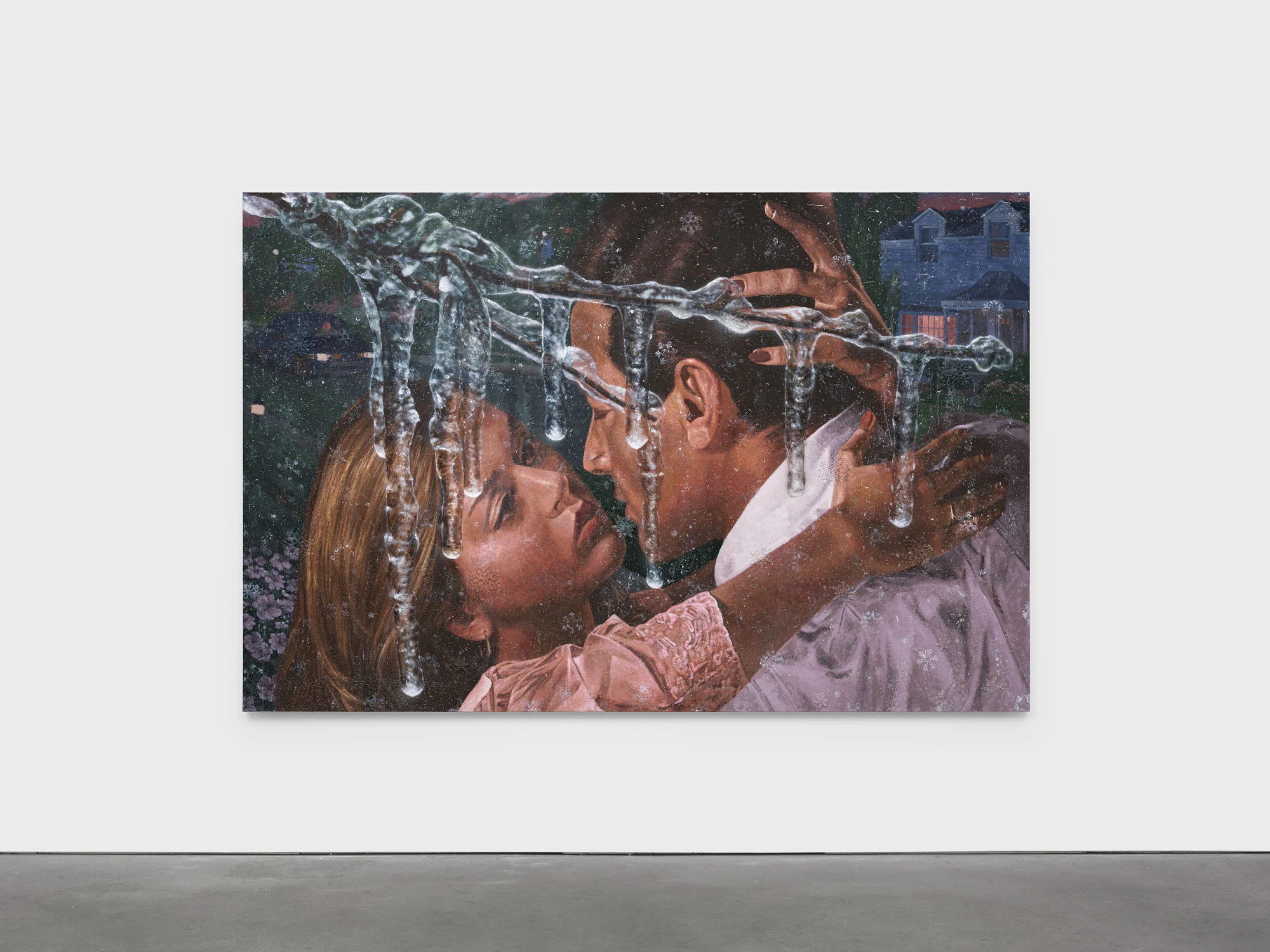
Trained as a painter but working with what the gallery calls "a cinematic and sculptural approach to surface and texture," Abdella builds panoramic, immersive scenes that pull you in physically. In Thin Ice (2025), a pair of skaters glide across a frozen pond while beneath them, under resin that glistens like ice, a submerged figure drifts lifelessly—romance collapsing into horror. Outdoor Cat (2025) frames a couple in domestic warmth, gazing at a cat freezing beyond frosted glass, the scene animated by a hologram fan flickering beside artificial pine. Then the details turn: the wide, silent scream in a child's eye in A Little Birdie Told Me; a boy gripping a knife in Run, Run As Fast As You Can; broken ceramic angels half-buried in Snow Angels.
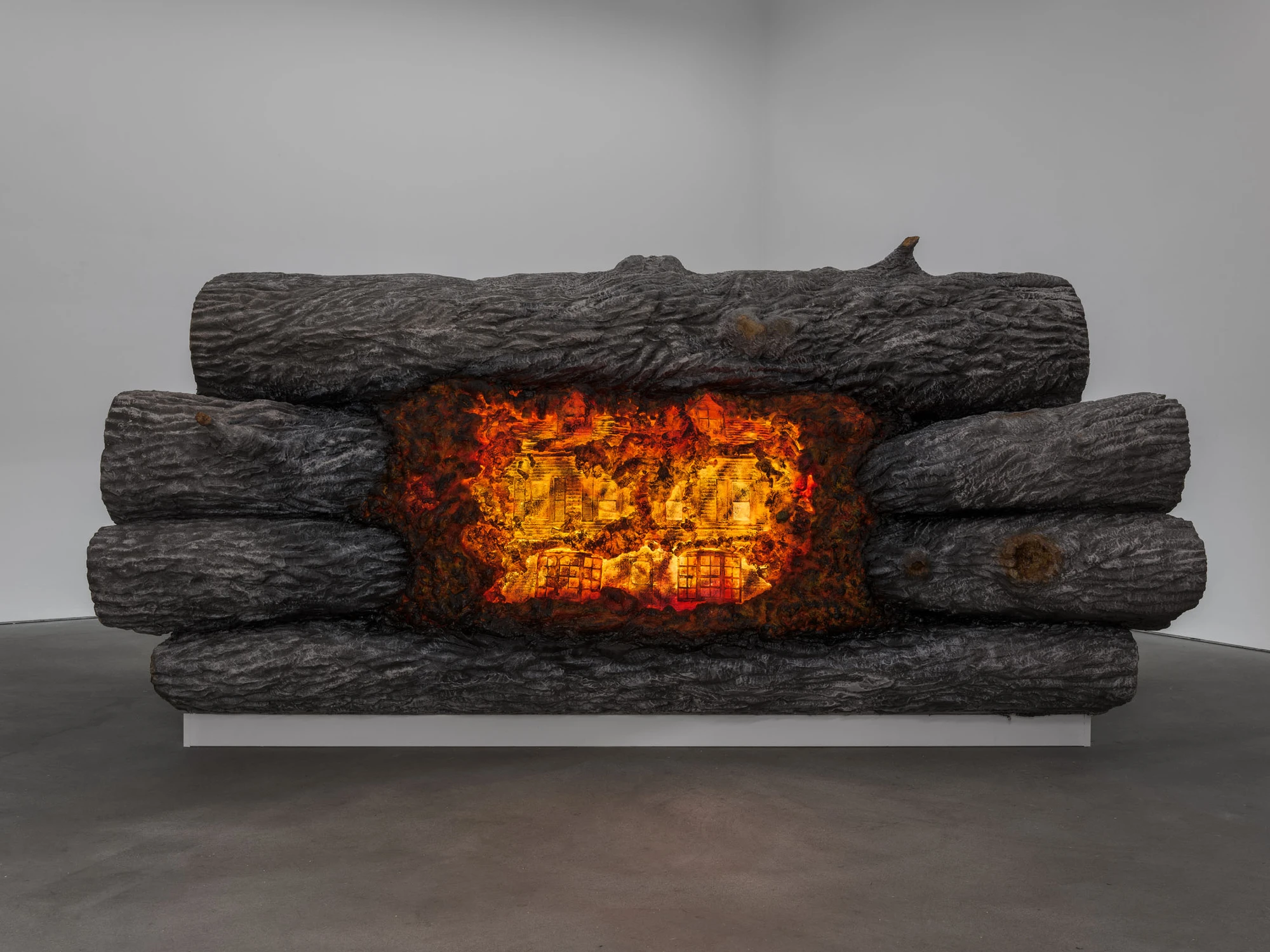
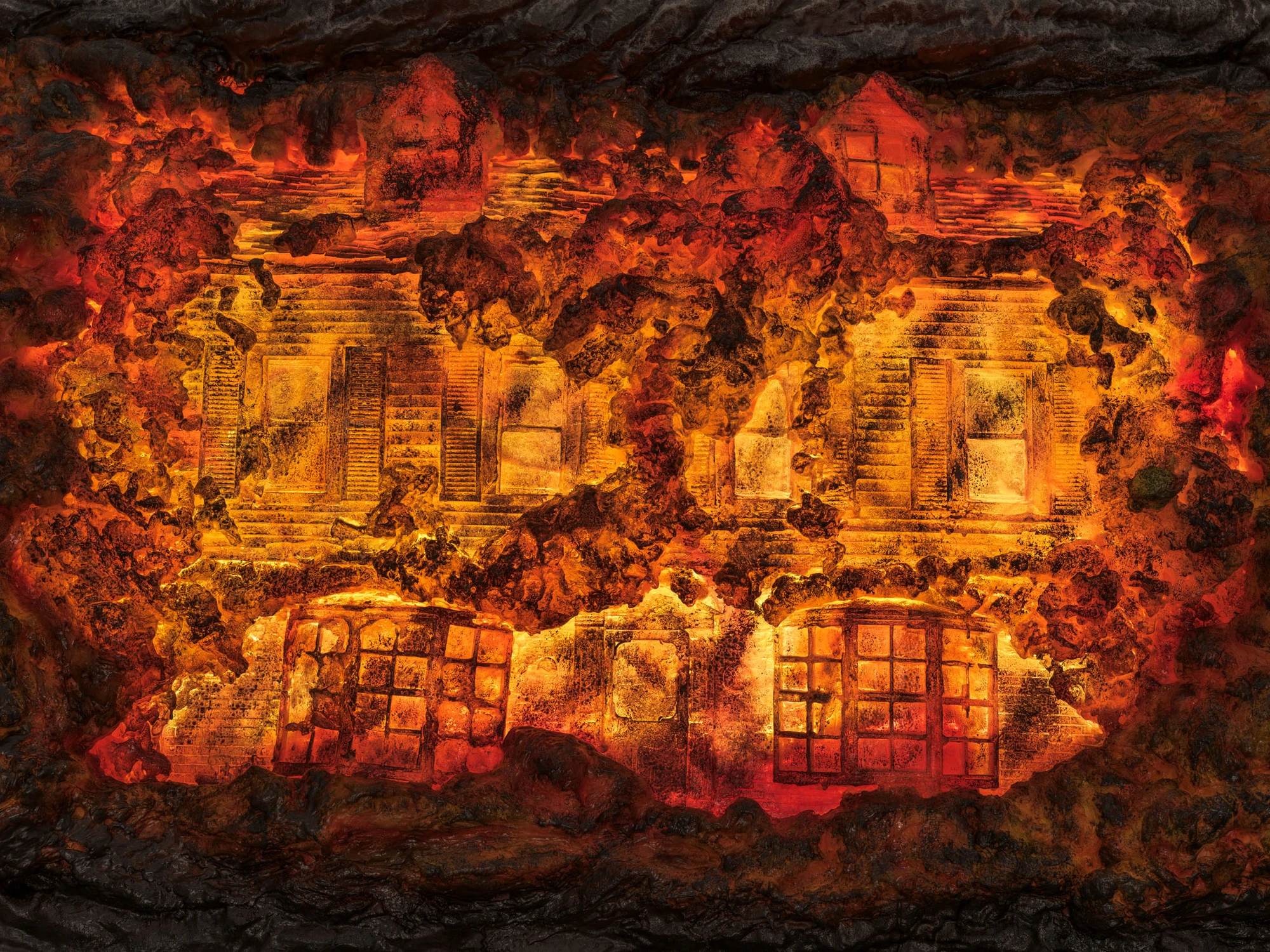
His process destabilizes painting as a category entirely. Layers of resin and pigment mingle with lenticular prints, glittering fragments, and broken ceramic. In When Hell Freezes Over (2025), logs of sculpted foam, a miniature house, LED lights, motors, and metallic tinsel simulate the flicker of fire—an entire hearth conjured from complete fakery. Abdella draws on Robert Gober's exploration of the uncanny and Tex Avery's exaggerated animation logic, but the result is entirely his own: hyperrealist, mixed-media works that blur the line between what is tender and what is grotesque.
What Cold Front ultimately lays bare is something uncomfortable about how we celebrate. Abdella "reveals how rituals of joy, family, and festivity depend on acts of concealment"—how spectacle in consumer culture smooths over what is anxious, strange, or grieving, leaving emotion itself caught beneath the surface sheen. The cold front, it turns out, is the thing we already live inside.