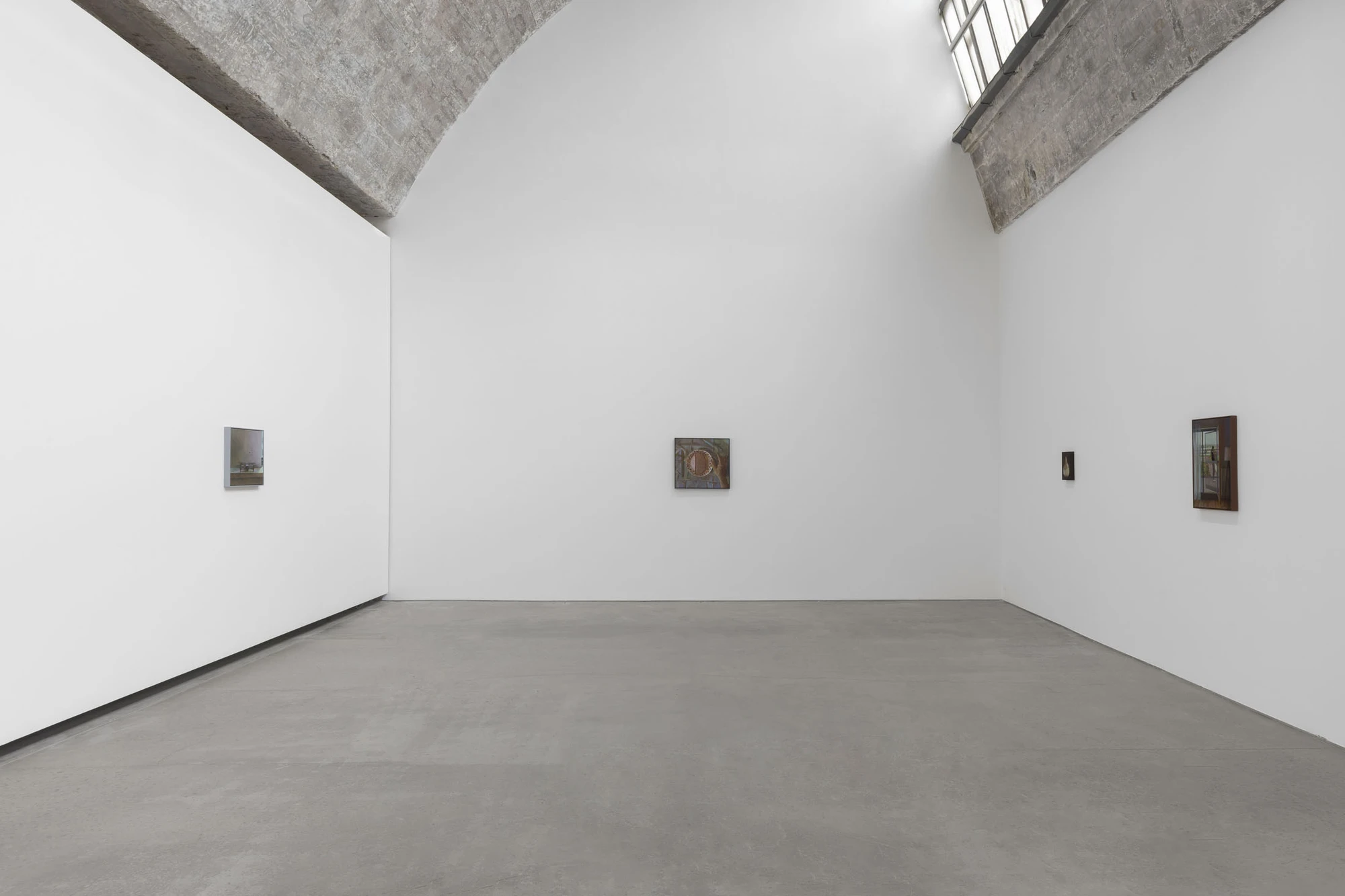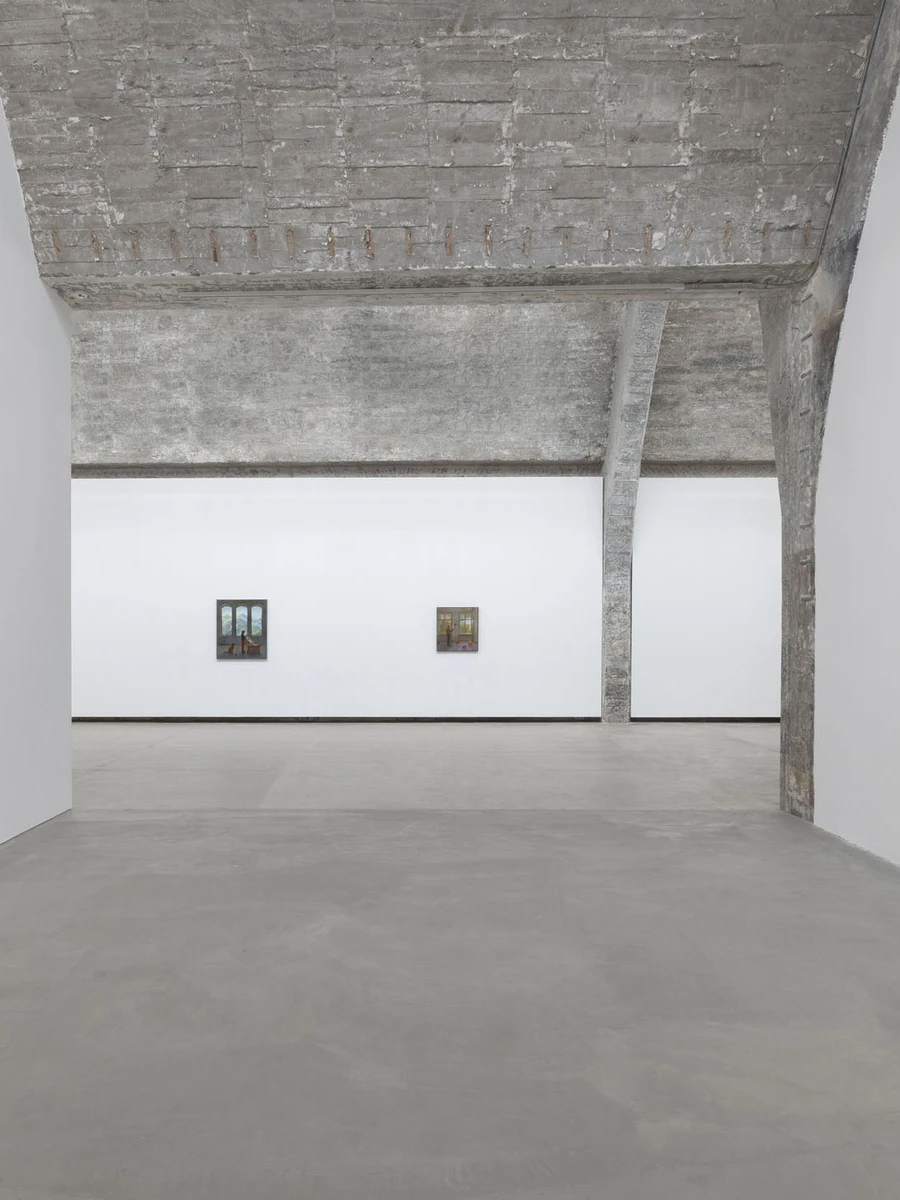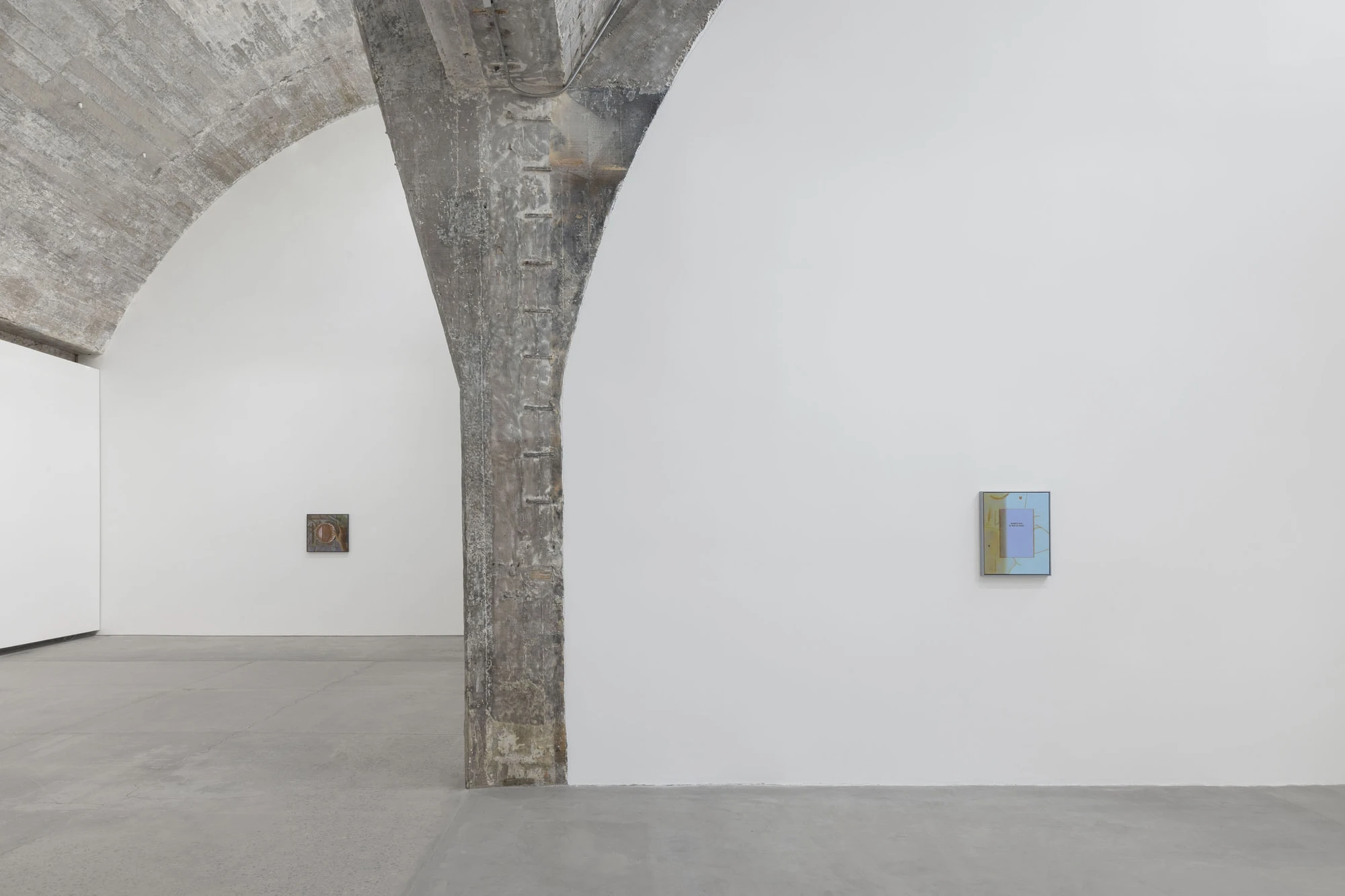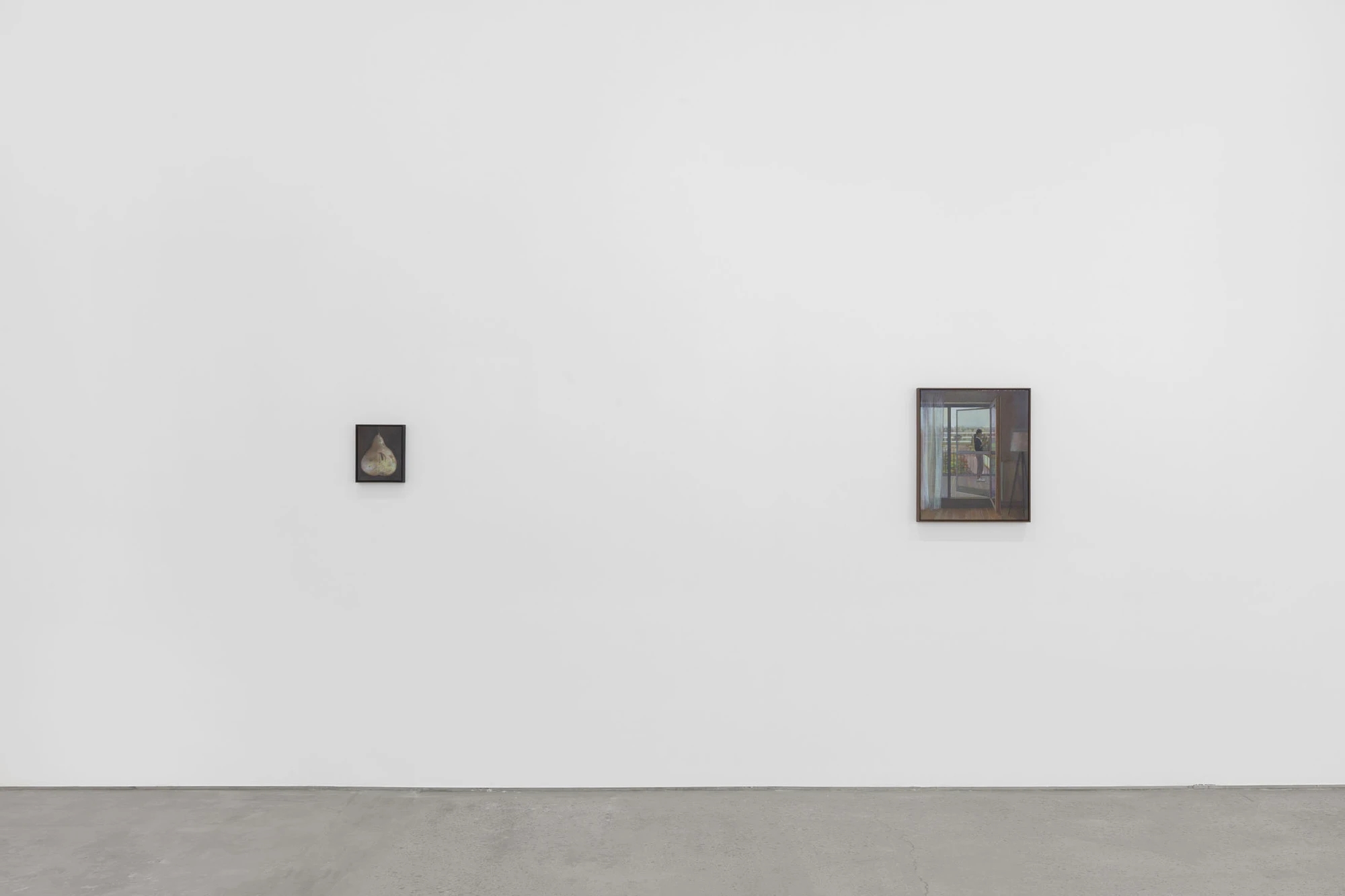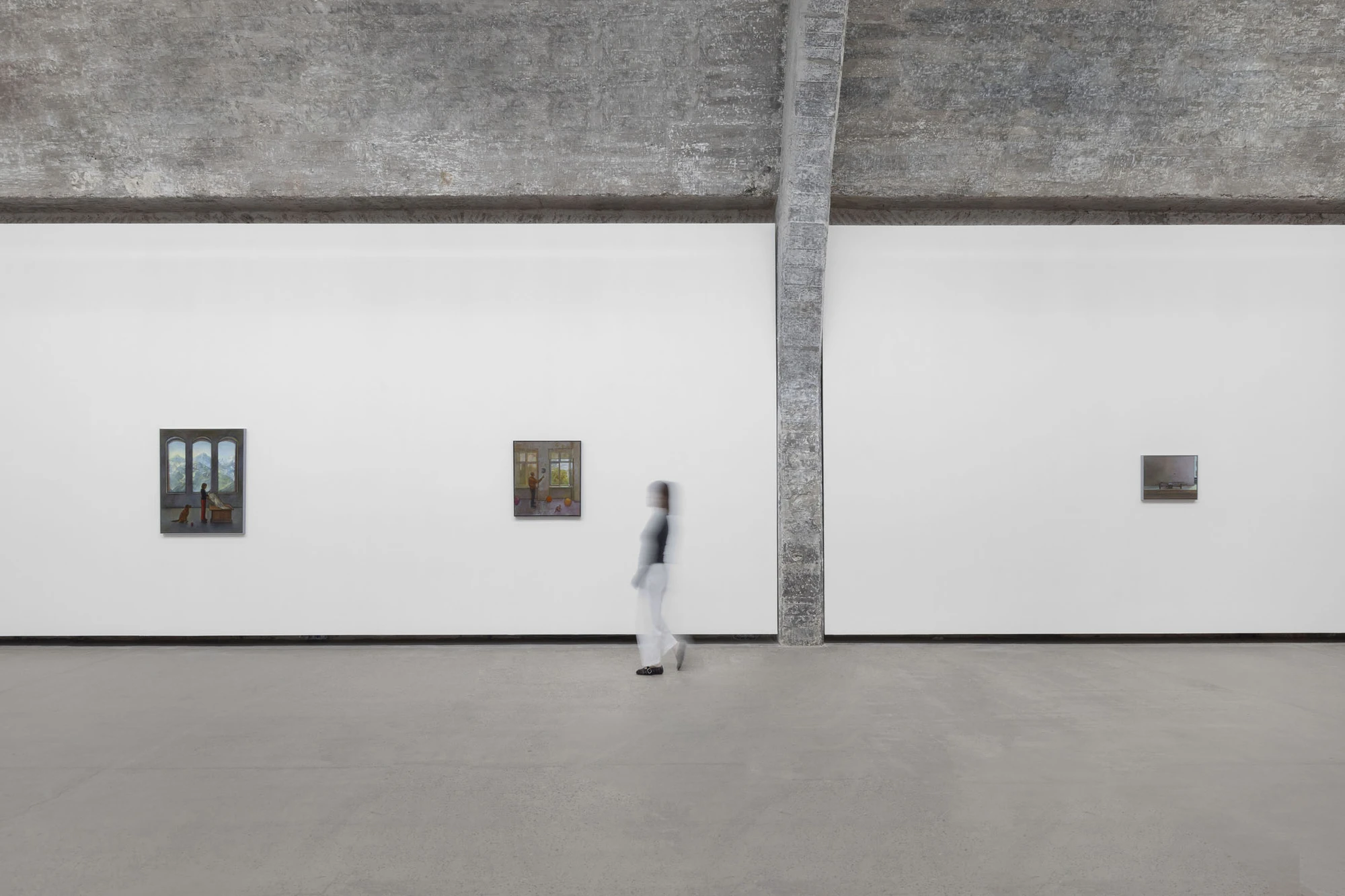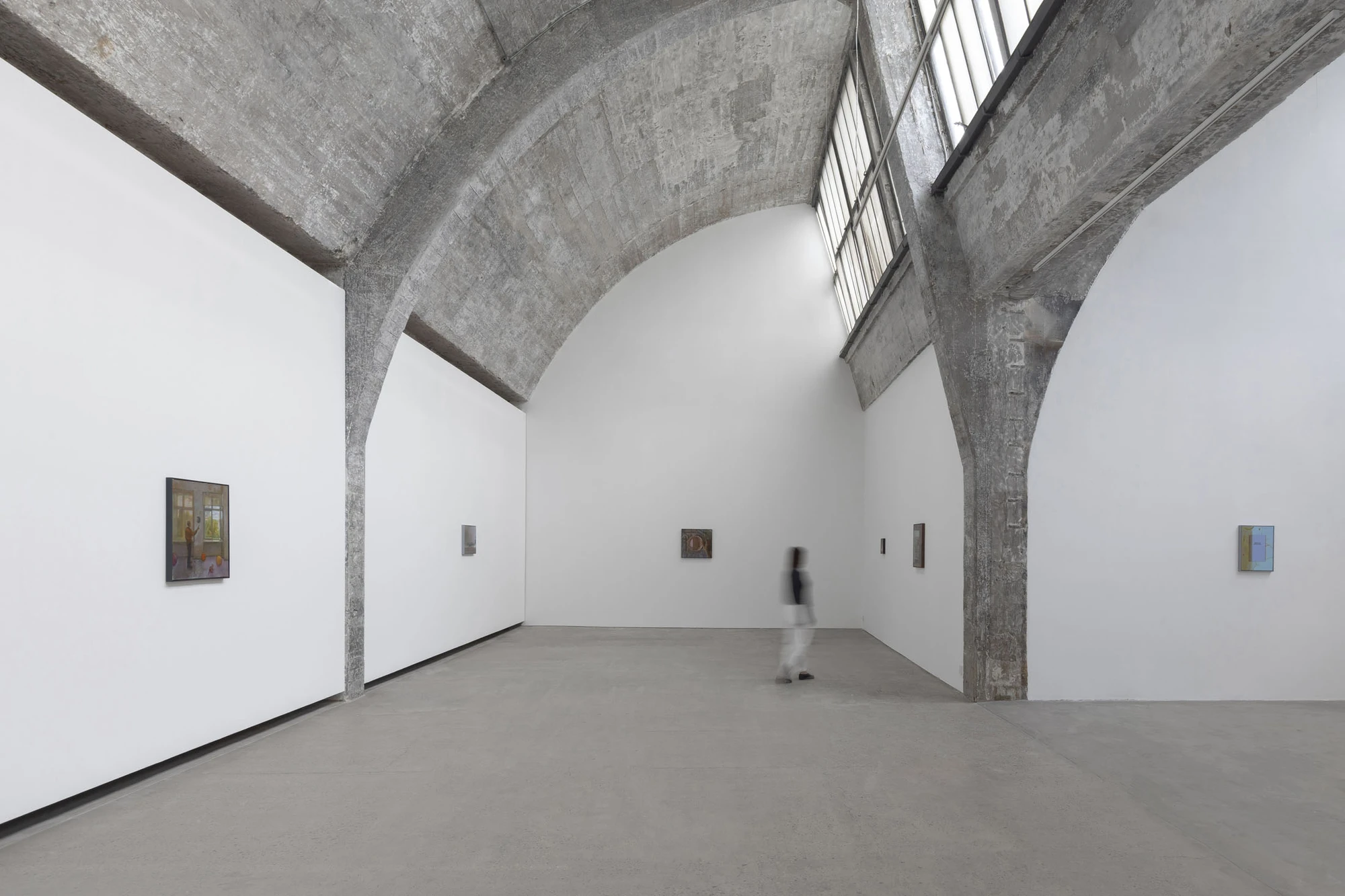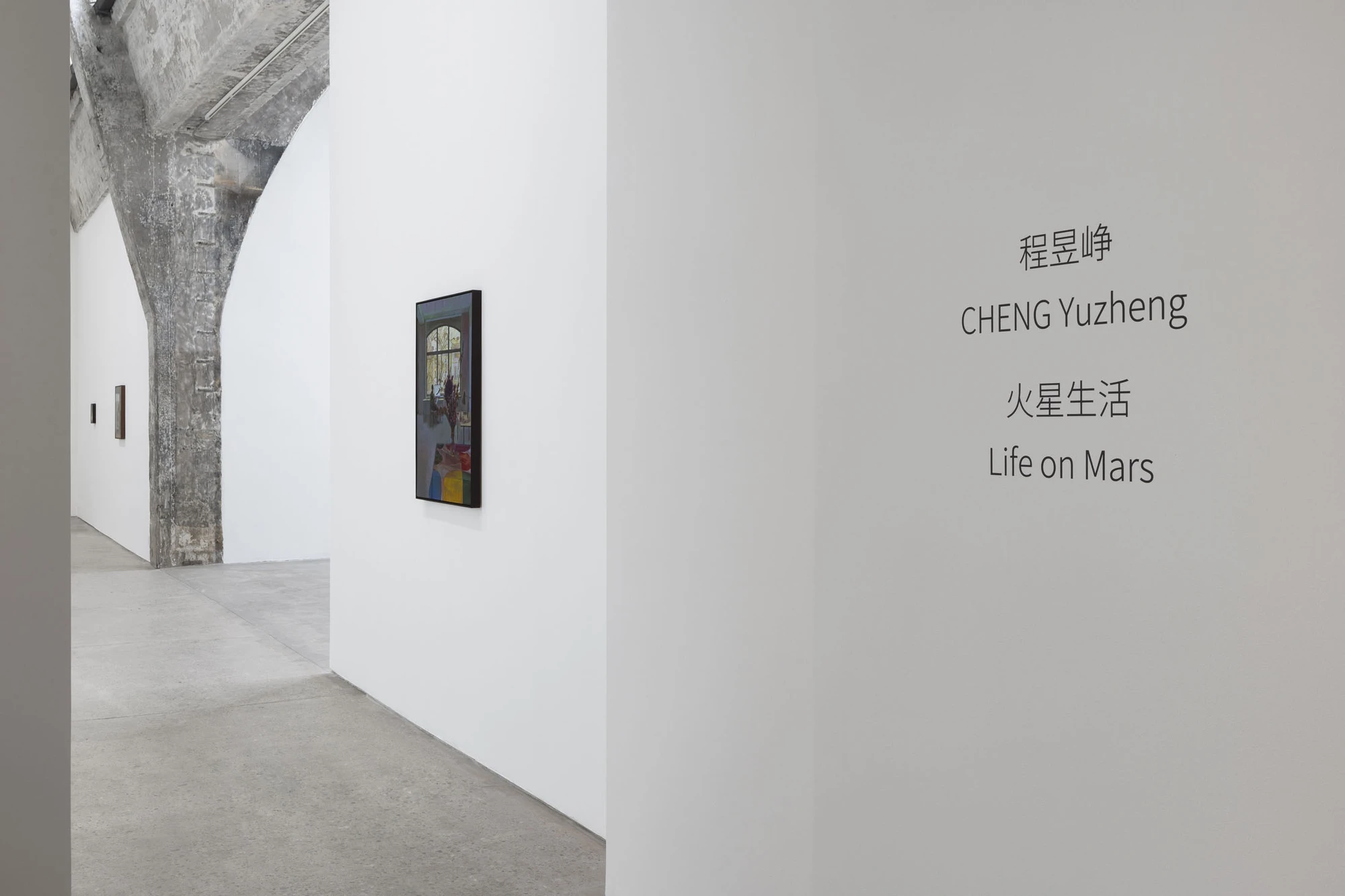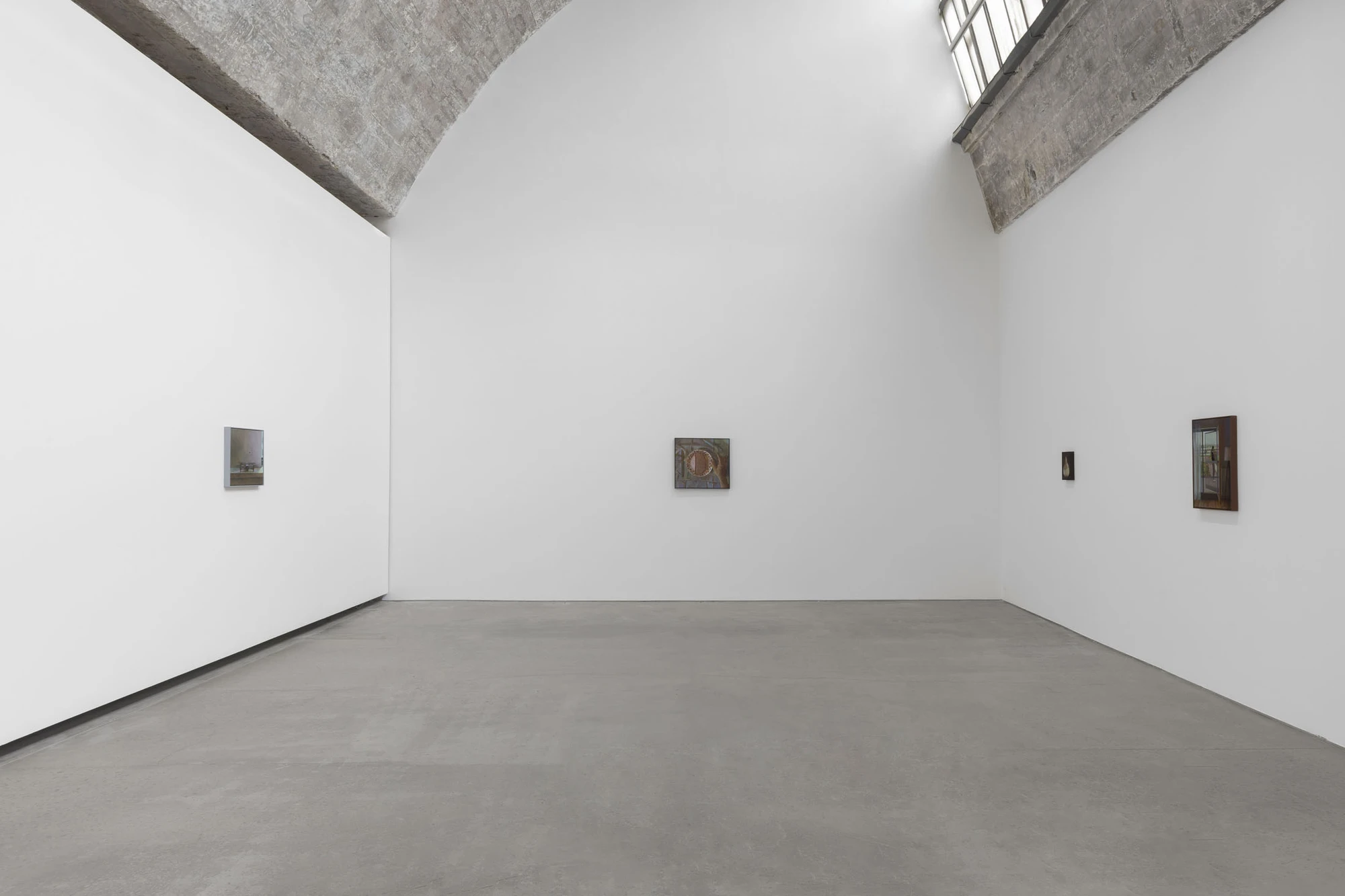
Inside a vaulted concrete hall in Beijing, Reflexion opens Life on Mars, Cheng Yuzheng's first Beijing solo, ten small acrylic and oil paintings hung sparsely across white walls.
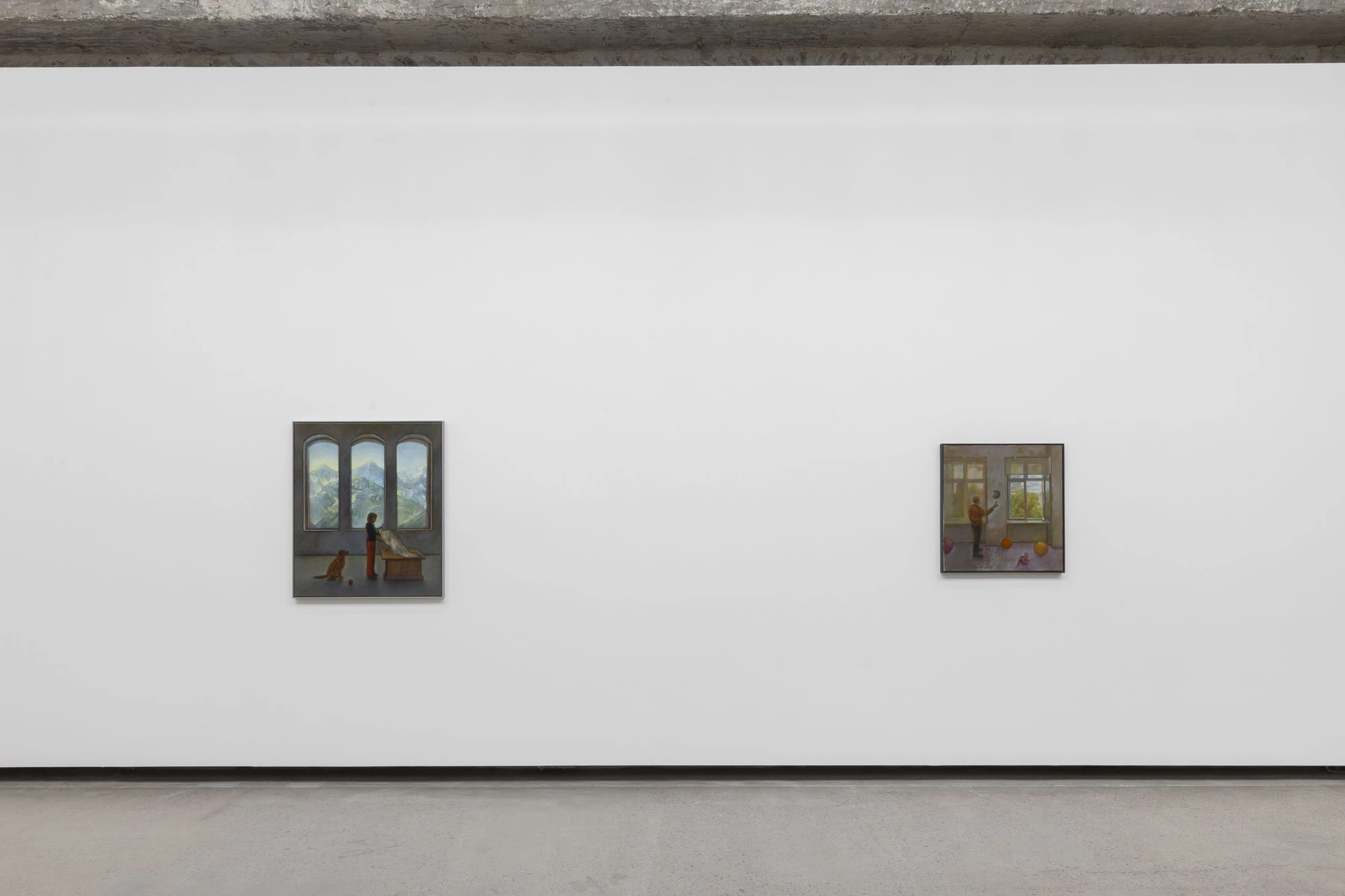
The canvases are stubbornly small. A taxidermy peacock at 97 by 82 centimetres counts as one of the largest; most sit closer to a sheet of A3, framed in dark wood and pinned with wide expanses of wall between them. Reflexion's room amplifies the gesture, its brick-vaulted ceiling and exposed concrete pier left unwashed against the smooth white plasterwork. The eye has to travel to reach each picture, and the travel is part of the work.
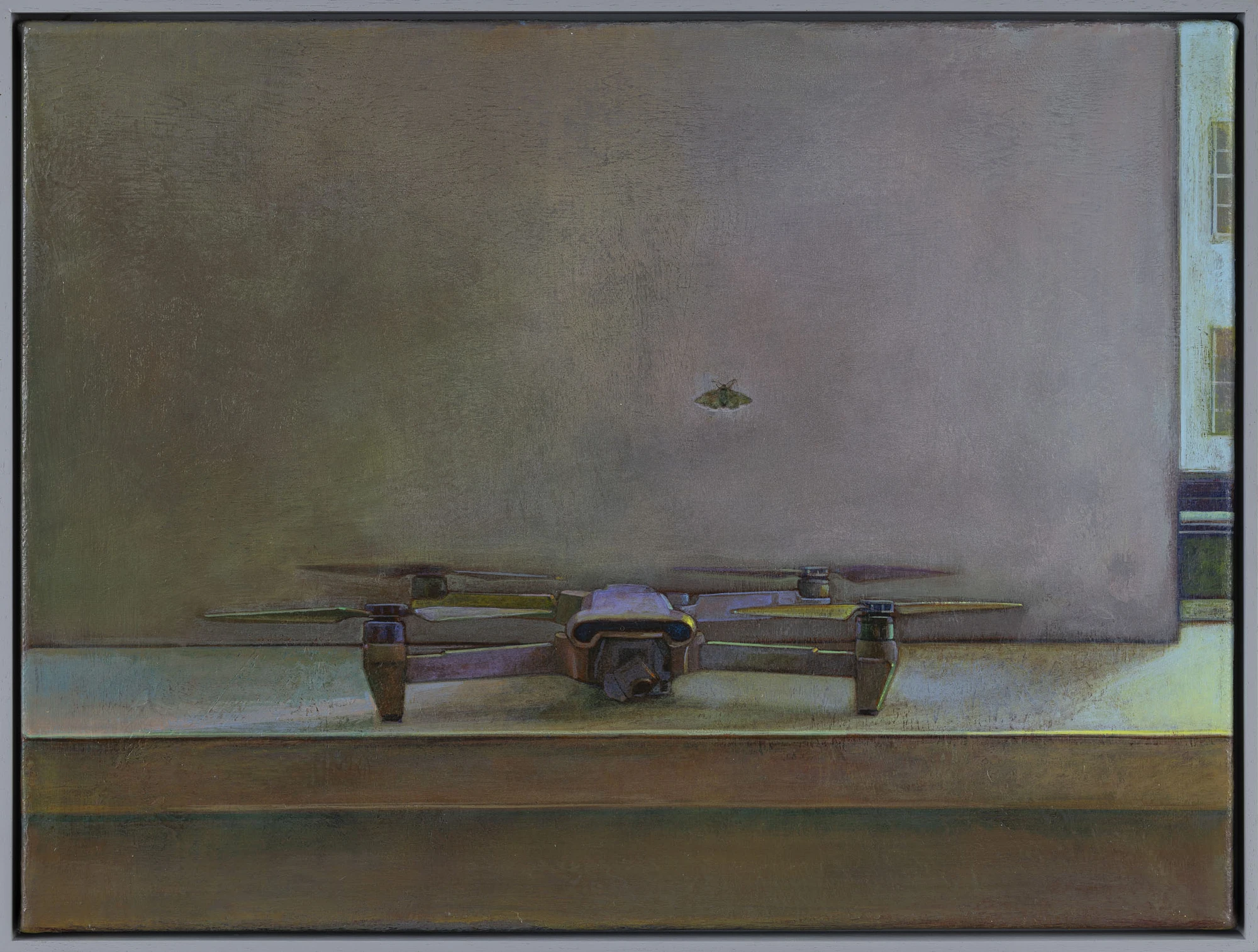
Up close the paintings hold a wet, granular dimness. A drone idles on a parapet under a single moth in painting after painting, the propellers caught in olive and pewter half-light. A pear glows against bitumen brown, its skin pocked and bruised in a way that quotes seventeenth-century Spanish still life without naming it. A figure on a hotel balcony stands behind sheer curtains, the railing dissolving into a flat horizon of suburb. Cheng works in thin acrylic glazes, occasionally oil, layered until the surface acquires the dull radiance of an old screen left on overnight.
Born in Suzhou in 1977 and trained at the Berlin University of Arts, Cheng paints from Berlin and his subjects carry that double residency: a Brandenburg apartment seen through bare branches, an Alpine triptych staged inside a domestic interior with a child and a stuffed bird, a moon rendered as a single white onion against dark ground. The mythological scenes the press text promises arrive without fanfare. Familiar elements get reorganised rather than re-narrated.
The exhibition takes its name from the David Bowie song, and the text accompanying the show pulls the question apart. Fin-de-siècle anxiety, the Y2K bug, Kubrick's view of Earth from orbit in 2001, Ray Kurzweil on the TED stage promising interstellar civilisation, the cloud rebranded as Google, Amazon, Azure. Bowie's question is left rhetorical. The paintings are the reply, slower than the question, and unwilling to answer in its idiom.
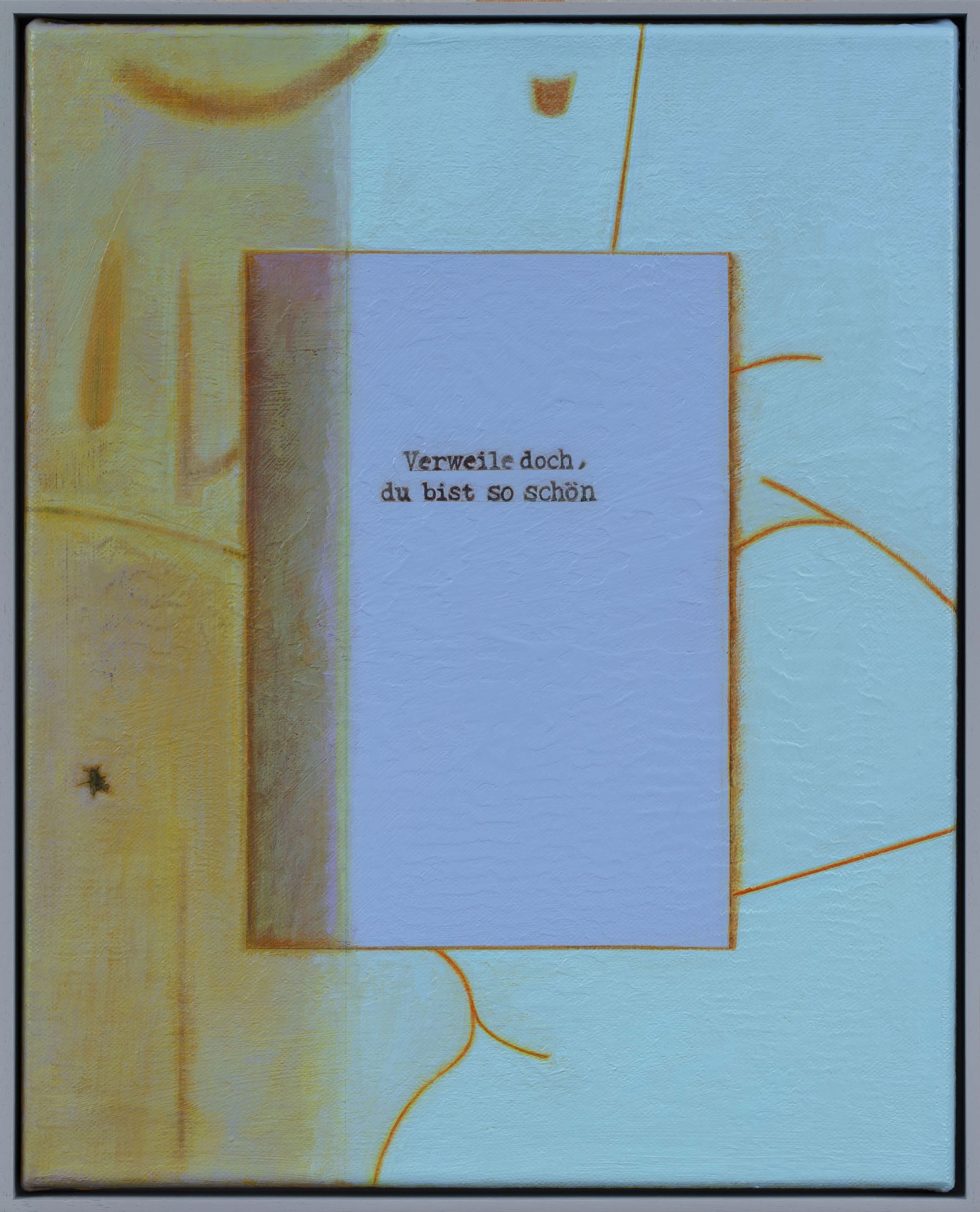
That refusal is the show's argument. Where the algorithmic feed compresses everything into surface, Cheng's pictures insist on the time of looking — minutes per canvas, layer by layer of pigment laid down across years (several works are dated 2024 to 2026). The wall labels itemise the labour: Acrylic on canvas, 50 x 40 cm x 2 pieces. Oil on canvas, 32 x 24 cm. Small numbers, against which the room is enormous. Life on Mars runs at Reflexion through 27 June.