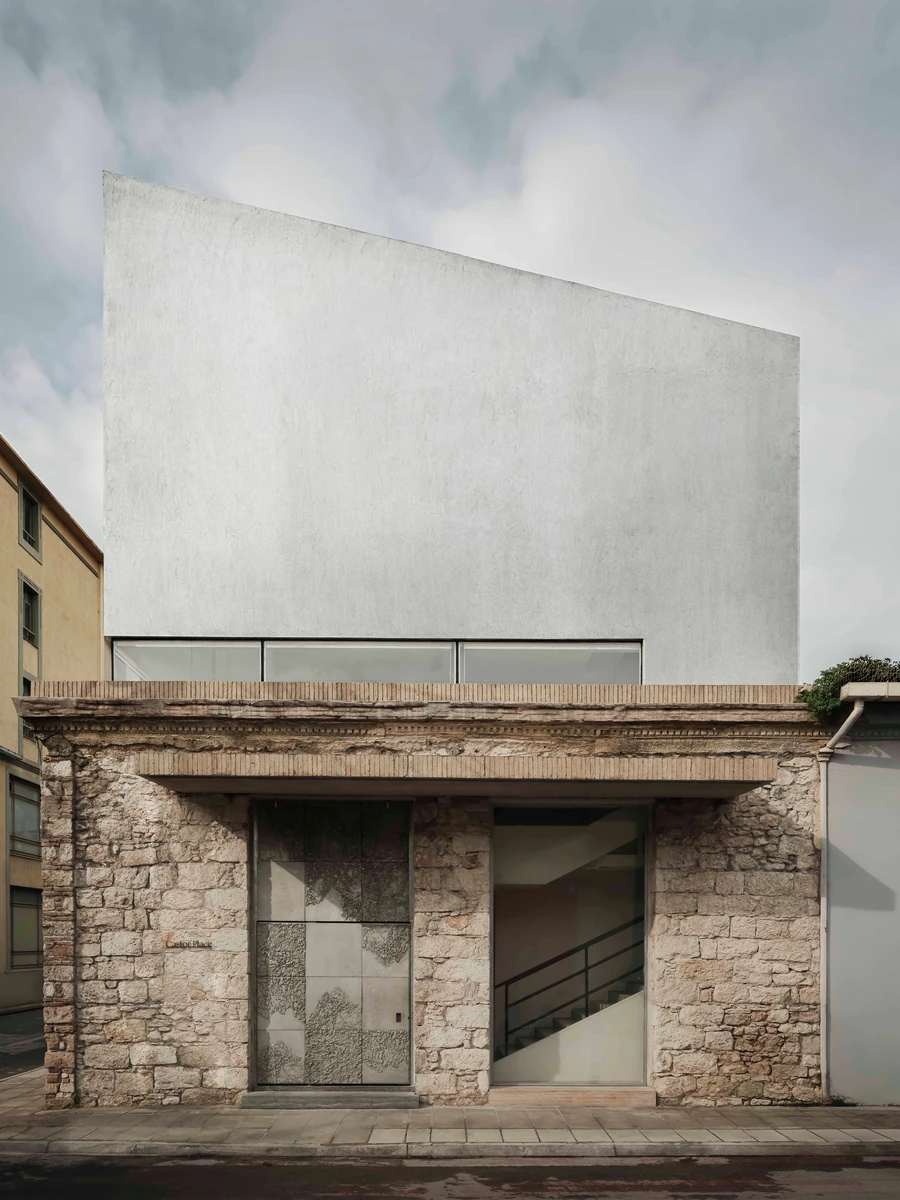
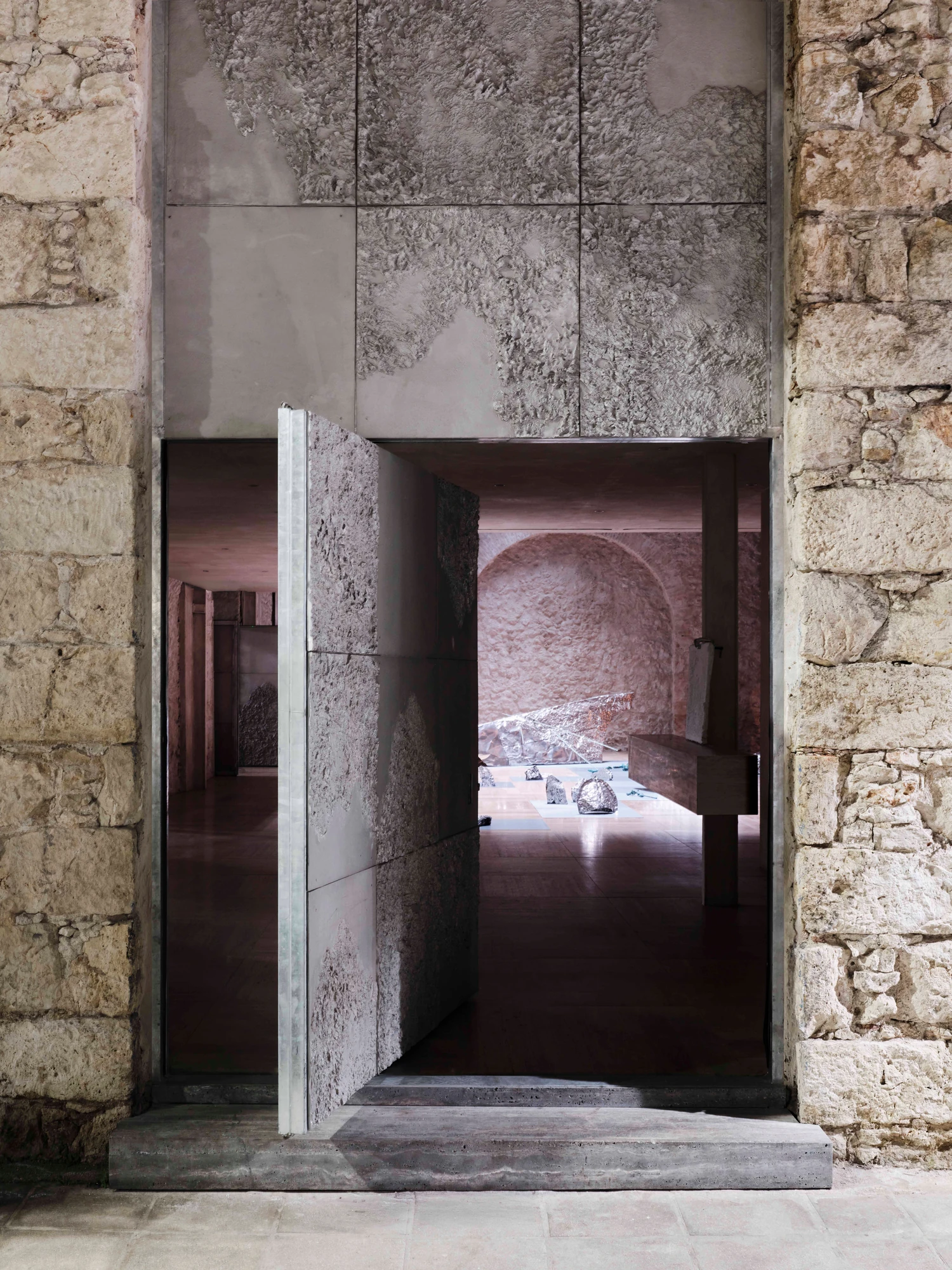
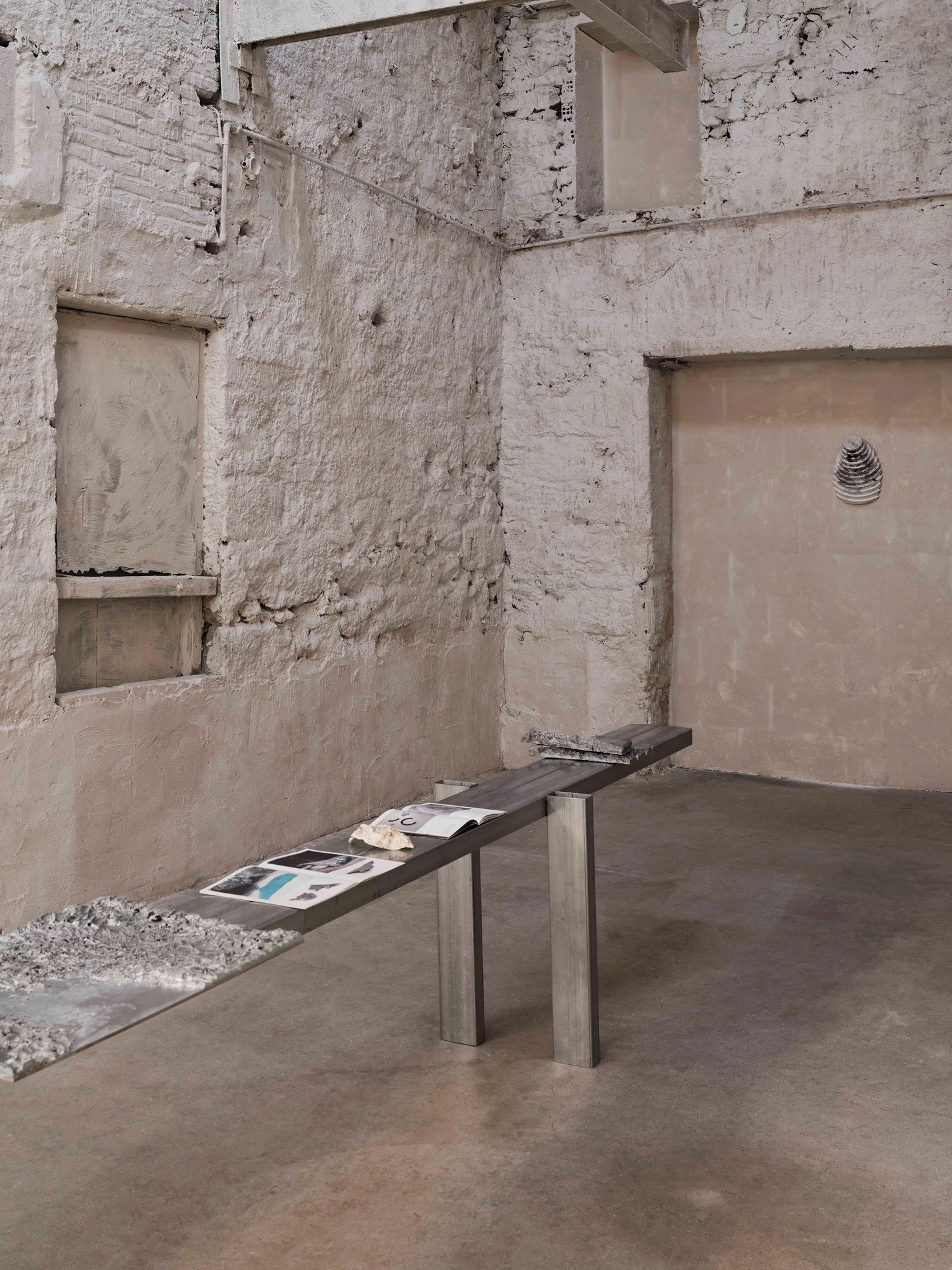
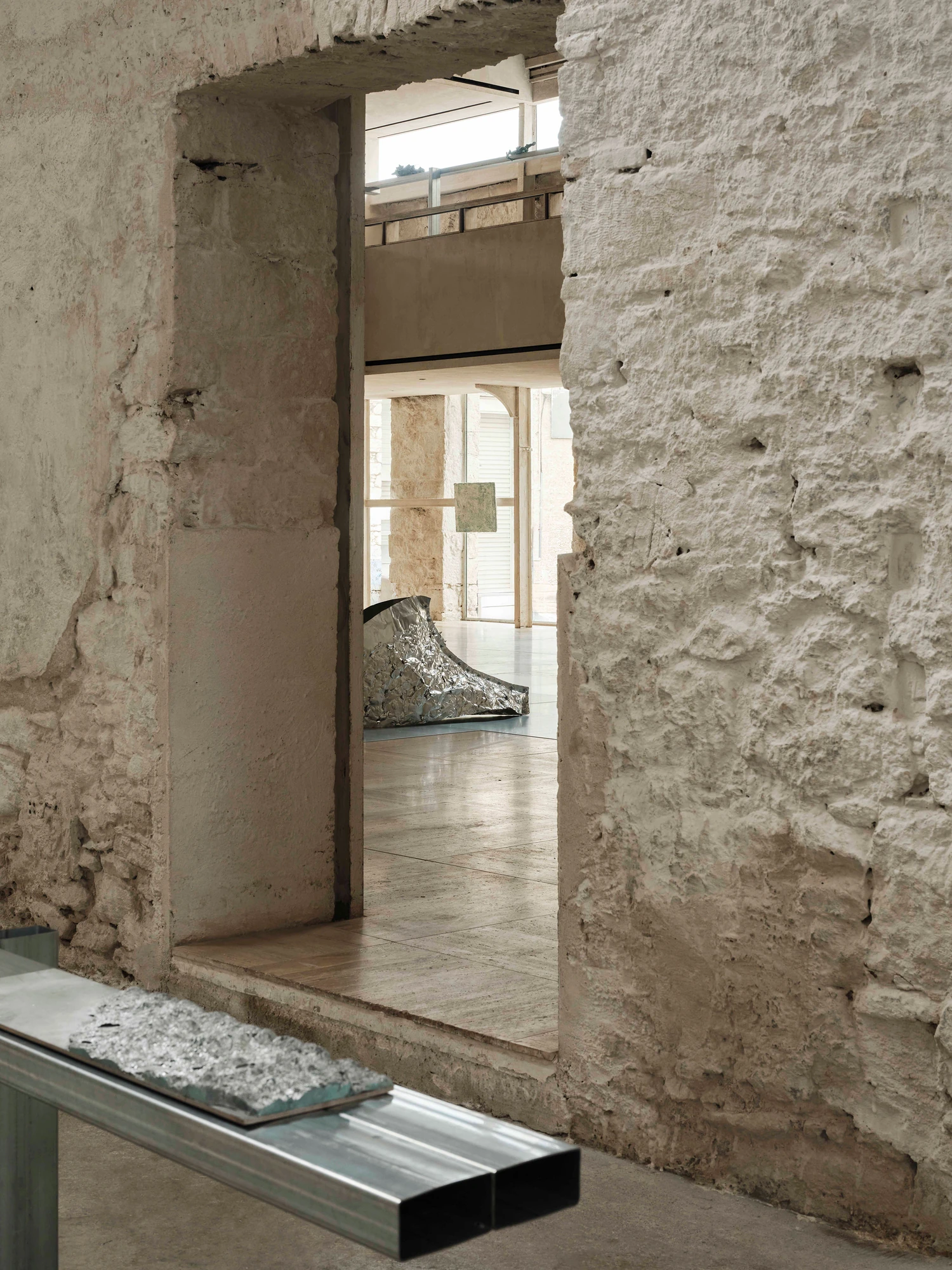
An 1850s stone shell carries a floating metal volume at Castor Place, where MPNYC has turned a former nightclub in Piraeus, the port of Athens, into a venue that keeps every repair in plain view.
Within a block of old port warehouses in Piraeus, a new cultural gravity is gathering, and MPNYC has turned one of these buildings into Castor Place, a venue loose enough to carry lectures, exhibitions, workshops, concerts, dance and theatre in turn. Its name comes from Kastoros Street, after Castor of the Dioscuri twins, and that pairing of brothers sets the logic for what follows: rather than wipe out one era to favour another, the studio holds old and new in deliberate tension.
When Andreas Kostopoulos took on the building, an 1850s masonry shell sat trapped under a two-storey metal box bolted on for a 1990s nightclub. "It was a real Frankenstein building," Kostopoulos told Wallpaper*; he had founded MPNYC in 2019, his time as an associate director at Diller Scofidio + Renfro behind him. His answer was a method he calls surgical archaeology: paring back the haphazard additions, reopening doors and windows that had been plugged shut, and coaxing daylight into rooms once painted black and sealed off from the street. The brief to treat the venue as a loose, reprogrammable framework leans on Cedric Price's Fun Palace and on his own time with Liz Diller on The Shed.
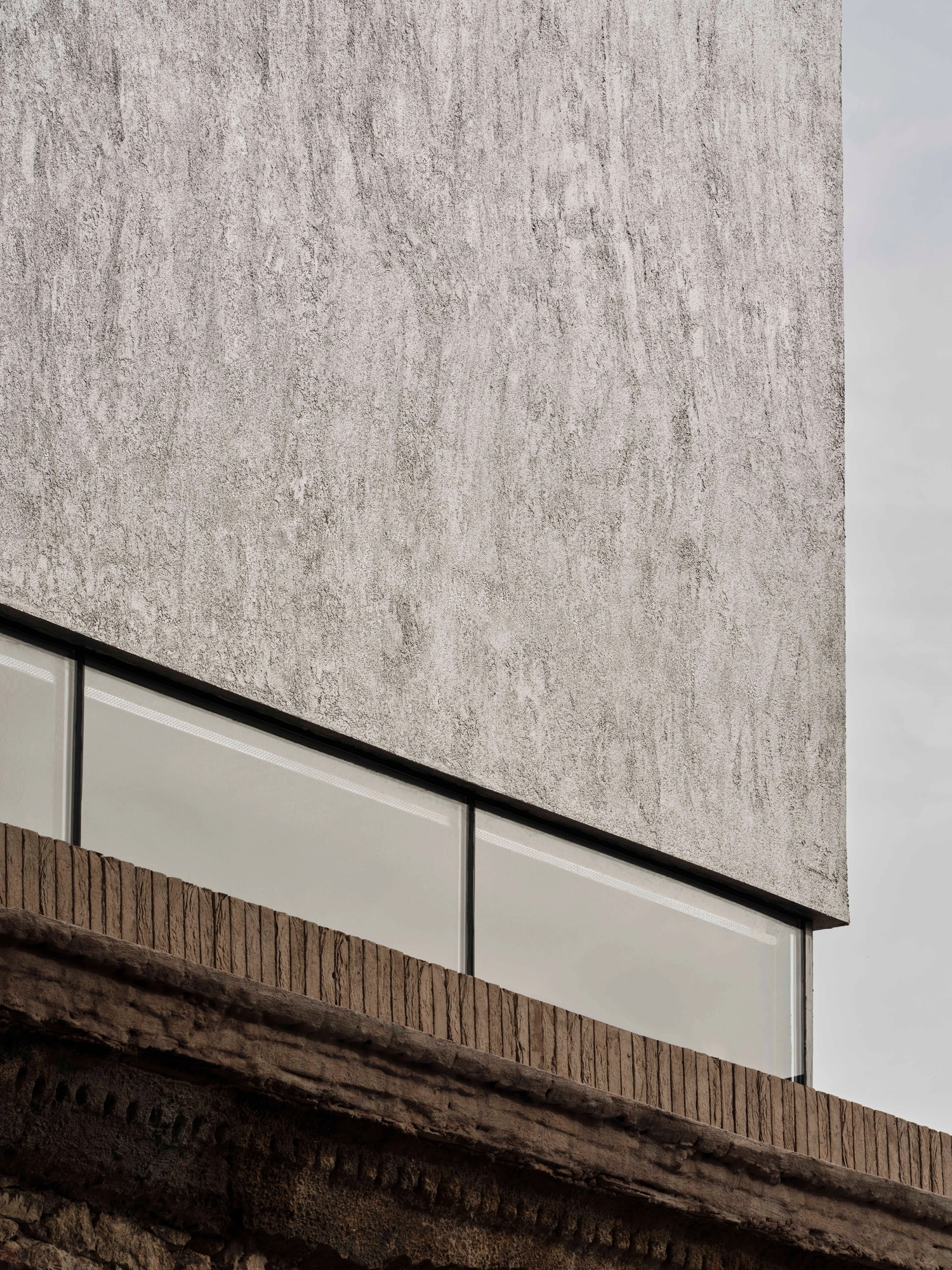
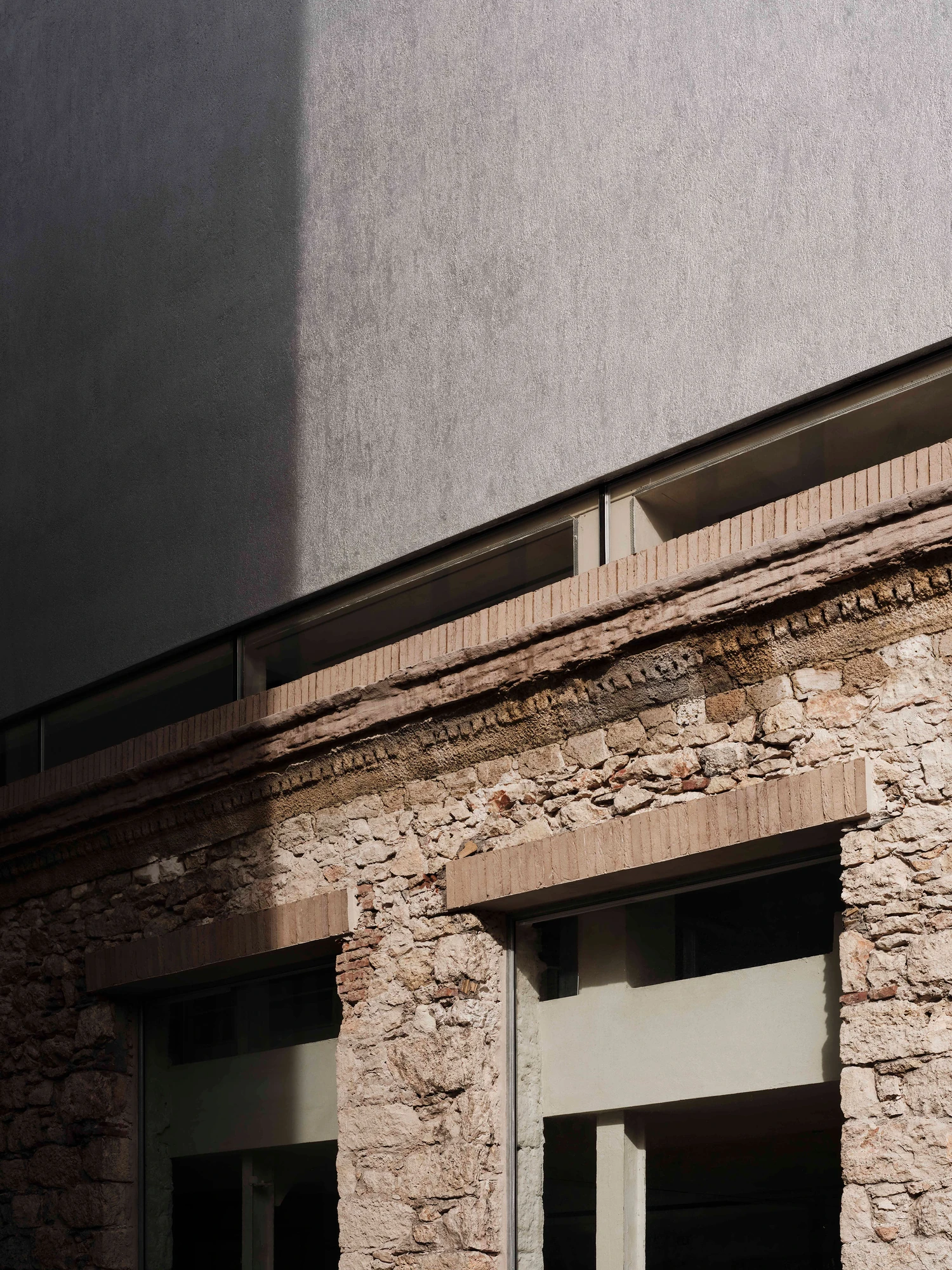
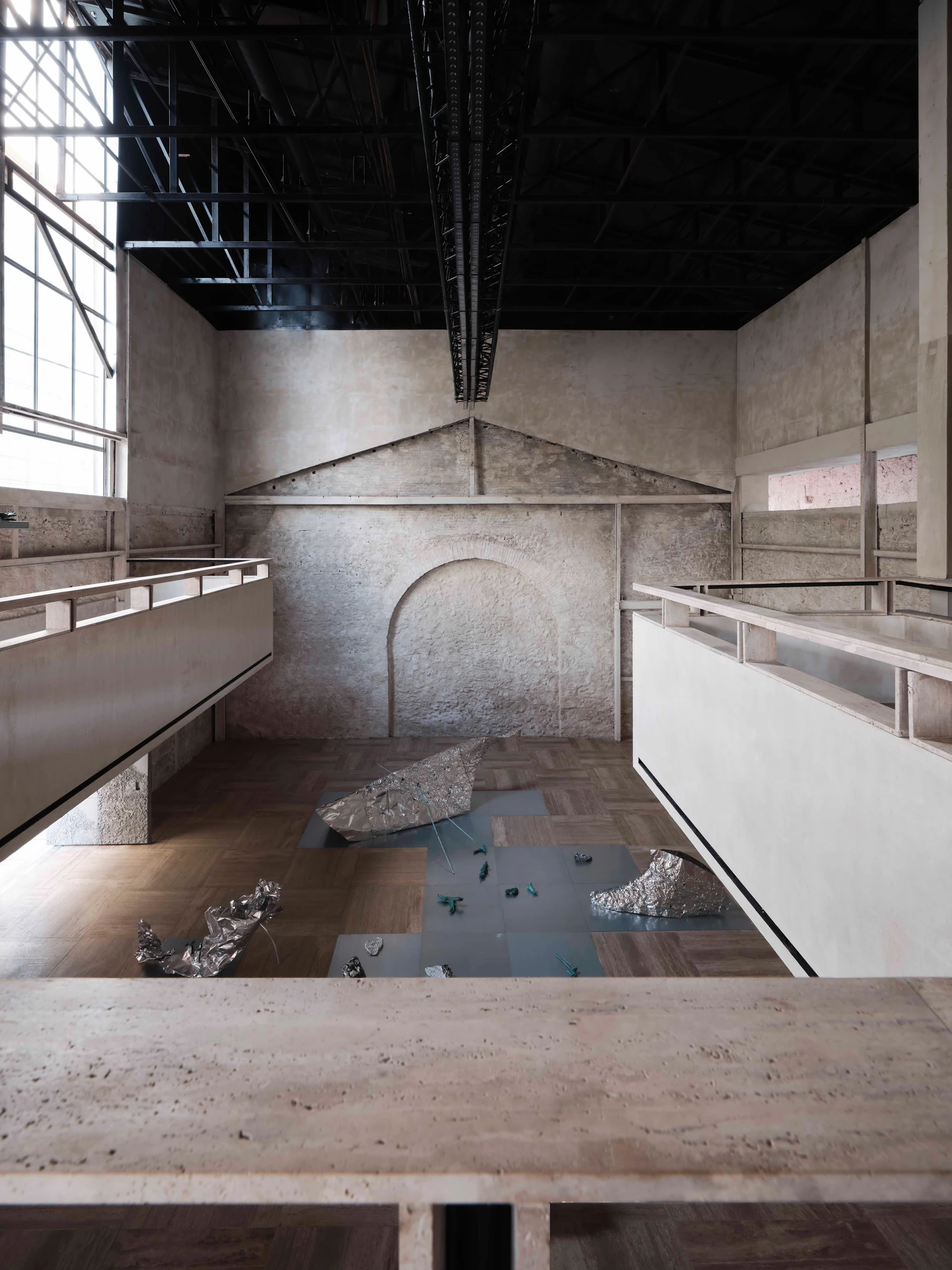
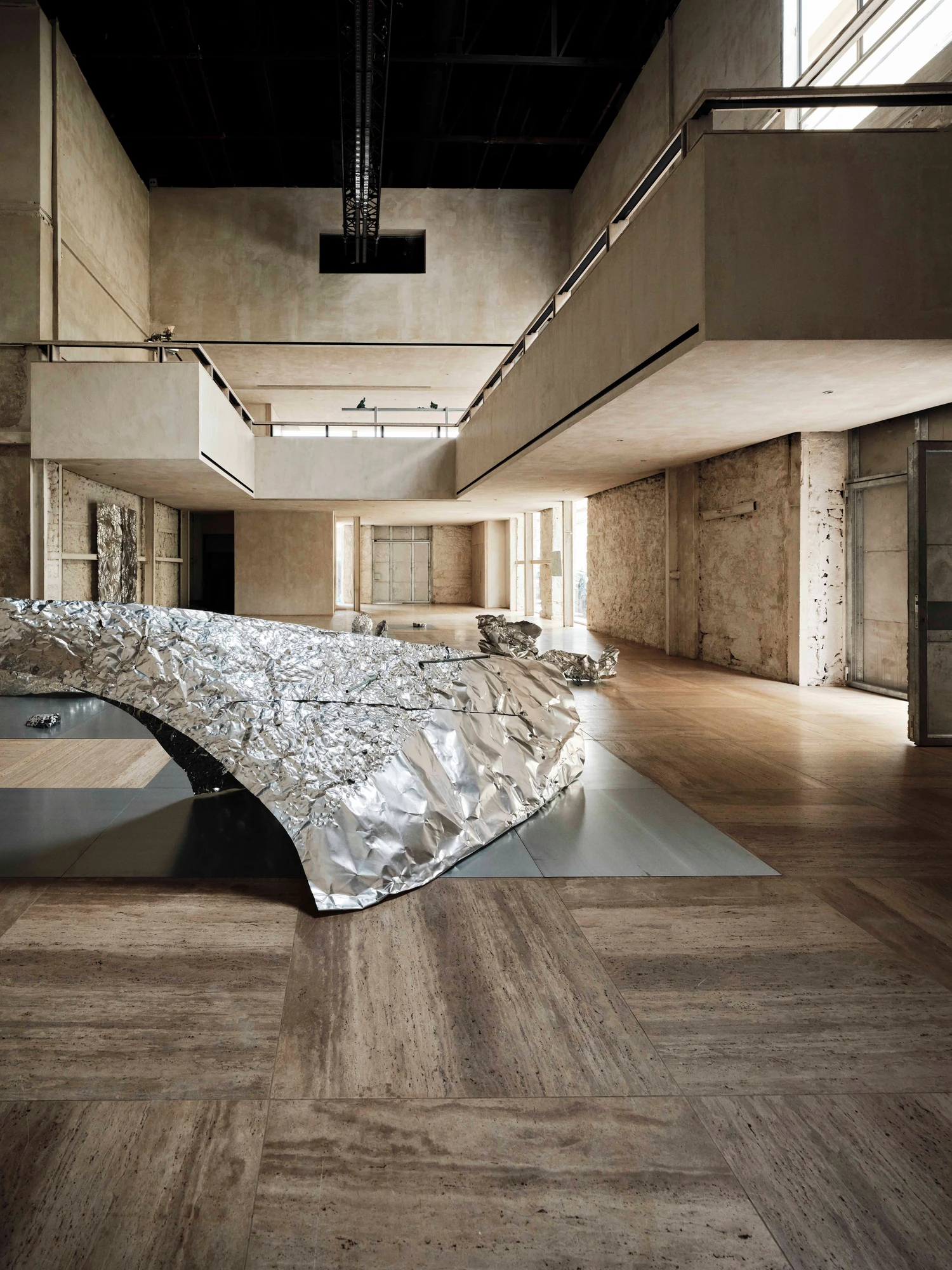
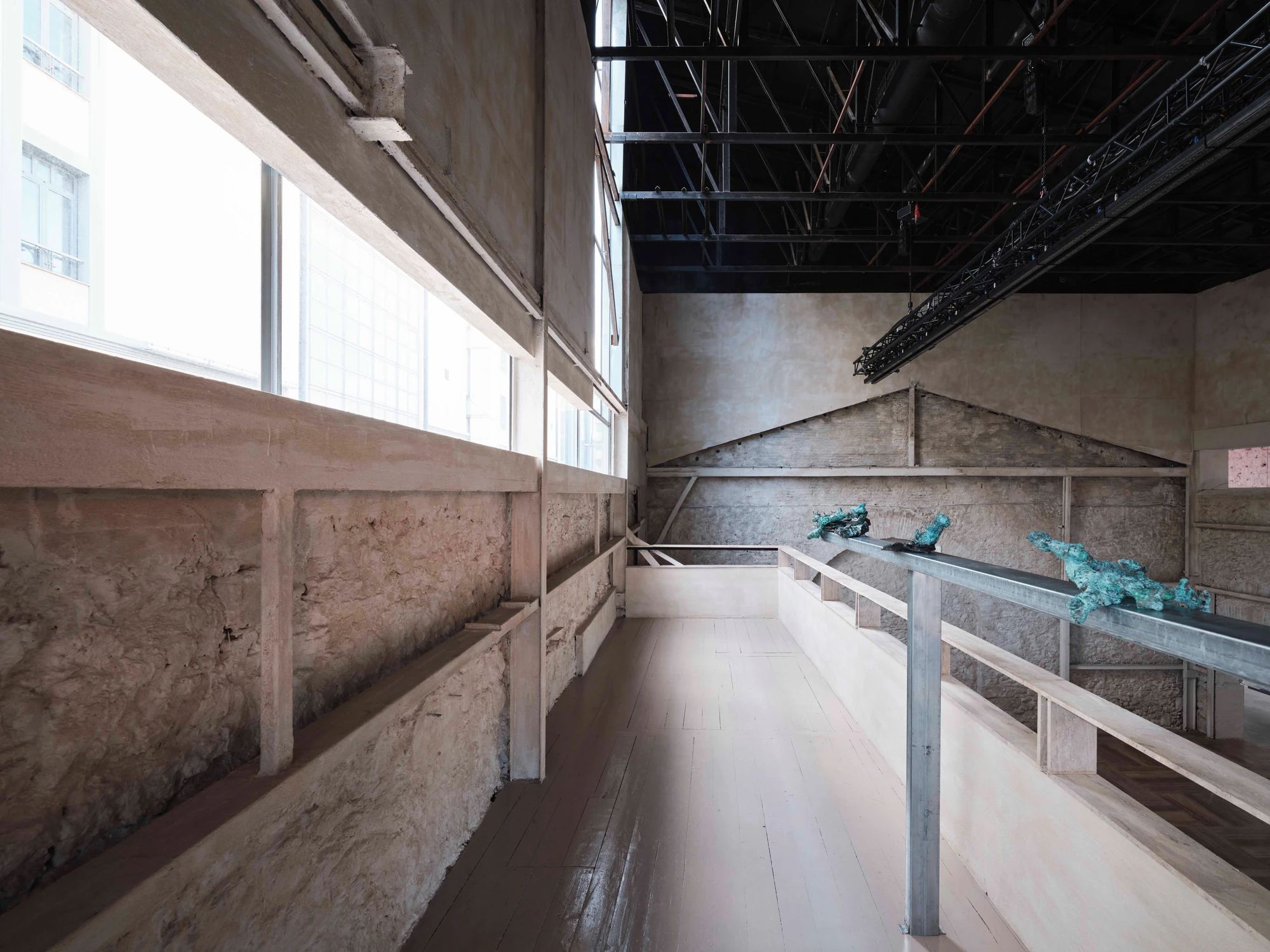
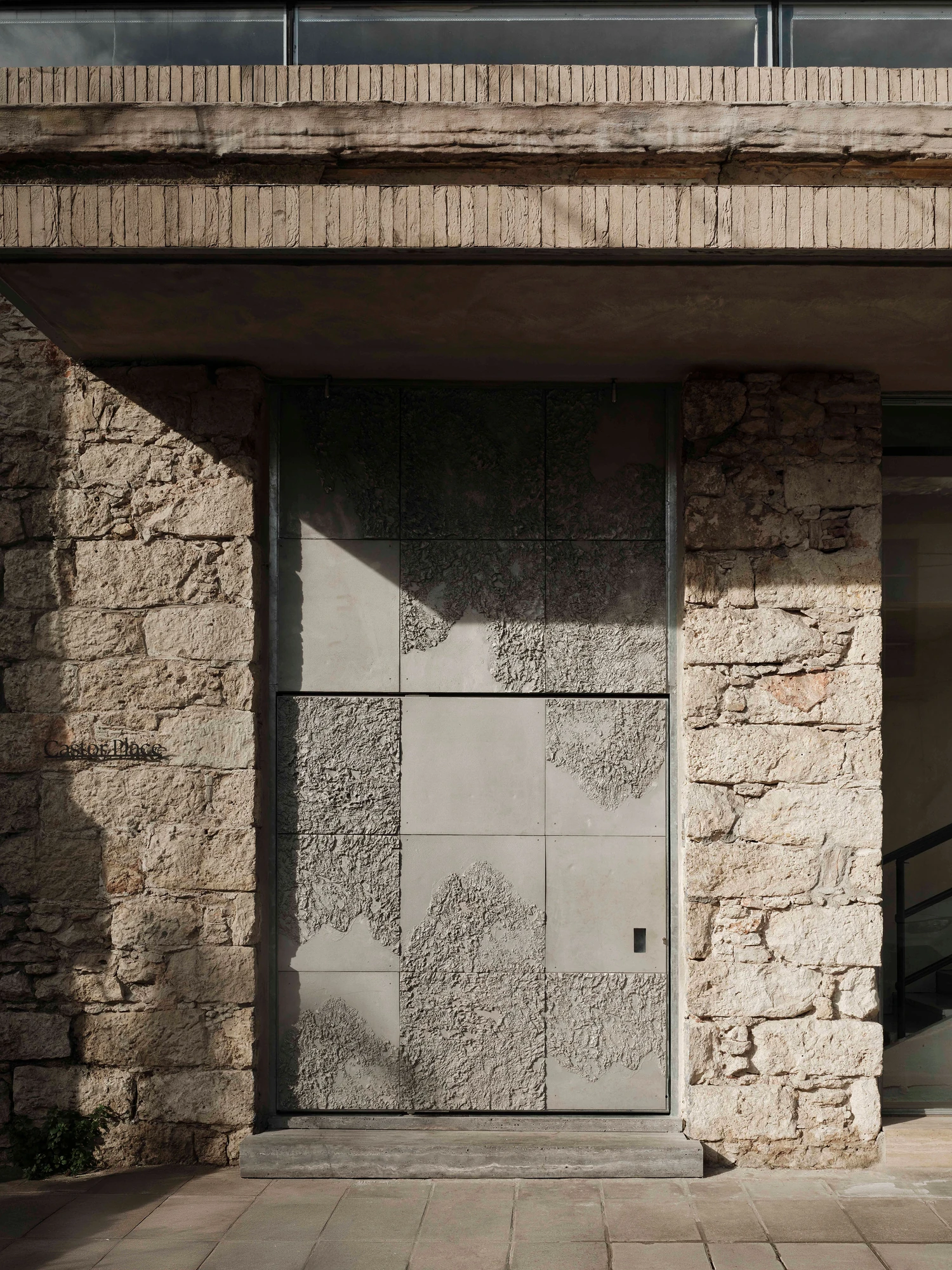
The pairing is clearest in section. The metal addition now reads as a single volume floating over the masonry, held apart by a slim clerestory that rises to a nine-metre vertical window. Its refurbished skin wears a liquid metal laced with aluminium microfibres, a coat that fends off the sun while catching the shifting sky above the port. At ground level the porous stone, freed of the protective plaster that had buried it, returns to view, and reclaimed brick rebuilds the canopy above, set without mortar so the line between old and new stays plain to read.
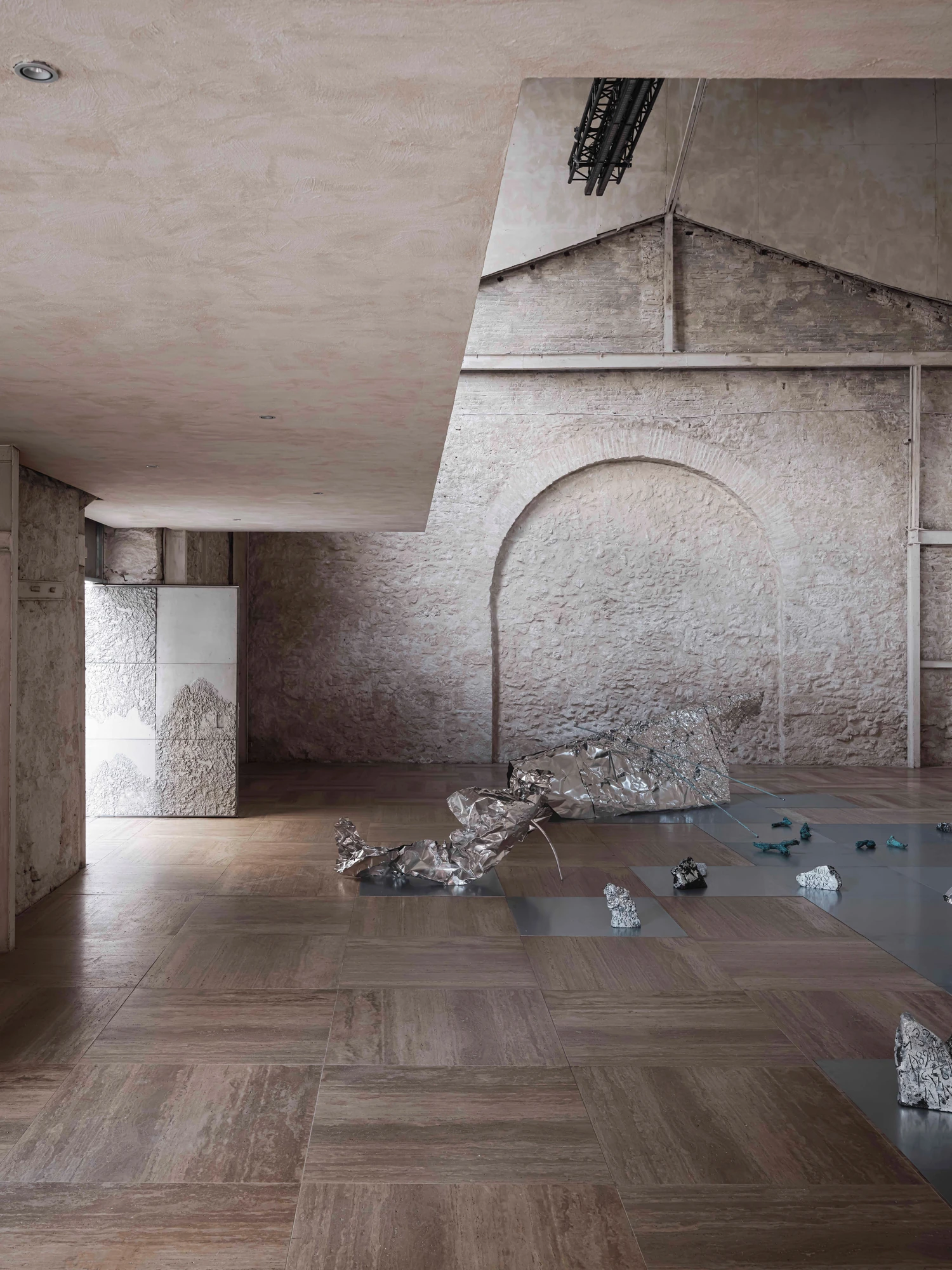
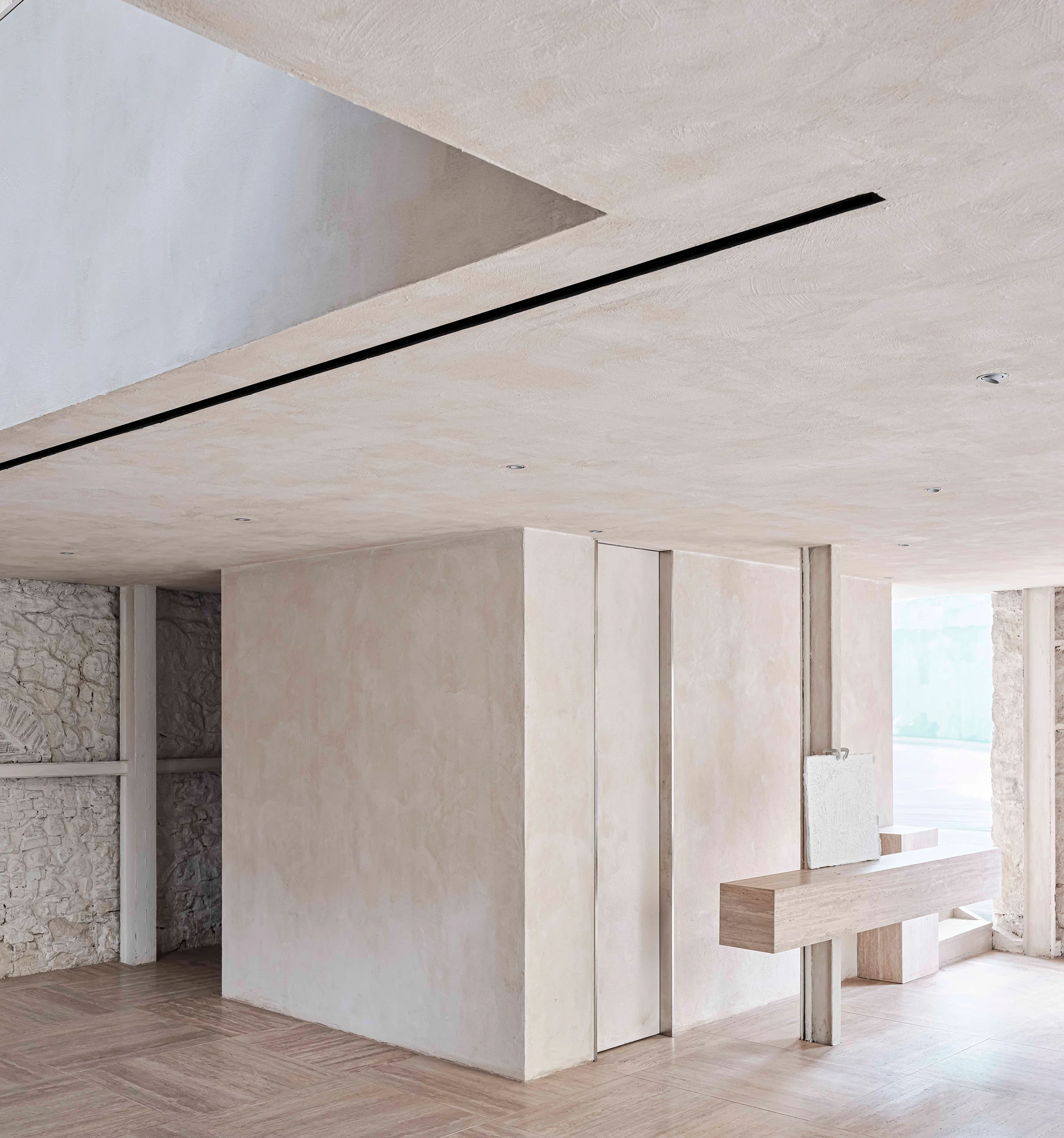
Inside, one move ties the room together. A thin coat of lime stucco is applied over the damaged walls, the structural bracing, the metal panels and the brick infill until they settle into a single tonal field, abstract and nearly model-like. "By doing that, you sort of calm the whole space down, and you start reading all the layers," Kostopoulos says. The old trusses stay put as reminders of the building's earlier lives, while balconies, modular staging and a suspended gantry crane rig reshape the room for each event it holds.
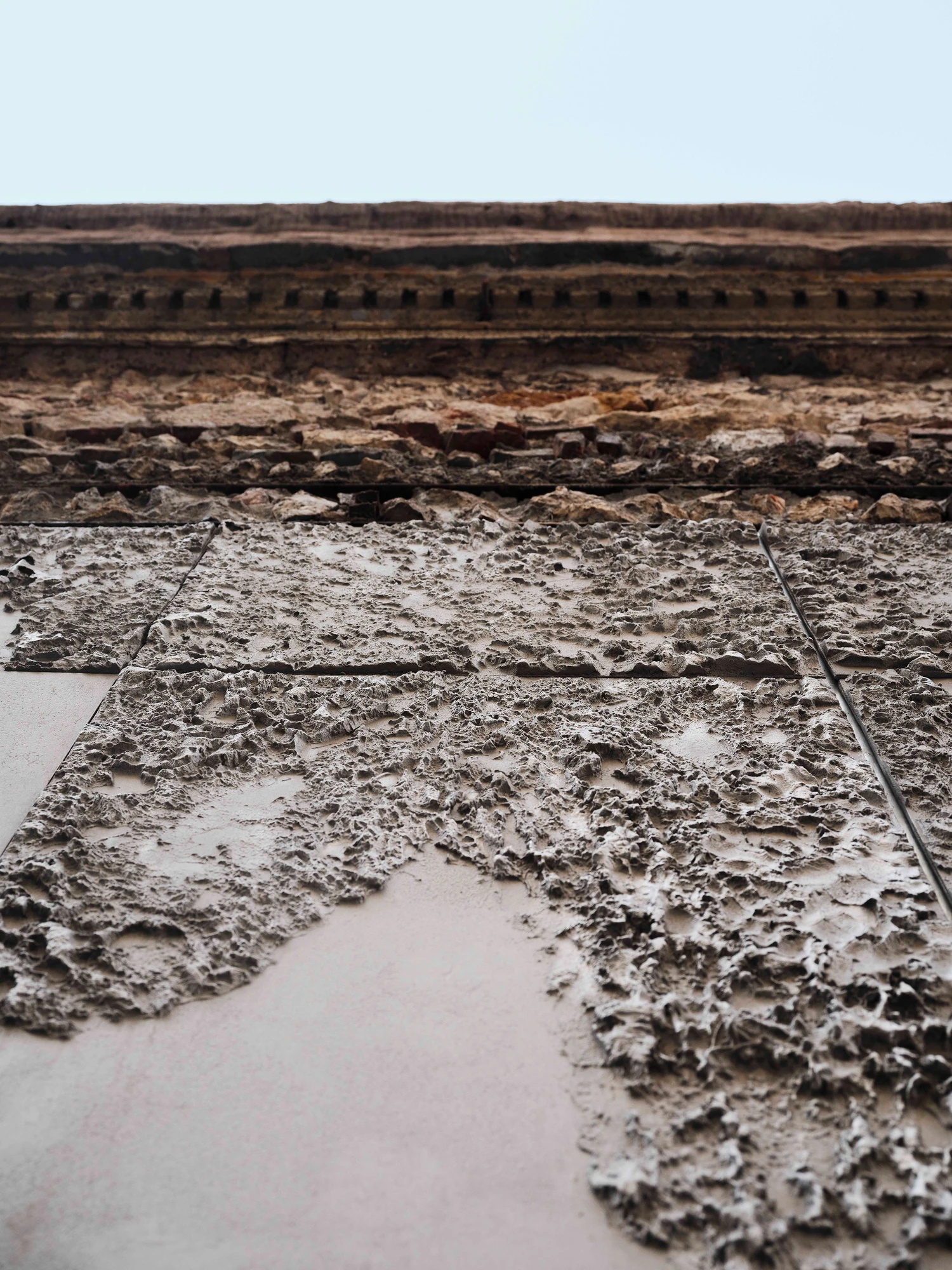
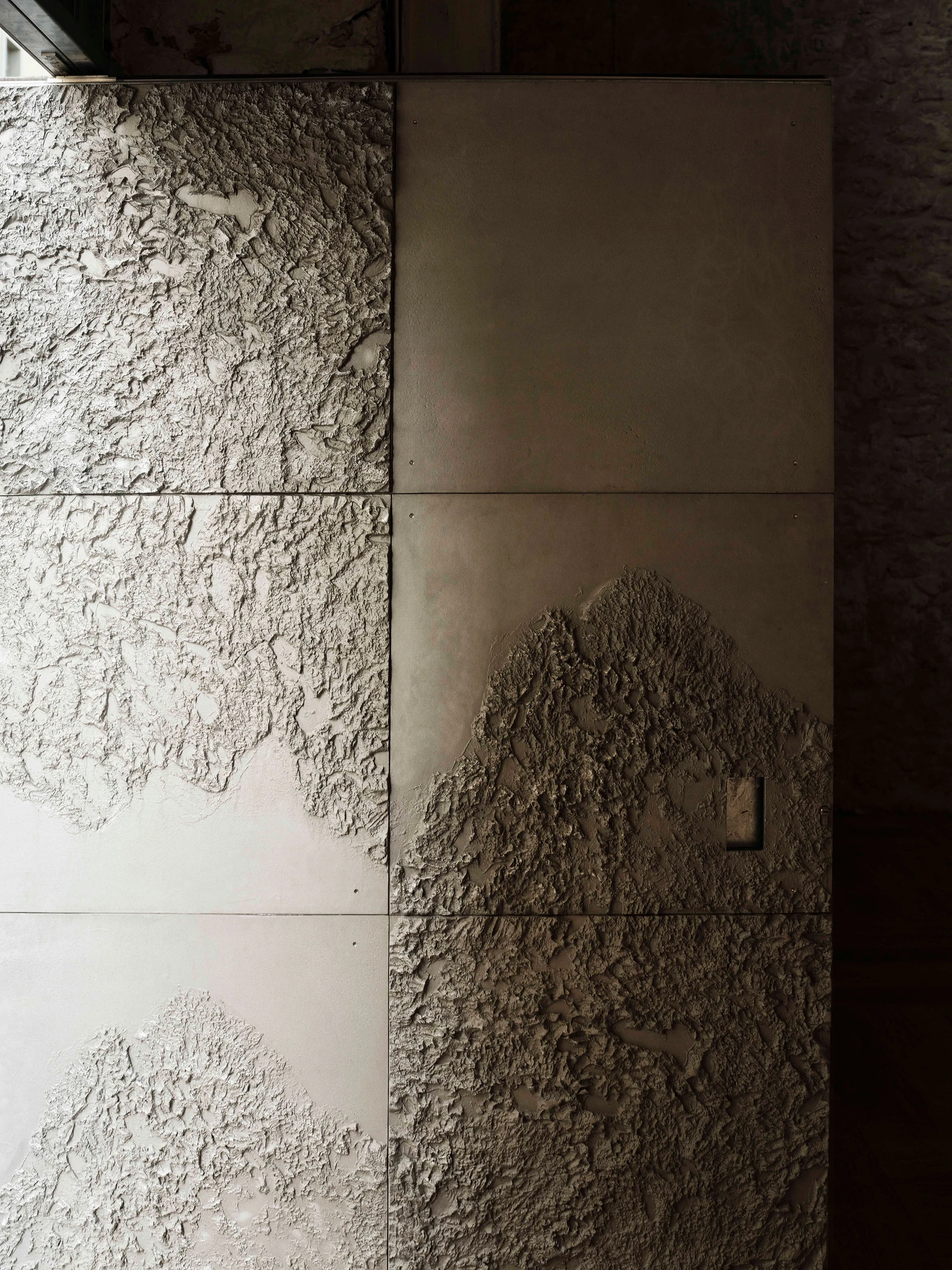
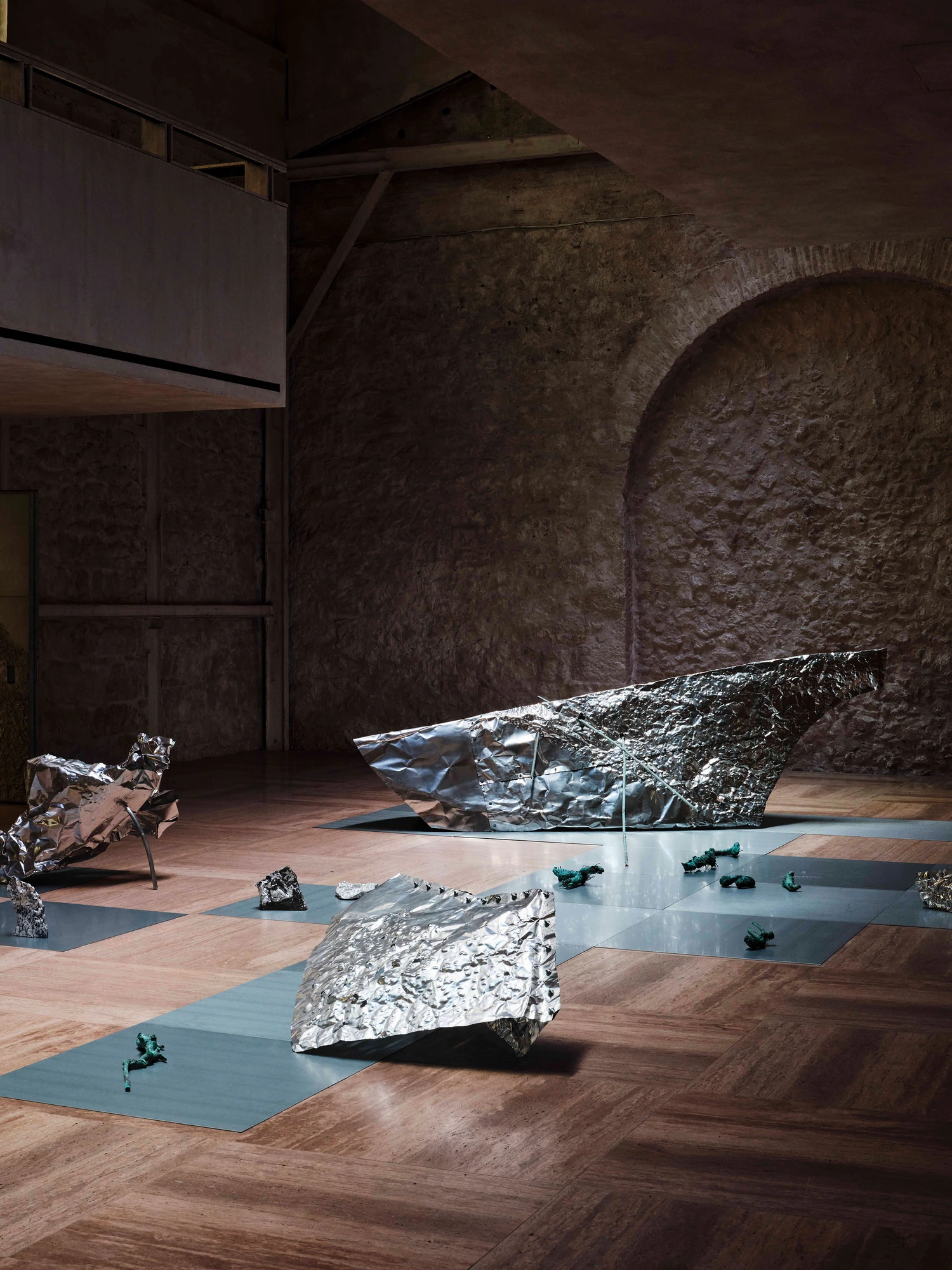
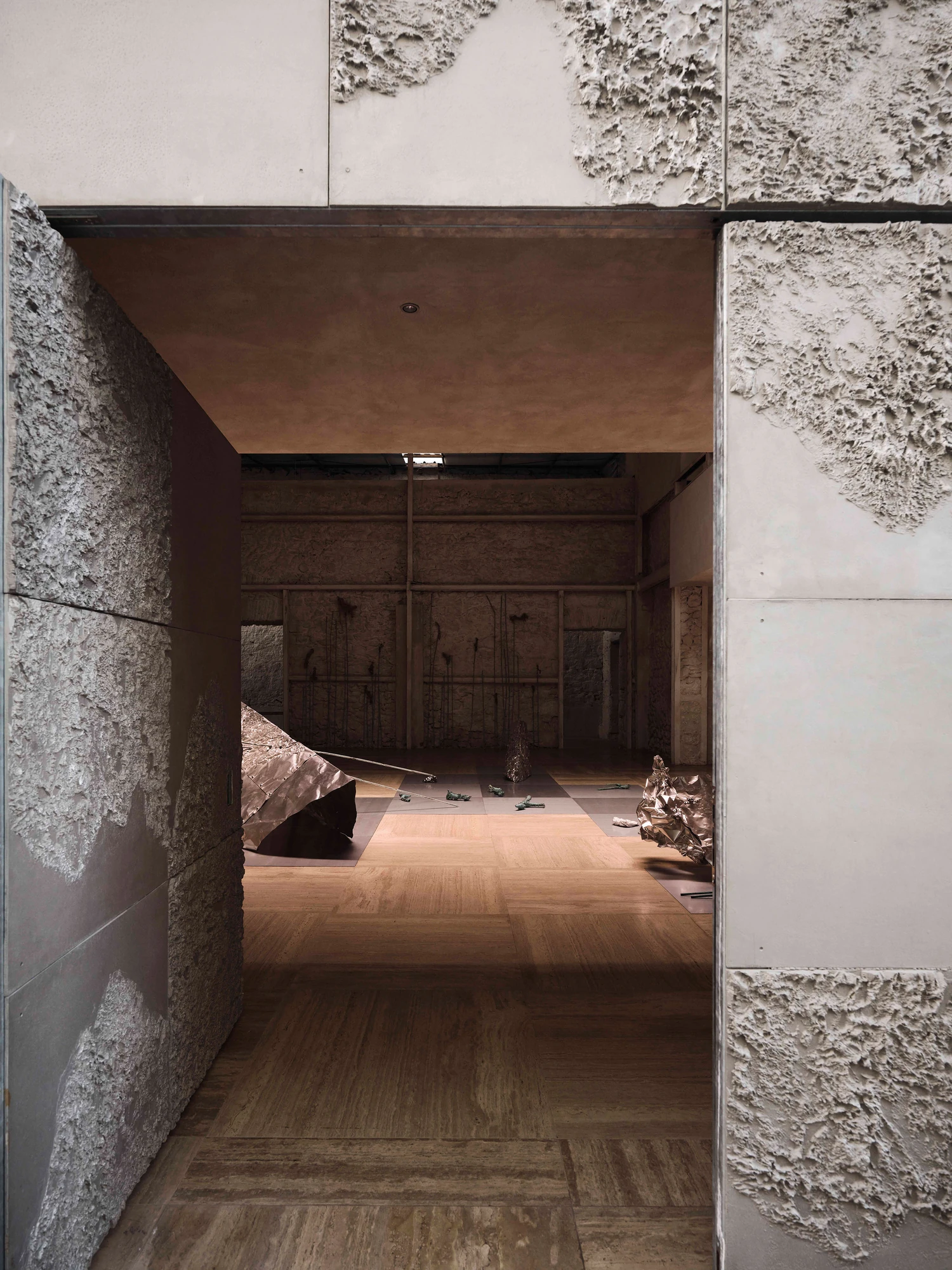
The opening exhibition, Bathymetry / Casting Water, made with artist Stefania Strouza and curator Giulio Margheri, read the building as much as it filled it, and it left one piece behind for good. A pair of cast-aluminium doors by Strouza, sand cast with MPNYC and the fabricators Qoop, bears reliefs lifted from bathymetry, the charting of the sea floor, their grid keyed to the building's own parts and their soft metal pressed against the hard stone. "For me, they're the real jewel of the building," Kostopoulos says. What stays is less a finished object than a frame others will keep filling.