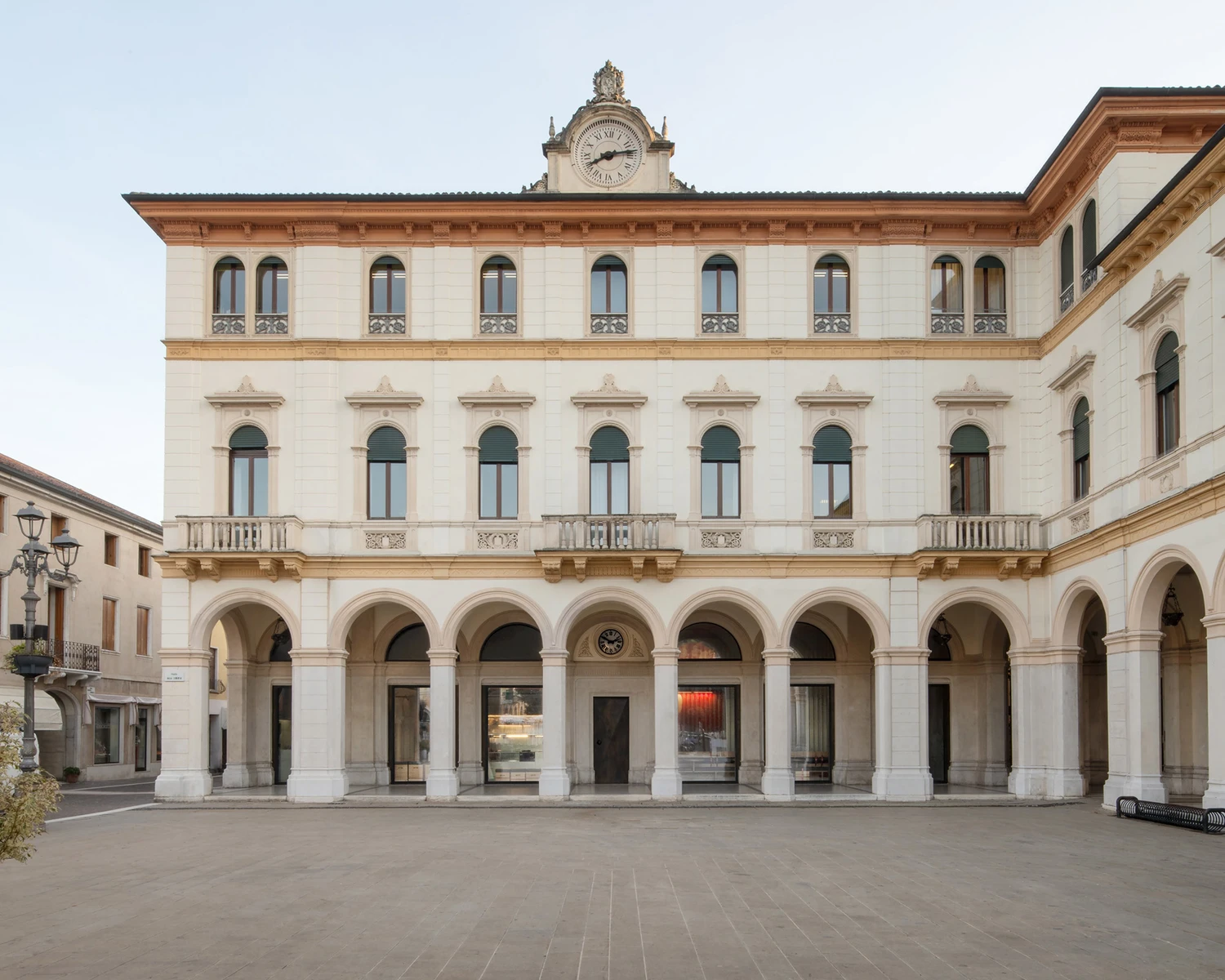
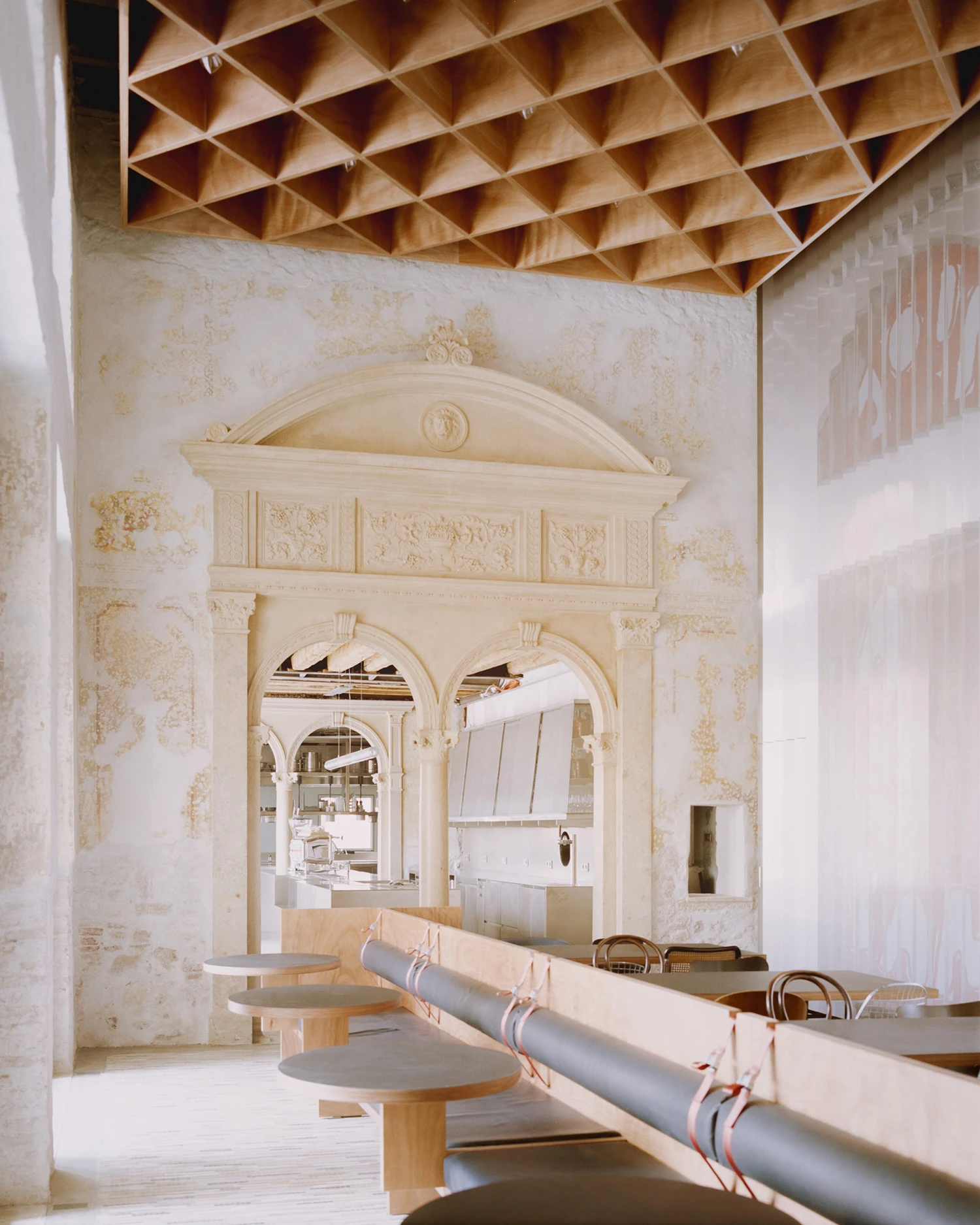
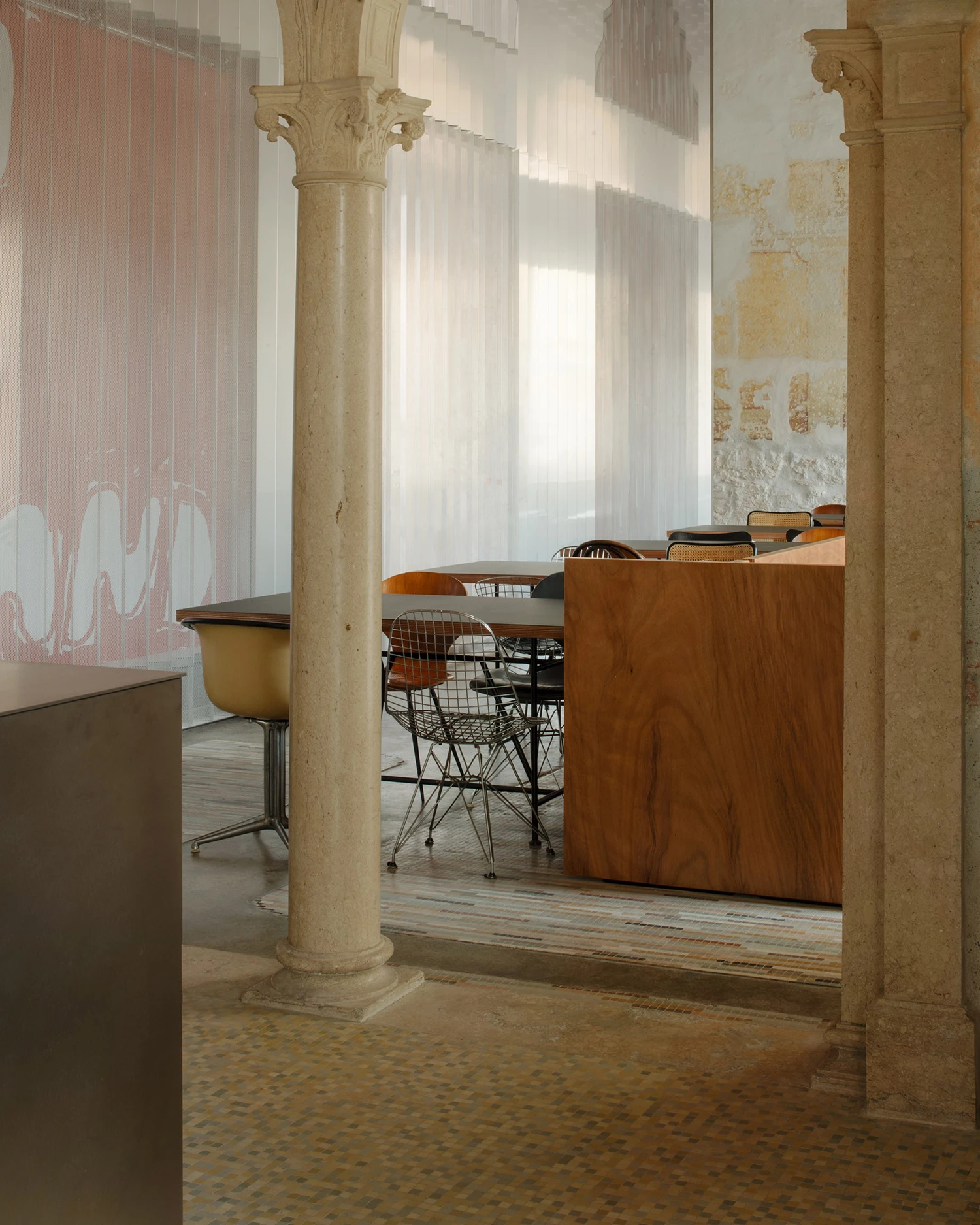
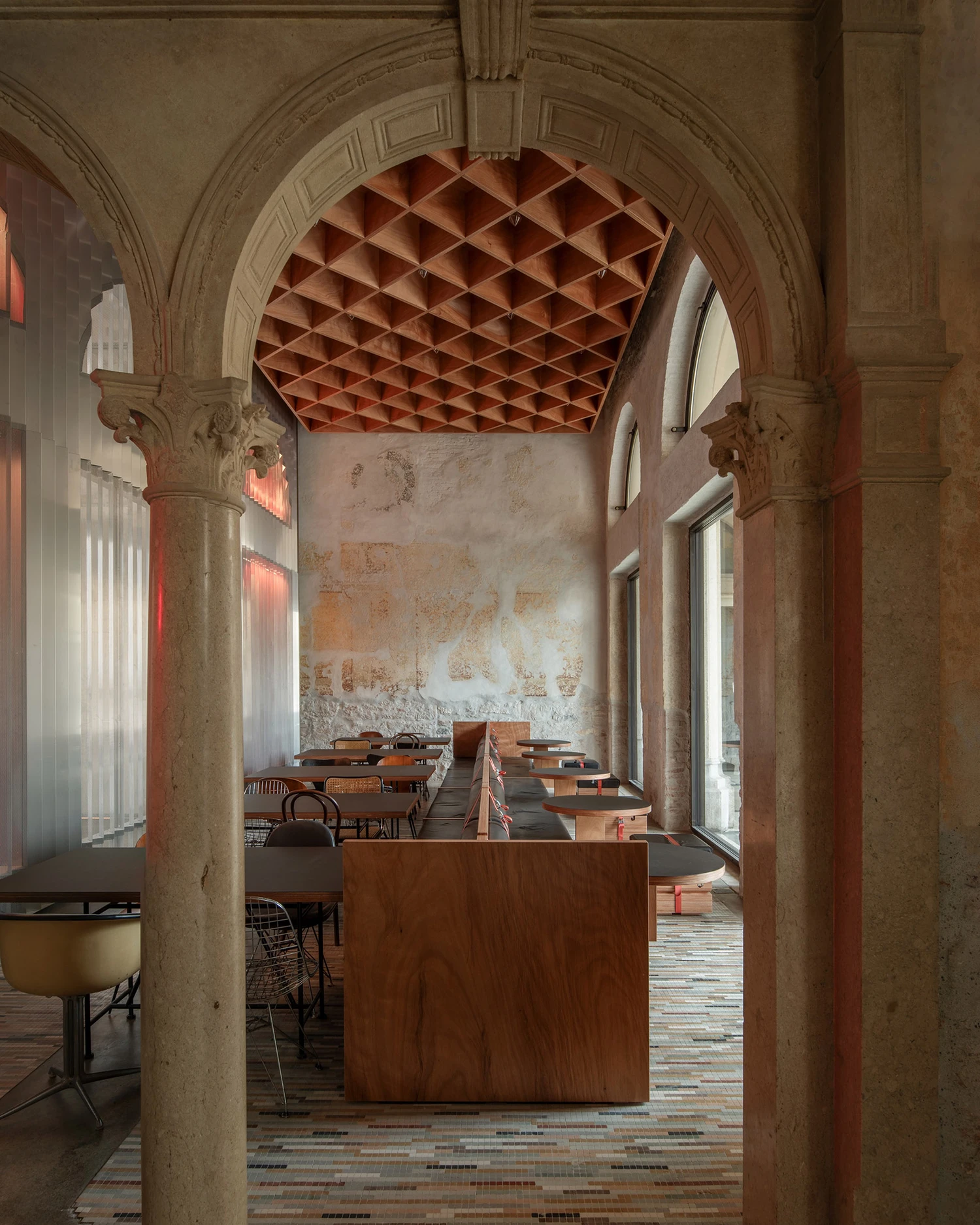
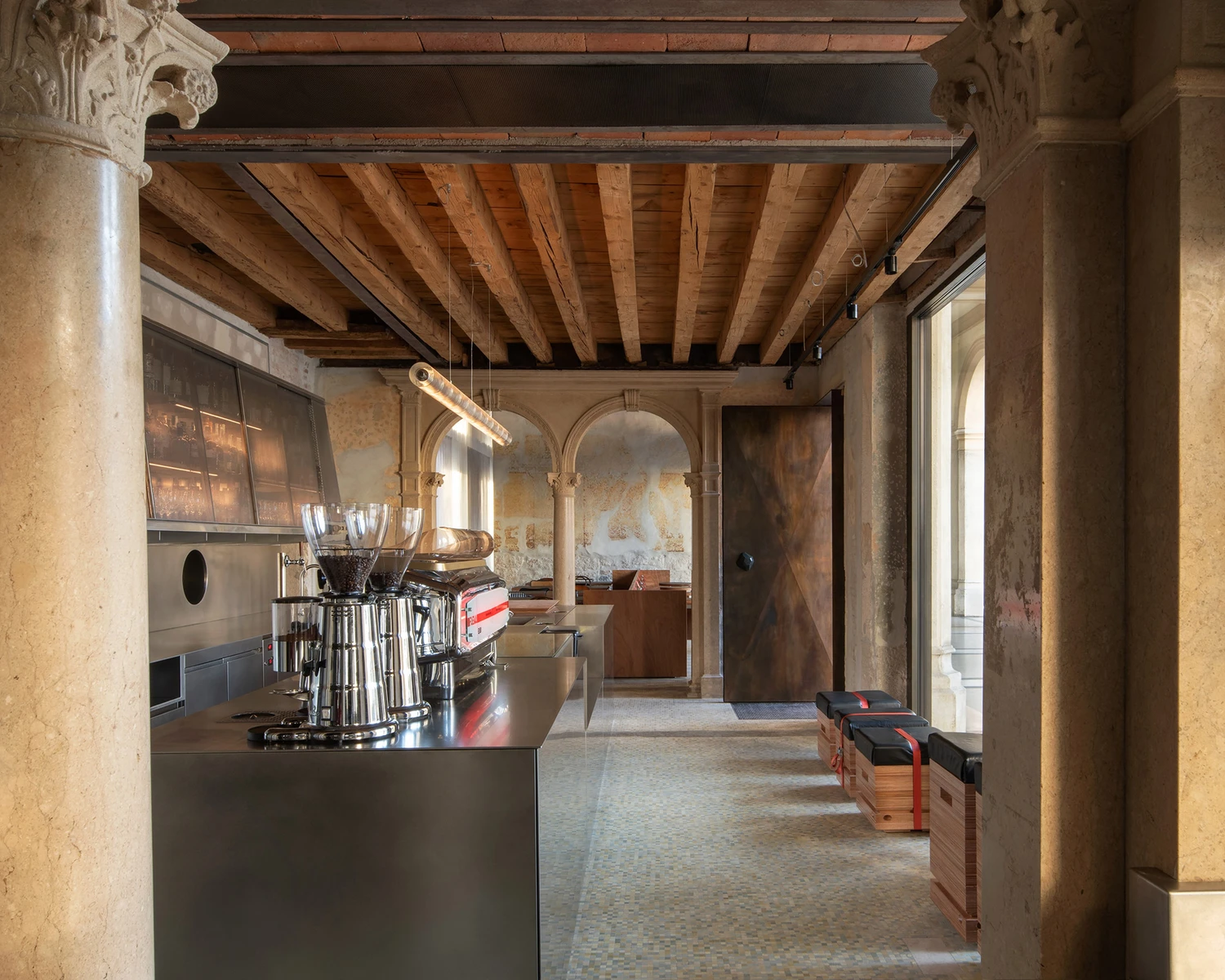
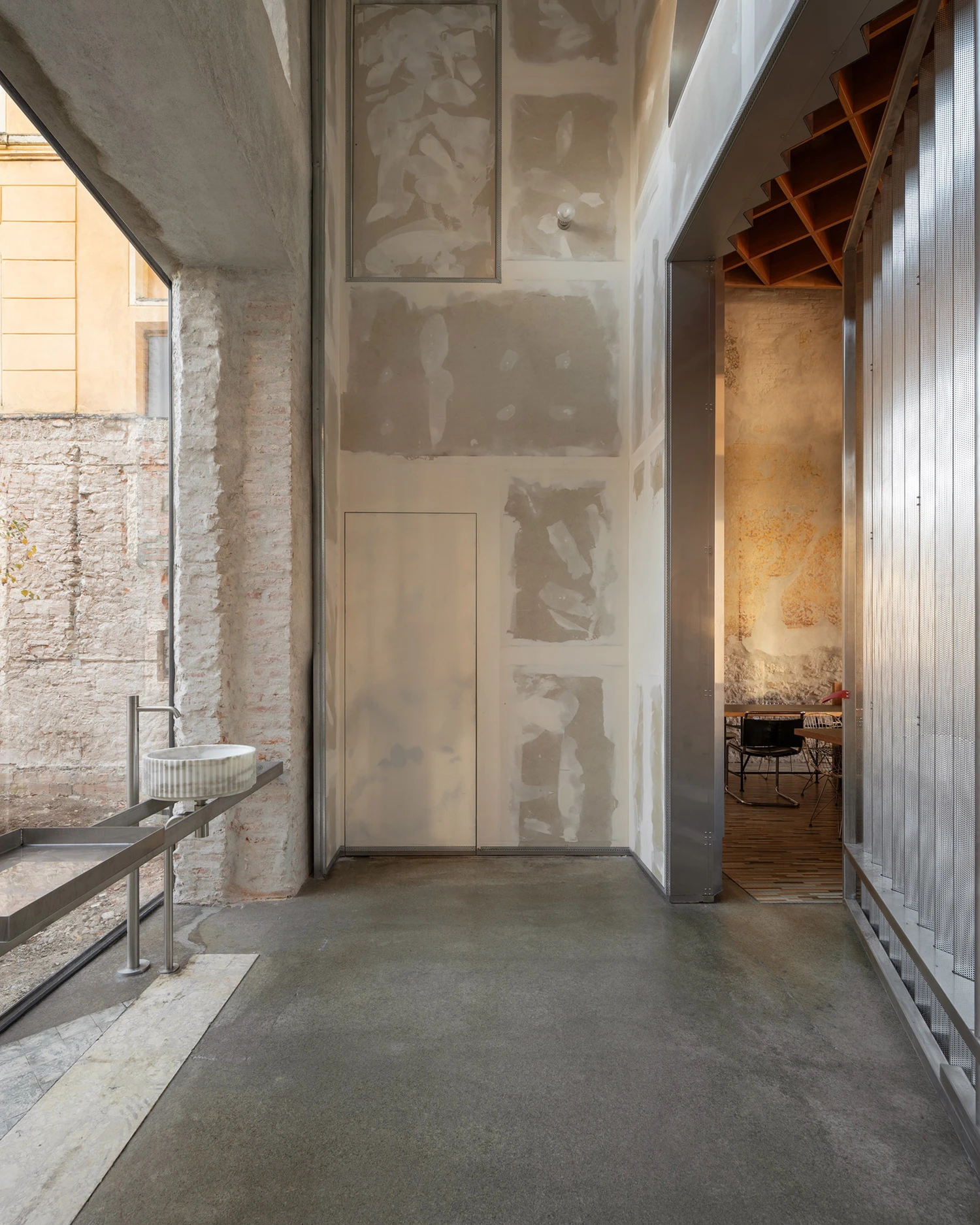
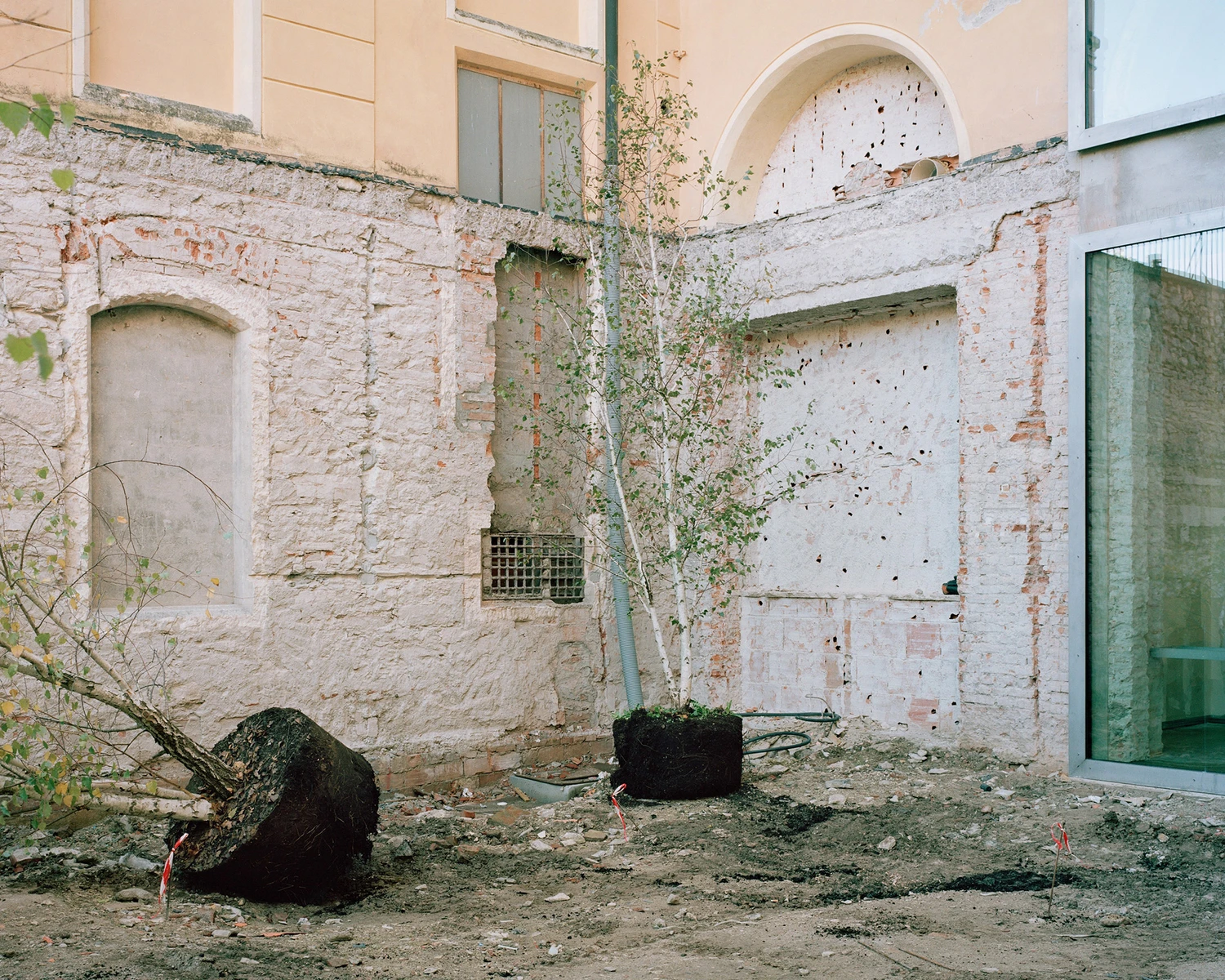
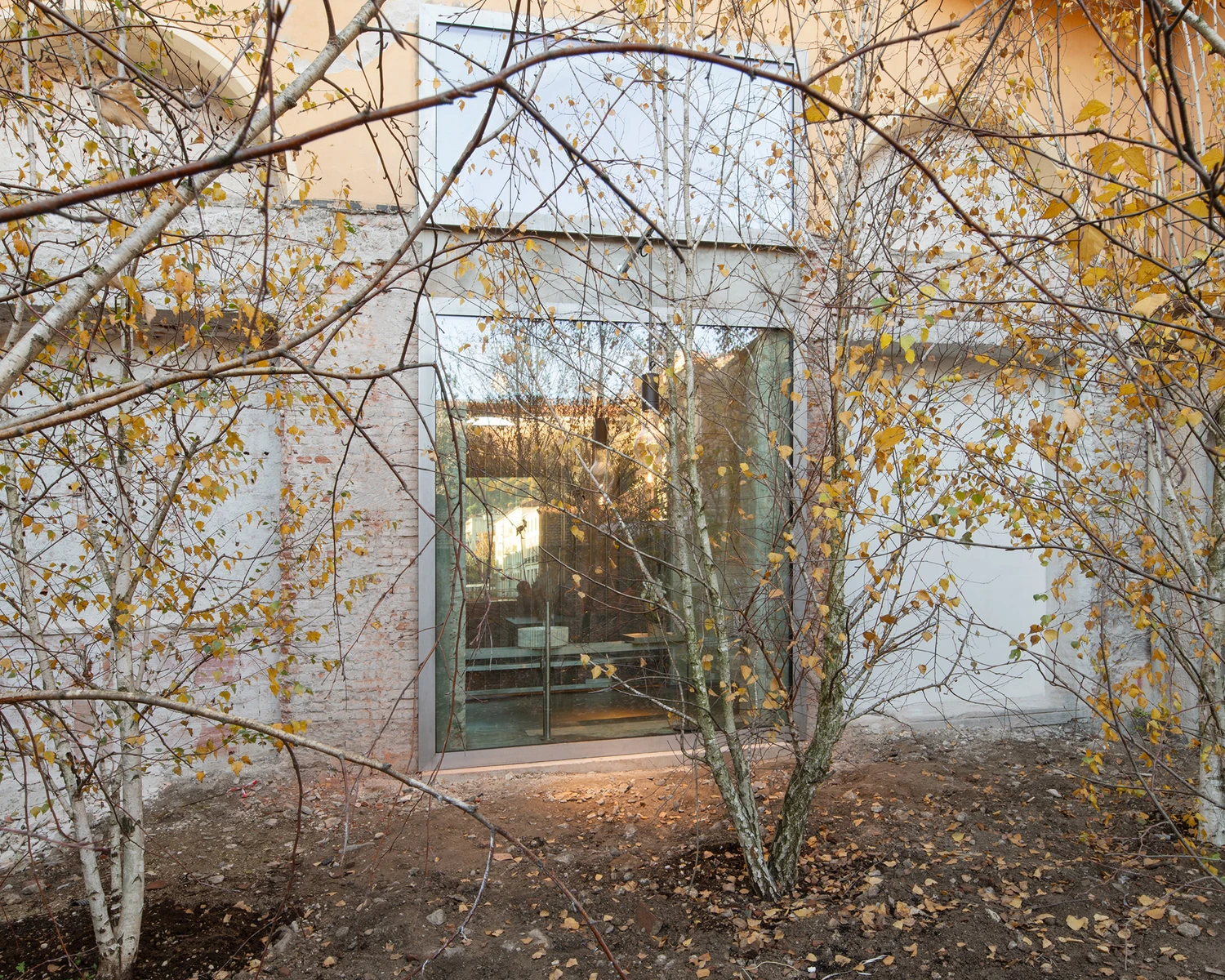
At the heart of Arzignano in northern Italy, between the civic weight of the City Hall and the vibrancy of the public square, AMAA has reopened Caffè Nazionale not as a restoration but as a conversation with time. Founded by Marcello Galiotto and Alessandra Rampazzo, the studio approached the project as a dialogic reconstruction: "a living work that embraces existing materials and their stories to create a new architecture."
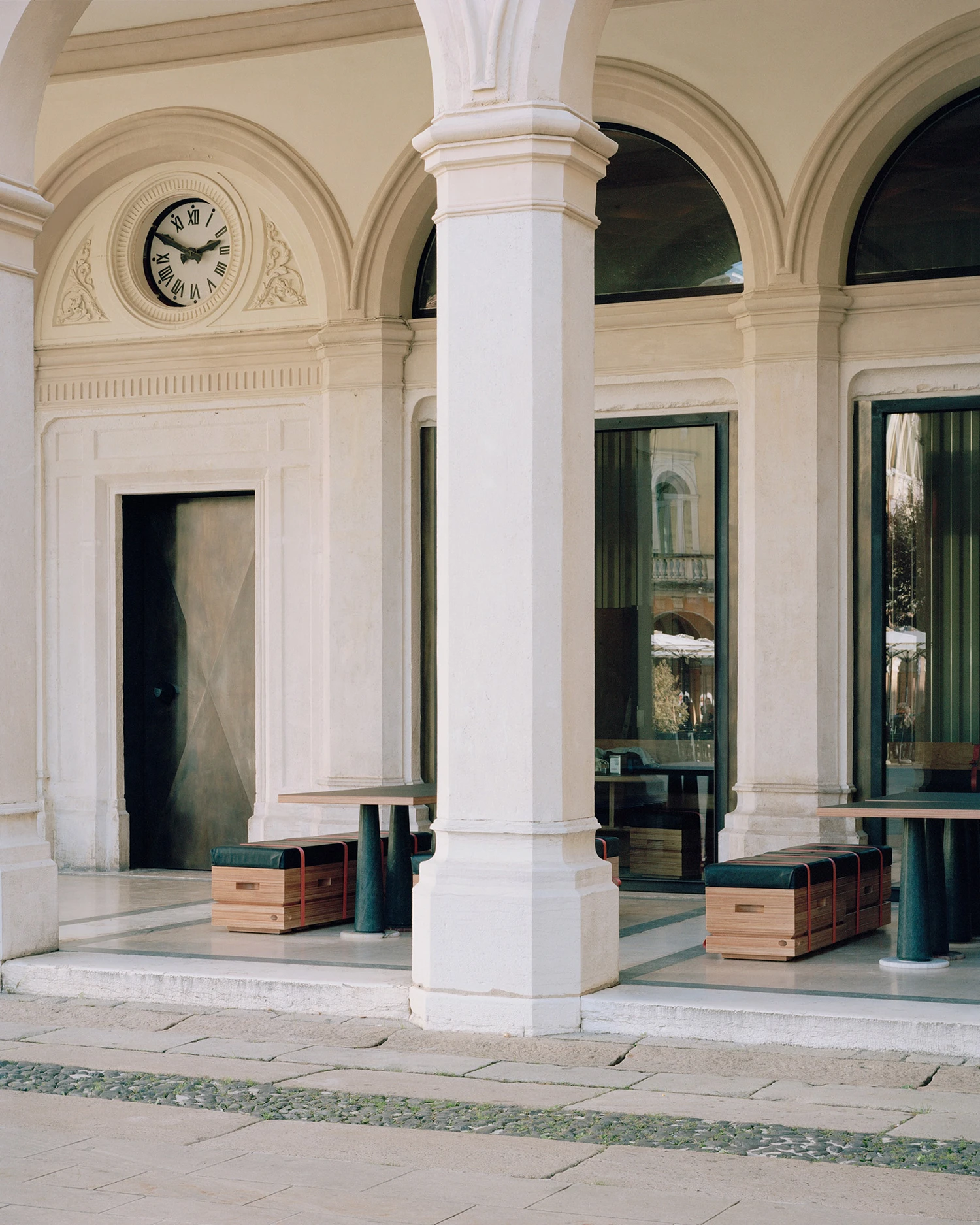
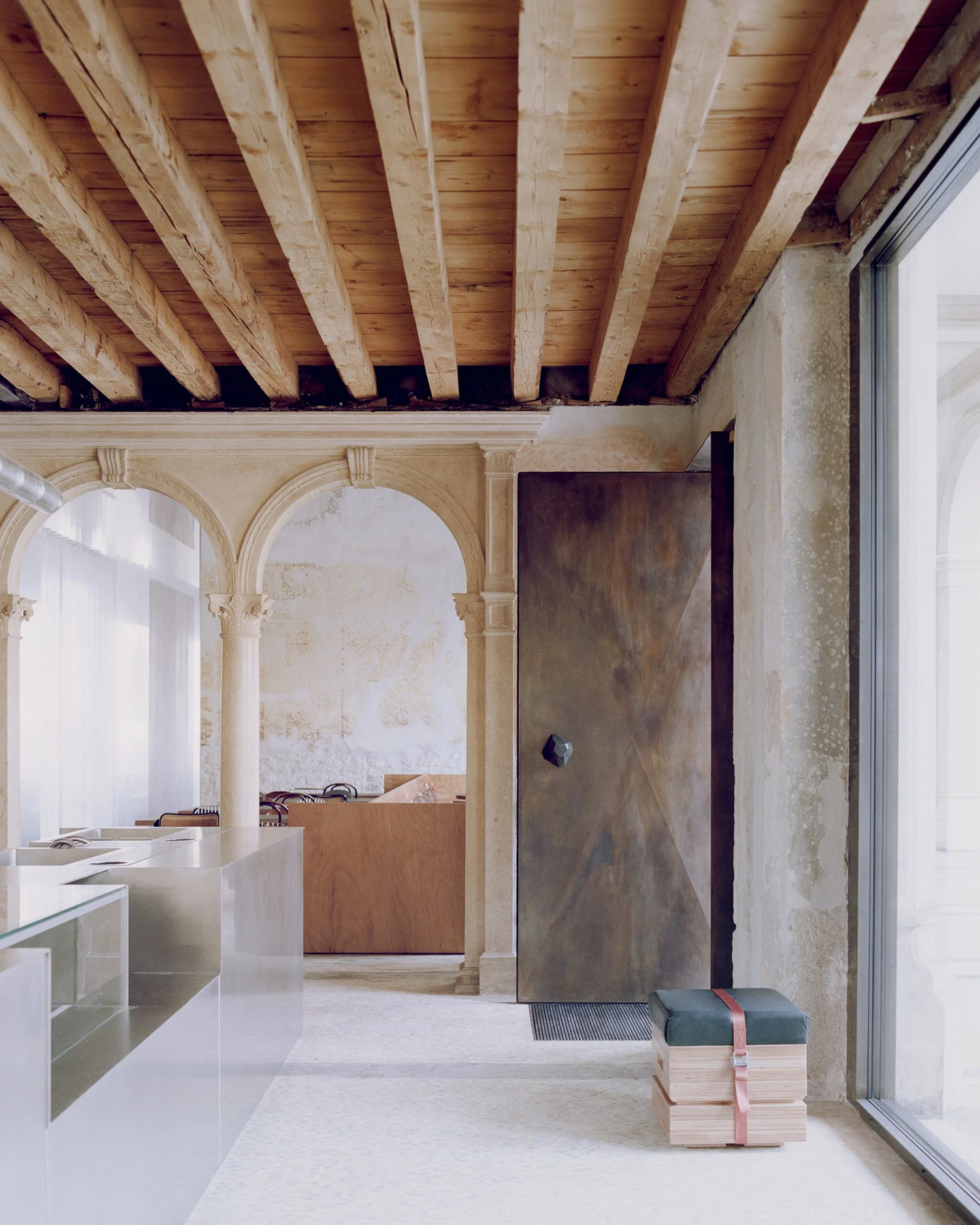
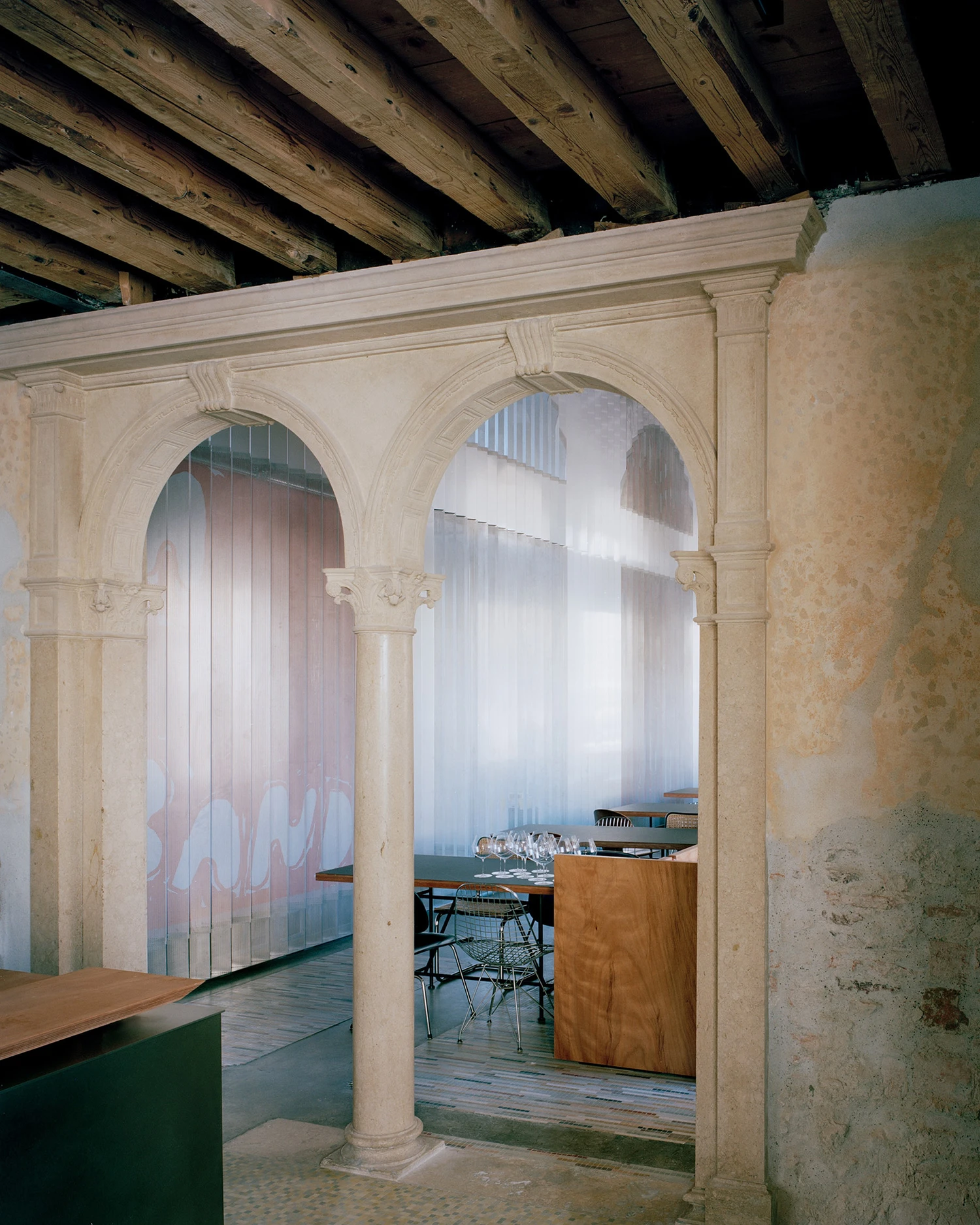
Rather than overwrite the historical layers of the 19th-century palazzo, AMAA chose to work with them. Patinas, imperfections, and historical traces were preserved rather than polished away—decisions that foreground the temporality of architecture and resist the urge to sanitise the past. The entry is a calibrated moment of opacity within an otherwise porous colonnade: a burnished iron door, pivoting on a central axis, punctuated by a diamond motif and anchored by a handle in serpentine marble. It is a tactile introduction to everything that follows.
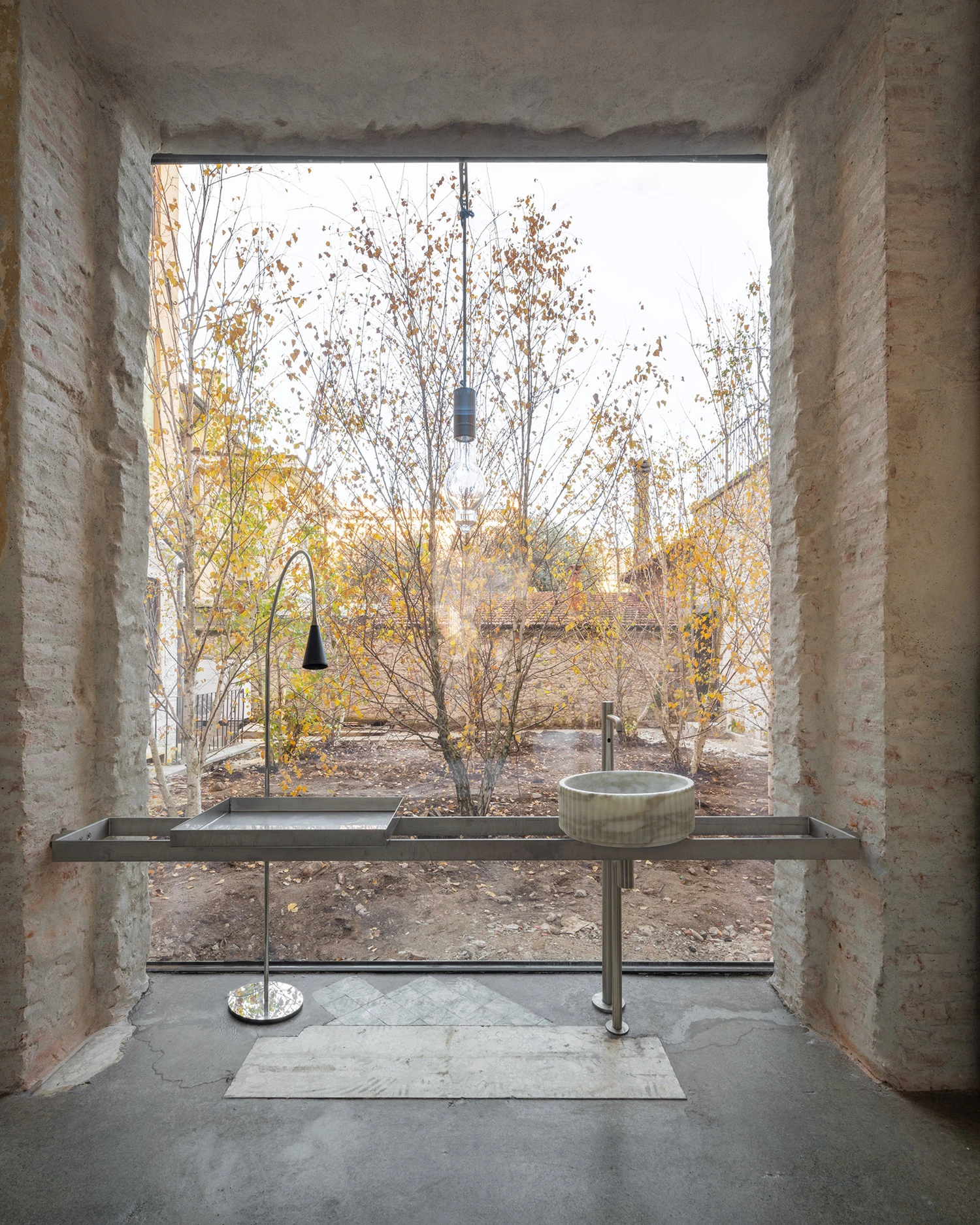
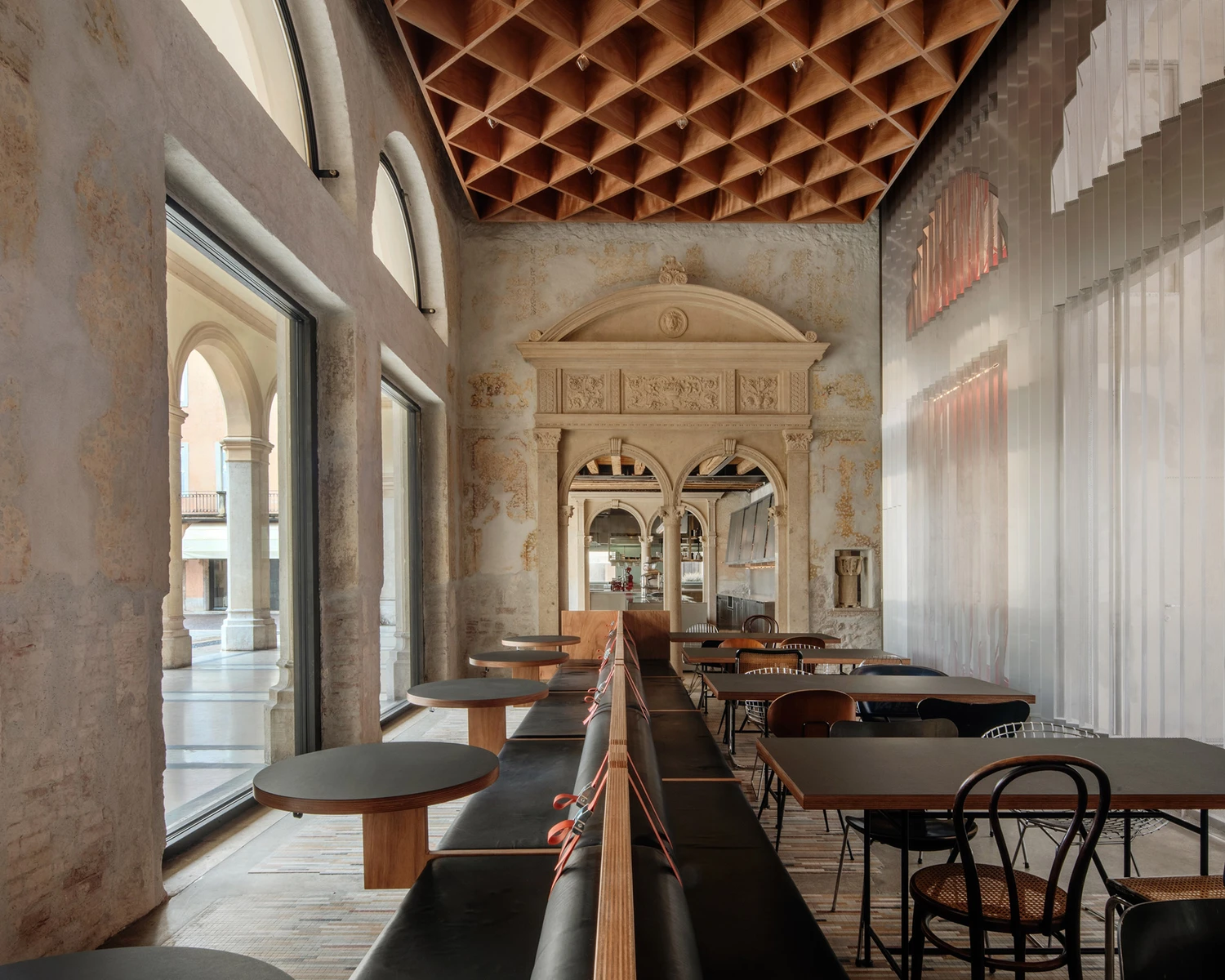
Spaces unfold in a sequence the architects describe through theatricality—from the urban exterior to the intimate inner courtyard, each transition choreographed to heighten awareness of texture and light. To the left, an open kitchen reinforces transparency. A stair beside the bar leads to an elevated dining room. To the right, the principal space reveals a pleated stainless steel curtain wall that subtly conceals and reveals. Behind it, posters by artist Stefan Marx reference Belle Époque theatrical imagery. A vestibule beyond serves as a liminal zone, mediating the shift from the constructed interior to a cultivated birch garden.
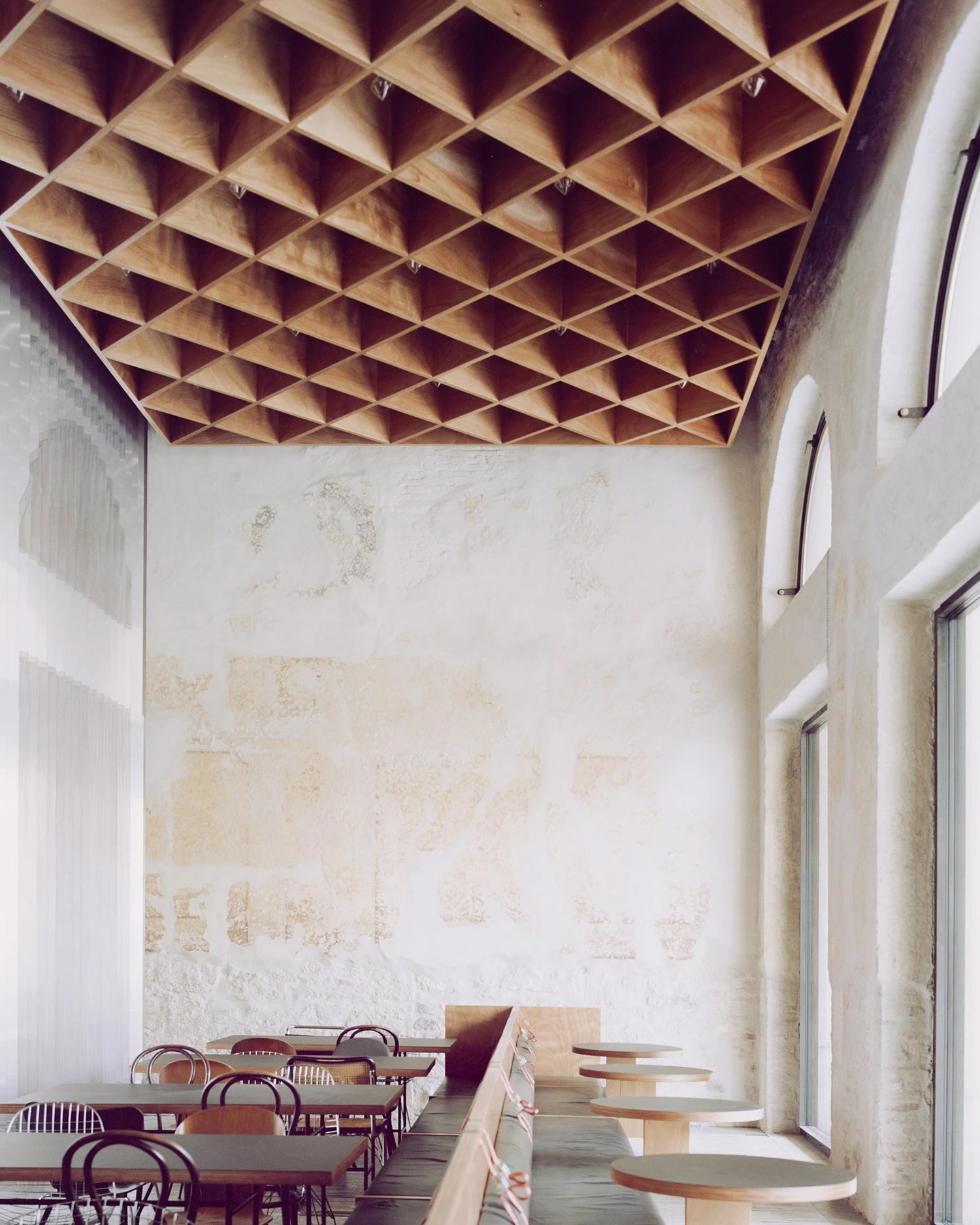
The coffered ceiling in the main room is constructed from okumè plywood, integrating lighting and acoustics while exposing its tectonic logic. Furnishings, custom-designed with artist Nero/Alessandro Neretti, recall the utilitarian clarity of Donald Judd’s furniture—plywood benches, leather cushions, linoleum table surfaces—but reinterpreted with a tactile softness and civic generosity. The leather itself was sourced from Conceria Laba, a local tannery, grounding the project in Arzignano’s industrial identity.
Caffè Nazionale belongs to AMAA’s broader exploration of the "unfinished" as an architectural position. By leaving certain elements exposed or unresolved, they foreground the construction process and invite ongoing interpretation. The project becomes not a fixed object but a framework—a civic space reimagined as a dynamic interface between history, material, and public life.