Thisispaper Community
Join today.
Enter your email address to receive the latest news on emerging art, design, lifestyle and tech from Thisispaper, delivered straight to your inbox.
Oops! Something went wrong while submitting the form.
Instant access to new channels
The top stories curated daily
Weekly roundups of what's important
Original features and deep dives
Exclusive community features
Mar 19, 2026

Over five years, Vincenzo Pagliuca traced the remains of the Alpine Wall through South Tyrol — the Fascist regime's vast network of border fortifications, eighty years on, quietly reclaimed by the landscape they were built to command.

The Alpine Wall (Vallo Alpino) was conceived by Mussolini's regime in the late 1930s as a continuous defensive system along Italy's northern border — a fortification network running from the French frontier through the Alps and into the Istrian peninsula, comprising thousands of bunkers, gun emplacements, underground tunnels, and command posts. In South Tyrol, the border between Italy and Austria, these structures were built into a landscape of extraordinary natural intensity: high passes, river valleys, the slow rhythms of Alpine agriculture. They were never used in the way their designers intended. They were dismantled, in legal terms, thirty years ago. But they are still there.

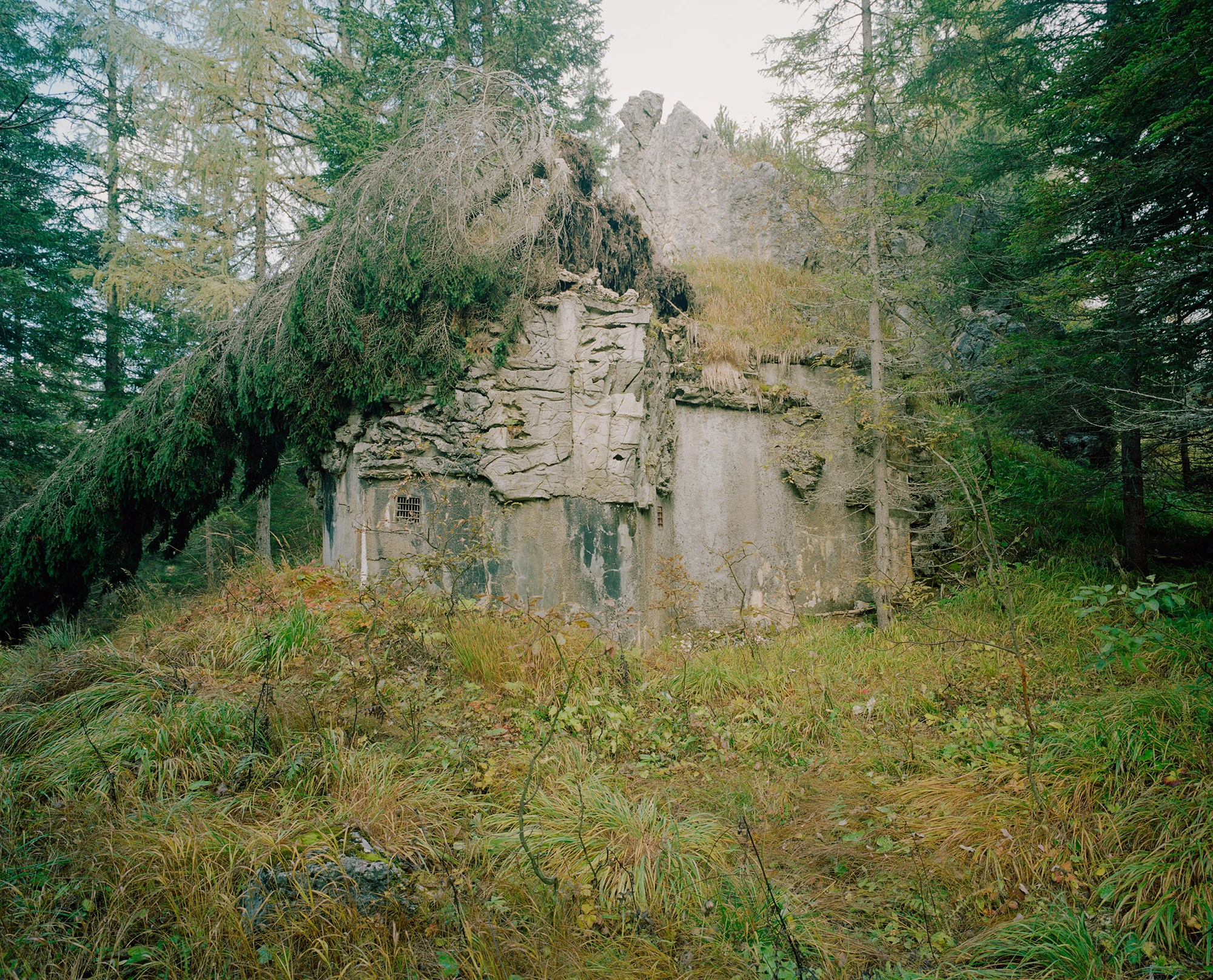
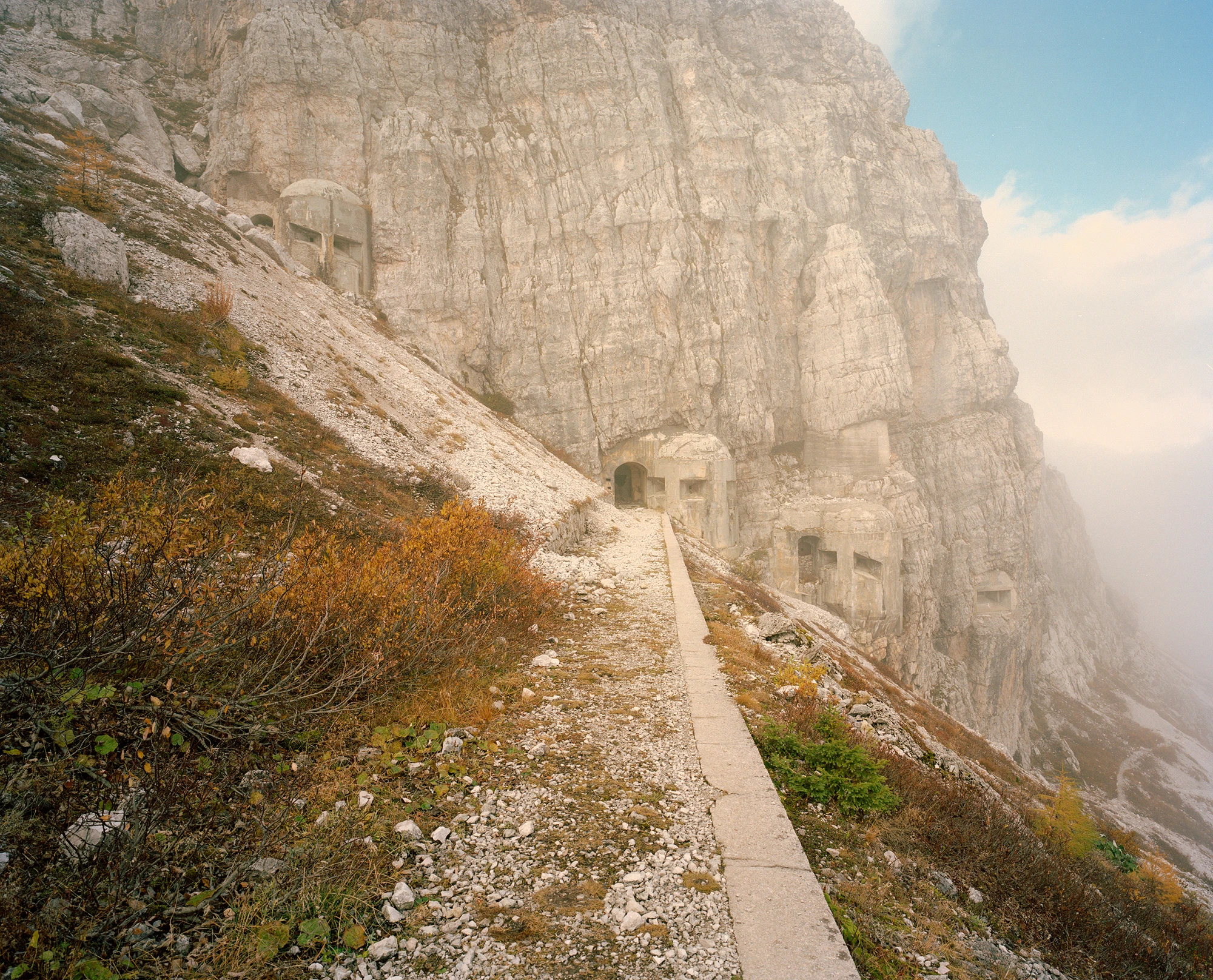
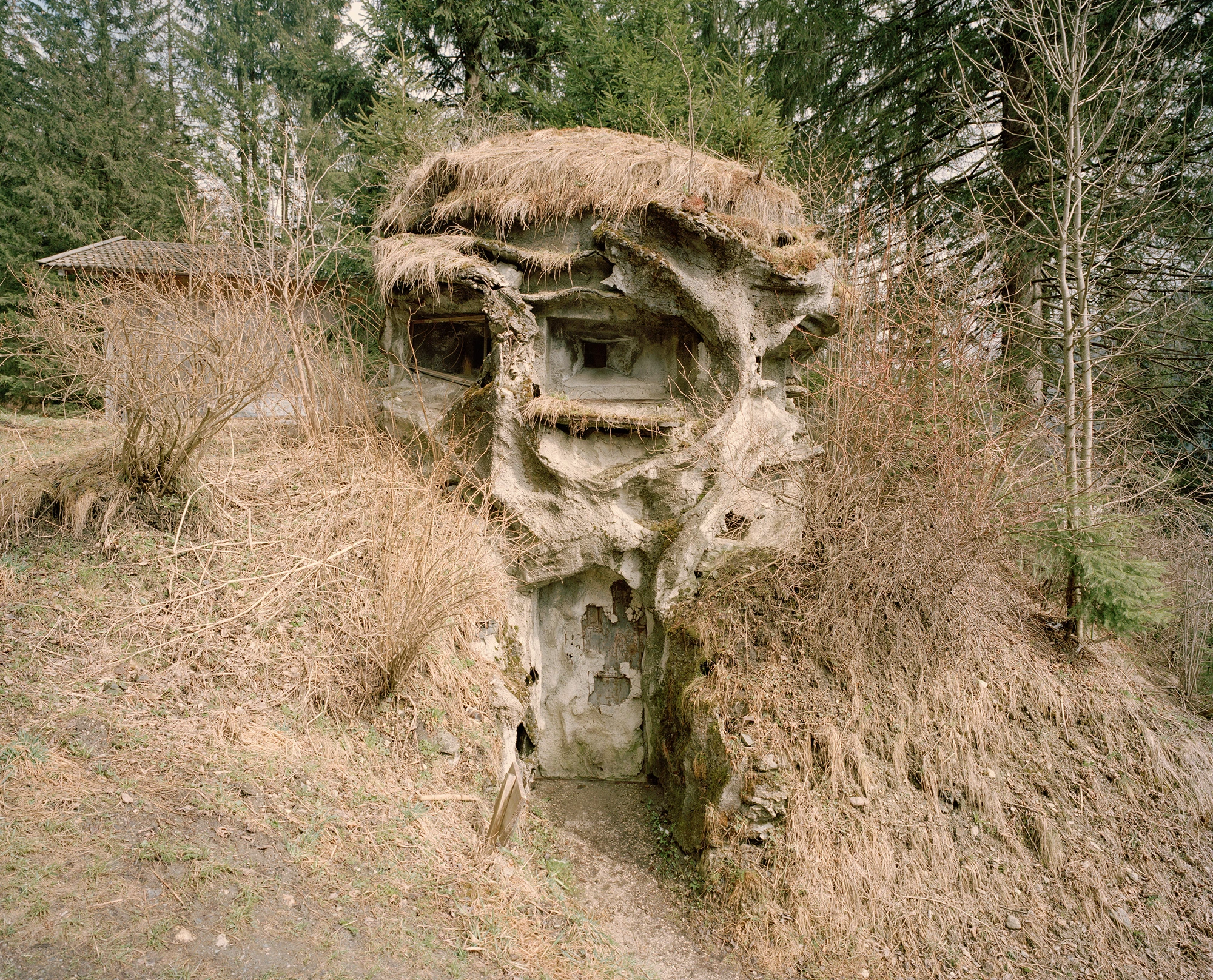
Between 2018 and 2023, Pagliuca systematically documented what remains. The photographs, published in 2025 by Hartmann Projects, have the quality of fieldwork — methodical, patient, formally precise — but they are not cold. These are large-format landscapes in which the structures appear as geological anomalies: a circular bunker whose roof has become a meadow of dry grass, hovering above its own concrete walls; a low artillery emplacement half-buried in a hillside, its apertures staring blankly at a mountain it was built to watch. The landscape absorbs them the way it absorbs everything — slowly, without drama, with the confidence of something that knows it has more time.

The captions in the book run as a kind of inventory: "Opera 14, Bolzano Sud"; "Opera 1, Dobbiaco"; "Opera 37, Bolzano Sud." Each Opera is a specific defensive structure in the system's original classification — the word itself both architectural and theatrical, unavoidably. Pagliuca uses this naming convention as it was given, without irony, which makes the images heavier than they might otherwise be. These are monuments to a particular form of political failure, and Pagliuca does not let the landscape absorb that history entirely.

"The bunkers are presented here as a culturally complex legacy," he writes: "at once emblematic architectures of the twentieth century and monuments to human fragility — relics of an era marked by nationalist ideologies, but also by unexpected, dreamlike forms of dwelling." The last phrase is the crucial one. Some of these structures have a formal beauty that sits uncomfortably alongside their history. The project refuses to resolve this discomfort, which is precisely what makes it worth looking at.

Interested in Showcasing Your Work?

If you would like to feature your works on Thisispaper, please visit our Submission page and sign up to Thisispaper+ to submit your work. Once your submission is approved, your work will be showcased to our global audience of 2 million art, architecture, and design professionals and enthusiasts.
No items found.
We love less
but there is more.
Become a Thisispaper+ member today to unlock full access to our magazine, advanced tools, and support our work.
Get two months FREE
with annual subscription
We love less
but there is more.
Become a Thisispaper+ member today to unlock full access to our magazine, advanced tools, and support our work.
Get two months FREE
with annual subscription
No items found.
Mar 19, 2026

Over five years, Vincenzo Pagliuca traced the remains of the Alpine Wall through South Tyrol — the Fascist regime's vast network of border fortifications, eighty years on, quietly reclaimed by the landscape they were built to command.

The Alpine Wall (Vallo Alpino) was conceived by Mussolini's regime in the late 1930s as a continuous defensive system along Italy's northern border — a fortification network running from the French frontier through the Alps and into the Istrian peninsula, comprising thousands of bunkers, gun emplacements, underground tunnels, and command posts. In South Tyrol, the border between Italy and Austria, these structures were built into a landscape of extraordinary natural intensity: high passes, river valleys, the slow rhythms of Alpine agriculture. They were never used in the way their designers intended. They were dismantled, in legal terms, thirty years ago. But they are still there.

Between 2018 and 2023, Pagliuca systematically documented what remains. The photographs, published in 2025 by Hartmann Projects, have the quality of fieldwork — methodical, patient, formally precise — but they are not cold. These are large-format landscapes in which the structures appear as geological anomalies: a circular bunker whose roof has become a meadow of dry grass, hovering above its own concrete walls; a low artillery emplacement half-buried in a hillside, its apertures staring blankly at a mountain it was built to watch. The landscape absorbs them the way it absorbs everything — slowly, without drama, with the confidence of something that knows it has more time.

The captions in the book run as a kind of inventory: "Opera 14, Bolzano Sud"; "Opera 1, Dobbiaco"; "Opera 37, Bolzano Sud." Each Opera is a specific defensive structure in the system's original classification — the word itself both architectural and theatrical, unavoidably. Pagliuca uses this naming convention as it was given, without irony, which makes the images heavier than they might otherwise be. These are monuments to a particular form of political failure, and Pagliuca does not let the landscape absorb that history entirely.

"The bunkers are presented here as a culturally complex legacy," he writes: "at once emblematic architectures of the twentieth century and monuments to human fragility — relics of an era marked by nationalist ideologies, but also by unexpected, dreamlike forms of dwelling." The last phrase is the crucial one. Some of these structures have a formal beauty that sits uncomfortably alongside their history. The project refuses to resolve this discomfort, which is precisely what makes it worth looking at.
Interested in Showcasing Your Work?

If you would like to feature your works on Thisispaper, please visit our Submission page and subscribe to Thisispaper+. Once your submission is approved, your work will be showcased to our global audience of 2 million art, architecture, and design professionals and enthusiasts.
Thisispaper+
Alps Guide
50+ Locations
Web Access
Link to Maps
A destination favoured by lovers of mountain landscapes and outdoor activities, the Alps and their exceptional natural heritage is a paradise not only for hikers and fans of adventure sports but also for architecture lovers in terms of cabins, huts, museums, wellness and local attractions.
Explore
Alps Guide

Join Thisispaper+
Unlock access to 2500 stories, curated guides + editions, and share your work with a global network of architects, artists, writers and designers who are shaping the future.
Get two months FREE
with annual subscription
Travel Guides
Immerse yourself in timeless destinations, hidden gems, and creative spaces—curated by humans, not algorithms.
Explore All Guides +
Submission Module
Submit your project and gain the chance to showcase your work to our worldwide audience of over 2M architects, designers, artists, and curious minds.
Learn More+
Curated Editions
Dive deeper into carefully curated editions, designed to feed your curiosity and foster exploration.
Off-the-Grid
Jutaku
Sacral Journey
minimum
The New Chair
Explore All Editions +
Atlas
A new and interactive way to explore the most inspiring places around the world.
Interactive map
Linked to articles
300+ curated locations
Google + Apple directions
Smart filters
Subscribe to Explore+
Become a Thisispaper+ member today to unlock full access to our magazine, submit your project and support our work.
Join Thisispaper+Join Thisispaper+
€ 9 EUR
/month
Cancel anytime
Get two months FREE
with annual subscription