The American West has been told and retold through pulp fiction, country music, and western movies. At the Brash Rodeo in Montana, Aaron Agosto goes looking for the cowboy who never made it into the myth.
Brash follows the longest running open rodeo series in Montana, an ongoing project that Aaron Agosto began on a whim. He photographed a single night, then stayed on to shoot a full season for the rodeo itself, returning on and off across two years. A fairly new resident of the state, he came to the arena already carrying the West that most people carry: monolithic, idyllic, forged in sensational stories and half-remembered movies. The pictures are what happened when that idea met the dust.
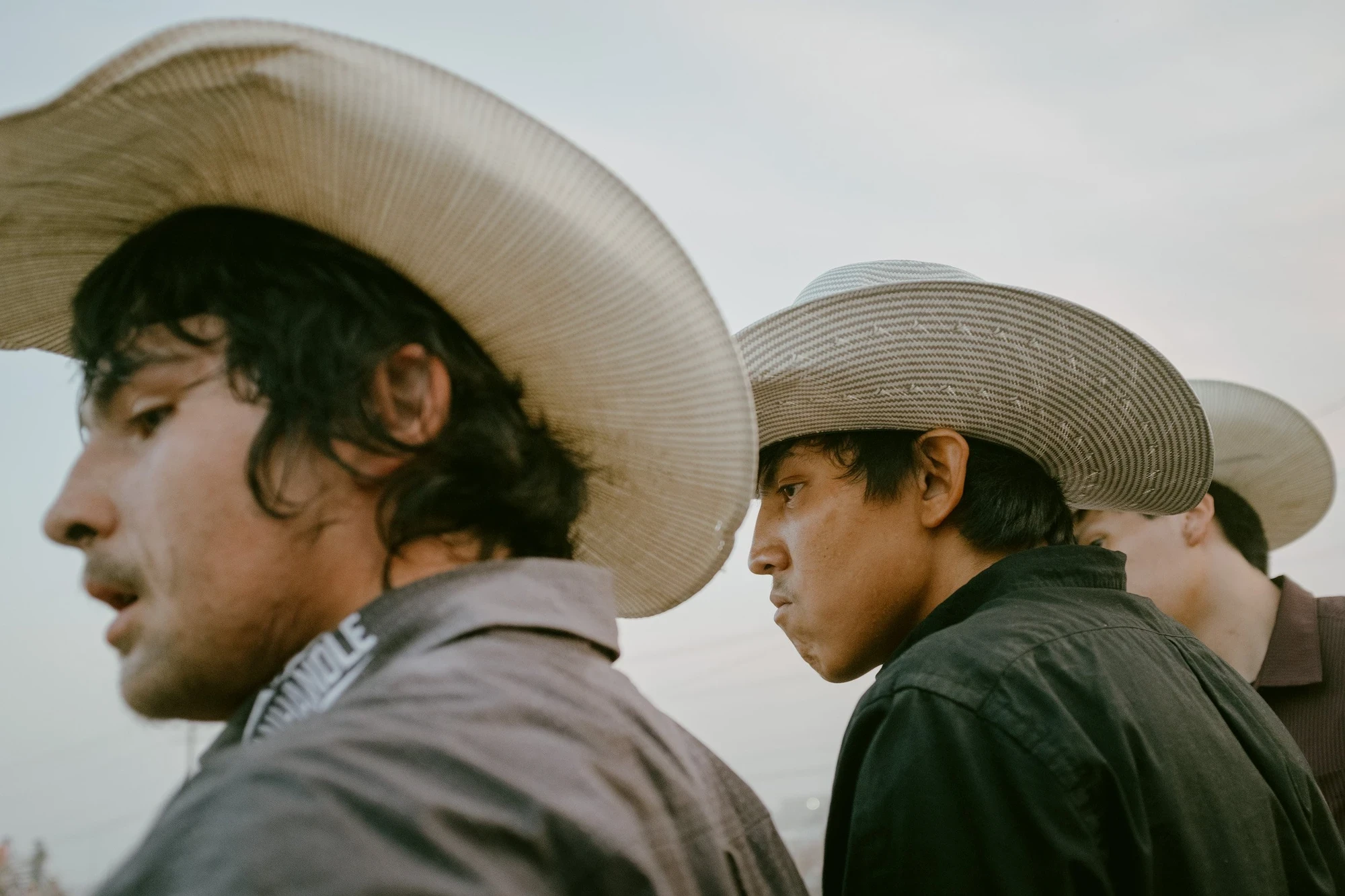
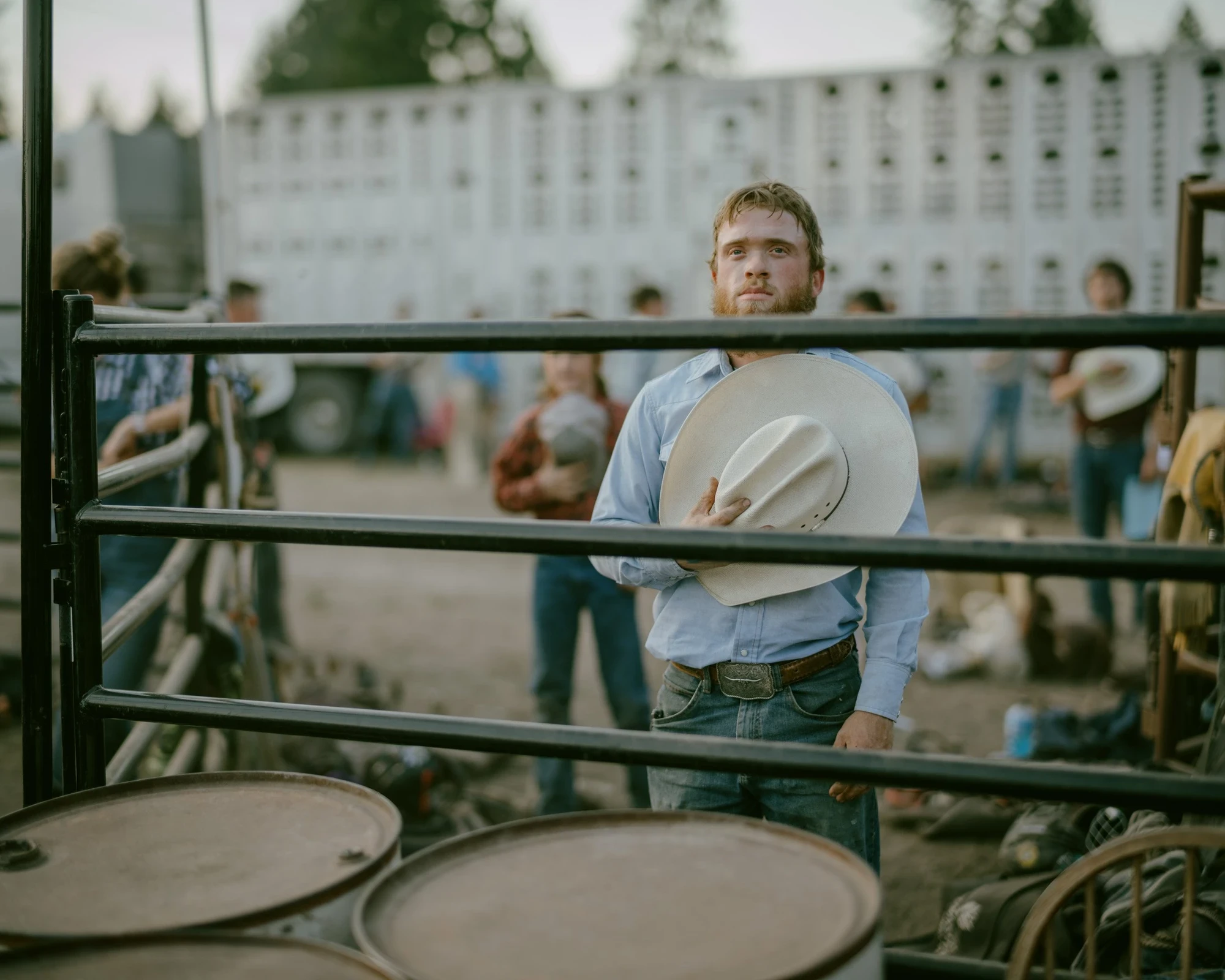
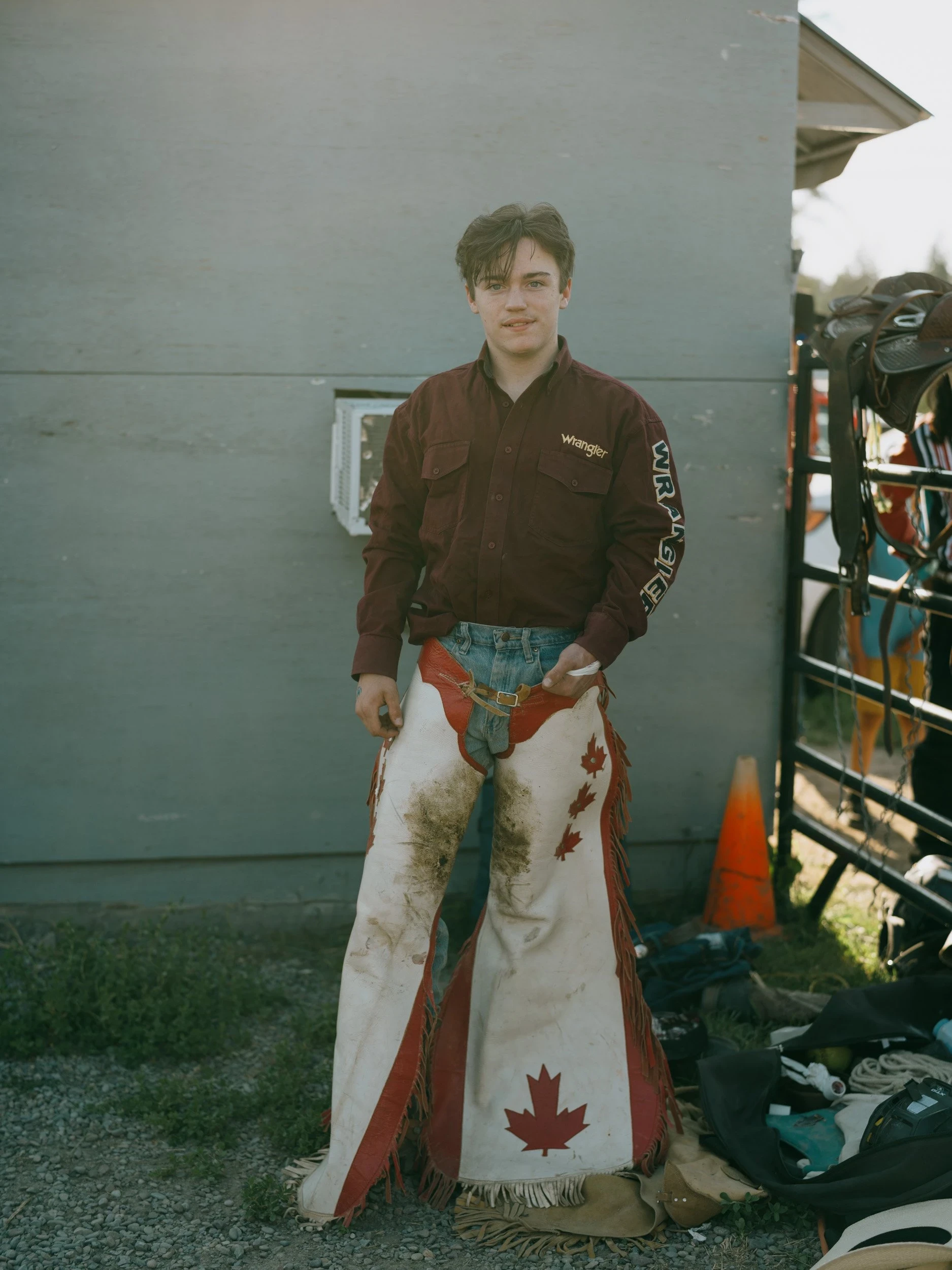
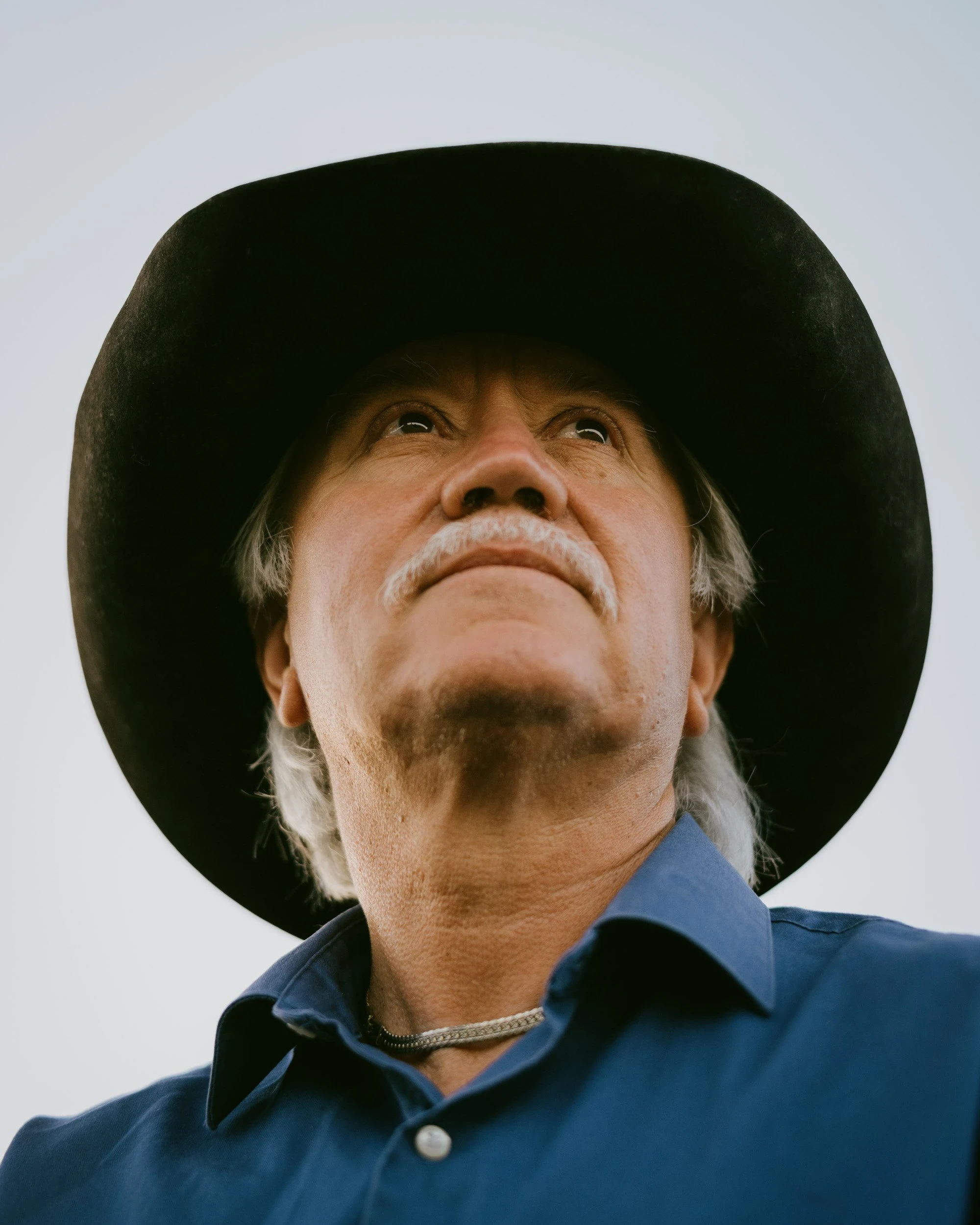
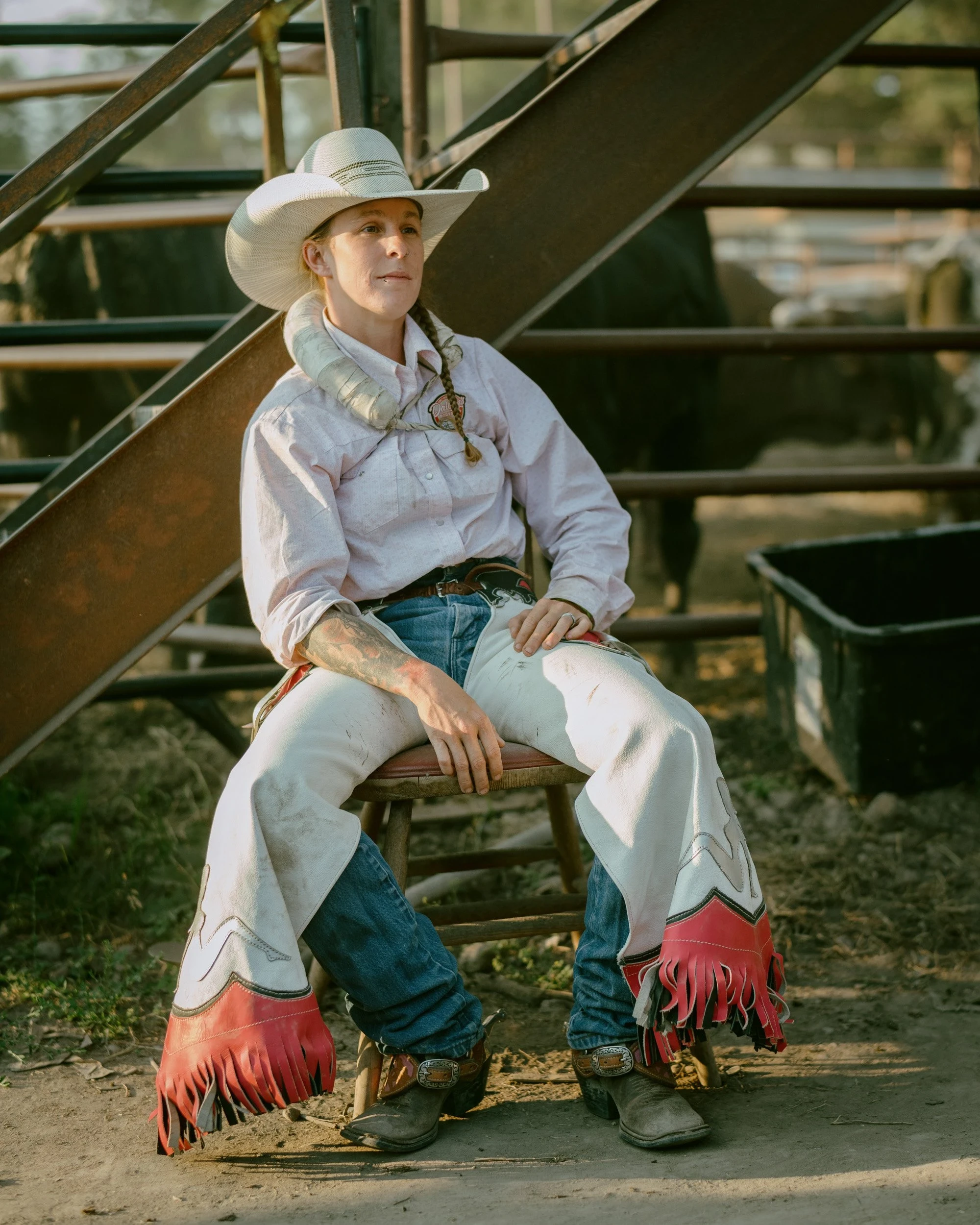
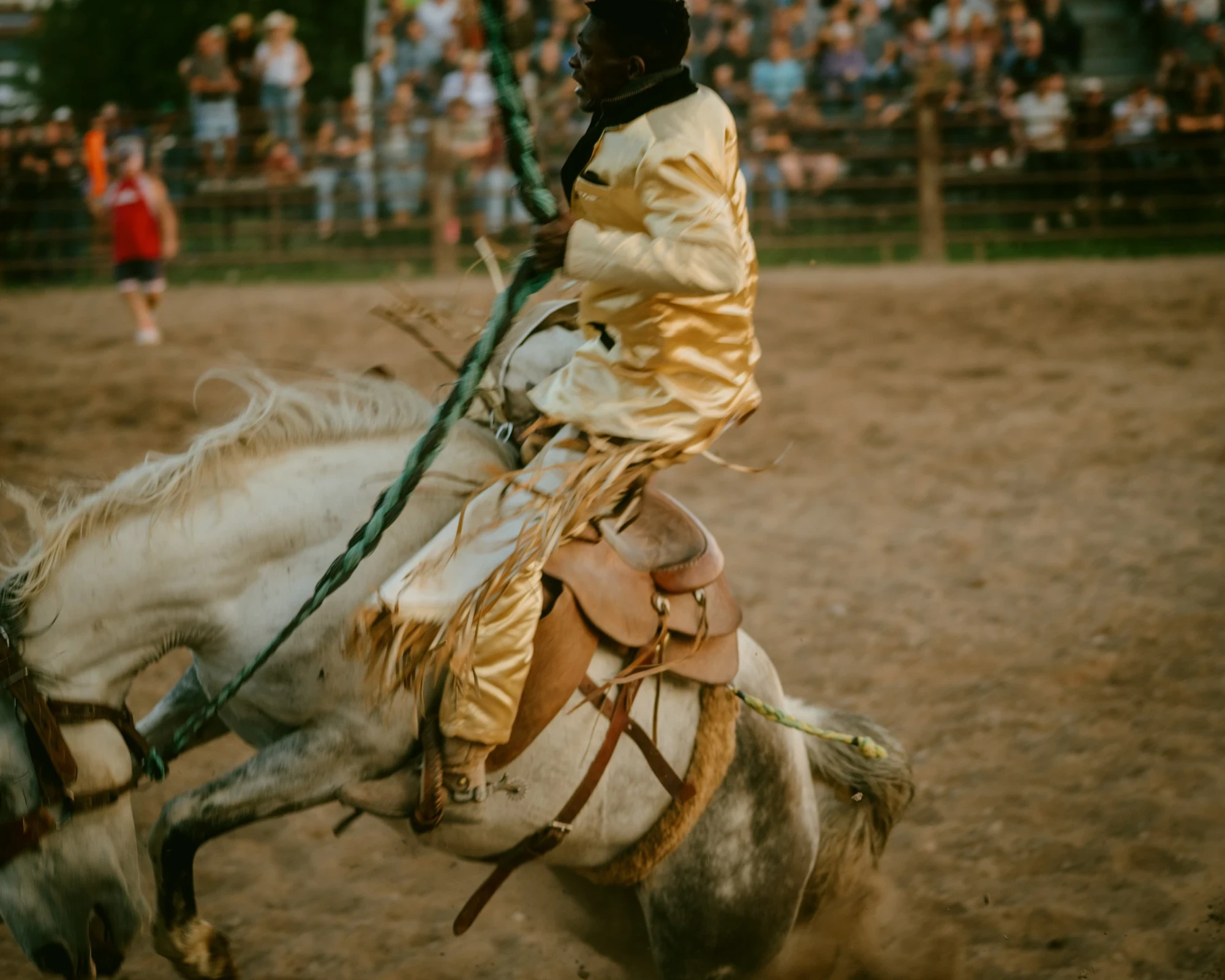
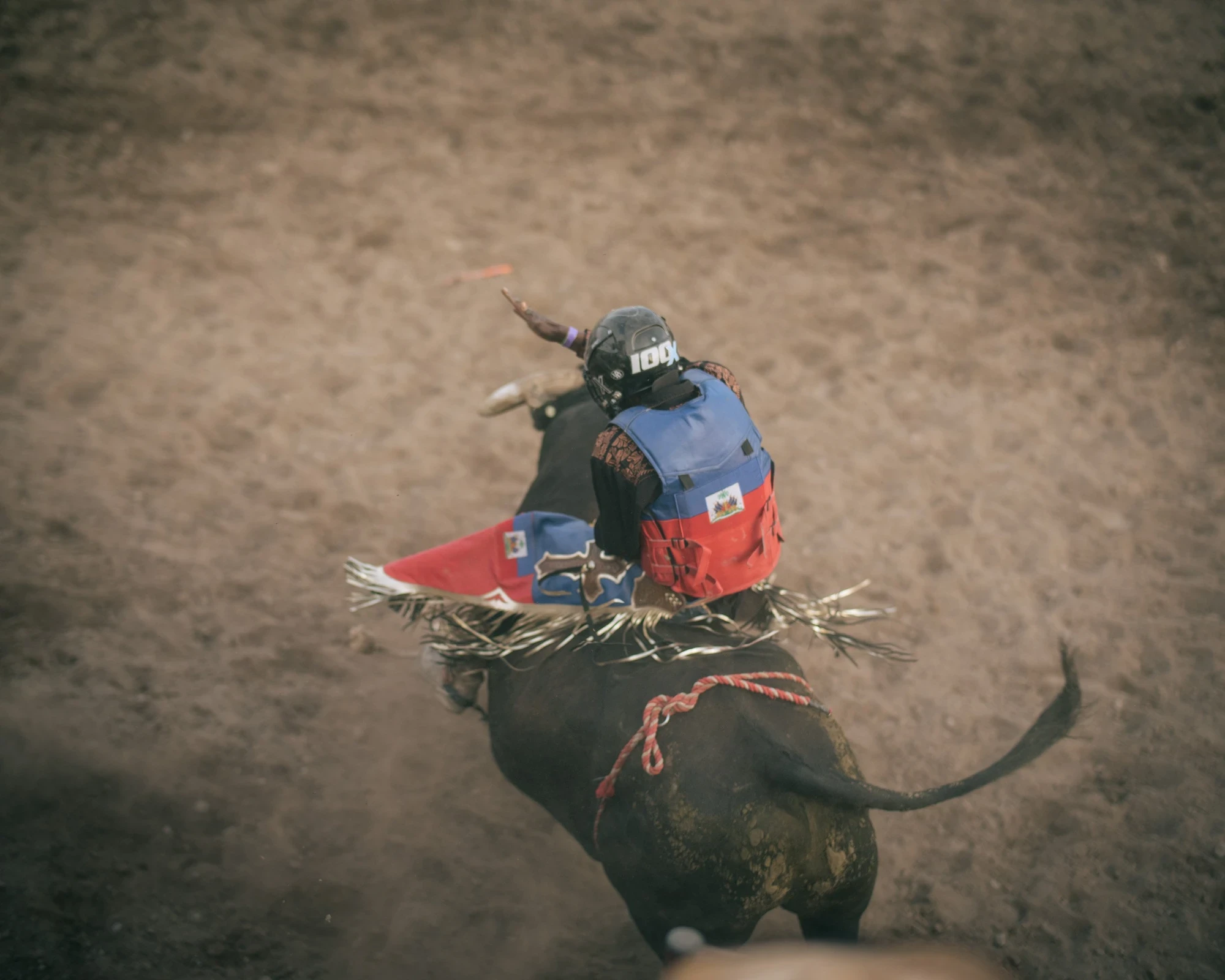
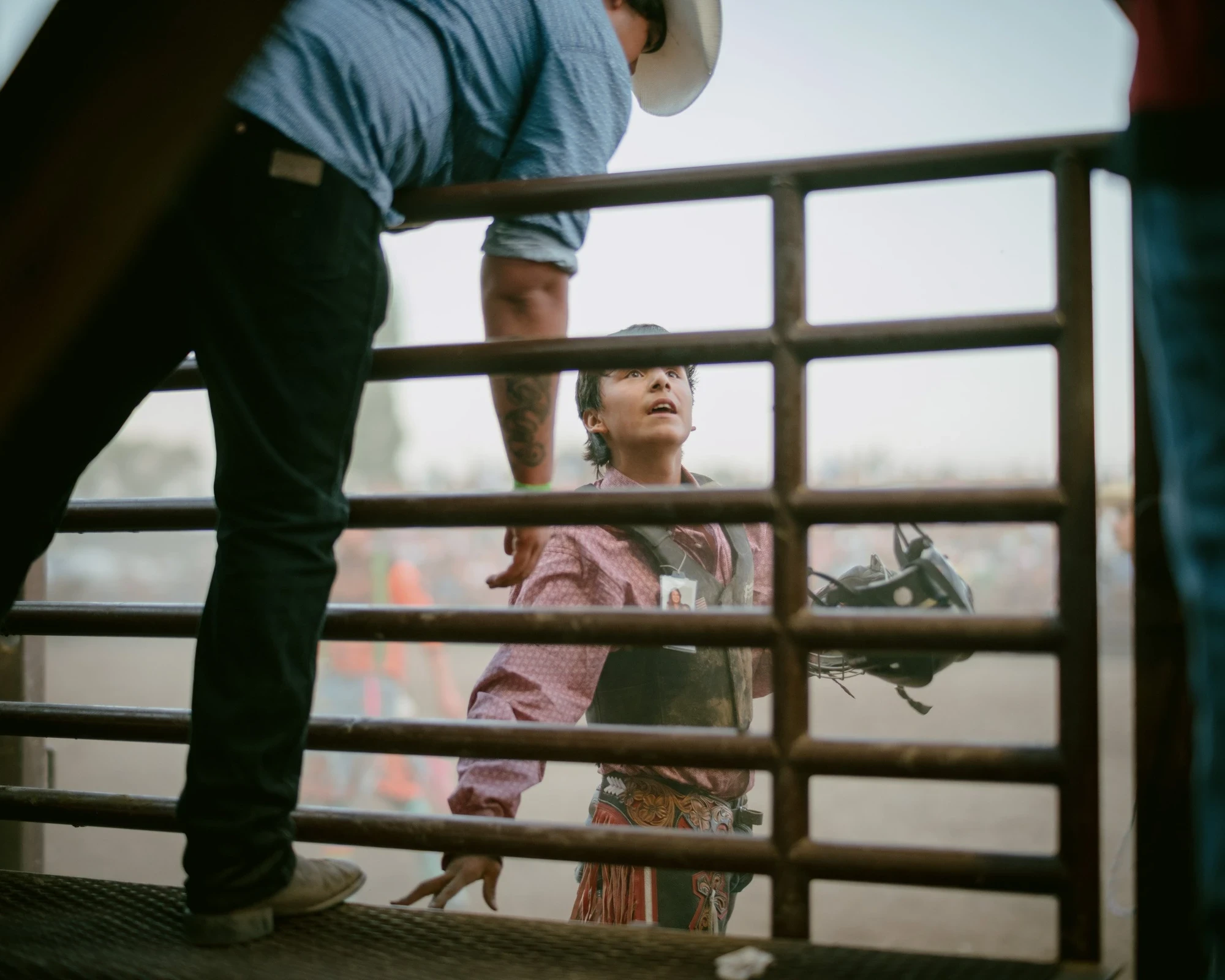
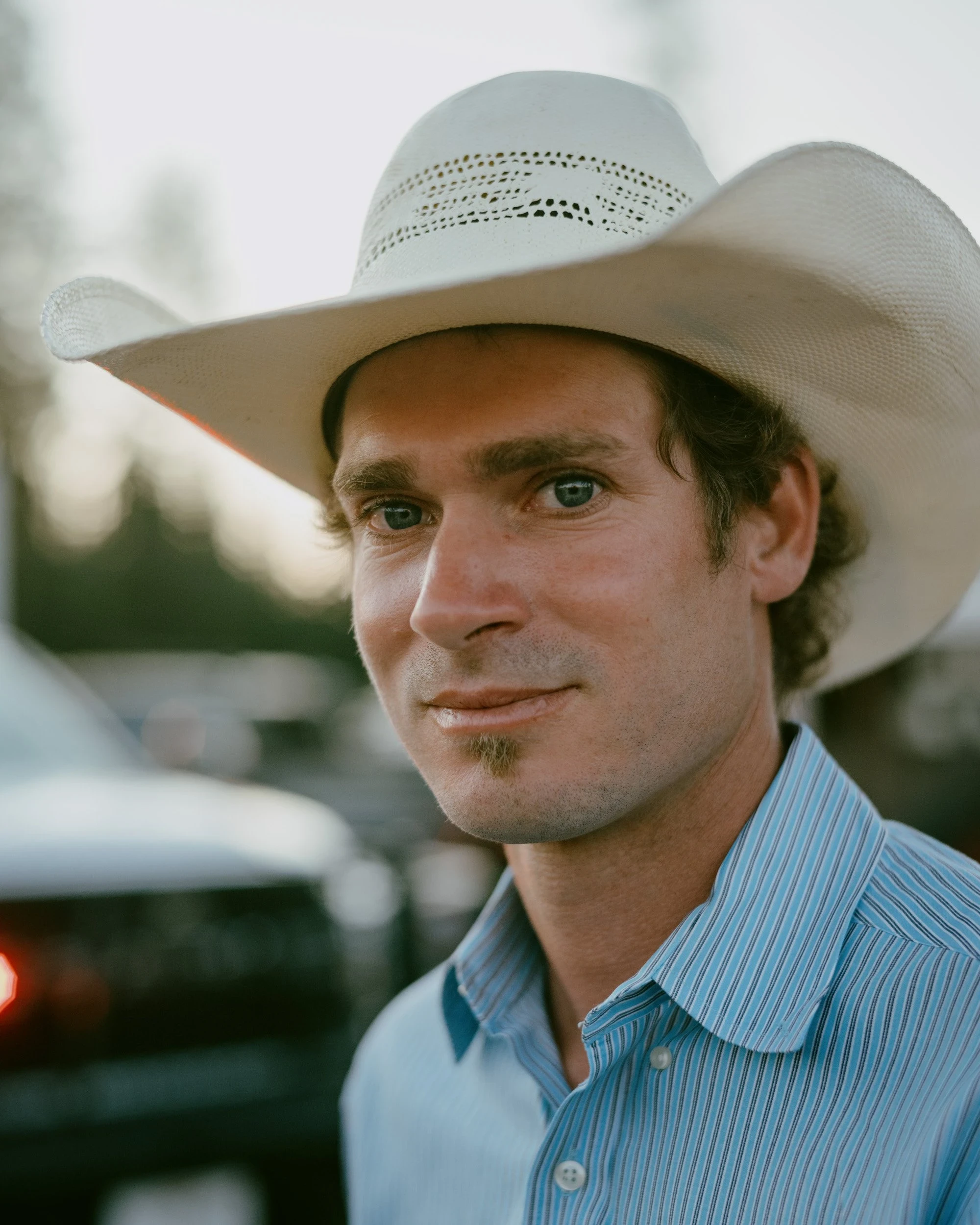
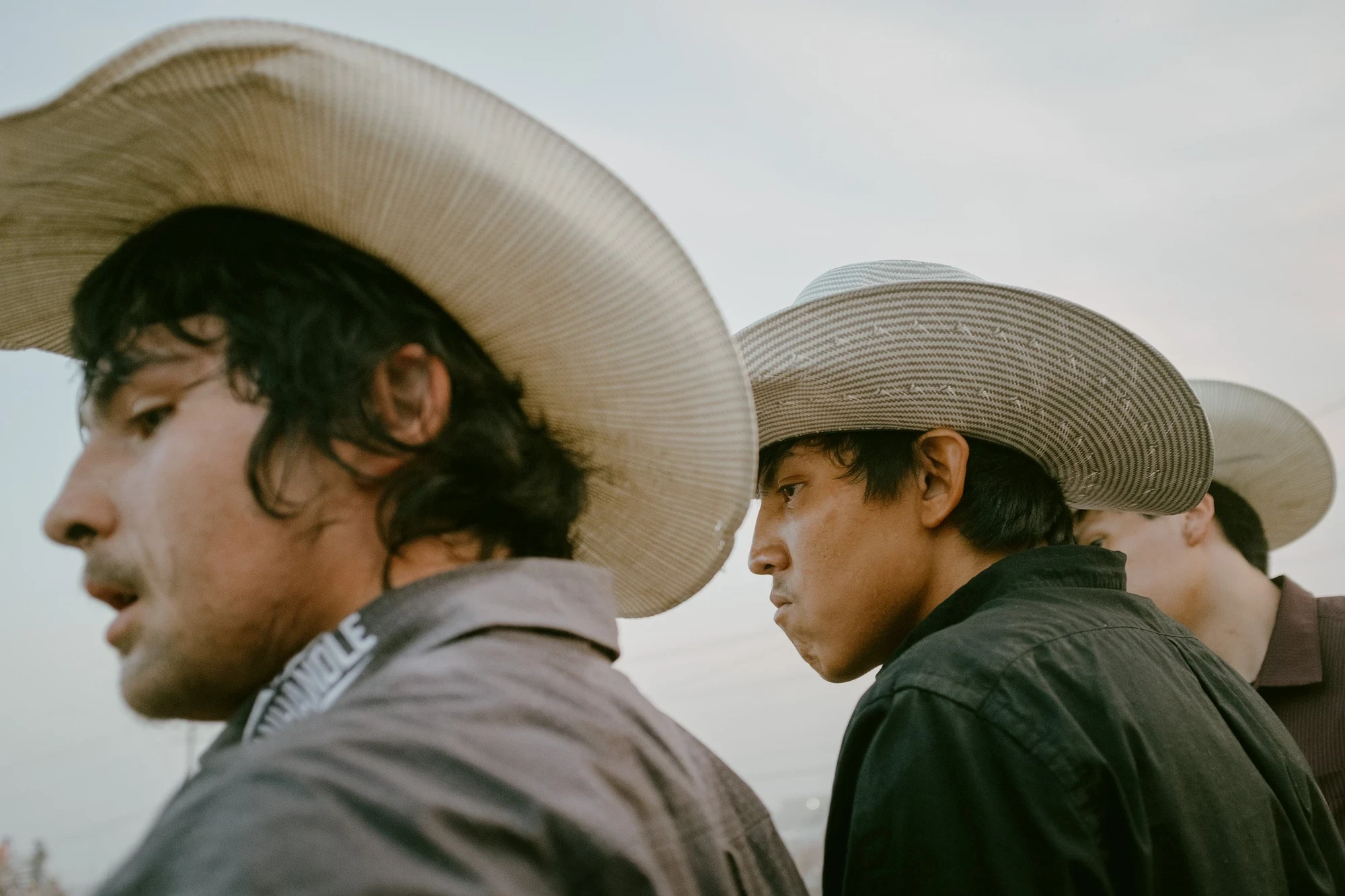
What the lens finds is not the archetype. It is a teenager in mud-caked chaps printed with a Canadian maple leaf, a rider whose vest bears the Haitian flag, a Black bronc rider in gold fringe hung sideways off a pale horse. The cowboys of Brash are younger, browner, and more various than the country song allows. Agosto shoots them straight, at close range and often from below, so a white-mustached man in a black felt hat reads like a monument against flat evening sky. The register is portraiture as much as reportage.
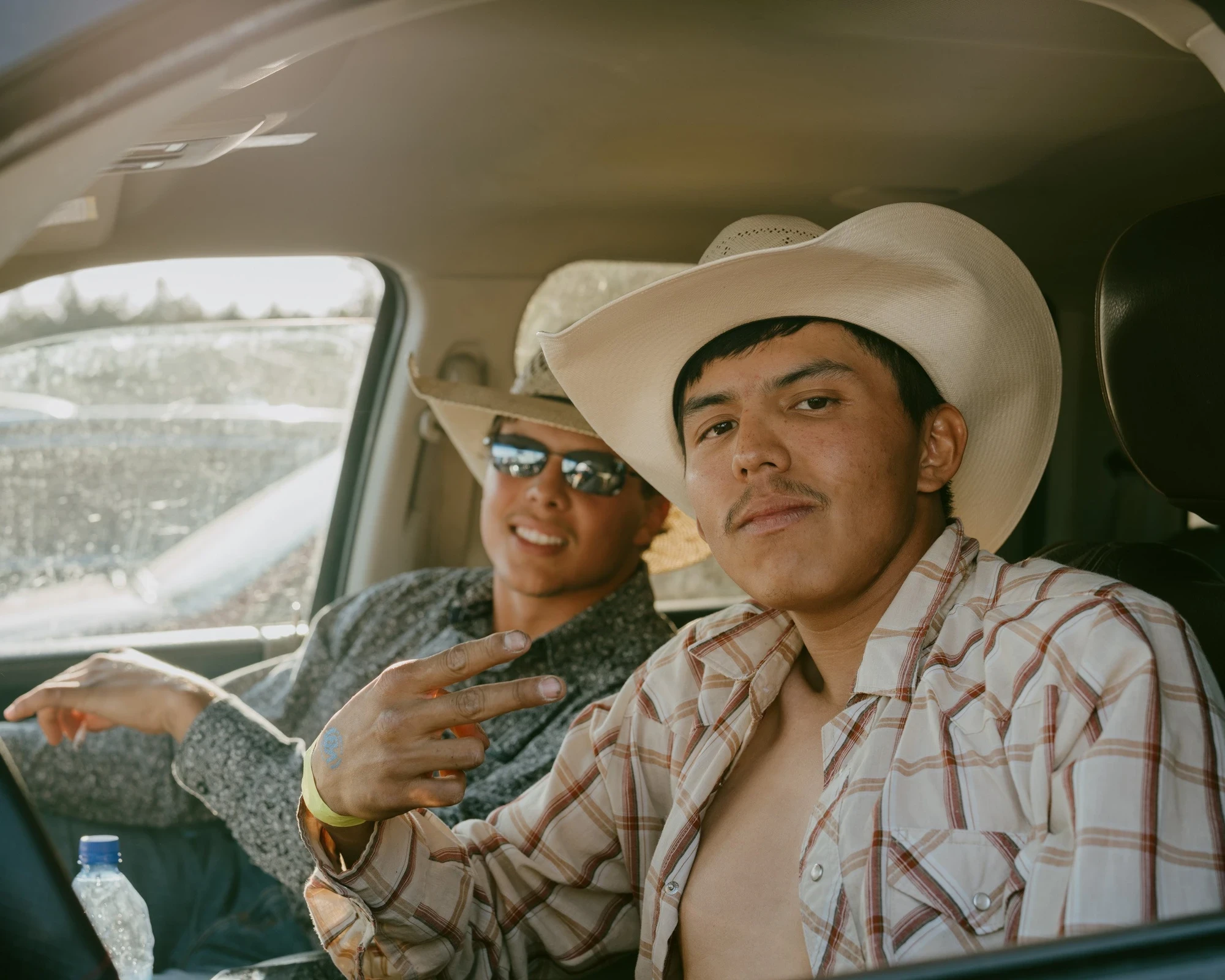
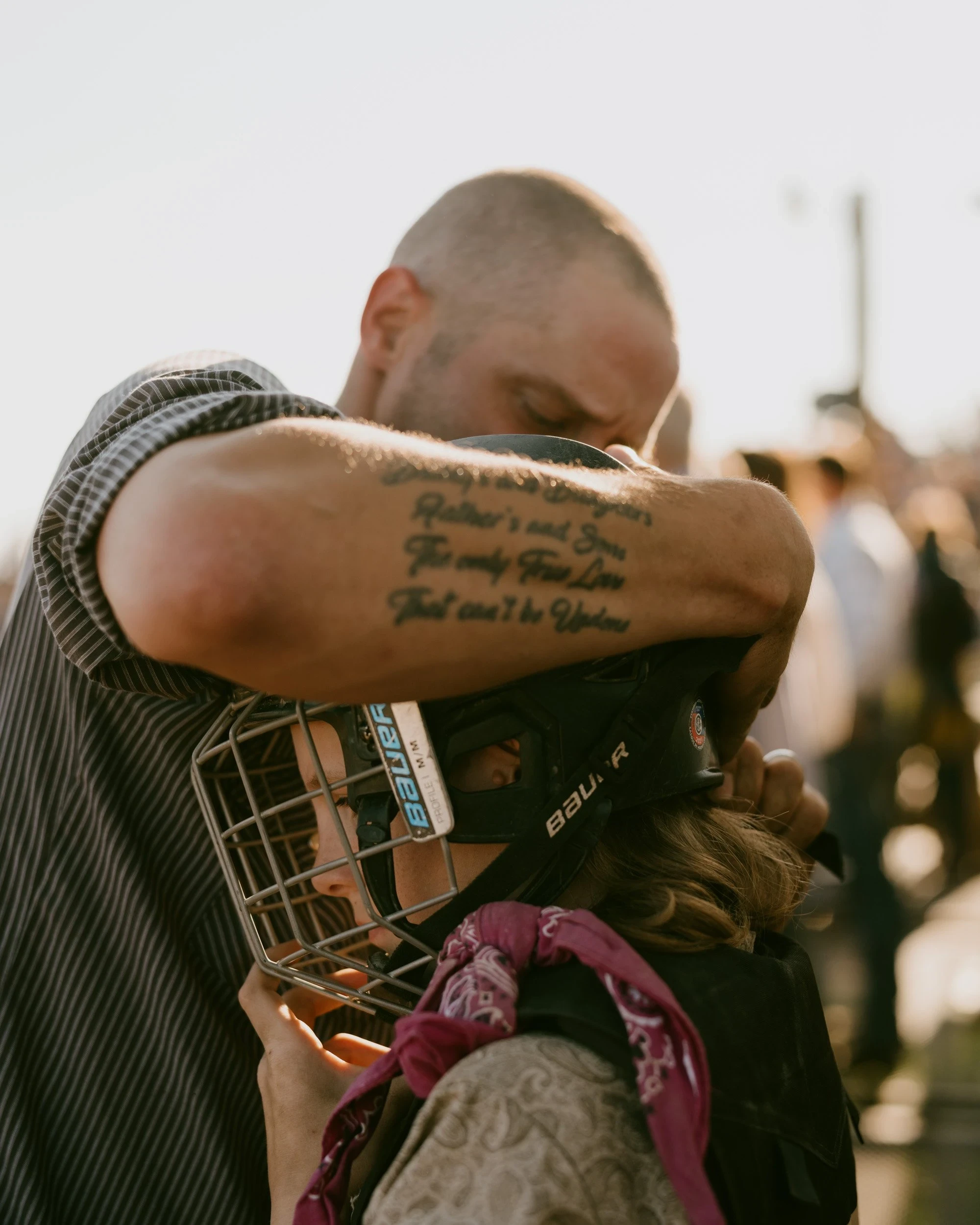
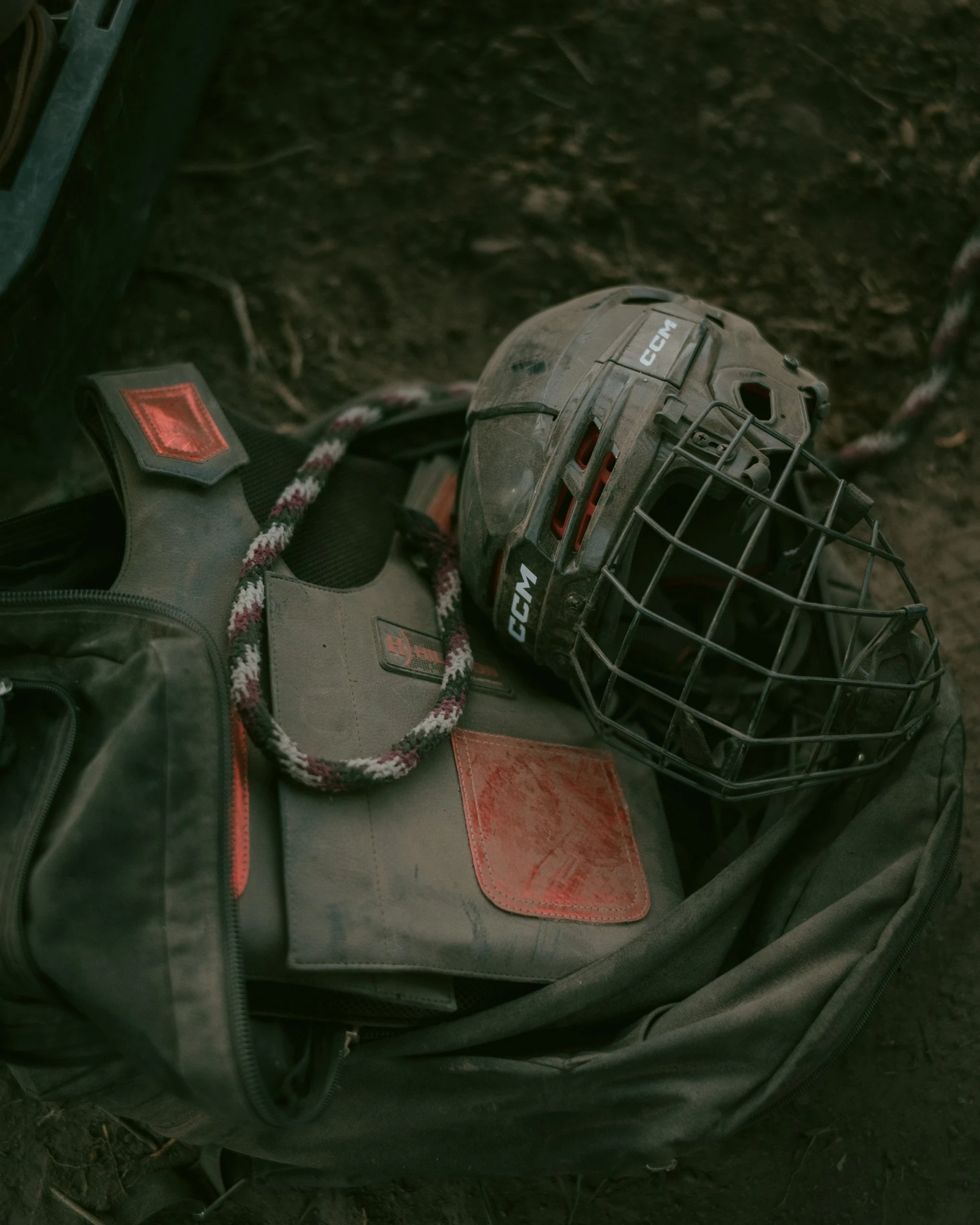
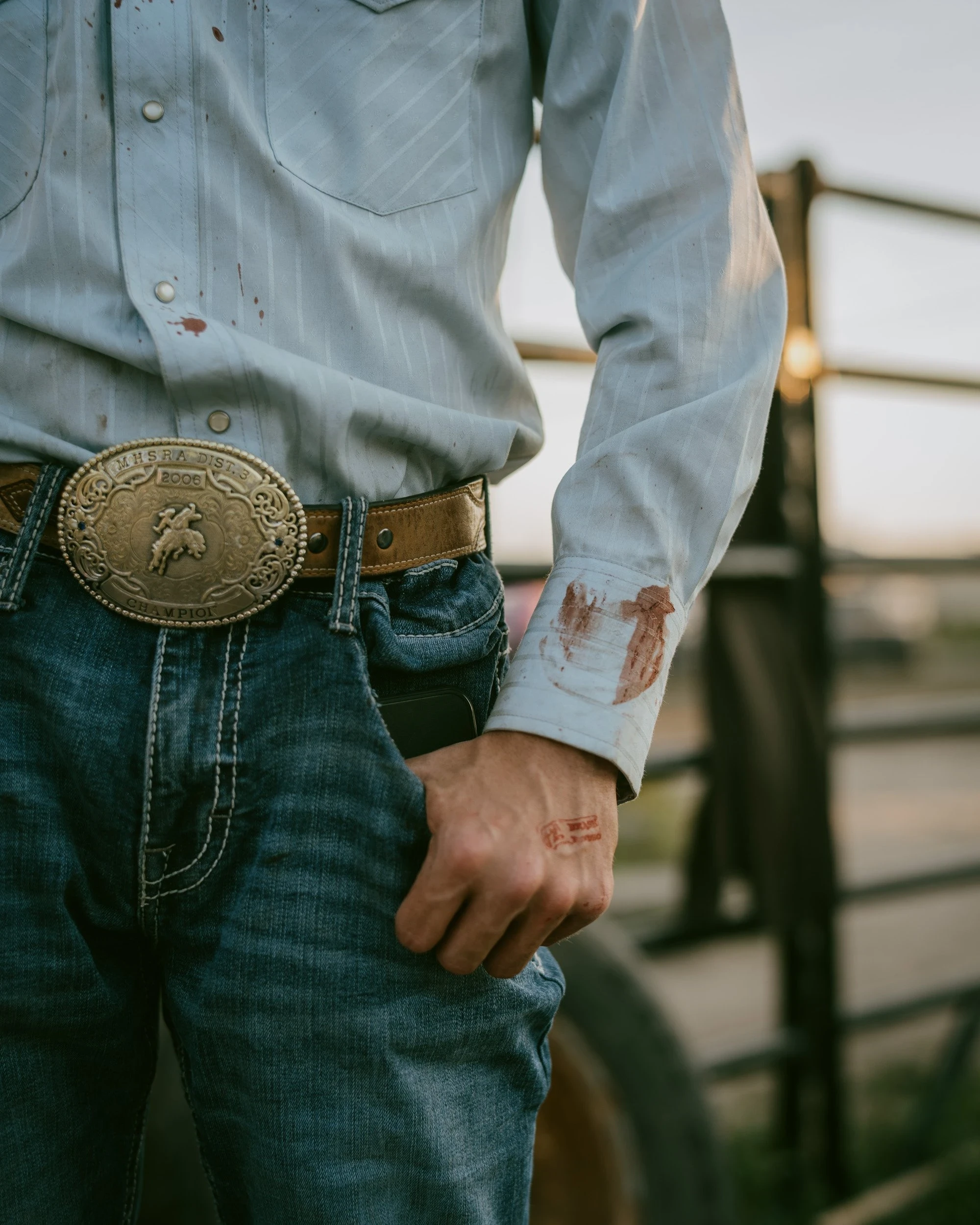
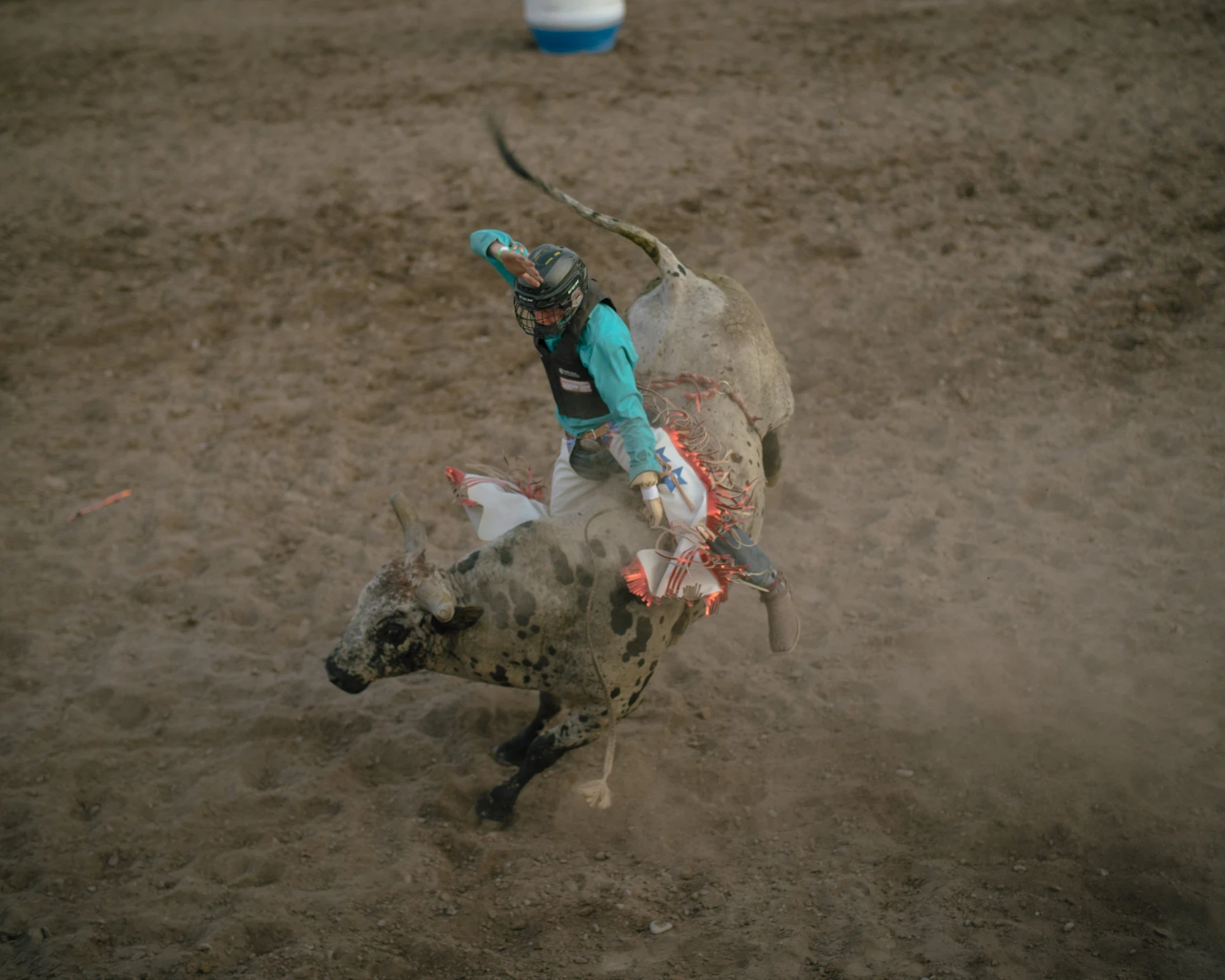
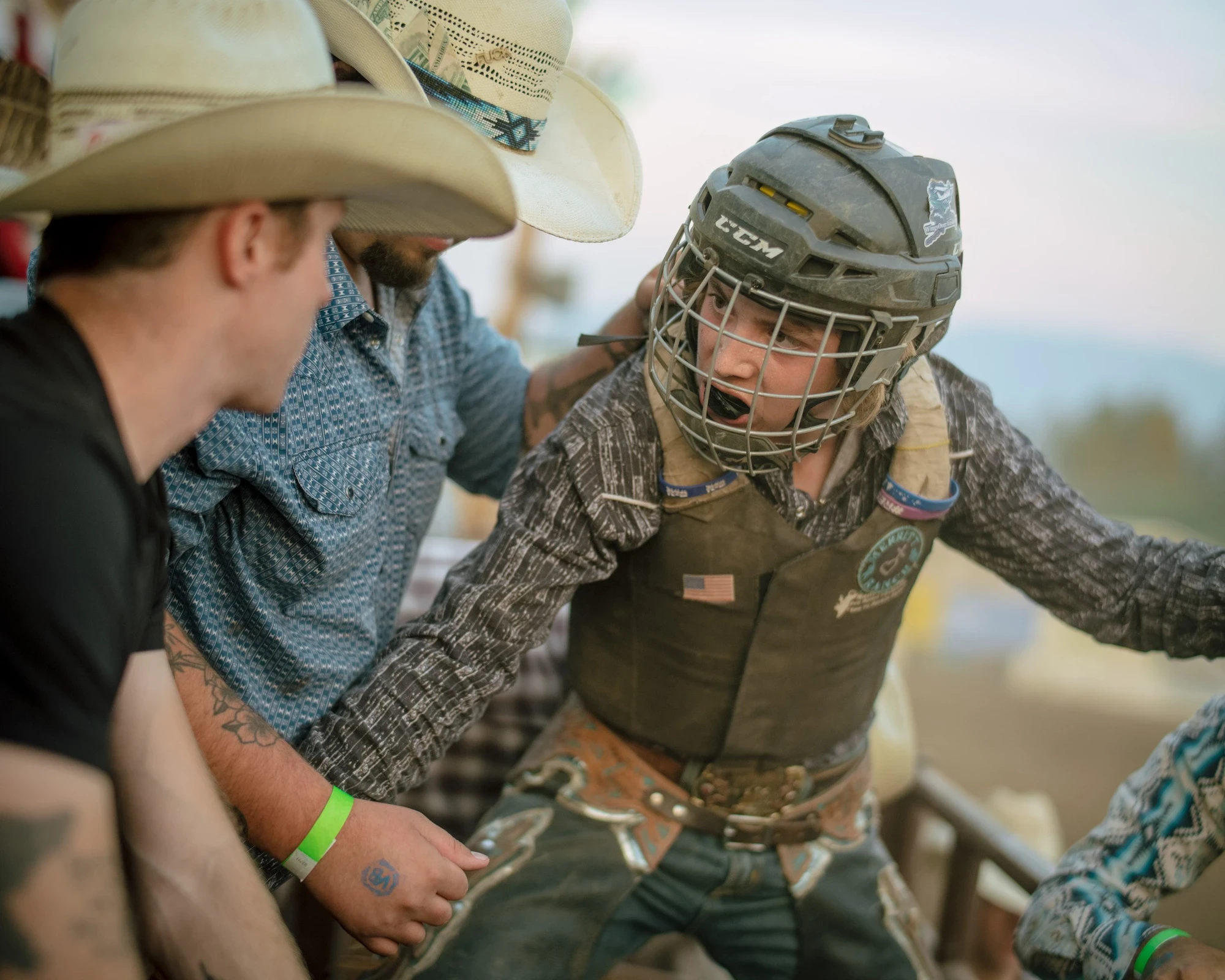
Agosto says he was drawn first to the action, then began looking for the lightness inside it. That instinct organizes the whole series. A hockey cage bolted onto a bull rider's helmet. A father pressing his face into a child's helmeted head, his forearm tattooed with a verse about fathers and sons. Two men in a truck cab throwing peace signs, one shirtless under an open plaid shirt. The violence is real, blood dried on a shirt cuff and a knuckle, but it is rarely the point of the frame.
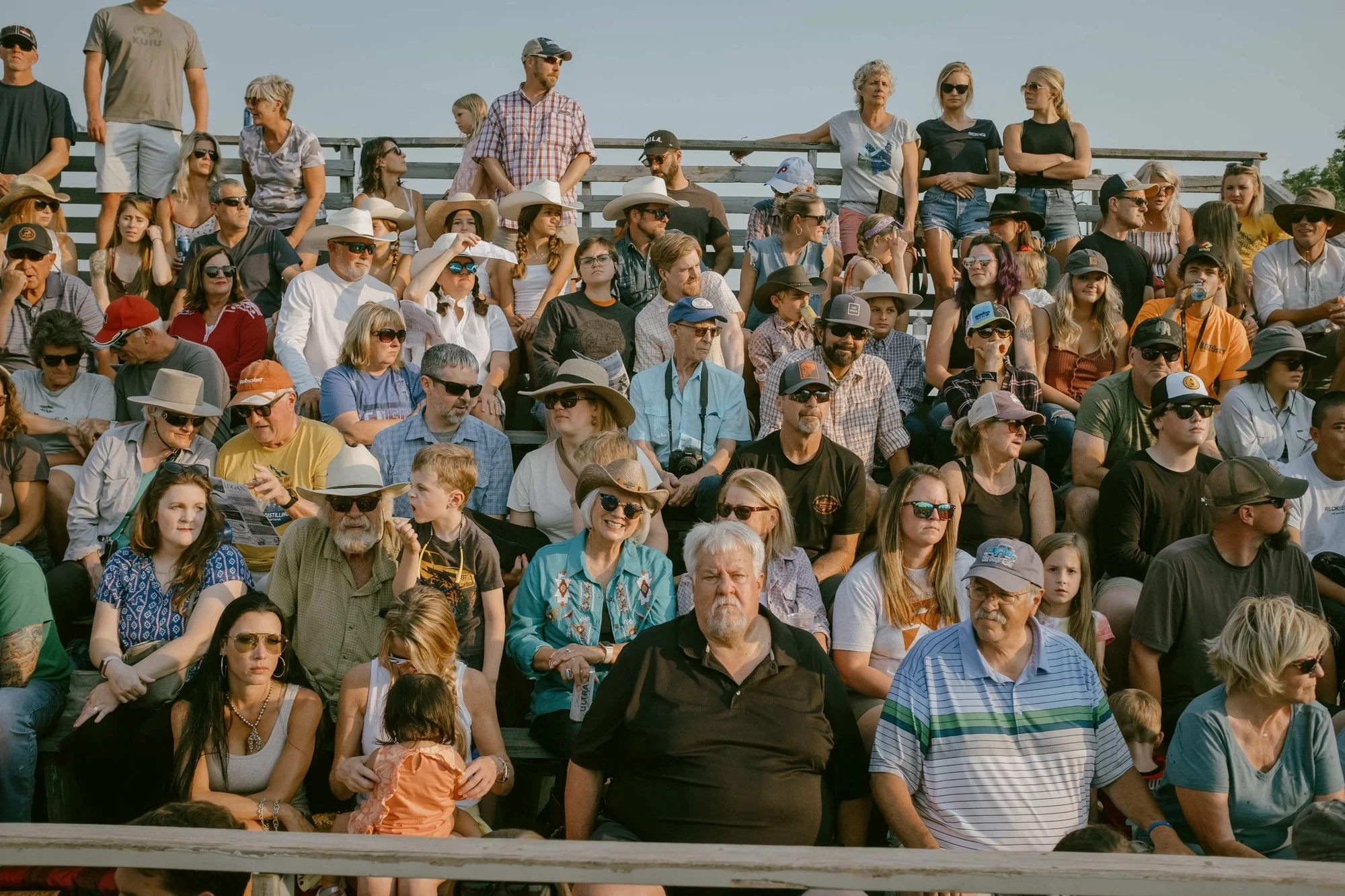
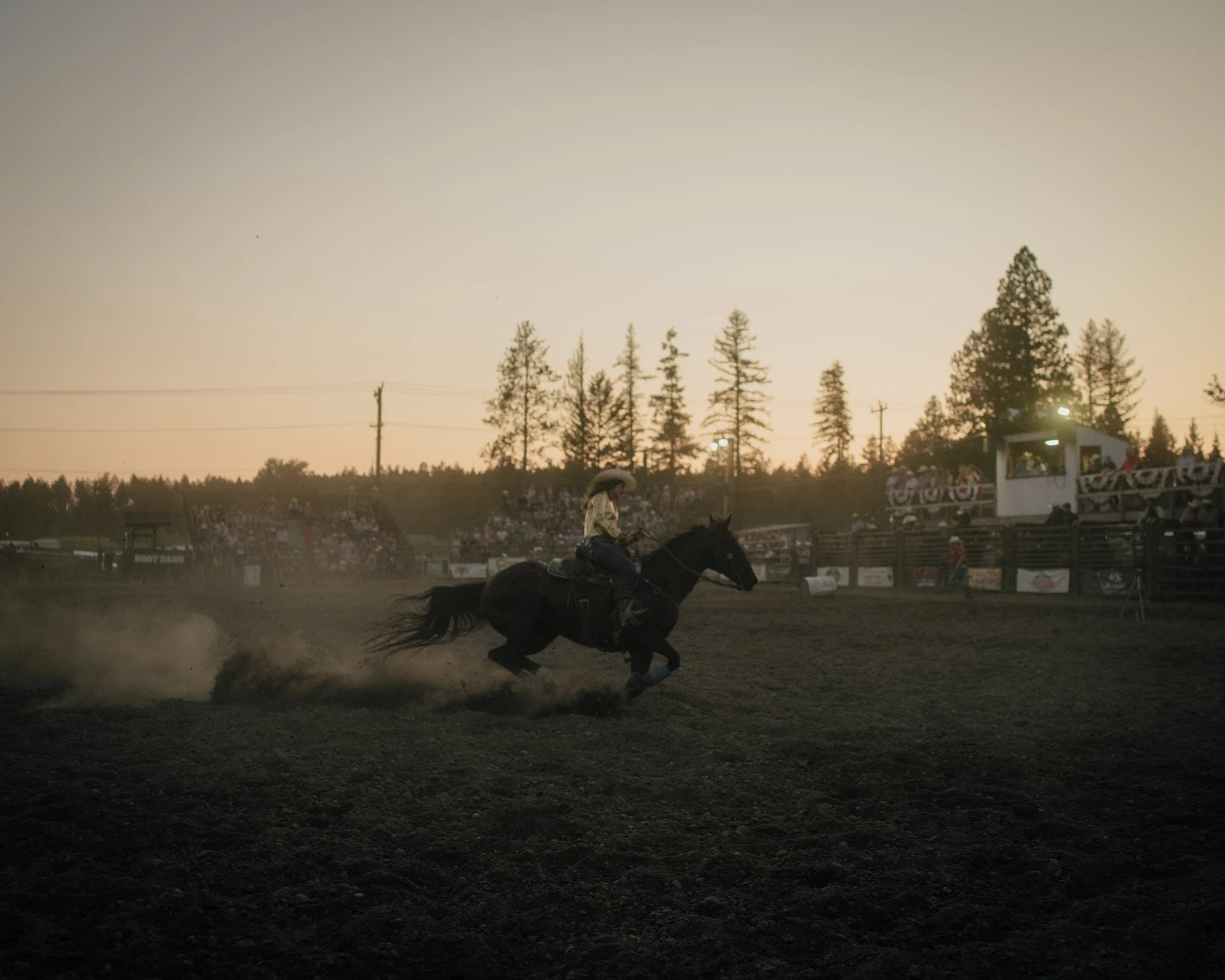
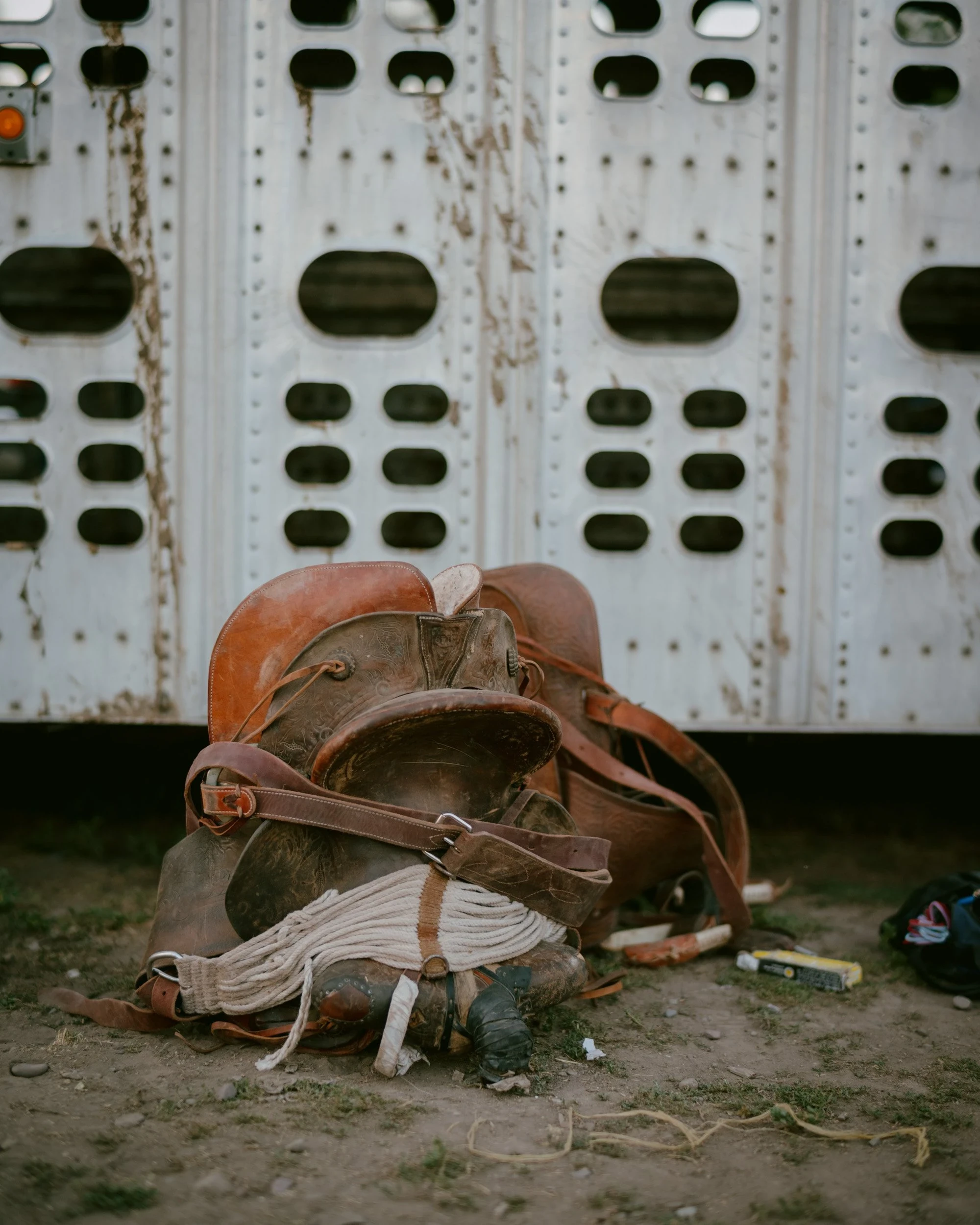
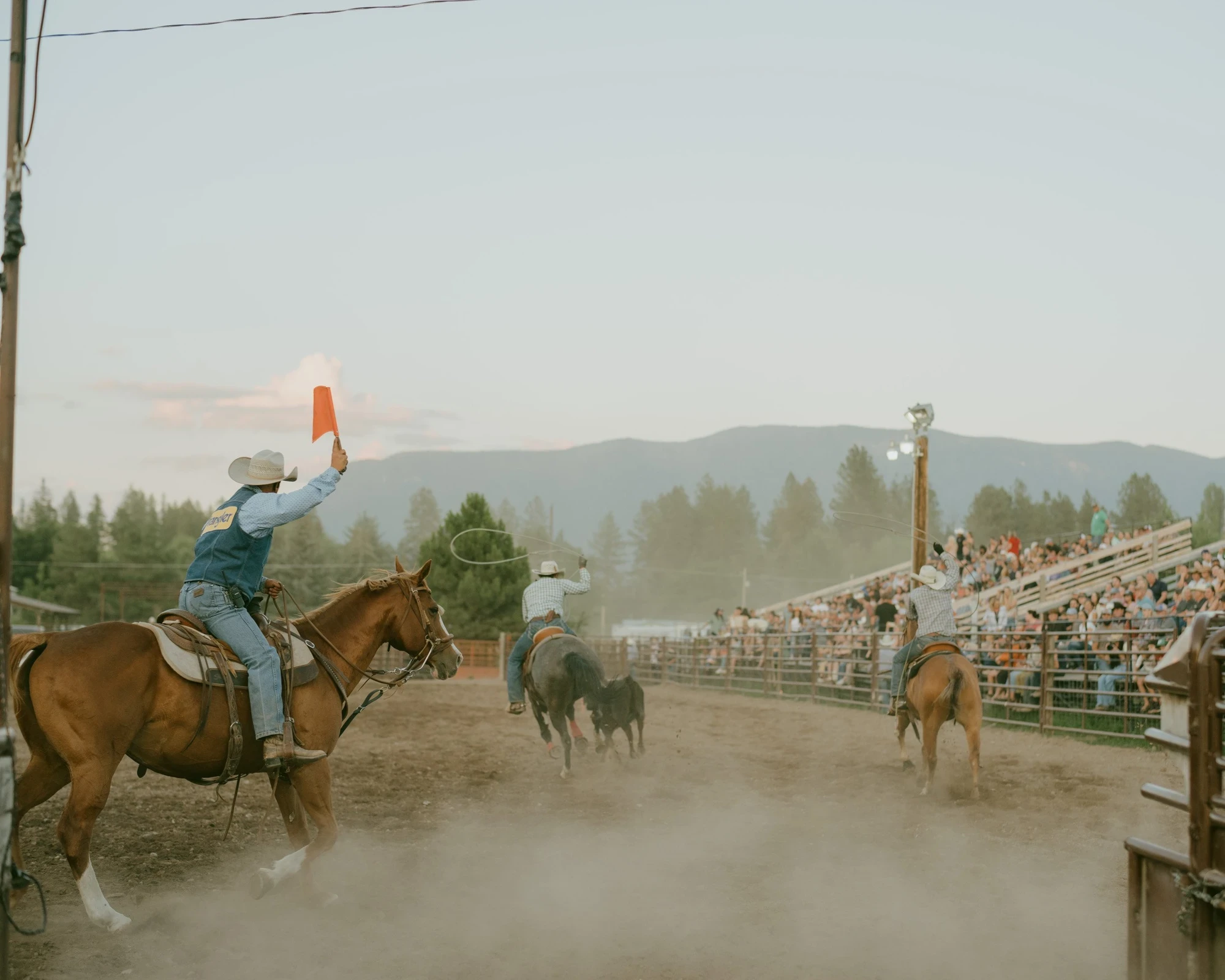
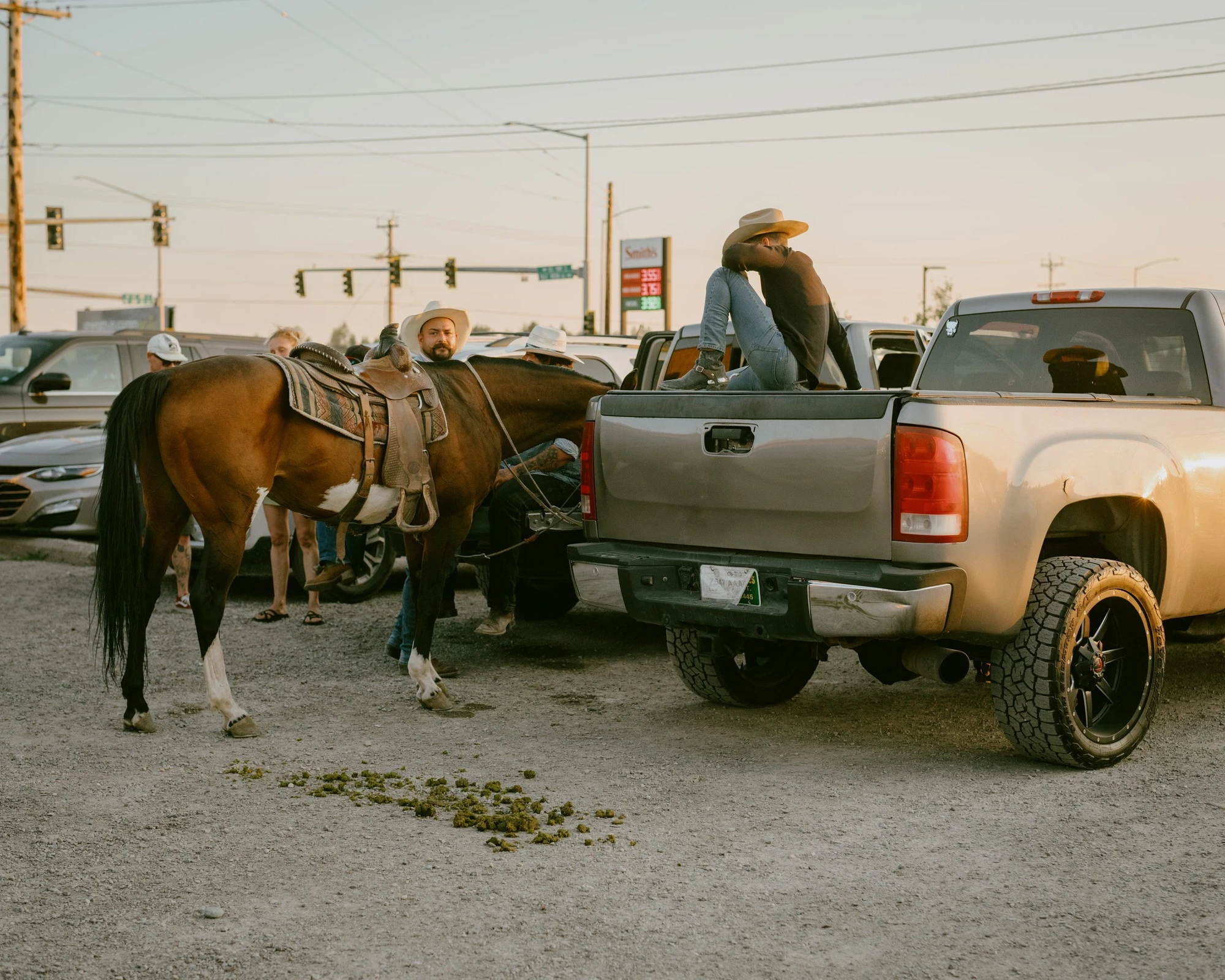
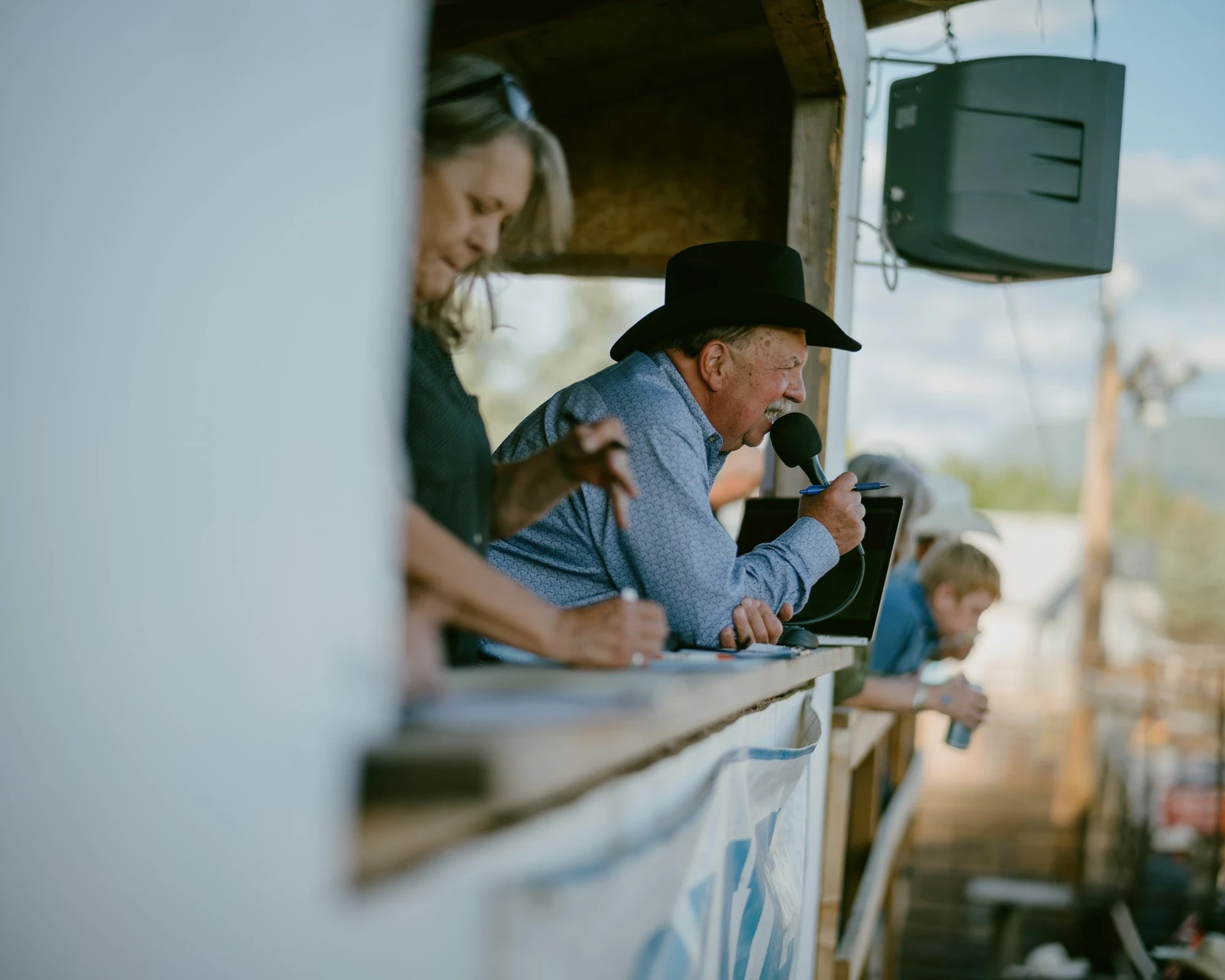
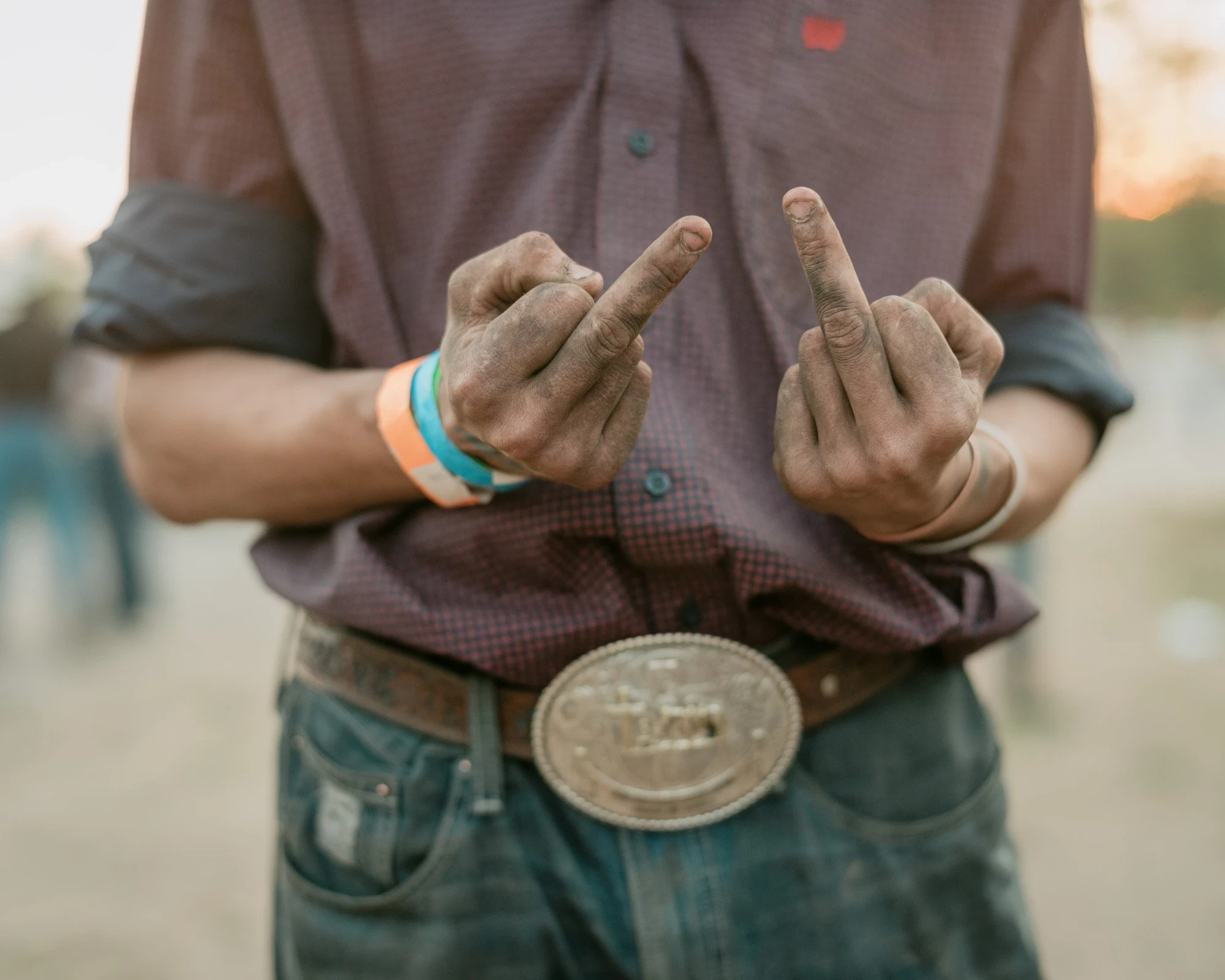
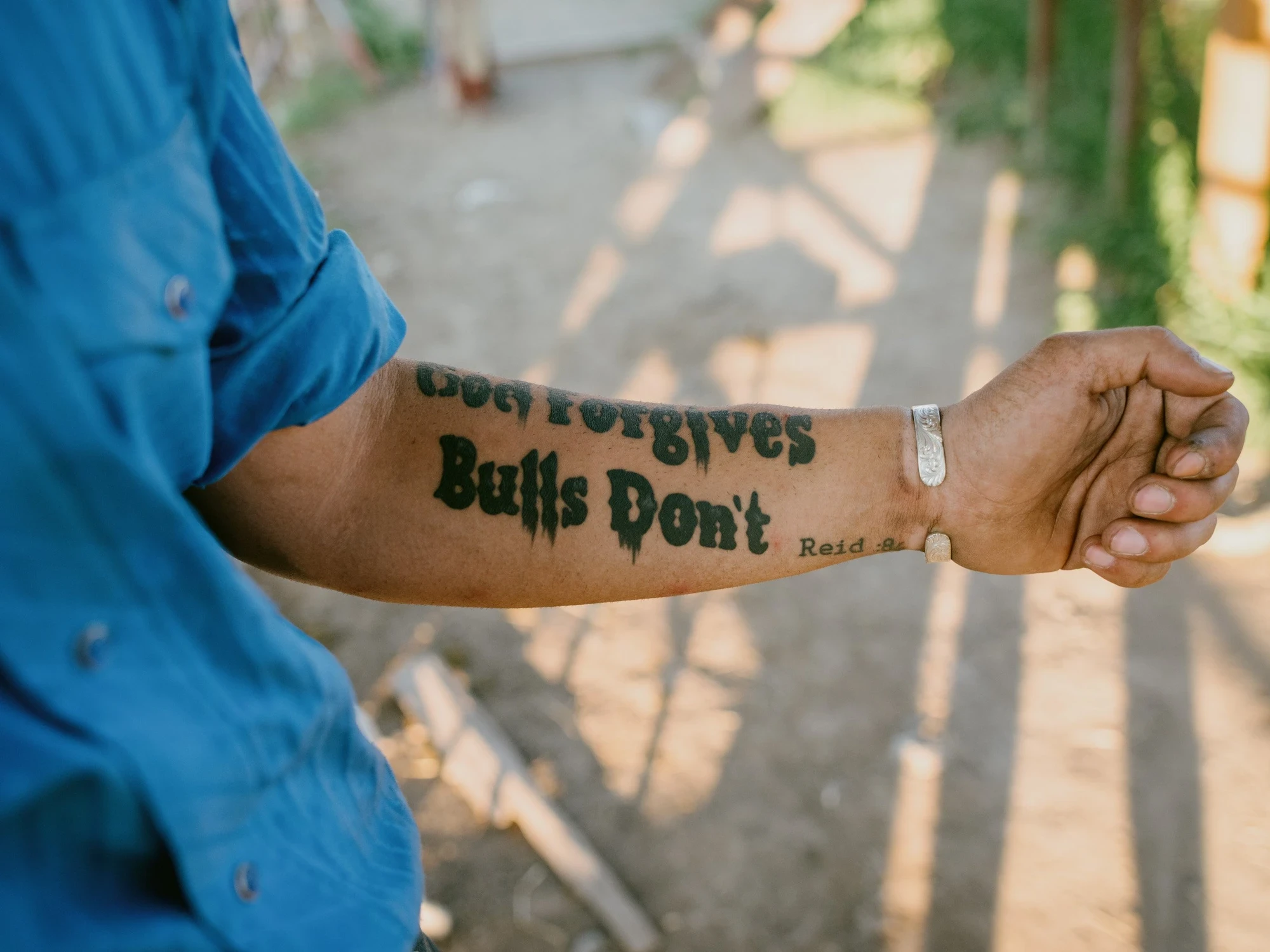
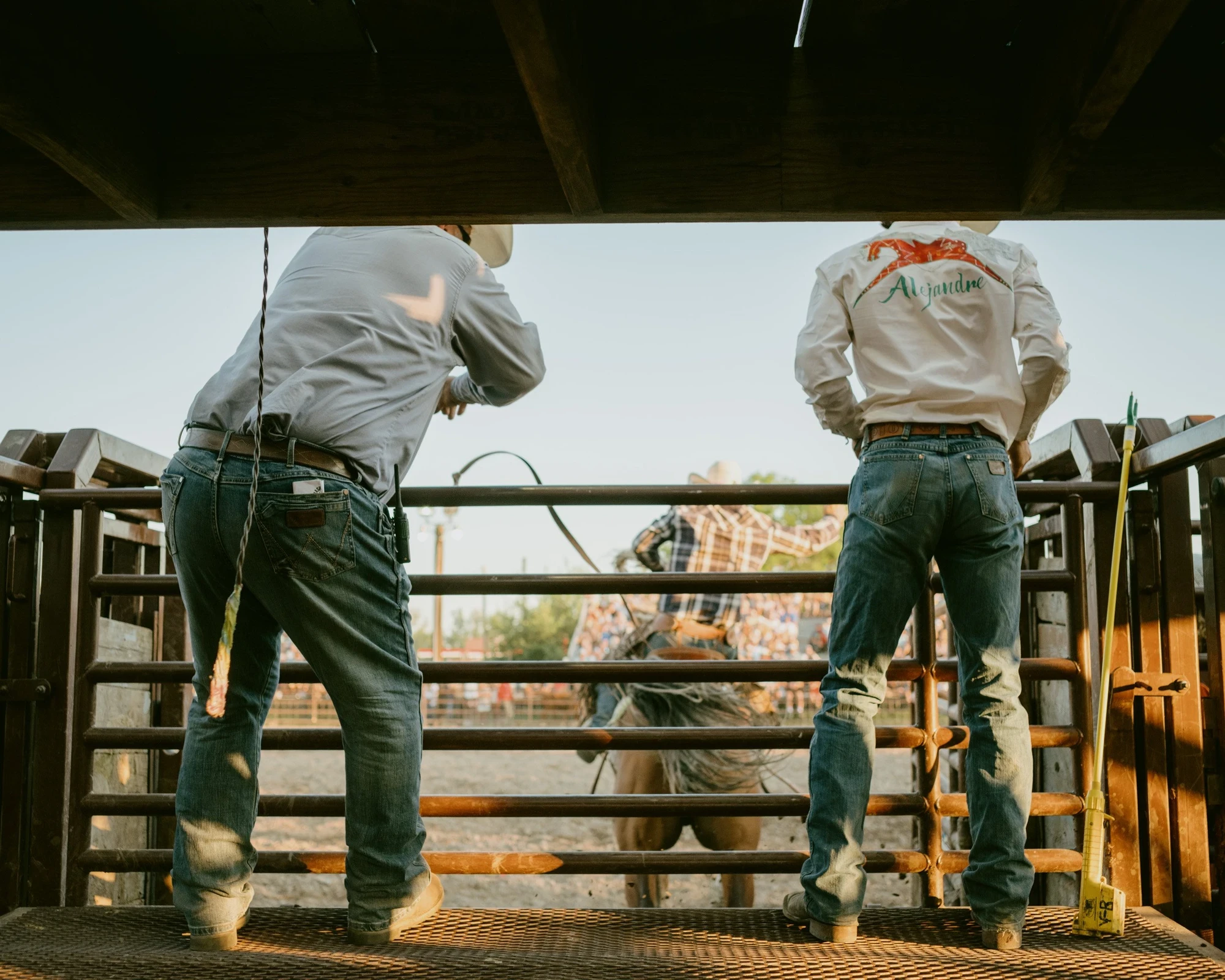
The details do the work the captions would. A forearm reads God Forgives, Bulls Don't. A brass belt buckle catches the last of the sun. A saddle slumps in the dirt against the ribbed aluminum of a livestock trailer, cinch and rope coiled beside it like something set down mid-sentence. Agosto photographs the periphery with the same attention as the eight-second ride: the crowd on the bleachers, the announcer leaning into his microphone, a lone attendant lit inside a Contestant Check-In booth after dark.
What accumulates is a portrait of a place that refuses to stay flat. The West of Brash is broad and contradictory, shaped like the landscape that made it. Agosto complicates the cowboy without condescending to him, and the affection in the looking is unmistakable. The myth said one thing. The arena, photographed honestly, keeps saying something else.