On the banks of the River Tay near Cupar, Scotland, Barboza Blanco rebuilds a roofless stone shell into a one-person riverside dwelling, the timber felled from the forest directly behind it.
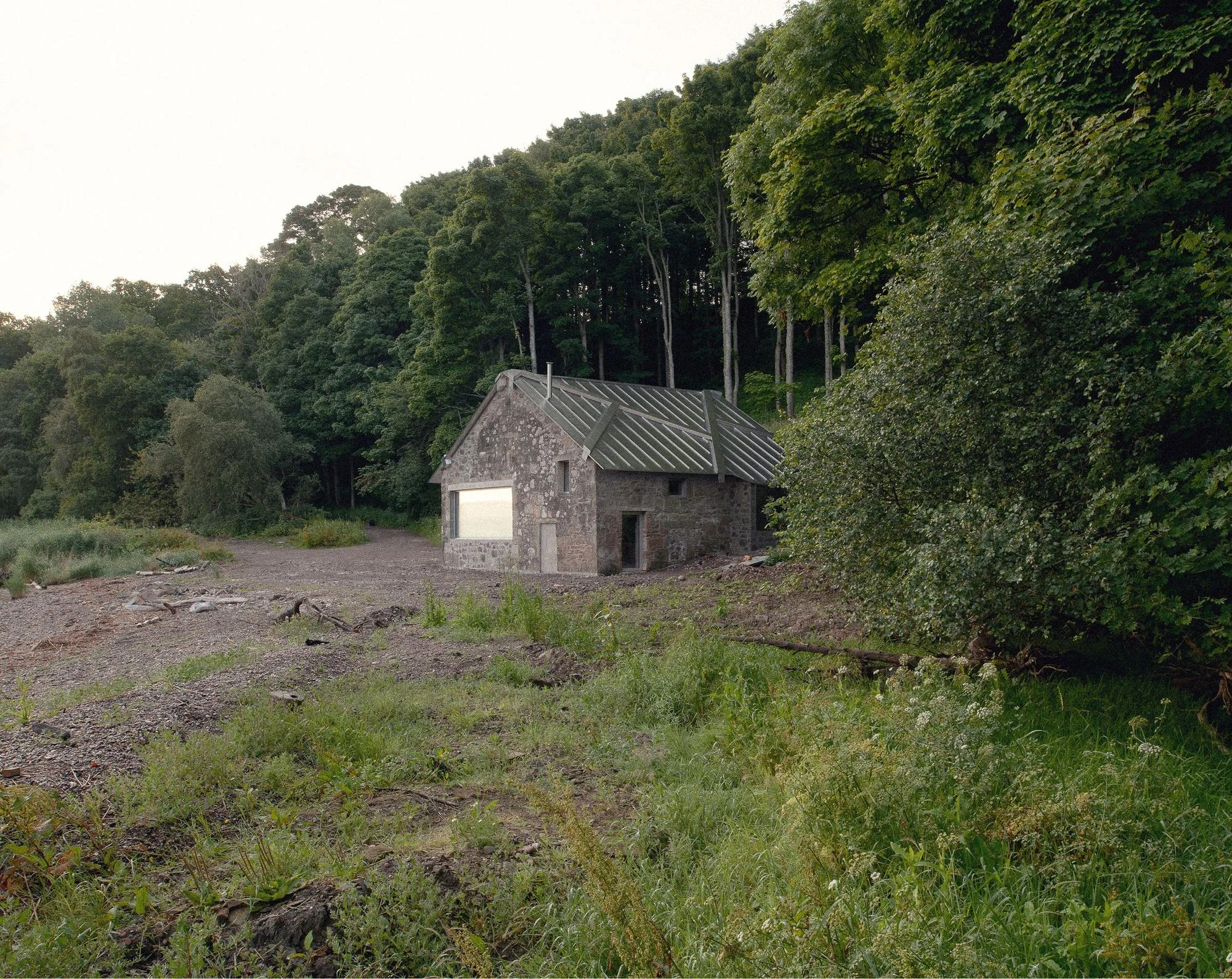
It is hard to reach. There is no road to the site; the Tay is at the front, a dense forest at the back, the nearest large town more than an hour away. A ruined stone structure four walls high with no roof, its history unclear but its walls suggesting something more permanent than a net shed, up to six metres tall and sixty centimetres of coursed stone. The client found it and decided to turn it into a weekend retreat. By the end of the project, he was living in it most of the year.
For Caio Barboza, Brazilian-born, and his Spanish partner Sofia Blanco, who had previously worked mainly in north-western Spain, this was the first construction contract for their office. The remoteness of the site made logistics both the constraint and the method. The woodland behind the house was being cleared anyway. Rather than heavy equipment, which would have compacted the forest floor permanently, they enlisted local forestry workers and logging horses to harvest the tree trunks needed for the new roof structure. The timber came from fifty metres away.
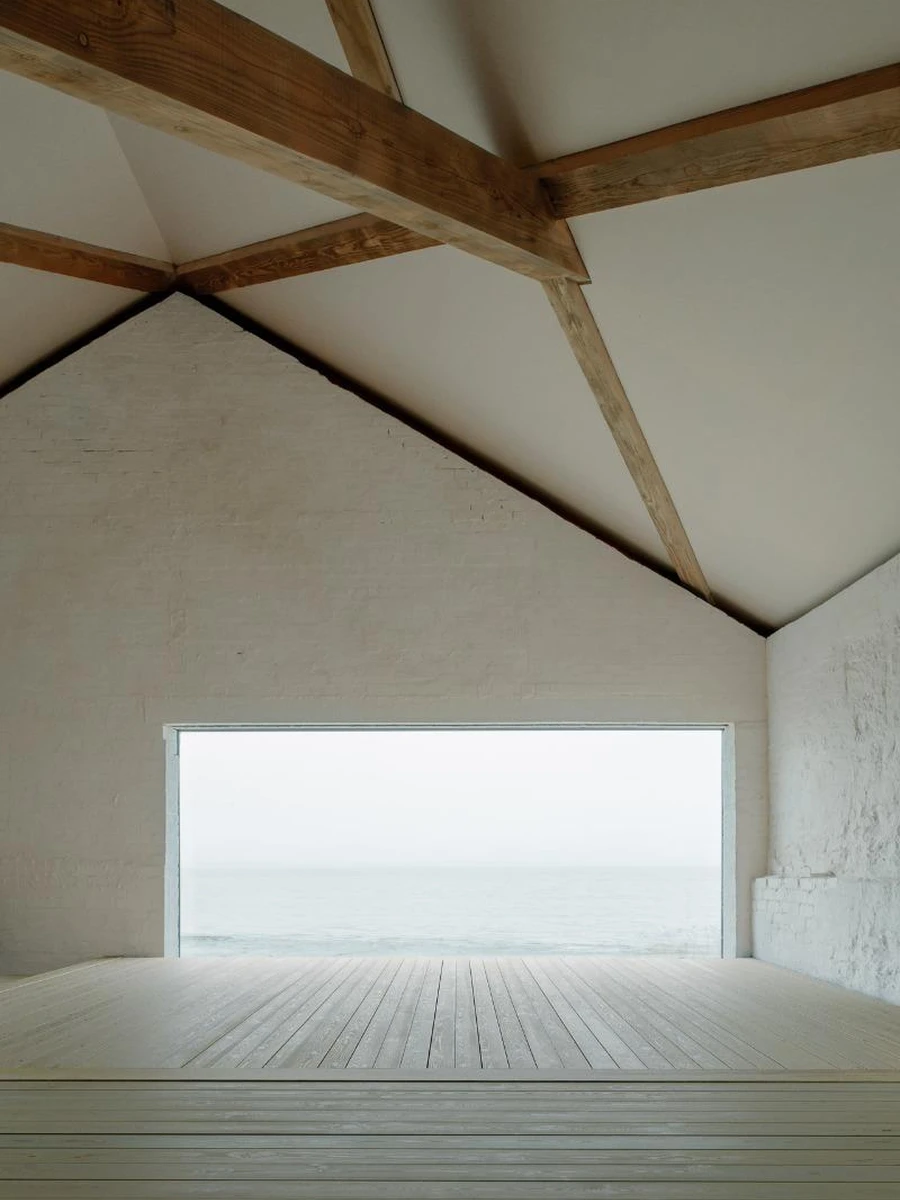
One trunk became the centre of the house. Using traditional mortise and tenon joinery, Barboza Blanco attached branches to the central trunk, the roof structure fanning out from a single load-bearing column that also supports the new wooden floor. To avoid weakening this central support unnecessarily, the floor is divided into four platforms at different heights, zoning the interior without partition walls. The entrance steps up from a flood-safe level; the kitchen runs along one long wall; the bathroom and utility room open separately from the outside. A wood-burning fireplace in the outer wall sits beside the entrance, built into the stone.
In Rohan Strathie's photographs, the interior reads as something between a woodland clearing and a barn, the existing stone walls receiving the new timber roof where they stop, the platforms creating a sectional complexity you would not expect from such a small plan. The exterior photographs show the building before and after: raw stone walls, a new corrugated metal roof sitting lightly on top, the site as cleared and muddy as a construction zone, then the building settled into the vegetation. What the client took to be temporary, visiting on weekends, eventually handing the place over to guests, turned out to be otherwise. The love story the press release mentions is accurate. The boathouse is now a home.