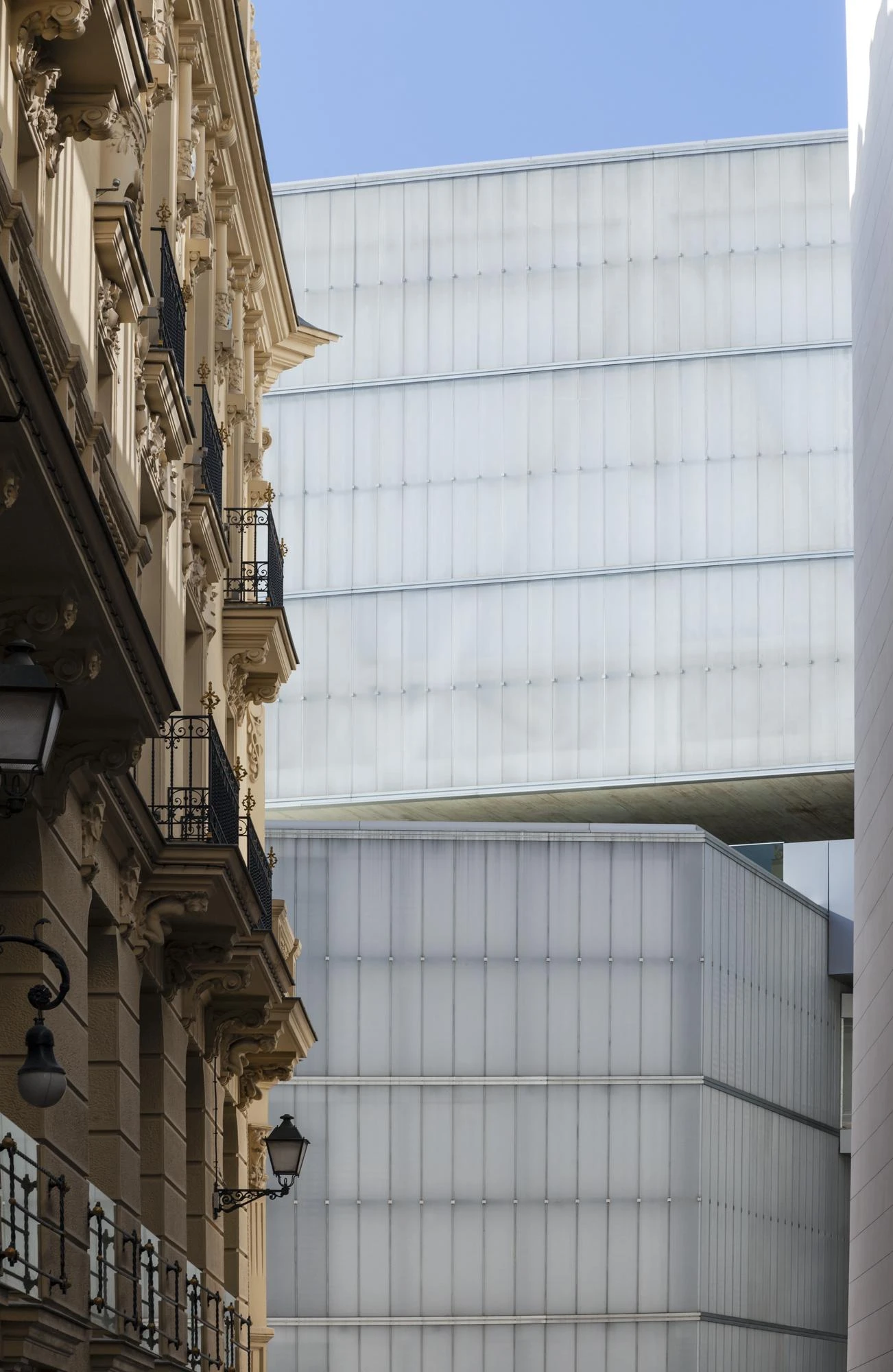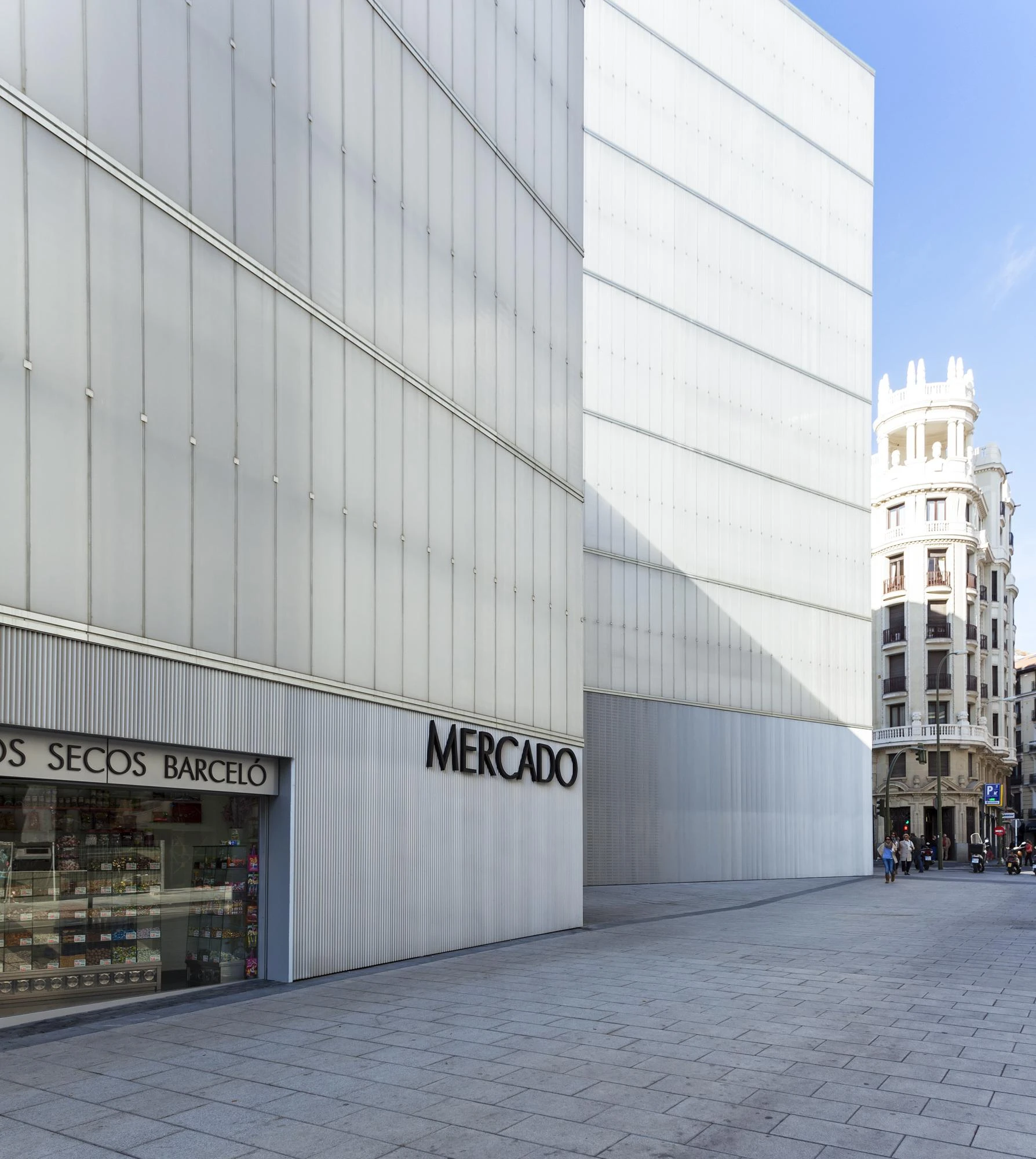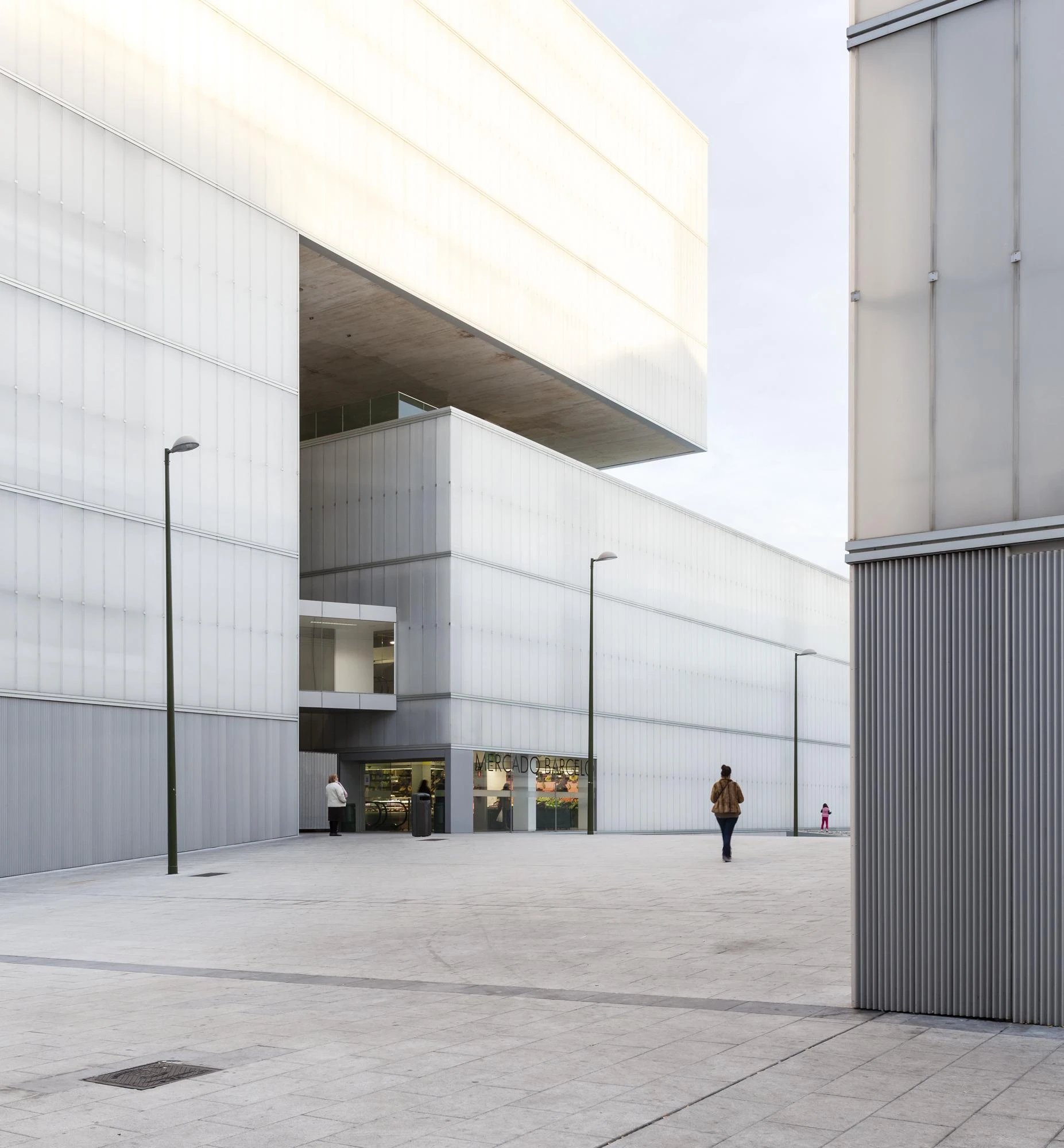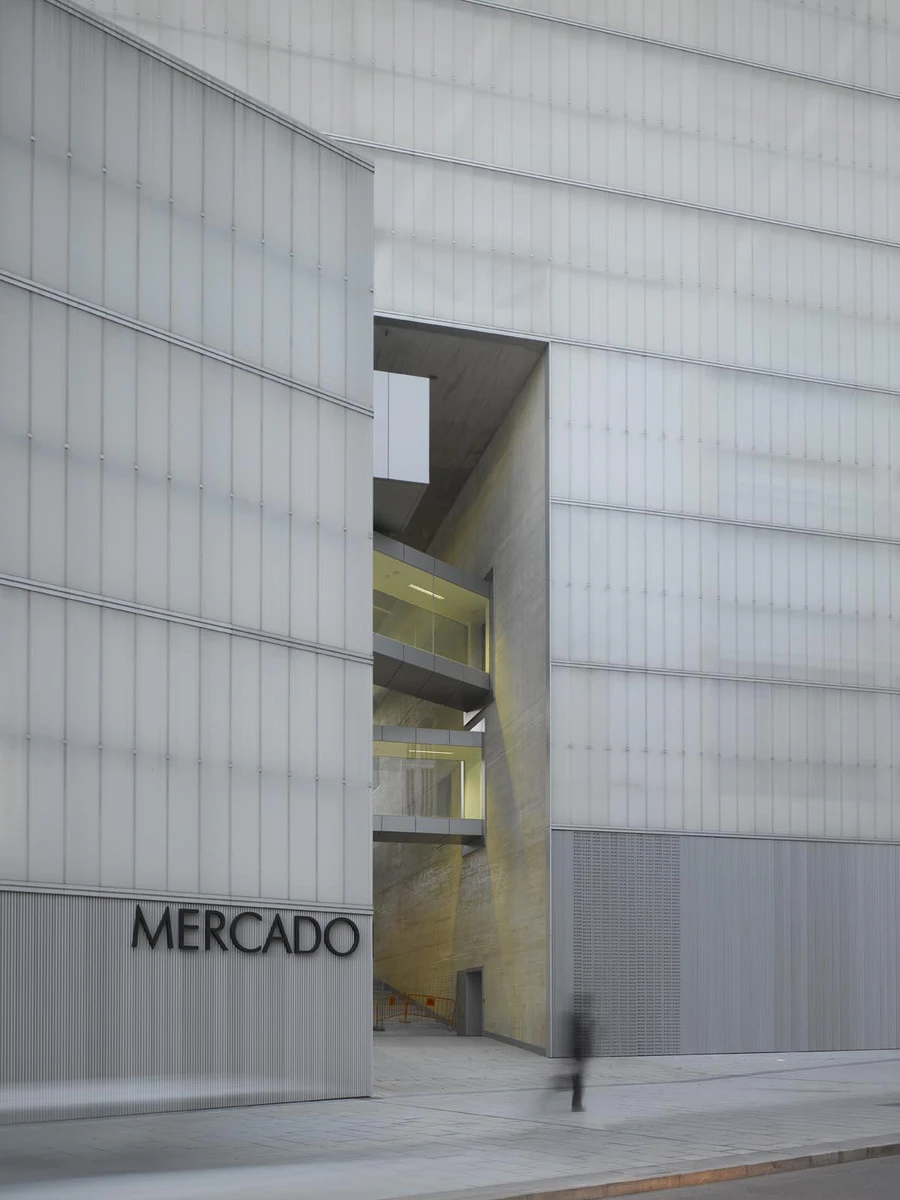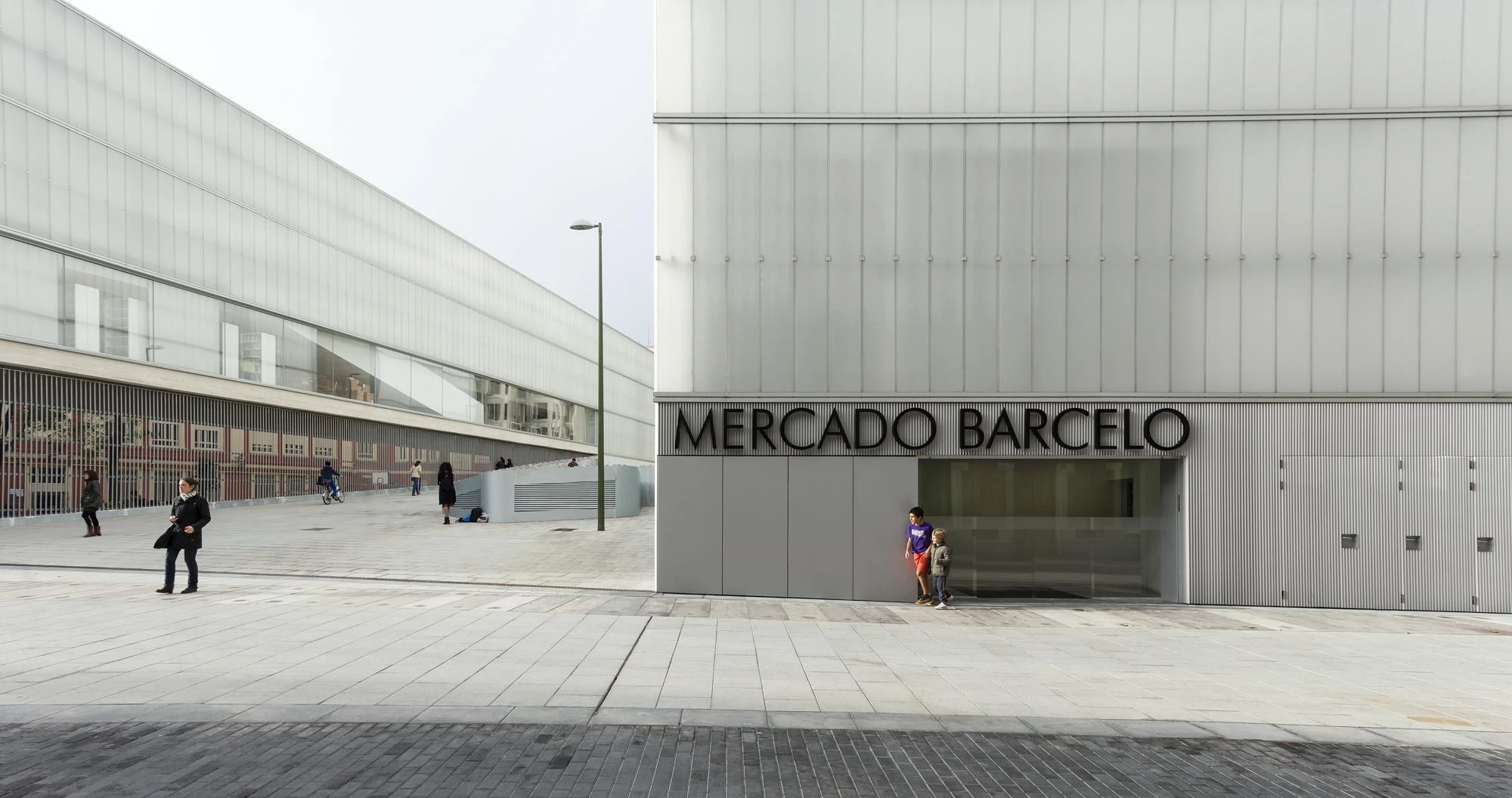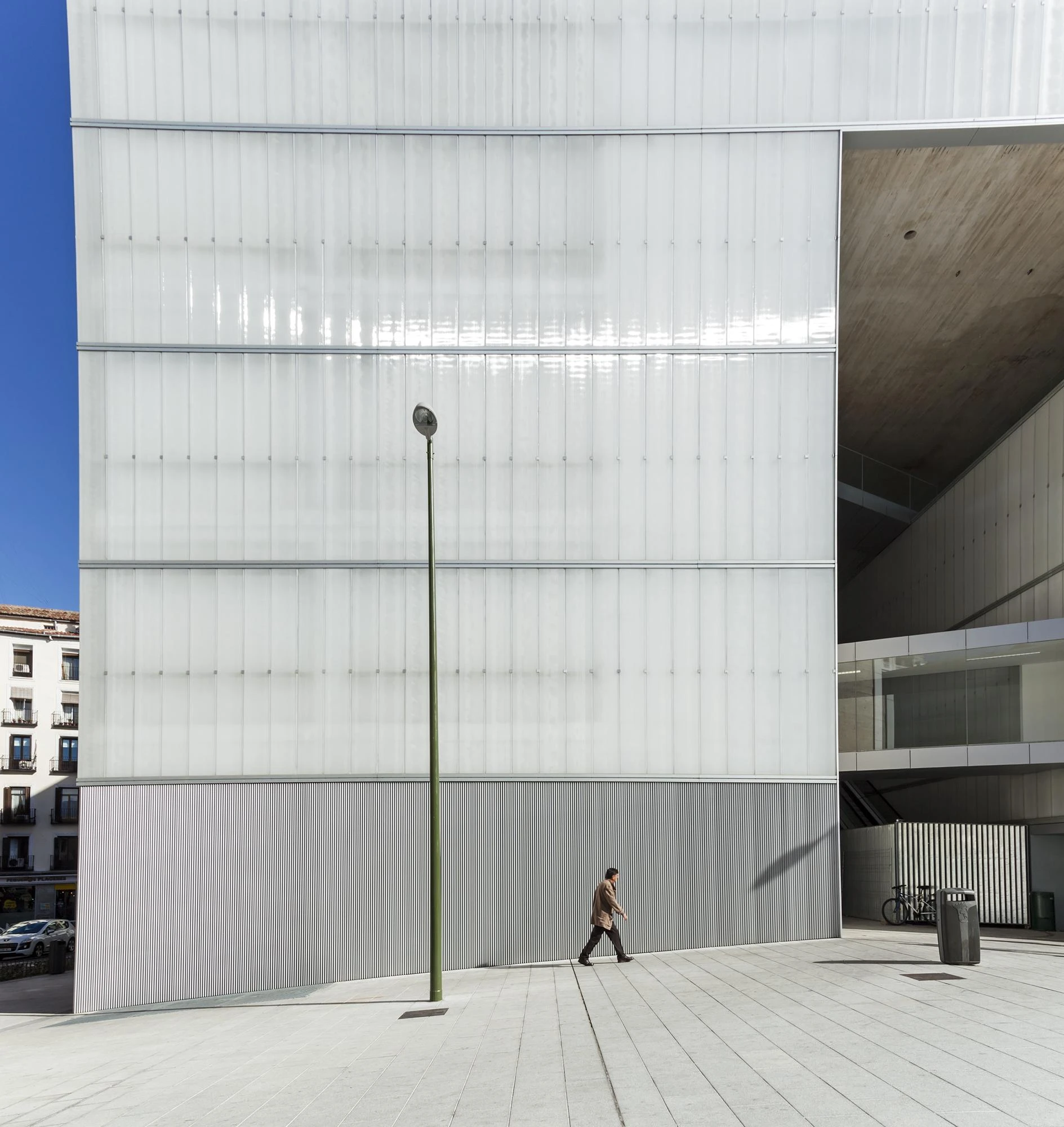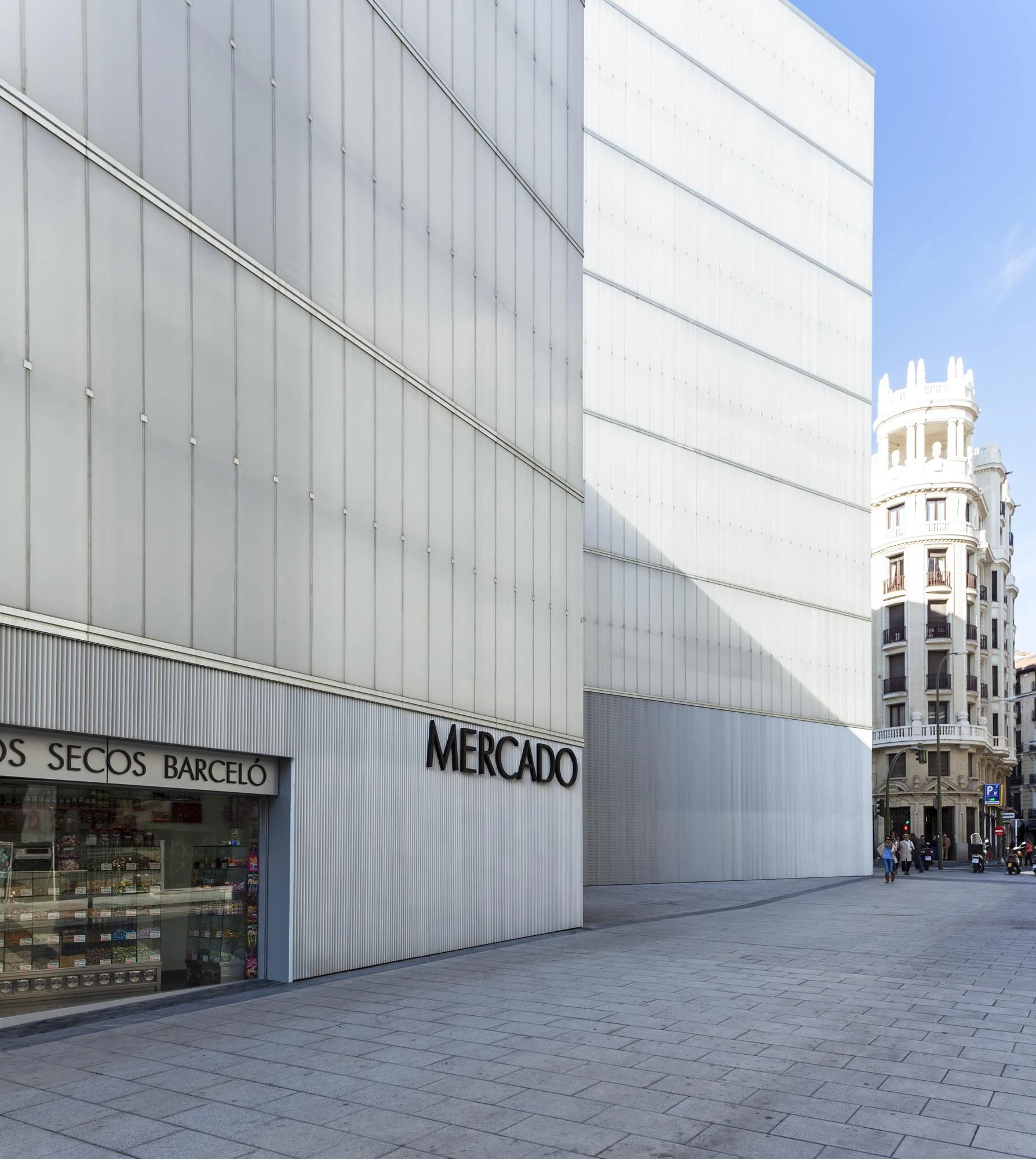
At the seam of Madrid's historic centre, Nieto Sobejano Arquitectos press market, sports hall and library into one block held together by a skin of white opaline cast glass.
The brief at the intersection of Mejía Lequerica and Beneficencia streets was dense by nature. Three civic programs had to coexist on a compact urban plot in a neighbourhood defined by historical buildings and contemporary structures, narrow streets and extensions. Enrique Sobejano and Fuensanta Nieto read the density as the project: "Its multiple denomination — market / sports center / library — speaks of collective engagement and reveals the social condition of the program."
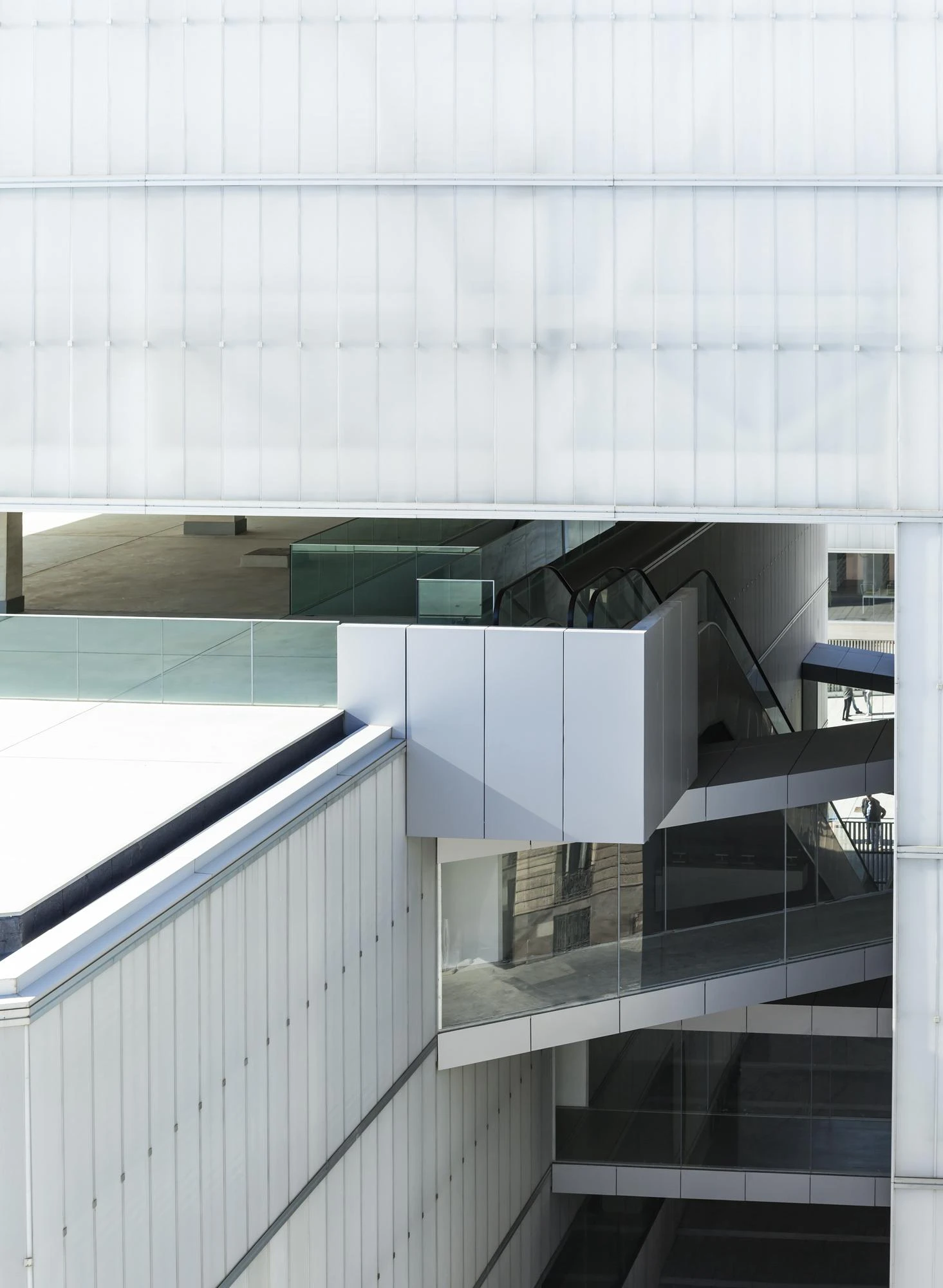
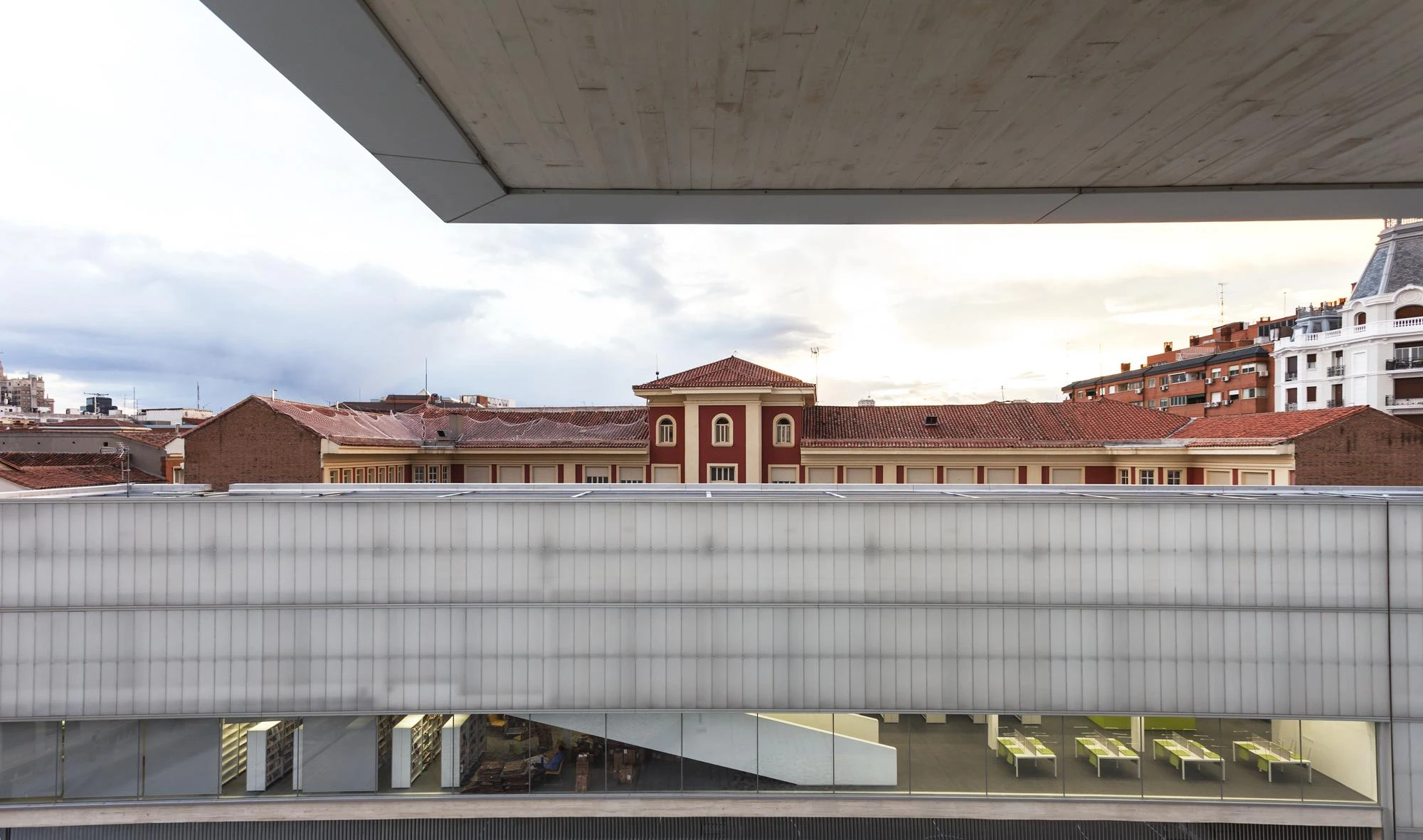
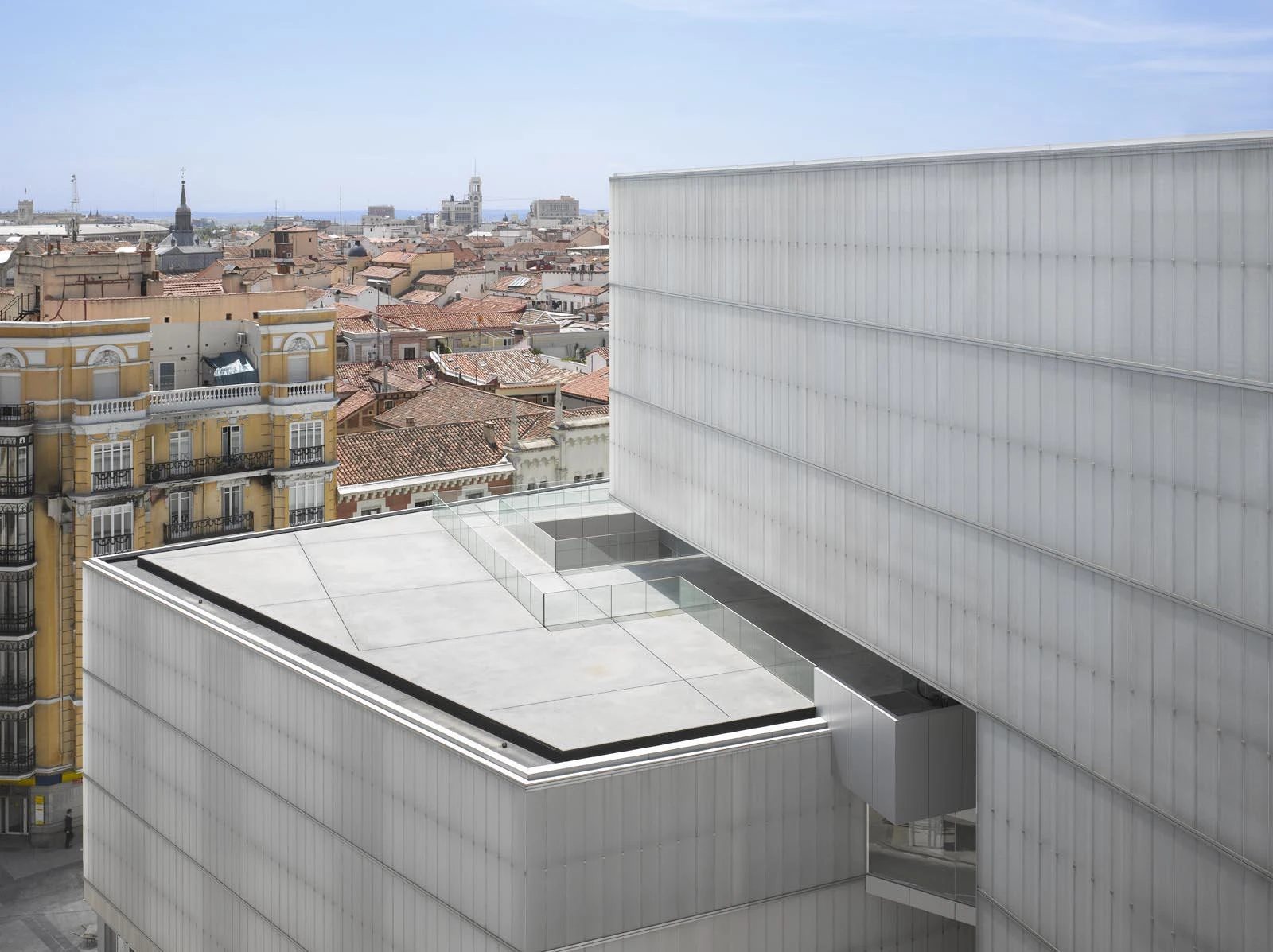
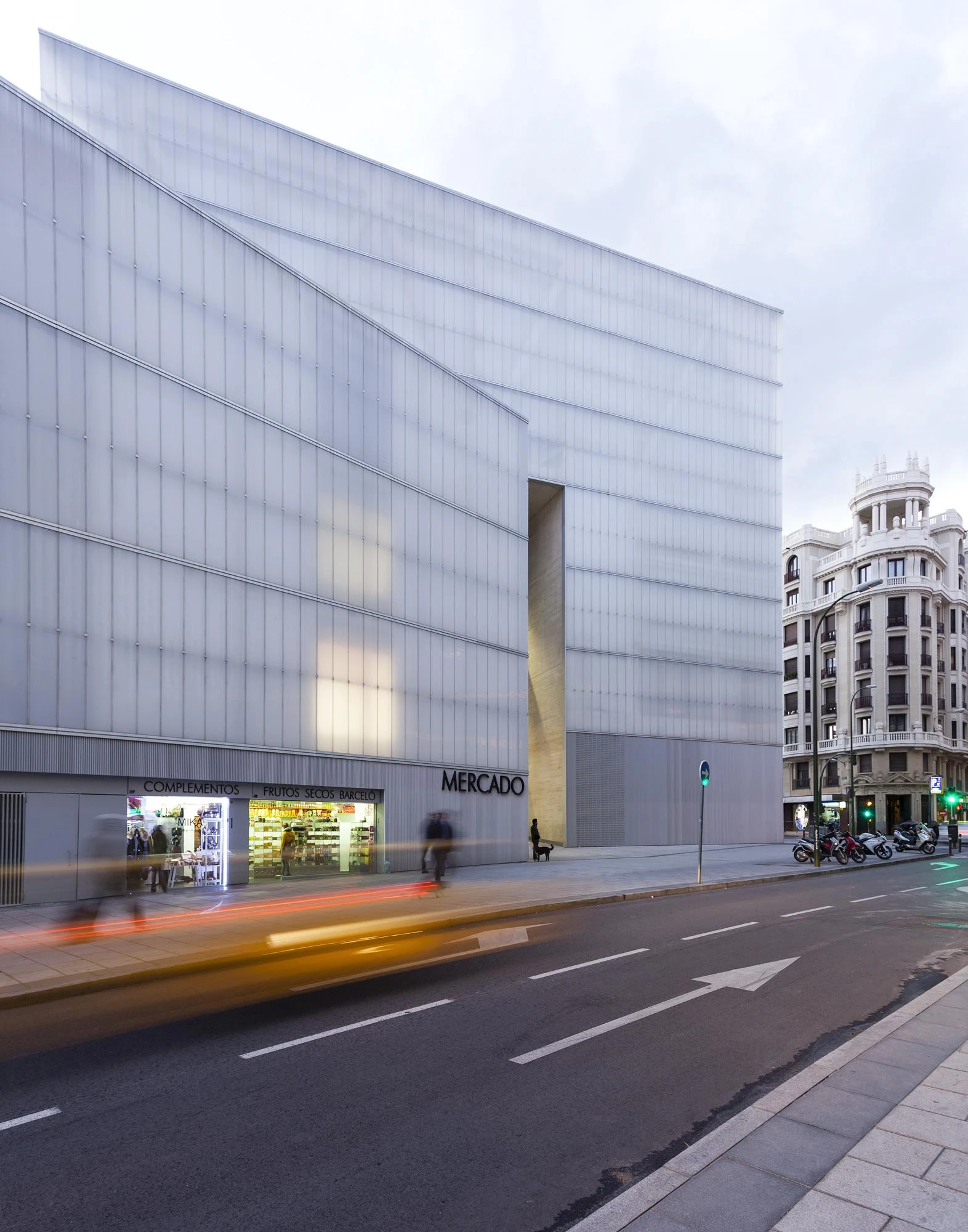
Each part takes a different structural position. A compact market sits at street level, functioning as a base. Above it, a sports pavilion juts outward using a space-frame structure, turning its roof into a raised public terrace with views of the Madrid roofscape. Across a long narrow plaza, a cantilevered library hovers above the schoolyard. Container, frame, bridge. The three elements generate a covered street, an elongated plaza, and a raised terrace — three distinct spatial experiences on the same plot.
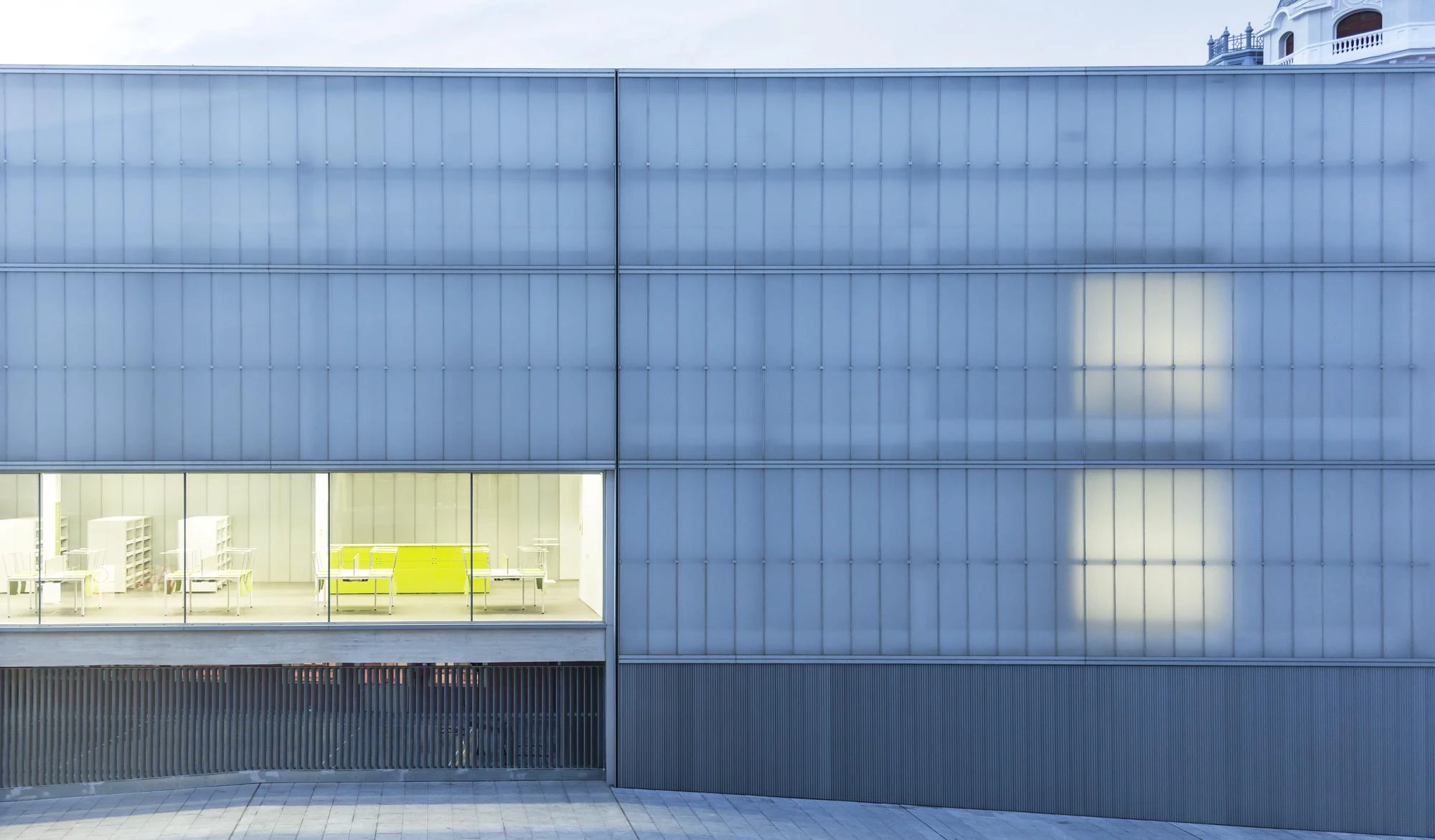
A unified skin of large white opaline cast-glass panels wraps all three buildings. This is the move that holds the complex together as a single material gesture despite the variety of its uses. "A skin formed by large pieces of cast glass — white and opaline — unifies its exterior appearance," the architects write, "thus lending lightness and unity to the complex." Translucent rather than transparent, the glass surface modulates the relationship between the building's mass and the street, giving a large block surprising depth.
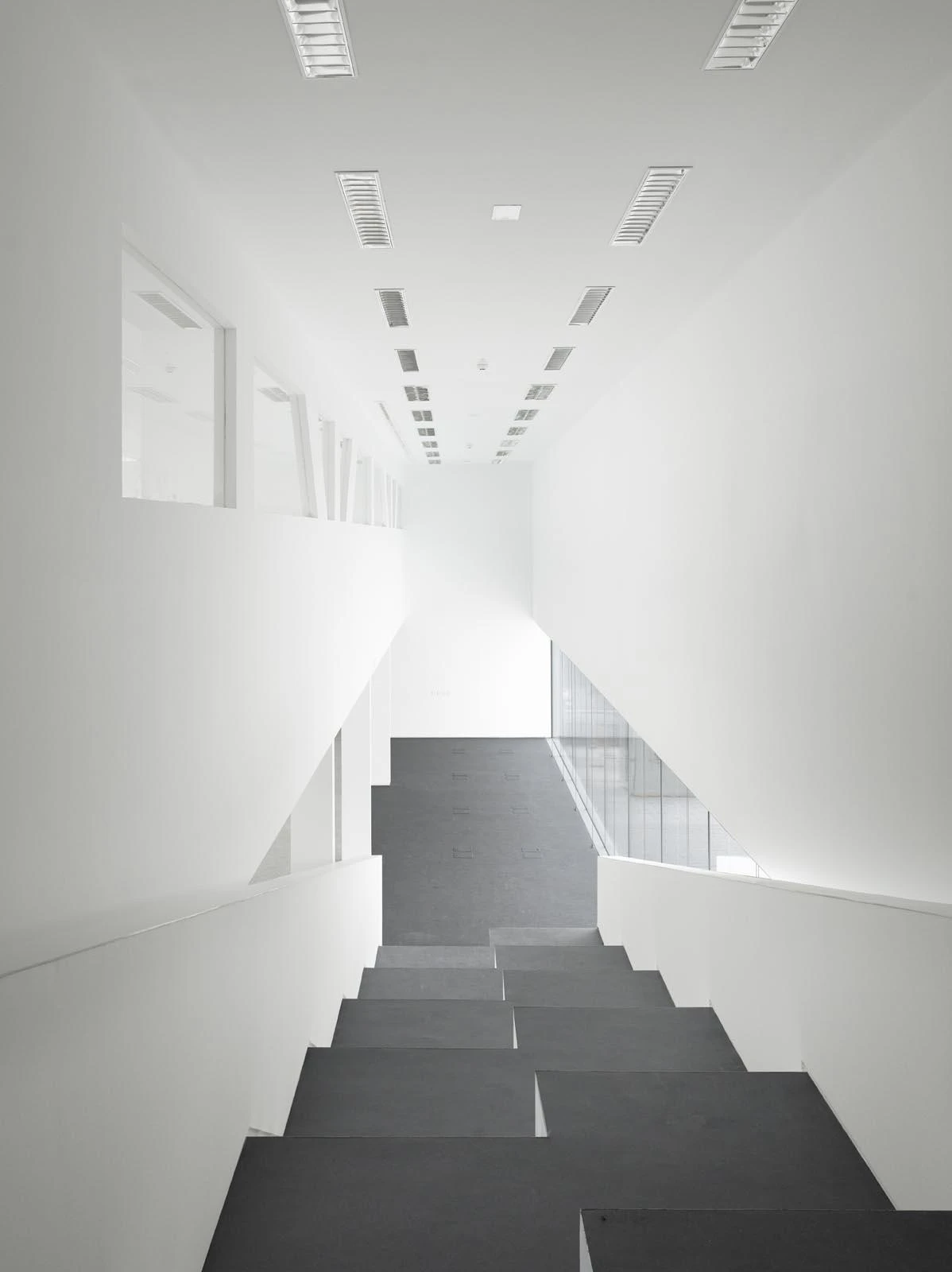
Photographers Roland Halbe and Marcela Grassi document the complex at different scales — Halbe's exterior views establishing the block's relationship to the Madrid fabric, Grassi's interiors recording the quality of diffuse daylight through the cast glass panels inside. Together they constitute a complete survey of what the architects describe as "the dense and hybrid condition" the project embodies: a civic block that refuses to be one thing, and is resolved precisely because of it.