Set within the Buyeo National Museum in South Korea, the Baekje Gilt-Bronze Incense Burner Hall by WGNB approaches architecture as a medium of translation rather than display.
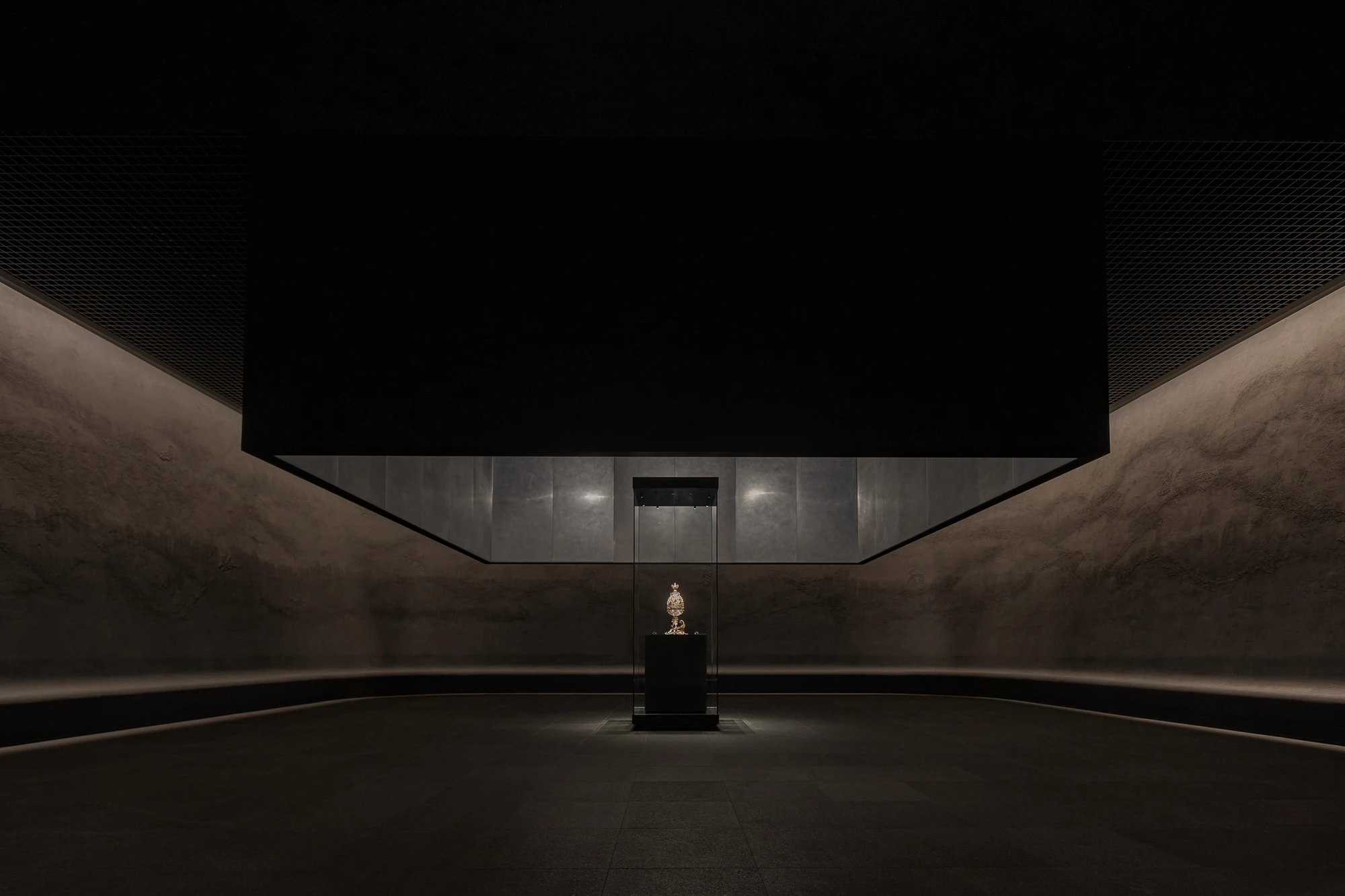
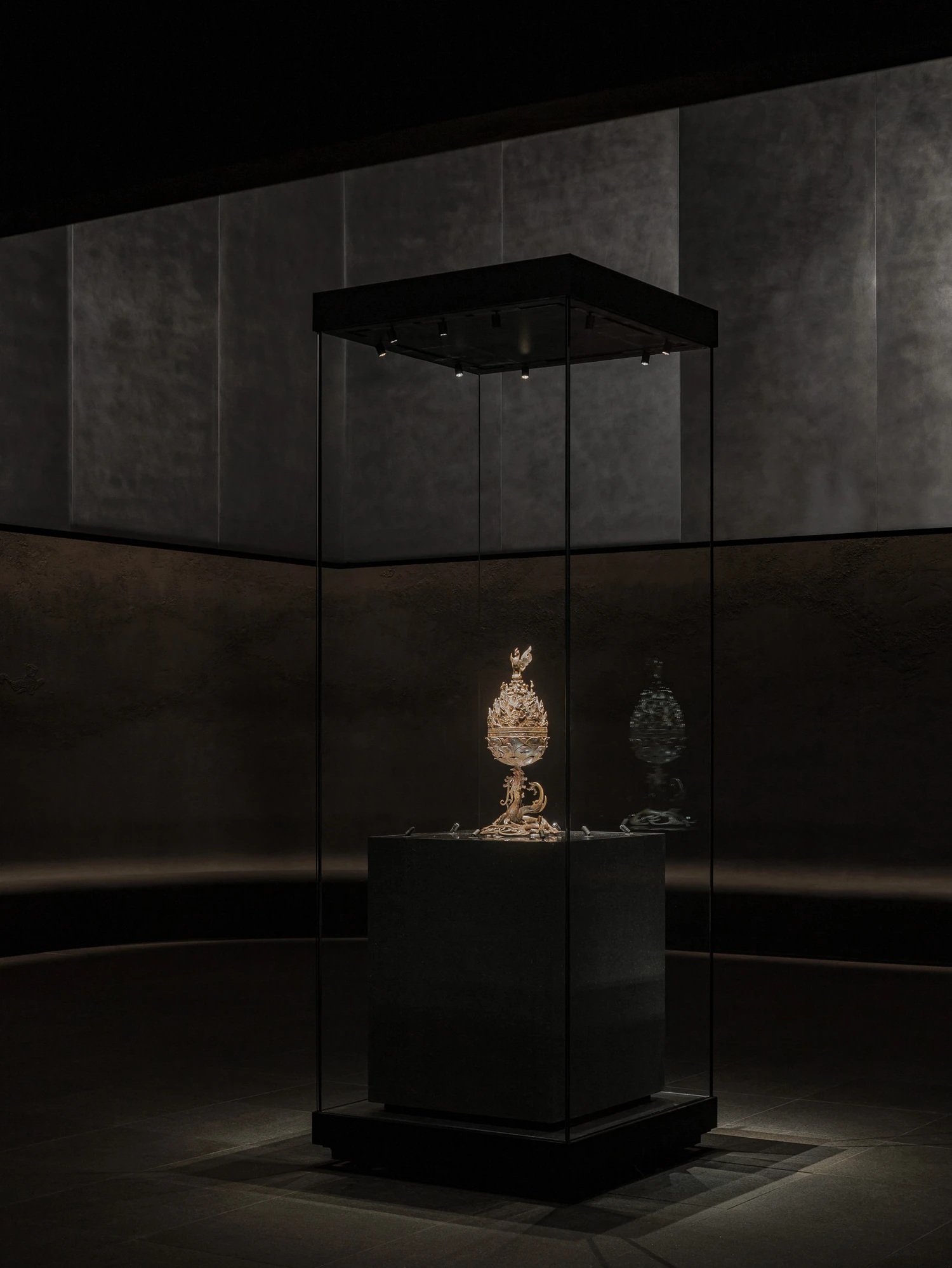
The project is anchored by one object, yet it resists the conventions of the vitrine or the didactic gallery. Instead, the hall frames the incense burner as a gravitational center, allowing spatial order to quietly perform the work of interpretation. Movement, light, and pause replace text as primary guides.
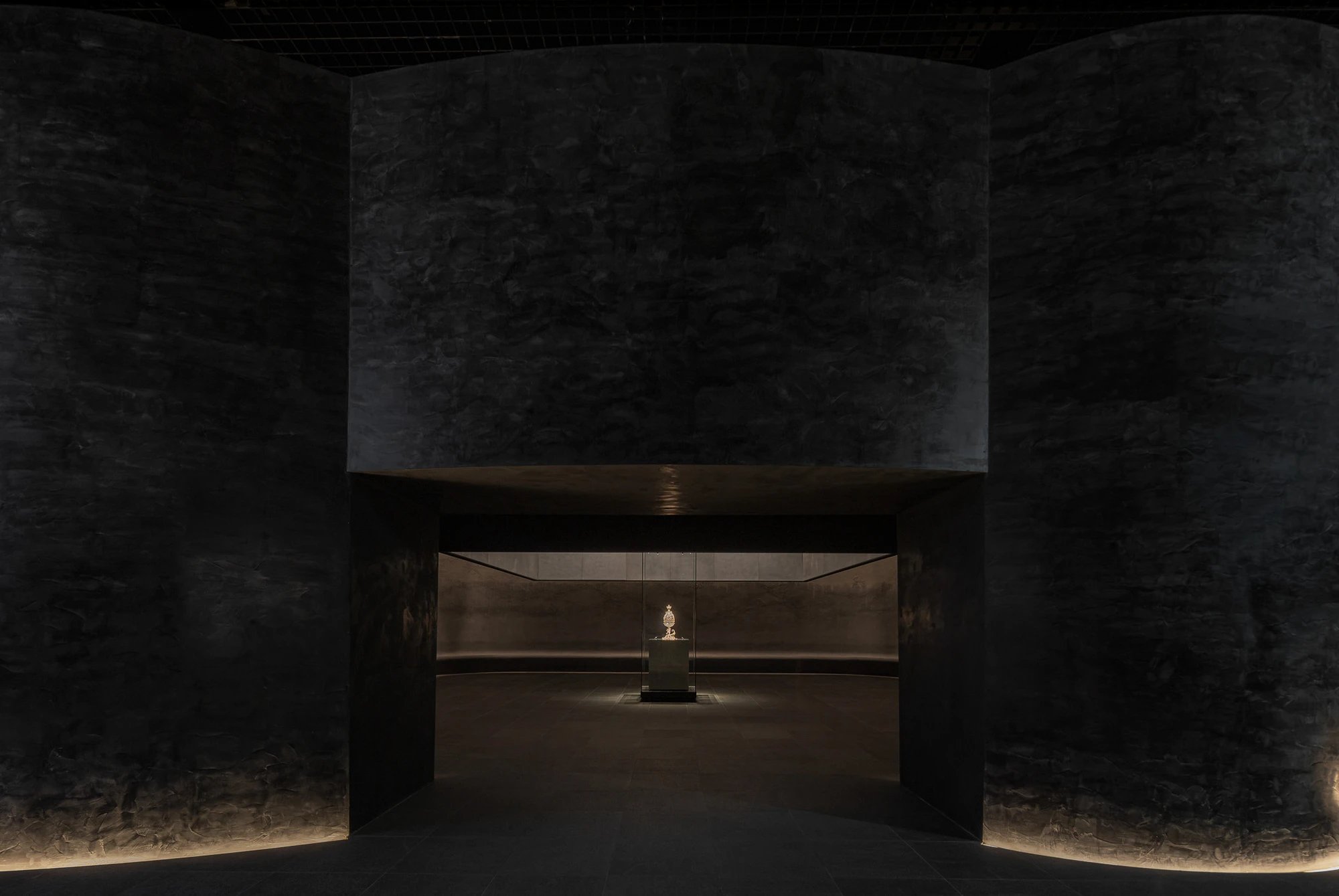
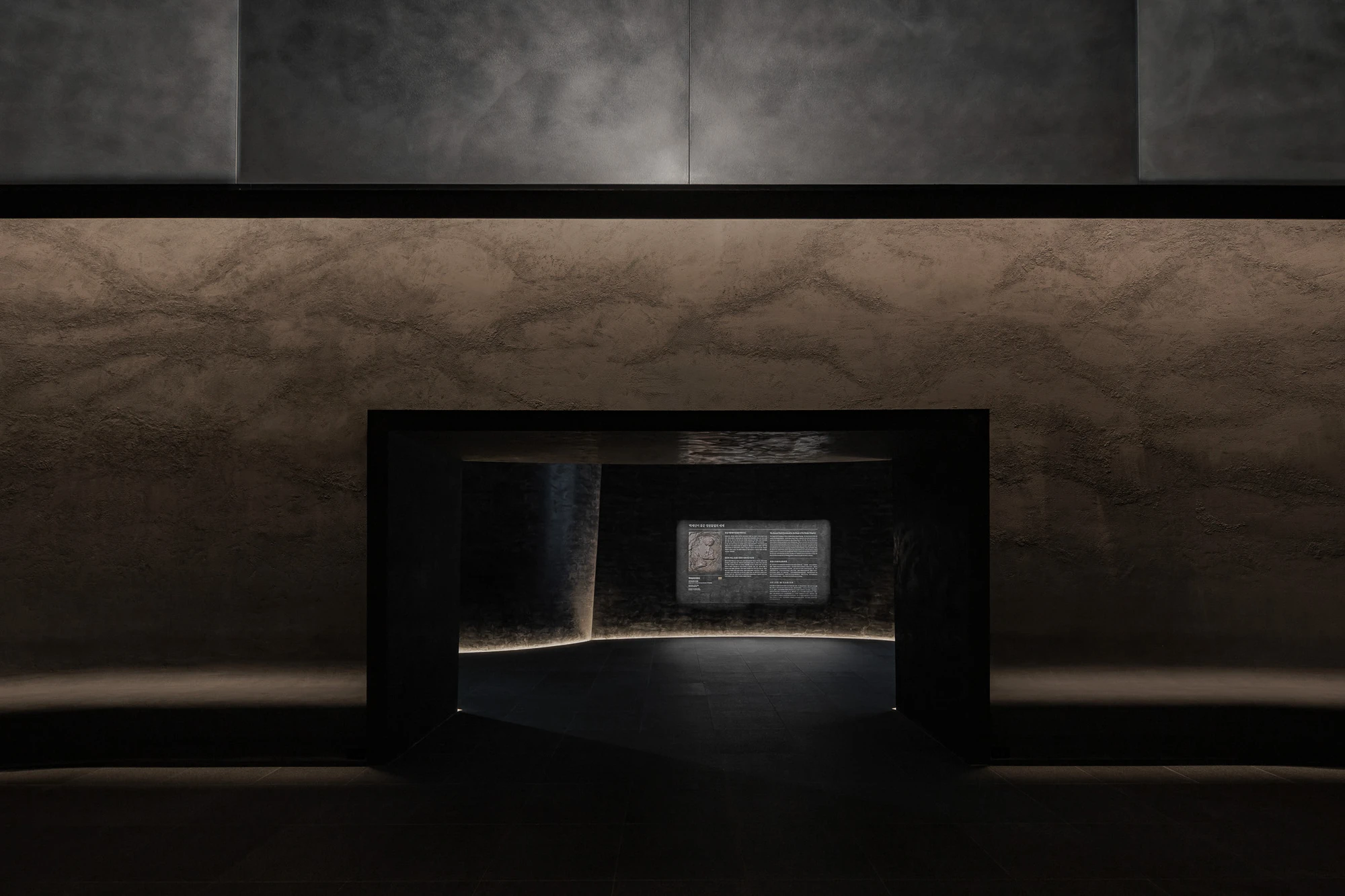
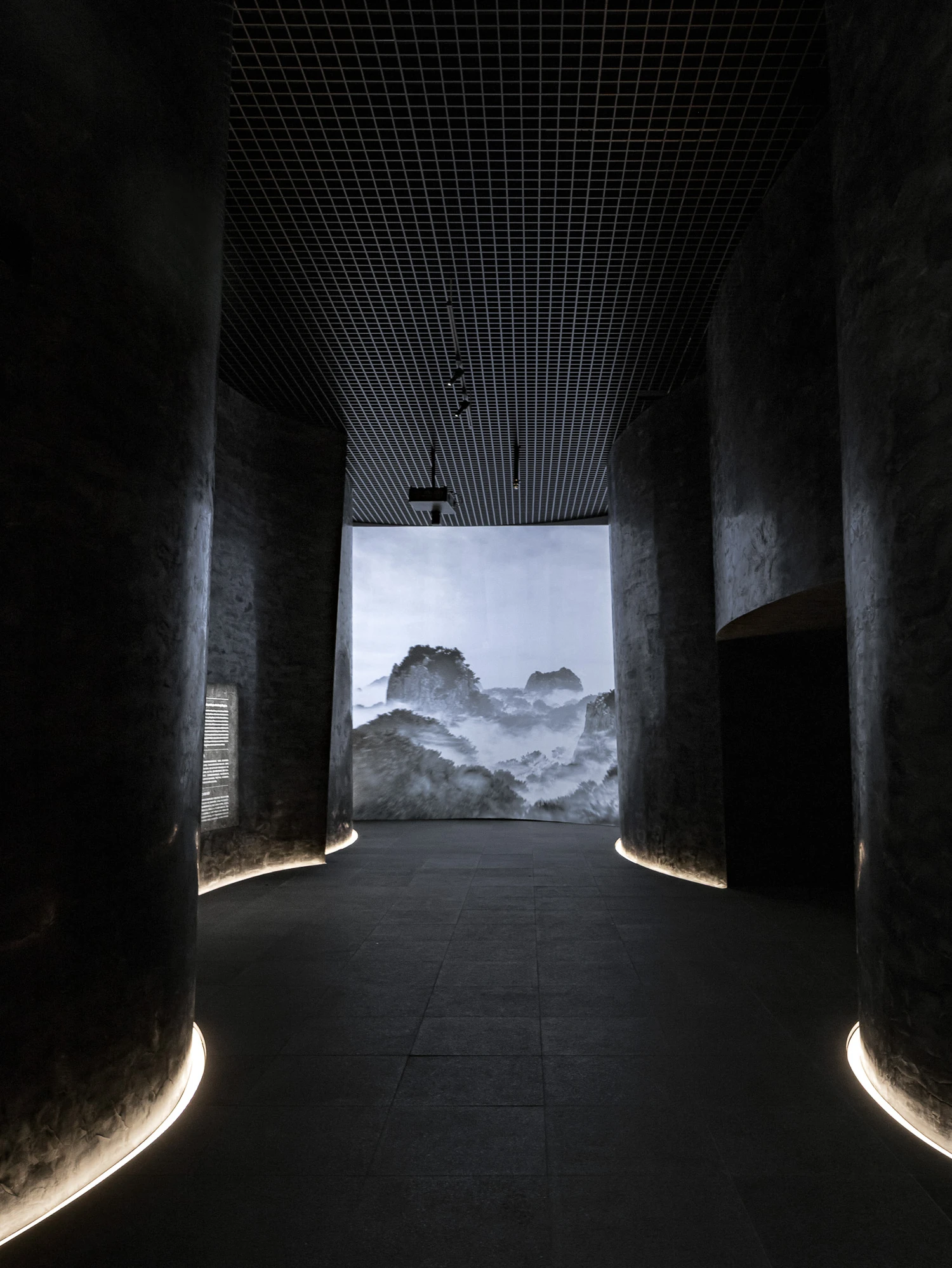
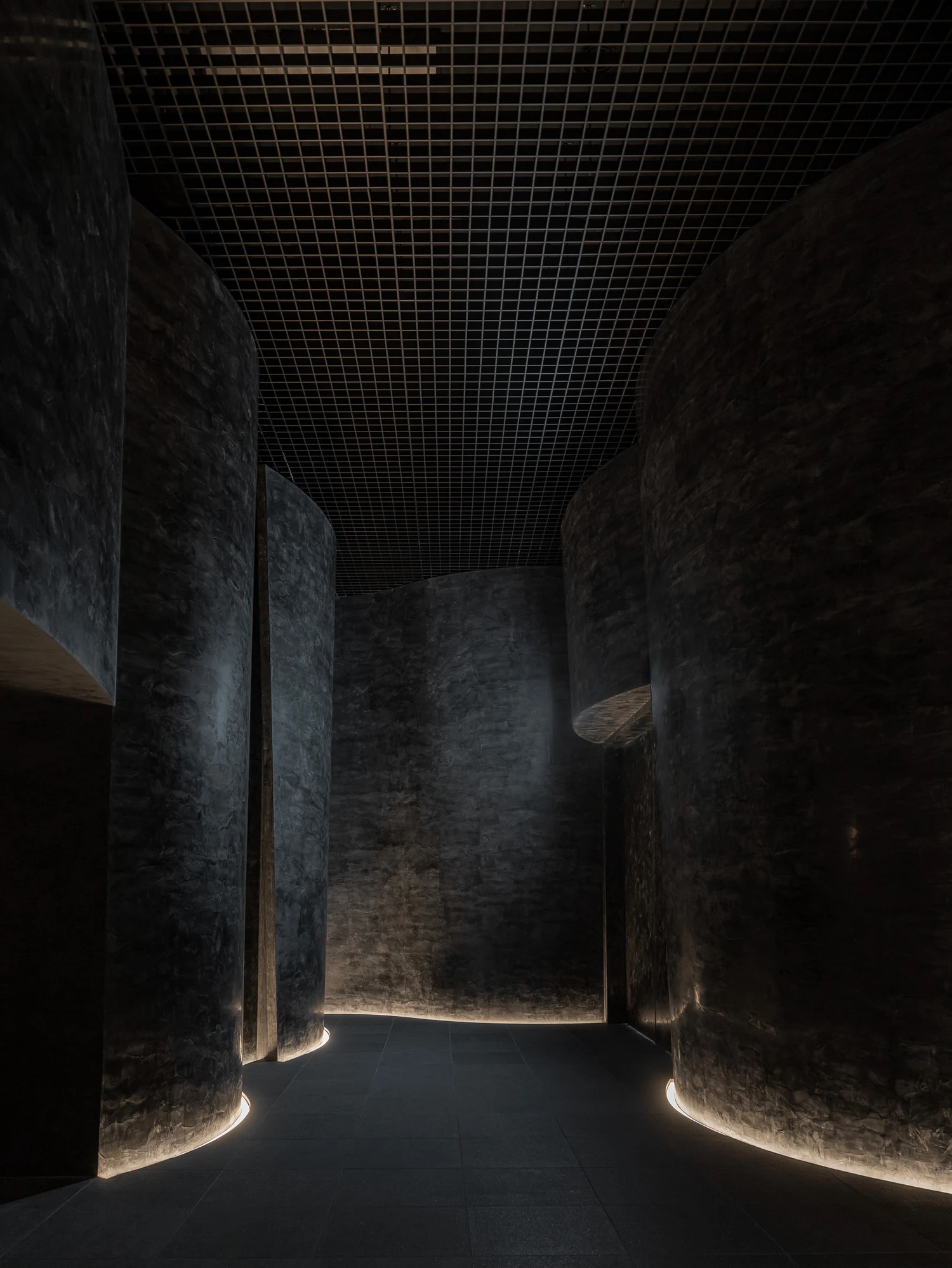
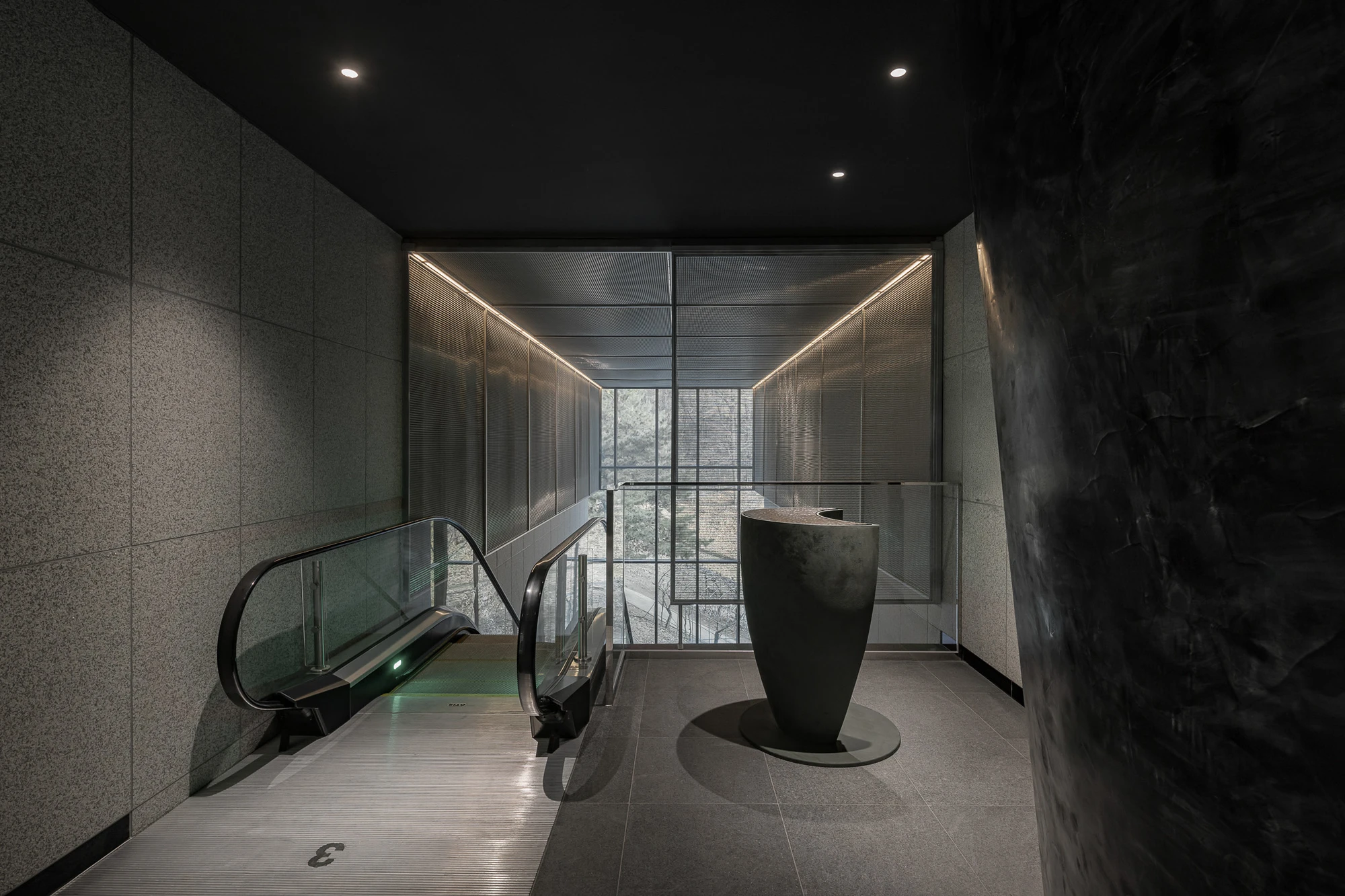
The architecture echoes the incense burner’s own cosmological structure. Entry begins in a compressed, darkened threshold that severs the visitor from external time. This initial descent prepares the body for a gradual ascent through the hall’s layered sequence, abstracting the burner’s realms of water, cloud, mountain, and heaven into spatial conditions. The progression is felt less as a narrative than as a change in bodily awareness, calibrated through scale and restraint.
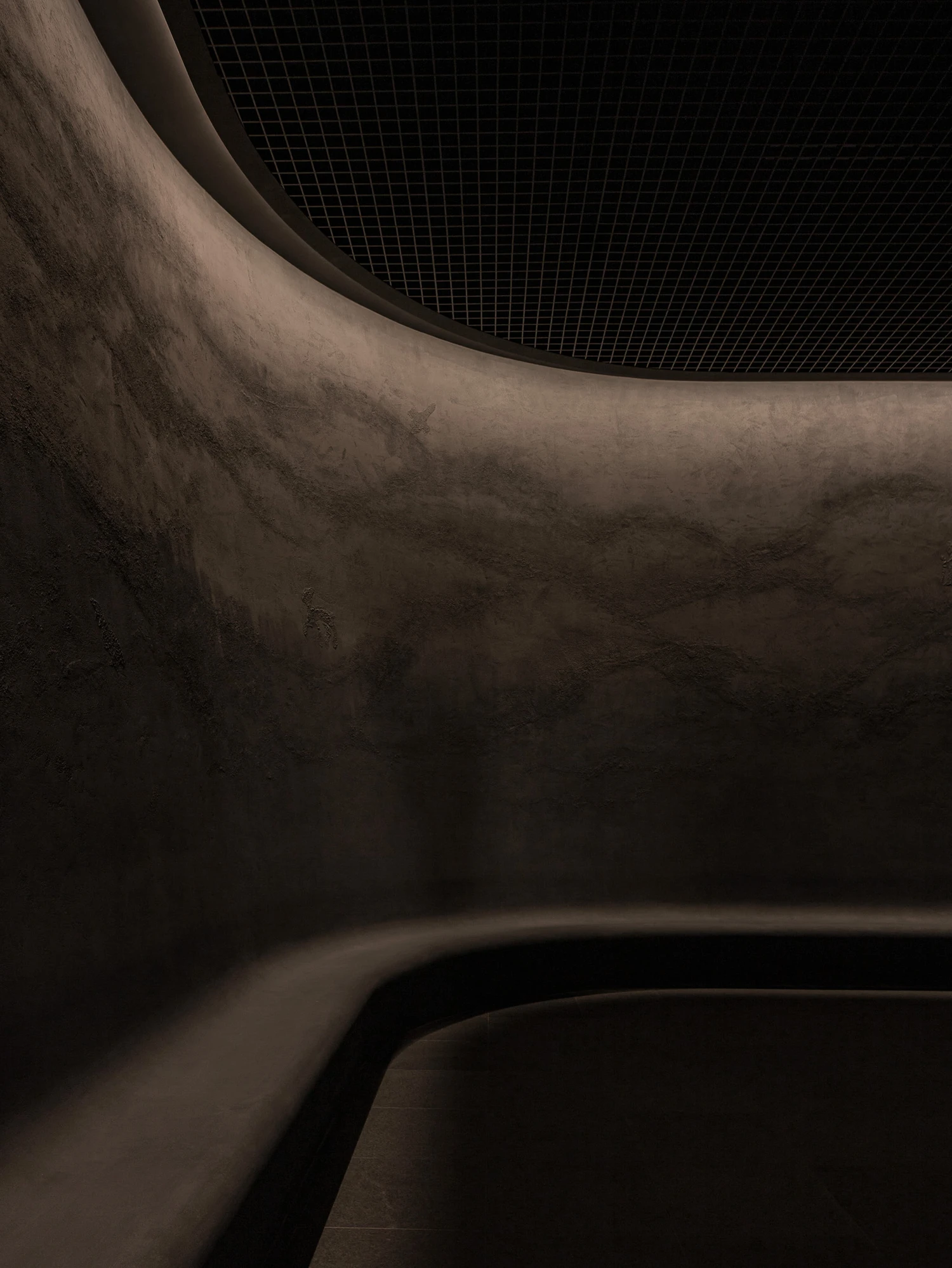
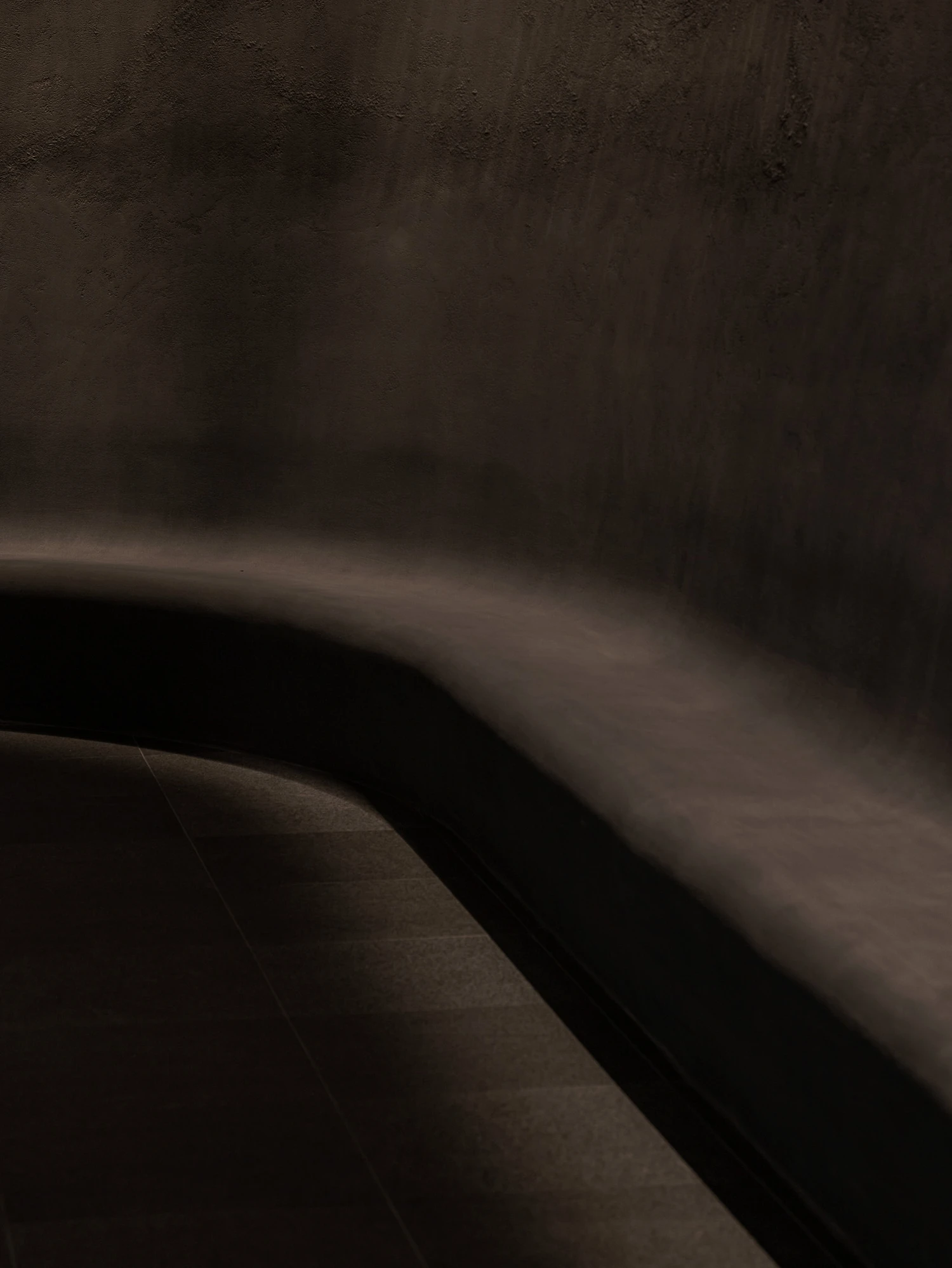
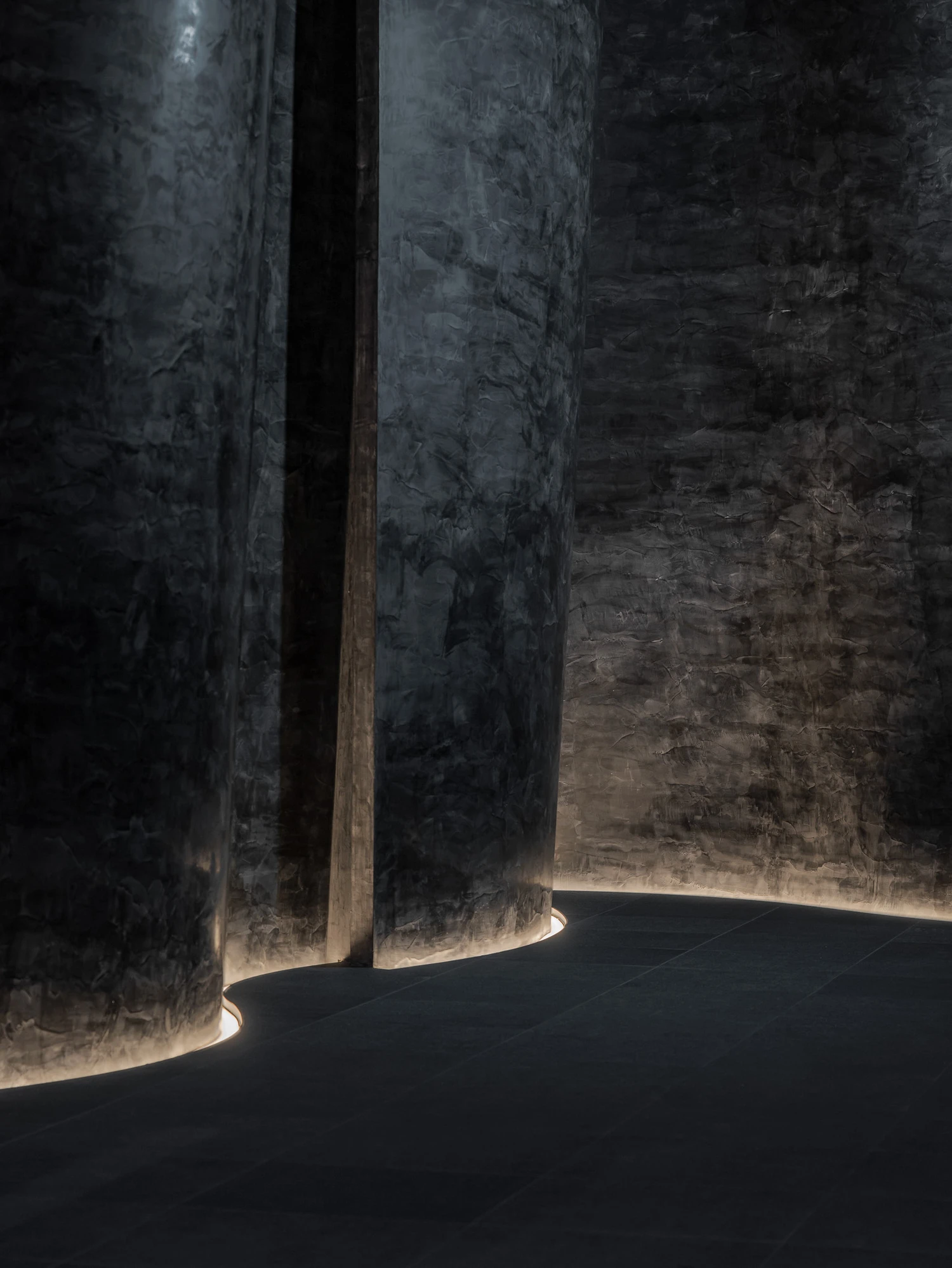
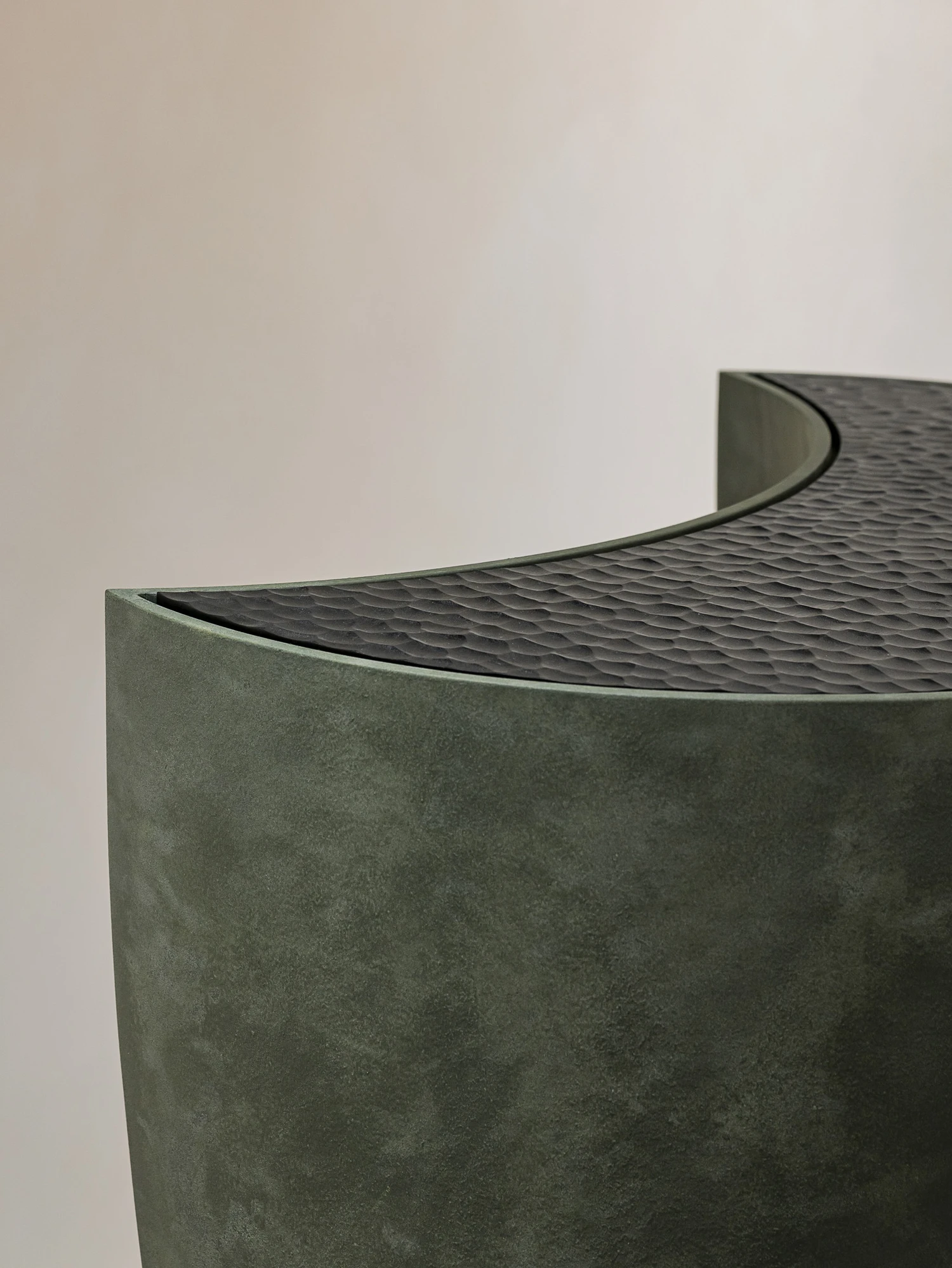
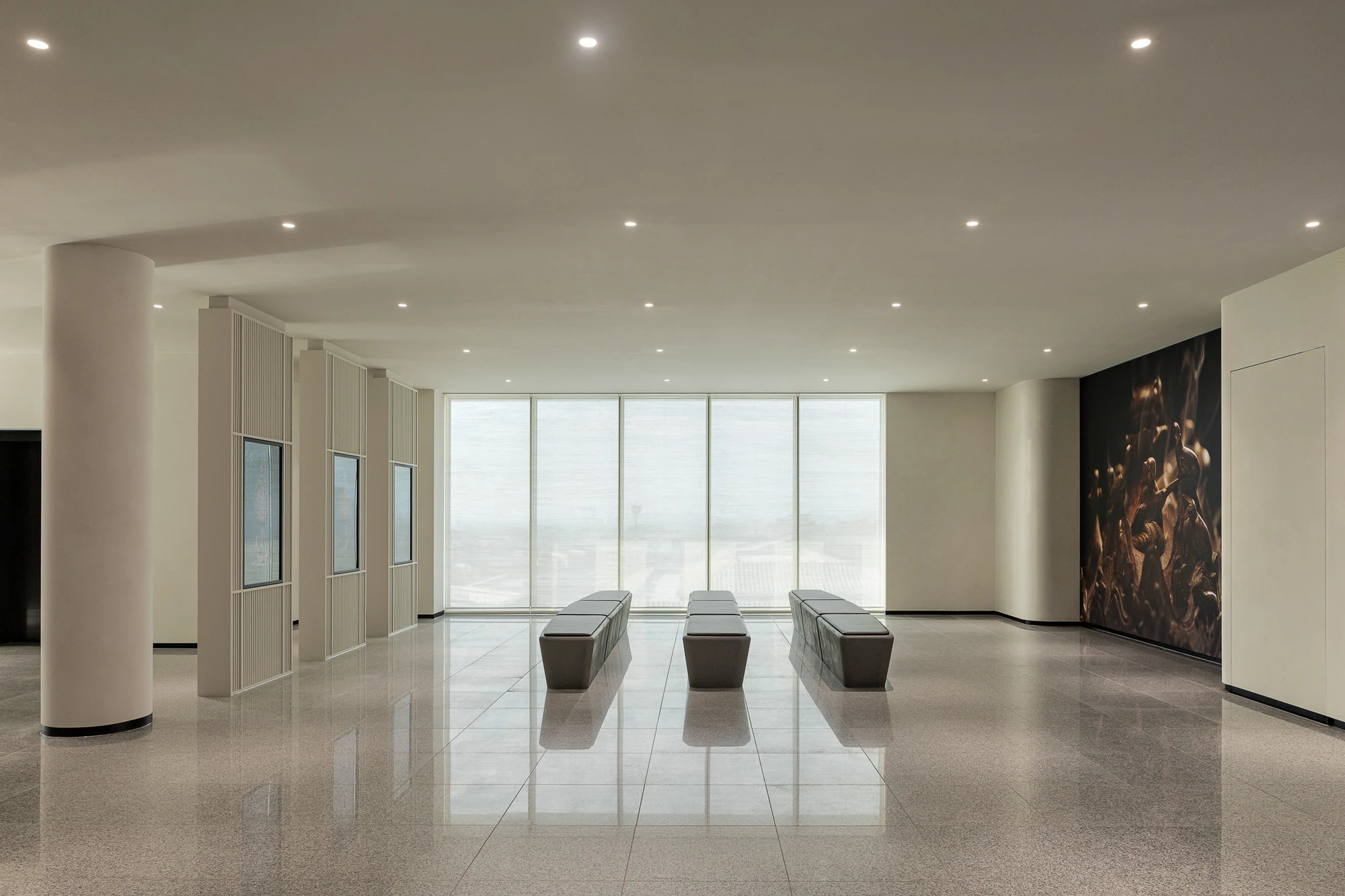
Material choices reinforce this temporal ambiguity. Mineral-based, matte surfaces absorb light, denying spectacle and foregrounding duration. Relief motifs embedded in the walls appear as faint residues rather than illustrations, rewarding slowness and repeated looking. Seating and enclosure merge into a continuous architectural element, encouraging visitors to remain, to sit, and to look without urgency. The space quietly resists circulation as consumption.
Above the artifact, a suspended square ceiling mediates between the intimacy of the object and the volume of the hall. Its dark exterior withdraws, while the hand-brushed stainless-steel interior reflects light with a subdued, almost atmospheric presence. Sound and scent drift through the room, extending perception beyond the visual and reinforcing the hall’s insistence on embodiment. The result is not a reconstruction of Baekje, but a coexistence of temporalities—ancient cosmology and contemporary perception held in careful equilibrium.