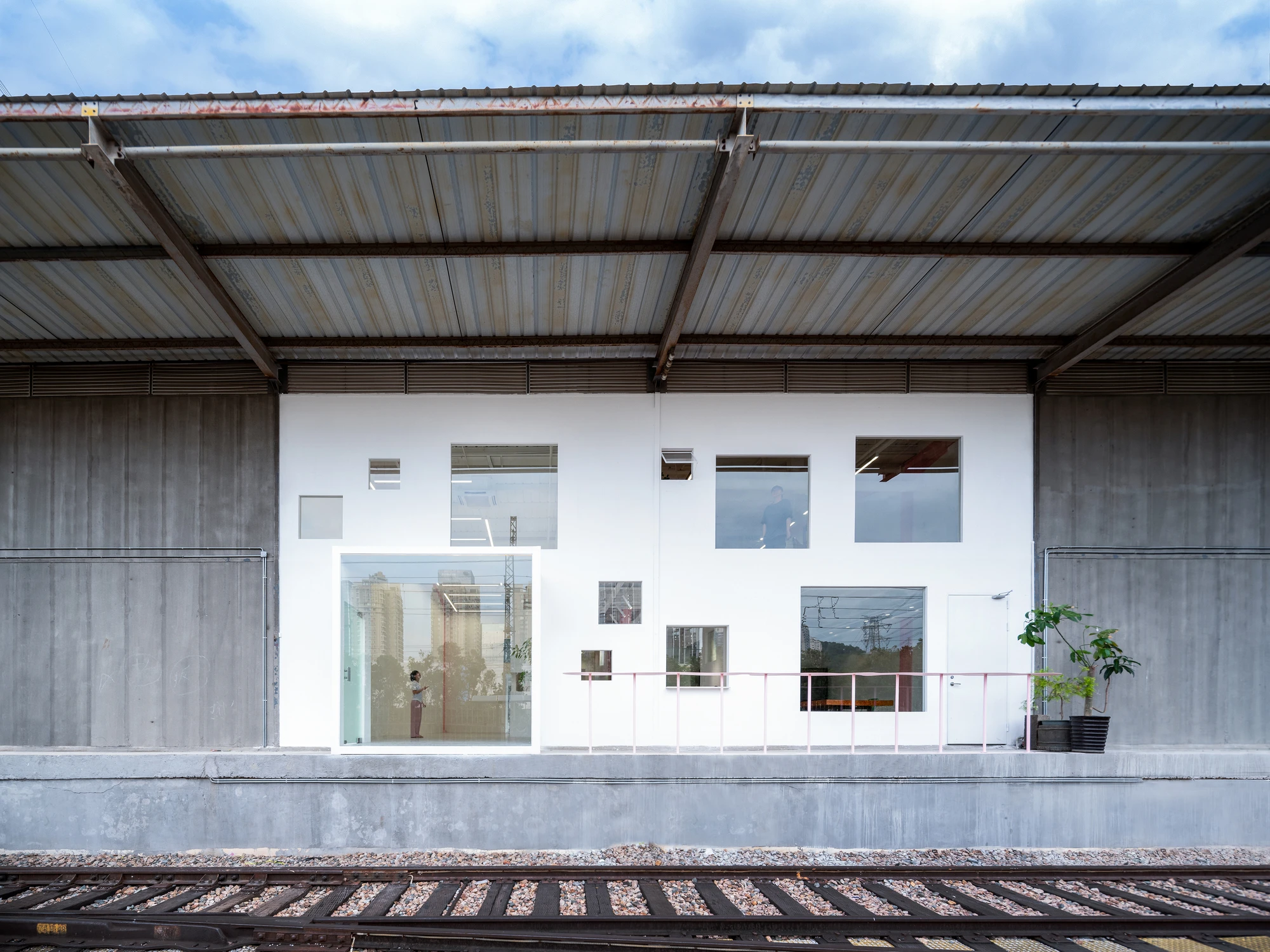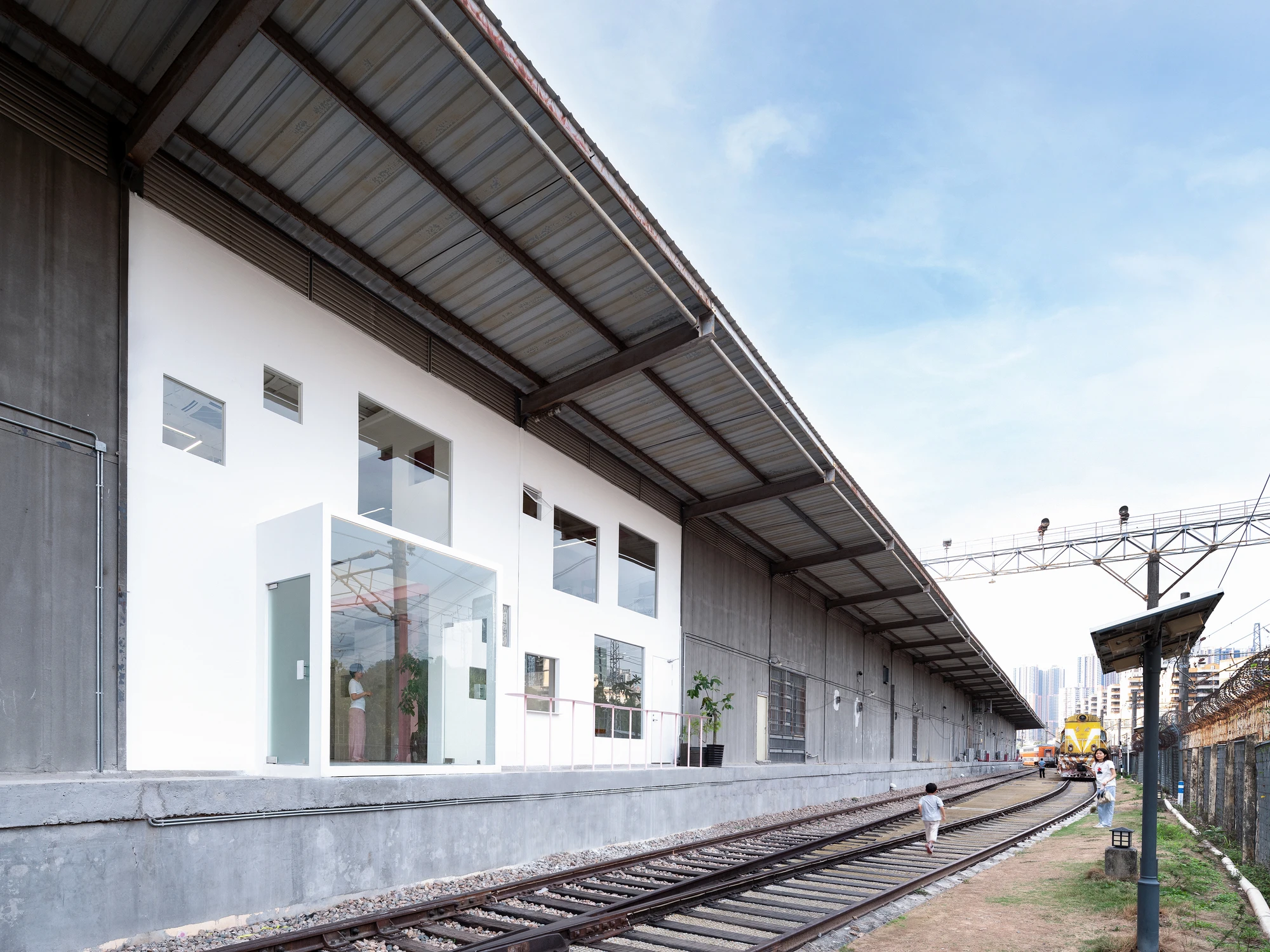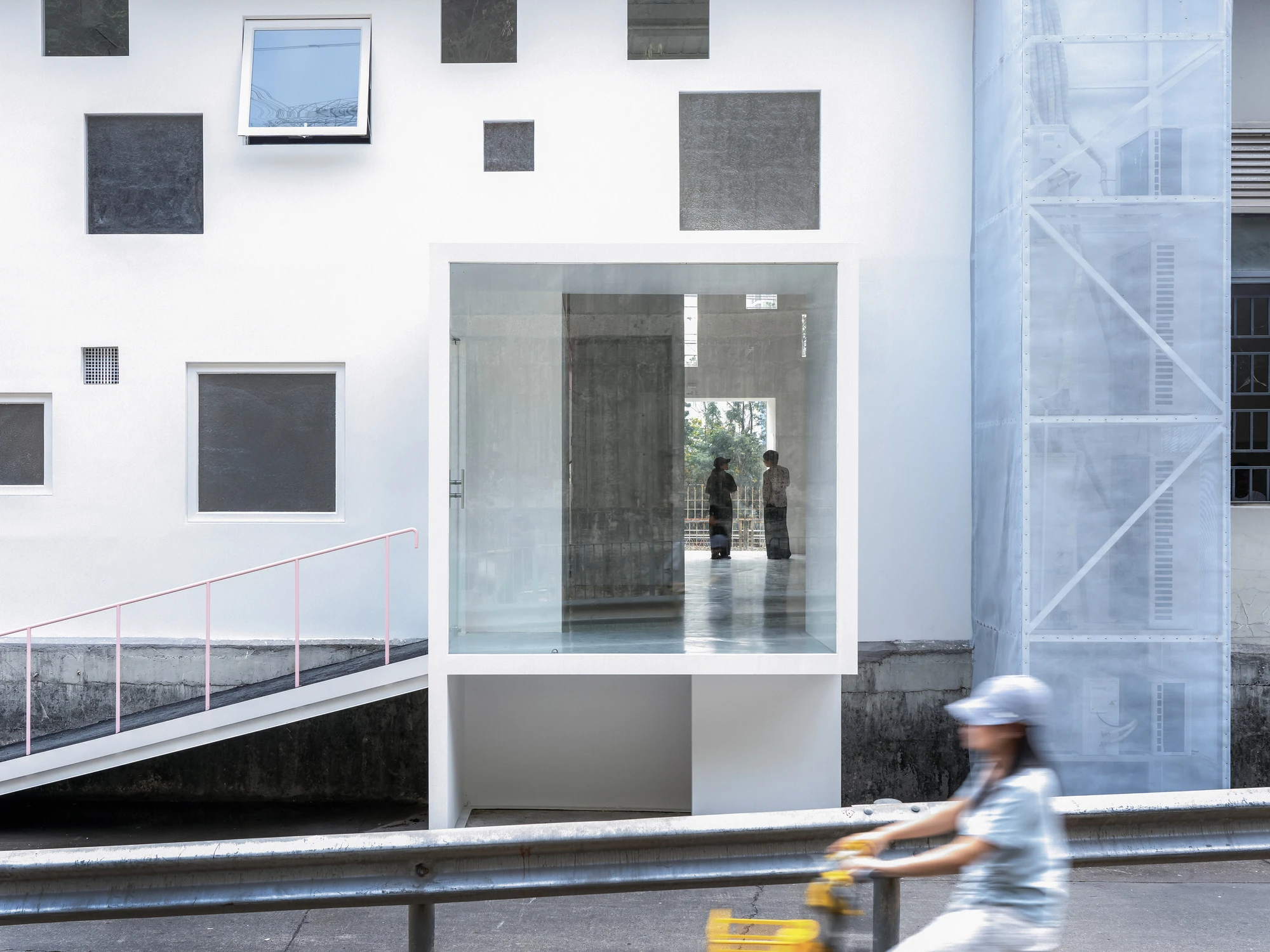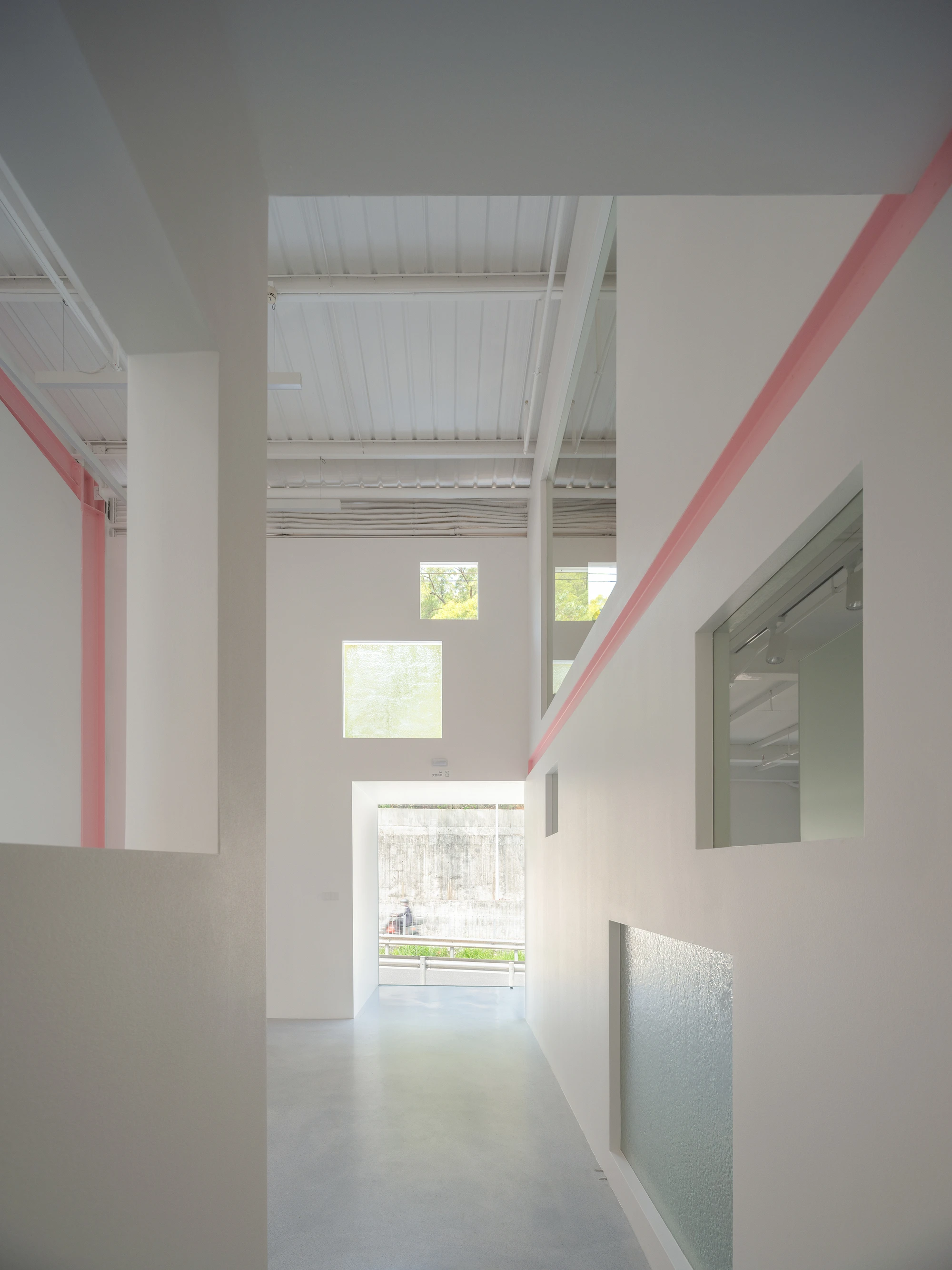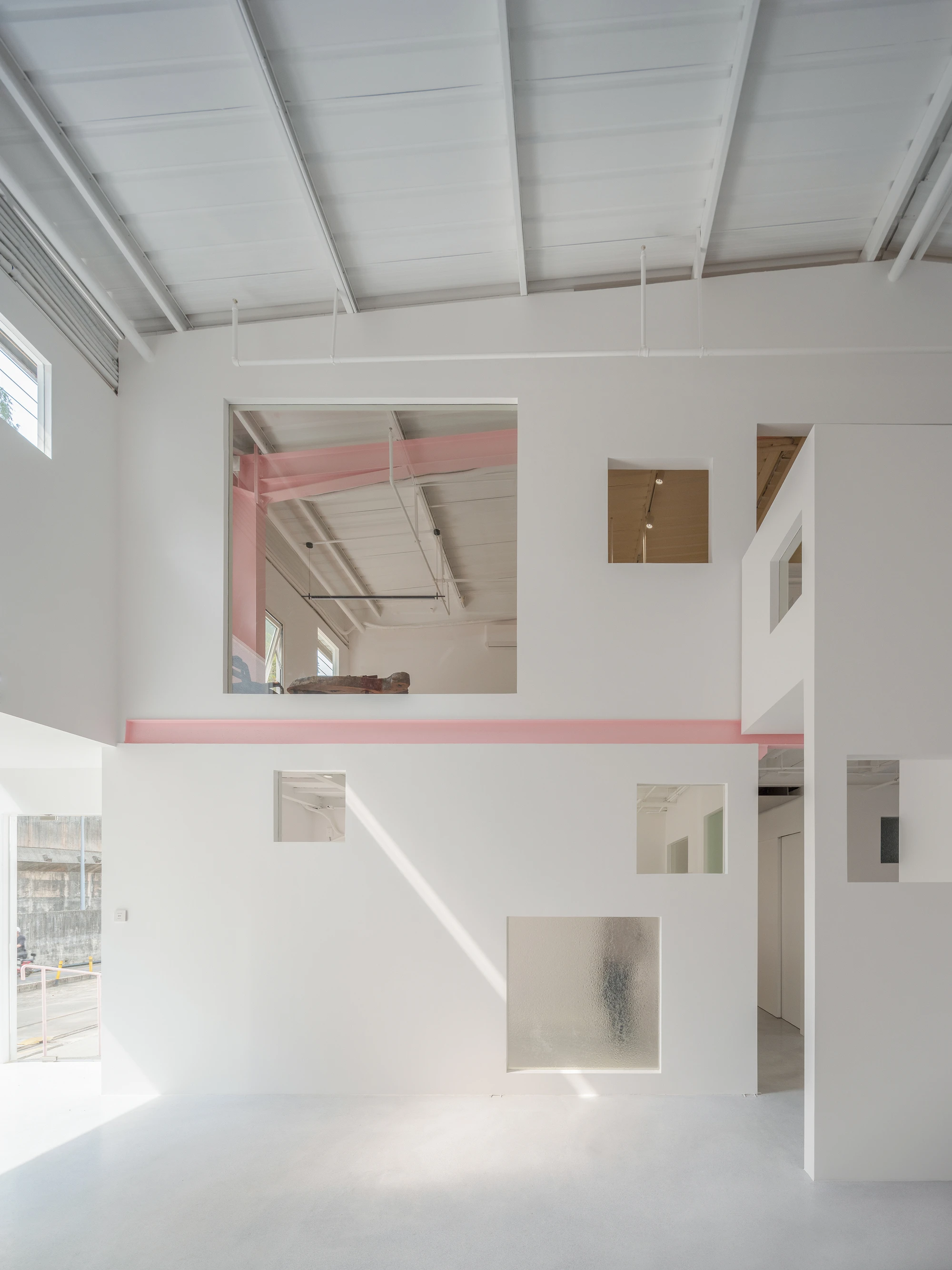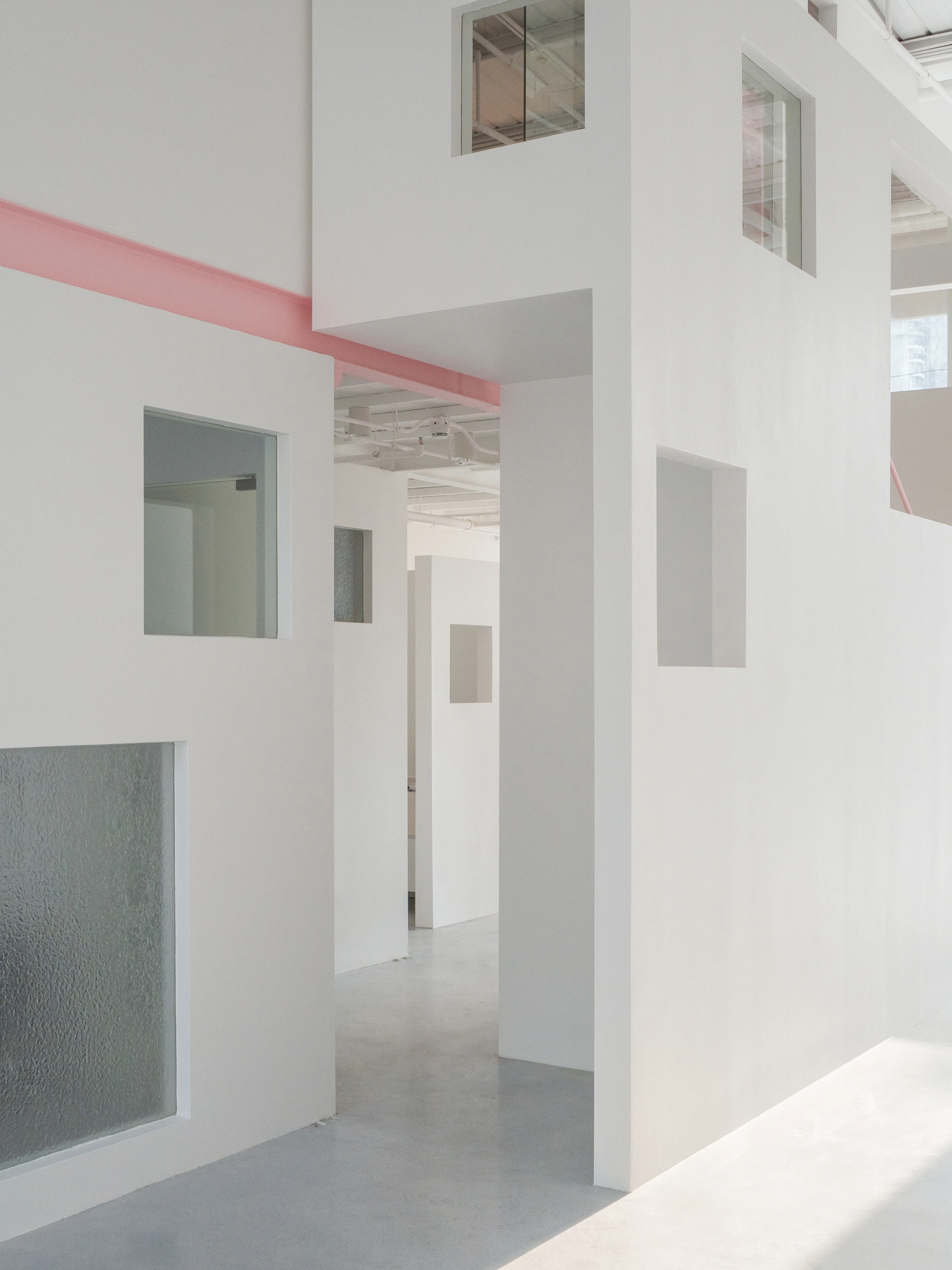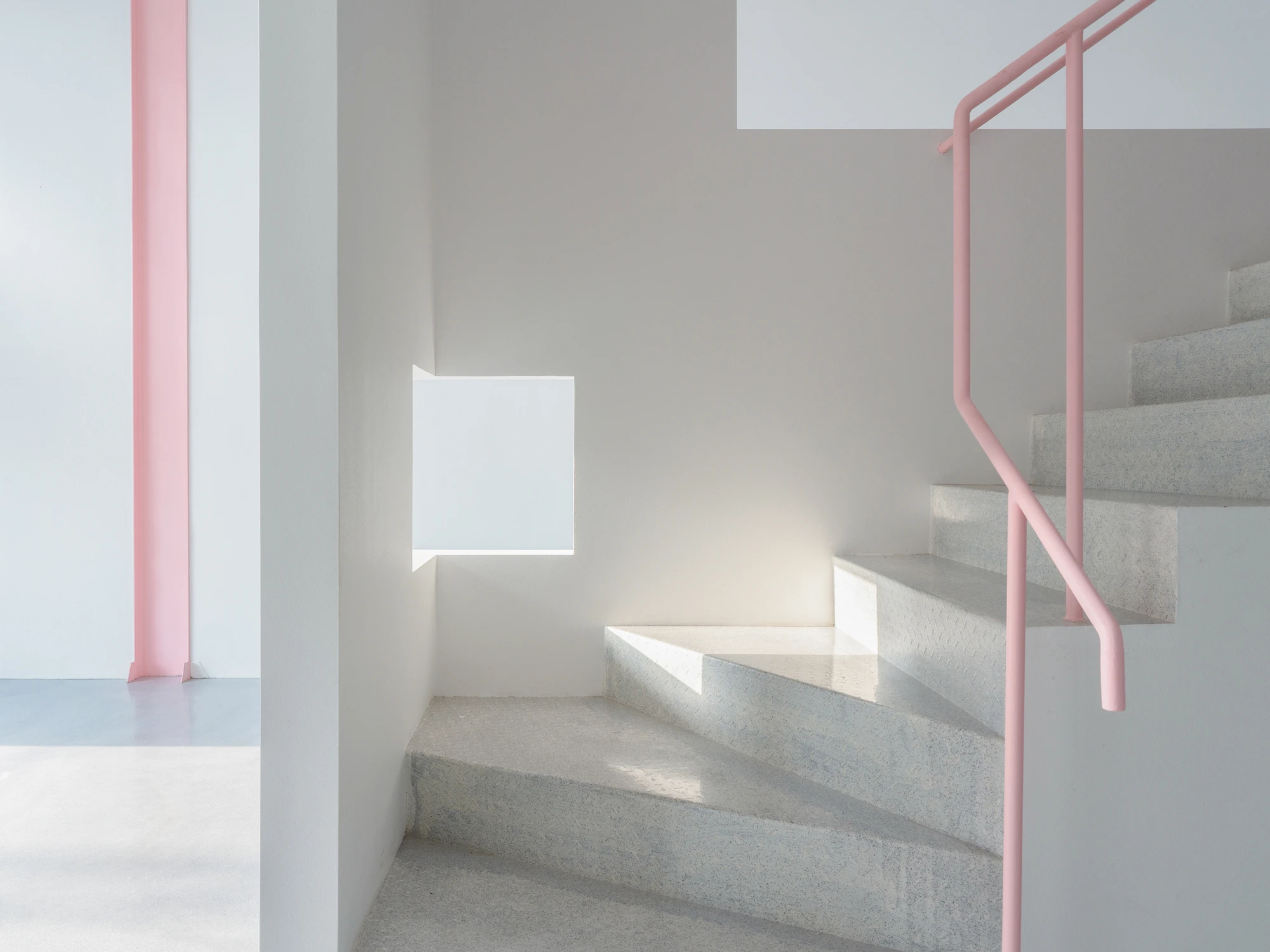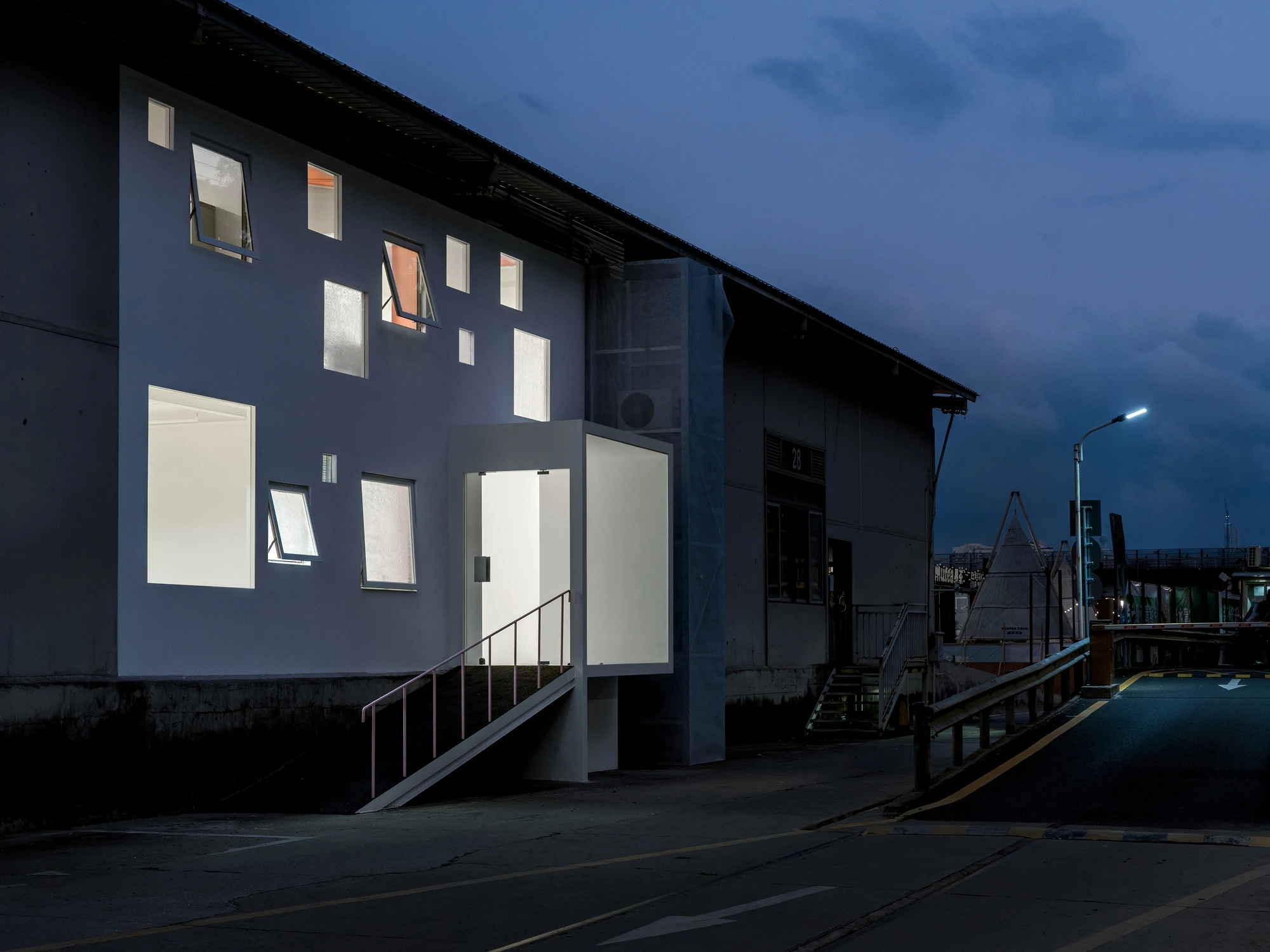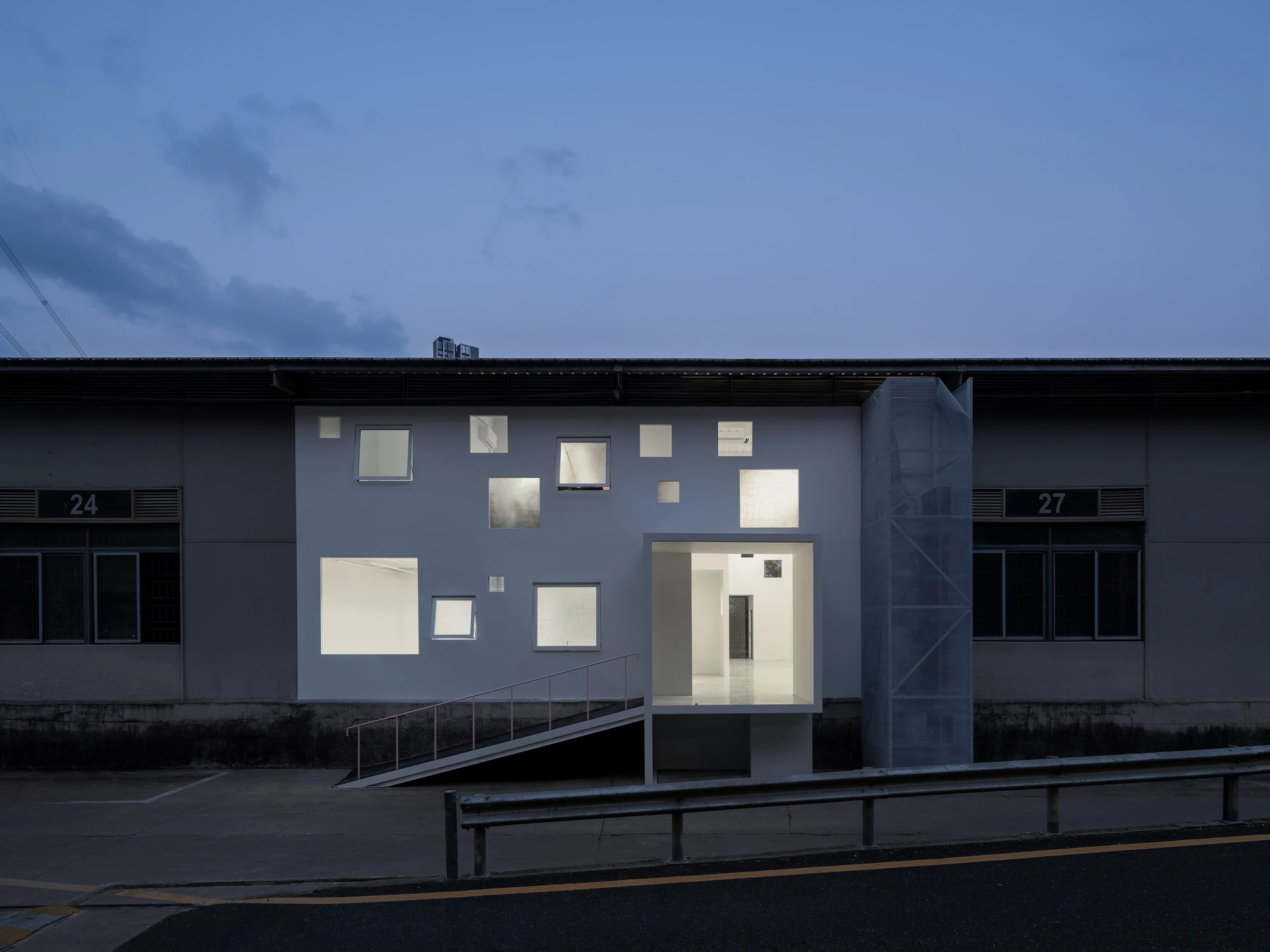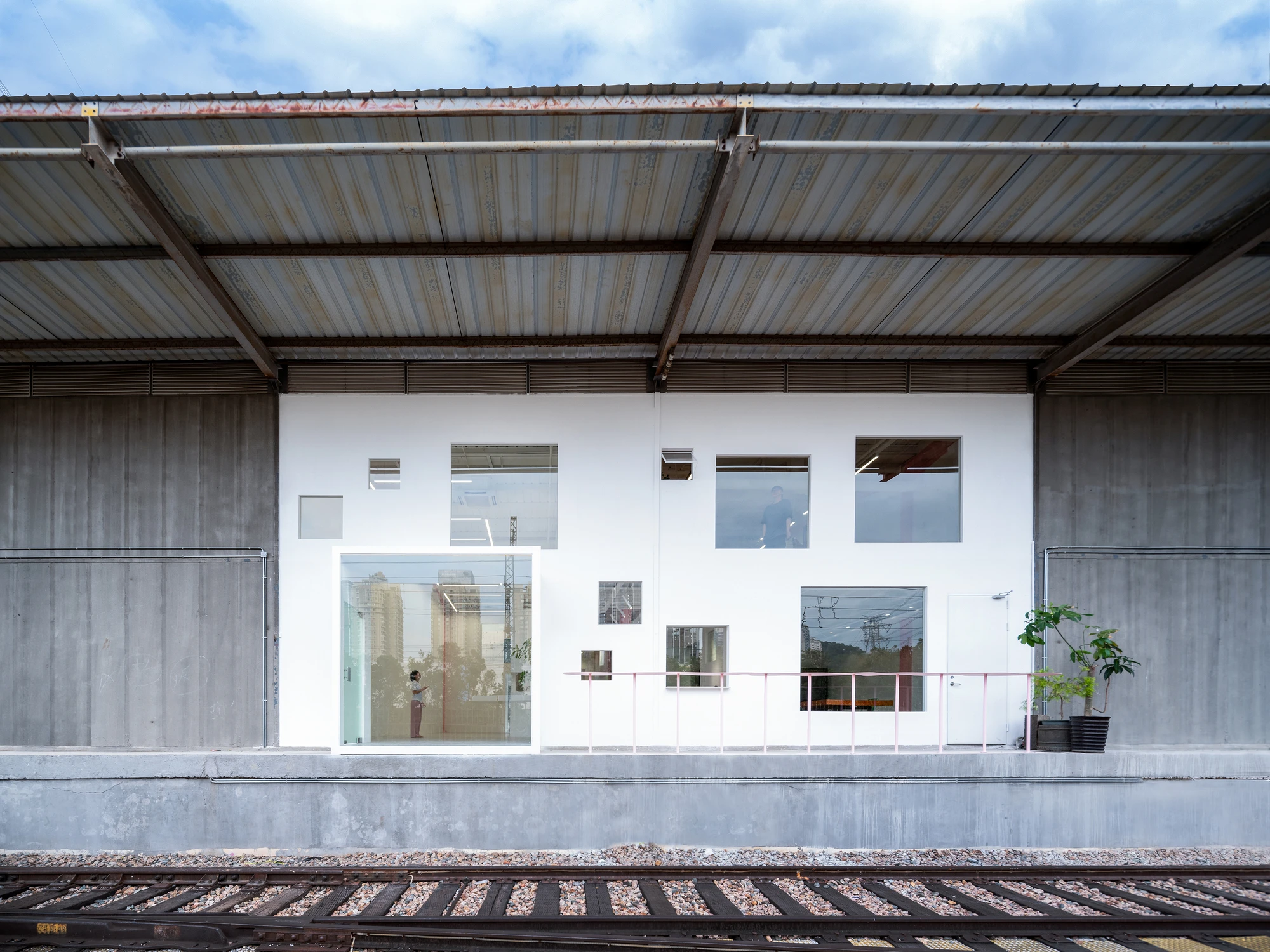
In Shenzhen's Qingshuihe Railway Relics squeezed between an active rail line and an urban road, Aether Architects and Archigress turn a 320 m² warehouse into a gallery by building nothing that touches the old shell — a settlement of freestanding objects under a roof that cannot take their weight.
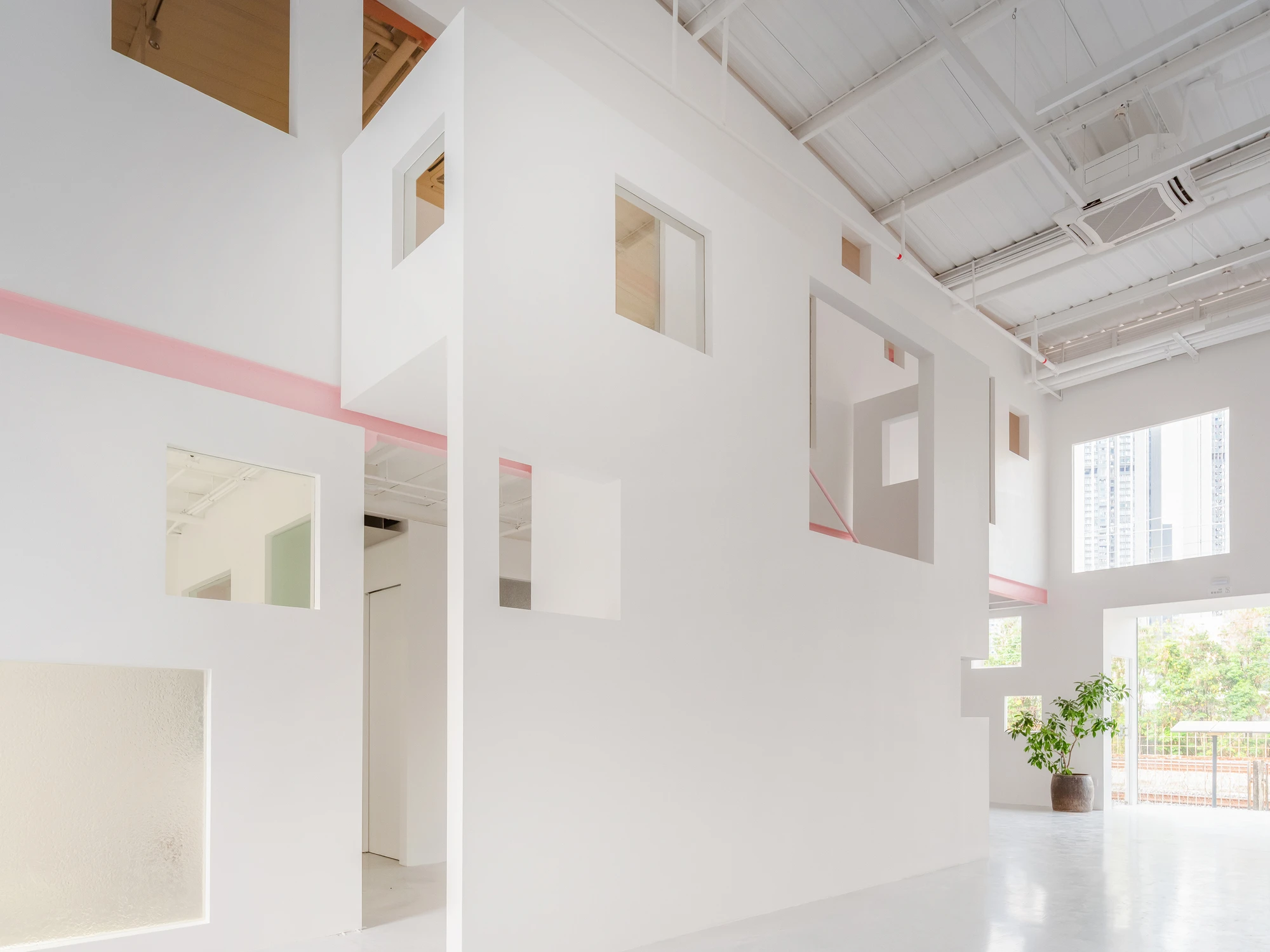
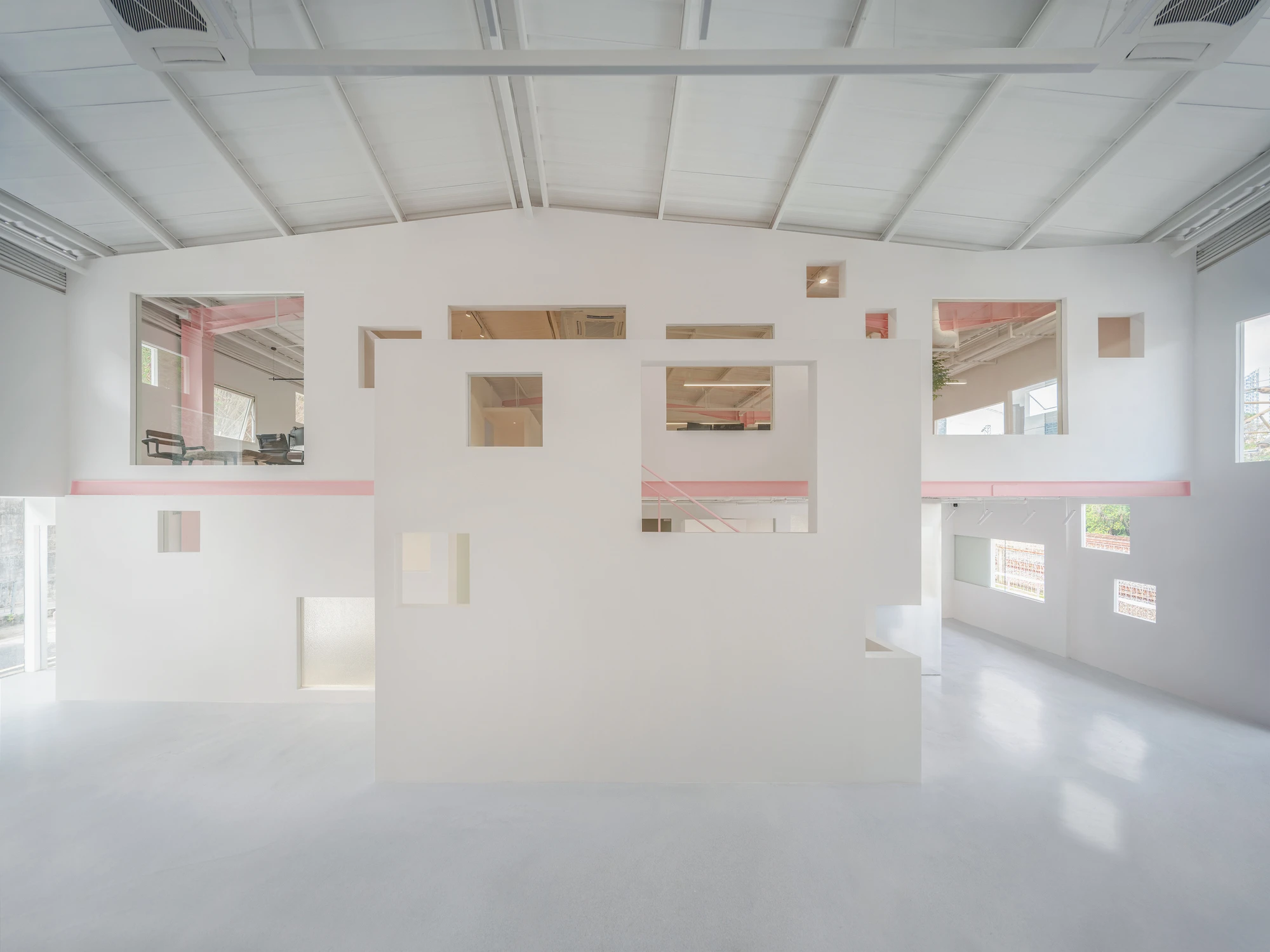
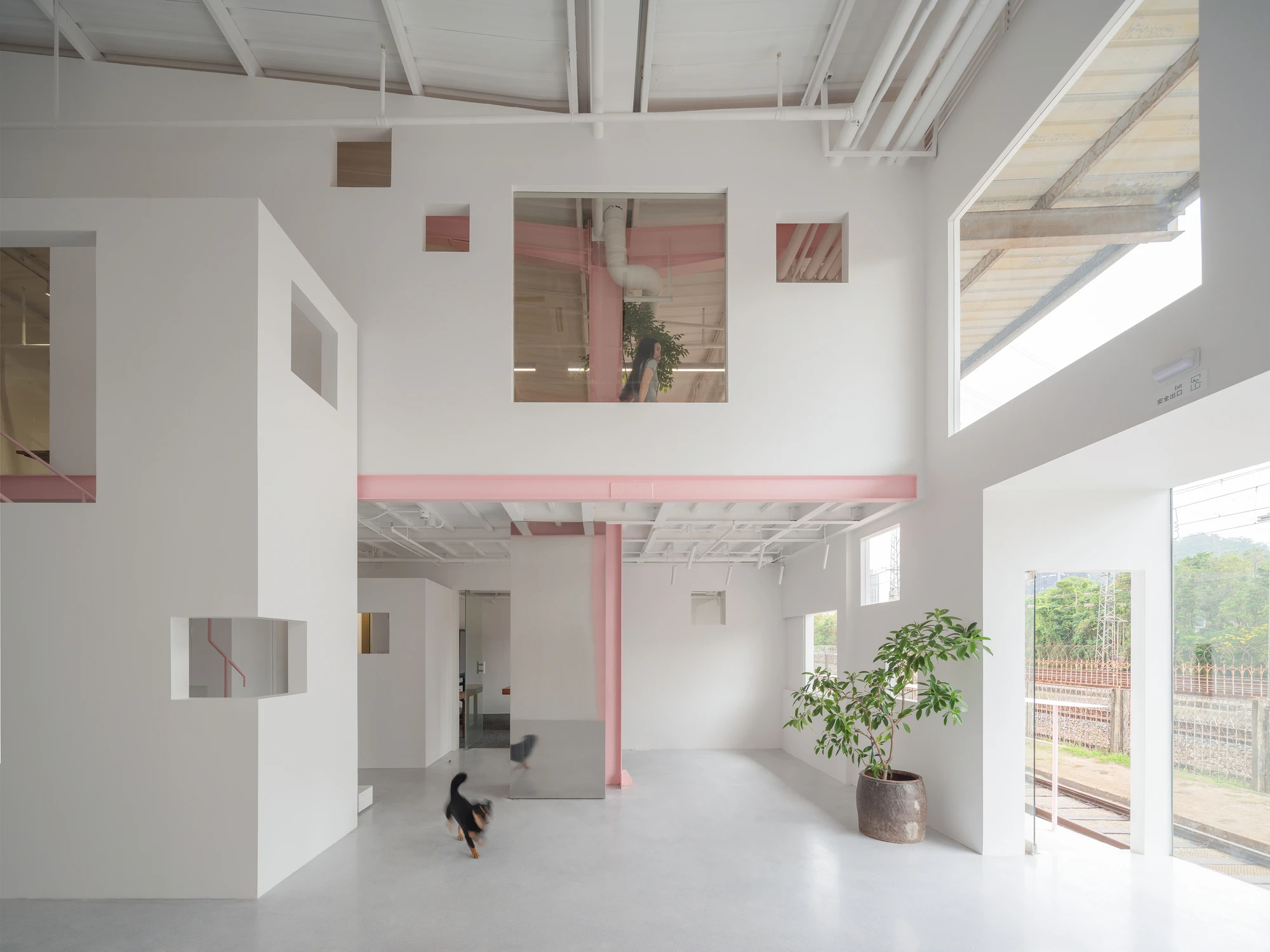
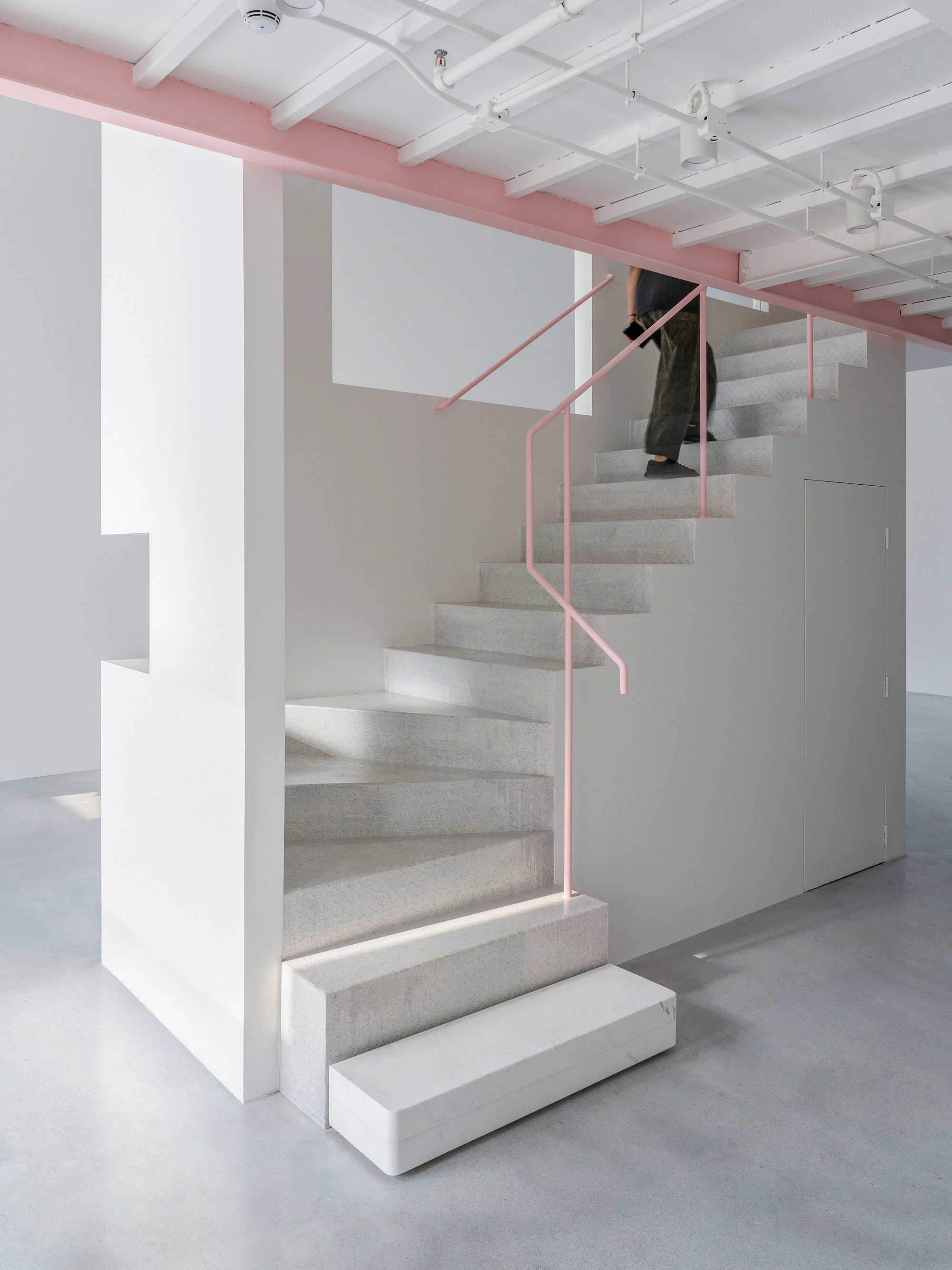
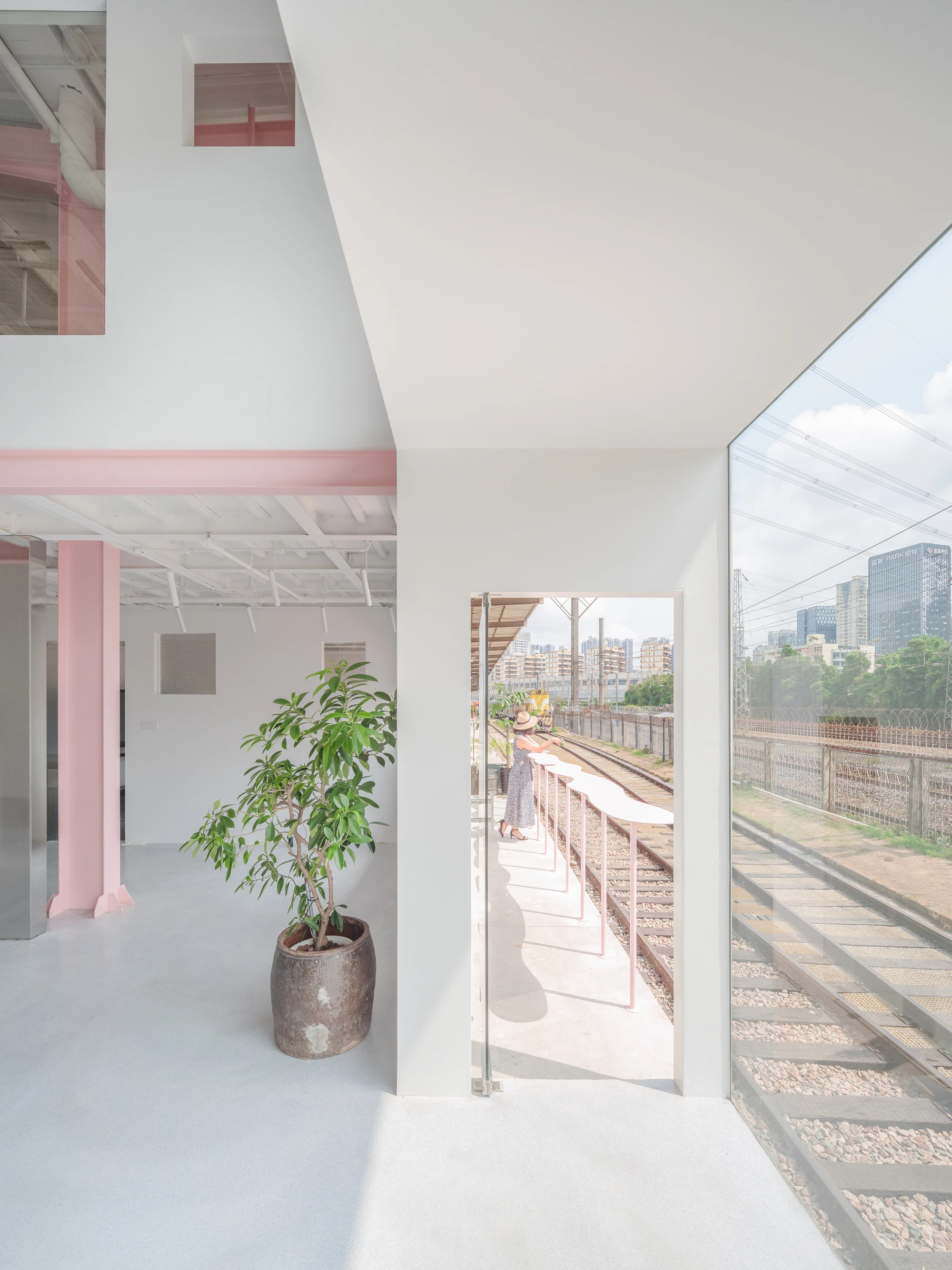
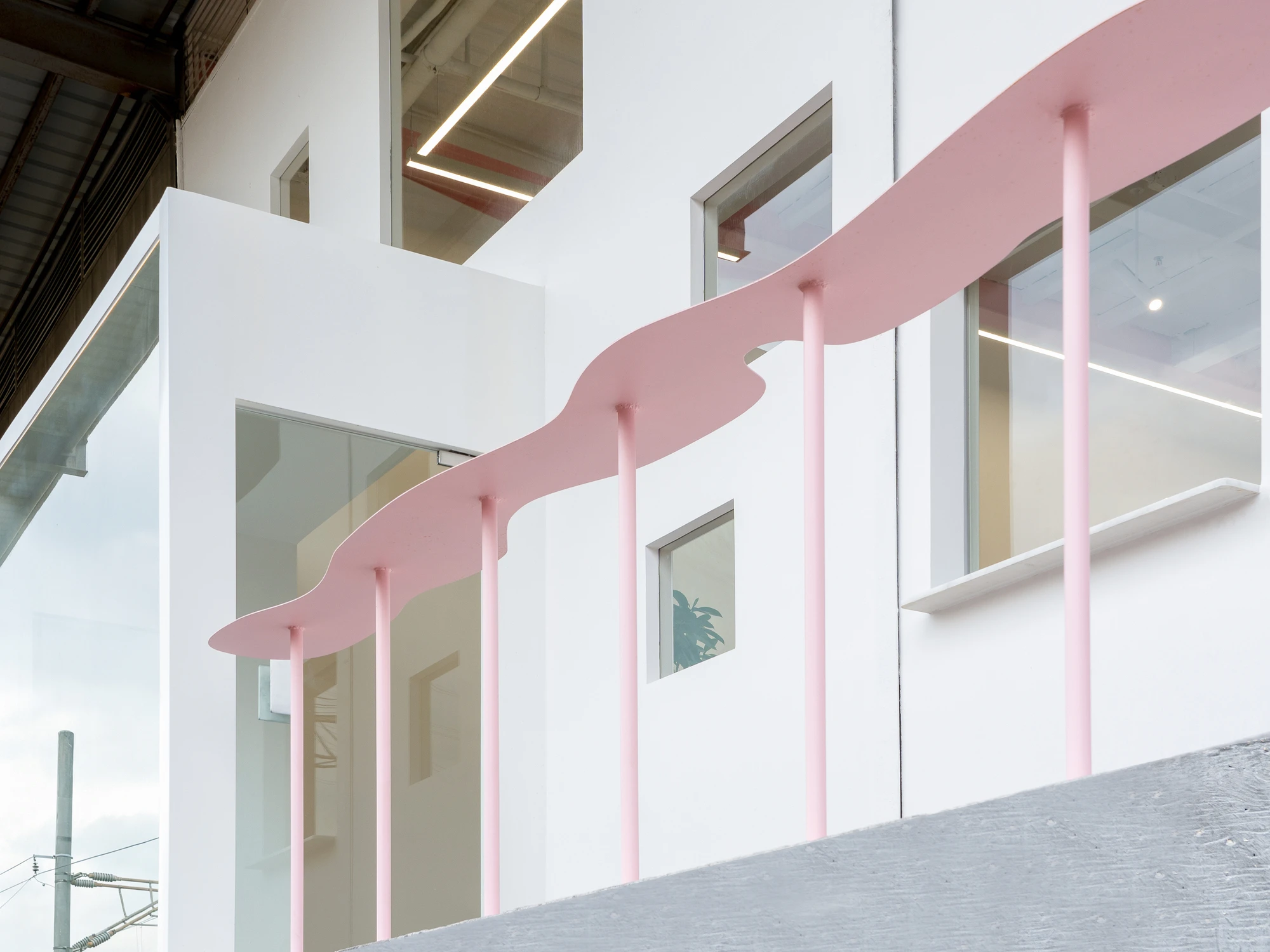
The constraint is precise: the existing warehouse structure can carry only itself. No new load can go onto it. The architects' response, which they call a "structural cluster," assembles stairs, walls, rooms and circulation as independent, self-supporting pieces standing beneath the industrial envelope. Nothing leans on anything else. Viewed from the middle of the gallery, the result reads as a small settlement of juxtaposed lightweight forms gathered under one roof, rather than a single inserted object.
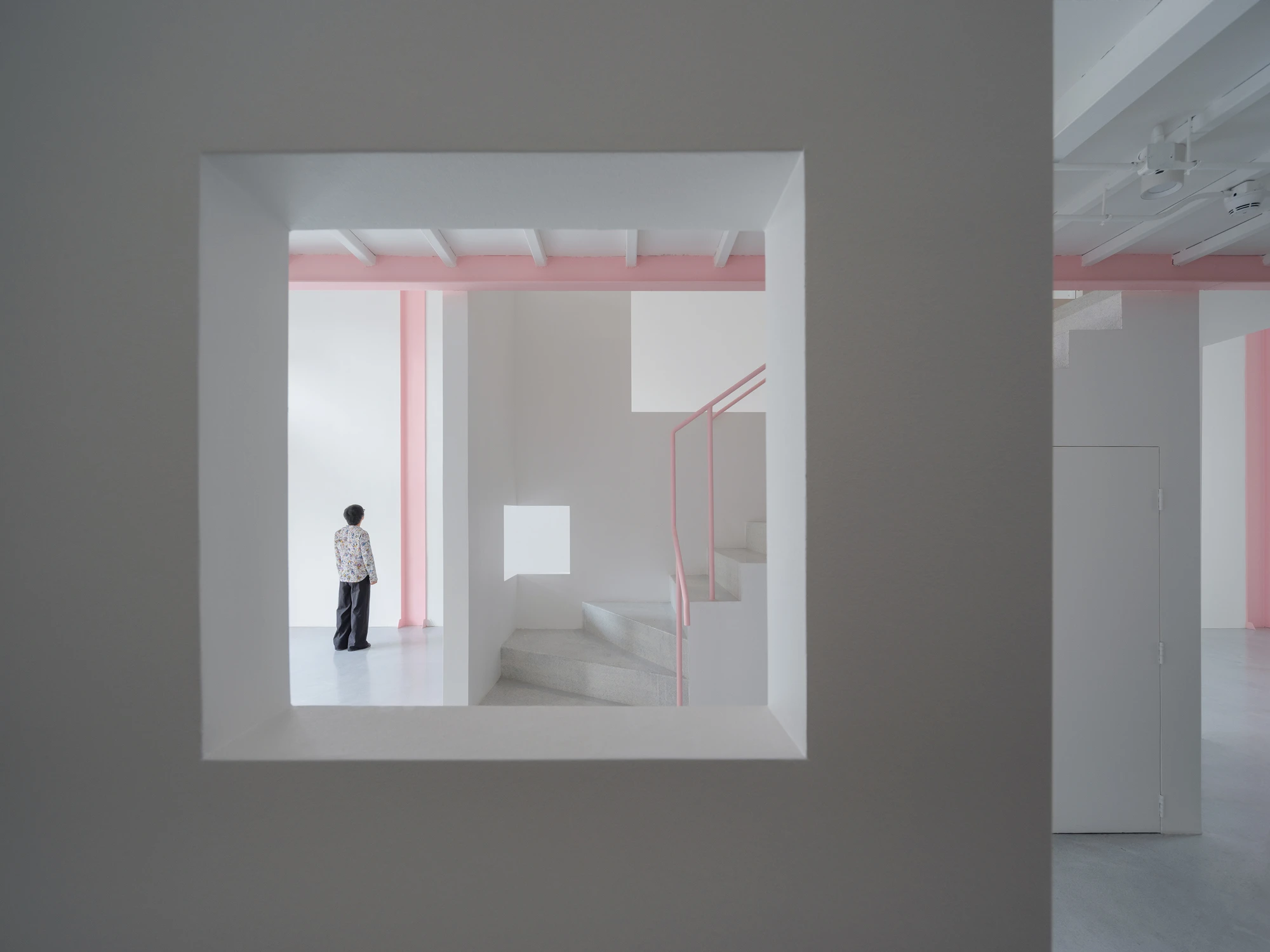
The wall openings are recomposed as layered assemblies — opaque, translucent, and clear materials combined in ratios tuned per opening for privacy, light, ventilation, and view. Natural light enters mainly from the east and west facades. As visitors move horizontally and vertically through the cluster, the relationships between rail line, road, warehouse roof, and gallery objects keep recomposing through reflection, shadow, and framed openings. The industrial landscape outside — the relics the project sits on — is pulled into the exhibition experience as part of the architecture.
The conceptual brief is almost a question: "How can we transform heaviness into lightness, proximity into distance, darkness into brightness, and discover the unexpected in the everyday landscape?" Aether Architects and Archigress do not answer this rhetorically. They answer it with a structural diagram. The warehouse that could carry nothing new now holds a gallery that does not feel heavy.
The site itself — Qingshuihe Railway Relics, Luohu District — is a narrow strip of post-industrial land where urban density and rail infrastructure have made conventional development impossible. Most adaptive reuse projects on sites like this work to conceal the infrastructure they inherit. Apelron makes it visible, deliberate, and essential to what the space is. The rail is not background. It is the view.
"What is scenery?" the architects ask. "We hope to ponder these questions in our projects." Standing inside the structural cluster, with warehouse steel above and railway line below the window line, the question stops being rhetorical.