At Galería Gato in Lima, Andrea Ferrero casts the toy castle in dull silver, filling the rooms with snarling groomed dogs, chained dragons and heart-eyed cameras that guard a moss garden.
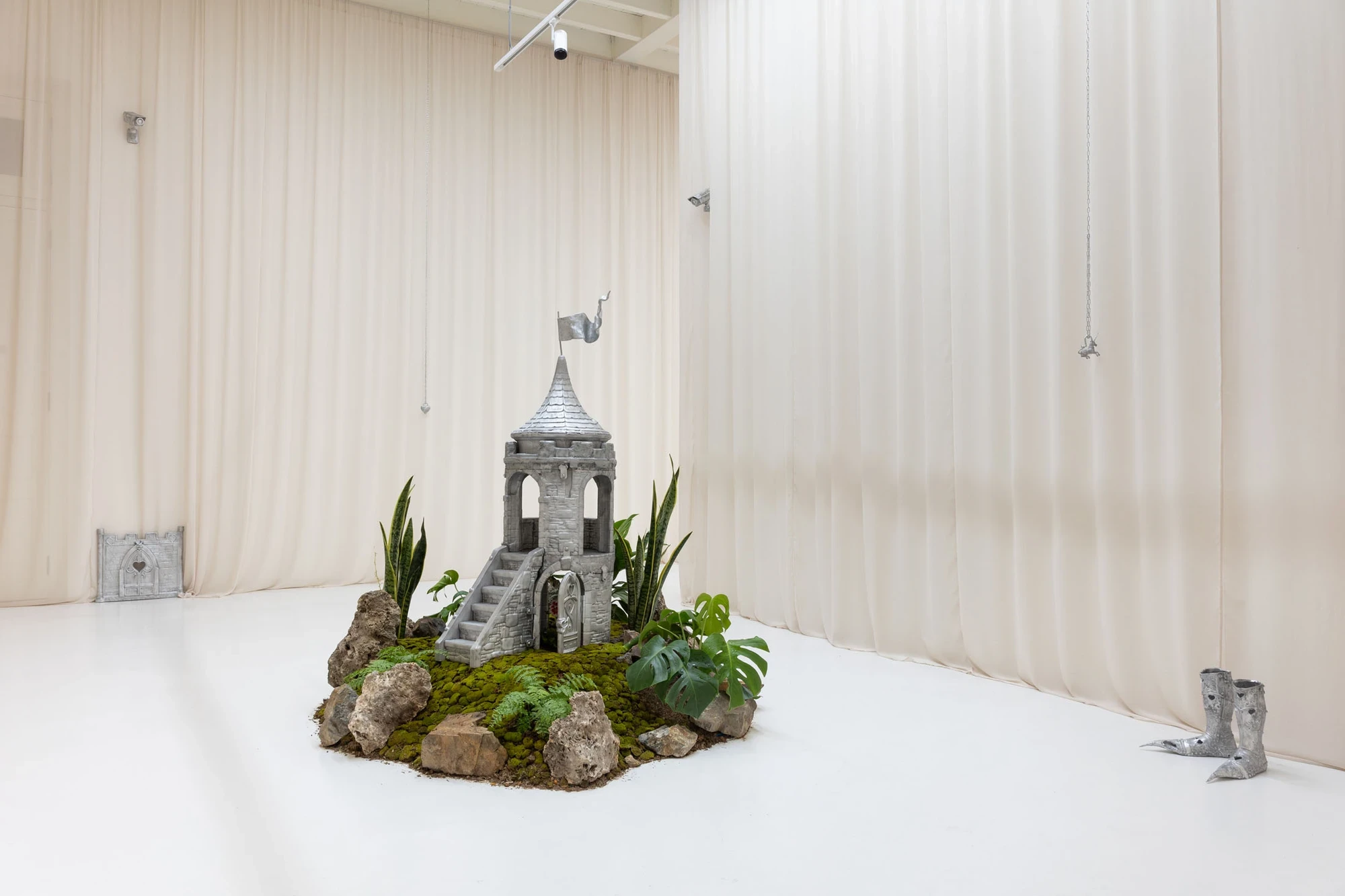
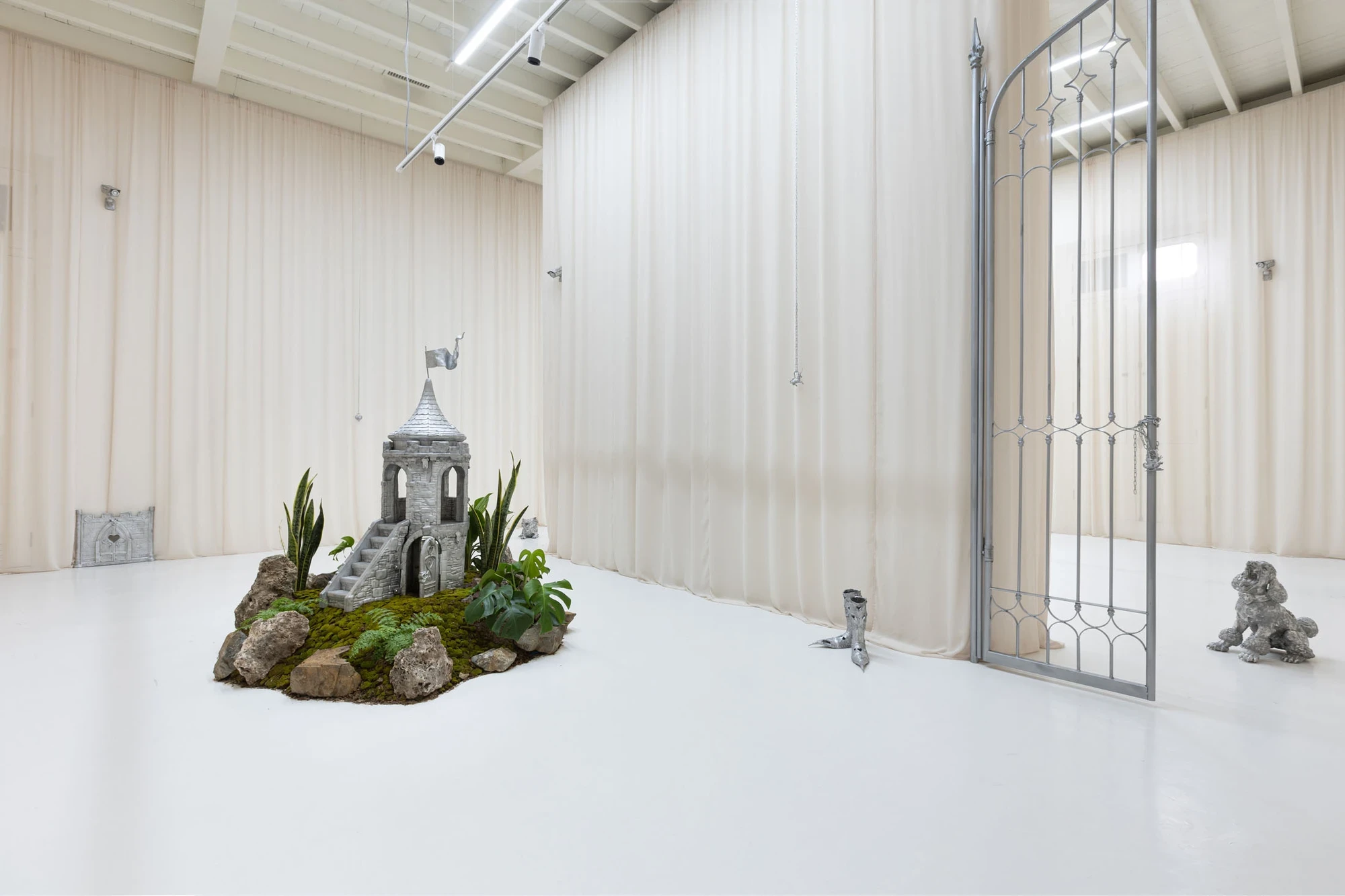
Andrea Ferrero has spent years tracing the logic of power back to where most people first meet it: the nursery floor. You Can’t Stop the World from Being Bad takes the Little Tikes castle, the Polly Pocket world, the plastic keep every child once defended, and casts it in dull silver. What returns is heavier than memory. A pointed-arch tower rises from a moss island of ferns, monstera and real rocks, its exterior staircase leading to a doorway where a single red flower blooms. It is a fairy tale rendered in metal, guarded and slightly menacing.
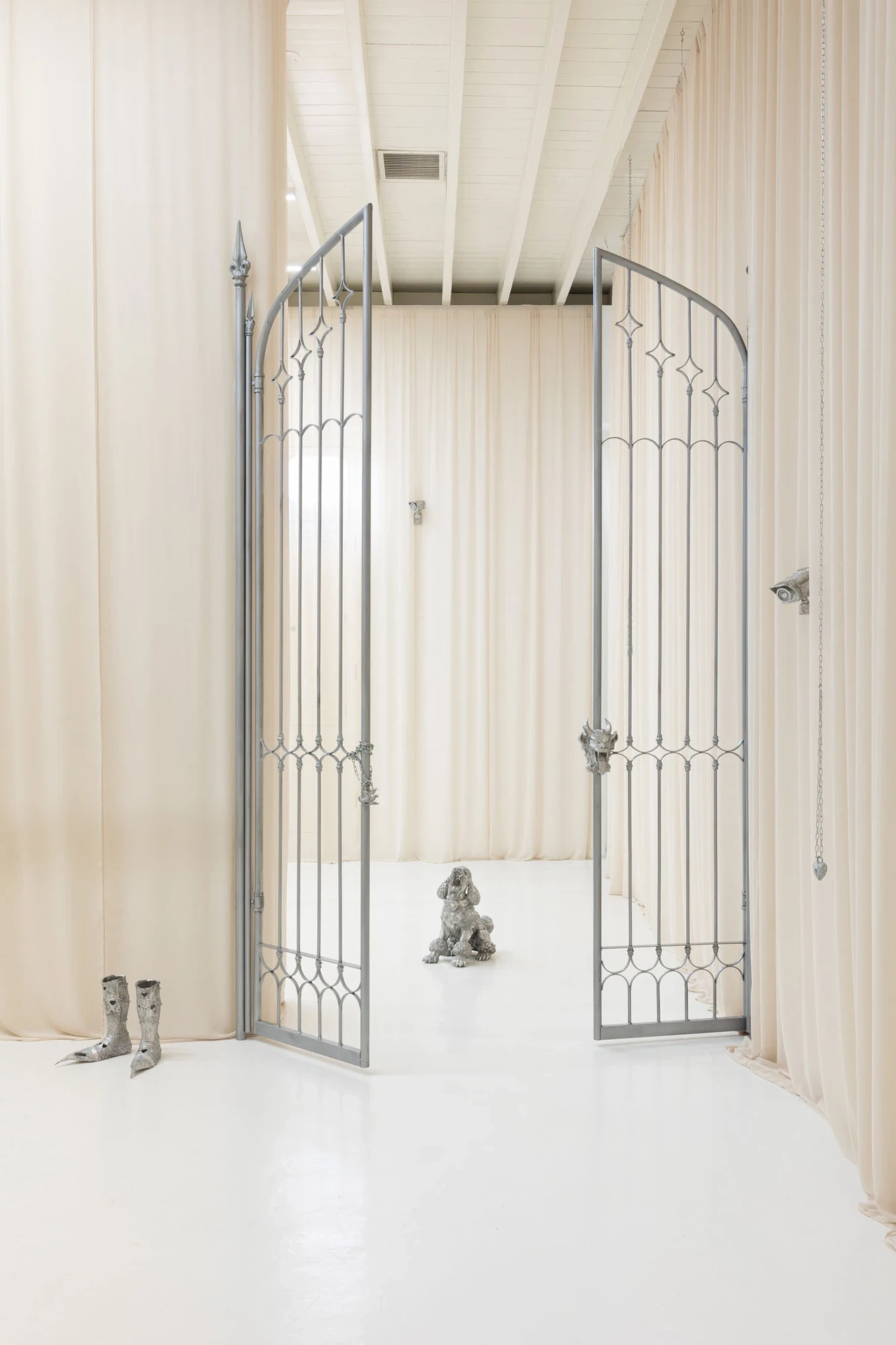
The sculpture is unapologetically theatrical. Sheer cream curtains sheath every wall, softening the room into a stage set and drawing the eye inward toward each object. A full-height wrought-iron gate stands open at the centre, its post crowned with a horned demon head, tongue extended, and a small dragon shackled to the bars by a chain that pools on the floor. Nearby, a fragment of castle wall with battlements leans against the curtain, a heart cut clean through its brick. Childhood defence and adult restriction share the same vocabulary.
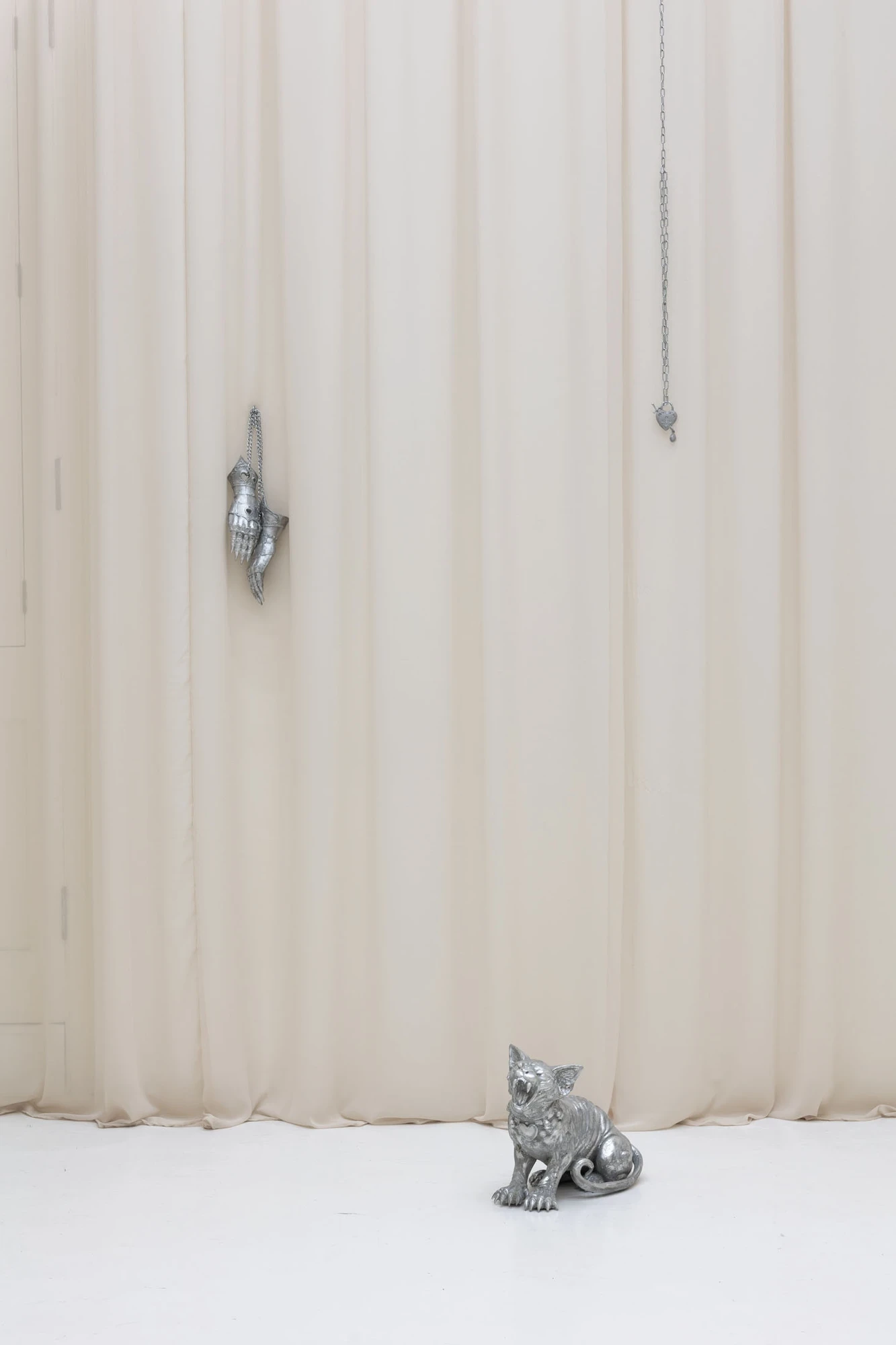
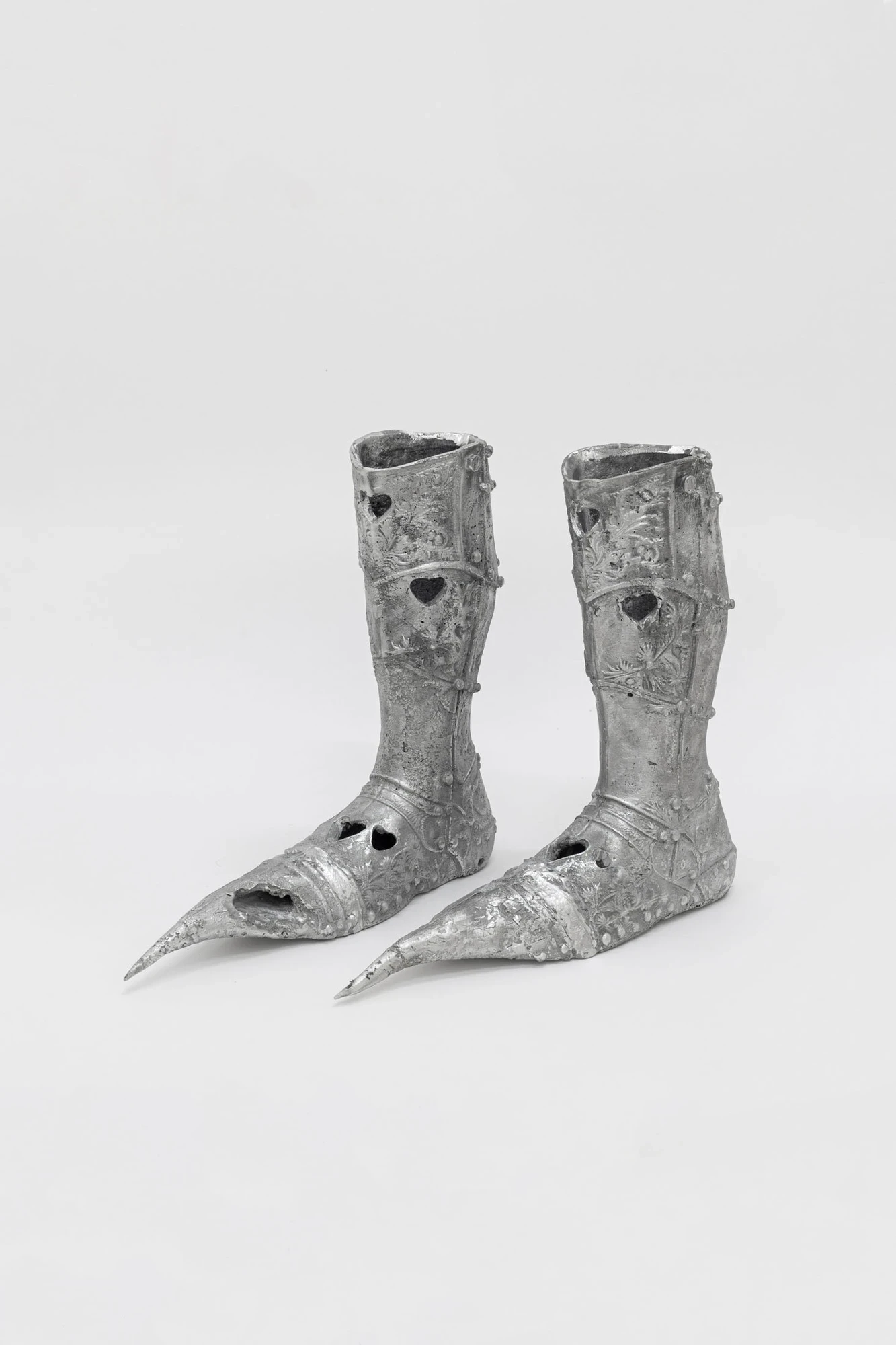
Everything here is cast aluminium, worked to a pewter shine that flattens armour, animal and toy into one material. A pair of pointed mediaeval sabatons, perforated with hearts and engraved with flowers, stand abandoned on the white floor. An armoured gauntlet hangs from a chain beside a love padlock, the kind couples fix to bridges. The gestures of intimacy and the mechanisms of the padlock are impossible to pull apart. Attachment looks a great deal like capture.
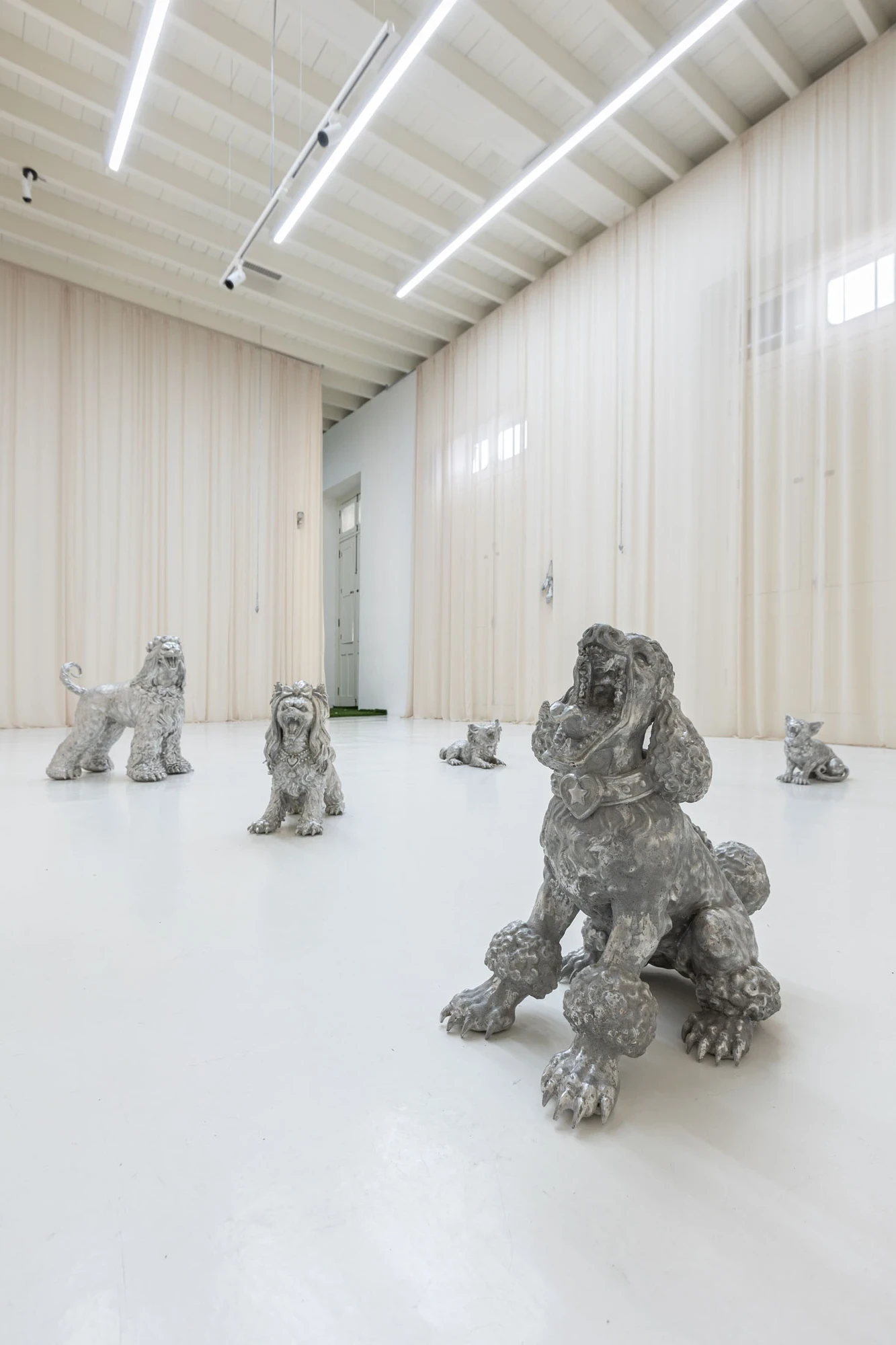
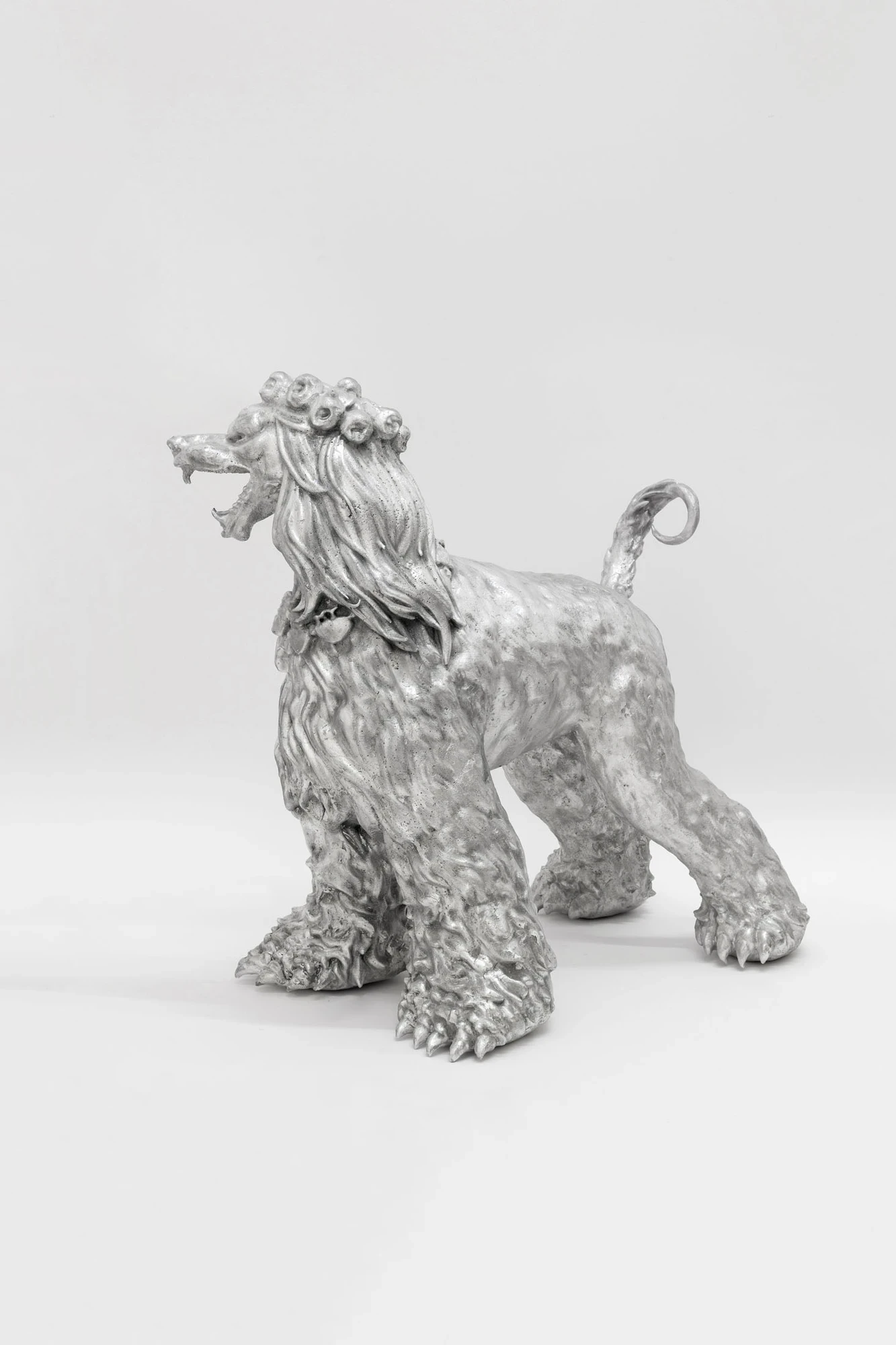
The dogs are the strangest guardians. An installation of silver poodles, spaniels and Afghan hounds spreads across the floor, mouths open mid-snarl, dressed in floral crowns, pearl necklaces and bows. They are lapdogs bred for display and pressed into service as sentries, ornament and threat collapsed into a single body. Cast cats crouch among them, equally armed with fangs. Grooming reads as armouring; the collar is both jewellery and leash.
Watching over all of it, silver security cameras protrude from the curtain folds, each lens shaped into a heart. Surveillance framed as devotion is the show’s sharpest turn, the exact point where love and possession stop being distinguishable. Ferrero builds a castle interior from the raw material of masculine-coded play, conquest narratives and nursery rhymes, then asks who the fortress was ever meant to protect. The title offers no comfort. You can’t stop the world from being bad, only wall a small piece of it off and call the wall love.