Thisispaper Community
Join today.
Enter your email address to receive the latest news on emerging art, design, lifestyle and tech from Thisispaper, delivered straight to your inbox.
Oops! Something went wrong while submitting the form.
Instant access to new channels
The top stories curated daily
Weekly roundups of what's important
Original features and deep dives
Exclusive community features
Alexander Zaxarov
Sep 24, 2026

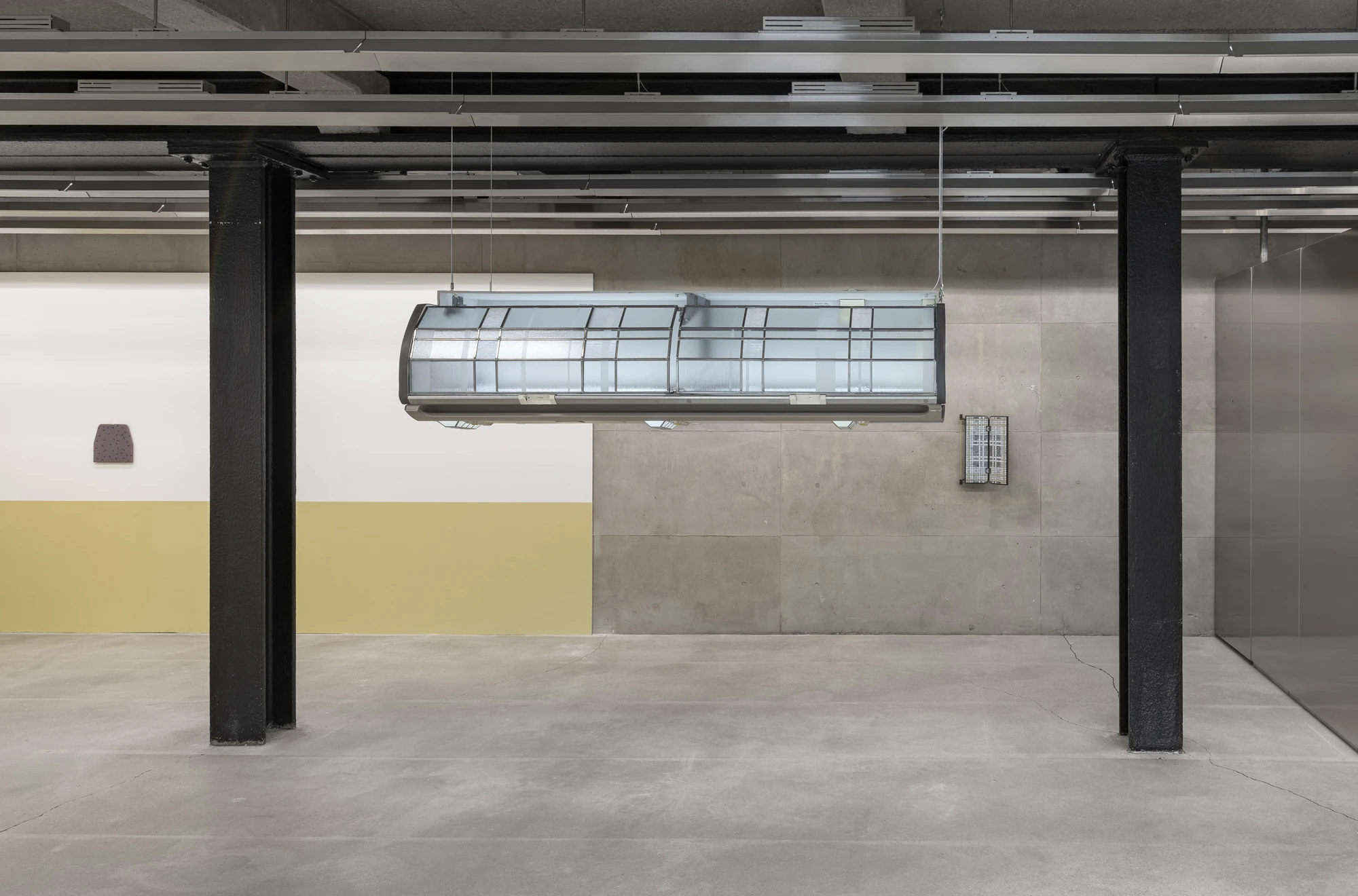
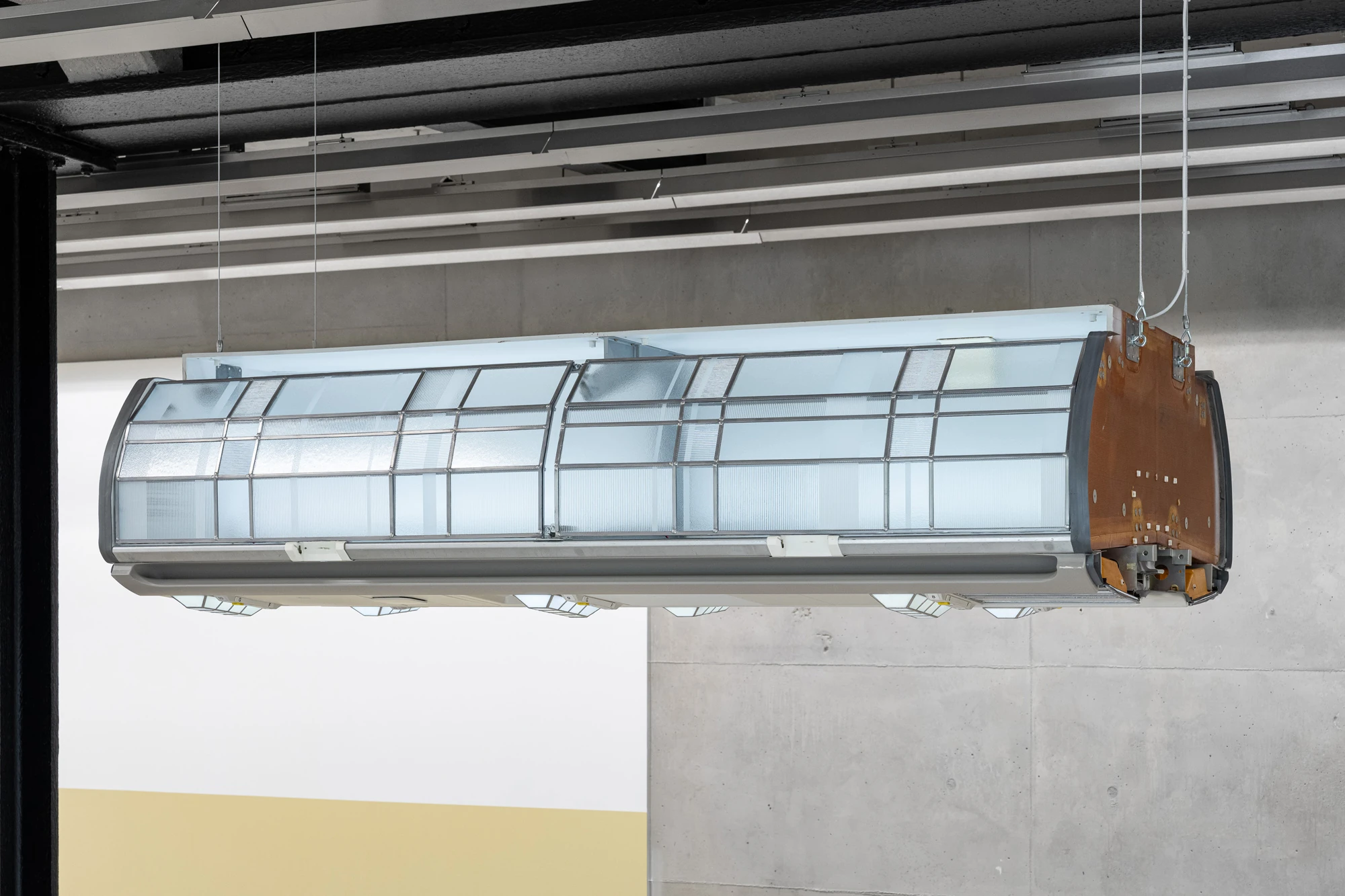
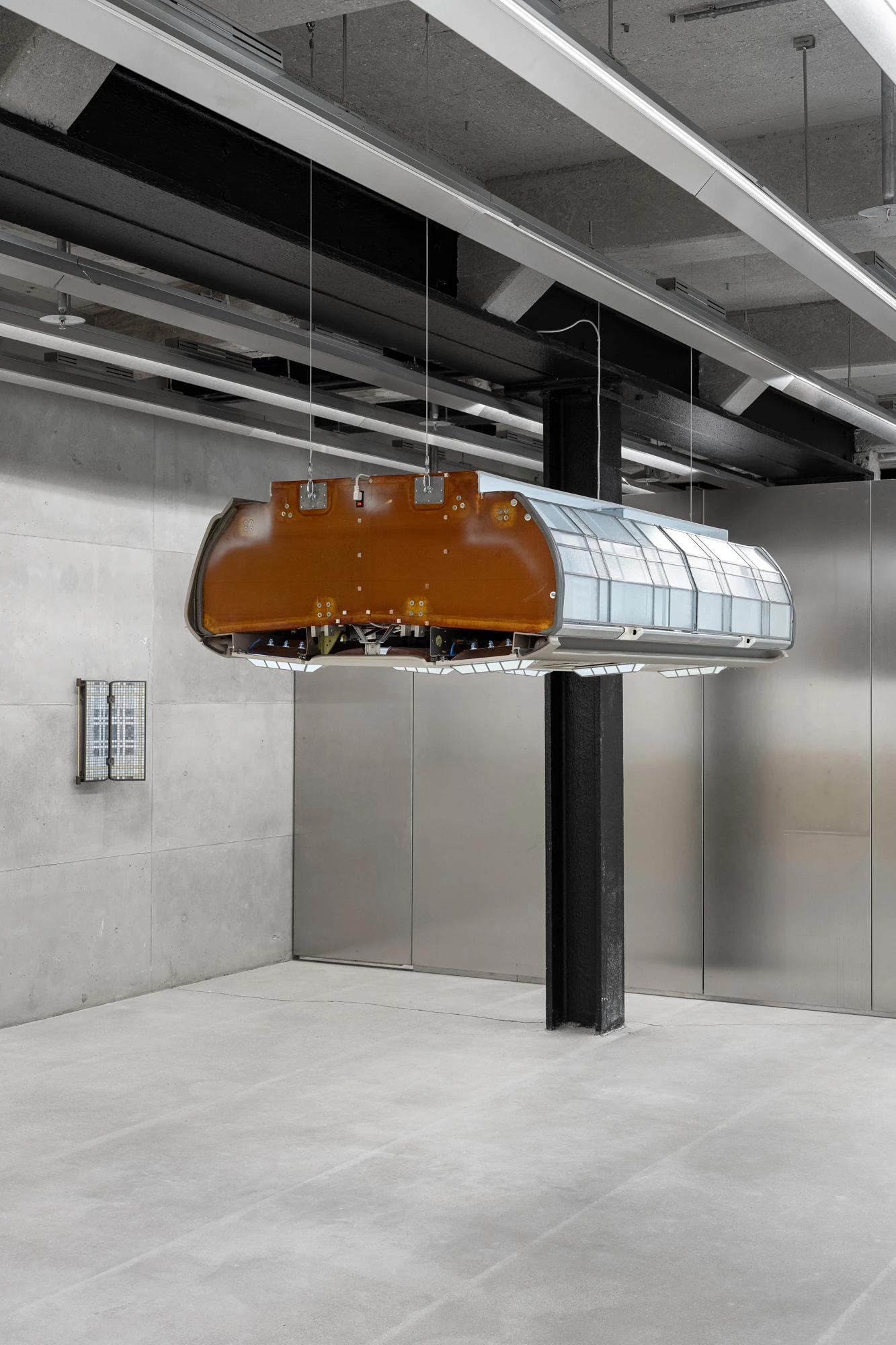
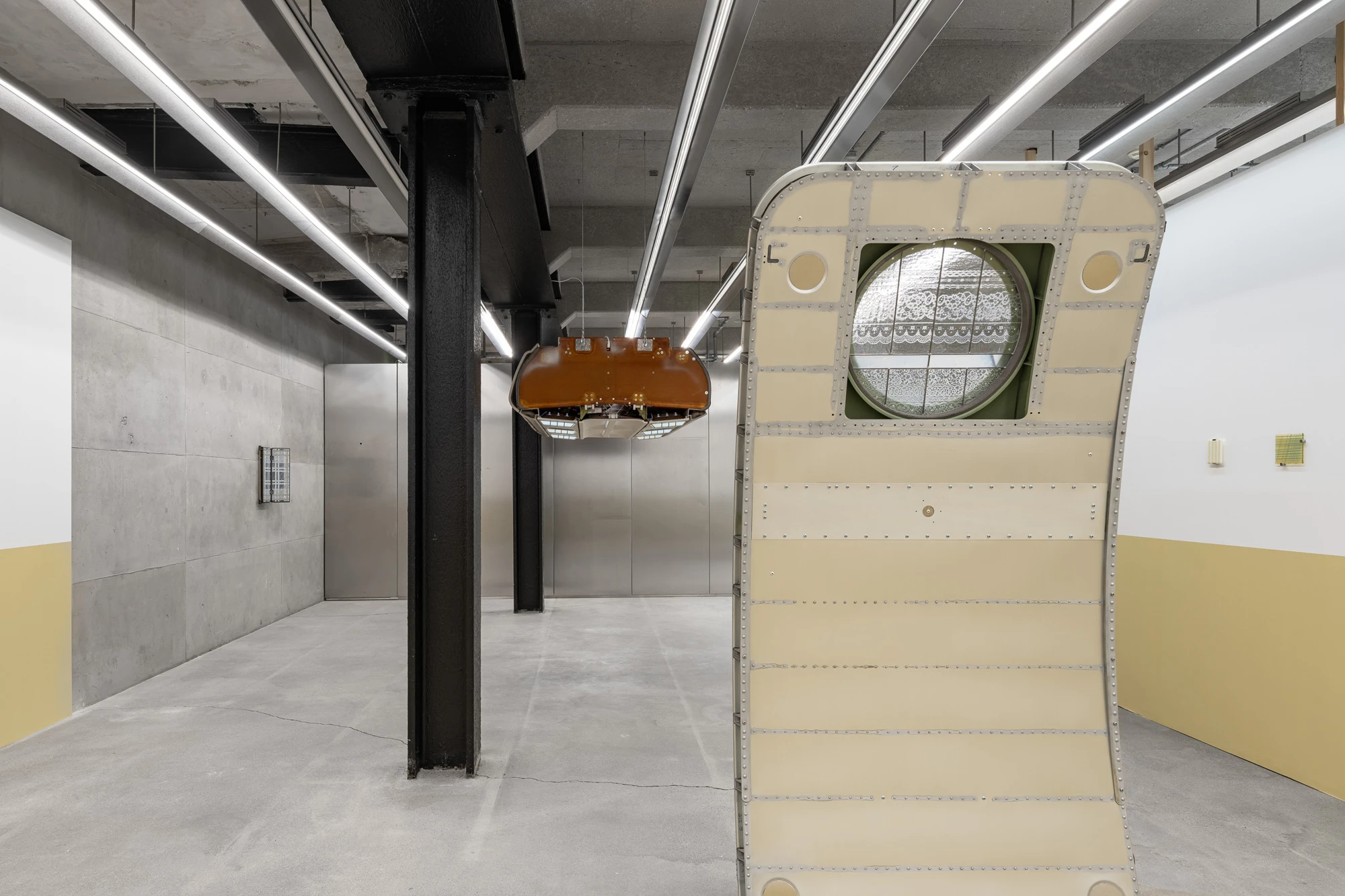
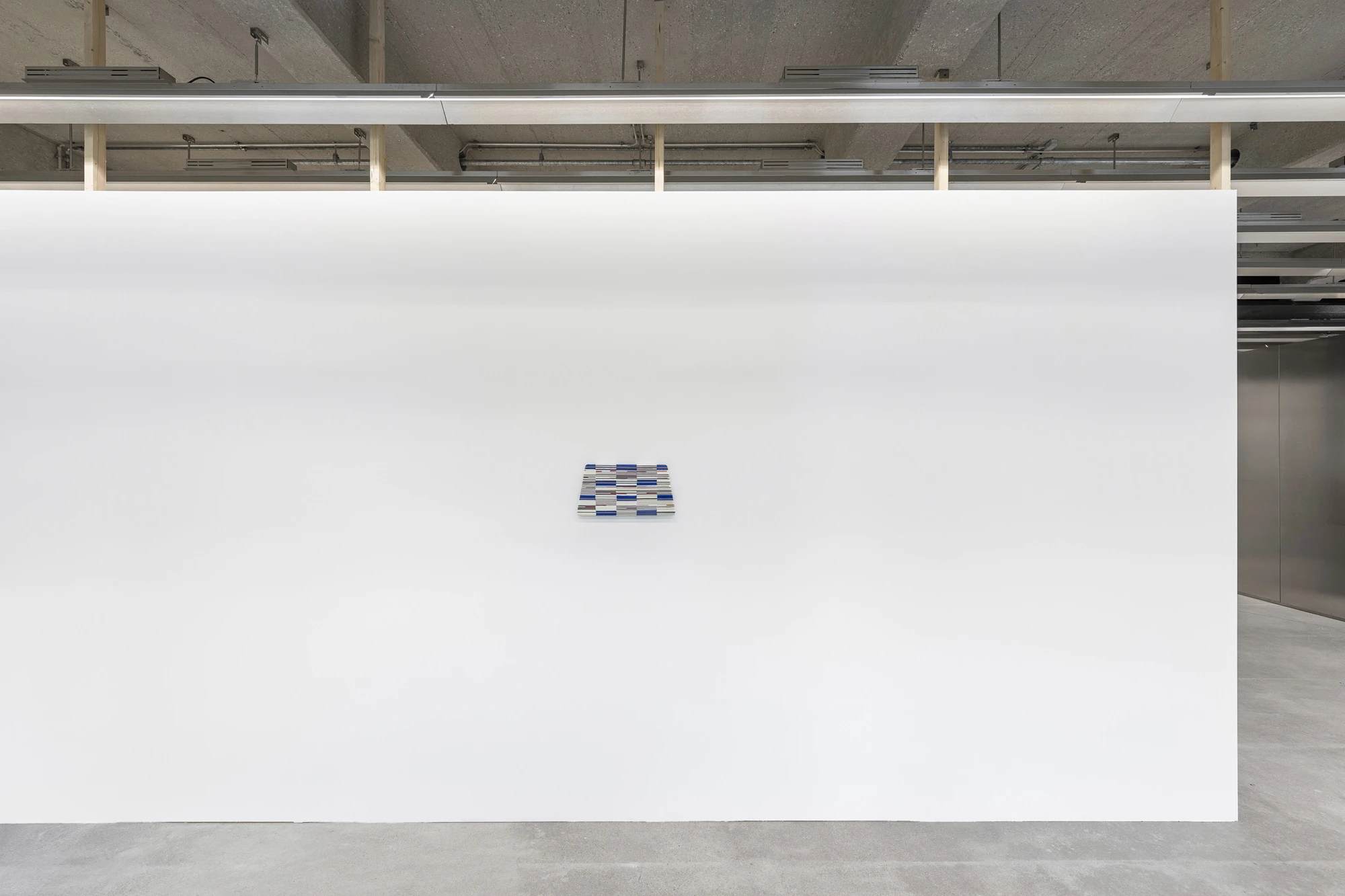
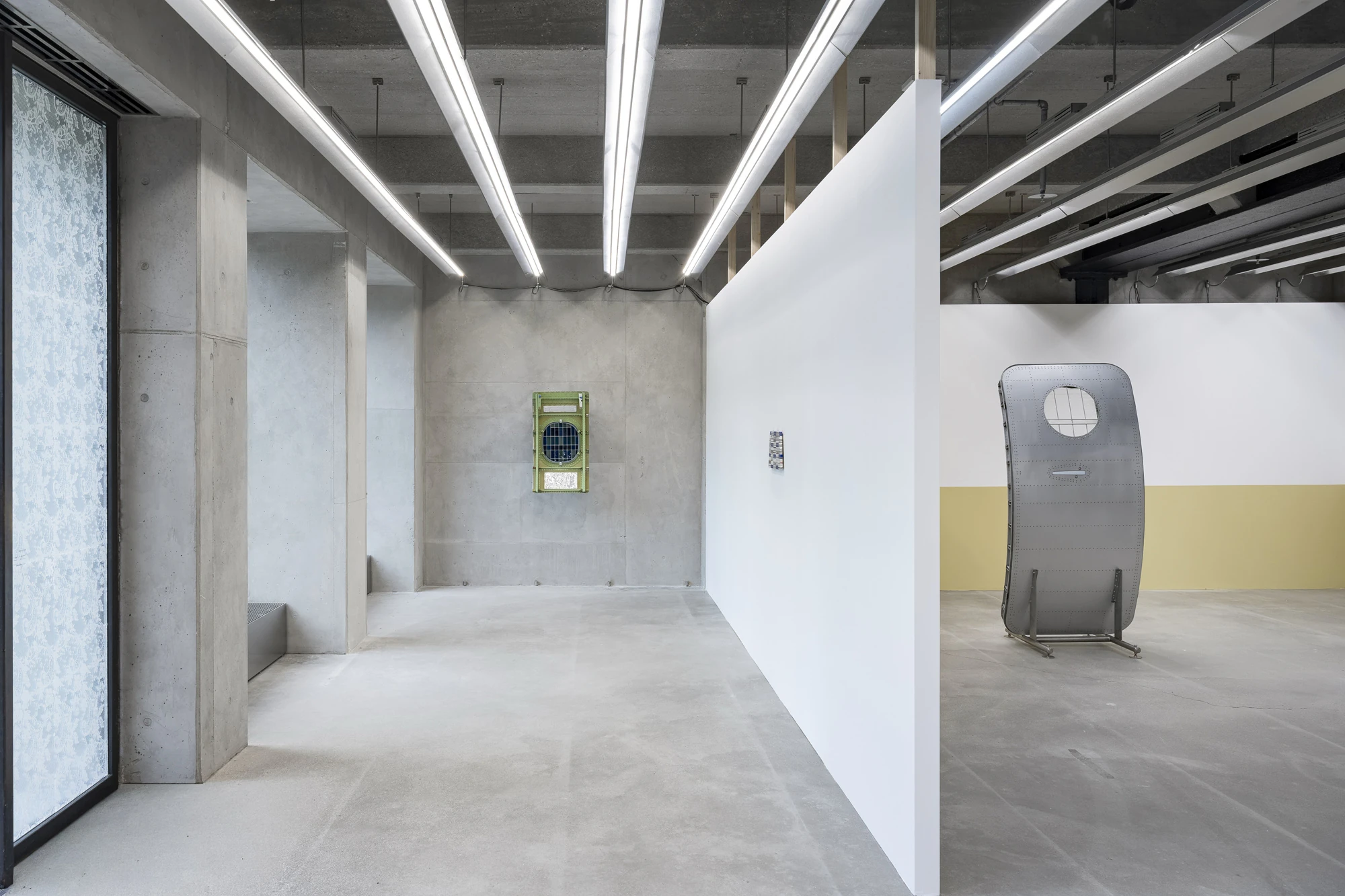
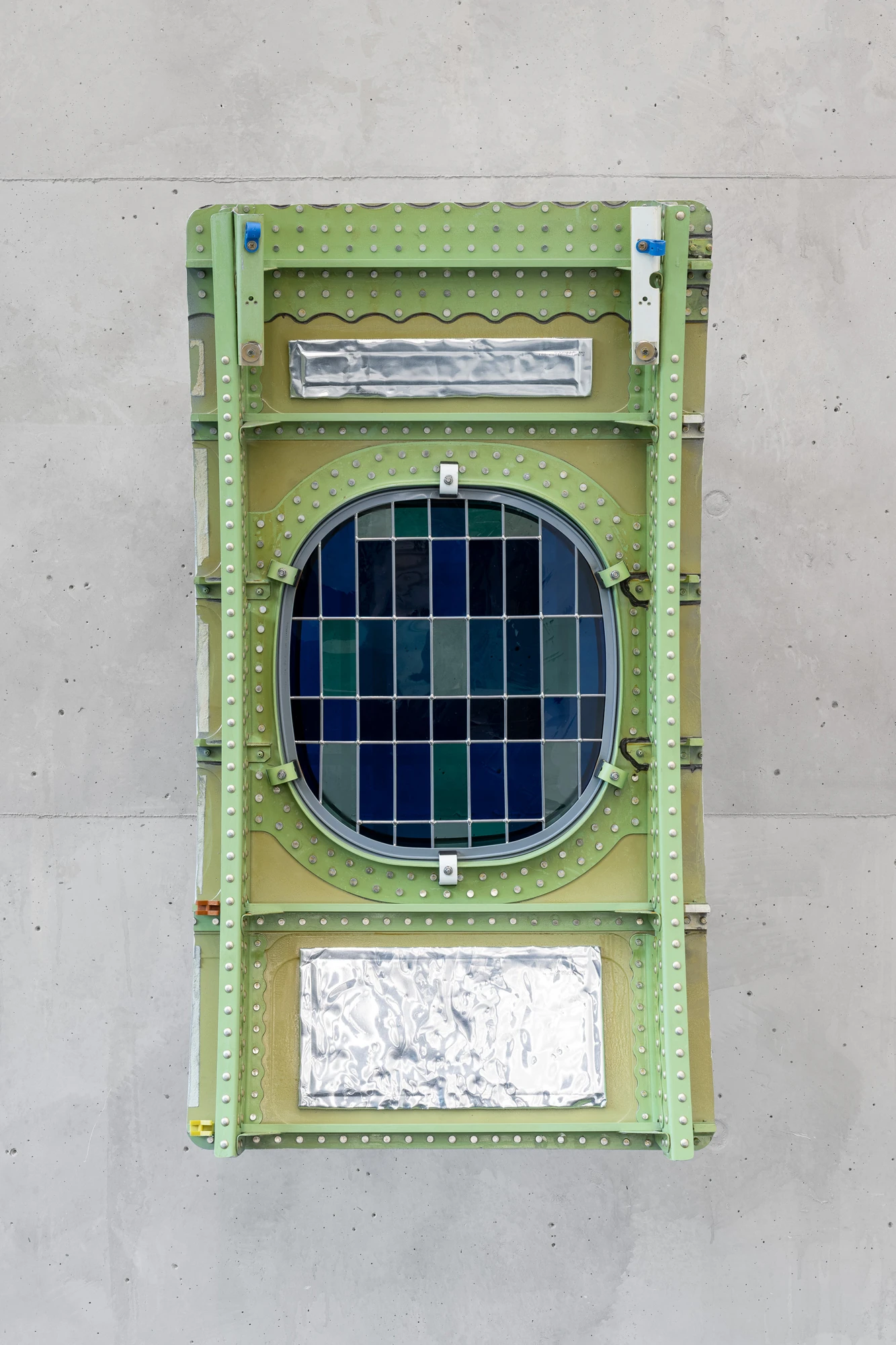
For Addresses Without Names at max goelitz in Munich, Germany, Ju Young Kim rebuilds the fittings of airplanes and waiting rooms in leaded and fused glass, an overhead bin remade as a lit stained-glass panel.

Ju Young Kim builds her work from the places that hold a body for a few hours and then let it go. Airplanes, trains, waiting rooms, hotels, temporary apartments: with Addresses Without Names, her show at max goelitz, she turns toward their close, bodily side, the way a seat fabric or a curtain can feel familiar without being tied to any single memory. Kim calls this condition “anonymous familiarity”, the recognition of something whose origin can no longer be located.

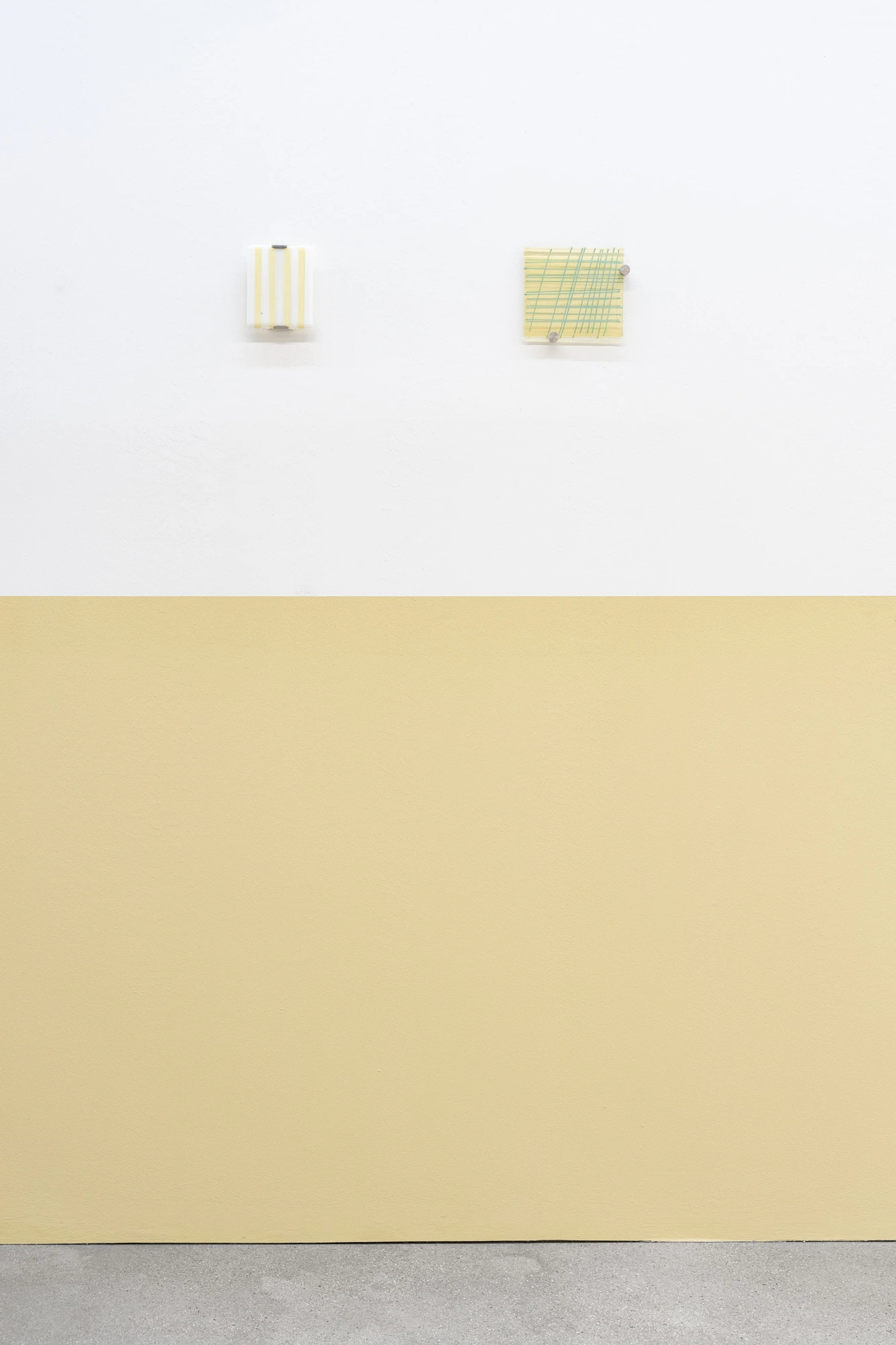
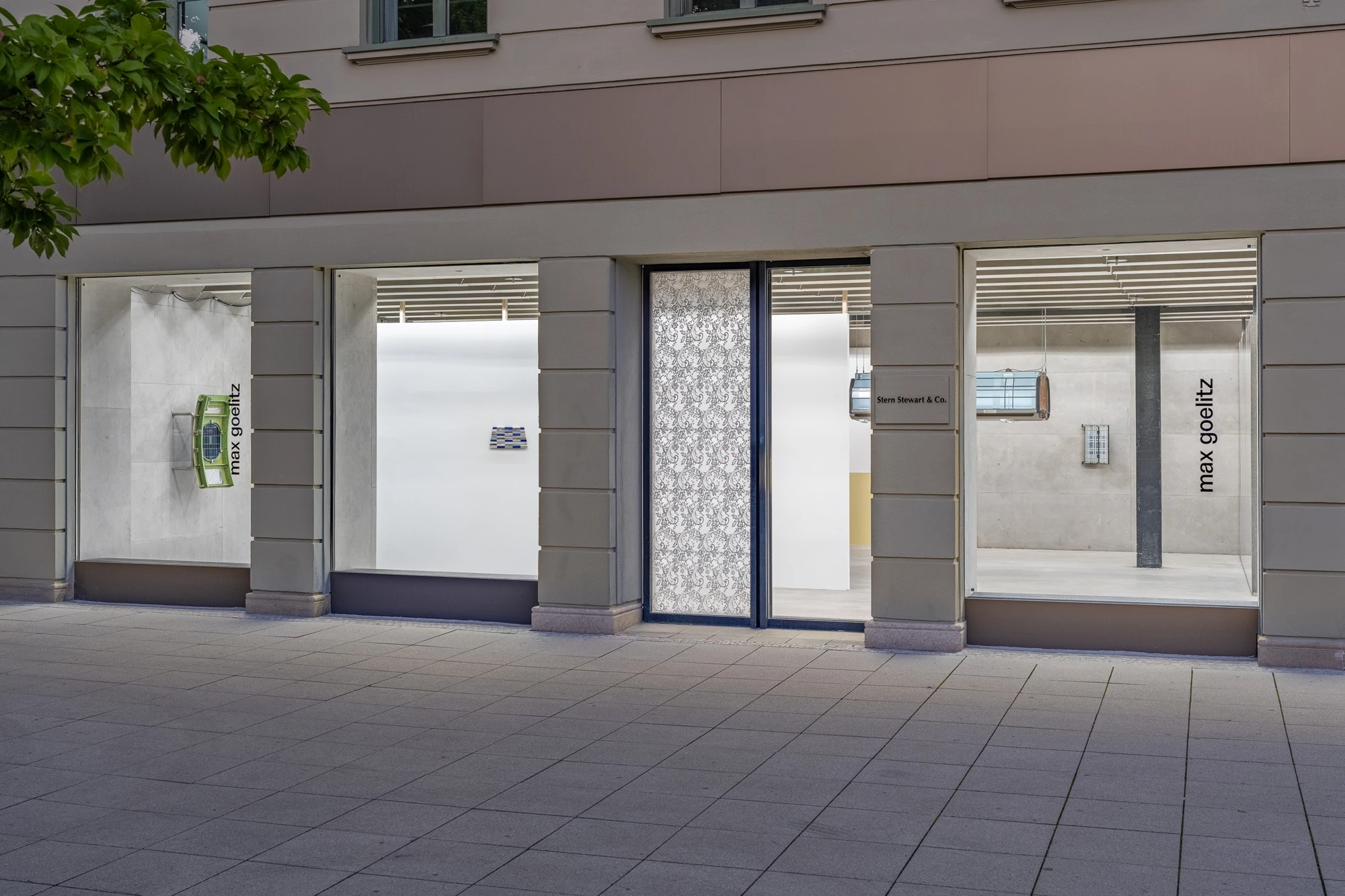
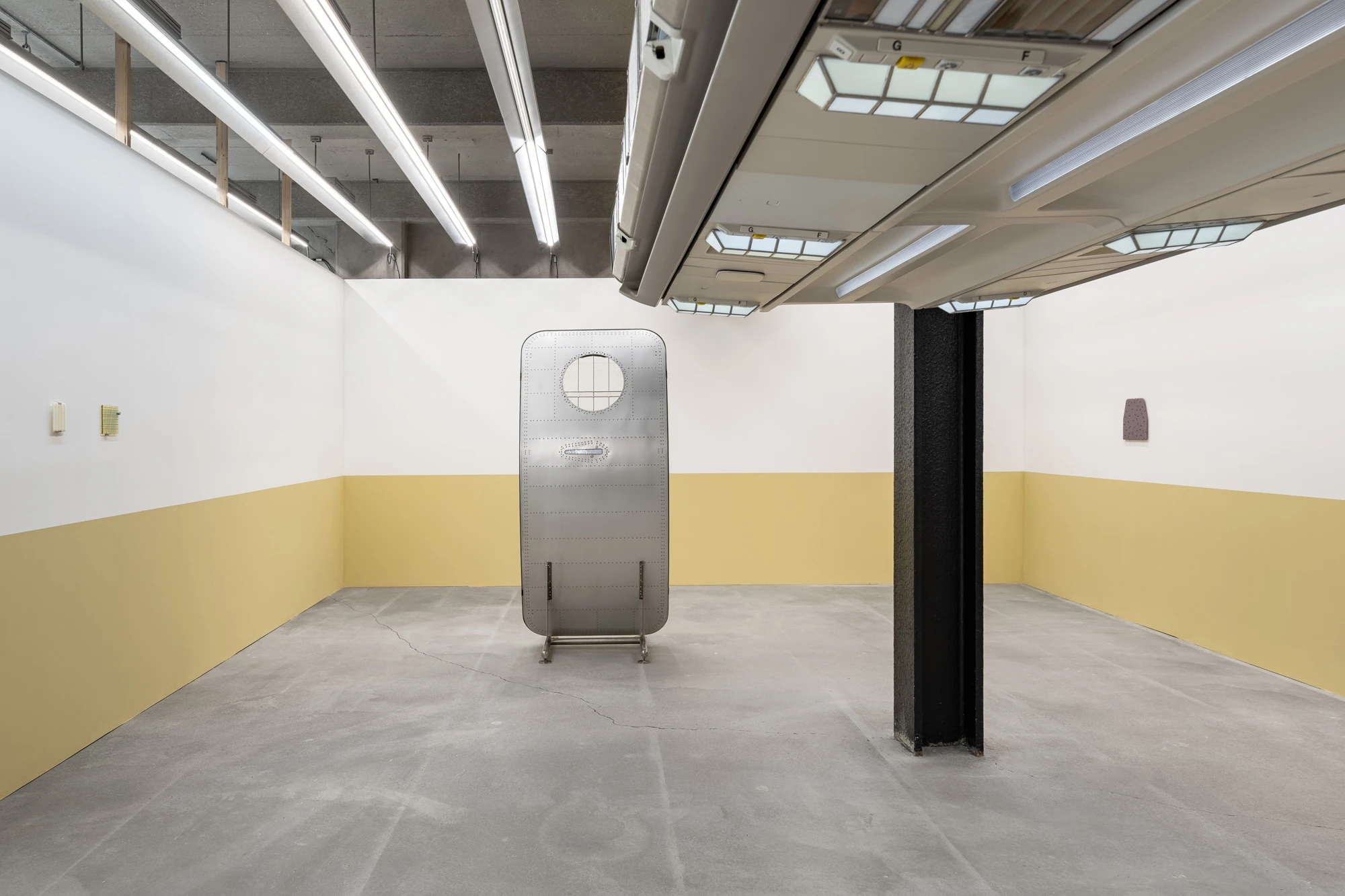
The gallery is split in two. A separate room is set inside the existing space at the back, its walls painted ochre to half height, giving the section a warm, domestic feel. On the entrance door, a film printed with a lace motif filters the view and holds the two areas half open. What results is a threshold that reads as neither fully private nor public, a pause between arrival and departure, familiarity and estrangement.

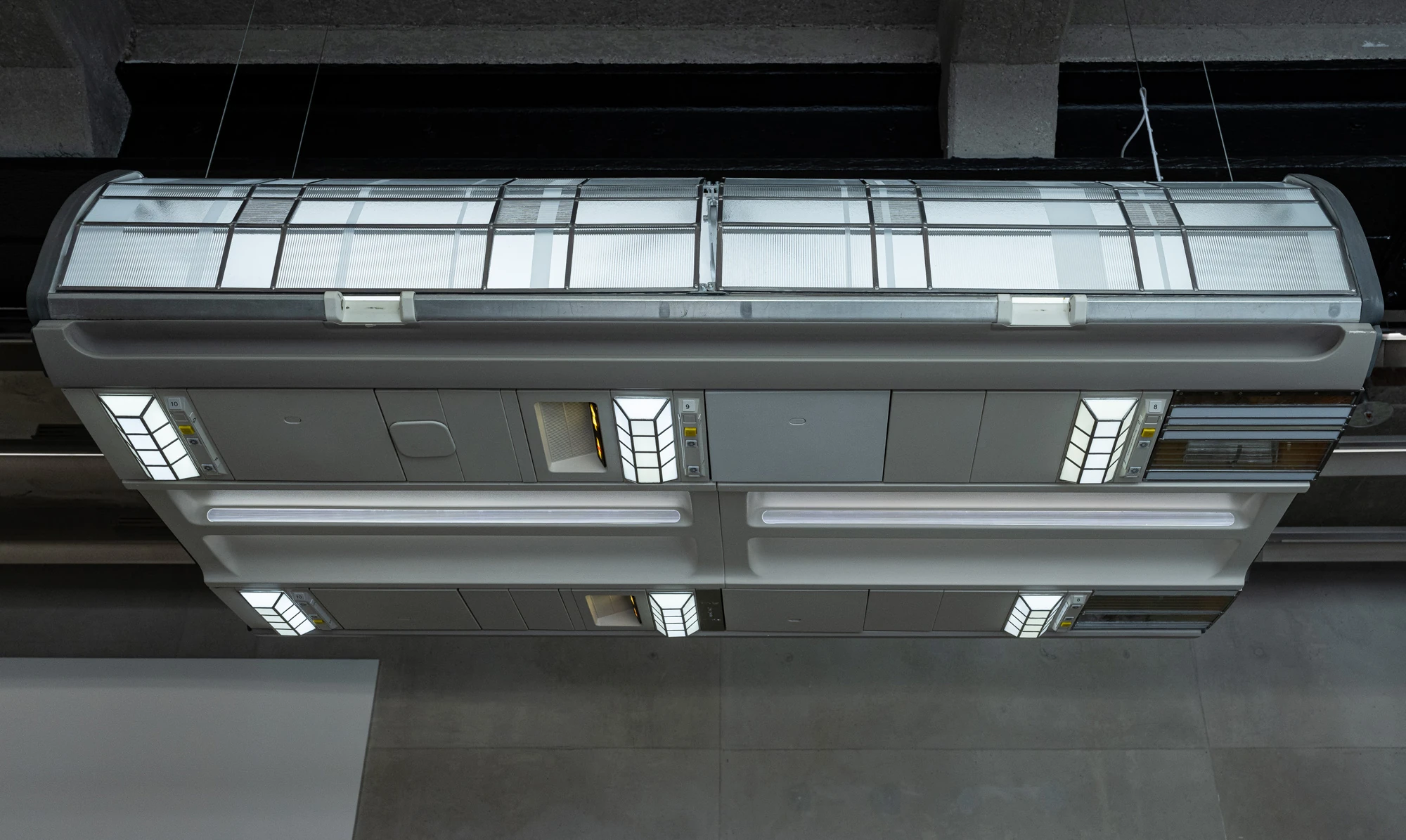
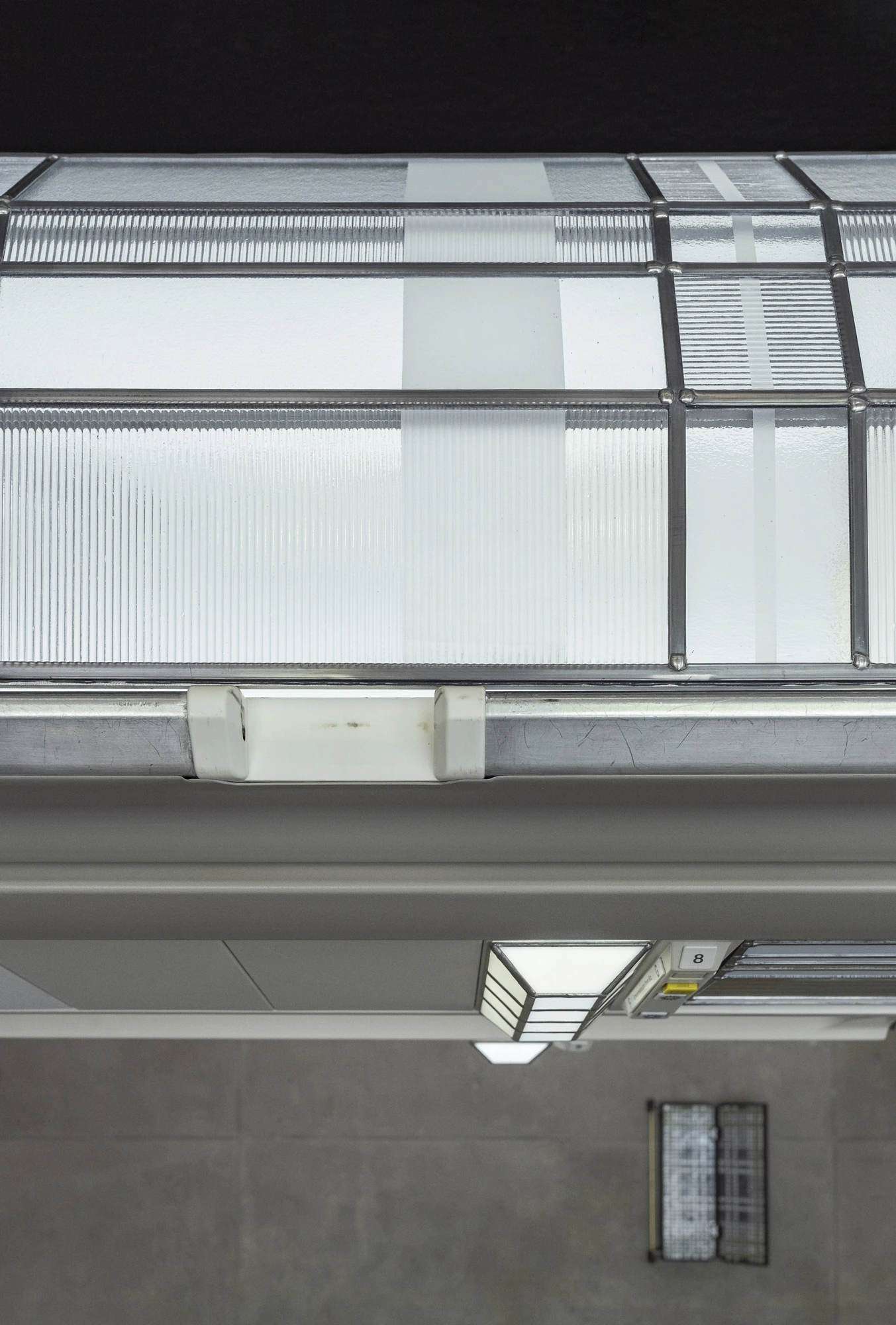
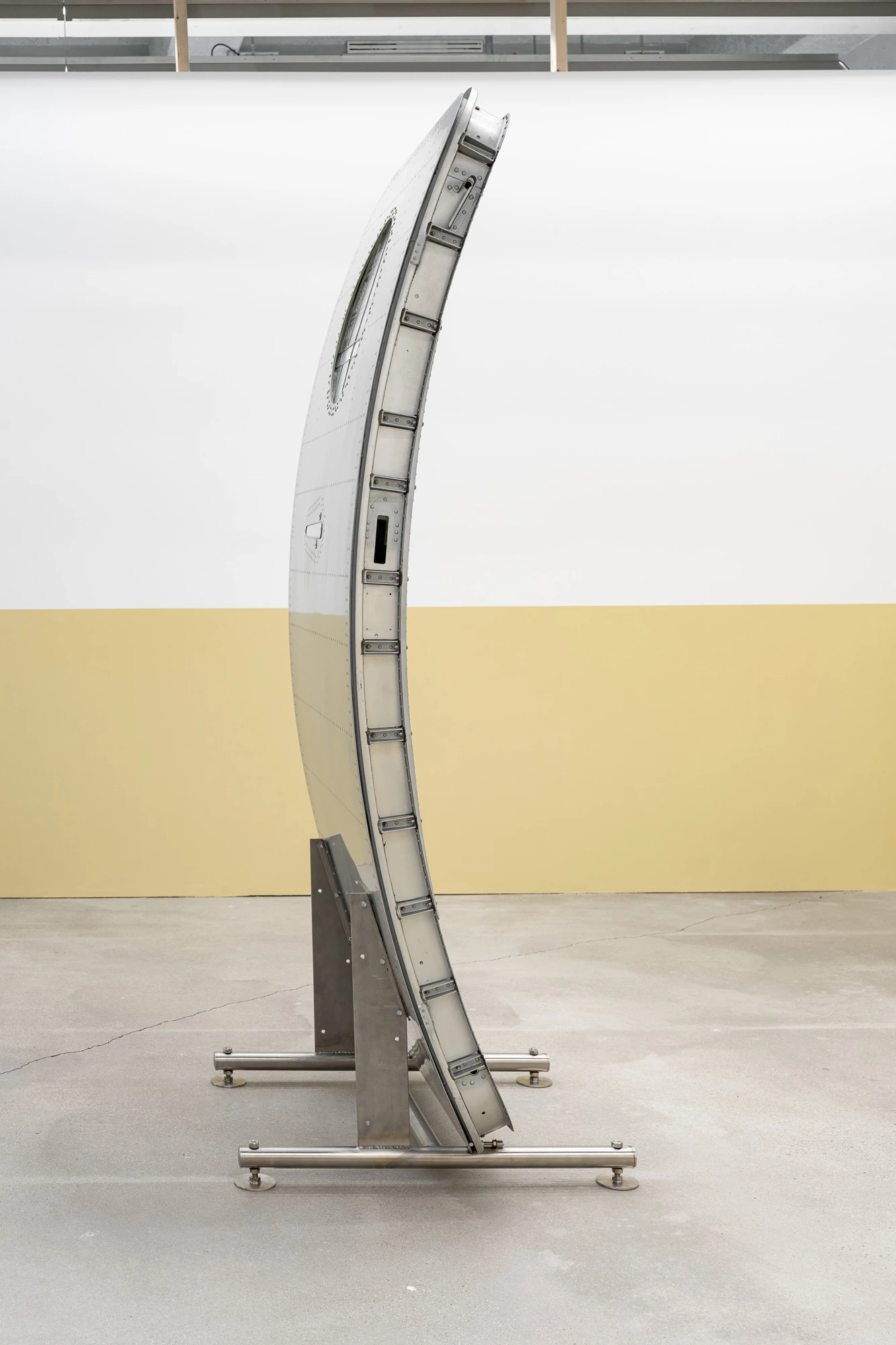
Suspended at the center is She slept better when nothing stayed still, the largest work to date from Kim’s ongoing series AEROPLASTICS, where salvaged aircraft parts meet hand-worked glass. An overhead luggage bin becomes a lit construction of smooth, ribbed and sanded glass held with lead cames. Below it hang six reading lights in different shades of white leaded glass, their geometry closer to Art Deco than to any cabin. Here Kim draws roses in lead and writes the Korean word for “thank you” in her own hand, a motif she knows from napkins in Korean restaurants, a shared visual language folded into private memory.

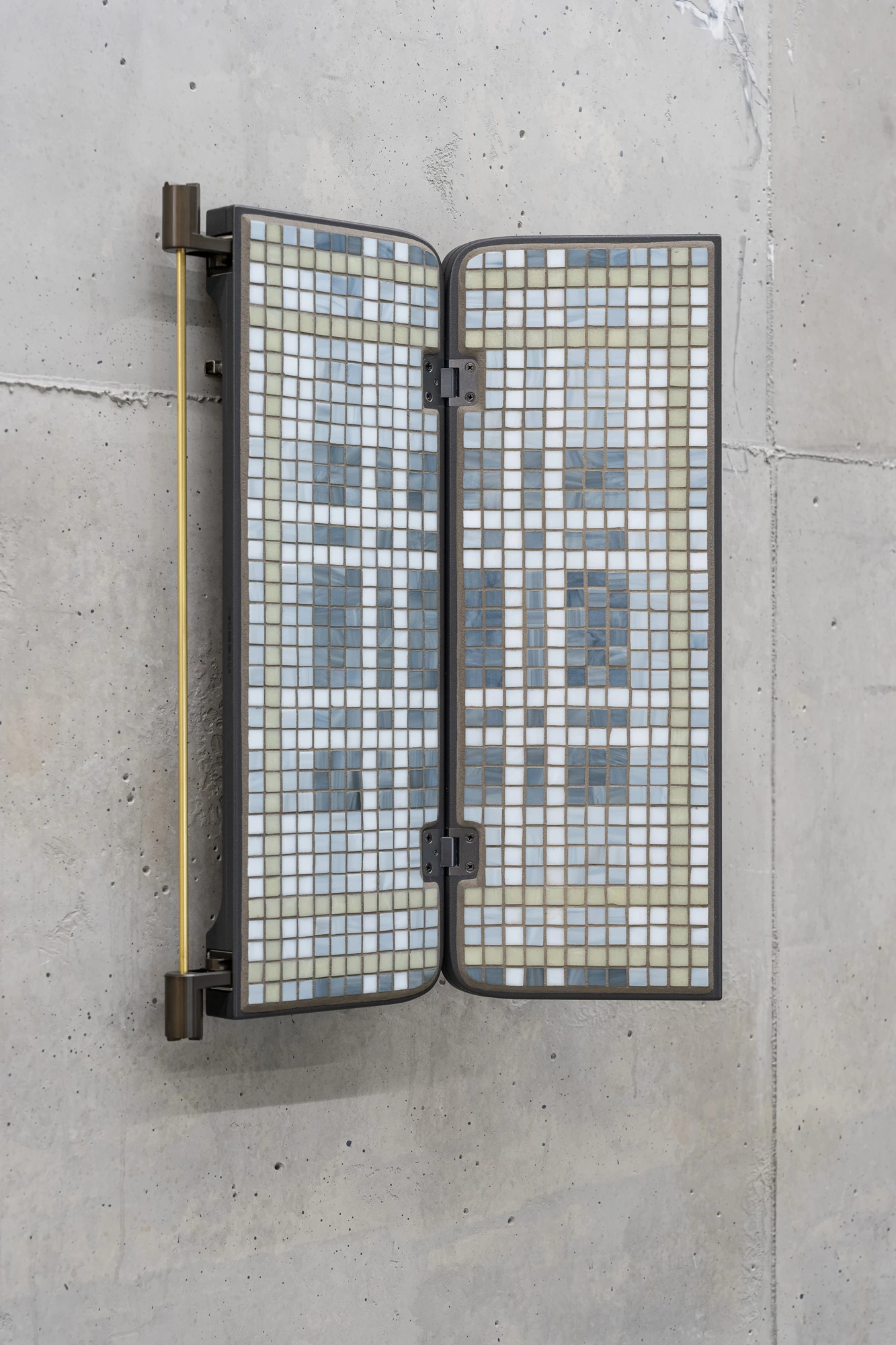
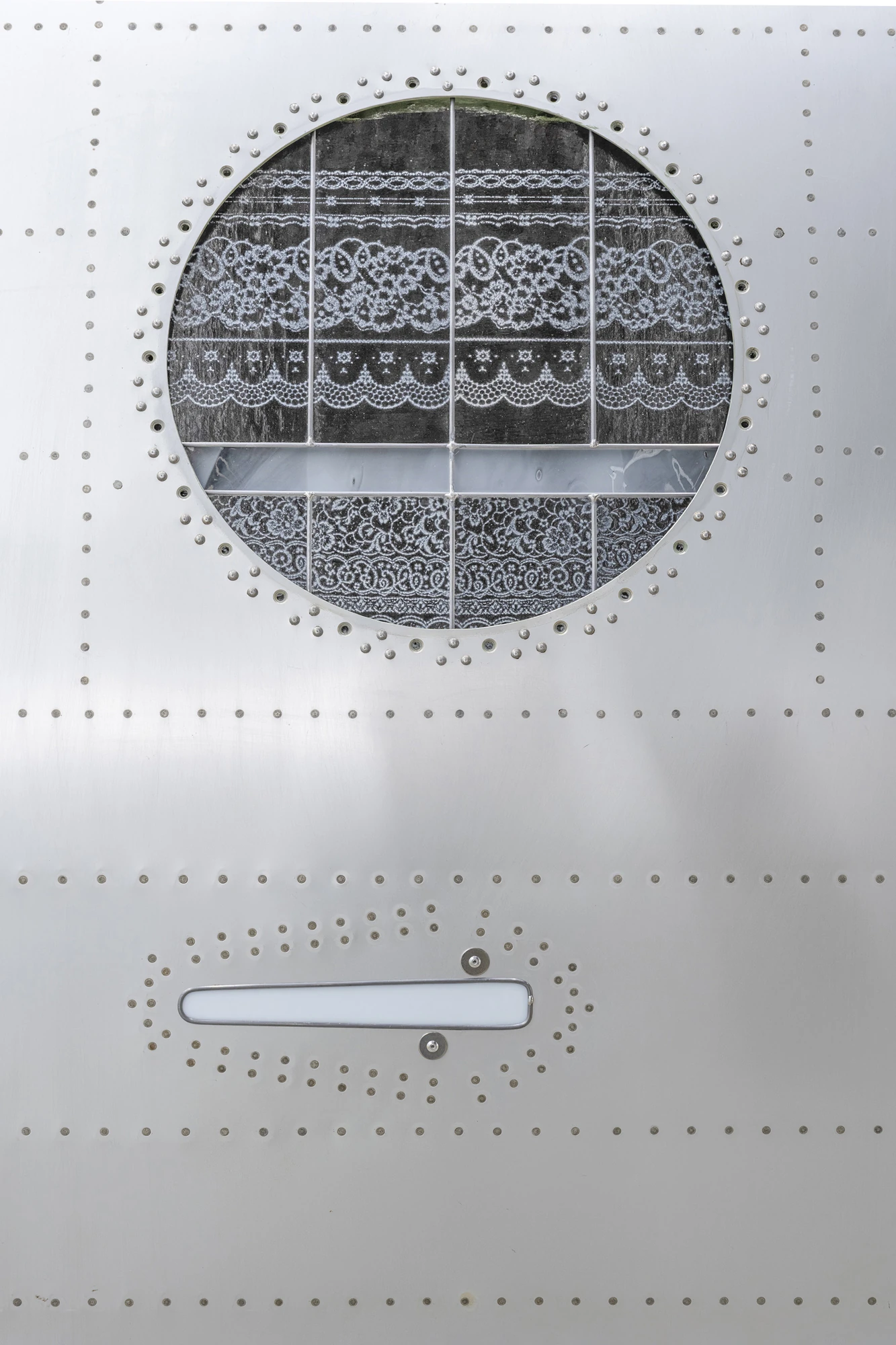
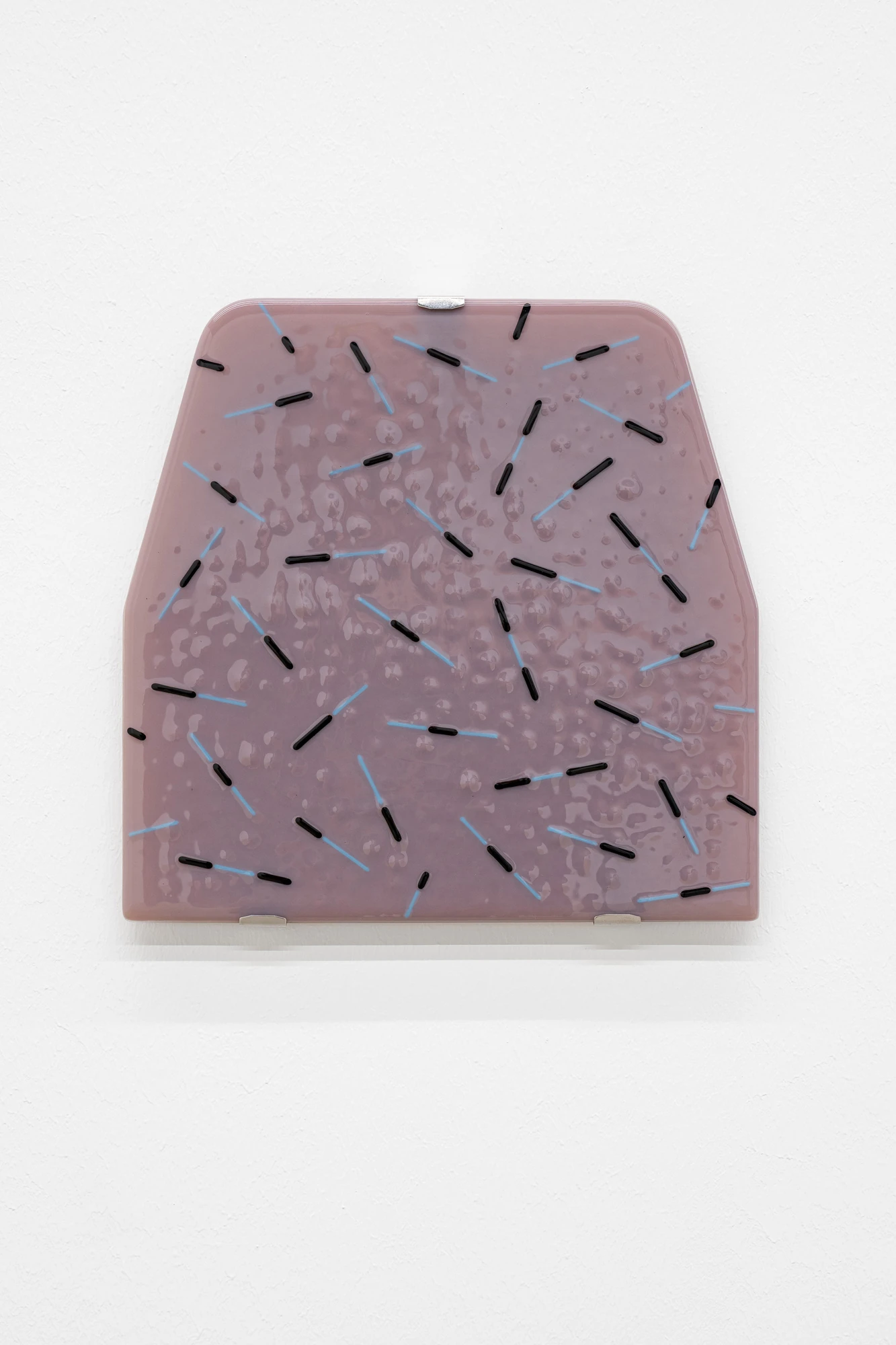
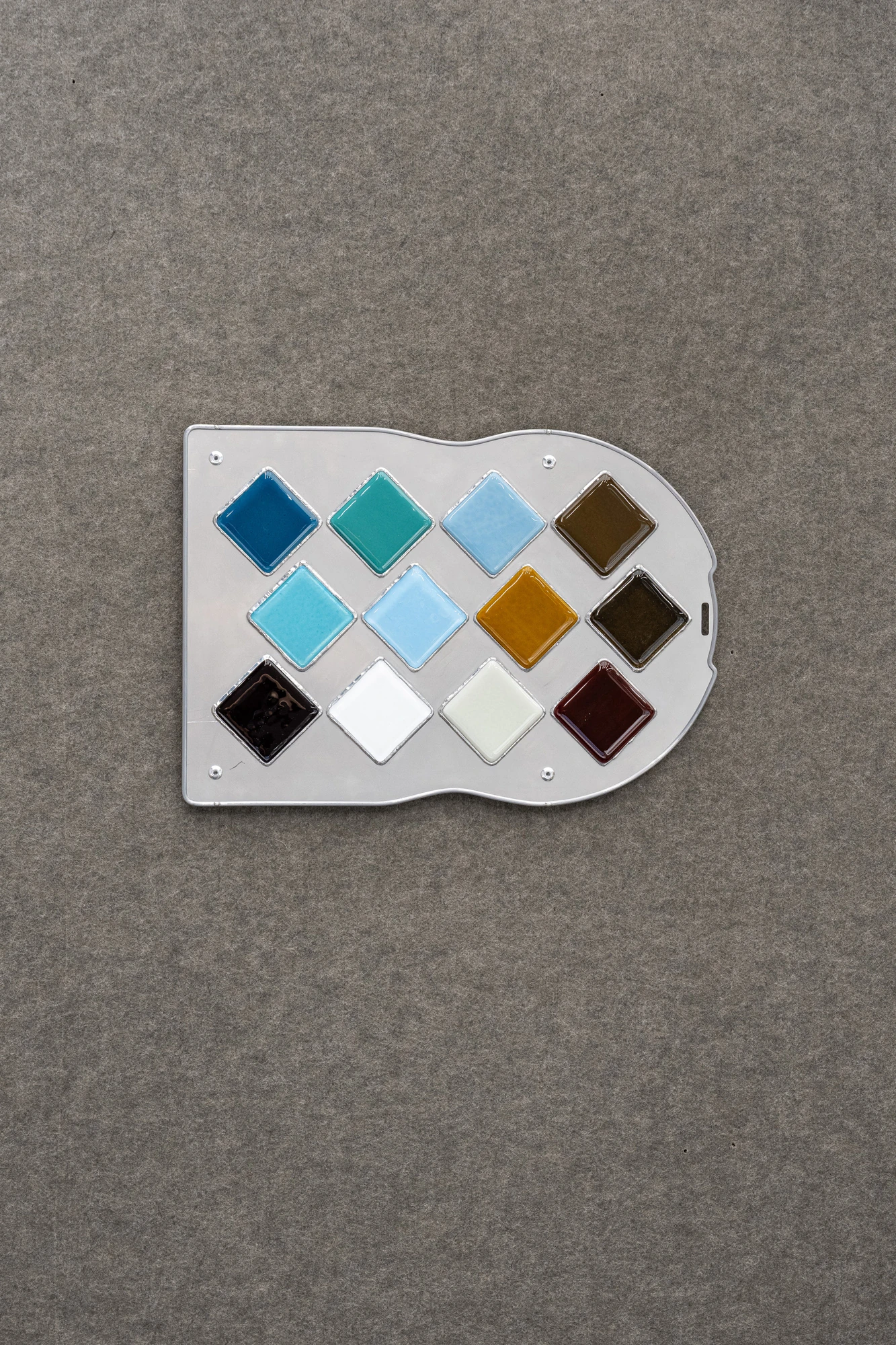
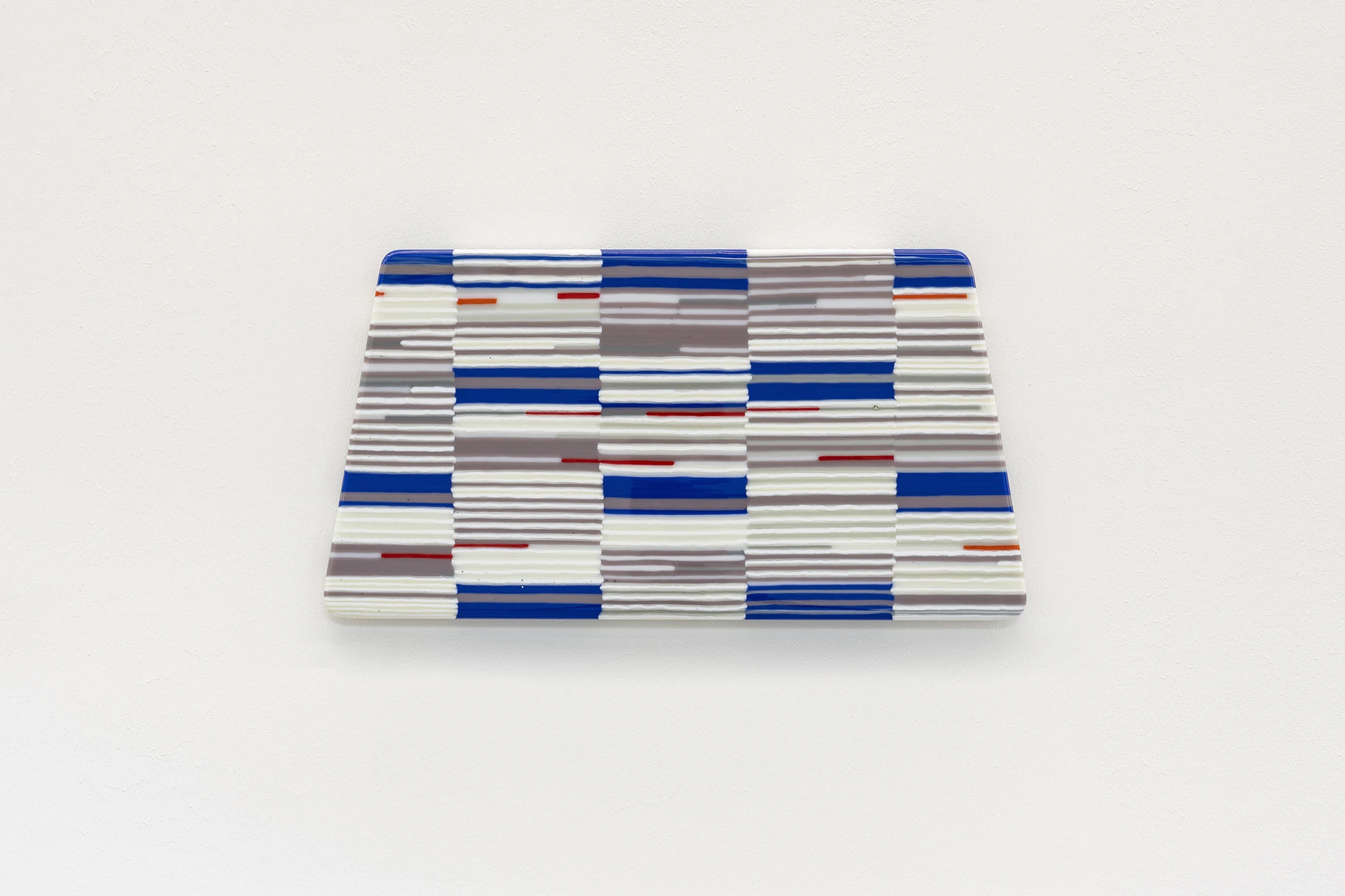
Around it sit smaller glass works based on textile structures: upholstery weaves and lace, translated pane by pane. A pattern might recall the interior of the London Underground or the seat of a Japanese airline while also standing in for a blanket from childhood. The titles carry the same doubling, She always left the blue unused, She remembered exactly what it felt like. Their dimensions follow the standardized formats of seats and headrests, keeping each piece the size of the body it once touched.

The tension between craft and industry is already written into these fabrics. Mechanized weaving turned once-handmade motifs into serial production, a shift Kim reads through Anni Albers, who rethought textile structure, grid and material across craft and the machine. Kim pushes it further, carrying reproduced weaves into glass and reworking them slowly by hand, so that fragile hand-cut surfaces sit beside factory-made aircraft parts and the standardized fittings of public transport. Some of the pieces were made during a residency at the Pilchuck Glass School in Washington.

What the show finally argues is that transit has become less a matter of geography than of the body. Memory survives as a material impression, a texture or colour that stays after the place is gone. Home, in Kim’s account, is less a fixed address than something rebuilt again and again from such fragments, a temporary sense of familiarity carried from one arrival to the next.
Interested in Showcasing Your Work?
‍

If you would like to feature your works on Thisispaper, please visit our Submission page and sign up to Thisispaper+ to submit your work. Once your submission is approved, your work will be showcased to our global audience of 2 million art, architecture, and design professionals and enthusiasts.
No items found.
Less, with more behind it.
Explore guides. Search the archive. Walk the atlas.
Become a Thisispaper+ member today to unlock full access to our magazine, advanced tools, and support our work.
Get two months FREE
with annual subscription
Less, with more behind it.
Explore guides. Search the archive. Walk the atlas.
Become a Thisispaper+ member today to unlock full access to our magazine, advanced tools, and support our work.
Get two months FREE
with annual subscription
No items found.
Alexander Zaxarov
Sep 24, 2026

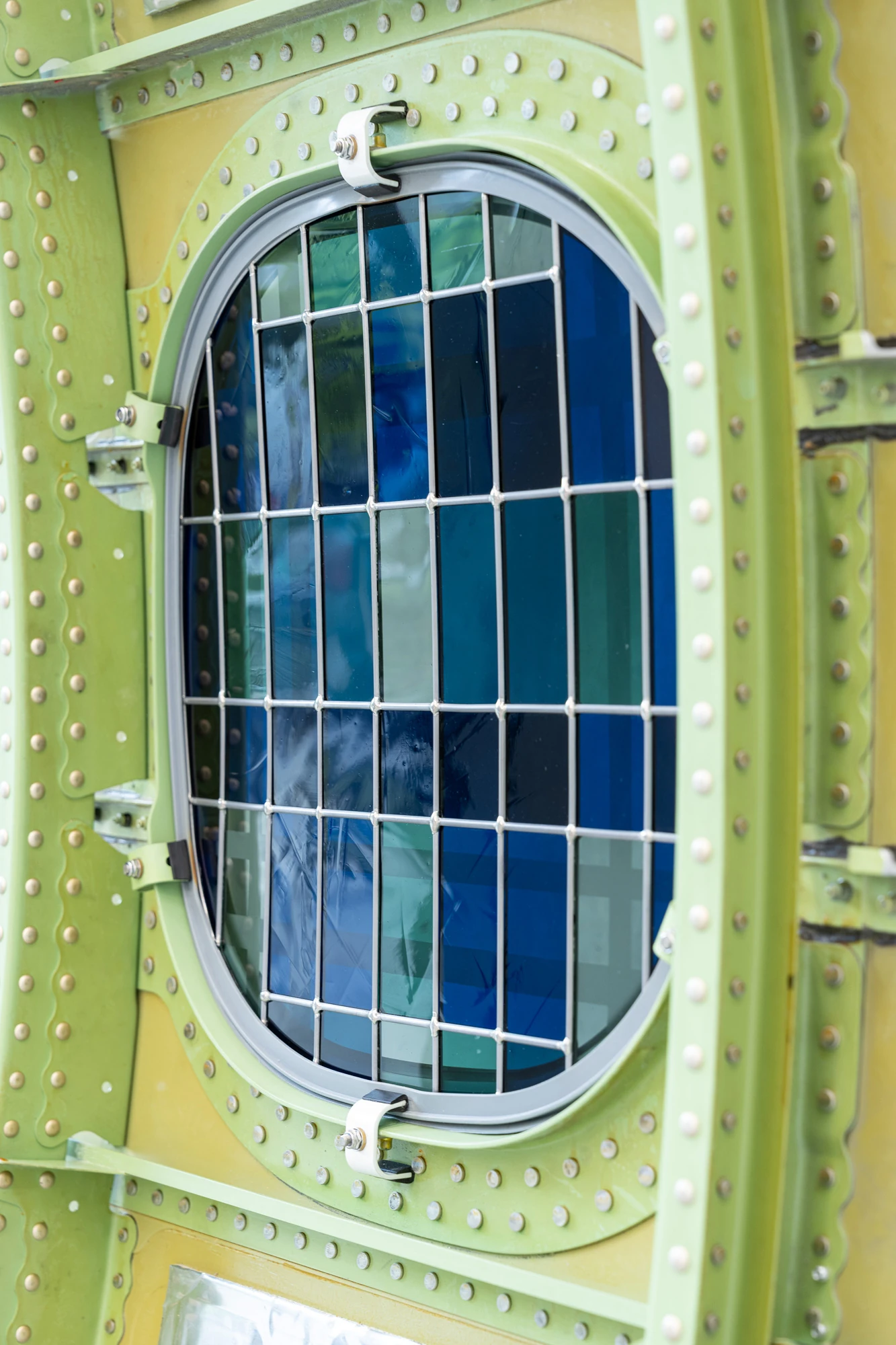
For Addresses Without Names at max goelitz in Munich, Germany, Ju Young Kim rebuilds the fittings of airplanes and waiting rooms in leaded and fused glass, an overhead bin remade as a lit stained-glass panel.

Ju Young Kim builds her work from the places that hold a body for a few hours and then let it go. Airplanes, trains, waiting rooms, hotels, temporary apartments: with Addresses Without Names, her show at max goelitz, she turns toward their close, bodily side, the way a seat fabric or a curtain can feel familiar without being tied to any single memory. Kim calls this condition “anonymous familiarity”, the recognition of something whose origin can no longer be located.

The gallery is split in two. A separate room is set inside the existing space at the back, its walls painted ochre to half height, giving the section a warm, domestic feel. On the entrance door, a film printed with a lace motif filters the view and holds the two areas half open. What results is a threshold that reads as neither fully private nor public, a pause between arrival and departure, familiarity and estrangement.

Suspended at the center is She slept better when nothing stayed still, the largest work to date from Kim’s ongoing series AEROPLASTICS, where salvaged aircraft parts meet hand-worked glass. An overhead luggage bin becomes a lit construction of smooth, ribbed and sanded glass held with lead cames. Below it hang six reading lights in different shades of white leaded glass, their geometry closer to Art Deco than to any cabin. Here Kim draws roses in lead and writes the Korean word for “thank you” in her own hand, a motif she knows from napkins in Korean restaurants, a shared visual language folded into private memory.

Around it sit smaller glass works based on textile structures: upholstery weaves and lace, translated pane by pane. A pattern might recall the interior of the London Underground or the seat of a Japanese airline while also standing in for a blanket from childhood. The titles carry the same doubling, She always left the blue unused, She remembered exactly what it felt like. Their dimensions follow the standardized formats of seats and headrests, keeping each piece the size of the body it once touched.

The tension between craft and industry is already written into these fabrics. Mechanized weaving turned once-handmade motifs into serial production, a shift Kim reads through Anni Albers, who rethought textile structure, grid and material across craft and the machine. Kim pushes it further, carrying reproduced weaves into glass and reworking them slowly by hand, so that fragile hand-cut surfaces sit beside factory-made aircraft parts and the standardized fittings of public transport. Some of the pieces were made during a residency at the Pilchuck Glass School in Washington.

What the show finally argues is that transit has become less a matter of geography than of the body. Memory survives as a material impression, a texture or colour that stays after the place is gone. Home, in Kim’s account, is less a fixed address than something rebuilt again and again from such fragments, a temporary sense of familiarity carried from one arrival to the next.
Interested in Showcasing Your Work?
‍

If you would like to feature your works on Thisispaper, please visit our Submission page and subscribe to Thisispaper+. Once your submission is approved, your work will be showcased to our global audience of 2 million art, architecture, and design professionals and enthusiasts.
Thisispaper+
Germany Guide
40+ Projects
Web Access
Link to Maps
Architecture in Germany — from the mineral restraint of Swiss-German studios to the repurposed industrial halls of the Ruhr, Bavarian timber houses, and Berlin's postwar experiments. A country where engineering precision meets spatial ambition at every scale.
Concrete churches, funeral halls, civic museums. A country that still builds as if weight meant something.
Explore
Germany Guide

Join Thisispaper+
Unlock access to 2500 stories, curated guides + editions, and share your work with a global network of architects, artists and designers who are shaping the future.
Get two months FREE
with annual subscription
Travel Guides
Immerse yourself in timeless destinations, hidden gems, and creative spaces—curated by humans, not algorithms.
Explore All Guides +
Submission Module
Submit your project and gain the chance to showcase your work to our worldwide audience of over 2M architects, designers, artists, and curious minds.
Learn More+
Curated Editions
Dive deeper into carefully curated editions, designed to feed your curiosity and foster exploration.
Off-the-Grid
Jutaku
Sacral Journey
minimum
The New Chair
Explore All Editions +
Atlas
A new and interactive way to explore the most inspiring places around the world.
Interactive map
Linked to articles
450+ curated locations
Google + Apple directions
Smart filters
Subscribe to Explore+
Become a Thisispaper+ member today to unlock full access to our magazine, submit your project and support our work.
Join Thisispaper+Join Thisispaper+
€9/month
Get two months FREE
with annual subscription