.webp)
On Magazynowa Street in Warsaw, a joint presentation pairs Magdalena Abakanowicz's headless plaster figures with Wanda Czełkowska's eighteen-fold head, twenty never-before-seen Tłum moulds at the centre.
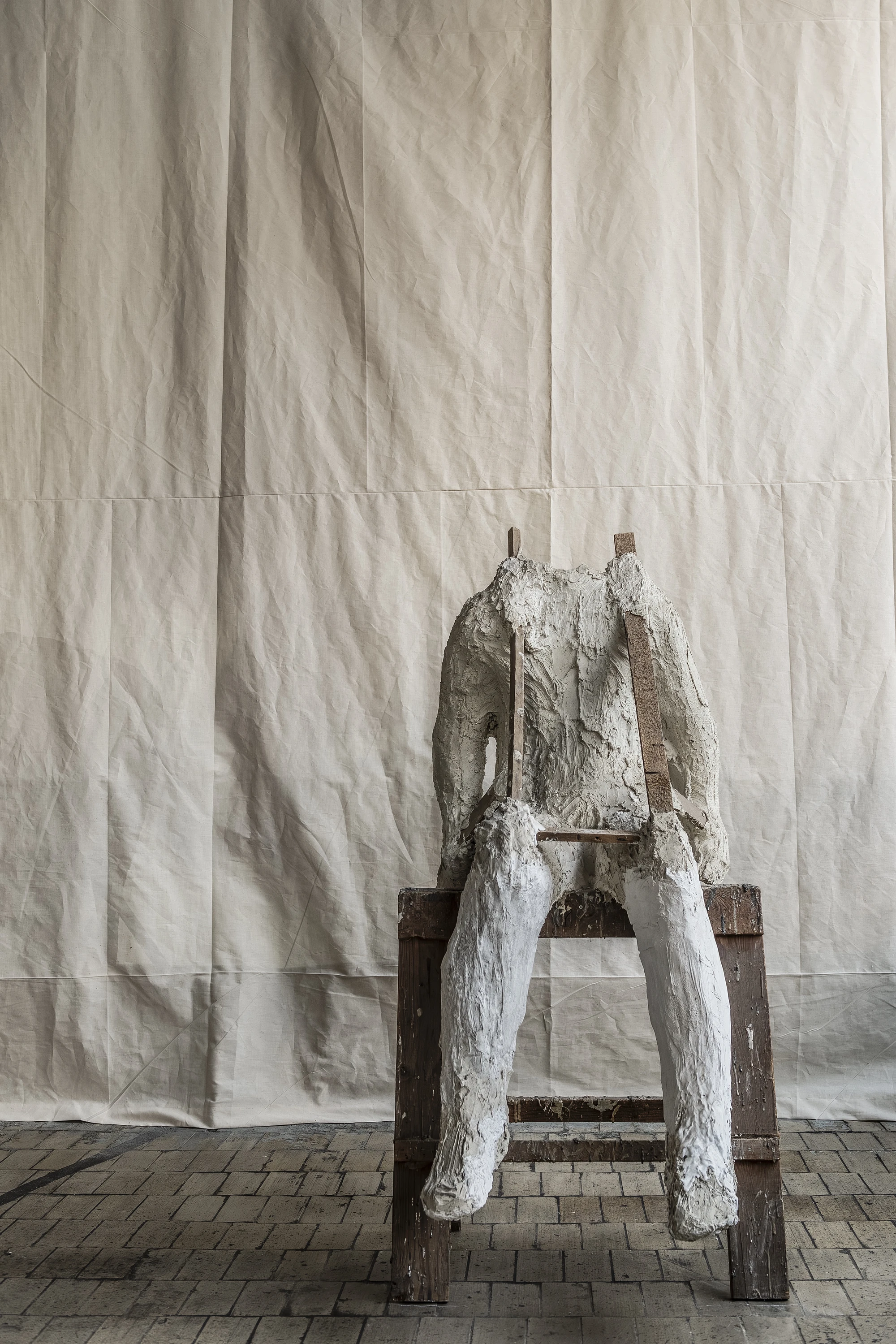
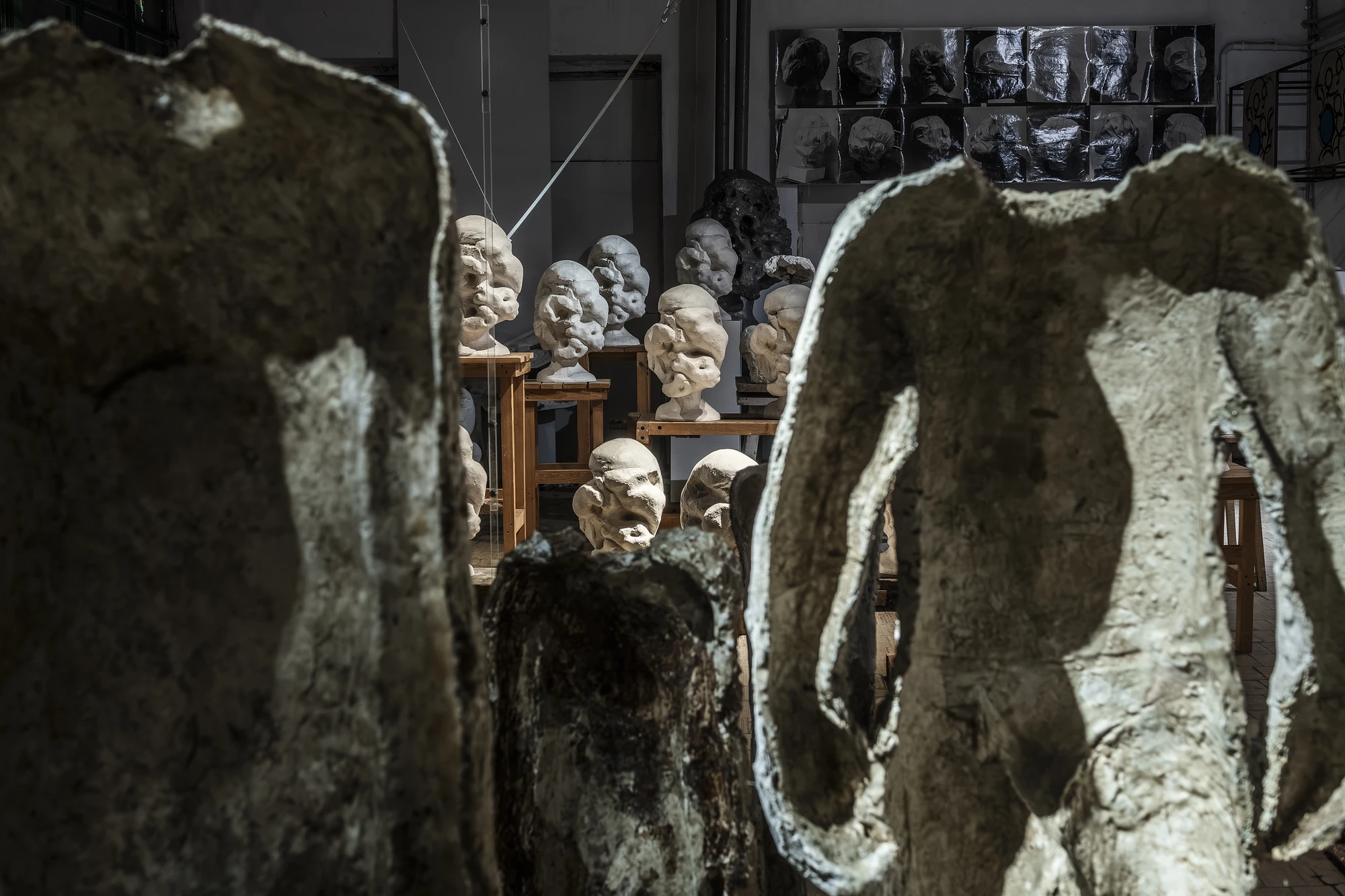
The premise of the joint presentation is small and exact. Born in 1930, both sculptors built their work around opposite reductions: Magdalena Abakanowicz to the headless figure, Wanda Czełkowska to the head alone. In Abakanowicz, the headless plaster forms share one sculptural convention but differ from each other in size, in detail, and in date of making: the tallest figures separated from earlier figures by some fifteen to twenty years. In Czełkowska, a single head is cast and multiplied eighteen times, then set in strict arrangement to form one object. The convention holds; the multiplications run in opposite directions.
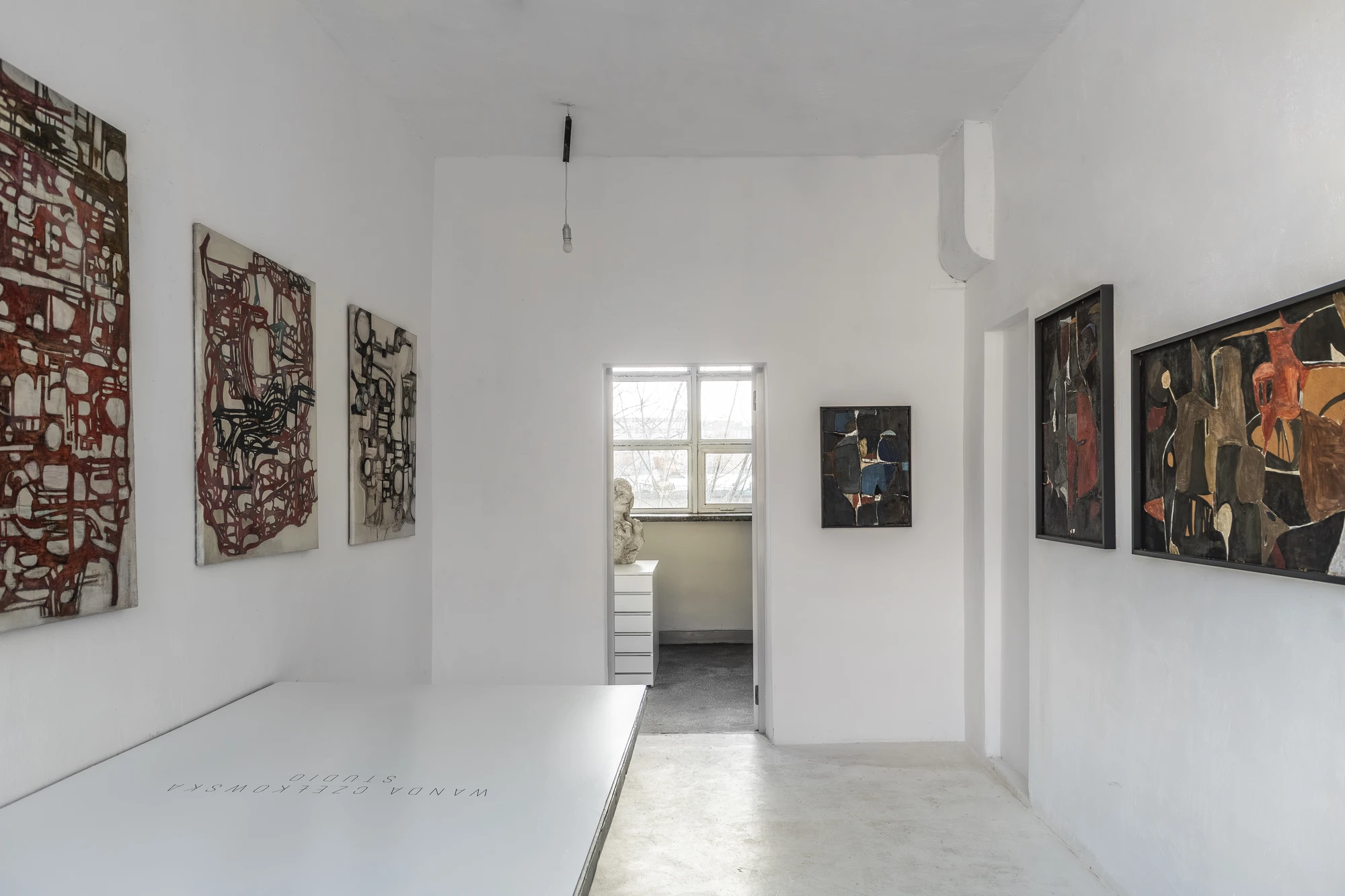
Wanda Czełkowska's Historical Art Studio on Magazynowa Street in Warsaw becomes the place for presenting both artists, their creative attitudes and their biographies. The 1970s is the curatorial anchor, with particular emphasis on their meeting at the Atelier 72 festival in Edinburgh.
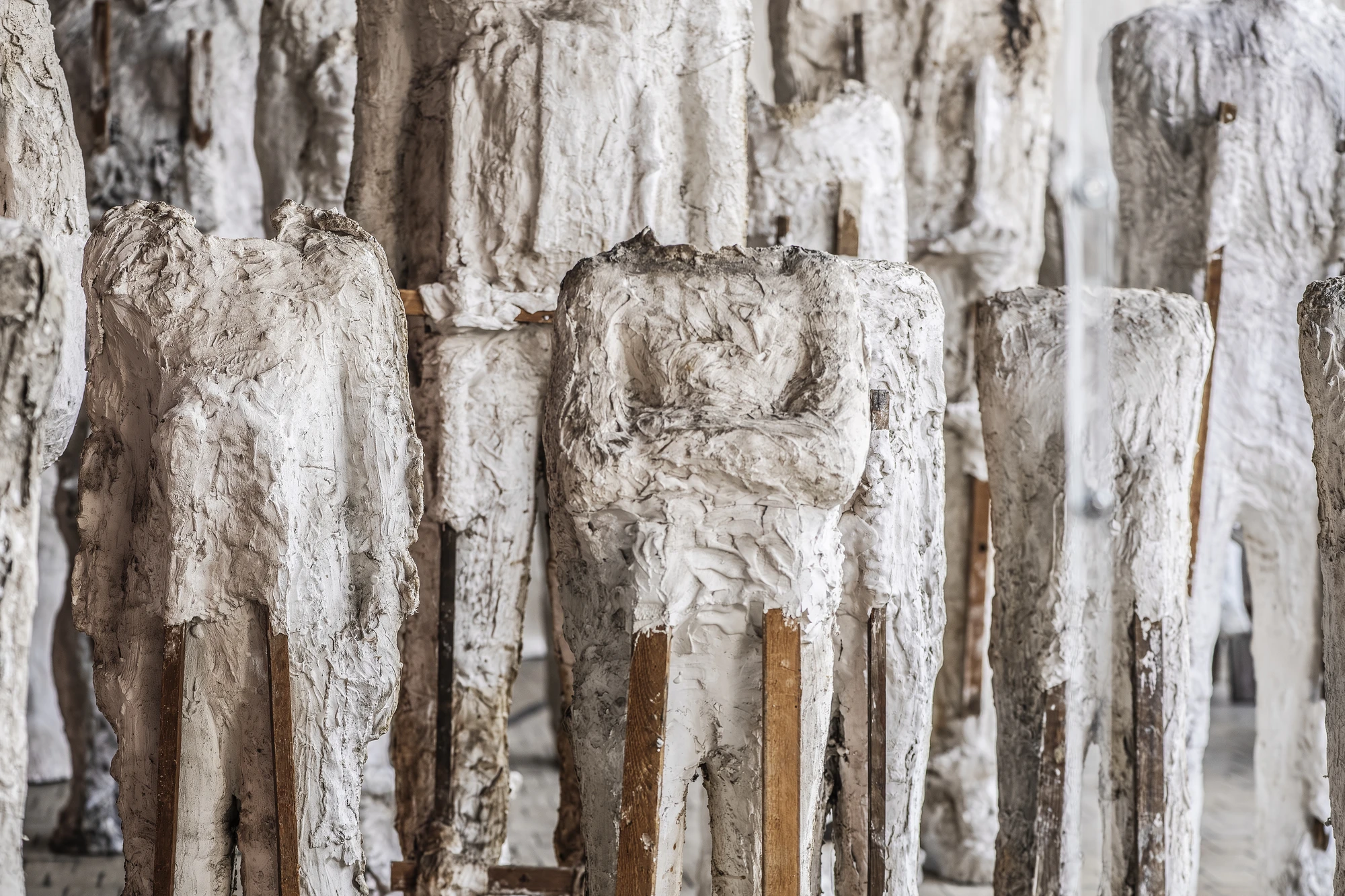
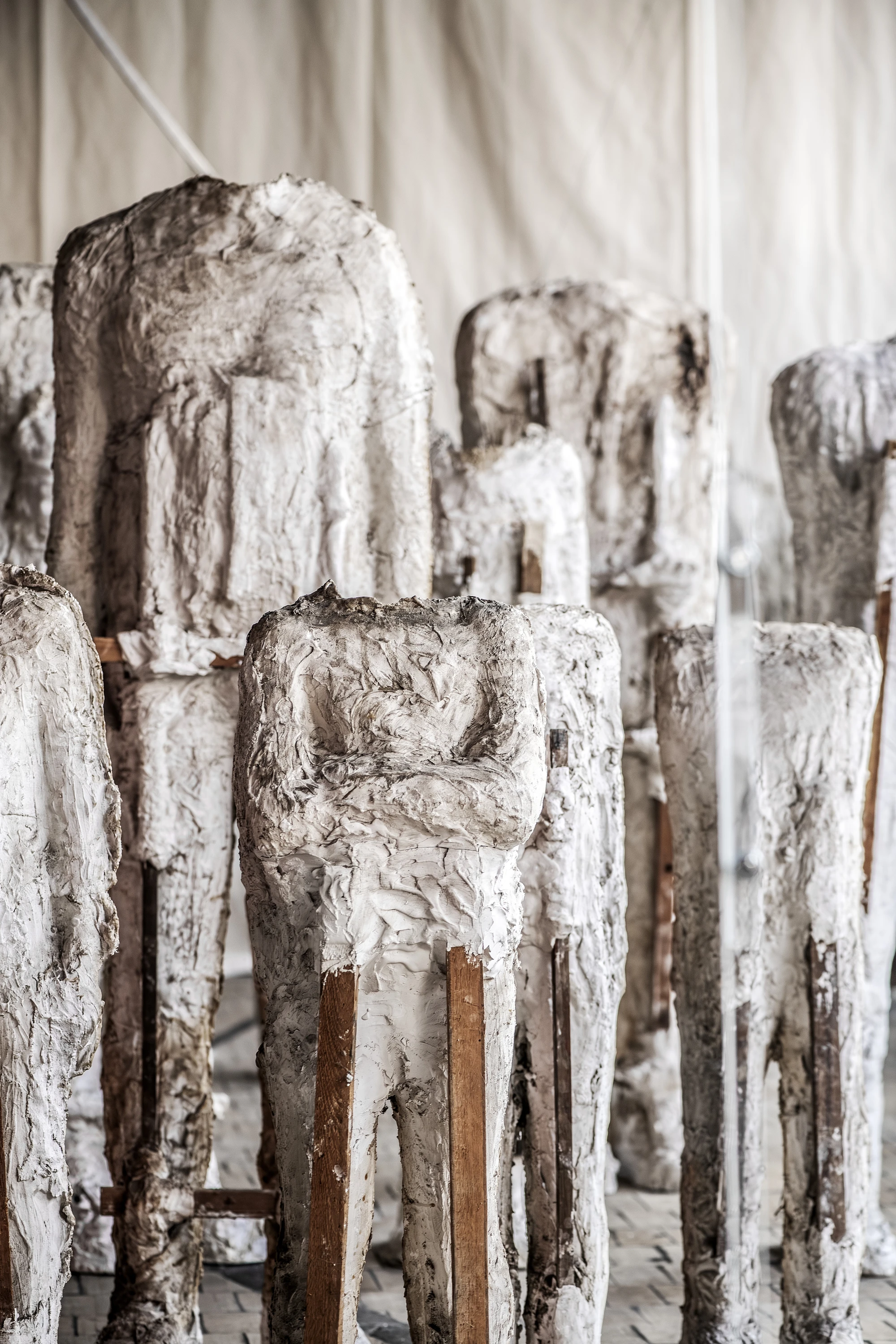
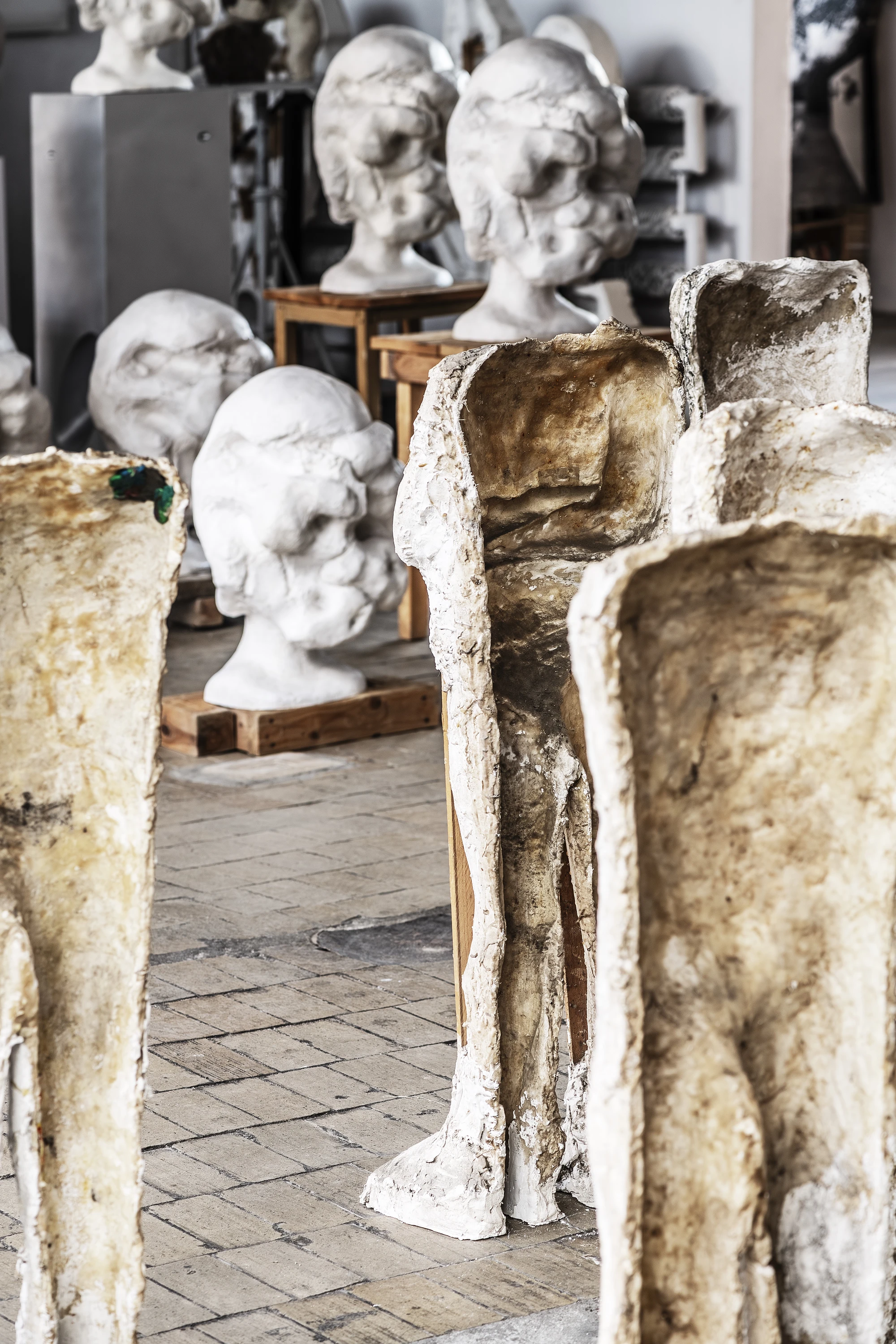
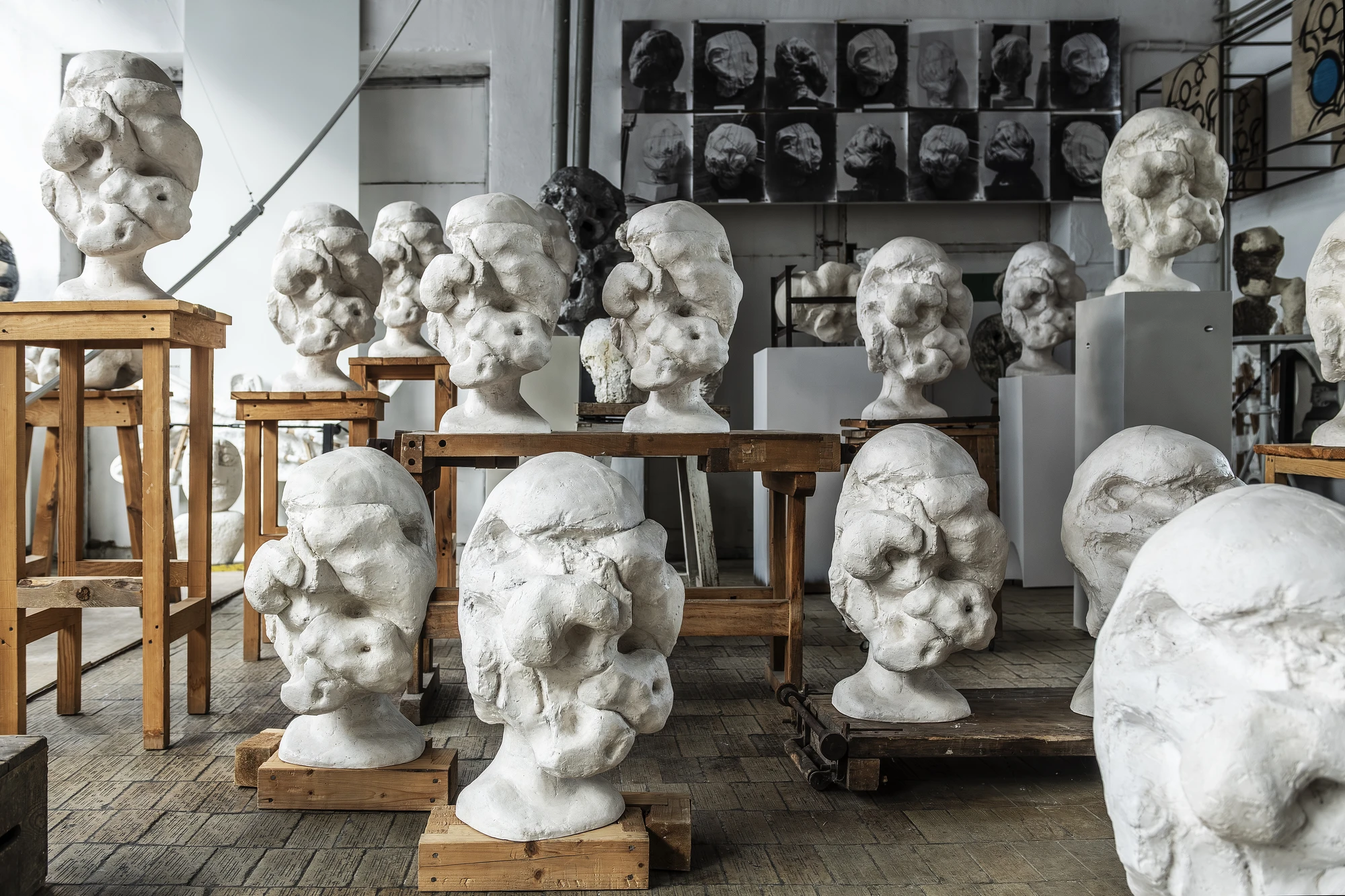
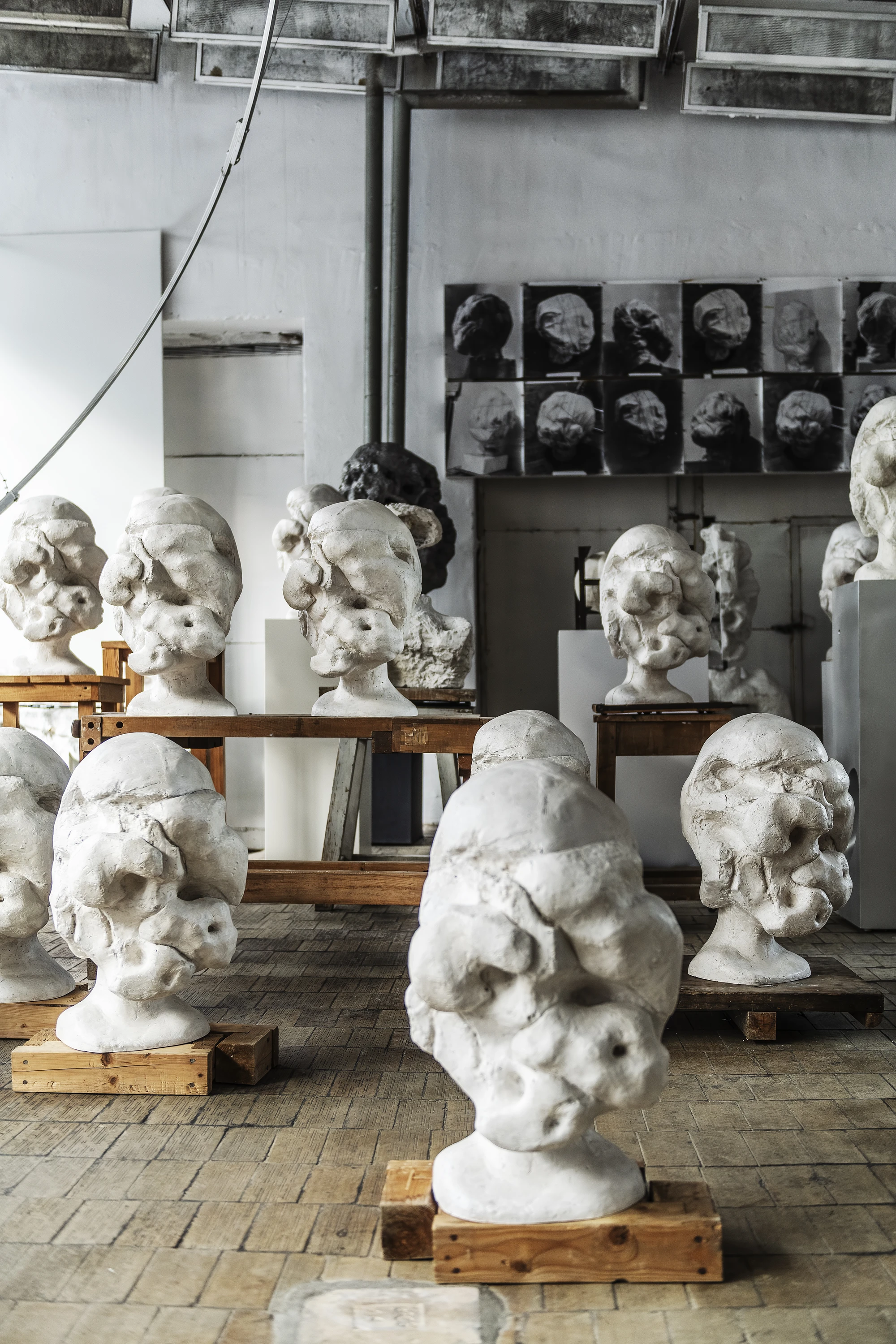
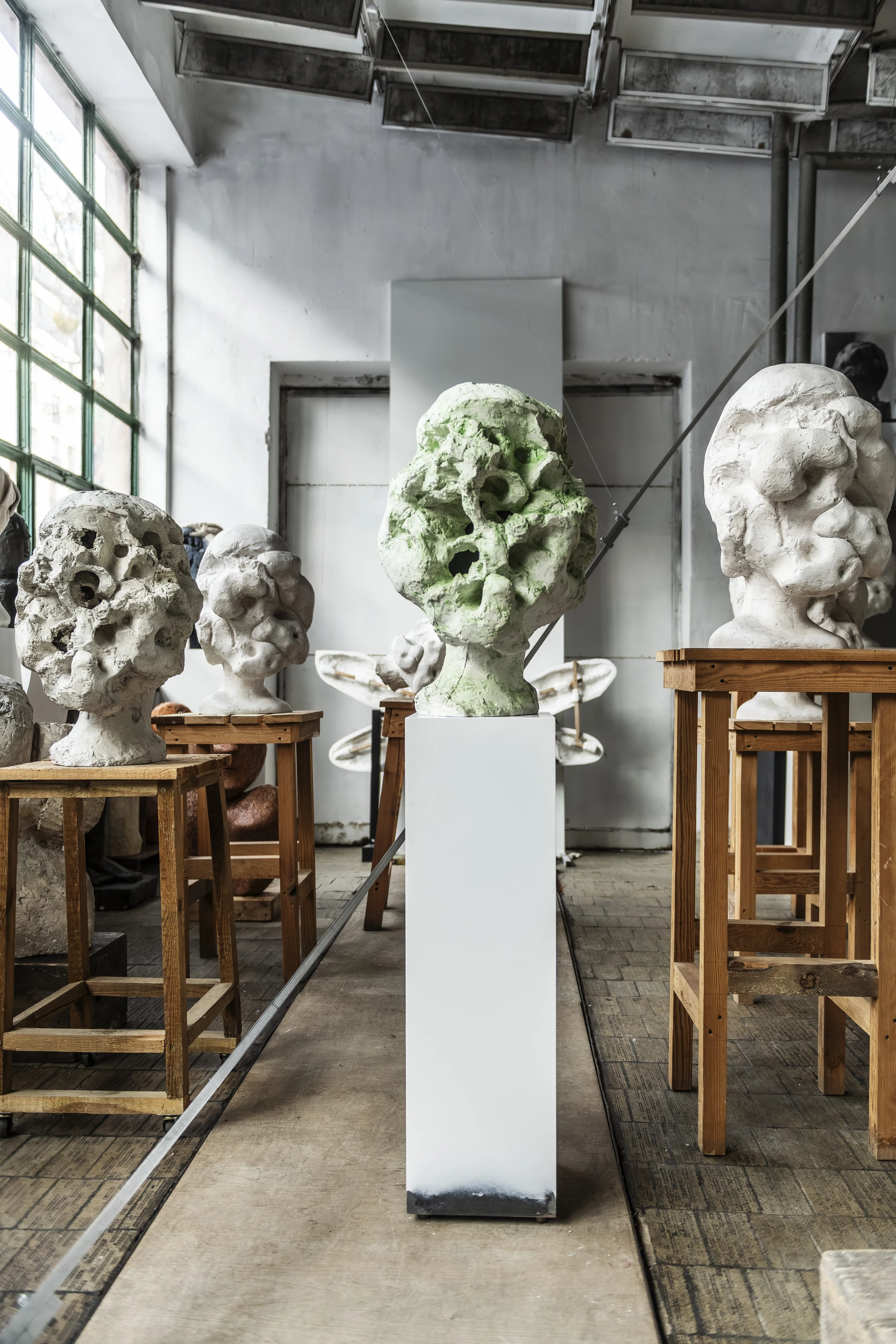
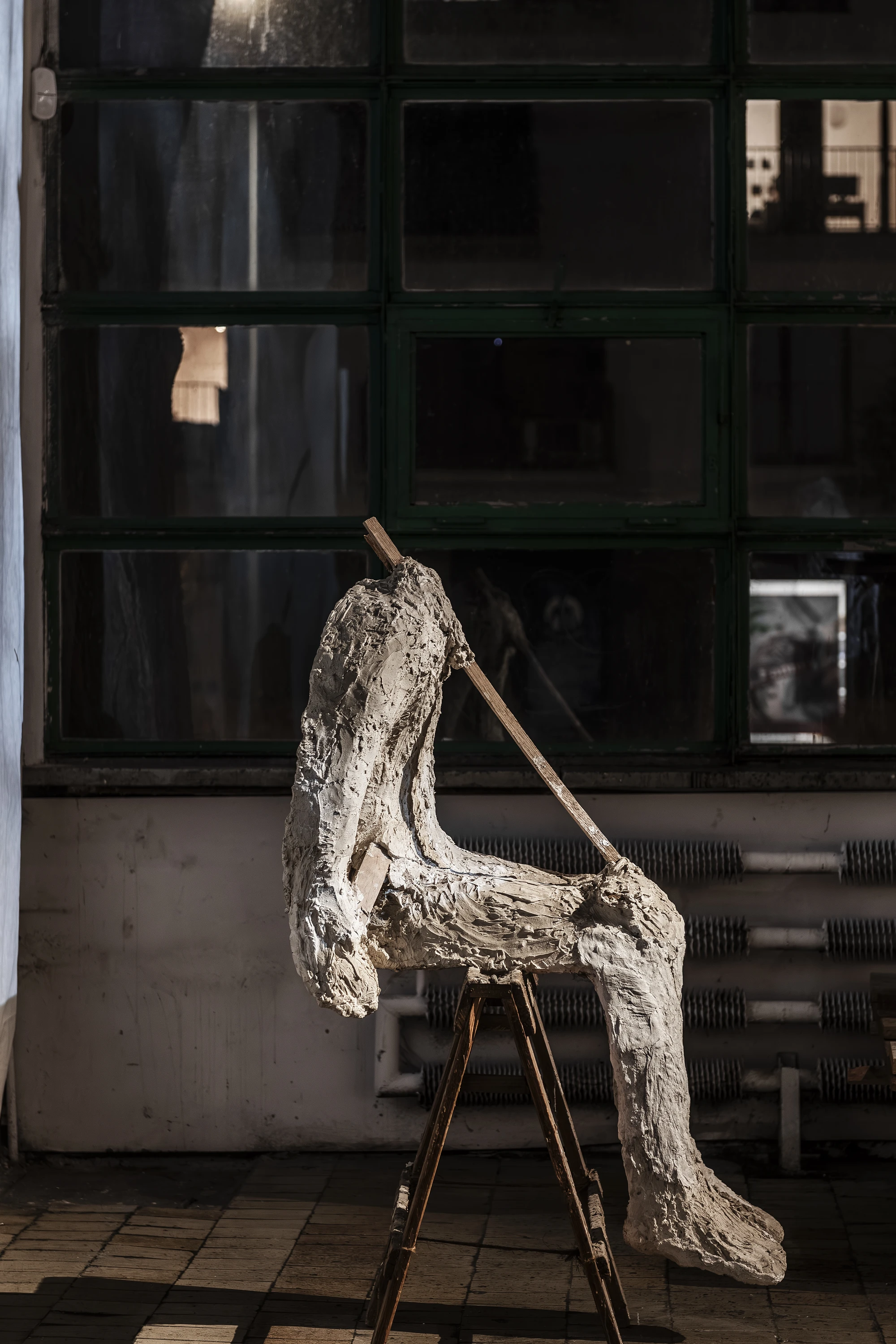
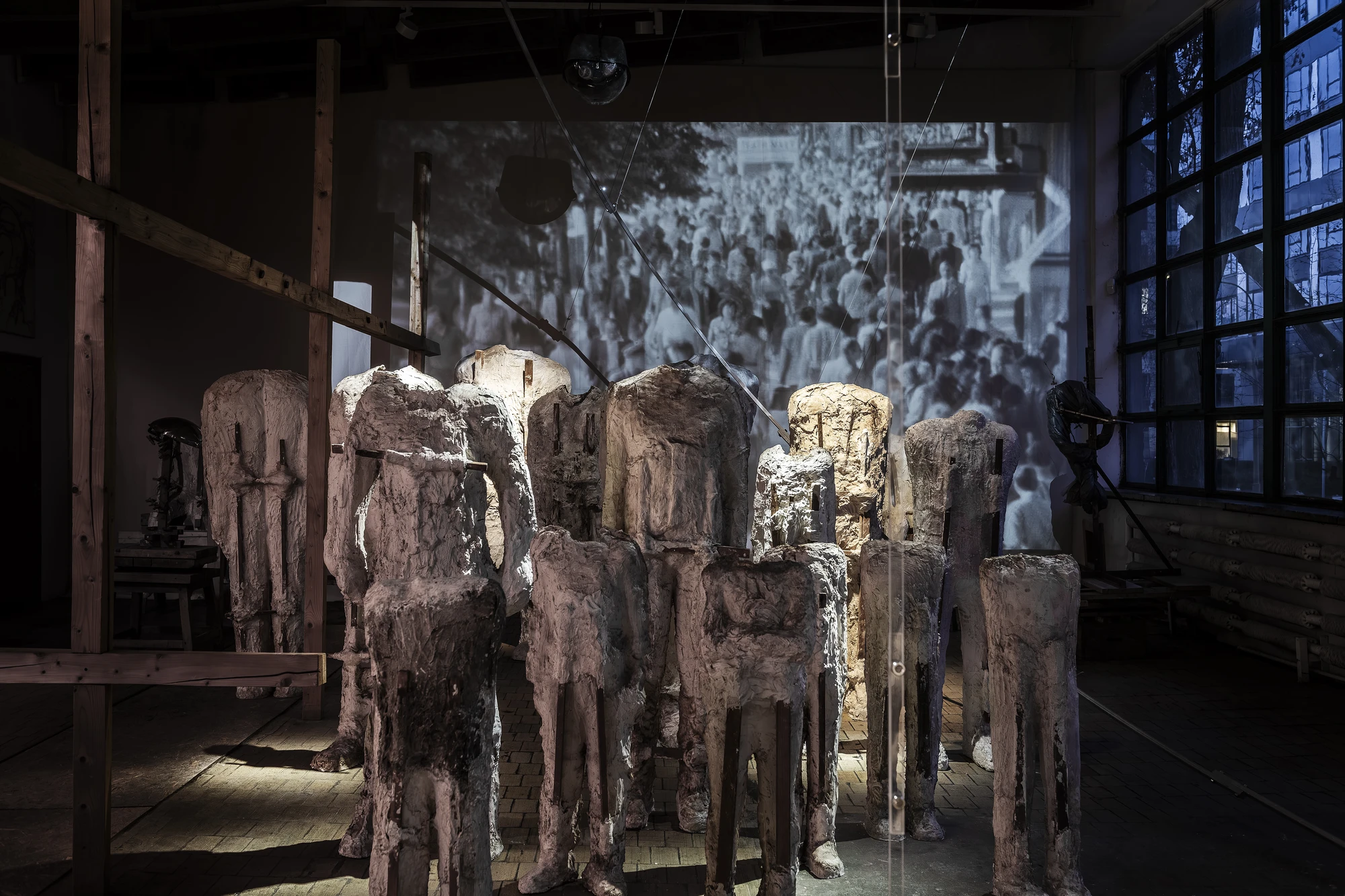
The Abakanowicz contribution is twenty never-before-seen objects, drawn from the collection of the Marta Magdalena Abakanowicz-Kosmowska and Jan Kosmowski Foundation at ul. Bzowa 1. They are technical in nature: moulds for sculptures from the Tłum series, working objects designed to produce other objects. To stand them up as the show's central material is to argue that the working surface, the cavity, the unfinished interior of the production process, holds its own register of form. The press calls the moulds magnificent sculptural objects, and the curatorial decision tests the claim against the industrial volume of the studio.
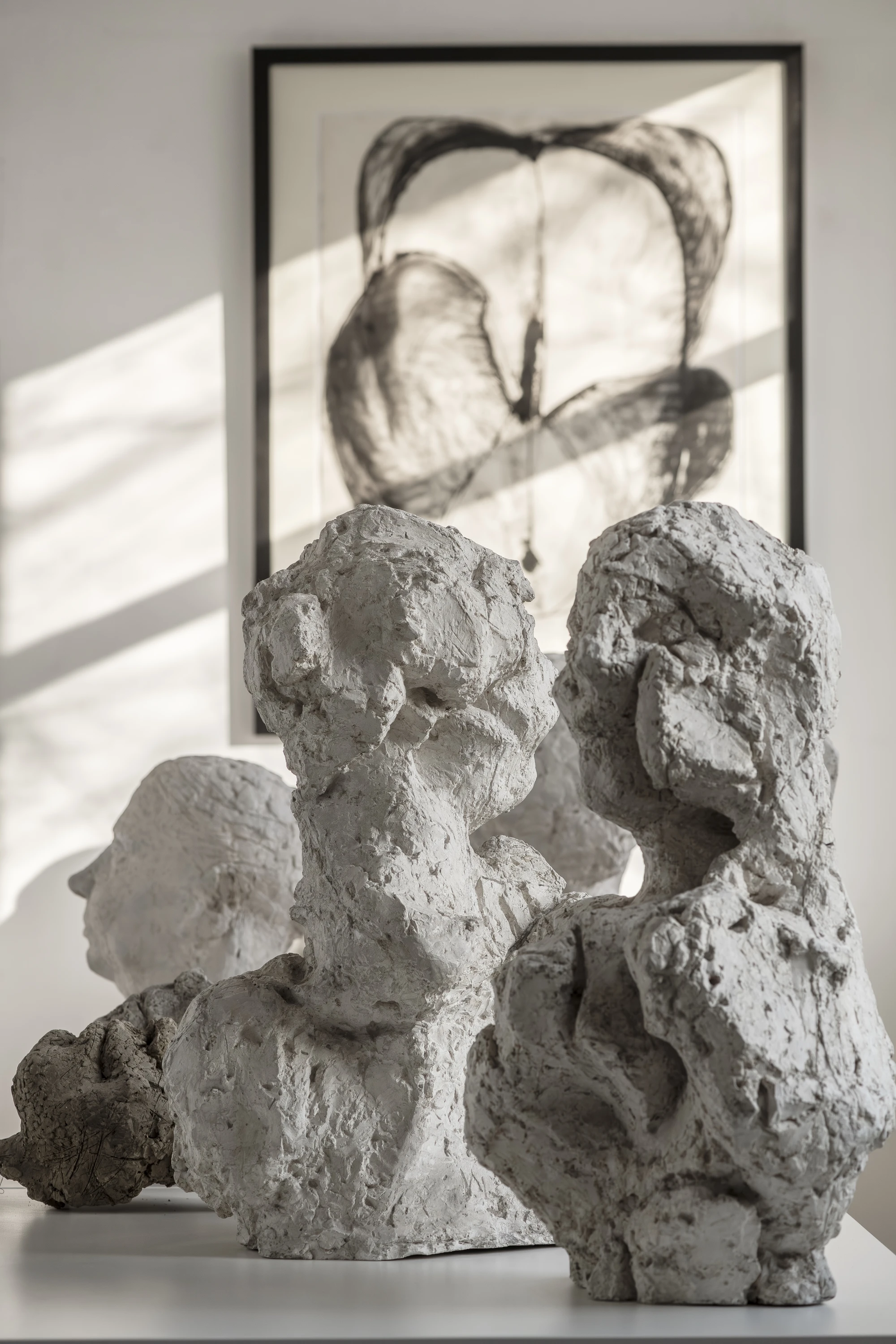
The objects are not gentle. The plaster is crusted, the surfaces splintered, wooden armatures showing through where the render did not hold; streaks of pigment trapped where the cast received its first impression. Viewed in rank in the studio, they read as an inventory of working states, the kind of working state museums normally exclude on principle.
The fit with Czełkowska is exact. Her practice has long taken construction and technical transparency as subjects in their own right, surprising the viewer with the reverse side of the work. The plaster moulds are literally the reverse side: the negative that produces the figure, the cavity into which the figure poured. Abakanowicz's raw forms reveal craftsmanship in the same register, and the industrial space of the studio carries the logic without needing to argue for it.
Behind the moulds runs a rediscovered archival film by Abakanowicz from the 1970s, premiered during the exhibition. An ordinary human crowd, captured in unusual frames, is juxtaposed with the trivial reality of urban space in that decade. The multiplied bodies of the Tłum moulds stand in front of the multiplied source. Selected photographs, drawings and paintings by both artists complete the exhibition.