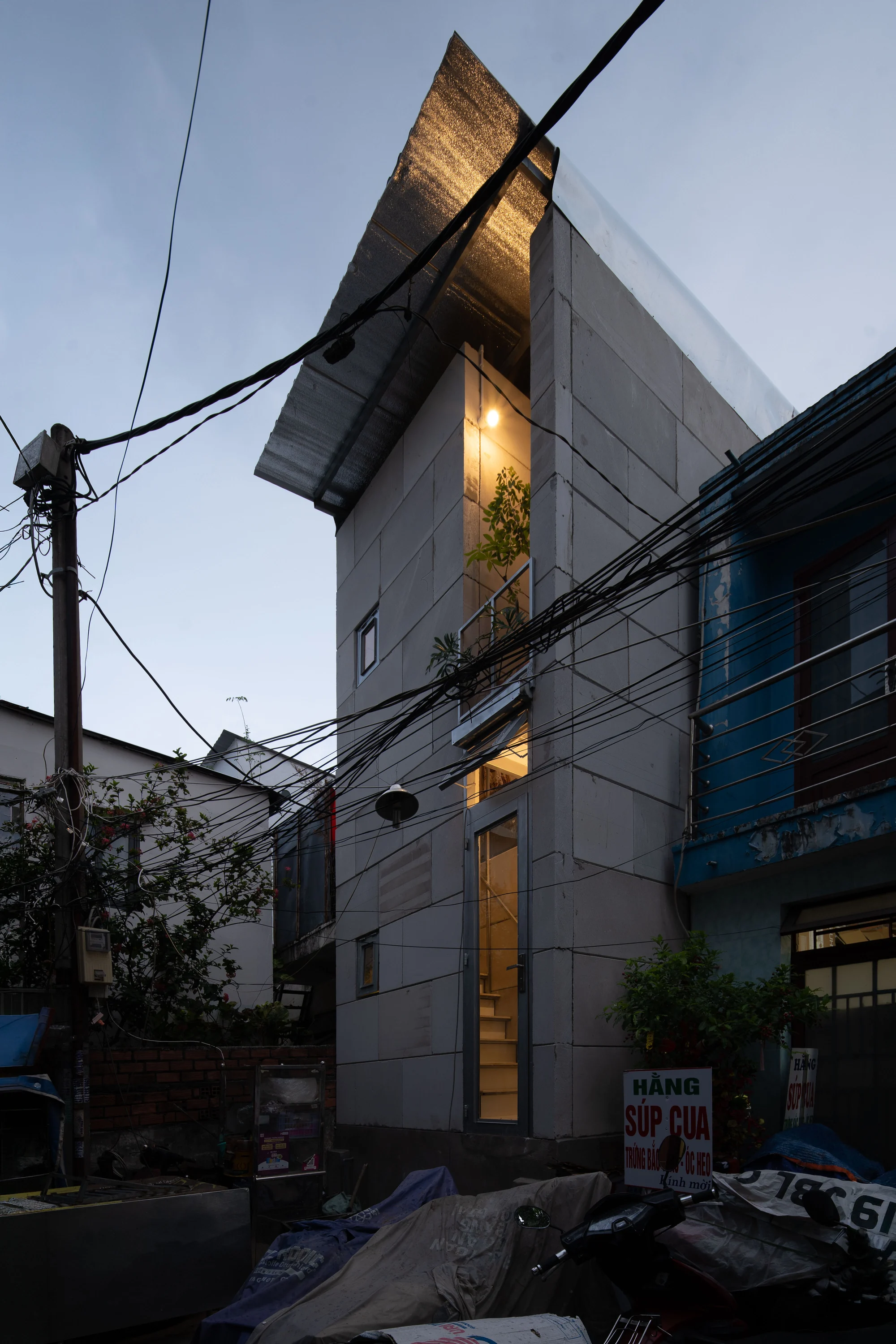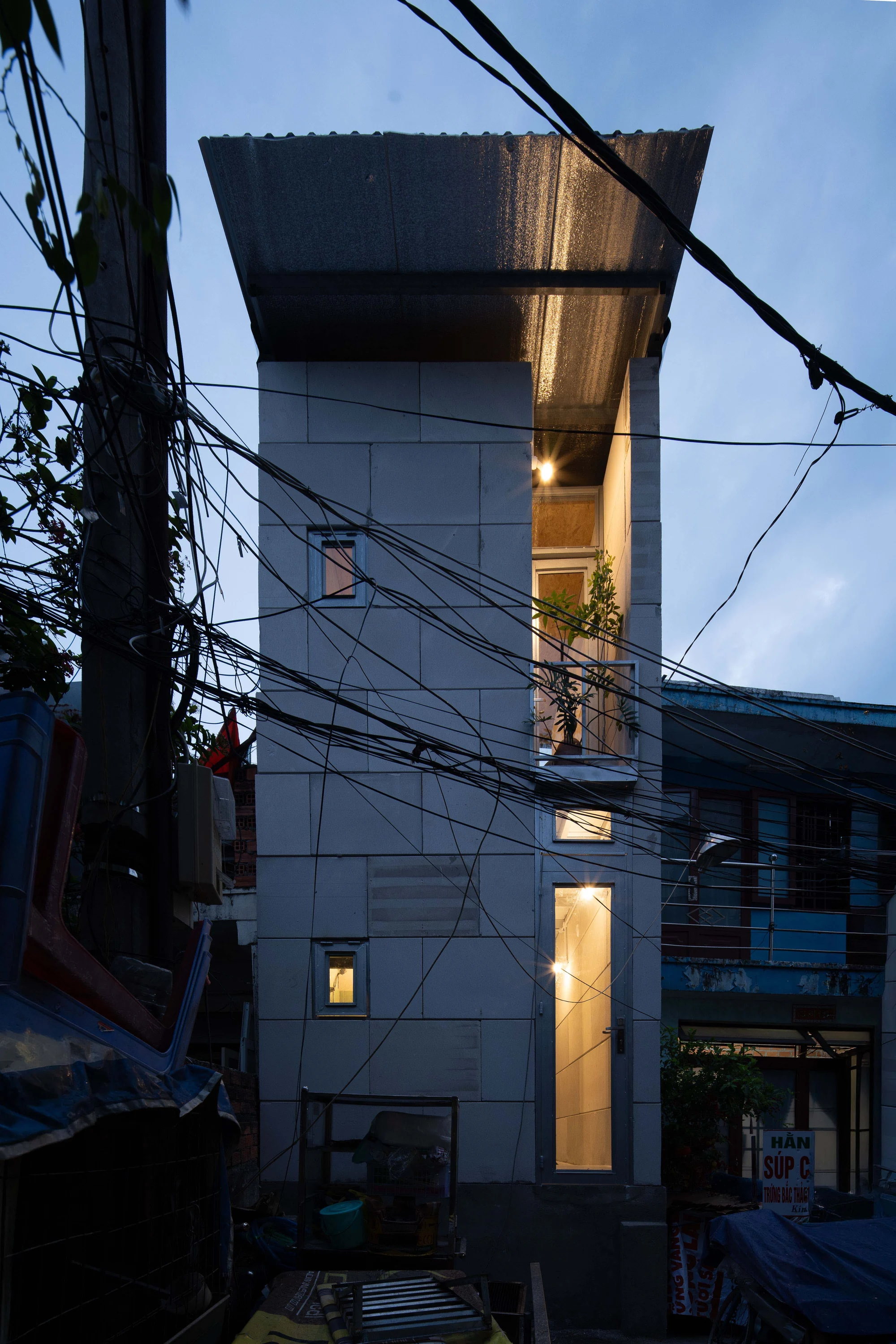
Along a Saigon canal scheduled for demolition, Ho Chi Minh City studio scale50 has slipped a slender three-storey house onto a footprint of 11 square metres in District 4's informal canal-edge fabric.
The brief from scale50 reads almost as a survey of a vanishing place. Along the canal in District 4, generations of Vietnamese households have built and rebuilt their houses through informal adaptation, pinning corrugated metal to brick, raising rooms above water, accumulating layers that read as one continuous wall from the boat. 11M2 HOUSE was finished in 2026, the year the canal’s redevelopment programme began clearing those layers for new embankments. The lot’s tenure was finite from the start. The design was made in that knowledge.
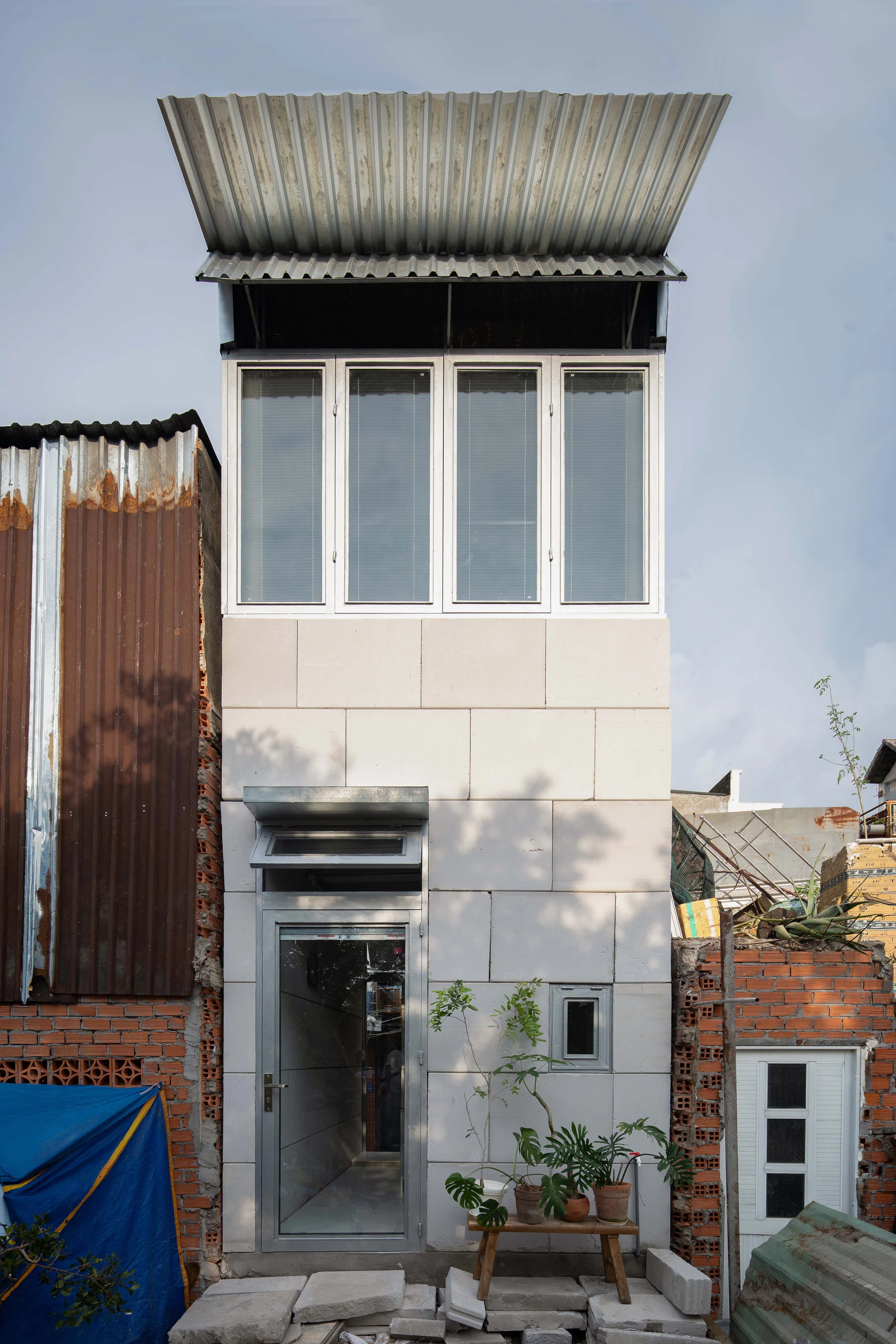
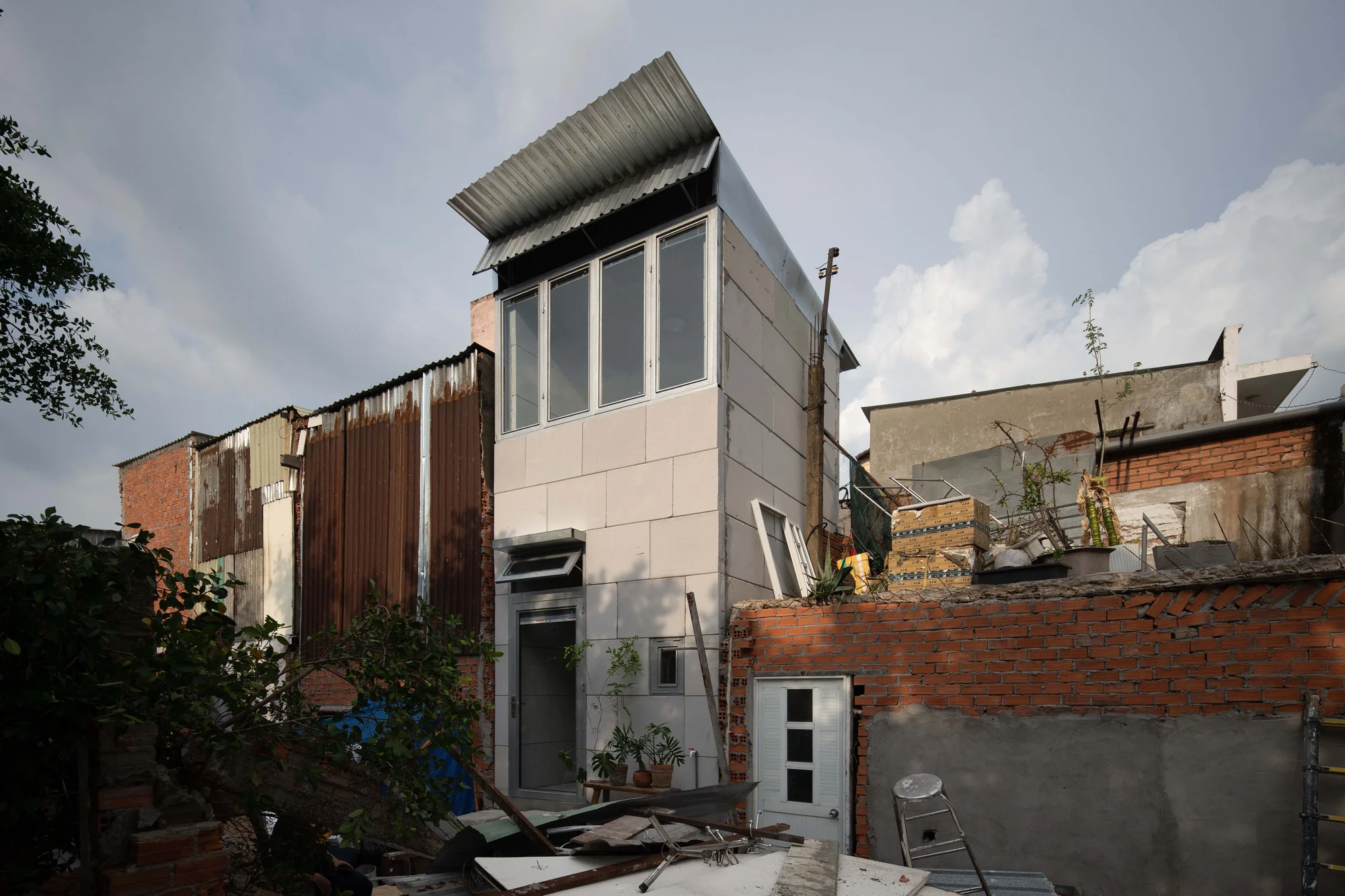
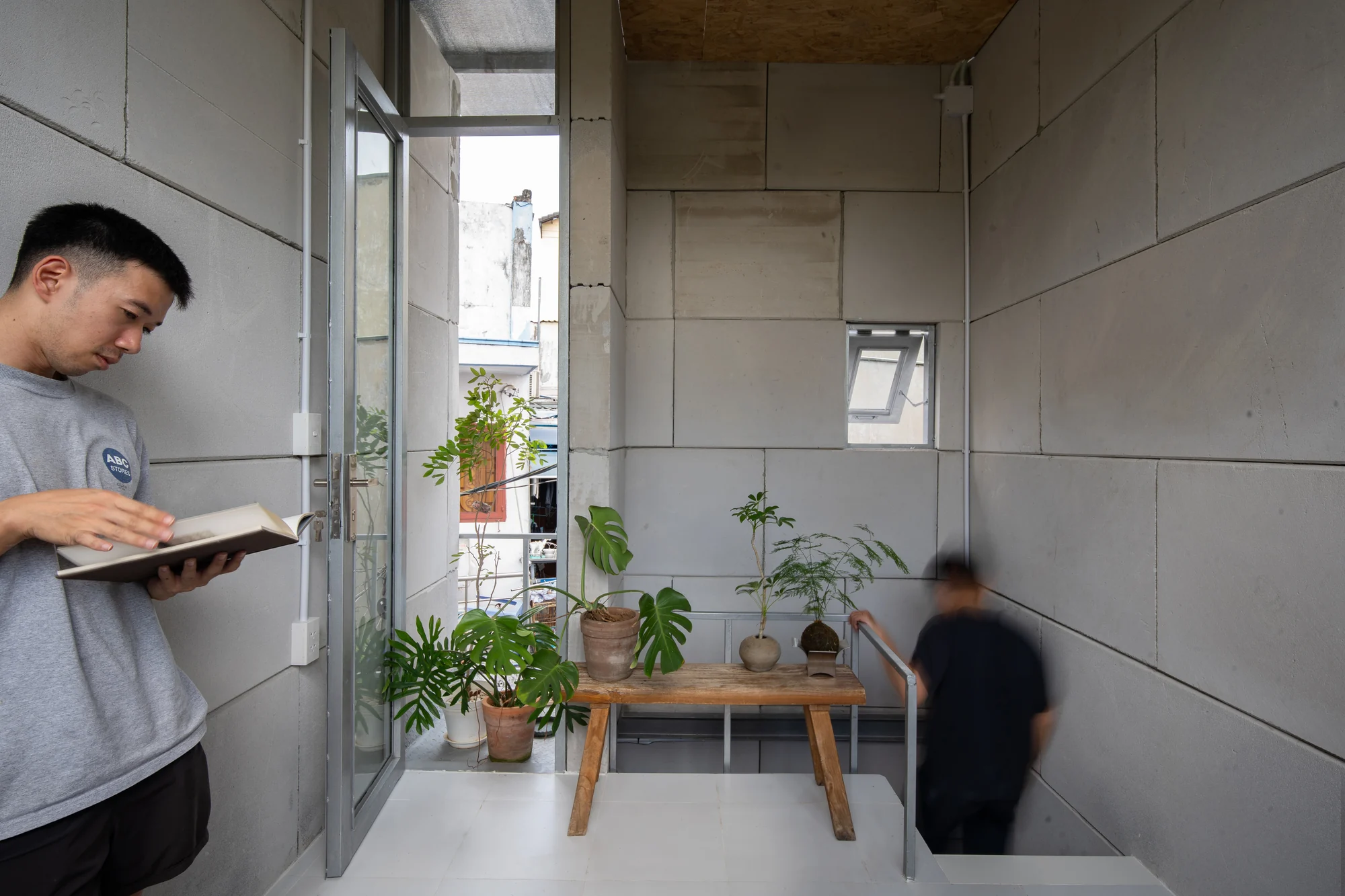
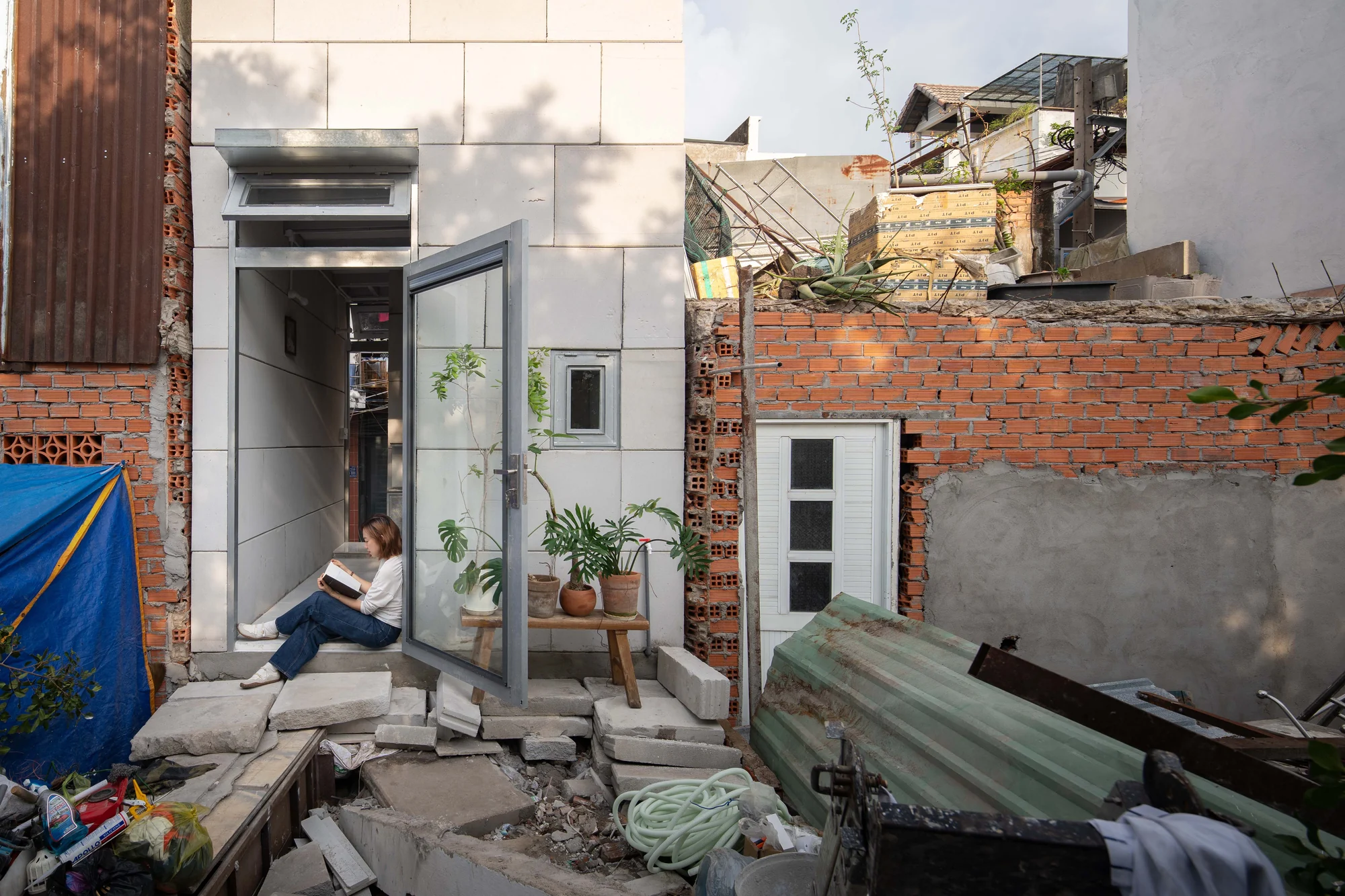
What stands on the 11 square metres is a slender white tower of three floors, capped by a tilted corrugated roof that nods to the neighbours. The body is wrapped in AAC panels, autoclaved aerated concrete, set in a visible grid that registers every joint. The choice is not aesthetic posture. AAC is light enough to keep loads down on uncertain ground, fast to lift into place, and porous enough to slow heat in a tropical climate. Aluminium-framed casements span the upper floor as a single ribbon, glazed almost wall to wall, so that the volume reads from the lane as a lantern with a flat skin and a glowing top.
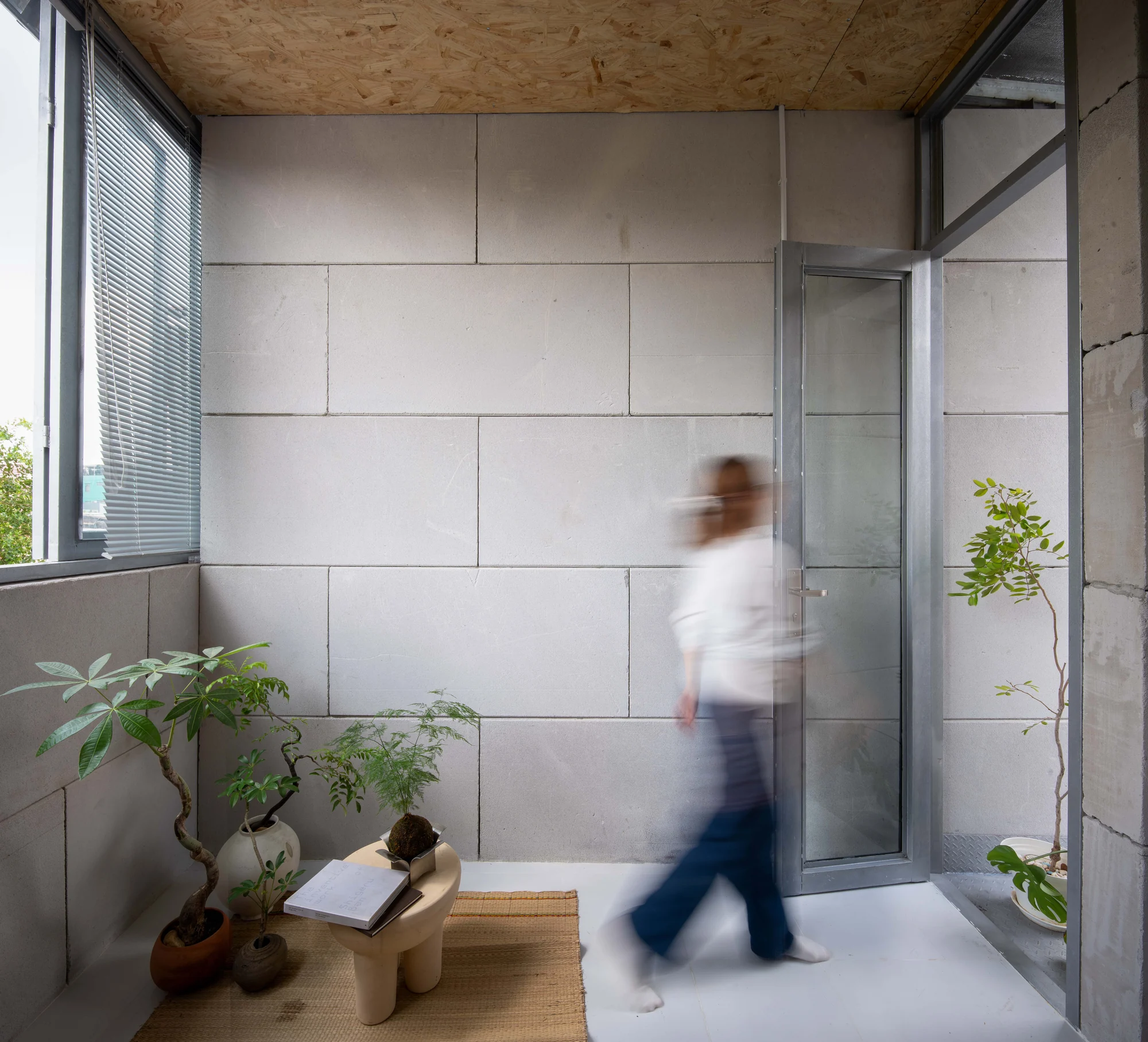
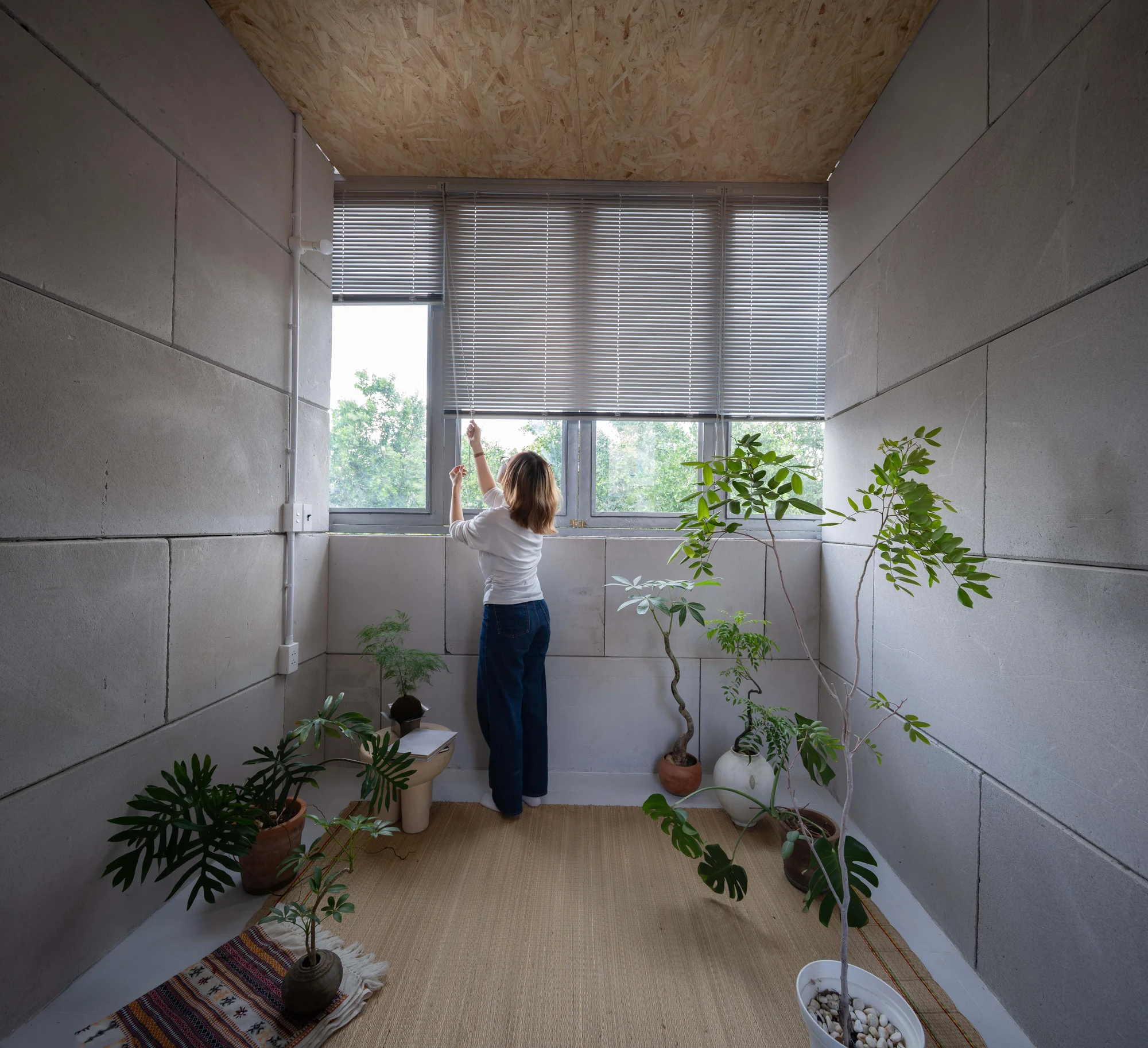
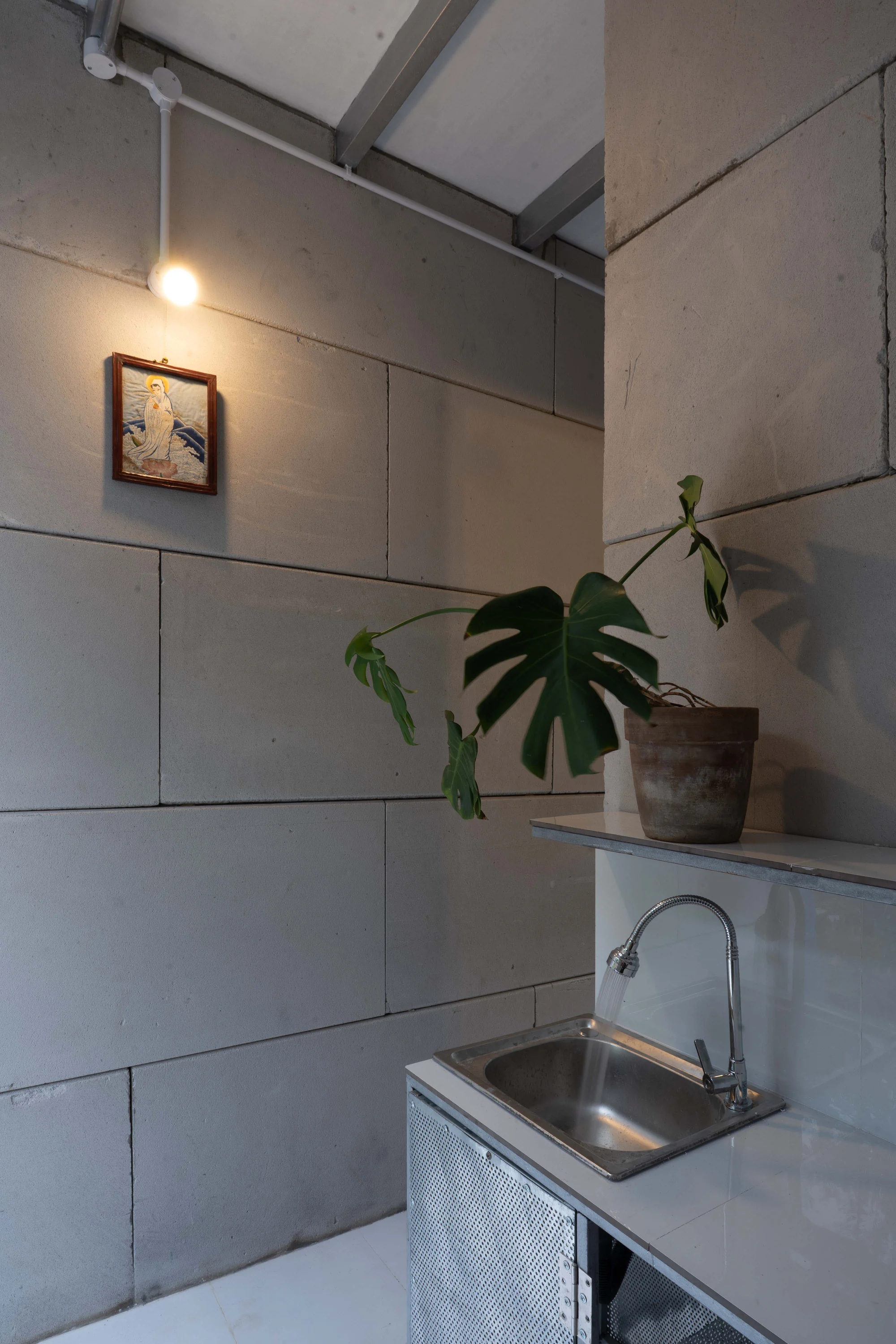
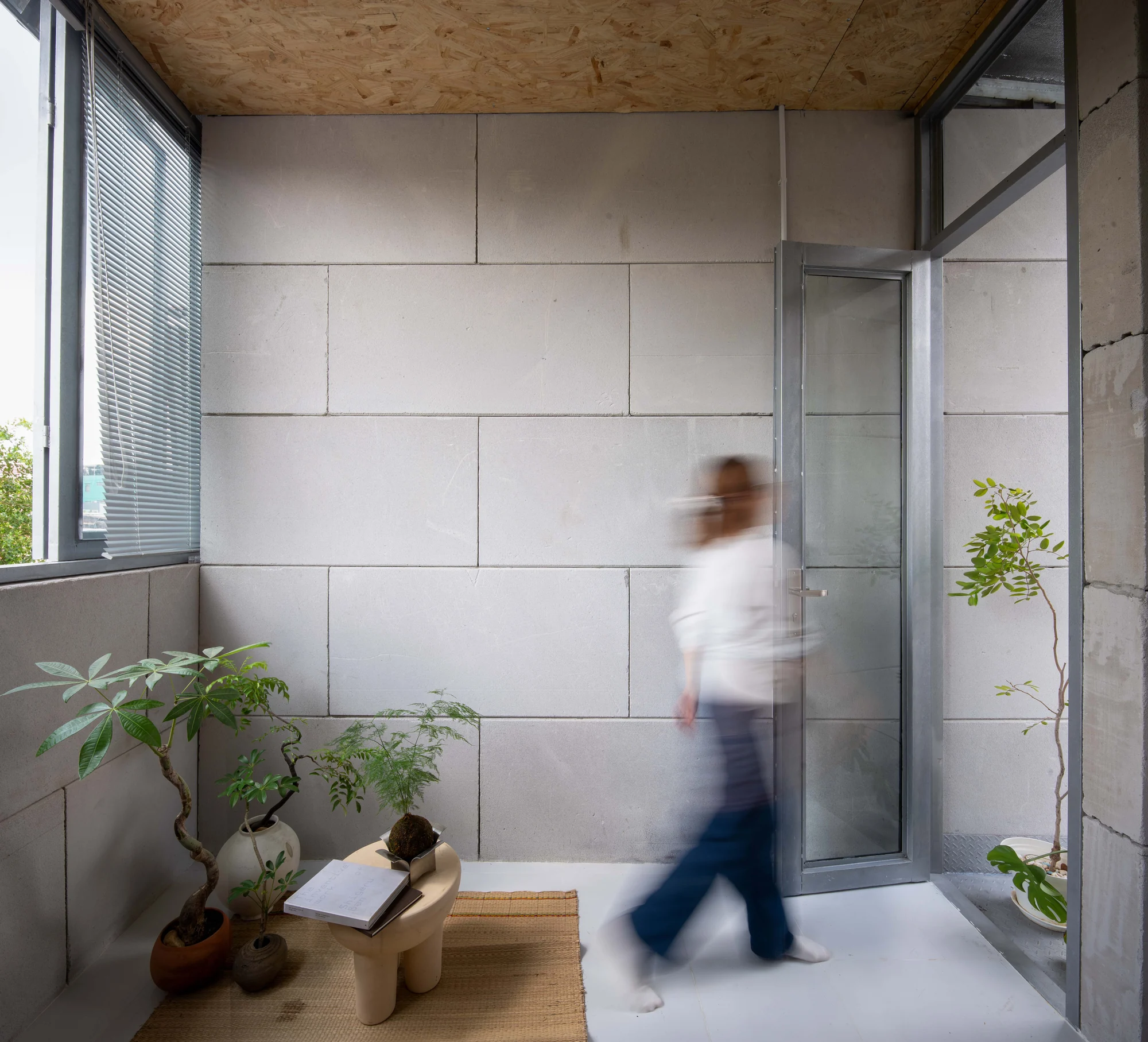
Inside, the same panels continue, with the floor finished in pale concrete and the ceilings in OSB board. Joinery is restrained: a steel-frame stair, a galvanised sink, a single timber bench, a woven rug. The studio writes of “spatial generosity within severe constraints,” and the rooms make that case without rhetoric. Plants do most of the soft work: monstera, a young palm, a fig in a clay pot, lining the perimeter of each floor as if the house were a vertical courtyard. A figure stands at the upper window in Nguyen Manh Toan’s photograph adjusting the blinds; the room is just wide enough to stretch both arms.
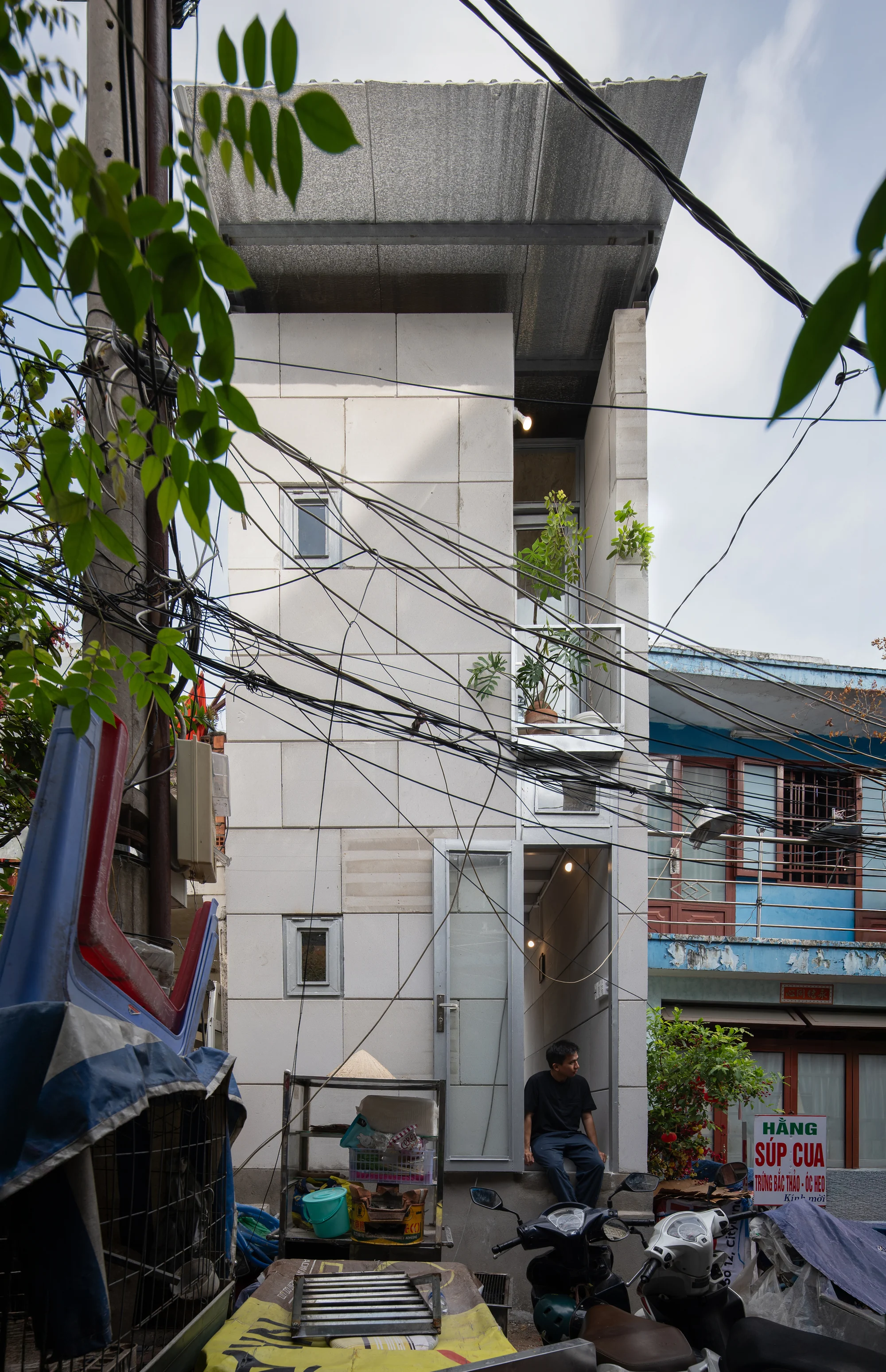
“Seen from the canal,” the studio writes, “the house appears almost provisional: a slender white volume inserted among brick walls, corrugated roofs, and improvised structures accumulated over decades.” The line is precise. From the water the house looks lighter and newer than anything around it, but no more permanent. scale50 calls this a negotiation between permanence and impermanence, the studio offering comfort to a household who may have to leave it. At dusk the volume glows through tangled overhead cables, the warmest object on the block.
The project documents a disappearing urban condition more than it answers it. Saigon’s canal redevelopment will replace many self-built houses with new embankments and code-compliant blocks; the gain in public space is real, and so is the loss. 11M2 HOUSE sits in that gap on purpose. Small enough not to obstruct, light enough to be removed, considered enough to suggest what the texture of the canal once held. scale50 was founded by Duy-Minh, Tai Ngo, Nhuquynh and Van Hiep, four practitioners working in Ho Chi Minh City on exactly this scale of question.